
Top 12 questions by planners about Biodiversity Net Gain (BNG)
Image: female surveyor with iPad and rucksack standing in forest. 1. How would you create a model that produces zero risk from judicial review? If local planning authorities (LPAs) set


Image: female surveyor with iPad and rucksack standing in forest. 1. How would you create a model that produces zero risk from judicial review? If local planning authorities (LPAs) set

Starting on 2nd April 2024, policies regarding Biodiversity Net Gain (BNG) also apply to smaller development sites. This includes residential locations of less than 1 hectare with fewer than 10

Image: surveyor holding paper and looking over river. The Government’s 25-year Environment Plan has, as one of its objectives, “to leave the environment in a better state than we found

Image: drone hovering over river in field. The Environment Act’s biodiversity net gain (BNG) legislation has a 2-year phasing-in period, which ends in November 2023. That means developers must ensure
Published: 29 May 2026 | News | Biodiversity Net Gain | Planning Policy Fewer than 63 days remain before a planning exemption that thousands of self-builders and custom-builders have relied upon since mandatory Biodiversity Net Gain (BNG) came into force disappears permanently. Defra has confirmed that the BNG self build…
Published: 28 May 2026 | UK Planning & Development News Half of all residential planning permissions in England could be freed from mandatory Biodiversity Net Gain obligations within weeks — and the clock is ticking for developers who need to act before the rules change. The biodiversity net gain 0.2…
Published: May 2026 | UK Planning & Ecology News England's mandatory BNG regime has already reshaped how thousands of planning applications are assessed — yet the rules keep evolving. Following a major government consultation in April 2026, a package of targeted reforms has been confirmed that will directly affect small…
Published: May 2026 | UK News Between 6,000 and 10,000 hectares of habitat are lost to development in England every year — a figure that Biodiversity Net Gain (BNG) legislation was designed to arrest. Now, a wave of confirmed policy changes is reshaping how that obligation works in practice. The…
Since the Industrial Revolution, ocean pH has dropped from approximately 8.2 to 8.1 — a shift that sounds small but represents a 26% increase in ocean acidity. For marine ecologists tasked with measuring biodiversity in coastal and offshore environments, this chemical transformation is not a distant forecast. It is already…
Fewer than 5% of England's development sites exceed 1 hectare — yet until now, even the smallest plots have faced the full weight of mandatory Biodiversity Net Gain (BNG) compliance. That is about to change. Defra has confirmed a package of significant BNG reforms expected to take effect by around…
England's mandatory Biodiversity Net Gain framework has already reshaped how planning applications are assessed — but 2026 brings the most significant wave of amendments since the policy launched in February 2024. From a new small-site exemption to BNG becoming compulsory for the UK's largest infrastructure projects, the Biodiversity Net Gain…
Last updated: May 21, 2026 Quick Answer: From 2 November 2026, Nationally Significant Infrastructure Projects (NSIPs) — including roads, rail, and energy networks — will be legally required to deliver a minimum 10% biodiversity net gain where development consent applications are submitted on or after that date. Separately, the government…
} Eighty-four percent of home builders still find Biodiversity Net Gain implementation challenging — and that figure was recorded before the Future Homes Standard arrives to simultaneously transform how every new home in England is designed and built. For developers, planning consultants, ecologists, and chartered surveyors, 2026 is the year…
Only 47% of England's Sites of Special Scientific Interest are currently in favourable condition — a stark reminder that good intentions alone do not restore ecosystems. For ecologists working at the sharp end of the planning system in 2026, Biodiversity Net Gain for Ecologists: Practical Field Strategies to Hit the…
Only 15% of England's land area falls within designated protected areas — yet these zones can unlock disproportionately large biodiversity gains when properly integrated into Biodiversity Net Gain (BNG) site surveys. For ecology teams racing to meet 2026 compliance deadlines, understanding how to leverage existing conservation designations is no longer…
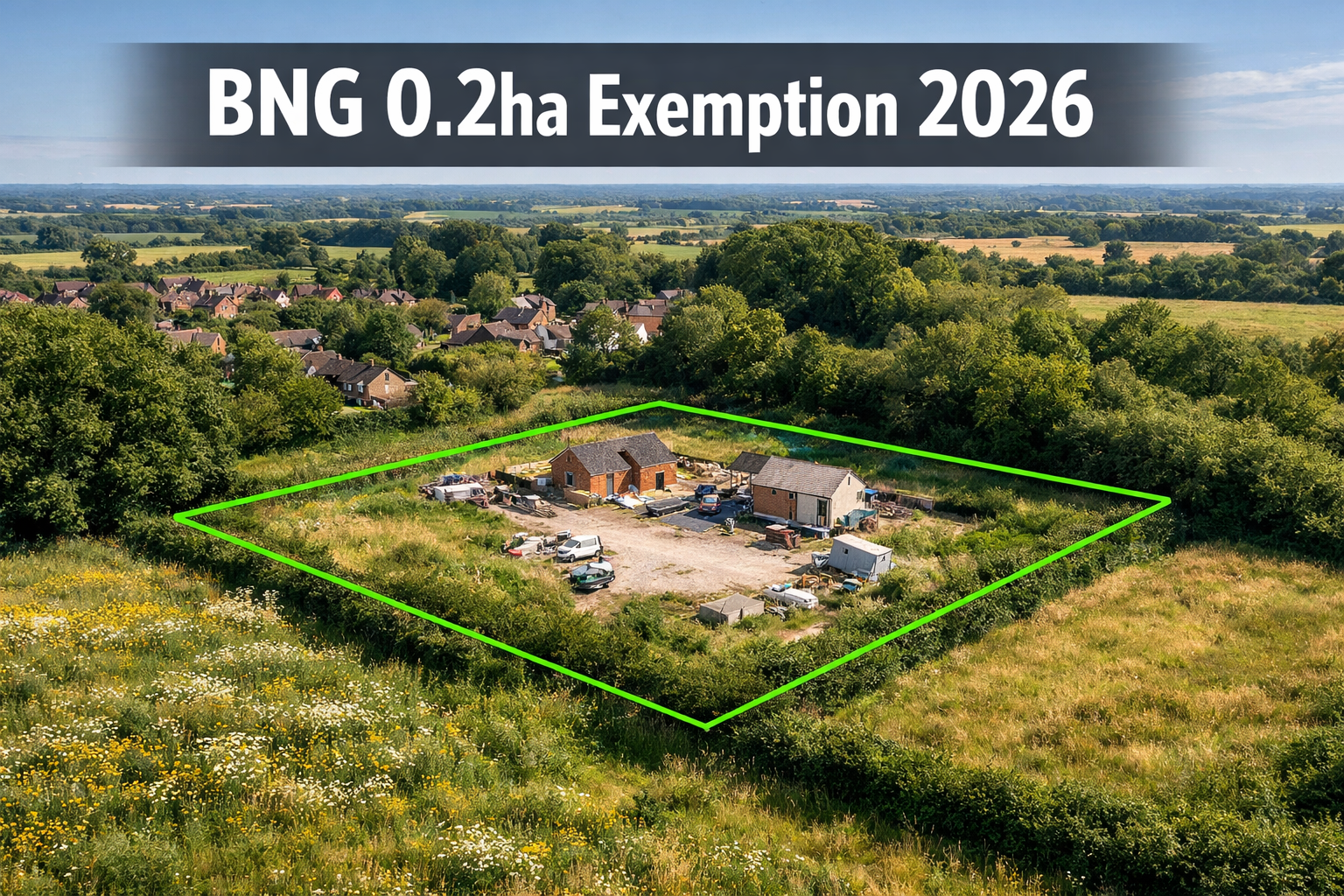
Roughly half of all residential planning permissions in England are about to fall outside mandatory Biodiversity Net Gain requirements — a seismic shift driven by a single measurement: 0.2 hectares. If your site sits at or below that threshold, the rules from 31 July 2026 are fundamentally different. At the…
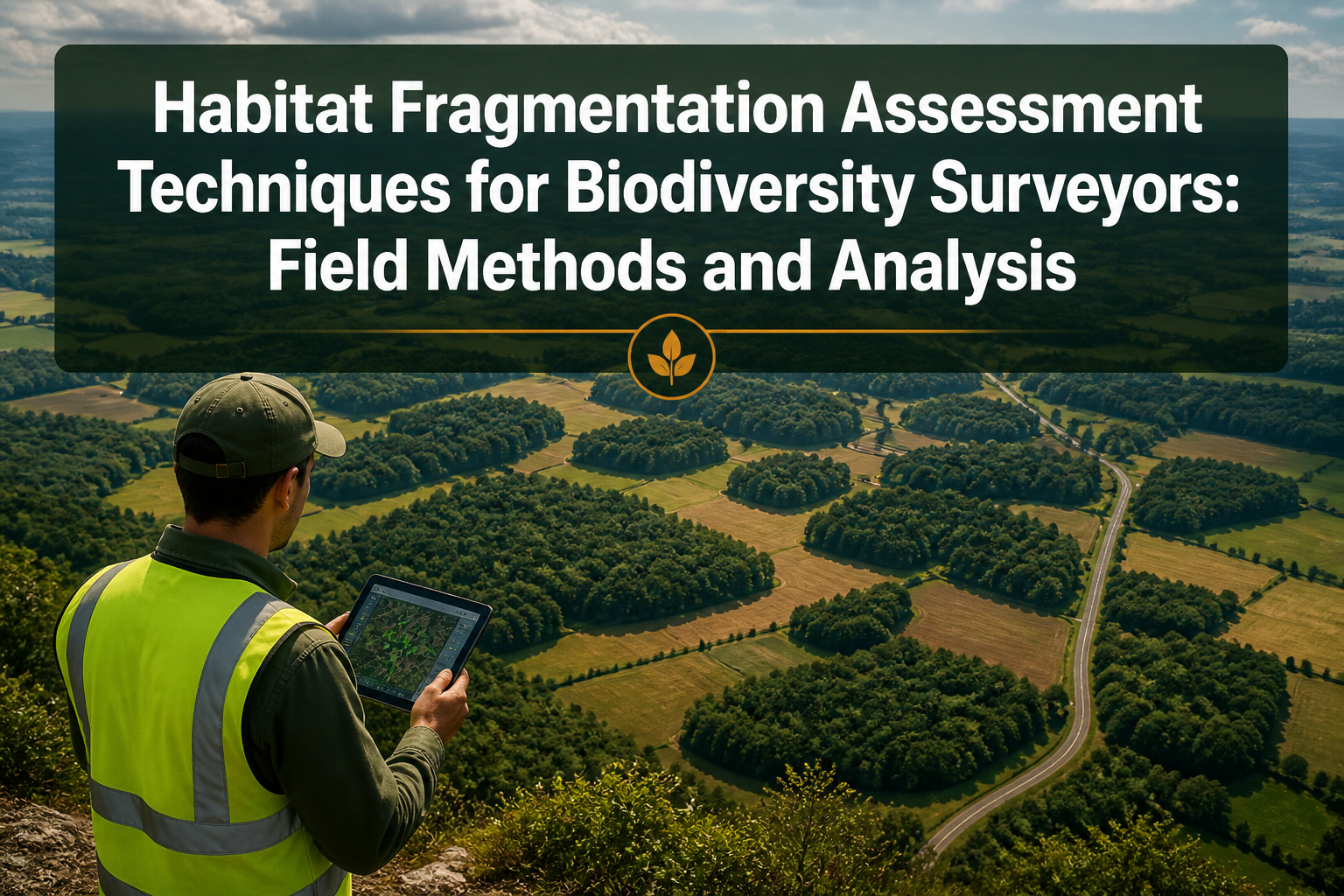
Globally, habitat fragmentation has reduced average within-sample species richness by 13.6% and total abundance by 10.7% — but in the worst-affected habitats, those figures spike to a staggering 76.5% richness loss [1]. For biodiversity surveyors working on development sites, these numbers are not abstract statistics. They are the baseline reality…
Only 18 months after mandatory Biodiversity Net Gain (BNG) came into force for major developments, the government has already moved to reshape the rules — and the changes arriving this summer are the most significant since the regime launched. The Biodiversity Net Gain 0.2ha exemption 2026 is the headline reform,…
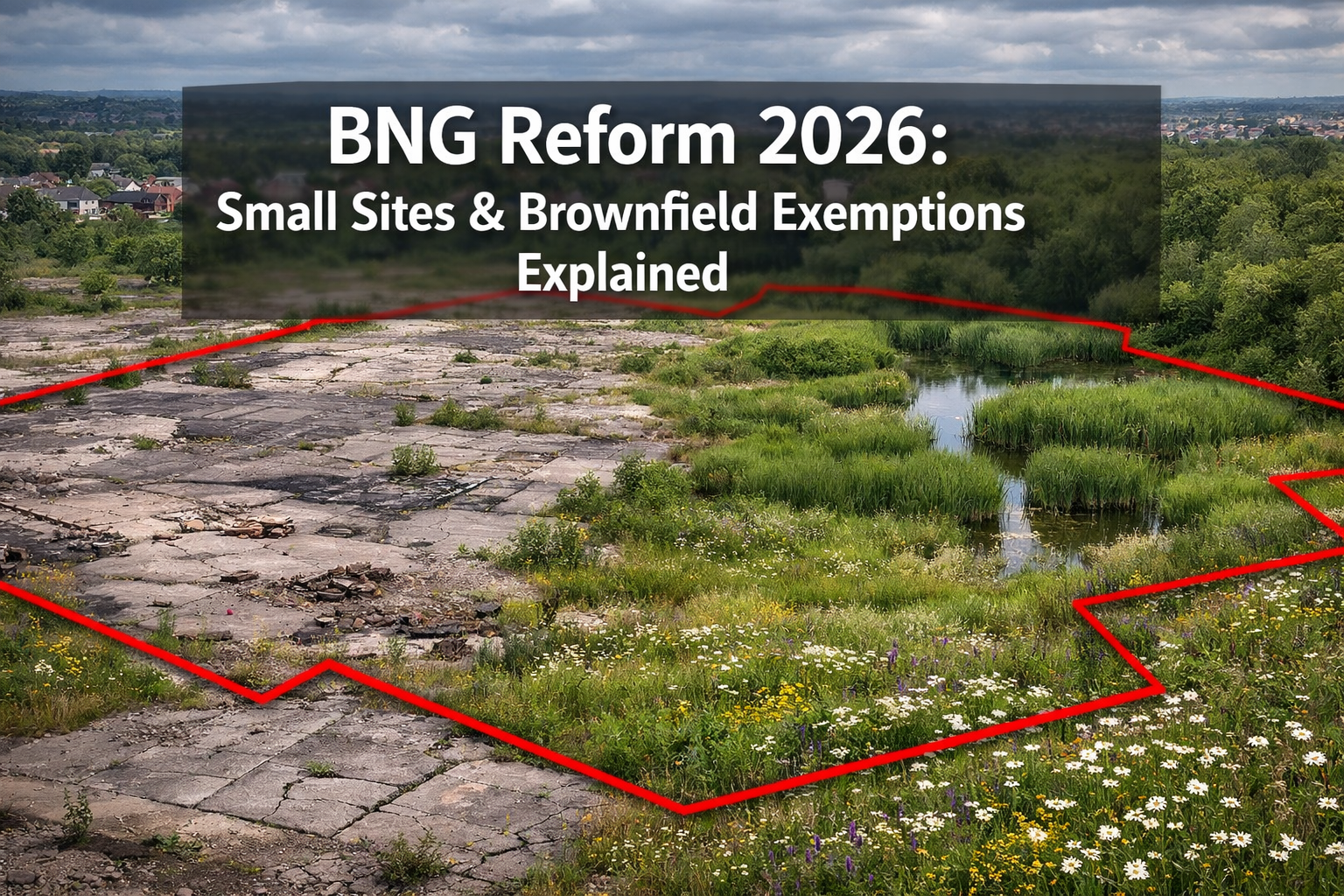
The UK government’s Biodiversity Net Gain (BNG) regime has just undergone its most significant shake-up since mandatory requirements came into force in 2024. On 20 April 2026, Defra published a landmark policy update confirming sweeping changes to the Biodiversity Net Gain April 2026 reform small sites brownfield exemptions framework —…
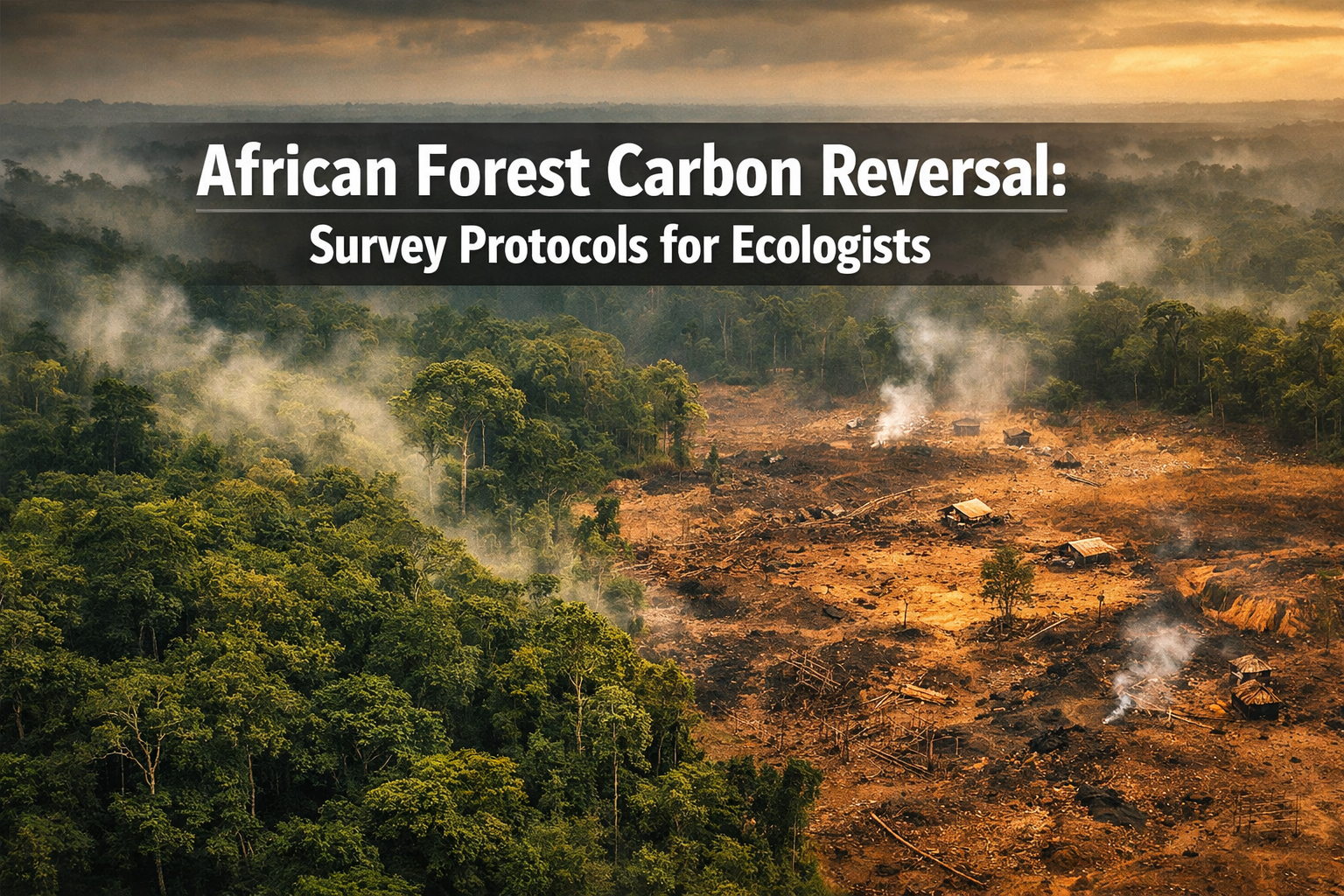
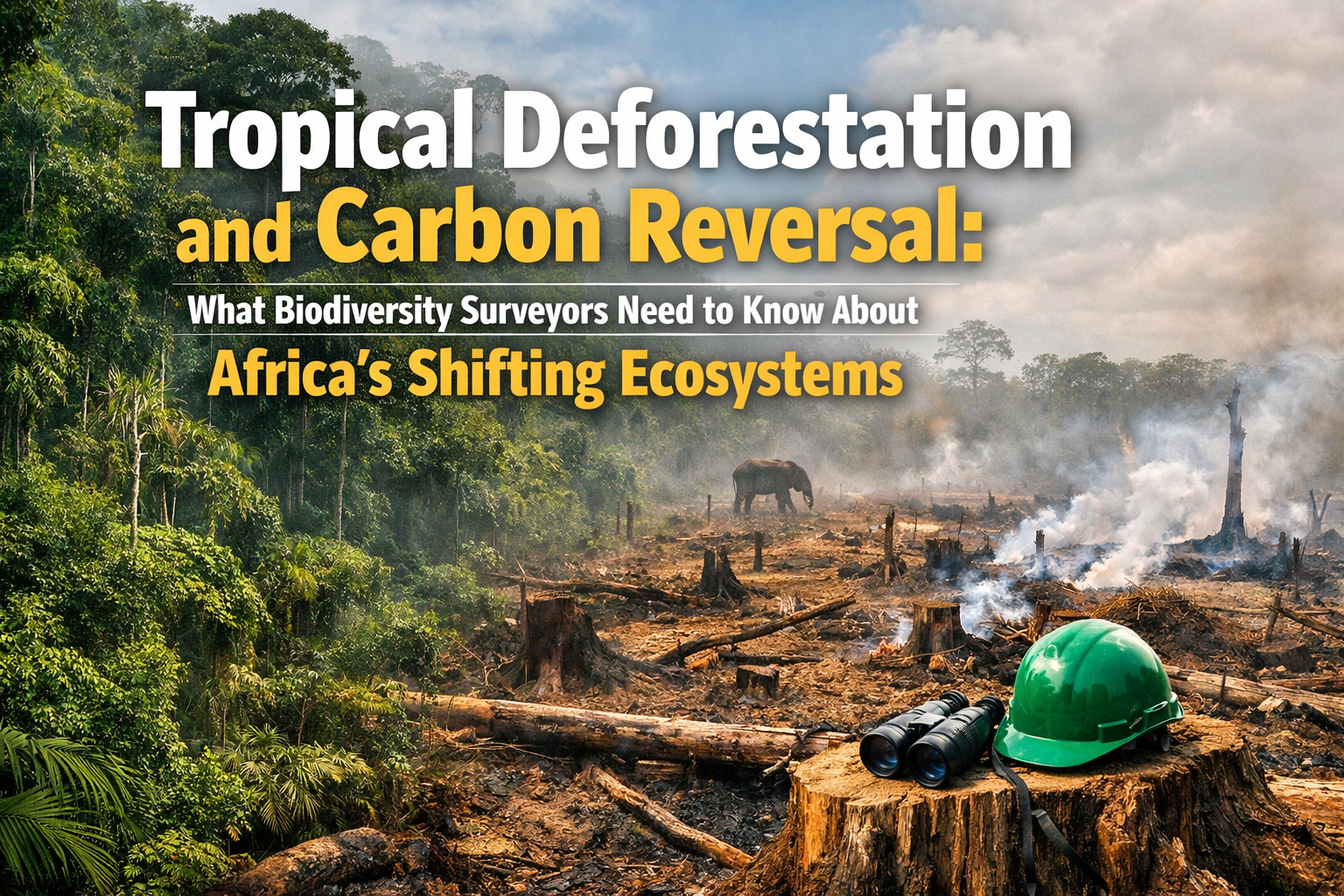
Africa's forests lost approximately 106 billion kilograms of forest biomass every single year between 2010 and 2017 — a figure equivalent to the combined weight of 106 million cars disappearing from the landscape annually [1]. This staggering statistic signals more than an ecological crisis. It marks a fundamental shift in…
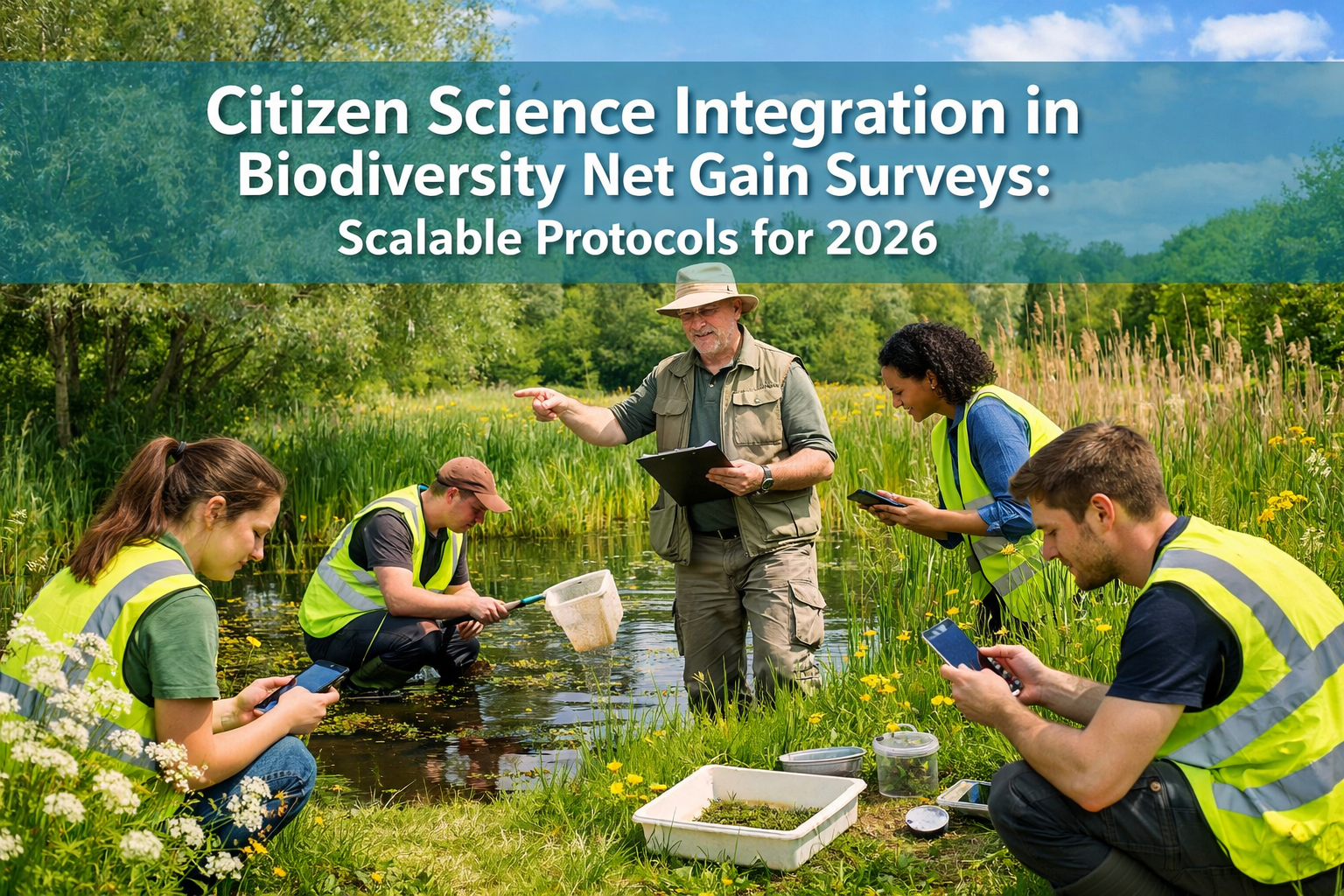
Nearly 100,000 priority ponds across the UK remain unrecorded—a staggering biodiversity data gap that professional ecologists alone cannot close. Yet in just two years, community volunteers have identified over 250 new priority ponds through structured citizen science programs, demonstrating that Citizen Science Integration in Biodiversity Net Gain Surveys: Scalable Protocols…
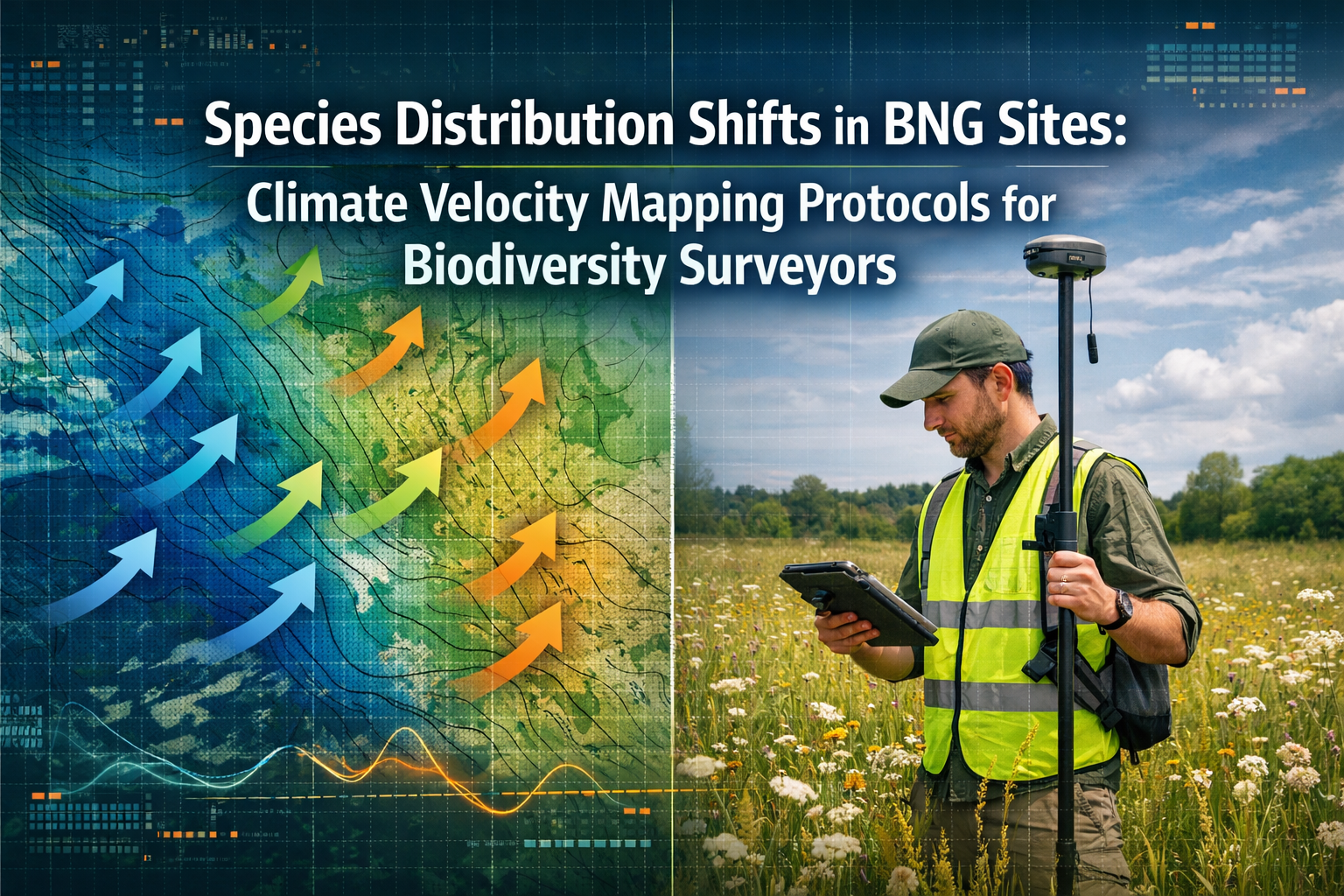
Recent research reveals that observed species range shifts occur at rates approximately four times faster than climate niche models predicted—a finding that fundamentally challenges how biodiversity surveyors approach Biodiversity Net Gain (BNG) site management in 2026. When static baseline assessments meet dynamic ecological reality, the question becomes: how can professionals…
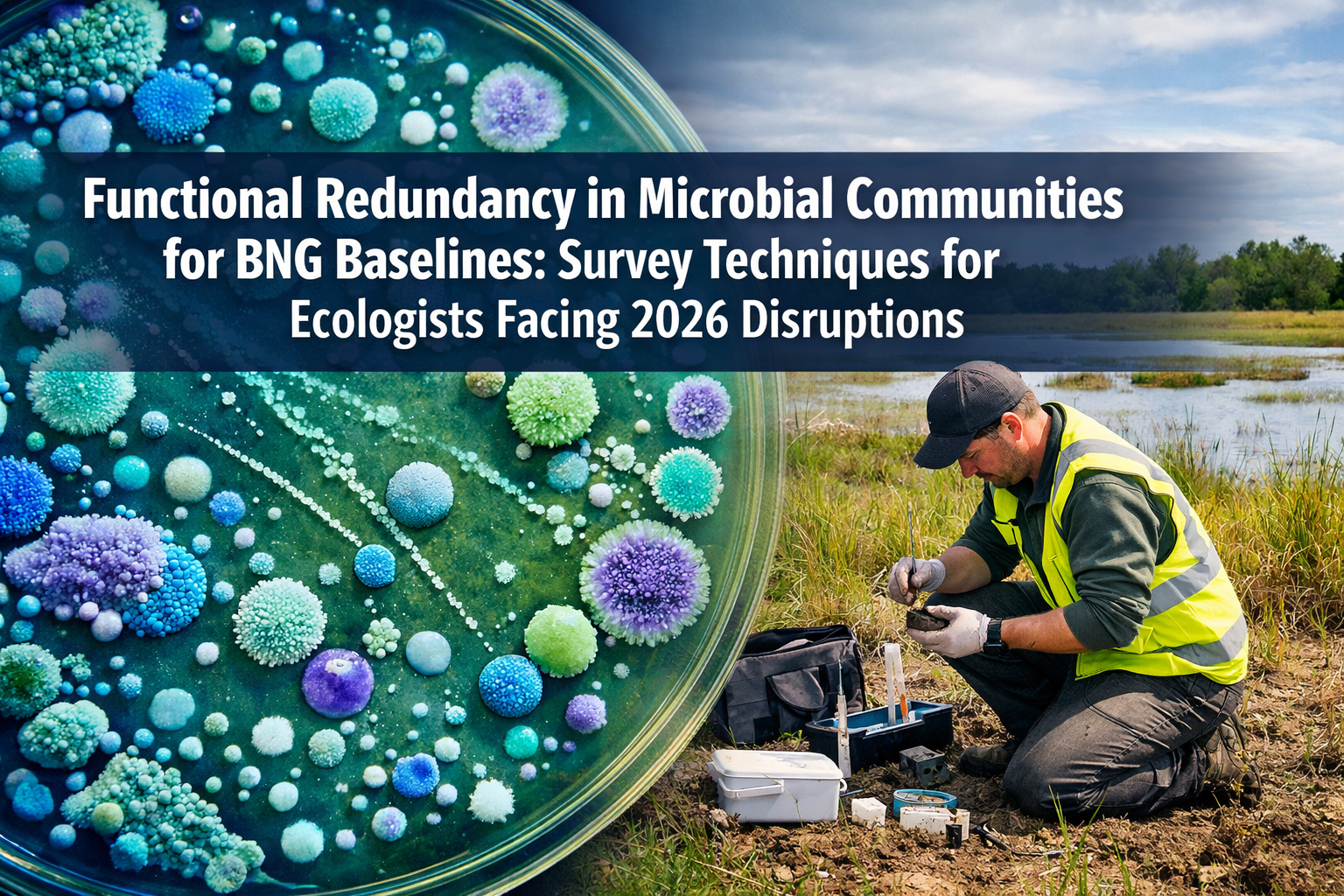
Microbiomes in major estuarine systems demonstrate metabolic flexibility across more than 50 different energy pathways—yet this hidden functional insurance policy remains largely unmeasured in Biodiversity Net Gain (BNG) assessments[3]. As development projects accelerate across England in 2026, ecologists face mounting pressure to establish robust ecological baselines that account for invisible…
Permafrost thaw is rewriting the biodiversity baseline across alpine regions at an unprecedented pace. Recent research reveals that over 2,000 treeline species records from 39 mountain regions now document systematic upslope migration, while ground-penetrating radar surveys detect active layer deepening that fundamentally alters habitat structure [1]. For developers and land…
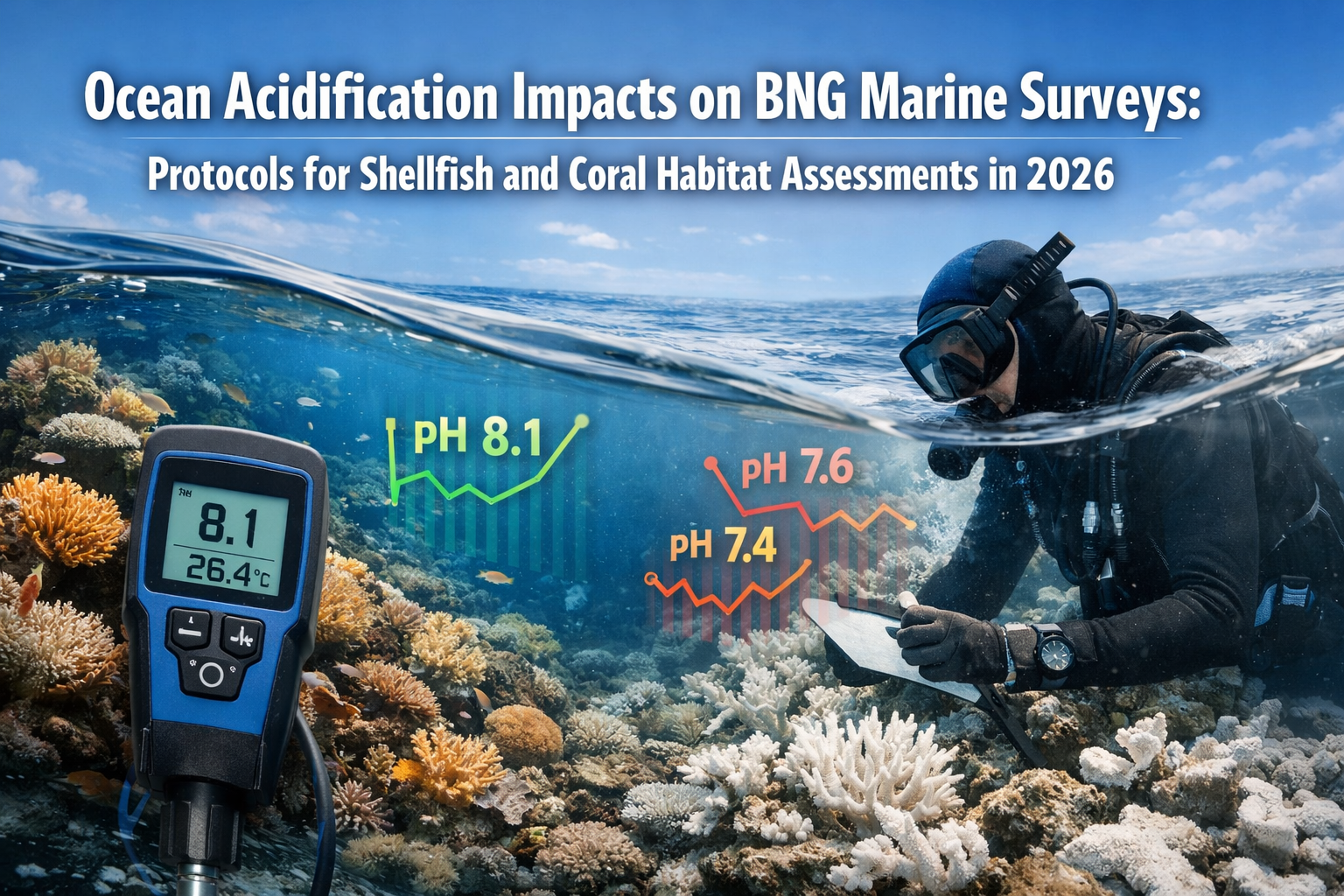
Ocean acidity has increased 26% over the past 250 years, with pH dropping from a global average of 8.2 to 8.1[1]. This seemingly minor shift represents a chemical transformation occurring at approximately 10 times faster than any point in the last 300 million years[2]. For marine surveyors conducting Biodiversity Net…
Recent regulatory changes have accelerated deep-sea mining operations at an alarming rate. NOAA's January 2026 rule cut environmental assessment timelines in half, while The Metals Company immediately doubled its extraction request to cover 65,000 square kilometers of the Pacific seabed[1]. For surveyors monitoring coastal Biodiversity Net Gain (BNG) sites, this…
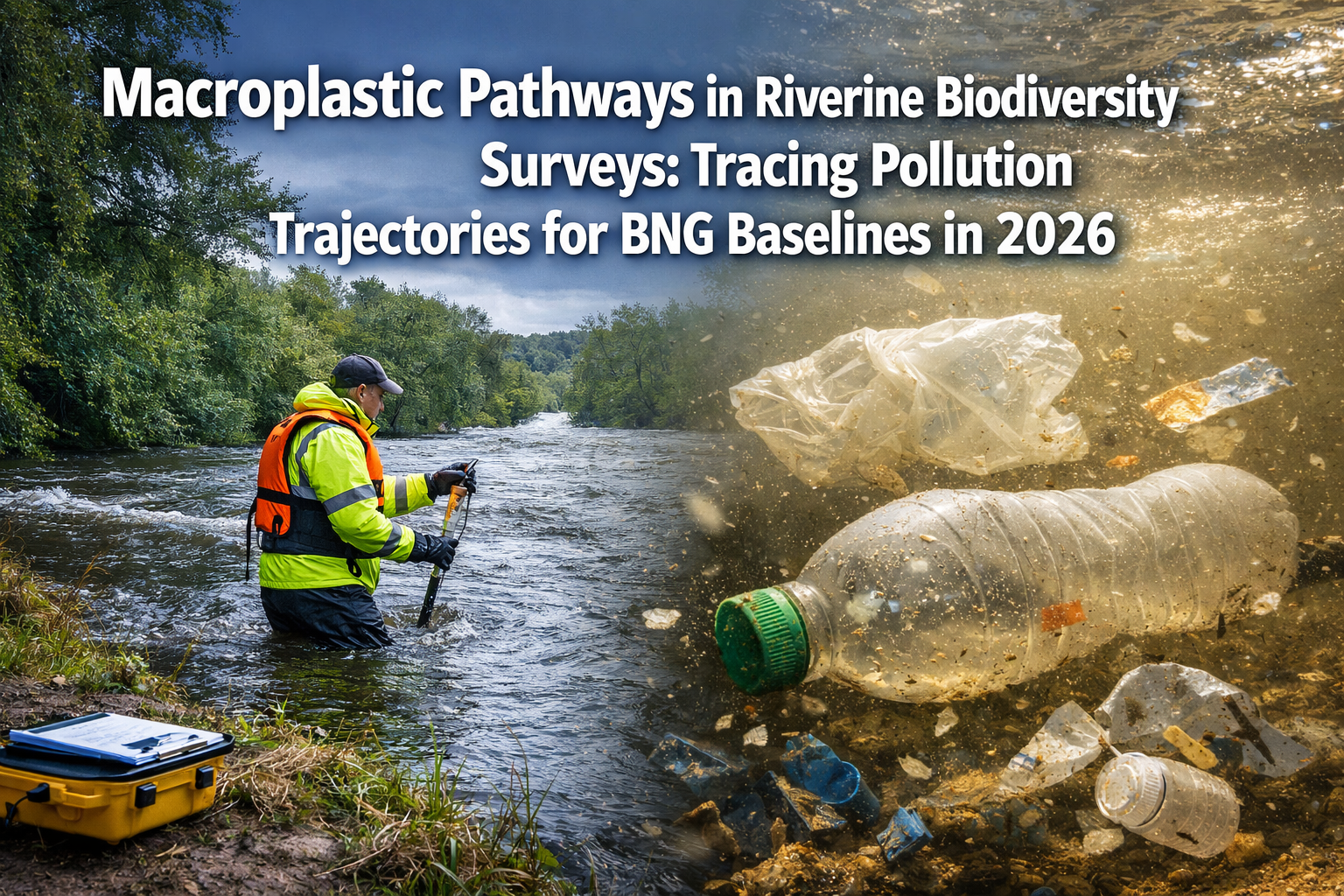
Recent research reveals that 90% of annual mesoplastic load in rivers is transported in just 43 days [3]. This extreme temporal concentration fundamentally changes how biodiversity surveyors must approach baseline assessments for Biodiversity Net Gain (BNG) compliance in 2026. When macroplastic debris surges through river systems during flood events, it…
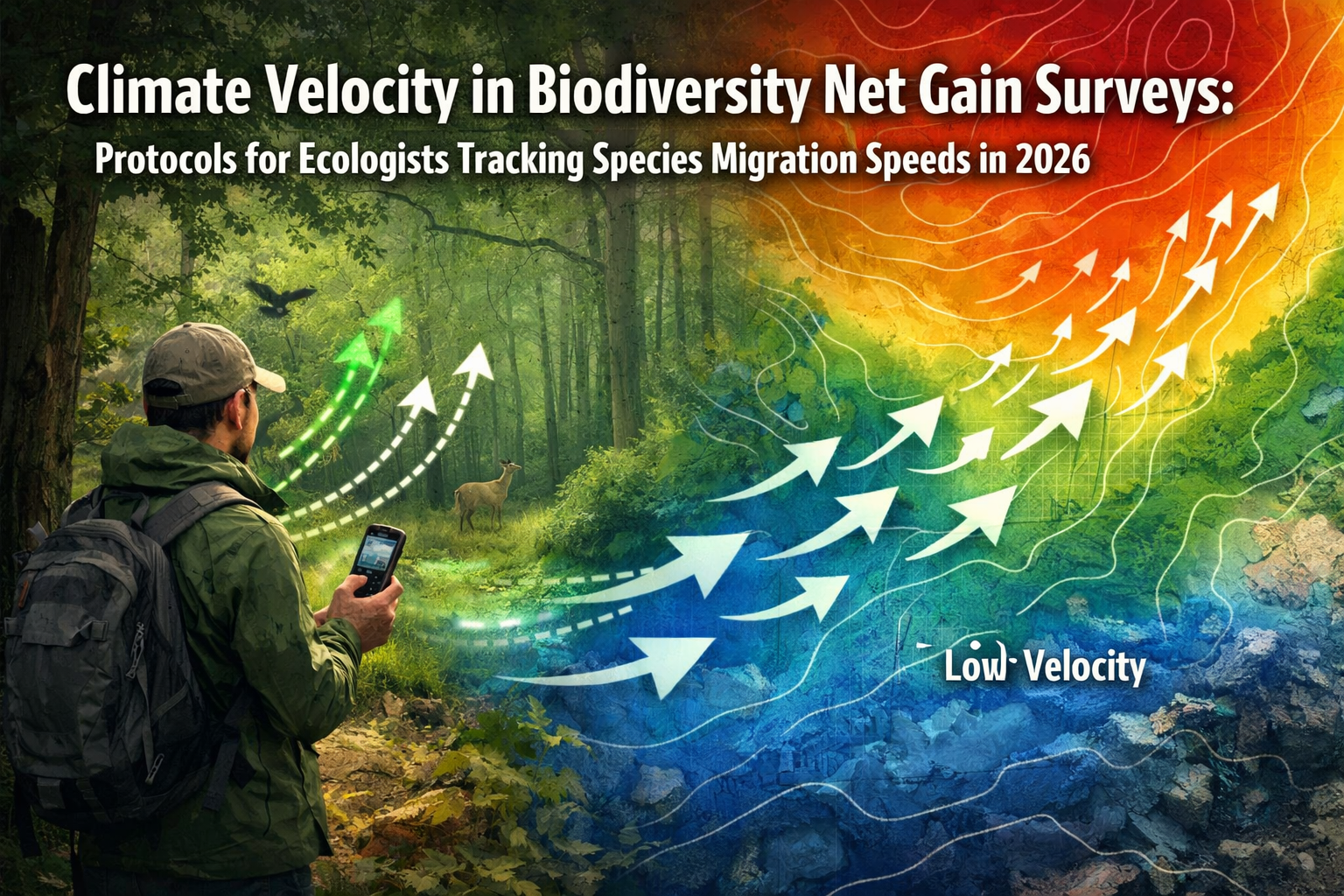
} Species are moving three times faster than predicted just five years ago. As climate zones shift at unprecedented rates, ecologists conducting Biodiversity Net Gain (BNG) surveys face a critical challenge: how do you calculate accurate biodiversity baselines when the species you're counting today might relocate tomorrow? Climate Velocity in…
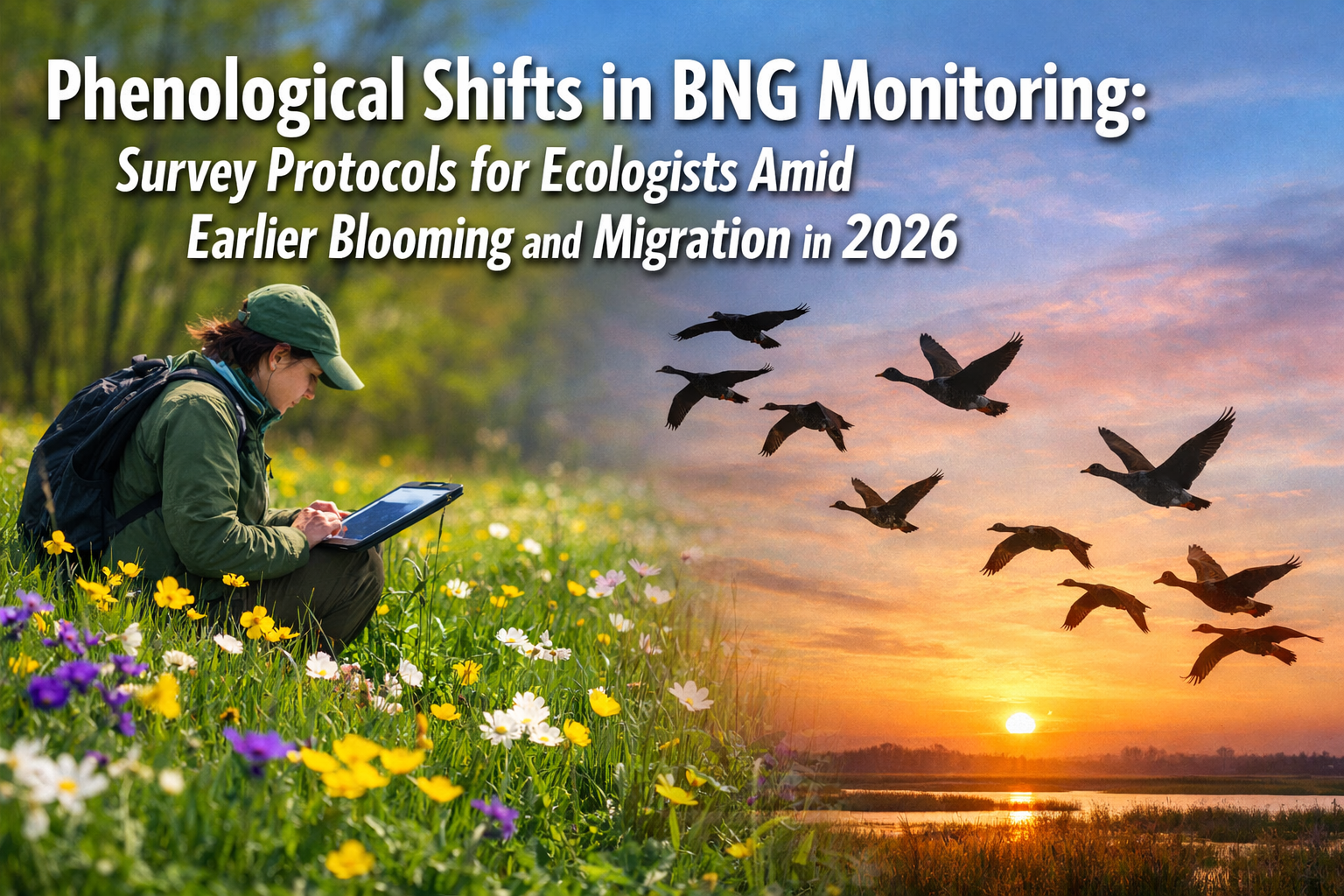
Tropical flowering phenology has shifted by an average of 2.04 days per decade over the past two centuries, with some species accelerating by more than 14 days per decade.[5] As climate-driven changes reshape the timing of natural events across ecosystems worldwide, ecologists face an unprecedented challenge: traditional snapshot surveys designed…
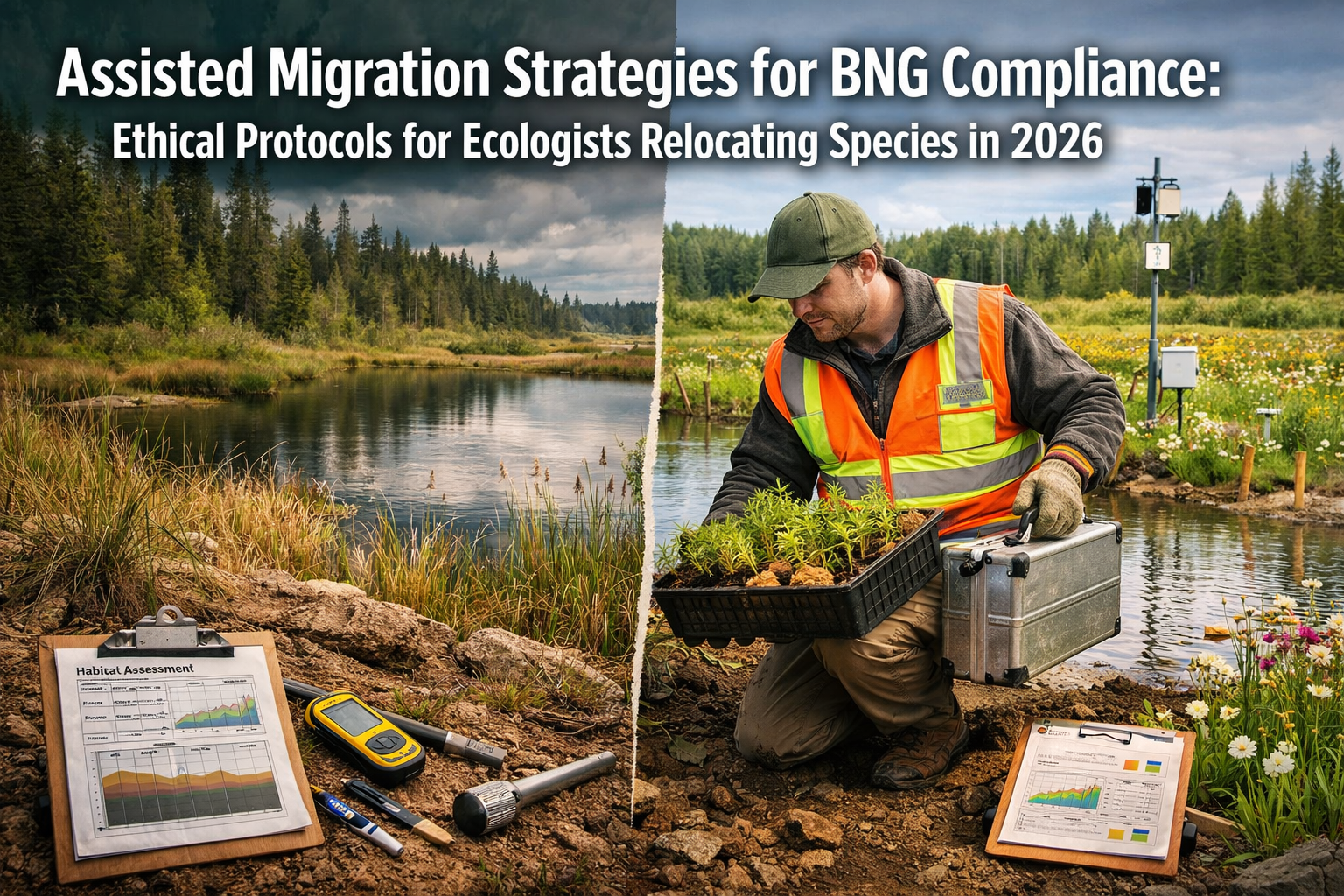
Climate change is outpacing natural species migration by a factor of 10 to 100 times in many ecosystems, creating an urgent conservation crisis that traditional habitat protection alone cannot solve. As Biodiversity Net Gain (BNG) requirements expand across major infrastructure projects in 2026, ecologists face a challenging question: when habitats…
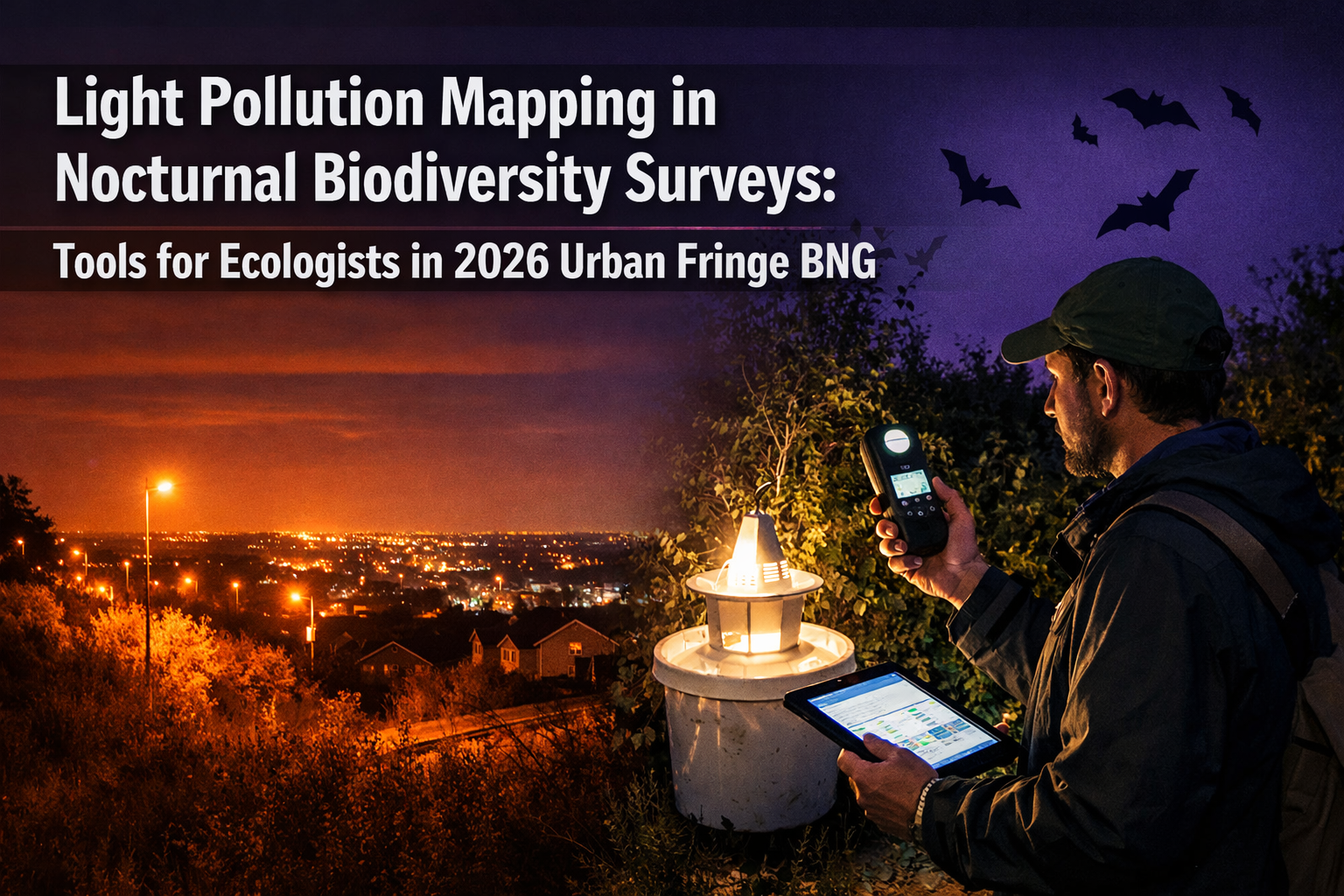
Groundbreaking research published in February 2026 has overturned decades of conservation practice: artificial light at twilight—not midnight—inflicts the greatest harm on nocturnal wildlife, yet current mitigation strategies focus on the wrong hours entirely[3]. This revelation arrives precisely as ecologists face mounting pressure to deliver accurate Biodiversity Net Gain (BNG) baselines…
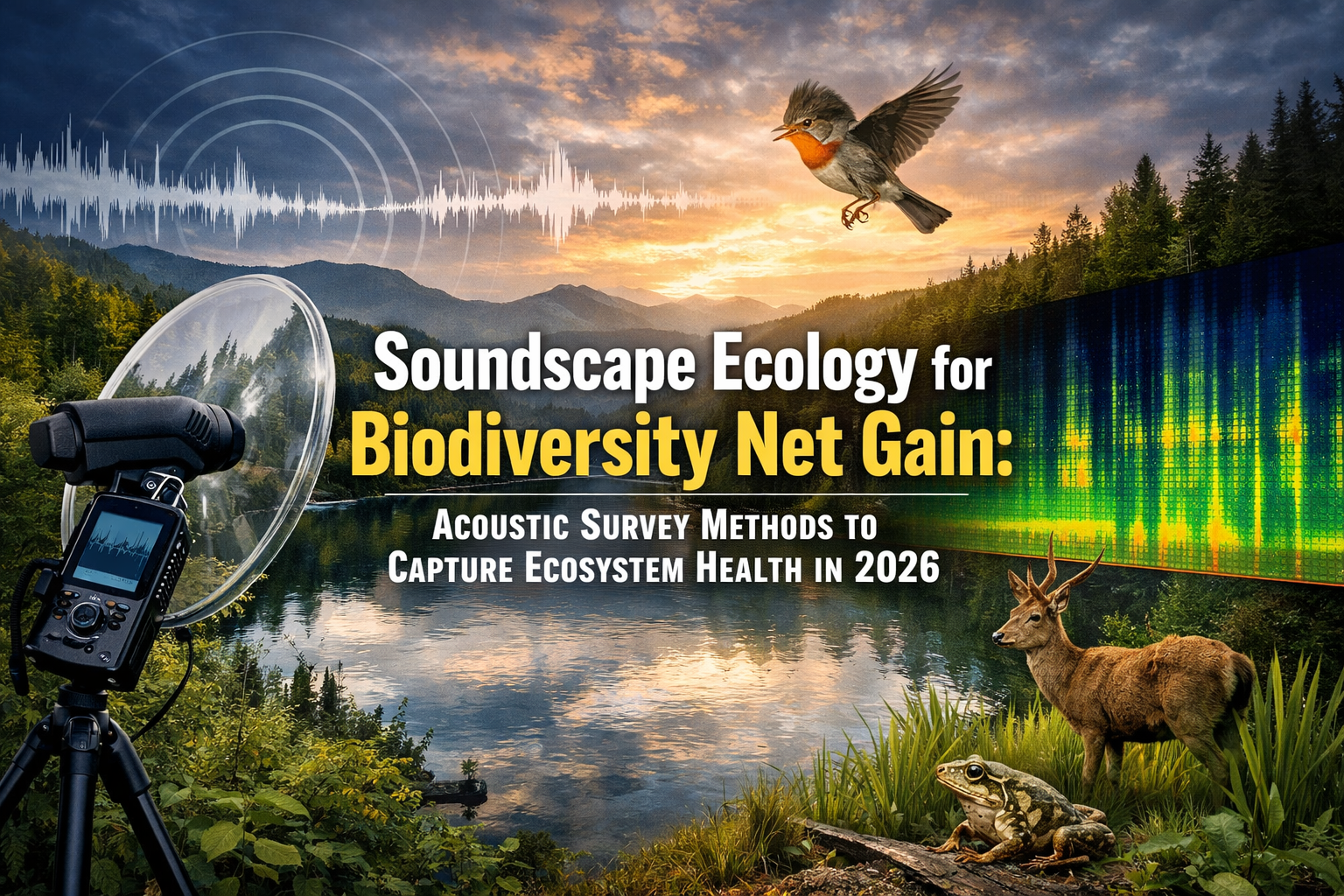
{"cover":"Professional landscape format (1536×1024) hero image with bold text overlay 'Soundscape Ecology for Biodiversity Net Gain: Acoustic Survey Methods to Capture Ecosystem Health in 2026' in extra large 72pt white sans-serif font with dark shadow effect, positioned in upper third with perfect alignment. Background shows split composition: left side features…
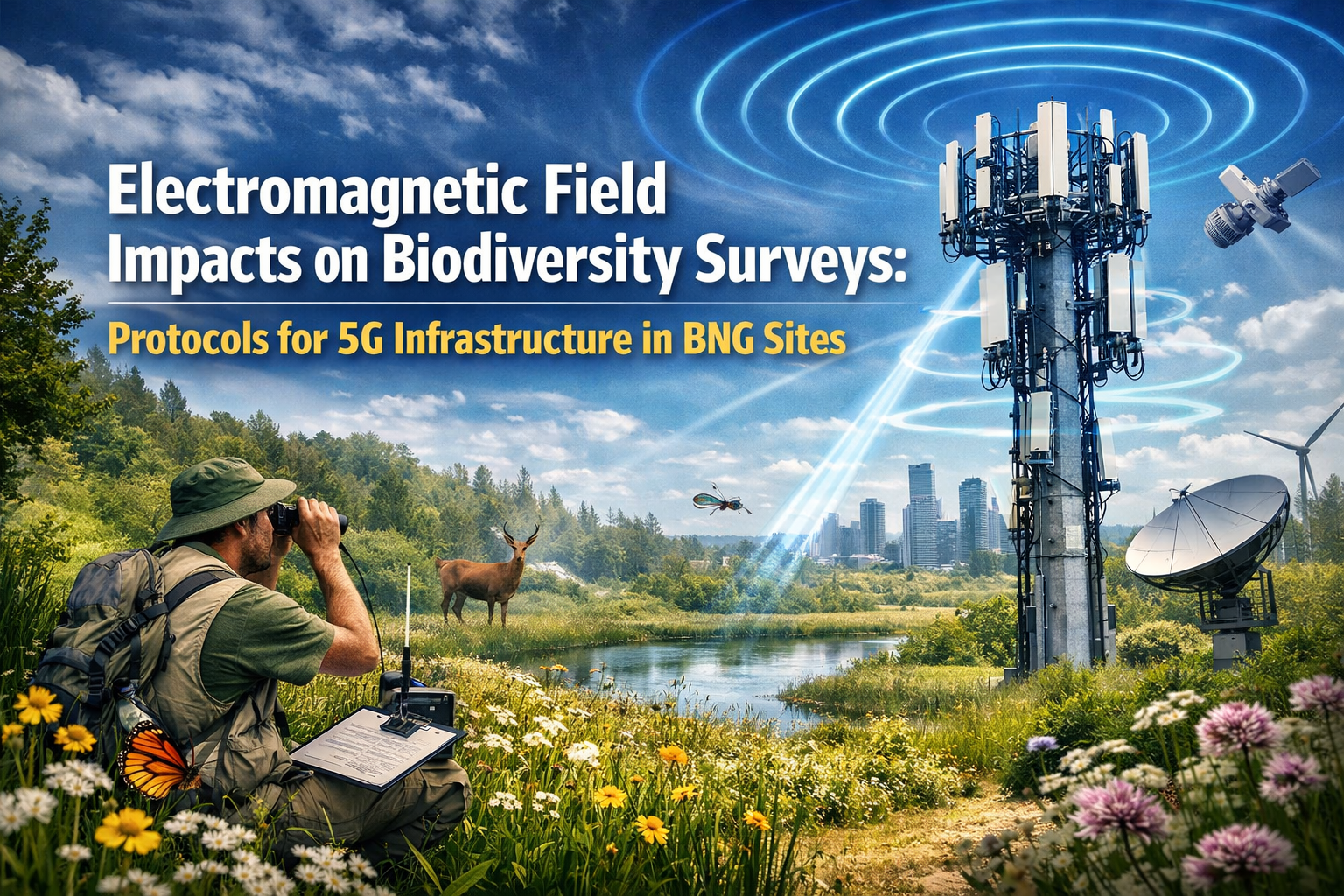
{"cover":"Professional landscape format (1536×1024) hero image with bold text overlay 'Electromagnetic Field Impacts on Biodiversity Surveys: Protocols for 5G Infrastructure in BNG Sites' in extra large 70pt white sans-serif font with dark shadow and semi-transparent overlay box, positioned center-upper third. Background shows dramatic split composition: left side features modern 5G…
Estrogens from contraceptive pills are feminizing male fish in English rivers right now, reducing their breeding capacity and threatening population stability in protected waterways [3]. This stark reality represents just one dimension of pharmaceutical pollution's impact on aquatic biodiversity—a challenge that has escalated dramatically as of 2026, with contaminants now…
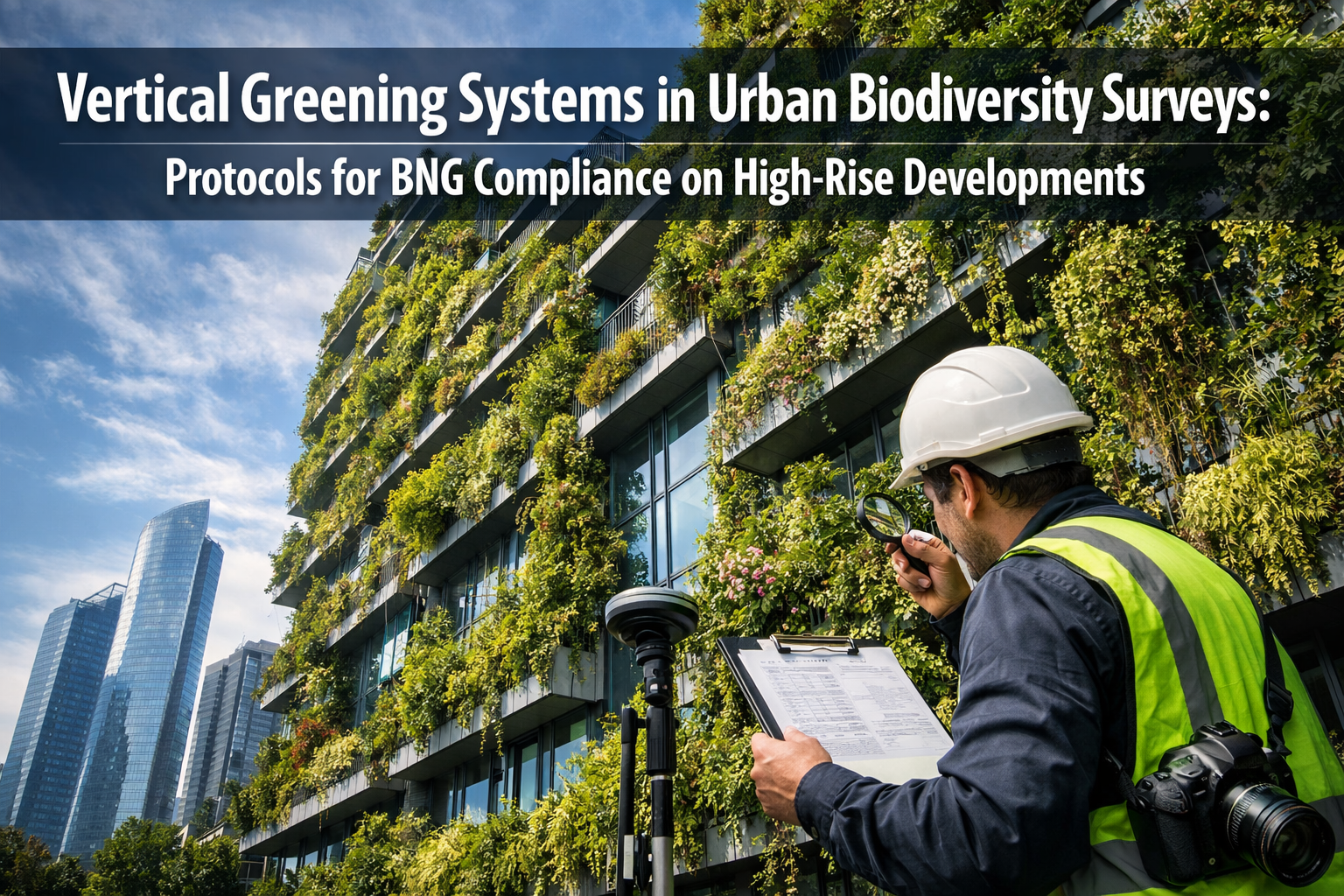
High-rise developments in England now face a biodiversity challenge that traditional ground-level surveys cannot solve. With over 68% of urban land already developed and vertical expansion accelerating across major cities in 2026, ecologists must adapt their survey methodologies to measure biodiversity gains on building facades—not just at ground level. Vertical…
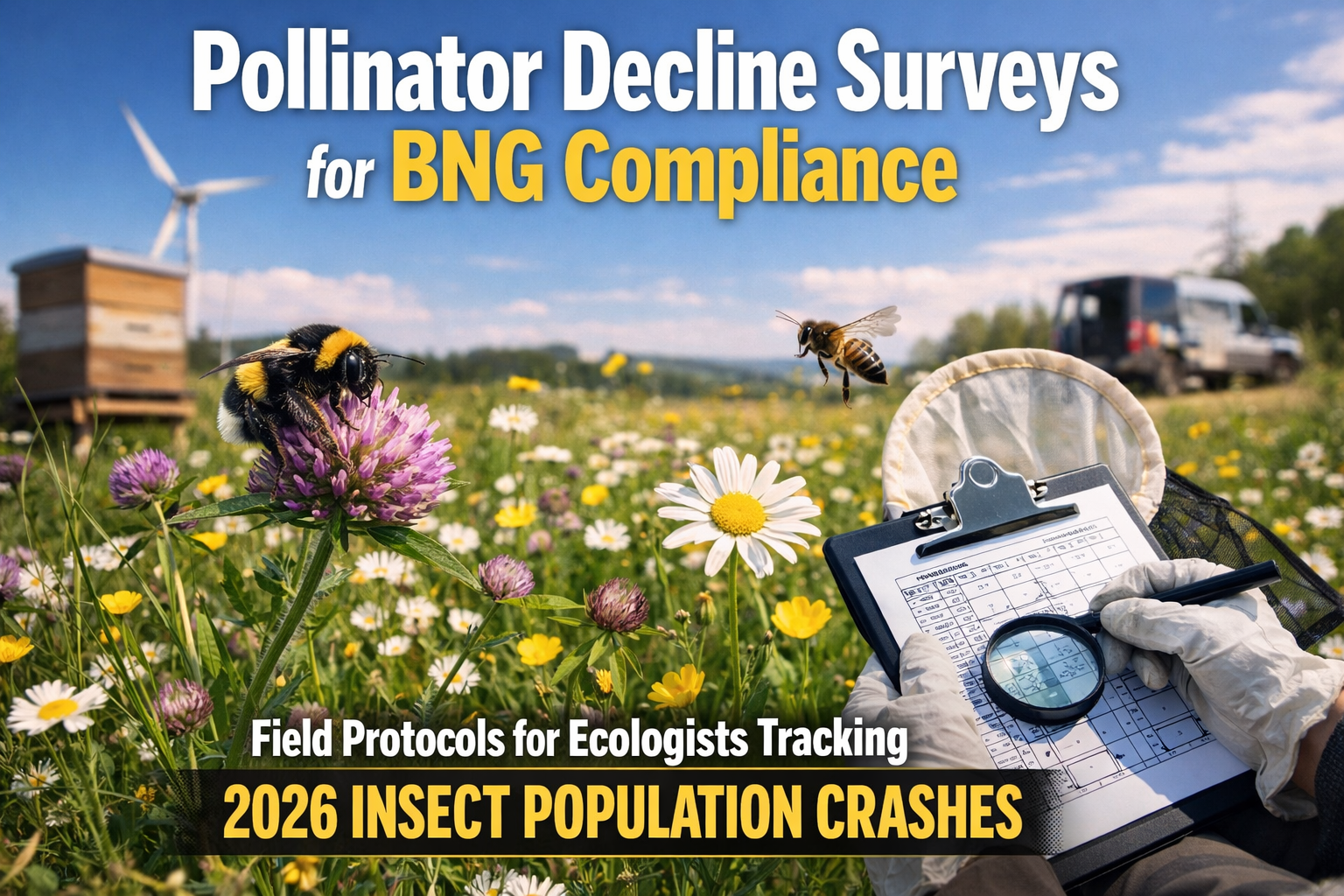
{"cover":"Professional landscape format (1536×1024) hero image with bold text overlay 'Pollinator Decline Surveys for BNG Compliance: Field Protocols for Ecologists Tracking 2026 Insect Population Crashes' in extra large 70pt white sans-serif font with dark shadow effect, positioned in upper third center. Background shows ecologist in high-visibility vest kneeling in wildflower…
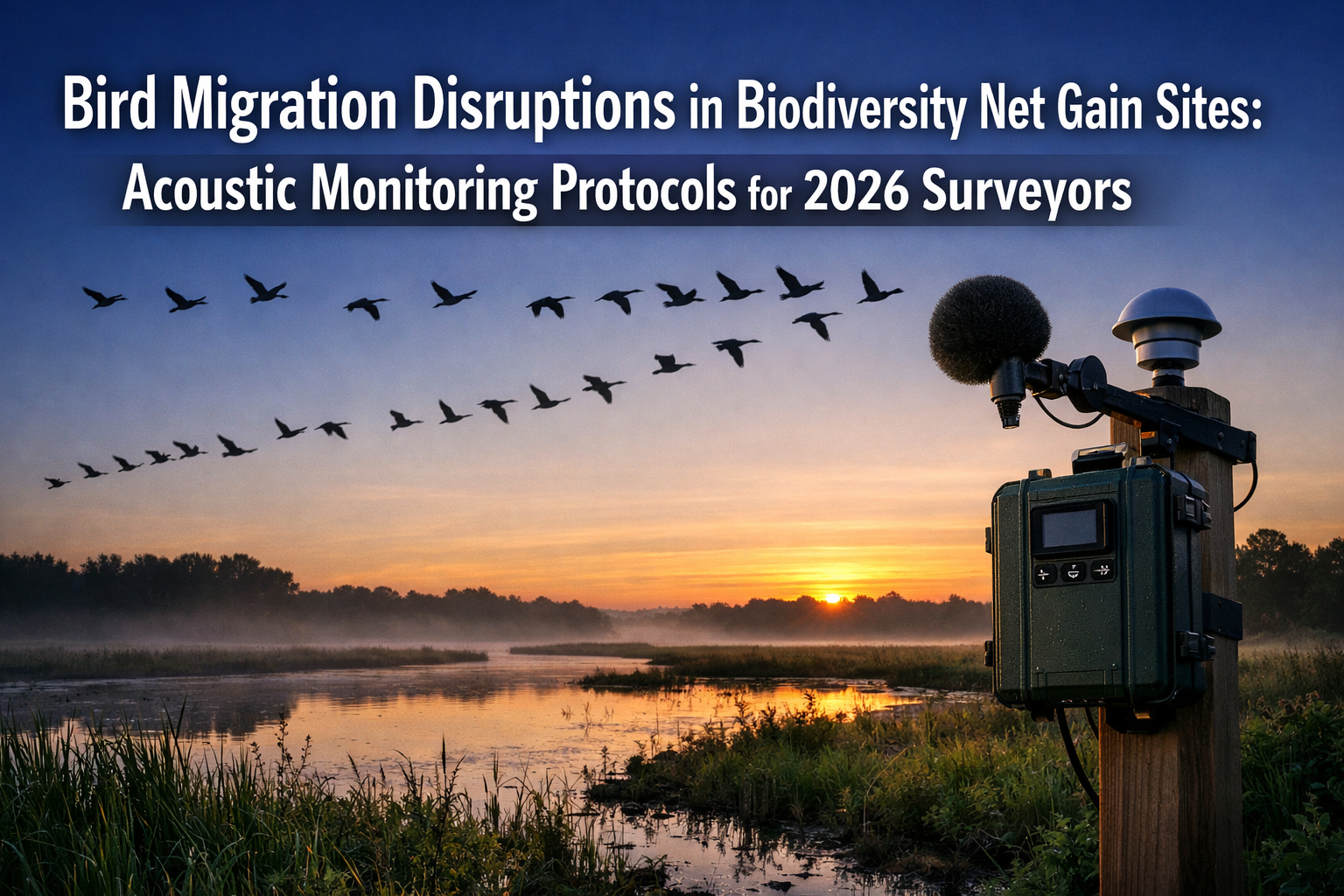
Nearly half of the world's migratory bird species are now in decline, with populations falling faster than surveyors can update baseline assessments. As climate patterns shift migration timing by several days each year, traditional survey methods—limited to specific dates and daylight hours—are missing critical data that could determine whether Biodiversity…
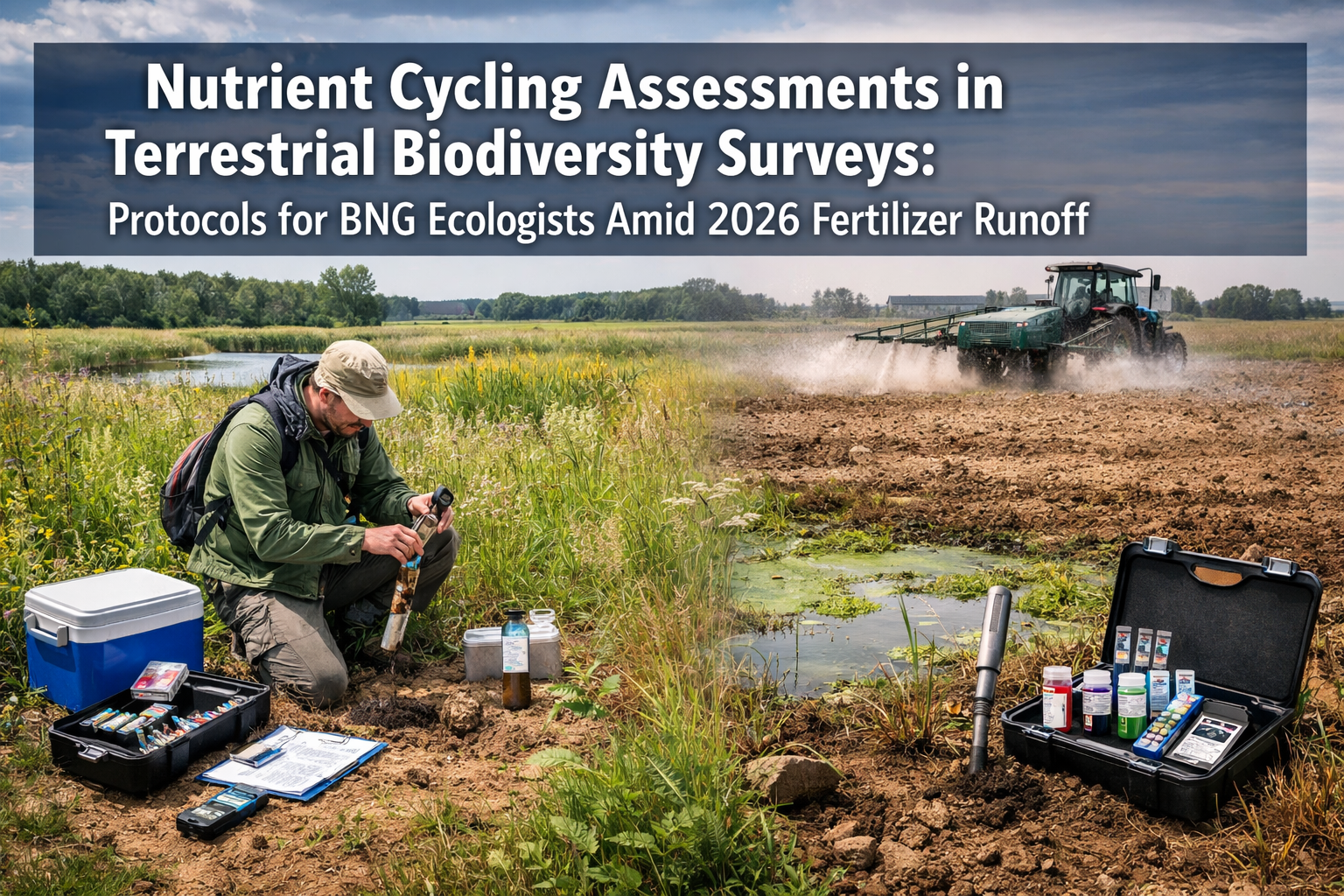
Agricultural fertilizer applications have increased nitrogen and phosphorus loads in UK watersheds by 40% over the past decade, fundamentally altering baseline biogeochemical cycling patterns in terrestrial ecosystems[4]. As Biodiversity Net Gain (BNG) requirements become mandatory across England in 2026, ecologists face a critical challenge: how to accurately assess nutrient cycling…
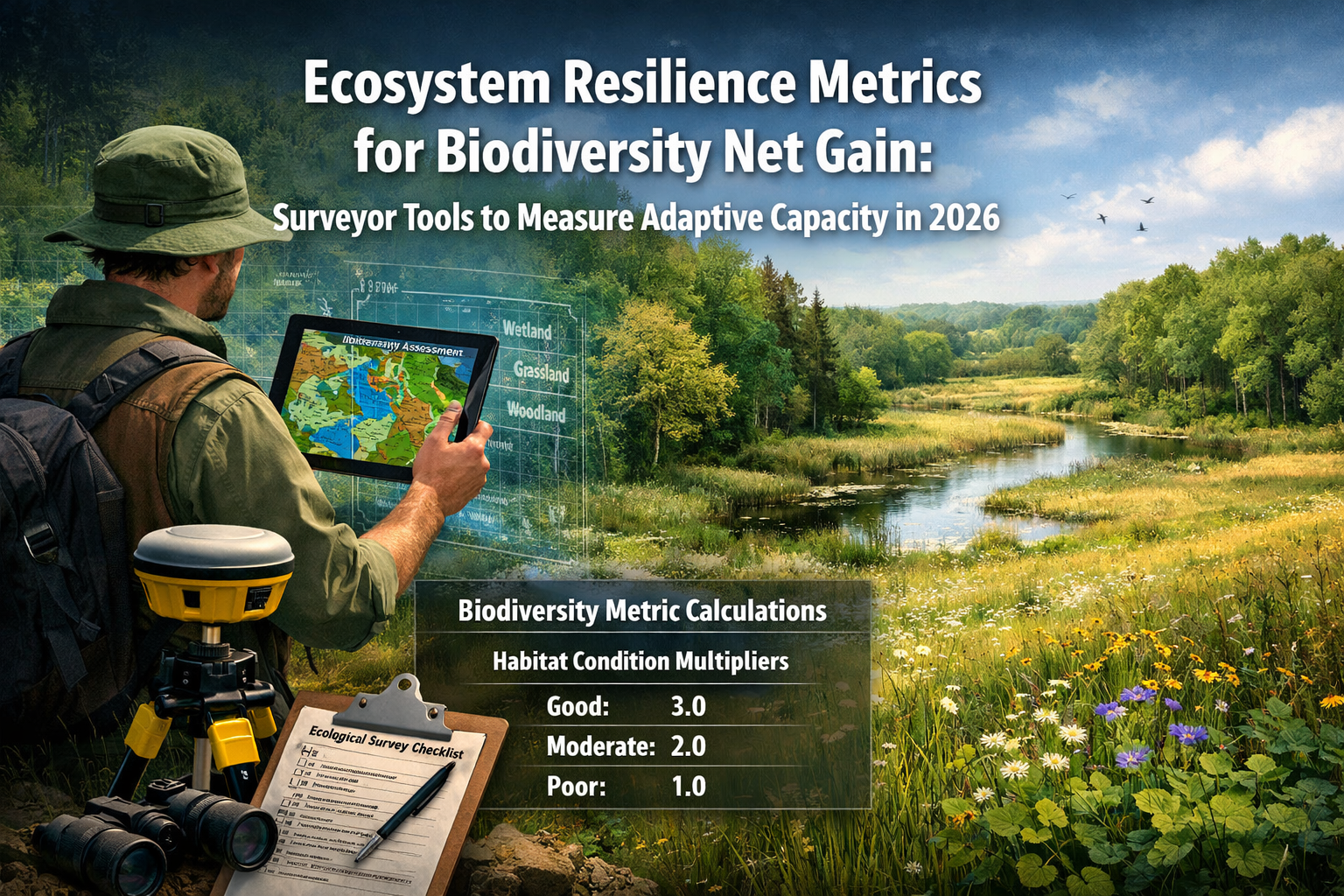
Recent research from the Smithsonian Institution reveals that ecosystem resilience fundamentally depends on land-sea interactions, a finding that transforms how ecologists approach Biodiversity Net Gain (BNG) assessments. As development projects across the UK navigate increasingly complex environmental requirements, surveyors now integrate functional diversity indices to score site adaptability—moving beyond simple…
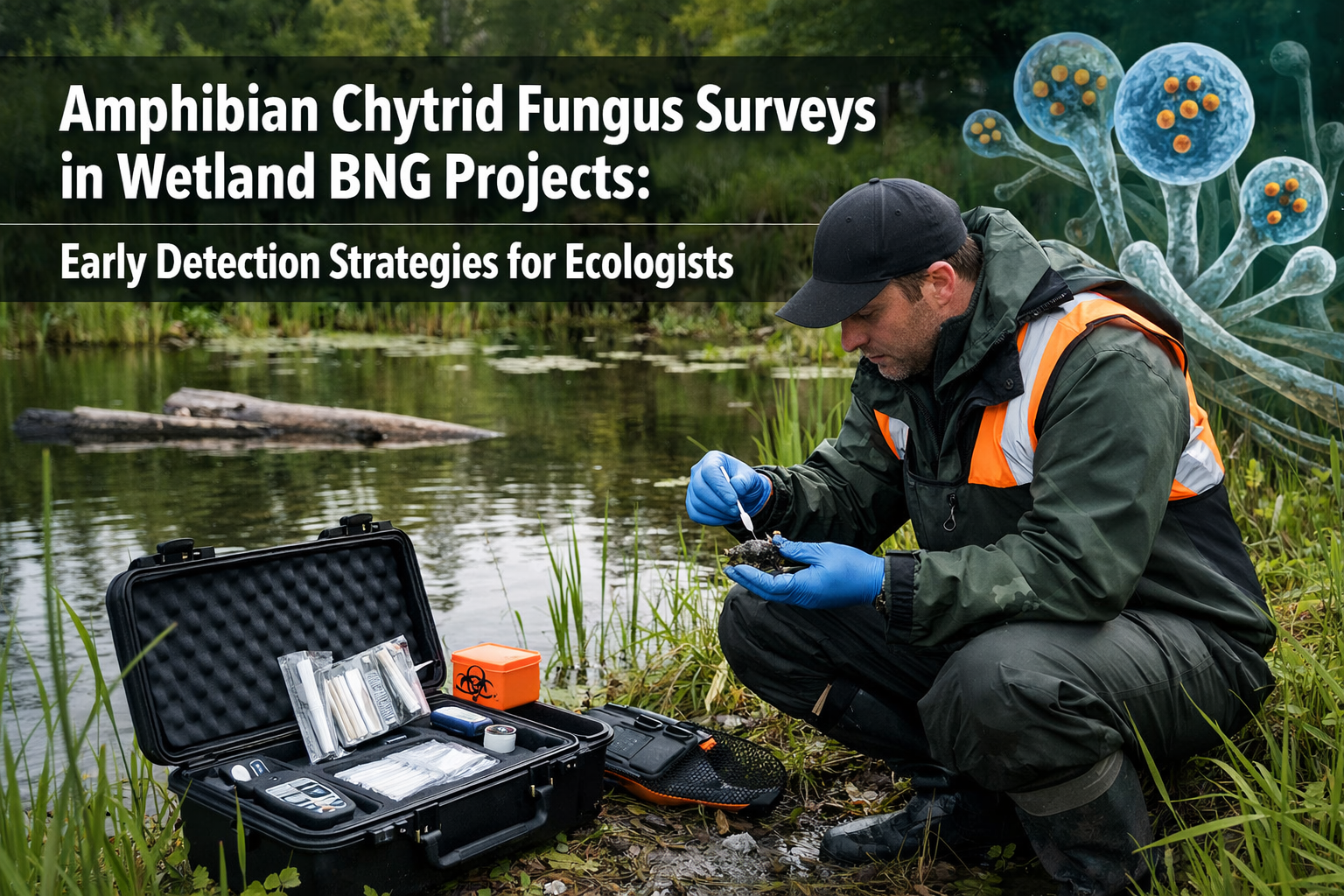
Chytrid fungus has driven 90 species of amphibians to extinction and threatens hundreds more worldwide—making it the most devastating wildlife disease ever recorded. As Biodiversity Net Gain (BNG) legislation mandates wetland creation and enhancement across England in 2026, ecologists face a critical challenge: establishing baseline amphibian populations without introducing or…
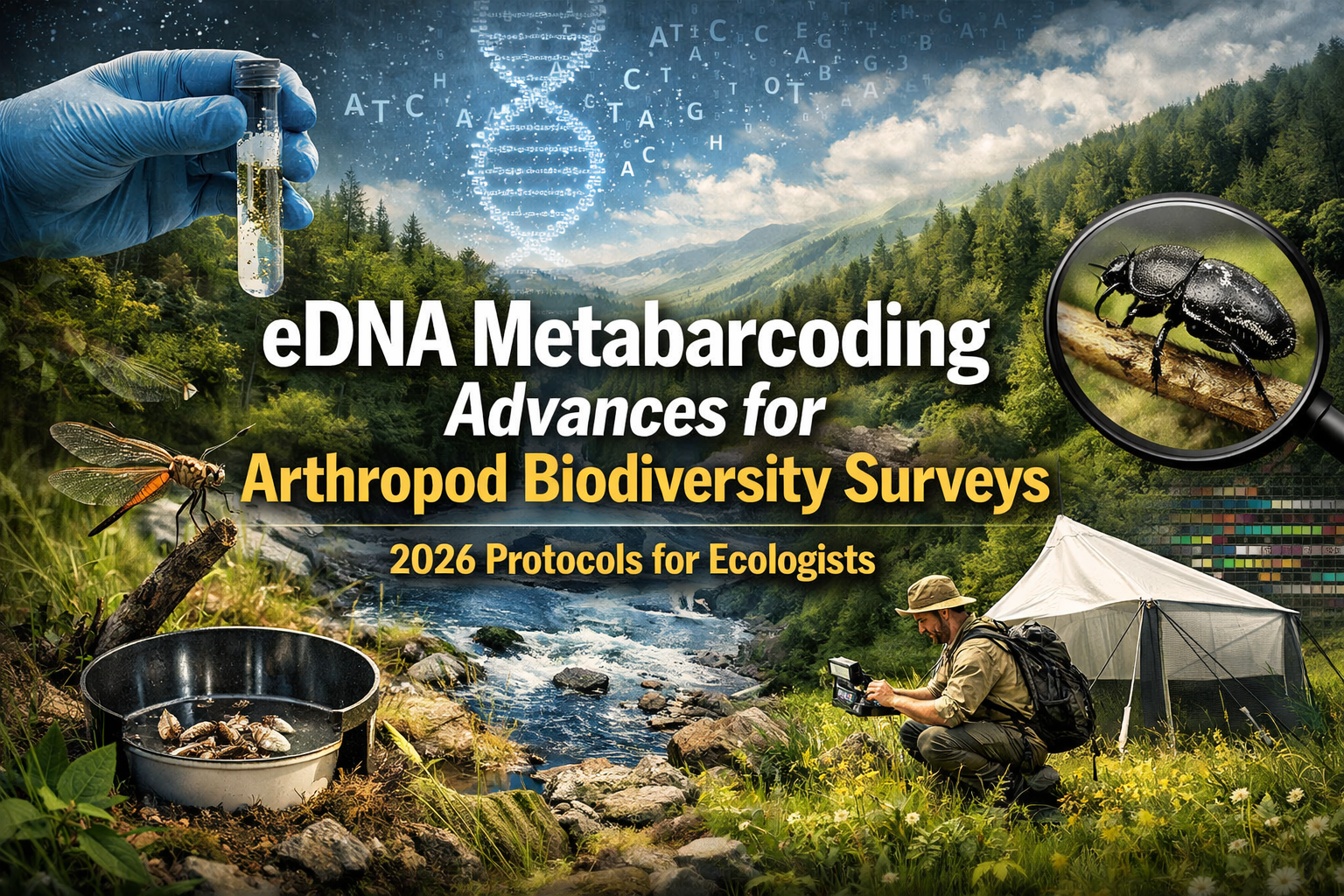
} Arthropod populations have declined by more than 75% in some protected areas over the past three decades, yet traditional survey methods still miss up to 60% of species present in terrestrial habitats. As ecologists face mounting pressure to establish accurate biodiversity baselines for conservation planning and regulatory compliance, environmental…
Field surveys at the Knepp Estate revealed a startling truth: rewilded land contains approximately twice the biodiversity richness of conventional arable farmland, with 33% more pollinator species and 25% more beneficial fungus species. As the UK's mandatory 10% Biodiversity Net Gain (BNG) requirement enters its third year of enforcement in…
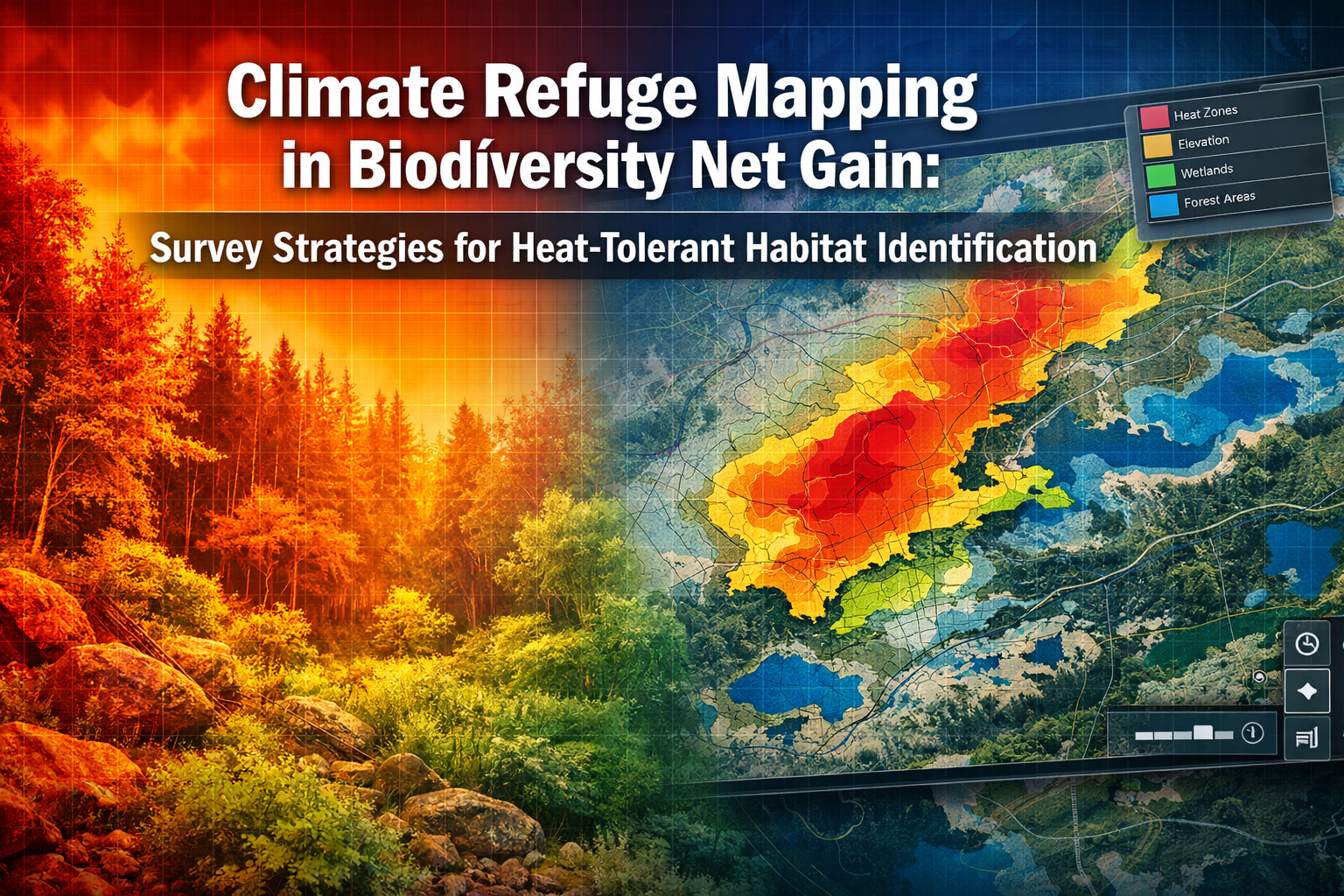
Recent research reveals a stark reality: approximately 13% of globally important biodiversity-rich land overlaps with areas designated for carbon dioxide removal projects, creating unprecedented conflicts between climate mitigation and habitat preservation [1]. As temperatures continue rising in 2026, identifying climate refugia—those critical pockets where species can persist despite warming—has become…
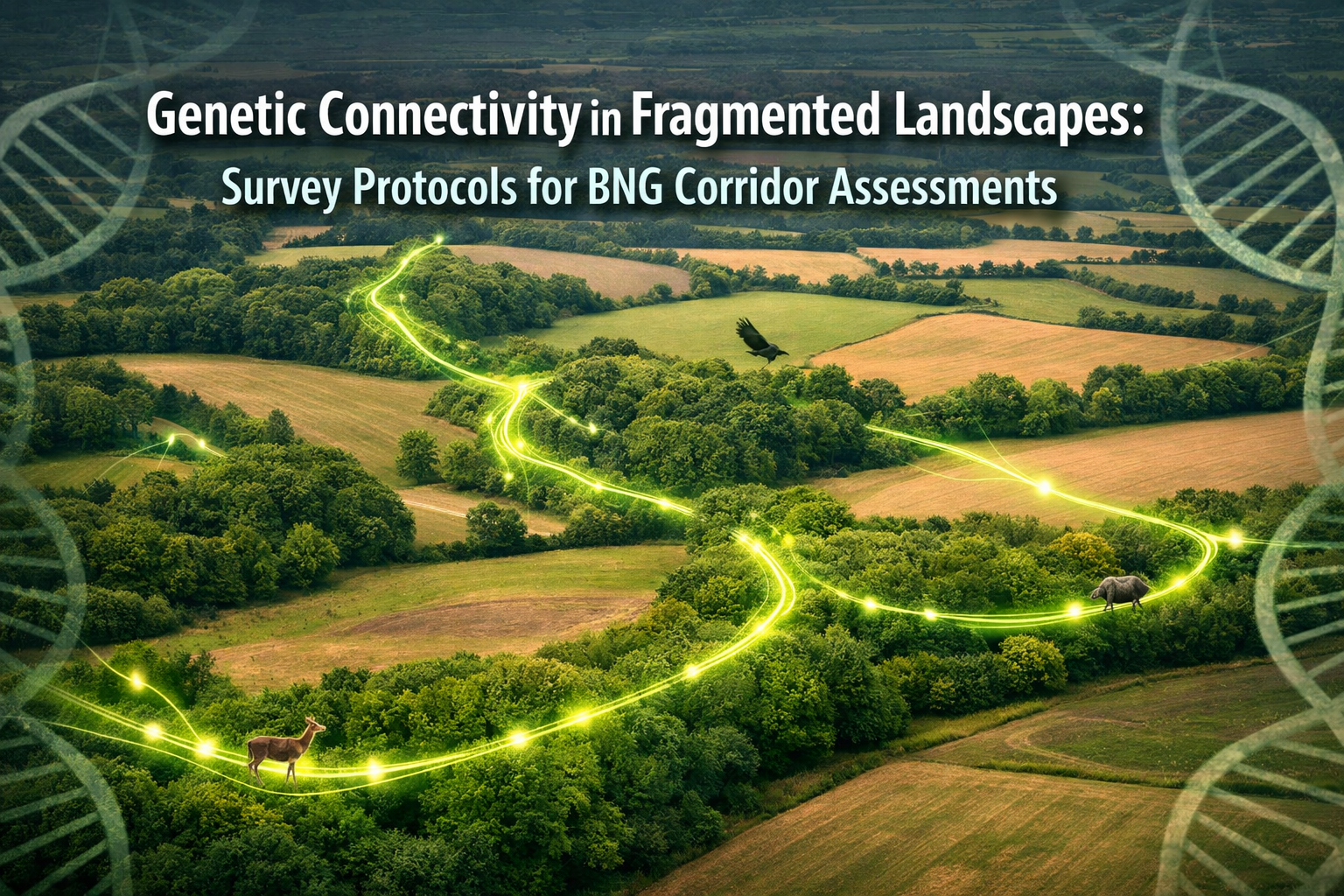
Landscape fragmentation now affects over 70% of remaining forests worldwide, creating isolated habitat patches that threaten long-term population viability for countless species. As urbanization accelerates across England in 2026, Genetic Connectivity in Fragmented Landscapes: Survey Protocols for BNG Corridor Assessments have emerged as essential tools for ecologists designing wildlife corridors…
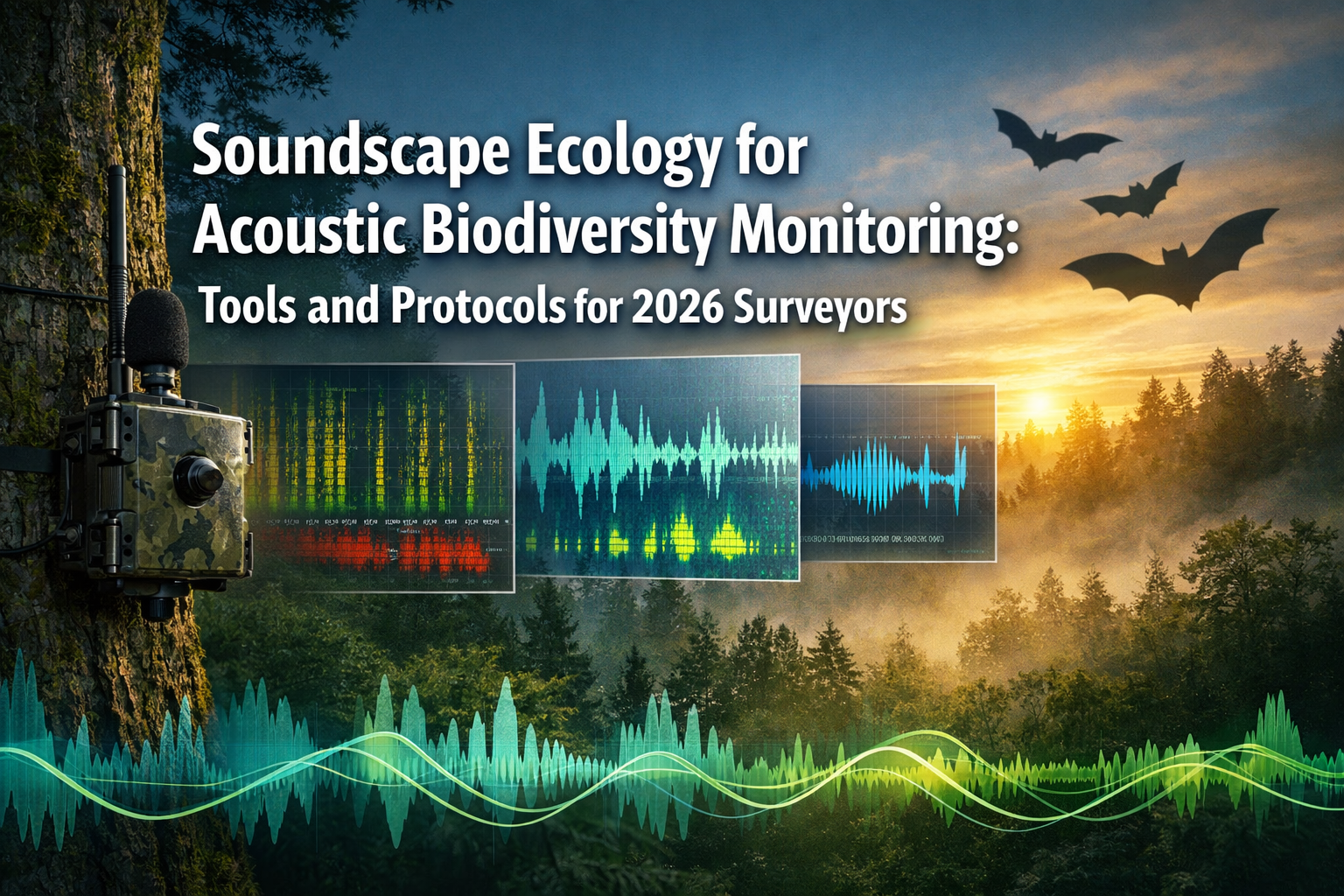
A single bat species can emit over 200 echolocation calls per minute while hunting—yet traditional visual surveys miss 90% of nocturnal wildlife activity. This gap between what exists in nature and what surveyors document has driven the rapid adoption of Soundscape Ecology for Acoustic Biodiversity Monitoring: Tools and Protocols for…
{"cover":"Professional landscape format (1536×1024) hero image with bold text overlay 'Hydrological Restoration and Aquatic Biodiversity: Survey Protocols for Wetland and Freshwater Net Gain Projects' in extra large 72pt white sans-serif font with dark blue shadow and semi-transparent overlay box, positioned in upper third. Background shows pristine restored wetland ecosystem with…
Between 28-61% of global crop systems currently experience yield limitations due to insufficient pollinator visitation[1]. This staggering statistic reveals a critical vulnerability in our food production systems—one that agricultural lands are uniquely positioned to address. The intersection of Pollinator Decline and Crop Dependency: Survey Strategies for Agricultural Biodiversity Net Gain…
{"cover":"Professional landscape format (1536×1024) hero image featuring bold text overlay 'Tropical Deforestation and Carbon Reversal: What Biodiversity Surveyors Need to Know About Africa's Shifting Ecosystems' in extra large 72pt white sans-serif font with dark shadow and semi-transparent overlay box, positioned in upper third. Background shows dramatic split composition: left side…
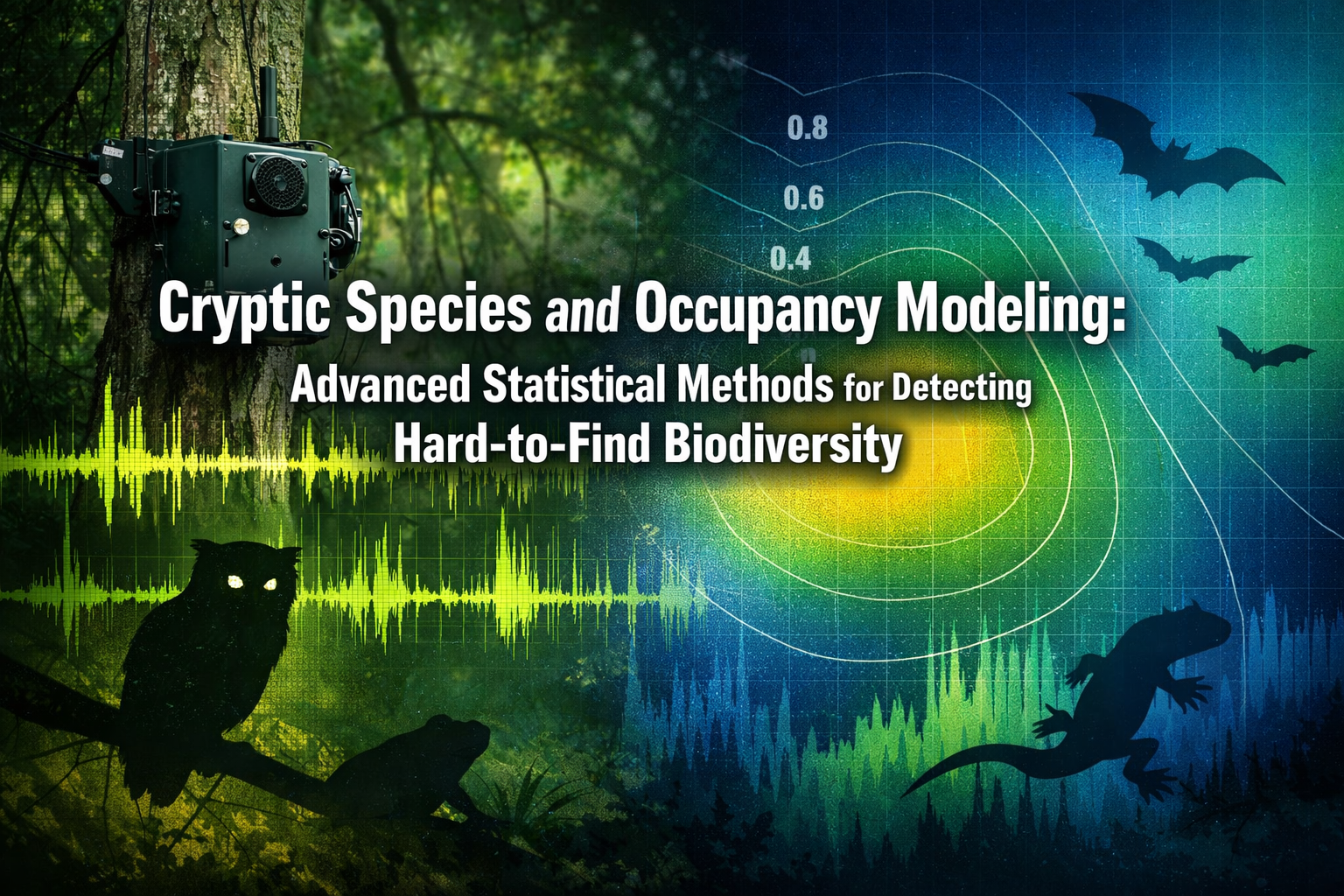
More than 40% of species present in typical ecological surveys go undetected during standard field assessments. This staggering reality means that conservation decisions, biodiversity baselines, and environmental impact assessments often rest on incomplete data. Cryptic Species and Occupancy Modeling: Advanced Statistical Methods for Detecting Hard-to-Find Biodiversity offers a powerful solution…
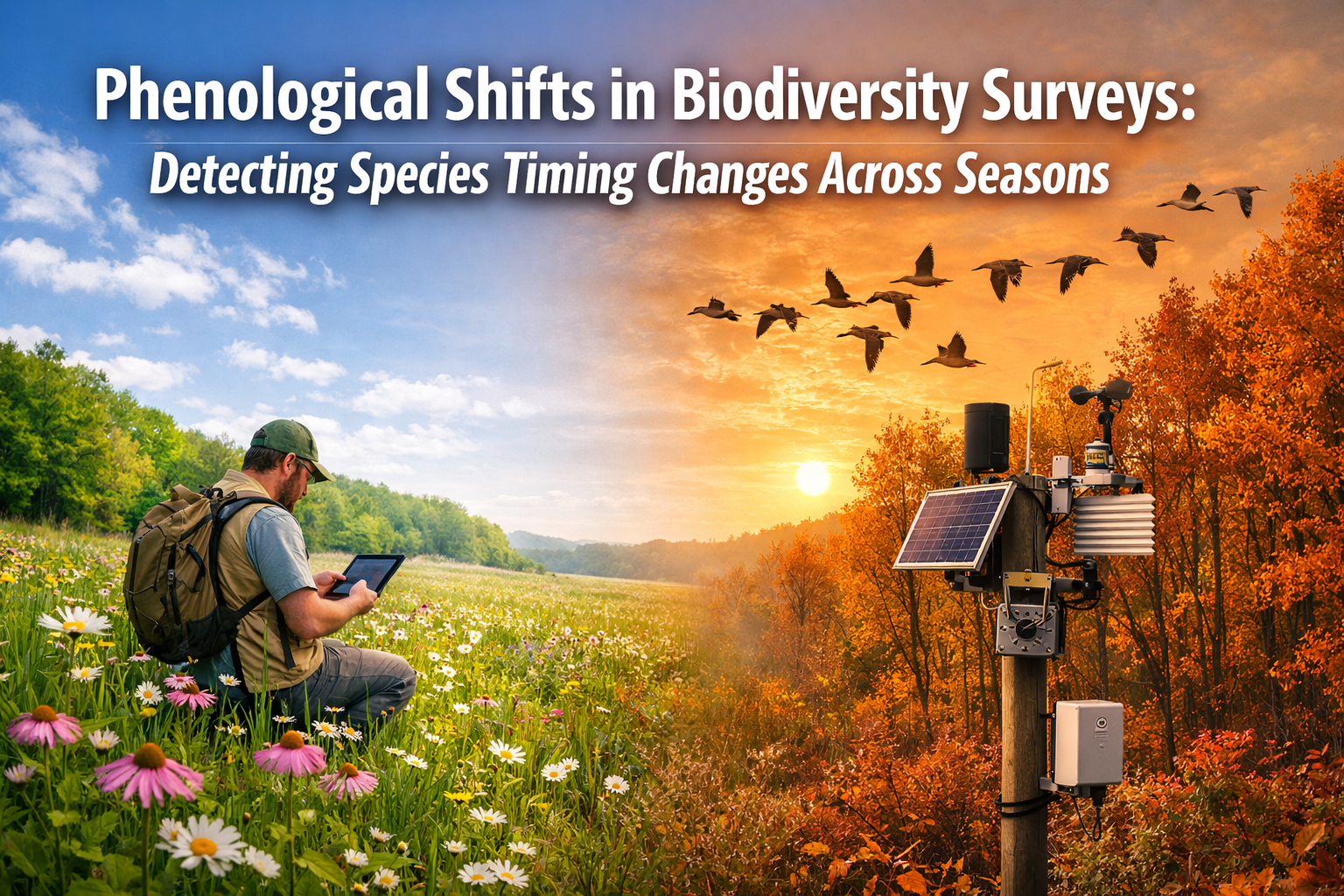
Climate change is rewriting nature's calendar at unprecedented speed. Recent research reveals that Mediterranean coral spawning now occurs two weeks earlier when spring temperatures rise by just 2°C—a shift that reduces reproductive success by measurable margins[1]. This acceleration of seasonal biological events, known as phenological shifts, is forcing biodiversity professionals…
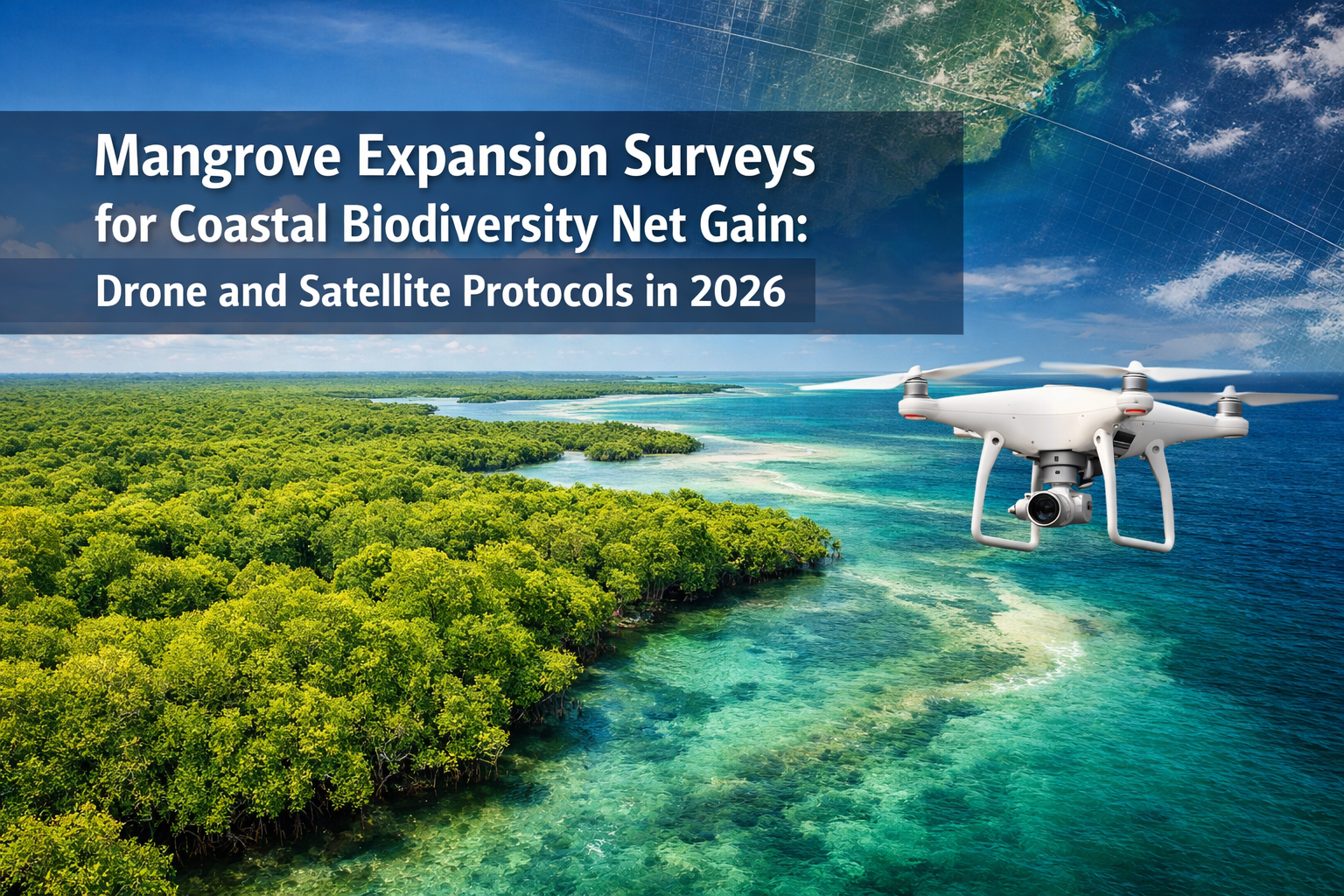
Mangrove forests are expanding northward along Atlantic coastlines at unprecedented rates, with climate modeling projecting significant range shifts over the coming decades[4]. This migration presents both challenges and opportunities for coastal biodiversity net gain (BNG) strategies, requiring innovative survey protocols that combine cutting-edge drone technology with satellite monitoring to accurately…
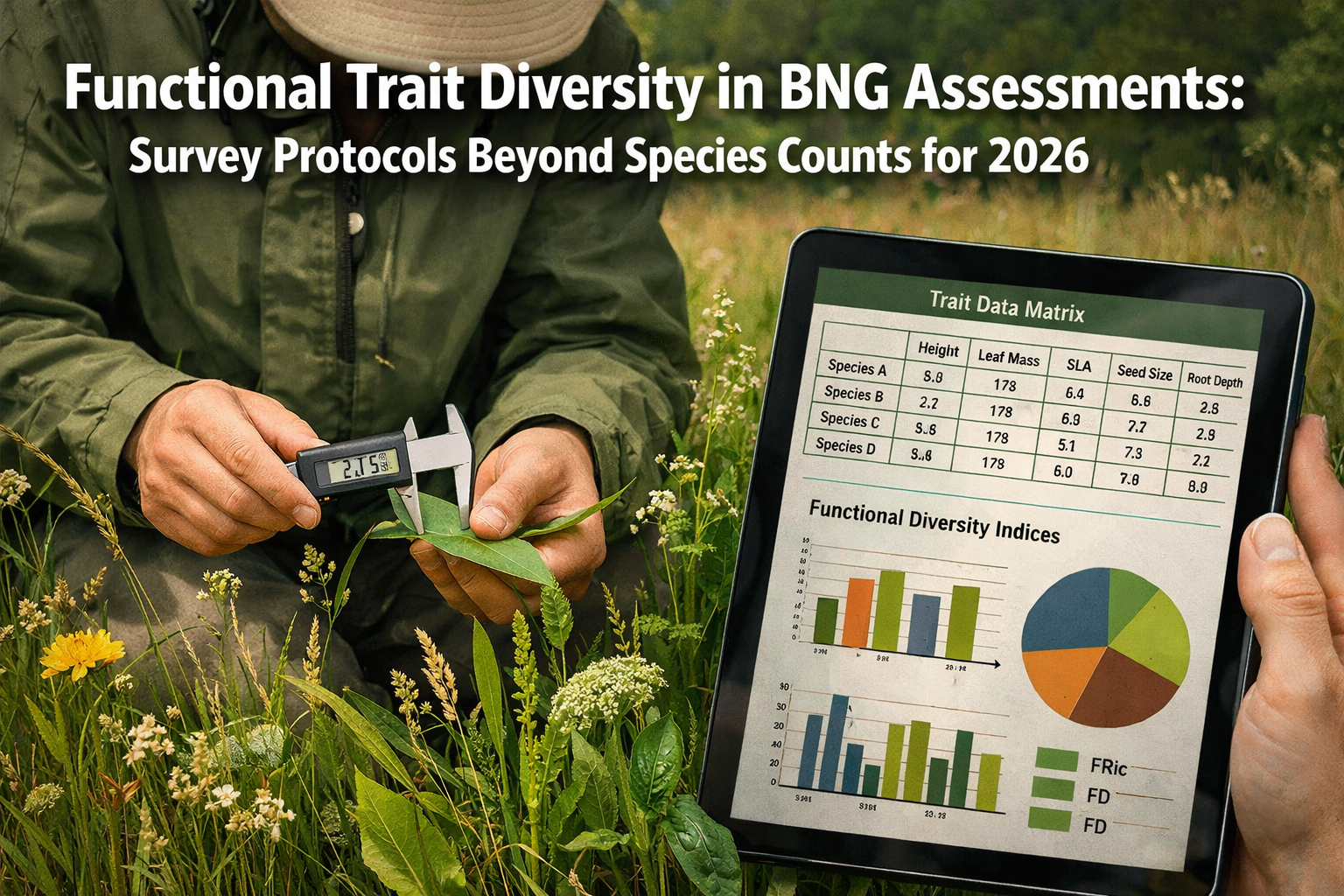
Recent studies reveal a striking finding: two grassland sites with identical species counts can differ by 300% in ecosystem functioning. This disparity stems from differences in functional trait diversity—the physical and physiological characteristics that determine how organisms interact with their environment. As UK Biodiversity Net Gain (BNG) regulations mature in…
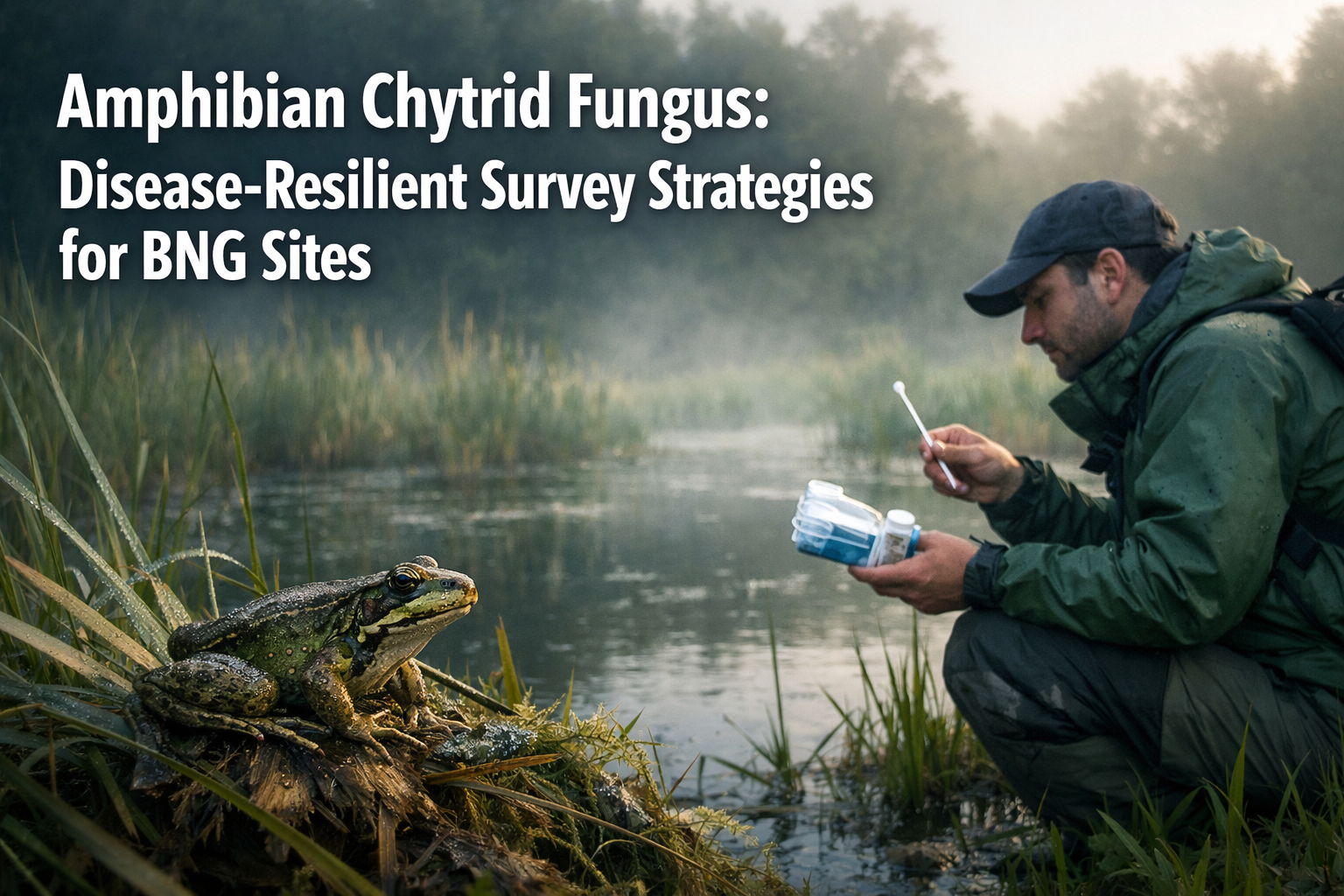
Eighty percent of amphibian extinctions since the 1980s share a single devastating cause: the chytrid fungus Batrachochytrium dendrobatidis (Bd)[3]. As Biodiversity Net Gain (BNG) requirements reshape how developers and landowners approach habitat restoration in 2026, this microscopic pathogen presents an invisible threat to long-term ecological success. Restored wetlands designed to…
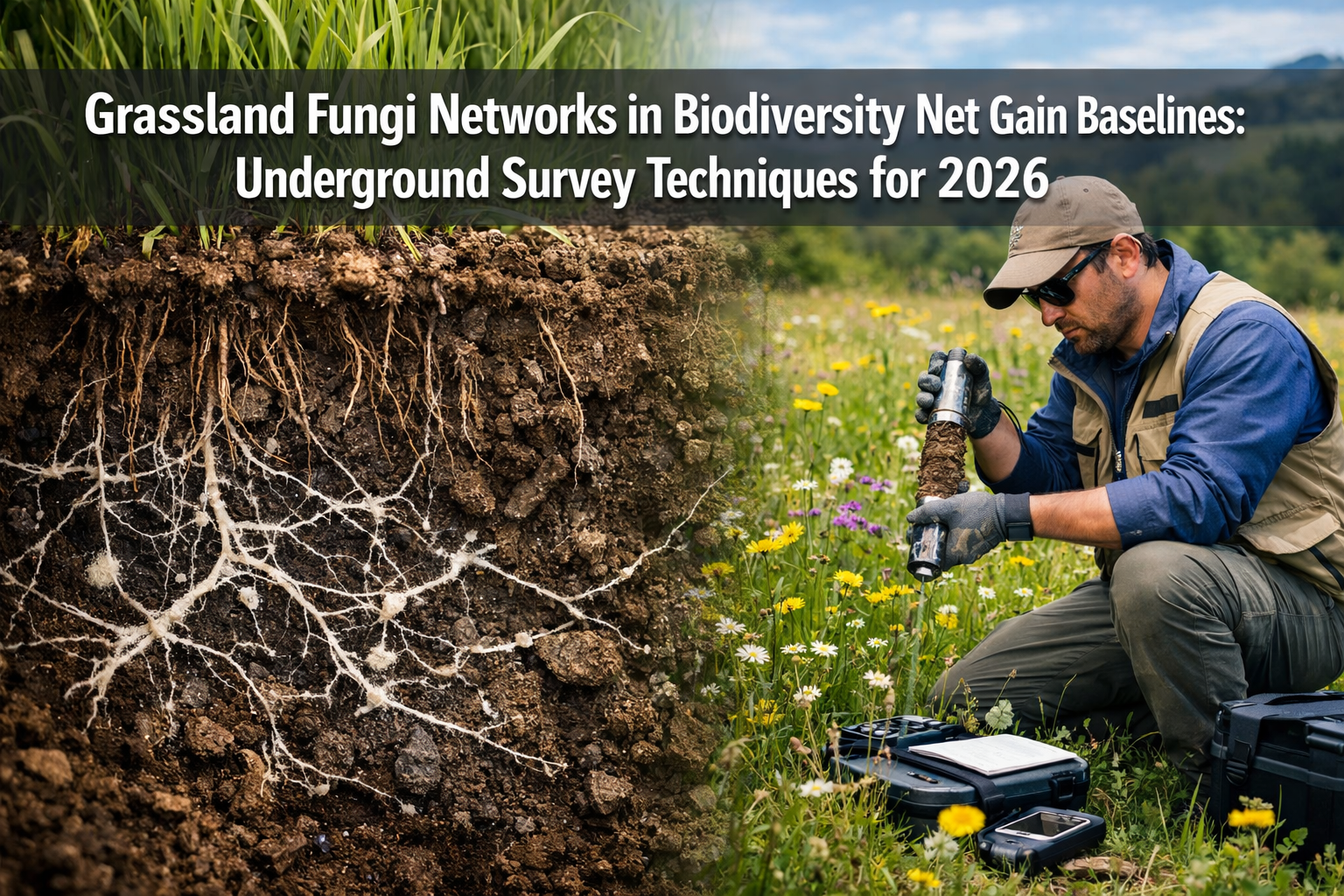
Below the visible surface of every grassland lies an invisible ecosystem worth billions—mycorrhizal fungi networks that connect plant roots across entire meadows, transferring nutrients and information through microscopic highways. Yet current Biodiversity Net Gain (BNG) assessments routinely overlook these underground architects, potentially undermining the accuracy of baseline calculations and the…