

Ocean acidity has increased 26% over the past 250 years, with pH dropping from a global average of 8.2 to 8.1[1]. This seemingly minor shift represents a chemical transformation occurring at approximately 10 times faster than any point in the last 300 million years[2]. For marine surveyors conducting Biodiversity Net Gain (BNG) assessments in 2026, this accelerating change demands urgent protocol updates. The calcifying species that form the foundation of marine habitats—shellfish, corals, and plankton—face unprecedented threats that directly impact the accuracy and long-term viability of BNG calculations. Understanding Ocean Acidification Impacts on BNG Marine Surveys: Protocols for Shellfish and Coral Habitat Assessments in 2026 has become essential for developers, planners, and ecologists working in coastal and marine environments.
Key Takeaways
- Ocean acidification has reduced shell thickness by up to 76% in modern specimens compared to historical samples, fundamentally altering baseline habitat quality assessments
- Updated pH monitoring and calcification rate protocols are now mandatory for accurate BNG marine surveys to account for ongoing chemical changes in ocean waters
- Early life stages of shellfish are most vulnerable to acidification effects, requiring specific survey timing and juvenile habitat protection measures
- Multiple stressor interactions between acidification, warming, and pollution compound impacts, necessitating integrated assessment approaches
- Economic losses from coral reef decline alone could reach $870 billion annually by 2100, making accurate marine BNG assessments critical for coastal development planning
Understanding Ocean Acidification and Its Marine Impacts
Ocean acidification occurs when atmospheric carbon dioxide dissolves into seawater, forming carbonic acid and lowering ocean pH levels. This process fundamentally alters the chemistry of marine environments, with profound consequences for calcifying organisms that form the structural basis of many marine habitats.
The Chemistry Behind the Crisis
The ocean absorbs approximately 30% of human-produced carbon dioxide emissions. When CO₂ dissolves in seawater, it undergoes chemical reactions that reduce the availability of carbonate ions—the essential building blocks that shellfish, corals, and many plankton species need to construct their shells and skeletons[1].
Key chemical changes include:
- 📉 Decreased pH levels (more acidic conditions)
- 🔬 Reduced carbonate ion concentration
- ⚠️ Undersaturation of aragonite and calcite minerals
- 🌊 Altered ocean chemistry affecting biological processes
By the end of the century, scientists estimate an additional pH drop of 0.2–0.3 units, intensifying impacts on marine calcifiers[3]. For BNG assessments, this trajectory means that baseline habitat conditions established today may not reflect future ecosystem capacity.
Documented Impacts on Calcifying Species
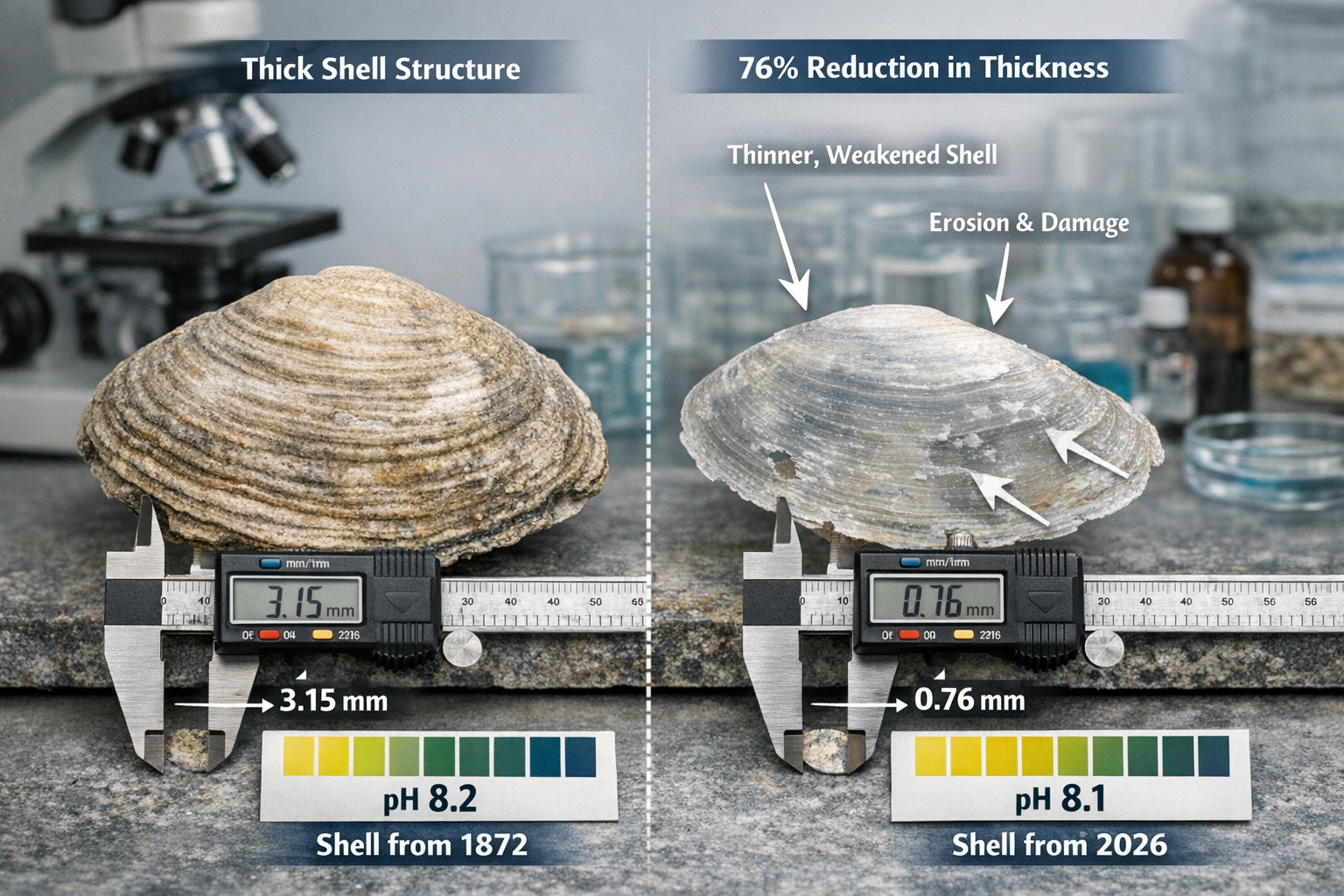
Historical shell comparisons provide stark evidence of acidification impacts. Modern specimens are up to 76% thinner than shells collected in 1872-76, with ocean acidification identified as the primary cause[3]. This dramatic reduction in shell integrity affects:
- Structural habitat quality for species dependent on shellfish beds
- Predator protection for juvenile organisms
- Reproductive success across multiple life stages
- Long-term population viability of commercially important species
Early life stages of shelled mollusks (gastropods and bivalves) are the most susceptible to ocean acidification effects[4]. Growth, shell production, and survival of both juvenile and adult mollusks are adversely affected, creating compounding challenges for habitat restoration and BNG delivery.
Updated Protocols for Ocean Acidification Impacts on BNG Marine Surveys
Traditional marine surveys focused primarily on species counts, habitat extent, and physical characteristics. However, the Ocean Acidification Impacts on BNG Marine Surveys: Protocols for Shellfish and Coral Habitat Assessments in 2026 require integration of water chemistry monitoring and calcification rate assessments to accurately baseline current conditions and project future habitat quality.
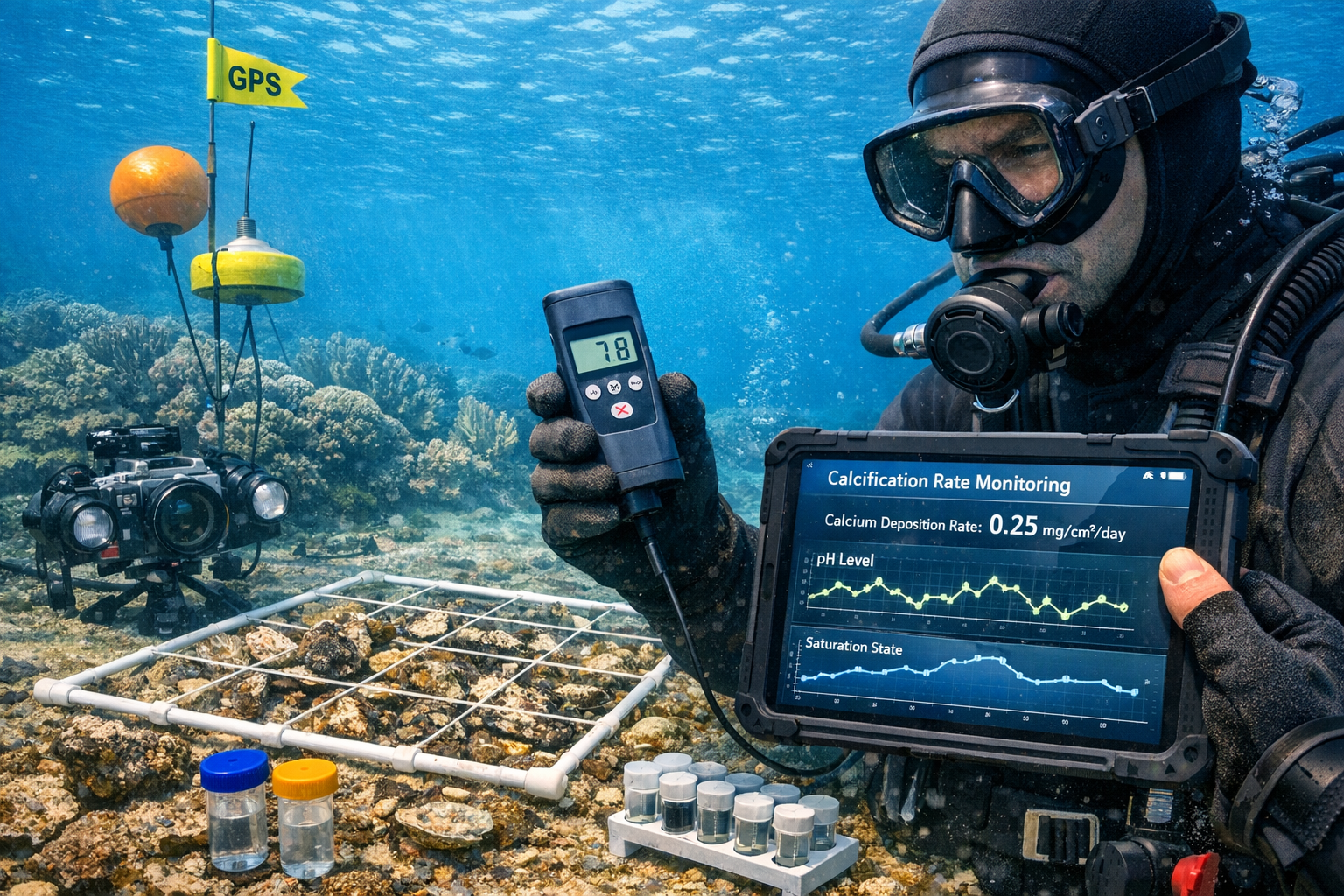
Essential pH Monitoring Protocols
Accurate pH monitoring forms the foundation of acidification-aware BNG assessments. Surveyors must now incorporate the following protocols:
Sampling Frequency and Timing:
- ✅ Minimum quarterly sampling across all seasons
- ✅ Additional sampling during upwelling events
- ✅ Continuous monitoring for high-value habitats
- ✅ Pre-dawn and afternoon measurements to capture daily variation
Measurement Standards:
- Use calibrated pH sensors with ±0.01 unit accuracy
- Record temperature, salinity, and dissolved oxygen simultaneously
- Document tidal stage and recent weather conditions
- Collect samples at multiple depths in stratified waters
Data Integration:
- Compare measurements against regional baseline datasets
- Calculate deviation from pre-industrial pH levels (8.2)
- Project future conditions using IPCC scenarios
- Integrate findings into biodiversity impact assessment frameworks
Calcification Rate Assessment Methods
Beyond pH measurements, direct assessment of calcification rates provides critical information about habitat functionality and resilience. Modern protocols include:
In Situ Calcification Monitoring:
- Deploy standardized substrate plates for settlement studies
- Measure shell growth rates in sentinel species populations
- Assess skeletal density in coral specimens
- Document recruitment success in shellfish beds
Laboratory Analysis:
- Shell thickness measurements using digital calipers
- Microstructure analysis via scanning electron microscopy
- Comparative analysis with historical specimens
- Strength testing for structural integrity assessment
Population-Level Indicators:
- Age-class distribution analysis
- Reproductive output quantification
- Juvenile survival rate monitoring
- Growth rate comparison across cohorts
These enhanced protocols align with biodiversity net gain assessment requirements while addressing the specific challenges posed by ocean acidification.
Shellfish Habitat Assessment Protocols for 2026
Shellfish beds provide critical ecosystem services including water filtration, habitat structure, and commercial value. The Ocean Acidification Impacts on BNG Marine Surveys: Protocols for Shellfish and Coral Habitat Assessments in 2026 recognize that traditional abundance surveys no longer capture the full picture of habitat quality under changing ocean chemistry.
Baseline Condition Assessment
Physical Habitat Characterization:
- Map shellfish bed extent using GPS and sonar
- Document substrate composition and grain size
- Measure water depth and current velocity
- Assess proximity to freshwater inputs and pollution sources
Chemical Environment Documentation:
- Establish pH baseline across the habitat
- Measure carbonate saturation state (Ω)
- Document seasonal variation patterns
- Identify acidification hotspots within the survey area
Biological Community Assessment:
- Conduct quadrat sampling for density estimates
- Measure size-frequency distributions
- Document species composition and diversity
- Assess predator and competitor populations
Vulnerability and Resilience Indicators
Not all shellfish populations respond equally to acidification stress. Surveyors must now evaluate:
Population Vulnerability Factors:
- 🦪 Species-specific sensitivity to pH changes
- 📊 Genetic diversity within populations
- 🌡️ Exposure to multiple stressors (temperature, pollution)
- 🔄 Connectivity to source populations for recruitment
Resilience Indicators:
- Presence of naturally acid-tolerant genotypes
- Refugia availability during extreme events
- Recruitment success in recent years
- Recovery capacity following disturbance events
This nuanced approach ensures that biodiversity net gain reports accurately reflect habitat condition and future viability under projected acidification scenarios.
Juvenile Habitat Protection Priorities
Since early life stages of shelled mollusks are most susceptible to ocean acidification effects[4], BNG protocols must prioritize juvenile habitat protection:
| Life Stage | Vulnerability Level | Survey Priority | Protection Measures |
|---|---|---|---|
| Larval | Very High | Critical | Identify settlement areas with optimal chemistry |
| Juvenile (0-1 year) | High | Essential | Map nursery habitats, establish buffer zones |
| Sub-adult | Moderate | Important | Monitor growth rates, assess recruitment success |
| Adult | Lower | Standard | Maintain spawning stock, ensure genetic diversity |
Developers working in marine environments should consult guidance on achieving biodiversity net gain that incorporates these life-stage-specific considerations.
Coral Habitat Assessment Under Acidification Stress
Coral reefs and temperate coral communities face dual threats from ocean acidification and warming. Ocean acidification is estimated to cause $870 billion in lost annual revenue from coral reef decline by 2100[3], representing significant economic impacts beyond ecological damage.
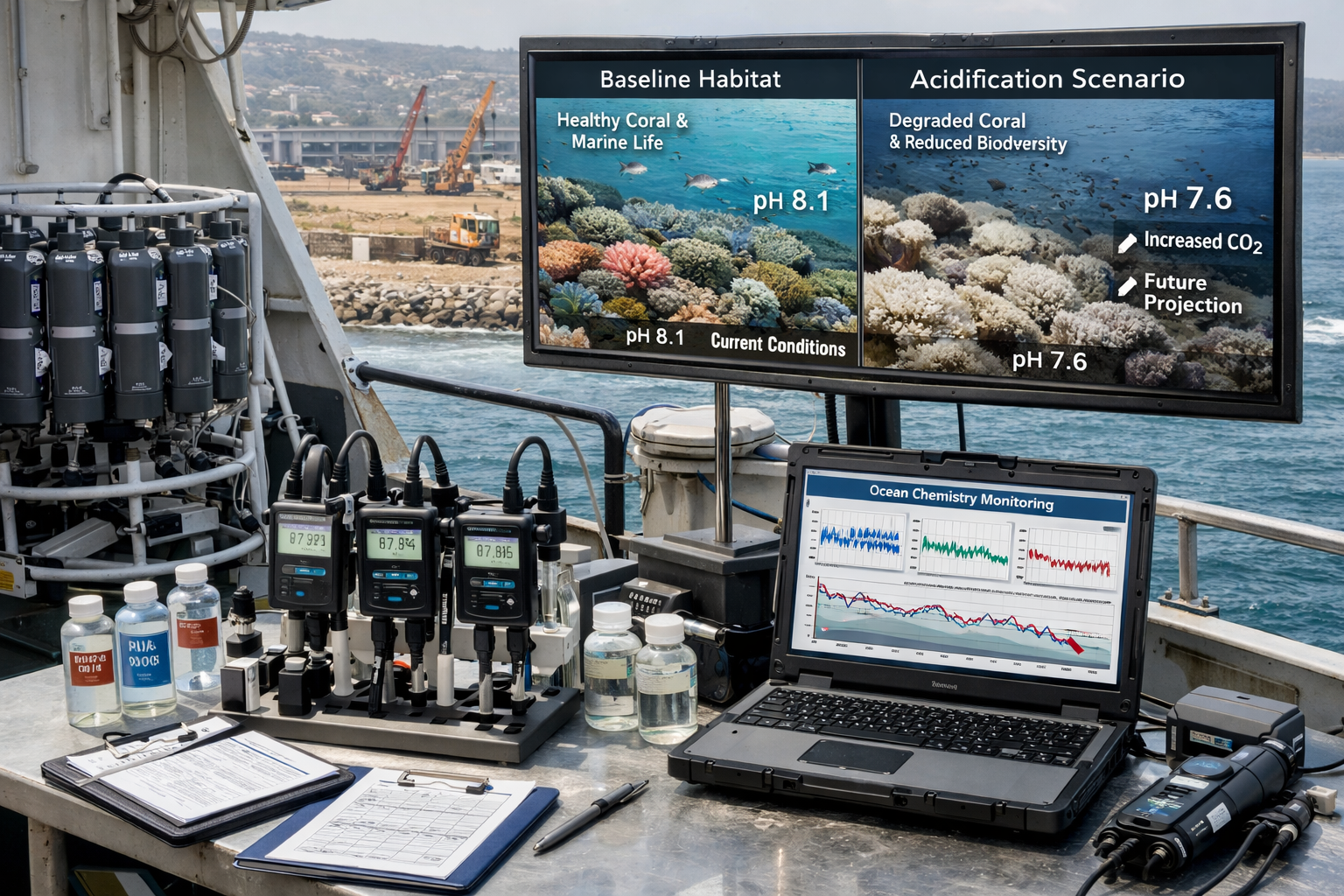
Coral Health Metrics for BNG Surveys
Traditional Metrics:
- Coral cover percentage
- Species richness and diversity
- Colony size distribution
- Bleaching prevalence
Acidification-Specific Metrics:
- Skeletal density measurements
- Calcification rate quantification
- Dissolution evidence documentation
- Recruitment tile analysis
Enhanced Assessment Protocols:
- Skeletal Density Analysis – Core samples from representative colonies to measure calcium carbonate density
- Growth Rate Monitoring – Annual band measurements in long-lived species
- Recruitment Success – Settlement plate deployment for 12-month periods
- Dissolution Surveys – Documentation of skeletal erosion in dead coral frameworks
Regional Considerations and Data Gaps
Tropical and subtropical regions face the highest risk for significant decline in ocean-dependent revenue, with particular data gaps in the Indian Ocean and other tropical waters despite high biodiversity and dependent populations[4][5]. For UK marine surveys, cold-water coral habitats require specific attention:
UK-Specific Considerations:
- Focus on Lophelia pertusa and other cold-water species
- Document carbonate mound structures
- Assess associated biodiversity in coral frameworks
- Monitor aragonite saturation in deeper waters
Data Collection Priorities:
- Establish long-term monitoring stations
- Collaborate with regional research institutions
- Contribute data to national marine monitoring networks
- Integrate findings with BNG off-site delivery planning
Coral Restoration and BNG Delivery
When coral habitats are impacted by development, BNG delivery must account for acidification effects on restoration success:
Restoration Site Selection:
- ✅ Prioritize areas with favorable carbonate chemistry
- ✅ Identify natural refugia with higher pH
- ✅ Consider future acidification projections
- ✅ Ensure connectivity to source populations
Species Selection:
- Choose locally adapted genotypes
- Prioritize species with demonstrated acid tolerance
- Maintain genetic diversity in restoration stocks
- Consider assisted evolution approaches where appropriate
Multiple Stressor Interactions and Integrated Assessments
Ocean acidification does not occur in isolation. Multiple stressors compound acidification effects: ocean acidification combined with warming, deoxygenation, eutrophication, and pollution intensify detrimental ecosystem impacts[4].
Synergistic Threat Assessment
Temperature-Acidification Interactions:
- Warming reduces oxygen solubility while acidification increases metabolic demand
- Combined stressors exceed individual effect predictions
- Thermal stress reduces acid tolerance in many species
- Range shifts complicate baseline establishment
Pollution-Acidification Synergies:
- Nutrient pollution exacerbates local acidification
- Heavy metals become more bioavailable at lower pH
- Microplastic ingestion compounds physiological stress
- Combined effects reduce reproductive success
Assessment Integration Requirements:
- Document all stressor exposures during surveys
- Quantify cumulative impact potential
- Model interactive effects on habitat quality
- Adjust BNG calculations for multi-stressor scenarios
Understanding why biodiversity net gain is important becomes even more critical when considering these complex interactions.
Ecosystem-Level Considerations
Fish populations show detrimental changes in olfactory systems, spawning behavior, and escape response, disrupting critical ecosystem functions[3]. The nutritional value of phytoplankton—the marine food chain foundation—may be compromised, potentially limiting zooplankton development and reproduction across higher trophic levels[4].
Trophic Cascade Assessments:
- Document primary producer community composition
- Assess zooplankton abundance and diversity
- Monitor fish populations and behavior
- Evaluate predator-prey relationship stability
Food Web Integrity Indicators:
- 🔬 Phytoplankton nutritional quality analysis
- 🦐 Zooplankton reproductive success rates
- 🐟 Fish recruitment and growth patterns
- 🦭 Top predator population trends
Implementation Framework for Developers and Planners
Developers and planners working in marine environments must now integrate acidification considerations into project planning from the earliest stages. This aligns with broader biodiversity net gain strategies required under UK legislation.
Pre-Development Survey Requirements
Minimum Survey Standards:
- Baseline pH and carbonate chemistry assessment (minimum 12 months)
- Calcifying species inventory and condition assessment
- Habitat mapping with acidification vulnerability classification
- Future projection modeling under climate scenarios
Timeline Considerations:
- Begin surveys at least 18 months before planning submission
- Include full seasonal cycle coverage
- Allow time for laboratory analysis of specimens
- Budget for specialized equipment and expertise
Specialist Consultation:
- Engage marine chemists for water quality analysis
- Consult with shellfish and coral specialists
- Coordinate with regional monitoring programs
- Review findings with statutory consultees
BNG Calculation Adjustments
Traditional BNG metrics require modification to account for acidification impacts:
Habitat Condition Scoring:
- Reduce condition scores for habitats in acidification hotspots
- Apply temporal discounting for future acidification risk
- Adjust distinctiveness ratings based on species vulnerability
- Incorporate resilience indicators into scoring
Gain Delivery Verification:
- Require ongoing pH monitoring in compensation sites
- Document calcification rates in restored habitats
- Demonstrate recruitment success in target species
- Verify habitat functionality under current chemistry
Developers should review guidance on creating biodiversity plans that incorporate these marine-specific requirements.
Mitigation Hierarchy Application
The mitigation hierarchy takes on additional complexity in marine environments affected by acidification:
Avoidance:
- Site projects away from critical calcifier habitats
- Avoid impacts during vulnerable life stages
- Protect natural pH refugia
- Maintain water quality in surrounding areas
Minimization:
- Reduce construction duration in marine environments
- Implement best practice sediment control
- Avoid nutrient and pollutant inputs
- Time activities to avoid spawning seasons
Compensation:
- Create or restore habitats in areas with favorable chemistry
- Enhance connectivity to source populations
- Protect refugia areas from other stressors
- Support regional monitoring and research programs
Policy Integration and Future Directions
Policy and governance integration for ocean acidification remains inadequate, with calls for integrating OA into national marine policies and creating dedicated monitoring networks in underrepresented regions[5].
Current UK Policy Landscape
The UK's BNG legislation, which became mandatory for most developments in 2024, is still evolving to fully incorporate marine considerations. Key policy developments for 2026 include:
Legislative Framework:
- Extension of BNG requirements to marine environments
- Development of marine habitat condition assessment protocols
- Integration with Marine Conservation Zone management
- Alignment with UK Marine Strategy
Monitoring Requirements:
- Establishment of national marine acidification monitoring network
- Standardization of pH and carbonate chemistry measurements
- Long-term data archiving and accessibility
- Integration with existing marine monitoring programs
Best Practice Recommendations
For Developers:
- Engage marine specialists early in project planning
- Budget adequately for comprehensive marine surveys
- Consider off-site BNG delivery options where on-site delivery is compromised by acidification
- Maintain adaptive management flexibility in compensation plans
For Surveyors:
- Invest in pH monitoring equipment and training
- Establish relationships with marine chemistry laboratories
- Participate in regional monitoring networks
- Stay current with evolving protocols and guidance
For Planners:
- Require acidification assessments for marine developments
- Ensure adequate survey scope and duration
- Verify specialist qualifications and experience
- Integrate findings into decision-making frameworks
Conclusion
The Ocean Acidification Impacts on BNG Marine Surveys: Protocols for Shellfish and Coral Habitat Assessments in 2026 represent a necessary evolution in marine biodiversity assessment. With ocean acidity increasing 26% over the past 250 years and shell thickness declining up to 76% in affected populations, traditional survey methods no longer capture the full picture of marine habitat quality and future viability.
Surveyors must now integrate pH monitoring, calcification rate assessments, and vulnerability analysis into standard protocols. Developers and planners face the challenge of accounting for ongoing chemical changes that affect habitat baseline conditions and compensation site success. The economic stakes are substantial, with potential losses of $870 billion annually from coral reef decline alone by 2100.
Actionable Next Steps
For Immediate Implementation:
- Upgrade Survey Equipment – Invest in calibrated pH sensors and water chemistry testing capabilities
- Update Assessment Protocols – Incorporate calcification rate monitoring and vulnerability assessments into standard surveys
- Engage Specialists – Consult with marine chemists and acidification experts for project-specific guidance
- Review Existing Assessments – Evaluate whether previous marine BNG assessments adequately addressed acidification impacts
- Plan for Adaptation – Build flexibility into compensation site management to respond to changing ocean chemistry
For Long-Term Success:
- Contribute data to regional monitoring networks to improve understanding of local acidification patterns
- Support research into acid-tolerant genotypes and restoration approaches
- Advocate for policy integration of acidification considerations in marine planning
- Develop partnerships with research institutions for ongoing technical support
The integration of ocean acidification considerations into BNG marine surveys is not merely a technical refinement—it is essential for ensuring that biodiversity gains are genuine, measurable, and sustainable in the face of rapid environmental change. By adopting these updated protocols in 2026, the marine conservation community can deliver more robust, science-based biodiversity outcomes that account for one of the most significant threats facing ocean ecosystems today.
For comprehensive support with marine BNG assessments and acidification-aware survey protocols, contact biodiversity specialists with expertise in coastal and marine environments.
References
[1] Turning The Tide – https://oceanacidification.noaa.gov/webstory/turning-the-tide/
[2] The Silent Shift How Ocean Acidification And Rising Temperature Affect Marine Organisms – https://news-oceanacidification-icc.org/2026/02/17/the-silent-shift-how-ocean-acidification-and-rising-temperature-affect-marine-organisms/
[3] Ocean Acidification Research – https://oceanfdn.org/ocean-acidification-research/
[4] Ocean Acidification The Silent Threat To Marine Biodiversity – https://news-oceanacidification-icc.org/2026/04/08/ocean-acidification-the-silent-threat-to-marine-biodiversity/
[5] California Coast And Ocean Report 2026 – https://opc.ca.gov/wp-content/uploads/2026/03/California-Coast-and-Ocean-Report-2026.pdf