

Microbiomes in major estuarine systems demonstrate metabolic flexibility across more than 50 different energy pathways—yet this hidden functional insurance policy remains largely unmeasured in Biodiversity Net Gain (BNG) assessments[3]. As development projects accelerate across England in 2026, ecologists face mounting pressure to establish robust ecological baselines that account for invisible but critical microbial communities. Understanding Functional Redundancy in Microbial Communities for BNG Baselines: Survey Techniques for Ecologists Facing 2026 Disruptions has become essential for predicting how ecosystems will respond to agricultural chemicals, antibiotics, and climate stressors that threaten functional stability.

The challenge extends beyond traditional biodiversity metrics. While biodiversity impact assessments typically focus on visible flora and fauna, microbial functional redundancy—the capacity of multiple microbial taxa to perform similar ecological roles—determines whether soil ecosystems maintain critical functions like nutrient cycling, carbon sequestration, and pollutant degradation when environmental conditions shift.
Key Takeaways
- Functional redundancy buffers ecosystems against environmental disruptions by maintaining stability through taxa with overlapping roles but different environmental tolerances[1]
- Seasonal vulnerability patterns reveal that low-redundancy communities (particularly in spring) face higher risks of functional collapse despite greater taxonomic diversity[1]
- Paired molecular approaches combining metagenomic potential with metatranscriptomic expression data provide more accurate baseline assessments than DNA surveys alone[3]
- Field protocols integrating eDNA with enzyme activity assays deliver practical, cost-effective methods for quantifying microbial functional capacity in BNG projects
- Environmental stressors including pesticides and antibiotics disproportionately impact low-redundancy communities, making functional assessment critical for long-term habitat resilience
Understanding Functional Redundancy in Microbial Ecosystems
What Makes Microbial Functional Redundancy Critical?
Functional redundancy represents nature's insurance policy—multiple microbial species capable of performing the same ecological function create resilience when environmental conditions change. This concept differs fundamentally from taxonomic diversity, which simply counts species numbers without considering their functional contributions.
Research in Chesapeake and Delaware Bay ecosystems reveals that microbial communities exhibit significant potential to exploit diverse energy sources, from organic carbon substrates to trace gases[3][1]. This metabolic flexibility translates directly to ecosystem stability, particularly relevant for achieving biodiversity net gain targets that depend on long-term habitat functionality.
The Buffering Capacity Mechanism
Functional redundancy buffers ecosystems through a straightforward mechanism: when environmental conditions eliminate one taxon, functionally similar species with better fitness under altered conditions maintain ecosystem services[1]. This buffering becomes critical in 2026 as development sites face:
- 🌡️ Temperature fluctuations from climate change
- 💧 Altered hydrology from construction activities
- 🧪 Chemical inputs including fertilizers and pesticides
- 🏗️ Physical disturbance during site preparation
Stream ecosystem studies demonstrate that despite compositional variations across habitats, functionally analogous species supported by complex microbial networks contribute to resilience and stability against environmental disturbances[2]. This finding validates the importance of assessing functional capacity rather than merely cataloging species presence.
Vulnerability Patterns Across Seasons
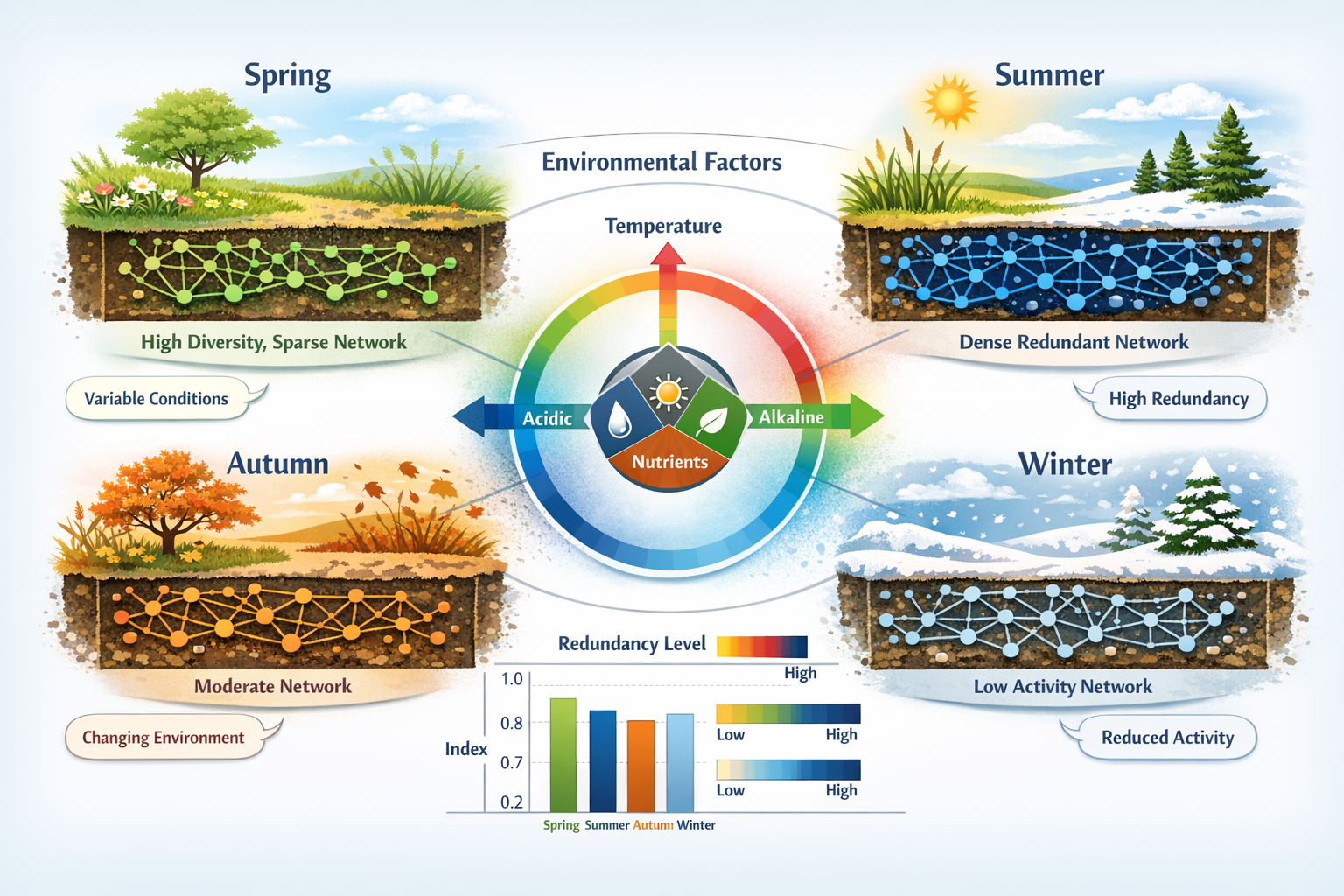
Functional redundancy varies substantially across seasons, lifestyles, and gene functions, structured by environmental parameters including temperature, salinity, and nutrient concentrations[3][1]. Low redundancy communities—such as those typically found in spring—exhibit higher functional diversity but lower functional redundancy, making them more vulnerable to functional or taxonomic losses[1].
This seasonal vulnerability has direct implications for BNG baseline surveys. Conducting assessments during single seasons may dramatically underestimate or overestimate functional resilience depending on sampling timing. For ecologists establishing baselines in 2026, understanding these temporal dynamics proves essential for accurate long-term predictions.
| Season | Functional Redundancy | Functional Diversity | Vulnerability Level |
|---|---|---|---|
| Spring | Low | High | Elevated ⚠️ |
| Summer | High | Moderate | Reduced ✅ |
| Autumn | Moderate | Moderate | Moderate 🔶 |
| Winter | Variable | Low | Context-dependent 🔄 |
Survey Techniques for Functional Redundancy in Microbial Communities for BNG Baselines
Paired Molecular Approaches: DNA and RNA Analysis
The most robust approach for assessing Functional Redundancy in Microbial Communities for BNG Baselines: Survey Techniques for Ecologists Facing 2026 Disruptions combines both metagenomic and metatranscriptomic datasets[3][1]. This paired analytical strategy reveals:
- Metagenomic data (DNA-based): Shows functional potential—which genes are present in the community
- Metatranscriptomic data (RNA-based): Reveals functional expression—which genes are actively being used
Understanding the gap between potential and expression proves critical for predicting actual community response to environmental change. A community may possess genes for pesticide degradation, but if those genes remain unexpressed under baseline conditions, the functional capacity may not activate quickly enough when contamination occurs.
Field-Practical eDNA Protocols
Environmental DNA (eDNA) sampling offers practical advantages for ecologists conducting biodiversity net gain assessments across multiple sites:
Sampling Protocol:
- Collect 5-10 soil cores (0-10cm depth) per habitat type
- Pool samples to capture spatial heterogeneity
- Store at -20°C within 6 hours of collection
- Extract DNA using commercial kits optimized for soil matrices
- Sequence 16S rRNA genes for bacterial/archaeal diversity
- Target functional genes (e.g., nitrogen cycling, carbon metabolism)
Cost Considerations:
Modern high-throughput sequencing has dropped dramatically in price, making comprehensive microbial surveys increasingly feasible for standard BNG projects. Costs typically range from £200-500 per sample for basic community profiling, with functional gene analysis adding £300-600 per sample.
Enzyme Activity Assays for Functional Validation
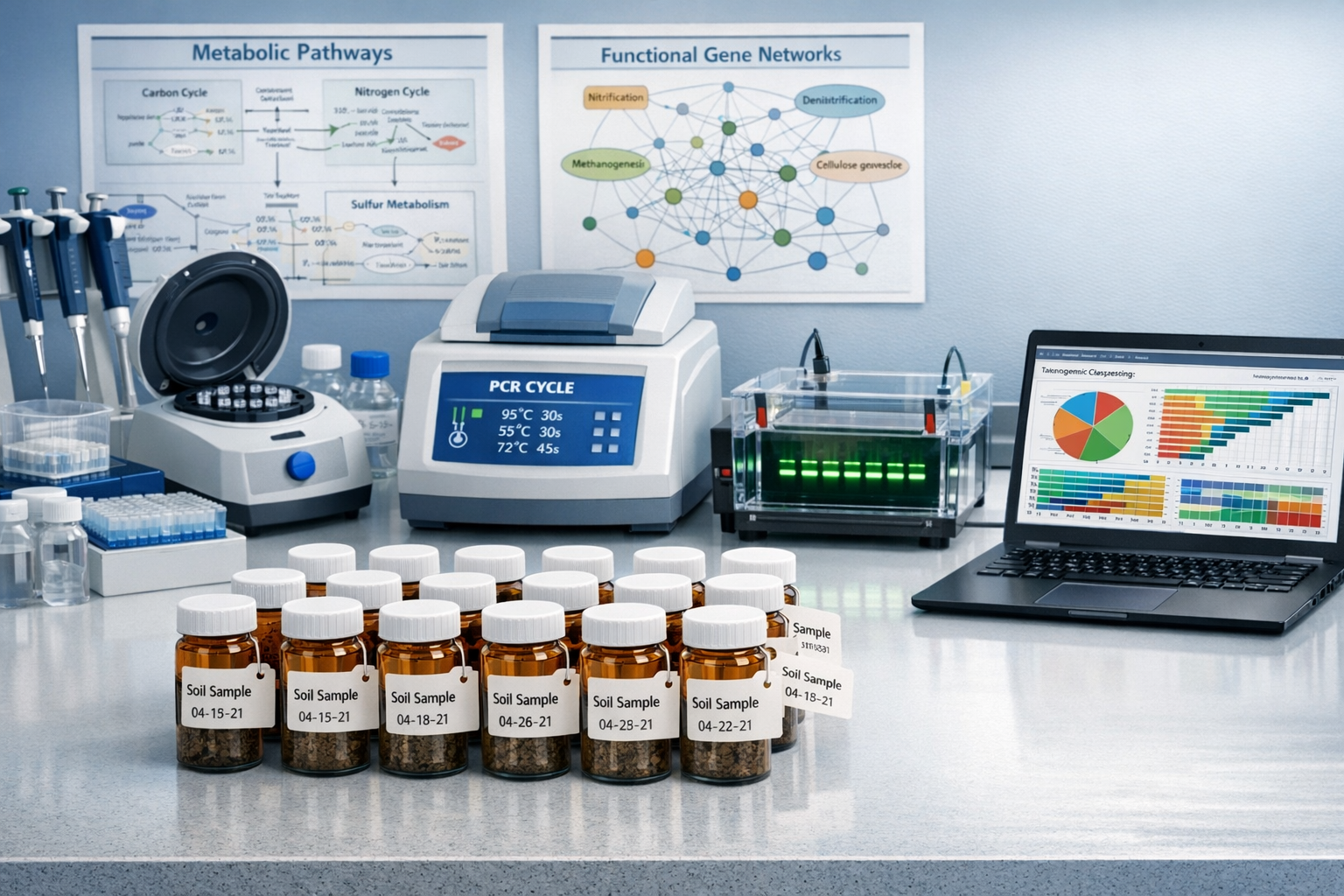
Molecular data gains practical validation through enzyme activity assays that measure actual functional capacity. These biochemical tests quantify rates of critical ecosystem processes:
- Dehydrogenase activity: Overall microbial metabolic activity
- β-glucosidase: Carbon cycling capacity
- Phosphatase: Phosphorus mobilization
- Urease: Nitrogen cycling efficiency
- Phenol oxidase: Organic matter decomposition
These assays provide immediate functional metrics that complement molecular surveys, offering a reality check on whether genetic potential translates to ecosystem function. For developers creating biodiversity plans, this dual approach demonstrates due diligence in baseline characterization.
Quantifying Functional Redundancy Metrics
Multiple metrics exist for quantifying functional redundancy, each with specific applications:
Species-to-Function Ratio: Calculates how many species perform each function. Higher ratios indicate greater redundancy.
Functional Redundancy Index (FRed): Measures the degree to which species share functional traits. Values range from 0 (no redundancy) to 1 (complete redundancy)[1].
Network Analysis: Maps functional interactions among taxa to identify keystone functional groups and vulnerable functional nodes.
Newer analytical frameworks allow estimations across multiple effect traits simultaneously[1], providing comprehensive assessments of ecosystem functional capacity. These quantitative approaches transform subjective ecological assessments into defensible, data-driven baselines suitable for regulatory review.
Addressing 2026 Disruptions: Pesticides, Antibiotics, and Chemical Stressors
The Antibiotic Resistance Challenge
Agricultural intensification continues introducing antibiotics into soil ecosystems through manure applications and veterinary treatments. These compounds disrupt microbial functional redundancy through two mechanisms:
- Direct toxicity: Eliminating sensitive taxa and reducing functional redundancy
- Selection pressure: Favoring resistant taxa that may lack functional diversity
Research demonstrates that interactions among taxa are dynamic—the influence of each taxon on ecosystem functioning changes based on community composition and environmental properties[5]. When antibiotics eliminate functionally redundant taxa, remaining species may lack the metabolic flexibility to maintain ecosystem services.
For BNG projects on former agricultural land, baseline assessments must account for potential antibiotic legacy effects. Functional gene surveys targeting antibiotic resistance genes provide insight into historical exposure and current community structure.
Pesticide Impact on Functional Networks
Pesticides pose particular risks to low-redundancy communities. Herbicides, fungicides, and insecticides designed to target specific organisms often exhibit broader non-target effects on soil microbiomes. The consequences extend beyond simple toxicity:
- Cascade effects: Loss of one functional group impacts dependent groups
- Functional compensation: Remaining taxa may increase activity but lack long-term stability
- Recovery trajectories: Low-redundancy communities recover more slowly from disturbance
Ecologists establishing baselines near agricultural operations should conduct pesticide residue analysis alongside microbial surveys. This integrated approach reveals whether observed functional redundancy patterns reflect intrinsic ecosystem properties or chemical suppression.
Climate Stressors and Temperature Sensitivity
Temperature directly structures functional redundancy patterns, with significant implications for climate-adapted BNG strategies[3][1]. As 2026 brings increasingly variable weather patterns, understanding temperature sensitivity becomes critical for predicting long-term habitat functionality.
Key considerations:
- Mesophilic communities (moderate temperature preference) typically show higher redundancy
- Thermophilic specialists (heat-loving) often exhibit lower redundancy but higher stress tolerance
- Cold-adapted communities demonstrate variable redundancy depending on substrate availability
Baseline surveys should incorporate temperature logging across seasons to correlate functional redundancy patterns with thermal regimes. This data supports predictive modeling of how communities will respond to projected climate scenarios over the 30-year BNG monitoring period.
Integrating Microbial Functional Redundancy into BNG Frameworks
Linking Microbial Function to Habitat Condition Assessments
Current BNG metric calculations focus predominantly on habitat area, distinctiveness, and condition scores. Integrating microbial functional redundancy requires connecting belowground processes to aboveground habitat quality indicators.
Practical integration approaches:
- Condition score adjustments: Incorporate soil health metrics including microbial functional capacity into habitat condition assessments
- Functional diversity units: Develop supplementary metrics that quantify functional redundancy alongside traditional biodiversity units
- Risk weighting: Apply higher scrutiny to habitats with low functional redundancy when calculating biodiversity net gain requirements
The trait-based approach integrating taxonomic abundance data helps predict ecological stability and ecosystem buffering capacity[1], providing scientific justification for incorporating microbial metrics into BNG calculations.
Establishing Robust Baselines for Long-Term Monitoring
BNG commitments extend 30 years, requiring baseline assessments that support meaningful long-term comparisons. For microbial functional redundancy, robust baselines include:
Minimum baseline requirements:
- Multi-season sampling (minimum 2 seasons, preferably 4)
- Spatial replication across habitat heterogeneity
- Both potential (DNA) and expressed (RNA) functional capacity
- Validation through enzyme activity assays
- Environmental parameter correlation (temperature, moisture, pH, nutrients)
Archive protocols:
Preserve DNA/RNA extracts and soil subsamples at -80°C for future re-analysis as methods advance. This forward-thinking approach allows baseline refinement without requiring site re-access.
Cost-Benefit Analysis for Developers
Developers evaluating whether to include microbial functional redundancy in BNG assessments face legitimate cost-benefit questions. The investment breaks down as follows:
Costs:
- Field sampling: £500-1,000 per site visit
- Laboratory analysis: £1,500-3,000 per sampling event
- Data analysis and reporting: £2,000-4,000
- Total baseline establishment: £4,000-8,000
Benefits:
- ✅ Reduced risk of functional habitat failure over 30-year monitoring period
- ✅ Earlier detection of ecological degradation enabling corrective action
- ✅ Stronger regulatory compliance documentation
- ✅ Potential reduction in biodiversity unit purchase requirements through demonstrated habitat quality
- ✅ Competitive advantage in demonstrating environmental stewardship
For small development projects, simplified protocols focusing on enzyme activity assays provide cost-effective functional assessment without full metagenomic sequencing.
Practical Implementation for Ecologists in 2026
Site Selection and Sampling Design
Effective sampling design balances statistical rigor with practical constraints. For typical BNG projects:
Stratified sampling approach:
- Divide site into habitat types using standard UK habitat classification
- Establish 3-5 sampling locations per habitat type
- Collect samples from representative microhabitats within each location
- Document environmental covariates (slope, aspect, drainage, vegetation cover)
Temporal considerations:
Conduct baseline surveys during ecologically relevant periods. For temperate UK ecosystems, spring (April-May) and autumn (September-October) sampling captures seasonal extremes in functional redundancy[1].
Quality Assurance and Chain of Custody
Microbial samples degrade rapidly without proper handling. Essential quality assurance measures include:
- 📋 Field documentation: GPS coordinates, habitat description, environmental conditions, collection time
- 🧊 Temperature control: Maintain cold chain from collection through laboratory processing
- 🏷️ Sample labeling: Unique identifiers with site, date, habitat, and replicate information
- 📊 Metadata recording: Comprehensive environmental parameter documentation
- 🔬 Laboratory standards: Use accredited facilities following ISO protocols
These protocols ensure data defensibility during regulatory review and support long-term monitoring comparisons.
Interpretation and Reporting
Translating complex microbial data into actionable BNG recommendations requires clear communication frameworks:
Reporting elements:
- Executive summary: Functional redundancy status in plain language
- Baseline characterization: Community composition, functional potential, and expressed activity
- Vulnerability assessment: Identification of low-redundancy functions and seasonal risks
- Comparison to reference sites: Contextualize findings against regional benchmarks
- Management recommendations: Specific actions to maintain or enhance functional redundancy
- Monitoring protocols: Standardized methods for tracking changes over time
Visual data presentation using heatmaps, network diagrams, and functional trait matrices enhances stakeholder understanding. For planners reviewing BNG strategies, clear visualization of microbial functional capacity supports informed decision-making.
Advanced Considerations: Niche Differentiation and Coexistence
Mechanisms Driving Functional Redundancy
Understanding why functional redundancy exists helps predict how it responds to disturbance. Functional redundancy emerges through mechanisms that lower competitive exclusion, allowing taxa with similar energy source utilization to coexist through differing response traits like migration abilities or habitat preferences[4].
Key coexistence mechanisms:
- Temporal niche partitioning: Species active at different times share resources without competition
- Spatial heterogeneity: Microhabitat variation supports multiple functionally similar taxa
- Resource spectrum utilization: Slight differences in substrate preferences reduce direct competition
- Dormancy strategies: Some taxa persist as inactive spores, activating when conditions favor them
Microbial taxa can have identical fundamental niches but contrasting realized niches, reducing resource overlap and increasing community functional redundancy, especially in ecosystems with multiple available niches[4]. This ecological principle explains why spatially complex habitats typically exhibit higher functional redundancy than homogeneous environments.
Implications for Habitat Creation and Enhancement
When designing on-site or off-site BNG delivery, incorporating spatial heterogeneity supports functional redundancy development:
Design principles:
- Create microtopographic variation (mounds, depressions, slopes)
- Establish diverse substrate types and textures
- Maintain moisture gradients
- Preserve or introduce woody debris and organic matter hotspots
- Minimize soil compaction to preserve pore space diversity
These physical habitat features provide the niche space necessary for functionally redundant microbial communities to establish and persist.
Predictive Modeling for Long-Term Outcomes
Advanced ecological modeling can predict how functional redundancy will evolve under different management scenarios. Trait-based approaches integrating taxonomic abundance data help predict ecological stability and ecosystem buffering capacity[1].
Modeling applications:
- Scenario testing: Compare functional outcomes under different restoration approaches
- Risk assessment: Identify management actions most likely to compromise functional redundancy
- Optimization: Balance cost constraints with functional redundancy targets
- Adaptive management: Update predictions as monitoring data accumulates
For developers seeking to benefit both nature and project outcomes, predictive modeling demonstrates proactive environmental stewardship and reduces uncertainty in long-term BNG commitments.
Conclusion
Functional Redundancy in Microbial Communities for BNG Baselines: Survey Techniques for Ecologists Facing 2026 Disruptions represents a critical frontier in biodiversity assessment. As development pressure intensifies and environmental stressors multiply, understanding the invisible functional insurance provided by microbial communities becomes essential for achieving genuine, lasting biodiversity net gain.
The evidence demonstrates that functional redundancy buffers ecosystems against environmental change, with seasonal vulnerability patterns revealing specific periods of elevated risk[1][3]. Low-redundancy communities face particular threats from pesticides, antibiotics, and climate stressors that characterize 2026's ecological landscape. Yet practical survey techniques combining eDNA analysis with enzyme activity assays provide cost-effective methods for establishing robust baselines.
Actionable Next Steps for Ecologists
- Integrate microbial surveys into standard BNG baseline assessments, prioritizing sites with known chemical exposure or climate vulnerability
- Adopt paired molecular approaches using both DNA and RNA analysis to capture functional potential and expression
- Conduct multi-season sampling to characterize seasonal vulnerability patterns and avoid baseline bias
- Validate molecular data with enzyme activity assays that demonstrate actual functional capacity
- Establish sample archives for future re-analysis as methods advance
- Develop site-specific monitoring protocols that track functional redundancy alongside traditional biodiversity metrics
- Engage with accredited laboratories experienced in environmental microbiome analysis
- Communicate findings clearly to developers, planners, and regulators using visual data presentation
The Path Forward
The transition from purely taxonomic biodiversity assessment to functional capacity evaluation represents a maturation of ecological science applied to conservation practice. Microbial functional redundancy provides quantifiable, mechanistic insight into ecosystem resilience—precisely the information needed to ensure BNG commitments deliver genuine environmental benefits over 30-year timeframes.
For ecologists establishing baselines in 2026, the question is not whether to assess microbial functional redundancy, but how to implement practical protocols within project constraints. The techniques outlined here provide a roadmap for integrating cutting-edge ecological science into defensible, cost-effective BNG assessments that support both regulatory compliance and authentic environmental stewardship.
As environmental disruptions intensify, the ecosystems most likely to persist will be those with robust functional redundancy—multiple pathways to maintain critical services when conditions shift. By measuring and protecting this invisible insurance policy, ecologists ensure that today's BNG investments deliver tomorrow's biodiversity outcomes.
References
[1] Functional redundancy in microbial communities: insights from aquatic ecosystems – https://academic.oup.com/ismecommun/article/6/1/ycag021/8454622
[2] Functional redundancy and stability of stream microbial communities – https://www.frontiersin.org/journals/microbiology/articles/10.3389/fmicb.2025.1581882/full
[3] Seasonal and environmental variation in functional redundancy – https://pubmed.ncbi.nlm.nih.gov/41710035/
[4] Mechanisms of functional redundancy in microbial ecosystems – https://academic.oup.com/femsre/article/doi/10.1093/femsre/fuae031/7926968
[5] Dynamic interactions among microbial taxa – https://cordis.europa.eu/project/id/311399/reporting