

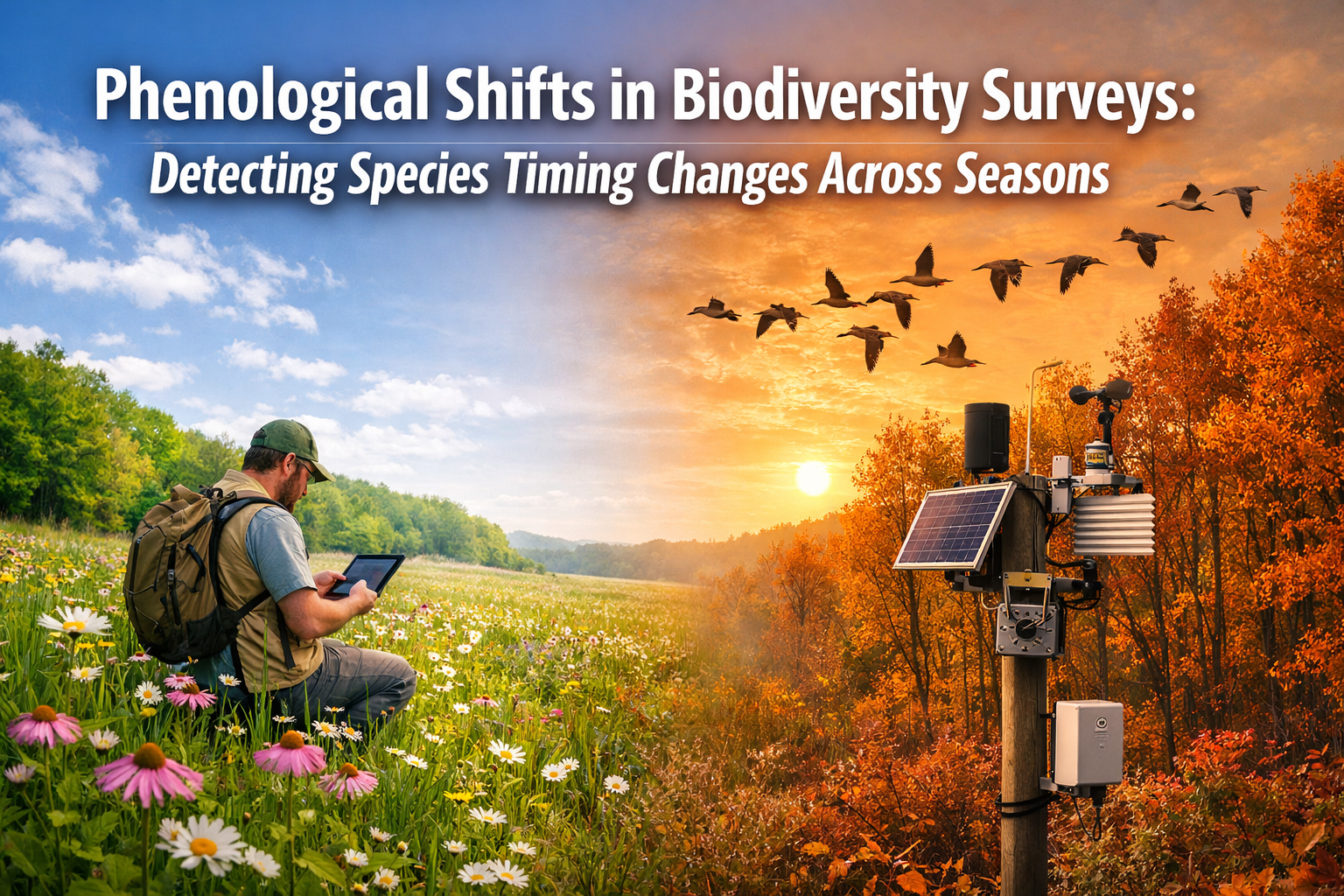
Climate change is rewriting nature's calendar at unprecedented speed. Recent research reveals that Mediterranean coral spawning now occurs two weeks earlier when spring temperatures rise by just 2°C—a shift that reduces reproductive success by measurable margins[1]. This acceleration of seasonal biological events, known as phenological shifts, is forcing biodiversity professionals to fundamentally rethink how and when they conduct field surveys. Traditional survey windows established decades ago no longer align with actual species activity, creating critical blind spots in Phenological Shifts in Biodiversity Surveys: Detecting Species Timing Changes Across Seasons that can undermine conservation planning and regulatory compliance.
For developers, ecologists, and land managers working under Biodiversity Net Gain (BNG) requirements, these timing mismatches present both challenges and opportunities. Missing peak flowering periods, breeding seasons, or migration windows can result in incomplete baseline assessments, while adaptive survey protocols that account for phenological dynamics deliver more accurate biodiversity data and stronger conservation outcomes.
Key Takeaways
- 🌡️ Temperature-driven timing shifts: A 2°C warming advances spawning, flowering, and breeding events by approximately two weeks, but earlier timing does not guarantee reproductive success
- 📊 Standardized monitoring frameworks: Europe has identified 84 Essential Biodiversity Variables, including insect phenology and bird abundance, to harmonize phenological tracking across regions[2]
- 🤖 Technology-enabled detection: AI-powered acoustic recorders, wildlife cameras, and eDNA metabarcoding now enable real-time phenological monitoring across landscapes[2]
- 🔄 Survey protocol adaptation: Traditional fixed-window surveys must evolve into flexible, climate-responsive monitoring that captures actual species activity patterns
- 🌍 Emerging pressures: Soil moisture decline, ocean darkening, and kelp forest loss represent new phenological stressors identified in the 2026 Global Horizon Scan[3]
Understanding Phenological Shifts in Modern Biodiversity Surveys
Phenology refers to the timing of recurring biological events—flowering, leaf emergence, insect emergence, bird migration, amphibian breeding, and countless other seasonal activities. These events evolved over millennia in response to environmental cues like temperature, day length, and precipitation. However, rapid climate change is disrupting these ancient rhythms faster than many species can adapt.
What Drives Phenological Changes?
Multiple environmental factors interact to trigger or delay seasonal biological events:
Primary drivers include:
- Temperature increases 🌡️: The most consistent driver, with warming springs advancing flowering and breeding
- Precipitation patterns: Altered rainfall timing affects plant growth cycles and insect emergence
- Day length (photoperiod): Remains constant but becomes decoupled from temperature cues
- Soil moisture availability: Declining moisture delays germination and reduces plant vigor[3]
- Extreme weather events: Heat waves, cold snaps, and storms disrupt normal timing
Recent evidence from plant functional groups shows that non-native species demonstrate more advanced flowering patterns in spring conditions compared to native herbaceous annuals[4]. This differential response creates competitive advantages and alters community composition in ways that traditional surveys may miss entirely.
The Reproductive Consequences of Mistimed Events
The Mediterranean octocoral study provides a sobering example of phenological shift impacts. While elevated spring temperatures caused spawning to occur approximately two weeks earlier, this advancement led to reduced spawning event frequency, decreased larval biomass, lower larval survival rates, and diminished settlement success[1]. The timing shift created a cascade of reproductive failures that threaten population viability.
This pattern—earlier timing without reproductive benefit—challenges the assumption that species can simply "adapt" to new conditions. Instead, phenological shifts often create temporal mismatches between:
- Pollinators and flowering plants
- Predators and prey emergence
- Migratory birds and food availability
- Breeding cycles and resource peaks
For biodiversity surveys supporting Biodiversity Net Gain assessments, failing to detect these mismatches means missing critical ecological dysfunction that could undermine habitat creation or restoration success.
Phenological Shifts in Biodiversity Surveys: Adapting Field Protocols
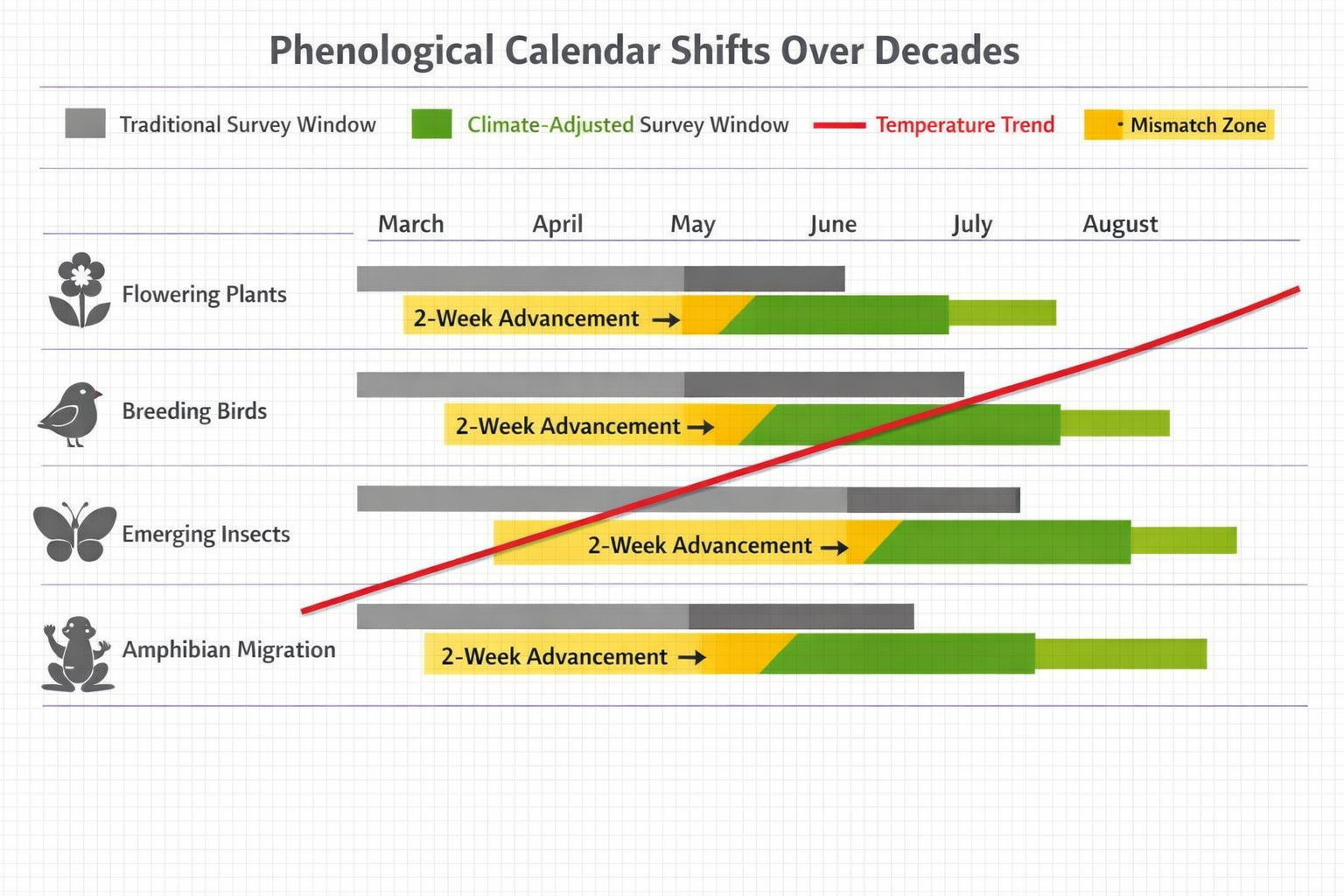
Traditional biodiversity survey protocols were developed when seasonal timing was relatively predictable. Standard guidance might specify "conduct breeding bird surveys between April 15 and June 30" or "survey for great crested newts between March and June." These fixed windows made logistical sense and ensured consistency across sites and years.
The problem? Species no longer reliably appear during these predetermined windows.
Identifying Phenological Shifts in Your Survey Area
Before adjusting protocols, survey teams must first detect whether and how phenological shifts are occurring locally. This requires:
Baseline comparison methods:
- Historical data review: Compare current observation dates with records from 10-20 years ago
- Phenological indicators: Monitor "herald species" like early flowering plants or first-arriving migrants
- Temperature tracking: Correlate local temperature trends with species activity patterns
- Community knowledge: Engage long-term land managers who notice seasonal changes
- Remote sensing: Use satellite vegetation indices to track green-up timing shifts
A 2026 roadmap published in Nature Reviews Biodiversity established 84 standardized Essential Biodiversity Variables specifically designed to create harmonized phenological and biodiversity monitoring across Europe[2]. These variables include bird abundance, insect phenology, seagrass extent, and ecosystem productivity—providing a framework for consistent detection of timing changes.
Flexible Survey Window Design
Rather than rigid calendar dates, climate-responsive survey protocols use phenological triggers to determine optimal survey timing:
| Traditional Approach | Phenological Approach |
|---|---|
| "Survey April 15-30" | "Survey when hawthorn reaches 50% bloom" |
| "Three visits in May-June" | "Three visits spanning peak breeding activity" |
| "Fixed monthly intervals" | "Visits timed to temperature-sum thresholds" |
| "Same dates annually" | "Dates adjusted by growing degree days" |
Growing degree days (GDD) provide a more accurate predictor of biological activity than calendar dates. By tracking accumulated temperature above a baseline threshold, survey teams can anticipate when species will reach critical life stages.
For developers working on biodiversity plans for building projects, incorporating phenological flexibility into survey specifications ensures that ecological consultants capture actual conditions rather than missing key species due to outdated timing assumptions.
Multi-Season Monitoring Strategies
Phenological shifts don't affect all seasons equally. Spring events typically advance more than autumn events, creating seasonal compression where the growing season lengthens but individual phenophases overlap differently.
Effective multi-season strategies include:
- Extended survey periods: Broaden windows by 2-4 weeks on either end
- Increased visit frequency: More visits with shorter intervals capture phenological variability
- Rapid resurvey protocols: Quick follow-up surveys when weather triggers early activity
- Cross-seasonal comparison: Document not just presence but relative timing across years
Evidence indicates that documented species range shifts often move faster than predictions from climatic niche models[5], suggesting that phenological flexibility and range responses exceed current theoretical frameworks. This reality demands survey protocols that can detect unexpected species appearances or absences.
Technology-Enabled Detection of Phenological Shifts in Biodiversity Surveys
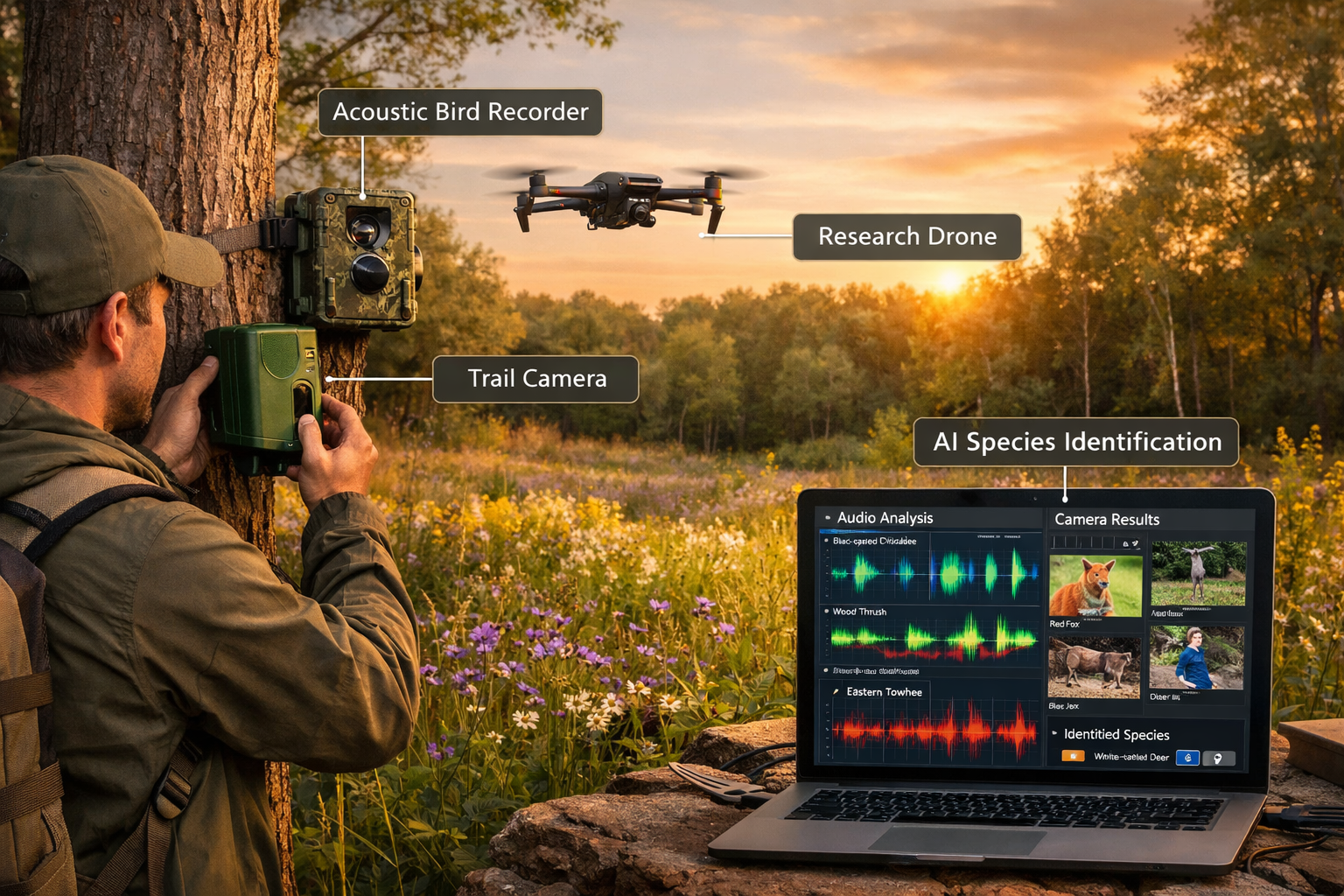
The 2026 monitoring roadmap proposes deploying acoustic bird recorders, AI-powered species recognition systems, wildlife cameras, biological radars, and environmental DNA (eDNA) metabarcoding to detect phenological changes in real-time across landscapes[2]. These technologies transform phenological monitoring from labor-intensive snapshot surveys to continuous, automated detection systems.
Automated Monitoring Technologies
Acoustic monitoring 🎵
- Continuous recording captures bird song, bat calls, and amphibian choruses 24/7
- AI algorithms identify species and quantify activity patterns across seasons
- Detects phenological shifts in breeding chorus timing and migration arrival dates
- Reduces field effort while increasing temporal resolution
Camera trap networks 📷
- Motion-triggered cameras document mammal activity, flowering phenology, and insect emergence
- Time-stamped images reveal shifts in daily and seasonal activity patterns
- AI image recognition automates species identification and phenological event detection
- Creates verifiable records for regulatory compliance
Environmental DNA (eDNA) 🧬
- Water or soil samples detect species presence through genetic traces
- Repeated sampling across seasons reveals phenological patterns in aquatic and soil communities
- Particularly effective for cryptic species that evade visual surveys
- Integrates with traditional surveys to fill detection gaps
TinyML devices 💻
- Low-power Tiny Machine Learning devices require no internet connection
- Enable real-time phenological and species detection in remote landscapes[3]
- Process data on-device, reducing data transmission costs and privacy concerns
- Democratize advanced monitoring for smaller projects and constrained budgets
Remote Sensing and Satellite Integration
The proposed European monitoring system incorporates state-of-the-art remote sensing from Copernicus satellites, aircraft, and drones to observe habitat structure and ecosystem changes that drive or reflect phenological shifts[2].
Remote sensing applications include:
- Vegetation indices (NDVI, EVI) track green-up timing and senescence across landscapes
- Thermal imaging detects microclimate variations that influence local phenology
- LiDAR reveals structural changes in canopy that affect understory phenology
- Multispectral imagery identifies flowering events and crop phenology
For biodiversity impact assessments, combining ground-based surveys with remote sensing creates a comprehensive picture of phenological dynamics that strengthens baseline characterization and impact prediction.
Data Integration and Analysis Platforms
The European Biodiversity Observation Coordination Center (EBOCC) is proposed to harmonize phenological monitoring methods, ensure transparent data governance, and align biodiversity surveys with EU policy requirements[2]. This centralized coordination addresses a critical gap: fragmented data collection that prevents large-scale phenological pattern detection.
Key platform capabilities needed:
- Standardized data formats across monitoring technologies
- Real-time data visualization showing phenological trends
- Predictive models that forecast survey timing based on weather forecasts
- Integration with Biodiversity Net Gain reporting requirements
- Quality assurance protocols that flag phenological anomalies
Emerging Threats and Opportunities in Phenological Monitoring
The 2026 Global Horizon Scan published in Trends in Ecology & Evolution identifies several emerging issues that will shape future phenological monitoring requirements[3].
Critical Emerging Pressures
Soil moisture decline 💧
- Identified as a major phenological pressure affecting terrestrial and freshwater ecosystems
- Implications for food security and water availability extend to biodiversity survey reliability
- Drought stress delays flowering, reduces seed production, and alters insect emergence
- Survey protocols must incorporate soil moisture monitoring to interpret phenological observations
Ocean darkening 🌊
- Declining light penetration in wide ocean regions threatens marine phenological systems
- Could fundamentally alter marine productivity and food web dynamics
- Effects on phytoplankton phenology cascade through entire marine ecosystems
- Coastal surveys must expand to include light availability metrics
Kelp forest phenology vulnerability 🌿
- Projected macroalgal habitat loss represents critical vulnerability to temperature extremes
- Kelp forests provide foundation habitat for diverse species assemblages
- Phenological shifts in kelp growth and reproduction affect entire coastal communities
- Monitoring must track not just species presence but reproductive timing and success
Opportunities for Improved Conservation Outcomes
Understanding phenological shifts creates opportunities to enhance conservation effectiveness:
Targeted intervention timing ⏰
- Habitat management activities (grazing, mowing, burning) timed to actual species phenology
- Restoration plantings scheduled to match current climate conditions rather than historical norms
- Predator control or supplemental feeding aligned with critical breeding windows
Climate-adaptive habitat design 🏗️
- Biodiversity Net Gain delivery that anticipates future phenological conditions
- Habitat heterogeneity that provides refugia for species with different phenological responses
- Connectivity corridors that facilitate range shifts as phenological mismatches intensify
Enhanced regulatory compliance ✅
- More accurate baseline assessments reduce risk of survey gaps
- Documentation of phenological considerations strengthens planning applications
- Adaptive monitoring demonstrates commitment to achieving biodiversity outcomes
For developers and planners, understanding why Biodiversity Net Gain is important to the UK includes recognizing that climate-responsive monitoring delivers more reliable biodiversity accounting and reduces project risk.
Practical Implementation for BNG Projects
Translating phenological awareness into practical survey protocols requires systematic integration into project planning and execution.
Pre-Survey Planning Checklist
Before mobilizing field teams, complete these phenological assessment steps:
✅ Review historical phenology data for target species and region
✅ Analyze recent temperature trends and compare to long-term averages
✅ Identify phenological indicator species that signal seasonal progression
✅ Establish flexible survey windows based on temperature thresholds rather than fixed dates
✅ Deploy automated monitoring (cameras, acoustic recorders) to capture continuous data
✅ Coordinate with local naturalists who track seasonal changes
✅ Build contingency time into project schedules for phenological uncertainty
Survey Specification Language
When commissioning ecological surveys, specify phenological considerations explicitly:
Instead of: "Conduct three breeding bird surveys between April and June"
Specify: "Conduct three breeding bird surveys timed to capture early, peak, and late breeding activity for target species, with survey dates determined by accumulated growing degree days (base 5°C) and local phenological indicators. First survey when hawthorn reaches 50% leaf emergence; subsequent surveys at 14-21 day intervals based on seasonal progression."
This language provides flexibility while maintaining rigor and ensures consultants consider actual ecological conditions.
Monitoring and Adaptive Management
Post-construction monitoring should continue phenological tracking to verify that created or enhanced habitats support intended species at appropriate times:
- Year 1: Intensive phenological monitoring to establish baseline timing in new habitat
- Years 2-5: Continued monitoring to detect phenological stabilization or ongoing shifts
- Years 5+: Periodic reassessment aligned with long-term BNG monitoring requirements
Document phenological observations in monitoring reports to build institutional knowledge and inform future projects.
Conclusion
Phenological shifts represent one of the most tangible manifestations of climate change in biodiversity systems, with documented timing advances of two weeks or more already affecting reproductive success across taxonomic groups. For professionals conducting biodiversity surveys—whether for development projects, conservation planning, or regulatory compliance—ignoring these shifts risks incomplete assessments, missed species detections, and ultimately, failed conservation outcomes.
The path forward requires three fundamental changes:
- Abandon fixed survey windows in favor of flexible, climate-responsive protocols that use phenological triggers and growing degree days to determine optimal timing
- Embrace technology including automated acoustic monitoring, camera traps, eDNA analysis, and remote sensing to capture continuous phenological data beyond traditional snapshot surveys
- Integrate emerging pressures like soil moisture decline, ocean darkening, and habitat loss into survey design and interpretation
The establishment of 84 Essential Biodiversity Variables for Europe and proposals for coordinated monitoring infrastructure demonstrate that the scientific and policy communities recognize the urgency of phenological monitoring. Projects that proactively incorporate these approaches will deliver more accurate baseline assessments, stronger biodiversity impact evaluations, and ultimately more effective conservation outcomes.
Next Steps for Your Project
Immediate actions:
- Review your current survey specifications for phenological flexibility
- Consult with ecological specialists about local phenological trends
- Consider deploying automated monitoring to supplement traditional surveys
- Build phenological contingencies into project timelines and budgets
Strategic planning:
- Develop institutional knowledge systems to track phenological observations across projects
- Engage with regional monitoring initiatives to access standardized phenological data
- Incorporate climate projections into long-term habitat management planning
- Stay informed about evolving BNG guidance and best practices
The species we aim to protect are already adapting to new seasonal realities. Our survey methods must evolve with equal urgency to ensure we detect, understand, and respond to these fundamental ecological changes. By embracing phenologically-informed monitoring, we transform a climate challenge into an opportunity for more effective, resilient biodiversity conservation.
References
[1] Mediterranean coral spawning study – https://pubmed.ncbi.nlm.nih.gov/41532749/
[2] Roadmap Outlines Biodiversity Variables Europe – https://phys.org/news/2026-02-roadmap-outlines-biodiversity-variables-europe.html
[3] What's Next For Biodiversity Conservation: Insights From The 2026 Horizon Scan – https://www.unep-wcmc.org/en/news/whats-next-for-biodiversity-conservation-insights-from-the-2026-horizon-scan
[4] Phenological variation across plant functional groups – https://onlinelibrary.wiley.com/doi/10.1002/ece3.73340
[5] Species range shifts research – https://www.pnas.org/doi/10.1073/pnas.2515903123