

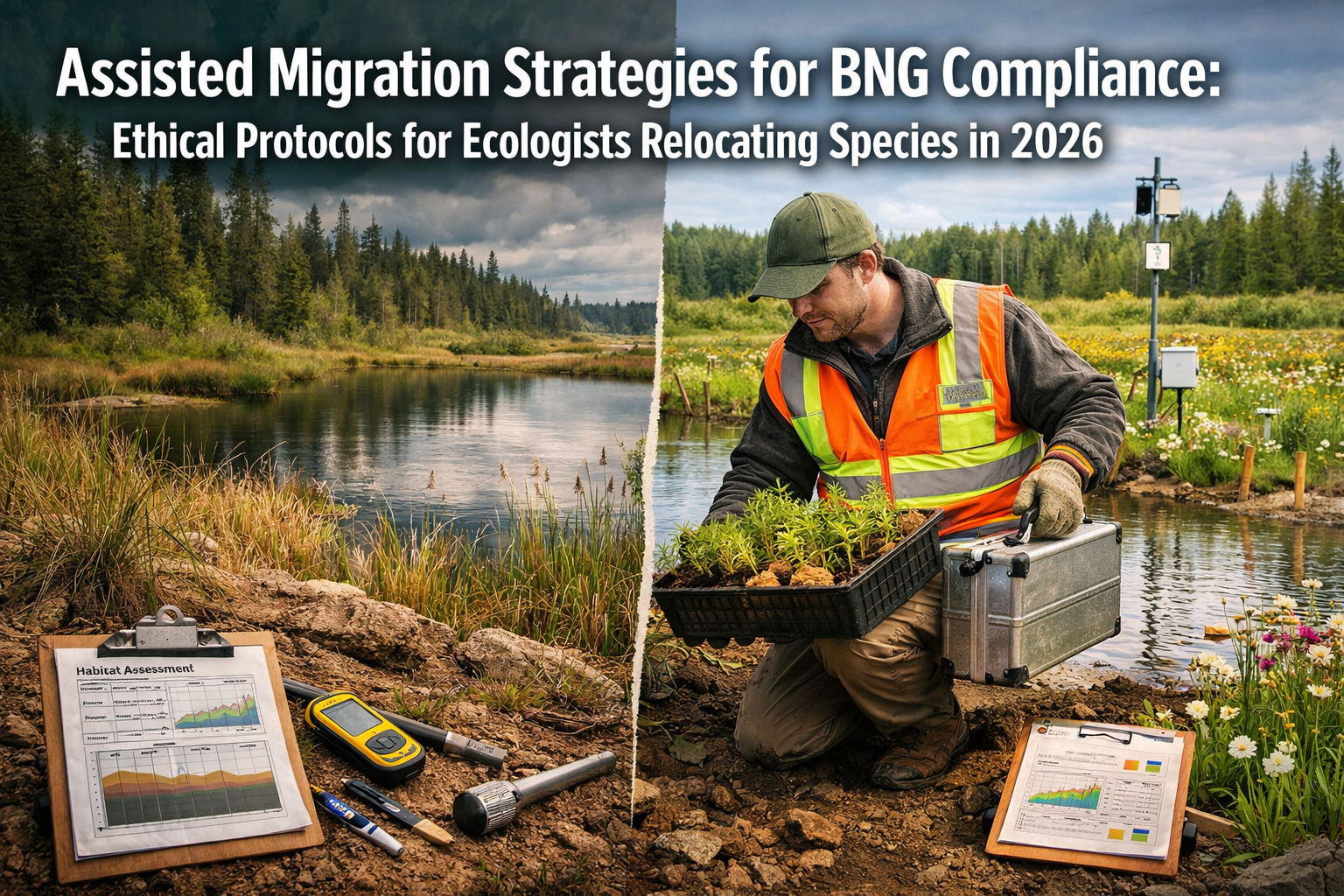
Climate change is outpacing natural species migration by a factor of 10 to 100 times in many ecosystems, creating an urgent conservation crisis that traditional habitat protection alone cannot solve. As Biodiversity Net Gain (BNG) requirements expand across major infrastructure projects in 2026, ecologists face a challenging question: when habitats shift faster than species can naturally migrate, is human-assisted relocation an ethical solution or a dangerous intervention? Assisted Migration Strategies for BNG Compliance: Ethical Protocols for Ecologists Relocating Species in 2026 represents a critical intersection of conservation science, regulatory compliance, and ethical responsibility that demands careful examination.
With the UK government confirming mandatory 10% BNG requirements for all Nationally Significant Infrastructure Projects (NSIPs) from November 2026[1], the pressure to deliver measurable biodiversity gains has intensified. This expansion creates both opportunities and challenges for conservation practitioners who must balance ambitious ecological goals with rigorous scientific protocols.
Key Takeaways
- 🌱 Assisted migration is becoming essential for BNG projects as climate change outpaces natural species movement
- 📊 Risk assessment protocols must evaluate genetic diversity, disease transmission, and ecosystem disruption before any relocation
- ⚖️ Ethical frameworks require transparent decision-making, stakeholder consultation, and precautionary principles
- 📈 Long-term monitoring for at least 30 years is mandatory to validate biodiversity gains and detect unintended consequences[1][2]
- 🎯 On-site delivery remains prioritized, with assisted migration reserved for exceptional ecological circumstances where natural colonization is impossible
Understanding Assisted Migration in the BNG Context
Assisted migration (also called assisted colonization or managed relocation) involves the deliberate movement of species to new locations where they can survive and thrive under changing environmental conditions. Within the framework of Biodiversity Net Gain compliance, this strategy addresses a fundamental challenge: how can development projects achieve measurable biodiversity improvements when target species cannot naturally reach enhanced habitats?
The Growing Need for Intervention
Traditional habitat creation assumes that if you build it, they will come. However, this "field of dreams" approach fails when:
- Fragmented landscapes prevent natural dispersal corridors
- Climate velocity exceeds species' migration capabilities
- Source populations are too distant or depleted
- Specialized habitat requirements limit colonization potential
- Time constraints for BNG validation conflict with natural succession timelines
The existing biodiversity metric allows flexibility in exceptional ecological circumstances, including provisions for "habitat created in advance"[1]. This recognition creates space for assisted migration strategies when properly justified and executed.
Types of Assisted Migration
Ecologists distinguish between three primary approaches:
- Assisted Population Migration: Moving individuals within their current range to more suitable habitat patches
- Assisted Range Expansion: Relocating species to areas just beyond their historical range where conditions are becoming suitable
- Assisted Long-Distance Migration: Transporting species to entirely new regions with appropriate climate conditions (most controversial)
For BNG compliance, the first two approaches are most relevant and defensible, as they maintain ecological relationships within biogeographic regions.
Assisted Migration Strategies for BNG Compliance: Developing Ethical Survey Protocols
Before any species relocation occurs, comprehensive survey and assessment protocols establish the scientific foundation for decision-making. These protocols ensure that Assisted Migration Strategies for BNG Compliance: Ethical Protocols for Ecologists Relocating Species in 2026 rest on robust ecological evidence rather than optimistic assumptions.
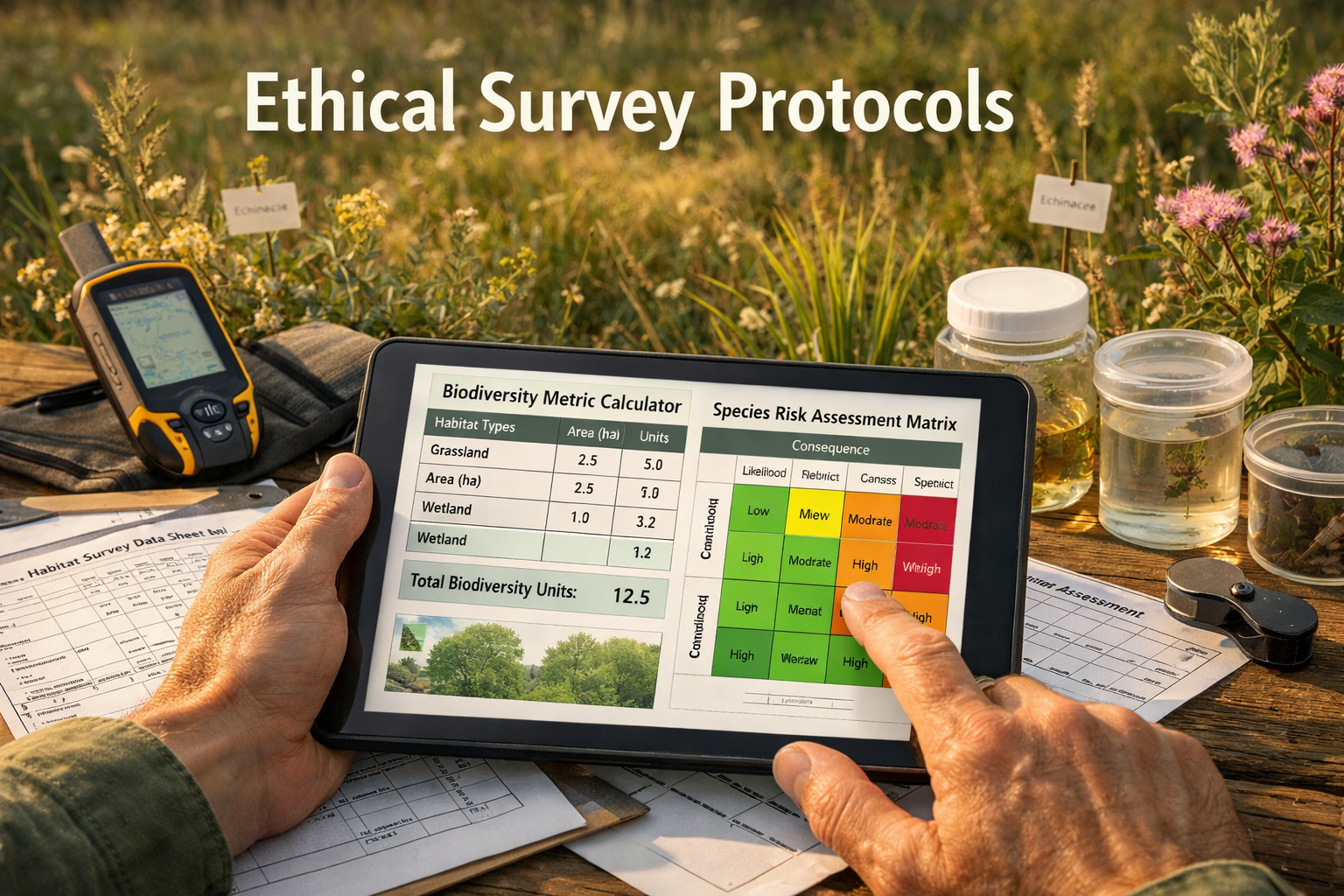
Pre-Migration Assessment Framework
A thorough pre-migration assessment must address multiple dimensions:
🔬 Source Population Evaluation
- Genetic diversity analysis: Ensure sufficient genetic variation to support viable populations
- Health screening: Test for diseases, parasites, and pathogens that could spread to new locations
- Population viability: Confirm that removal won't jeopardize source population sustainability
- Behavioral assessment: Document species-specific requirements for successful establishment
🌍 Recipient Site Suitability Analysis
- Habitat matching: Verify that soil chemistry, hydrology, microclimate, and vegetation structure align with species requirements
- Climate envelope modeling: Project future climate conditions over the 30-year monitoring period[1][2]
- Biotic interactions: Assess availability of pollinators, seed dispersers, prey species, and absence of novel predators
- Competition analysis: Evaluate potential conflicts with established species
When conducting a biodiversity impact assessment, these additional considerations become critical for assisted migration proposals.
Risk Assessment Matrix
A structured risk assessment helps ecologists make transparent, defensible decisions. The following table outlines key risk categories:
| Risk Category | Low Risk | Medium Risk | High Risk | Mitigation Strategies |
|---|---|---|---|---|
| Genetic contamination | No related populations nearby | Distant related populations | Hybridization possible | Genetic screening, population isolation |
| Disease transmission | Comprehensive health screening | Limited pathogen testing | Unknown disease status | Quarantine protocols, veterinary oversight |
| Invasive potential | Well-documented behavior | Limited ecological data | Novel ecosystem interactions | Small-scale trials, intensive monitoring |
| Establishment failure | Optimal habitat match | Marginal habitat suitability | Poor habitat match | Adaptive management, supplemental plantings |
| Ecosystem disruption | Minimal food web changes | Moderate trophic impacts | Major community restructuring | Staged introduction, population controls |
Documentation Requirements
Comprehensive documentation serves multiple purposes: regulatory compliance, scientific transparency, and adaptive management. Essential records include:
- Baseline surveys of both source and recipient sites
- Genetic analysis reports and health certificates
- Climate modeling projections and habitat suitability maps
- Stakeholder consultation records and expert peer reviews
- Monitoring protocols with clear success criteria and trigger points for intervention
This documentation becomes part of the BNG assessment submitted with planning applications.
Ethical Decision-Making Frameworks for Species Relocation
The ethical dimensions of assisted migration extend beyond technical feasibility to fundamental questions about human responsibility, ecological integrity, and intergenerational justice. Assisted Migration Strategies for BNG Compliance: Ethical Protocols for Ecologists Relocating Species in 2026 must navigate complex moral terrain.
Core Ethical Principles
🛡️ The Precautionary Principle
When outcomes are uncertain and potentially irreversible, err on the side of caution. This principle suggests:
- Starting with small-scale pilot projects before full implementation
- Maintaining source population reserves as insurance against failure
- Establishing reversibility protocols where feasible
- Requiring higher evidence standards for controversial relocations
⚖️ Distributive Justice
Consider who bears risks and who receives benefits:
- Temporal justice: Future generations inherit both successes and failures
- Spatial justice: Local communities experience direct impacts
- Species justice: Non-target organisms face altered ecological relationships
- Procedural justice: Affected parties participate in decision-making
🔄 Adaptive Management Obligation
Ethical practice requires ongoing learning and adjustment:
- Monitoring commitments extend for at least 30 years[1][2]
- Transparent reporting of both successes and failures
- Course correction when monitoring reveals problems
- Knowledge sharing to improve future practice
Stakeholder Engagement Process
Meaningful stakeholder engagement goes beyond token consultation. A robust process includes:
- Early notification of local communities, conservation organizations, and indigenous groups
- Accessible information explaining proposed actions in non-technical language
- Genuine dialogue that can influence project design
- Ongoing communication throughout implementation and monitoring phases
- Grievance mechanisms for addressing concerns
For developers working to achieve Biodiversity Net Gain, stakeholder support can significantly smooth regulatory approval and reduce project delays.
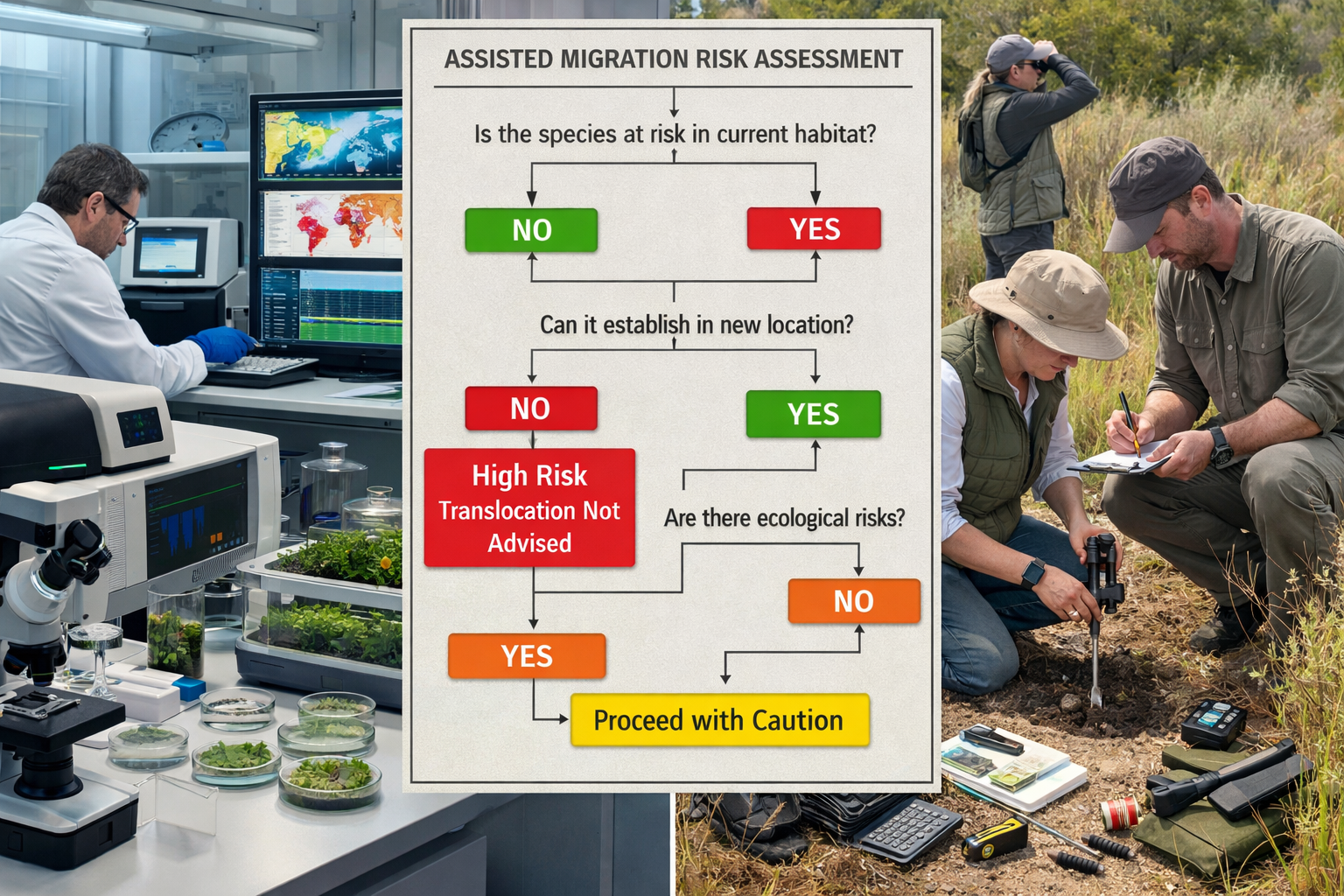
Decision Trees for Ethical Evaluation
Structured decision frameworks help ecologists navigate complex choices:
Question 1: Can BNG targets be met through natural colonization within reasonable timeframes?
- Yes → Assisted migration not justified; proceed with habitat creation only
- No → Proceed to Question 2
Question 2: Is the species at risk of local or regional extinction without intervention?
- Yes → Strong conservation justification; proceed to Question 3
- No → Weak justification; consider alternative species or approaches
Question 3: Does comprehensive risk assessment indicate acceptable risk levels?
- Yes → Proceed to Question 4
- No → Reject proposal or modify to reduce risks
Question 4: Do benefits clearly outweigh risks across ecological, social, and temporal dimensions?
- Yes → Proceed with pilot project and intensive monitoring
- No → Reject proposal
This systematic approach ensures that assisted migration remains a tool of last resort rather than a convenient shortcut.
Implementing Assisted Migration Strategies for BNG Compliance: Practical Protocols
Moving from ethical principles to practical implementation requires detailed protocols that translate theory into field-ready procedures. These operational guidelines ensure that Assisted Migration Strategies for BNG Compliance: Ethical Protocols for Ecologists Relocating Species in 2026 can be executed consistently and effectively.
Collection and Transport Protocols
📋 Pre-Collection Preparations
- Permits and licenses: Secure all required permissions from regulatory authorities
- Equipment sterilization: Prevent cross-contamination between sites
- Transport containers: Prepare appropriate vessels for different taxa (plants, invertebrates, amphibians, etc.)
- Climate control: Maintain suitable temperature and humidity during transport
- Timing optimization: Schedule collections during appropriate seasons and weather conditions
🚚 Collection Best Practices
Different taxonomic groups require specialized approaches:
Plants:
- Collect seeds from multiple individuals to maximize genetic diversity
- Include associated soil microbiomes when transplanting
- Document phenological stage and microhabitat conditions
- Take herbarium vouchers for verification
Invertebrates:
- Sample across multiple life stages when possible
- Maintain host plant associations for specialist species
- Minimize handling stress through appropriate techniques
- Record microhabitat parameters (temperature, humidity, substrate)
Amphibians and Reptiles:
- Follow strict biosecurity protocols to prevent disease transmission
- Maintain appropriate temperature gradients during transport
- Minimize transport duration (ideally under 4 hours)
- Conduct health assessments before and after transport
Release and Establishment Protocols
Successful establishment depends on careful release procedures:
🎯 Site Preparation
- Habitat conditioning: Ensure recipient sites have reached appropriate successional stages
- Competitor management: Control dominant species that might exclude introductions
- Predator assessment: Verify that predation pressure is manageable
- Microhabitat creation: Provide refuges, basking sites, or other specialized features
📍 Release Strategies
- Staged releases: Multiple smaller introductions reduce risk and allow adaptive learning
- Spatial distribution: Establish multiple subpopulations to reduce extinction risk
- Density considerations: Avoid overcrowding while maintaining minimum viable populations
- Timing: Release during optimal seasons for establishment
🔍 Immediate Post-Release Monitoring
The first weeks and months are critical:
- Daily observations for the first week to detect immediate problems
- Weekly monitoring for the first season
- Behavioral assessment to confirm normal activity patterns
- Survival tracking using appropriate methods (mark-recapture, radio telemetry, etc.)
- Rapid response protocols for addressing unexpected issues
Long-Term Monitoring and Validation
BNG regulations require legally secured monitoring for at least 30 years[1][2]. This extended timeframe demands sustainable, cost-effective approaches:
📊 Monitoring Frequency and Methods
| Year Range | Monitoring Frequency | Key Metrics | Methods |
|---|---|---|---|
| Years 1-3 | Quarterly | Survival, reproduction, behavior | Intensive surveys, mark-recapture |
| Years 4-10 | Biannually | Population trends, genetic diversity | Population counts, genetic sampling |
| Years 11-20 | Annually | Population stability, ecosystem integration | Standardized surveys, community assessments |
| Years 21-30 | Biannually | Long-term persistence, ecosystem function | Targeted surveys, indicator species |
🎯 Success Criteria and Trigger Points
Clear success criteria enable objective evaluation:
Population Establishment:
- Self-sustaining reproduction for at least 3 consecutive years
- Population size exceeding minimum viable population thresholds
- Age structure indicating successful recruitment
Ecosystem Integration:
- Evidence of expected ecological interactions (pollination, predation, competition)
- No detected negative impacts on non-target species
- Contribution to ecosystem functions (nutrient cycling, habitat provision)
Trigger Points for Intervention:
- Population decline exceeding 50% in any monitoring period
- Evidence of disease outbreak or genetic problems
- Unexpected negative impacts on other species
- Failure to reproduce for 2 consecutive years
Adaptive Management and Course Correction
Monitoring data must inform management decisions:
- Annual data review by qualified ecologists
- Five-year comprehensive assessments with stakeholder input
- Contingency protocols for addressing problems
- Supplemental interventions (additional releases, habitat enhancement, predator control)
- Exit strategies if establishment proves unsuccessful
For projects pursuing 10% Biodiversity Net Gain, this adaptive approach ensures that biodiversity units remain valid over the required monitoring period.
Regulatory Compliance and Reporting Requirements
Assisted Migration Strategies for BNG Compliance: Ethical Protocols for Ecologists Relocating Species in 2026 must align with evolving regulatory frameworks. The expansion of BNG to NSIPs from November 2026 brings additional scrutiny and documentation requirements[1].
BNG Metric Calculations
Assisted migration affects biodiversity metric calculations in several ways:
🧮 Habitat Condition Assessments
- Baseline condition: Document pre-development habitat quality
- Target condition: Specify expected post-enhancement condition
- Time to target condition: Account for establishment periods (typically 5-15 years for assisted migration projects)
- Spatial risk multiplier: Apply appropriate multipliers based on delivery location
📈 Biodiversity Unit Accounting
When species are actively introduced:
- Enhanced distinctiveness scores may apply for rare or specialist species
- Condition scores should reflect establishment uncertainty in early years
- Strategic significance multipliers for priority habitats or species
- Temporal discounting for delayed delivery
Developers can explore biodiversity credits as an alternative when on-site assisted migration proves unfeasible.
Documentation for Planning Authorities
Planning submissions must include comprehensive evidence:
📄 Required Documentation
- Biodiversity Gain Plan incorporating assisted migration strategies
- Ecological Impact Assessment justifying intervention necessity
- Risk Assessment Report with mitigation measures
- Monitoring and Management Plan covering 30+ years[1][2]
- Stakeholder Consultation Summary demonstrating engagement
- Expert Peer Review from qualified ecologists
- Legal Agreements securing long-term management and funding
🔒 Legal Mechanisms
Gains must be legally secured through:
- Conservation covenants (preferred mechanism under Environment Act 2021)
- Section 106 planning obligations for site-specific requirements
- Management agreements with land managers
- Financial guarantees ensuring funding for full monitoring period
Understanding secondary BNG legislation helps navigate these complex requirements.
Reporting and Transparency
Ongoing reporting maintains accountability:
- Annual monitoring reports submitted to planning authorities
- Five-year comprehensive reviews assessing overall progress
- Public registers of BNG sites and management activities
- Incident reporting for unexpected problems or failures
- Final validation at 30-year completion demonstrating sustained gains
Case Studies: Lessons from Early Adopters
While assisted migration for BNG compliance remains relatively new, early projects provide valuable insights:
✅ Success Story: Wetland Plant Translocation
A major infrastructure project in southern England successfully established rare wetland plants through assisted migration:
Approach: Seeds and rhizomes from multiple source populations were collected and propagated in controlled conditions before planting in newly created wetland habitat.
Results: After 5 years, populations showed natural reproduction and expansion beyond initial planting areas, contributing 2.3 biodiversity units toward the 10% BNG requirement.
Key Success Factors:
- Extensive habitat preparation before introduction
- Genetic diversity from multiple source populations
- Intensive early monitoring enabling rapid problem-solving
- Favorable hydrological conditions
⚠️ Cautionary Tale: Butterfly Reintroduction Challenges
An attempted butterfly reintroduction to chalk grassland habitat encountered difficulties:
Approach: Captive-bred butterflies were released into restored habitat designed to meet species requirements.
Results: Initial releases failed to establish breeding populations despite apparently suitable habitat conditions.
Lessons Learned:
- Microhabitat requirements were more specific than initially understood
- Host plant phenology didn't align with butterfly life cycle
- Source population genetics may have been poorly adapted to local conditions
- Alternative approach using natural colonization from nearby populations ultimately succeeded
These experiences emphasize the importance of thorough preparation and realistic expectations.
Future Directions and Emerging Technologies
As Assisted Migration Strategies for BNG Compliance: Ethical Protocols for Ecologists Relocating Species in 2026 continue evolving, several technological and methodological advances show promise:
🔬 Genetic Tools
- Environmental DNA (eDNA) for non-invasive monitoring of establishment success
- Genomic selection to identify individuals with favorable traits for translocation
- Population genomics to assess genetic diversity and adaptation potential
- Disease screening using molecular diagnostics
📡 Remote Monitoring Technologies
- Automated acoustic monitoring for birds, amphibians, and insects
- Camera traps with AI-powered species identification
- Drone surveys for vegetation mapping and habitat assessment
- Satellite imagery for landscape-scale habitat monitoring
🤖 Predictive Modeling
- Species distribution models incorporating climate change projections
- Population viability analysis predicting long-term persistence
- Ecosystem modeling forecasting community-level impacts
- Machine learning identifying optimal release sites and timing
🌐 Data Sharing Platforms
Centralized databases could accelerate learning:
- National assisted migration registry documenting all projects
- Success and failure reporting enabling meta-analysis
- Genetic databases preventing inappropriate source populations
- Best practice repositories sharing effective protocols
Conclusion: Building an Ethical Framework for Conservation in the Anthropocene
Assisted Migration Strategies for BNG Compliance: Ethical Protocols for Ecologists Relocating Species in 2026 represent a pragmatic response to unprecedented ecological challenges. As climate change accelerates and habitat fragmentation intensifies, passive conservation approaches increasingly fall short. The expansion of BNG requirements to major infrastructure projects from November 2026[1] creates both pressure and opportunity to develop more interventionist conservation strategies.
However, this power to reshape ecosystems demands corresponding responsibility. Ethical protocols must balance conservation urgency against ecological humility, recognizing that our understanding remains incomplete and unintended consequences are possible. The frameworks outlined in this guide—comprehensive risk assessment, transparent stakeholder engagement, adaptive management, and long-term monitoring—provide guardrails for responsible practice.
🎯 Actionable Next Steps for Ecologists and Developers
- Assess necessity: Rigorously evaluate whether natural colonization can achieve BNG targets before considering assisted migration
- Build expertise: Develop in-house capabilities or partner with specialists experienced in species translocation
- Engage early: Begin stakeholder consultation and regulatory discussions during project design phases
- Plan comprehensively: Develop detailed protocols addressing all stages from collection through 30-year monitoring[1][2]
- Secure resources: Ensure adequate funding for long-term monitoring and adaptive management
- Document thoroughly: Maintain detailed records enabling learning and regulatory compliance
- Share knowledge: Contribute to the growing evidence base by reporting both successes and failures
The path forward requires collaboration between developers, ecologists, regulators, and communities. By grounding assisted migration decisions in robust science, ethical reflection, and adaptive learning, the conservation community can navigate this challenging terrain while benefitting both nature and development.
The stakes are high—both for biodiversity conservation and for the credibility of BNG as a policy mechanism. Success depends on maintaining rigorous standards while remaining flexible enough to address unique ecological circumstances. As we move deeper into the Anthropocene, assisted migration may transition from controversial intervention to essential conservation tool. The protocols we establish today will shape how responsibly we wield this power tomorrow.
References
[1] Government Confirms Biodiversity Net Gain For Major Infrastructure From November 2026 – https://cieem.net/government-confirms-biodiversity-net-gain-for-major-infrastructure-from-november-2026/
[2] Watch – https://www.youtube.com/watch?v=t98BNi3zvPk
[3] Biodiversity Net Gain Summit For Nsips – https://www.environmentbank.com/biodiversity-net-gain-summit-for-nsips/
[4] Nap Implemetation – https://www.undp.org/sites/g/files/zskgke326/files/2026-01/nap_implemetation.pdf
[5] Biodiversity Net Gain Whats Changing And What It Means For You – https://www.tlt.com/insights-and-events/webinars/biodiversity-net-gain-whats-changing-and-what-it-means-for-you
[6] March Nature Policy Bulletin – https://www.businessfornature.org/news/march-nature-policy-bulletin