

Eighty percent of amphibian extinctions since the 1980s share a single devastating cause: the chytrid fungus Batrachochytrium dendrobatidis (Bd)[3]. As Biodiversity Net Gain (BNG) requirements reshape how developers and landowners approach habitat restoration in 2026, this microscopic pathogen presents an invisible threat to long-term ecological success. Restored wetlands designed to deliver measurable biodiversity gains over 30 years could see their amphibian populations collapse within a decade if disease surveillance remains absent from survey protocols. Understanding Amphibian Chytrid Fungus Impacts on BNG Sites: Disease-Resilient Survey Strategies for Ecologists has become essential for ensuring that today's habitat investments deliver genuine conservation outcomes for decades to come.
The challenge extends beyond simple species counts. Traditional amphibian surveys focus on presence, abundance, and breeding success—critical metrics for calculating biodiversity units but insufficient for predicting population persistence. Chytrid fungus operates silently, often establishing in populations years before triggering mass mortality events. For ecologists working on BNG off-site habitat banking projects, integrating pathogen screening into baseline and monitoring surveys represents not just best practice but a safeguard for long-term habitat viability.
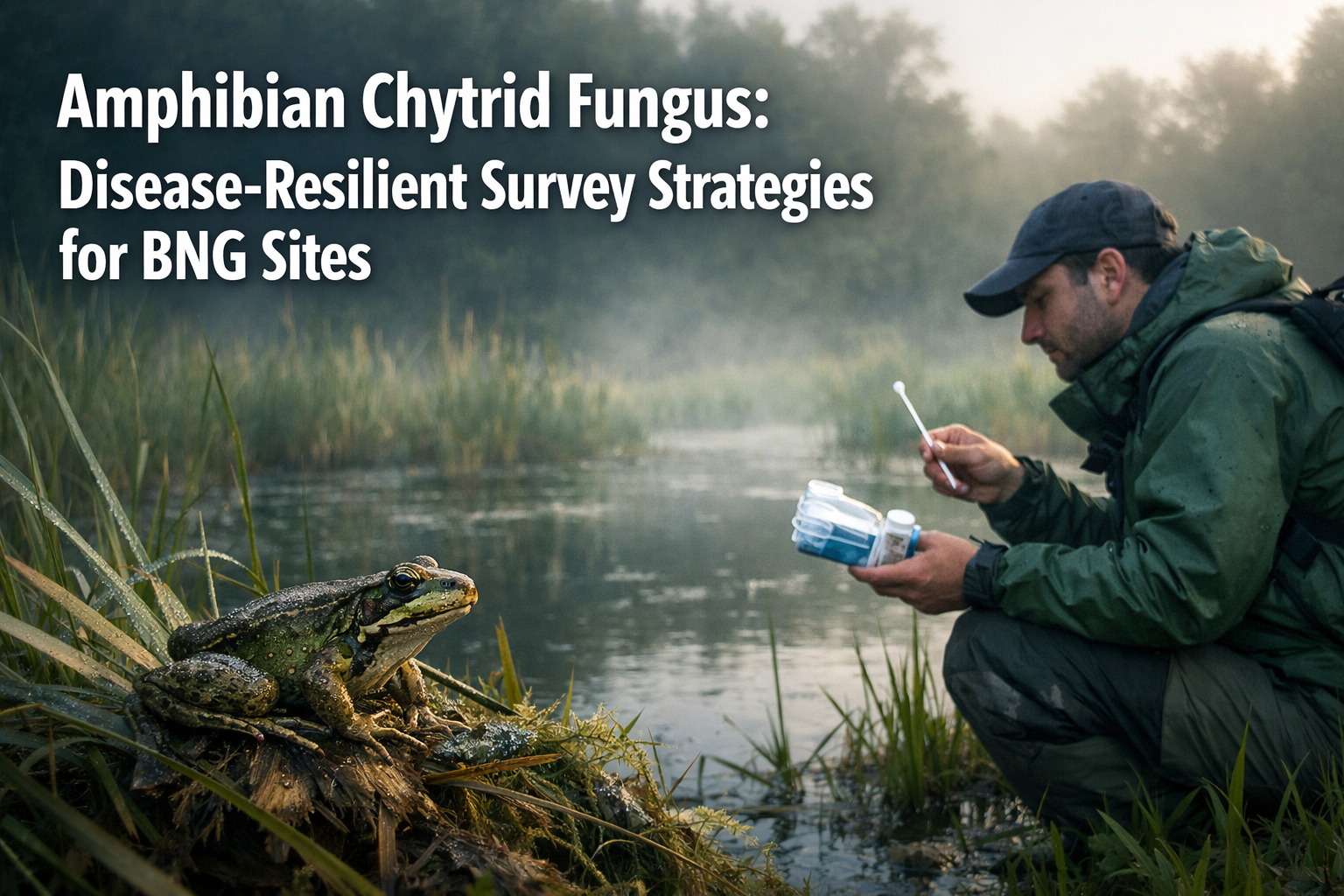
Key Takeaways
- Disease surveillance integration: Pathogen screening must become standard practice in amphibian surveys for BNG sites to protect 30-year habitat commitments from chytrid-driven population collapse
- Climate-informed survey timing: Weather conditions 15 days prior to sampling predict chytrid presence and intensity, enabling strategic survey scheduling for accurate disease detection[1]
- Environmental context matters: Laboratory susceptibility data fails to predict field outcomes; site-specific environmental factors significantly influence actual disease impacts in wild populations[2]
- Climate refuges exist: Specific temperature, humidity, and pH conditions create natural disease refuges that can be deliberately incorporated into BNG site design and management
- Biosecurity protocols are non-negotiable: Cross-contamination between survey sites represents a primary disease transmission vector that proper field hygiene can prevent
Understanding Amphibian Chytrid Fungus Impacts on BNG Sites
The intersection of amphibian disease ecology and biodiversity offsetting creates unique challenges for ecological consultants. BNG sites, particularly those focused on wetland creation or restoration, attract amphibian colonization as a primary indicator of habitat quality. Yet these same conditions—permanent water bodies, moderate temperatures, and concentrated amphibian populations—create ideal environments for chytrid fungus establishment and transmission.
The Pathogen Profile: What Makes Chytrid So Destructive
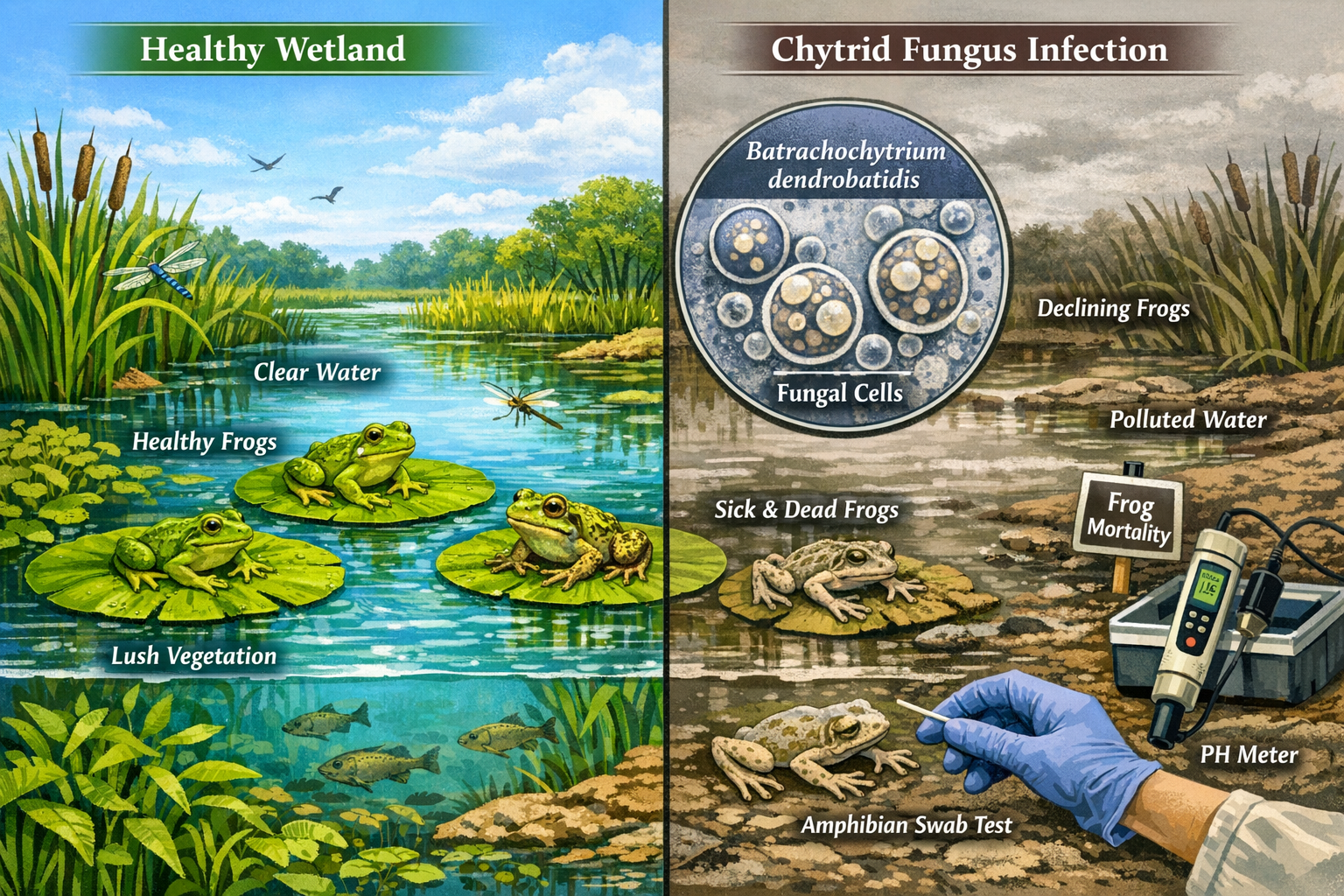
Batrachochytrium dendrobatidis disrupts amphibian skin function, interfering with respiration, osmoregulation, and immune response. Unlike many wildlife diseases that affect only immunocompromised individuals, Bd can cause mass mortality in previously healthy populations. The fungus thrives in aquatic environments and spreads through waterborne zoospores, making wetland BNG sites particularly vulnerable.
Key transmission pathways include:
- 🔄 Direct contact between infected and susceptible amphibians
- 💧 Waterborne zoospore dispersal within and between ponds
- 🥾 Human-mediated transport on field equipment, boots, and vehicles
- 🦆 Wildlife vectors moving between water bodies
- 🌊 Hydrological connections during flooding events
The fungus exhibits remarkable environmental persistence, surviving in moist conditions without amphibian hosts for extended periods. This resilience means that even BNG sites created on previously agricultural land may become infected through contaminated equipment or colonizing amphibians carrying subclinical infections.
Environmental Factors Influencing Disease Expression
Research analyzing over 4,900 disease samples from 314 sites paired with satellite atmospheric modeling reveals that chytrid distribution follows predictable environmental patterns[1]. Temperature and humidity emerge as primary drivers, with disease intensity correlating strongly with specific climatic windows.
Climate conditions favoring chytrid proliferation:
| Environmental Factor | Optimal Range for Bd | Impact on Disease Risk |
|---|---|---|
| Temperature | 17-25°C | Peak growth and transmission |
| Humidity | >80% relative humidity | Enhanced zoospore survival |
| Elevation | Higher elevations | Cooler, more humid conditions increase risk |
| Water pH | Neutral to slightly alkaline | Low pH (<4) inhibits growth |
| Water temperature | Cool, stable conditions | Reduces thermal stress on fungus |
Critically, researchers can predict chytrid presence and intensity by examining weather conditions 15 days prior to sampling[1]. This discovery transforms survey planning, enabling ecologists to schedule fieldwork during periods most likely to detect infections if present, or to understand false-negative risks when sampling occurs during suboptimal detection windows.
Why Laboratory Data Misleads Field Predictions
A significant challenge in assessing chytrid risk for BNG sites stems from the disconnect between controlled laboratory studies and field realities. Laboratory susceptibility trials consistently fail to predict actual disease outcomes in wild amphibian communities[2]. Species classified as "highly susceptible" in laboratory exposures may persist in infected habitats, while supposedly "resistant" species occasionally experience population declines.
This discrepancy highlights the importance of ecological context:
- Population density influences transmission rates independent of individual susceptibility
- Behavioral differences affect exposure frequency and duration
- Microhabitat selection may provide refuges from high-infection zones
- Seasonal activity patterns can reduce contact during peak transmission periods
- Community composition affects overall disease dynamics through dilution or amplification effects
For ecologists conducting biodiversity impact assessments, this means that species lists alone cannot predict disease vulnerability. Site-specific environmental monitoring and pathogen surveillance provide more reliable indicators of long-term population viability.
Disease-Resilient Survey Strategies for Ecologists Working on BNG Projects
Integrating pathogen screening into amphibian survey protocols requires methodological adjustments, additional training, and careful planning. However, the investment protects both ecological outcomes and the financial viability of 30-year BNG commitments. The following strategies provide a framework for disease-resilient surveying that maintains scientific rigor while remaining practical for commercial ecological consultancy.
Pre-Survey Planning and Risk Assessment
Before conducting fieldwork, ecologists should evaluate site-specific disease risk using available data and environmental predictors. This assessment informs survey intensity, biosecurity requirements, and sampling strategies.
Essential pre-survey steps:
- Review regional disease records: Consult national databases and local biological records centers for known chytrid occurrences within 10km of the survey site
- Analyze site environmental conditions: Evaluate temperature, humidity, elevation, and water chemistry against known disease-favorable parameters
- Assess connectivity: Map hydrological connections and proximity to infected sites that could facilitate pathogen introduction
- Evaluate colonization sources: Identify potential source populations for amphibian colonization and their disease status
- Plan survey timing: Use 15-day weather forecasts to optimize sampling windows for disease detection[1]
This preparation enables targeted surveillance rather than blanket screening, making pathogen monitoring economically feasible even for smaller BNG projects. Sites identified as high-risk warrant more intensive sampling, while lower-risk sites may require only periodic screening integrated with standard population monitoring.
Field Sampling Protocols for Pathogen Detection
Chytrid detection relies primarily on non-invasive swab sampling, making it compatible with existing amphibian survey methods. The technique involves gently swabbing amphibian skin to collect fungal cells for subsequent laboratory analysis using quantitative PCR.
Recommended sampling approach:
- Sample size: Minimum 30 individuals per site per visit, distributed across species and life stages present
- Swabbing technique: 5 strokes each on ventral surface, hind legs, and feet using sterile rayon swabs
- Sample preservation: Individual swabs stored in sterile tubes with molecular-grade ethanol or dry storage tubes
- Metadata collection: Record species, life stage, body size, location coordinates, water temperature, air temperature, and time of capture
- Handling minimization: Limit handling time to <2 minutes per individual; prioritize animal welfare over sample collection
Critical biosecurity measures:
🧤 Use disposable nitrile gloves, changing between every individual handled
🧴 Disinfect all reusable equipment between sites using Virkon S or 10% bleach solution
👢 Clean boots thoroughly and use site-specific footbaths with appropriate disinfectant
📦 Maintain separate equipment sets for known-infected and disease-free sites
🚗 Vehicle decontamination protocols when moving between catchments
These measures prevent ecologists from becoming vectors for disease transmission—a genuine risk when conducting surveys across multiple BNG sites within short timeframes. Proper biosecurity protects not only survey sites but also contributes to broader amphibian conservation efforts.
Integrating Environmental Monitoring with Disease Surveillance
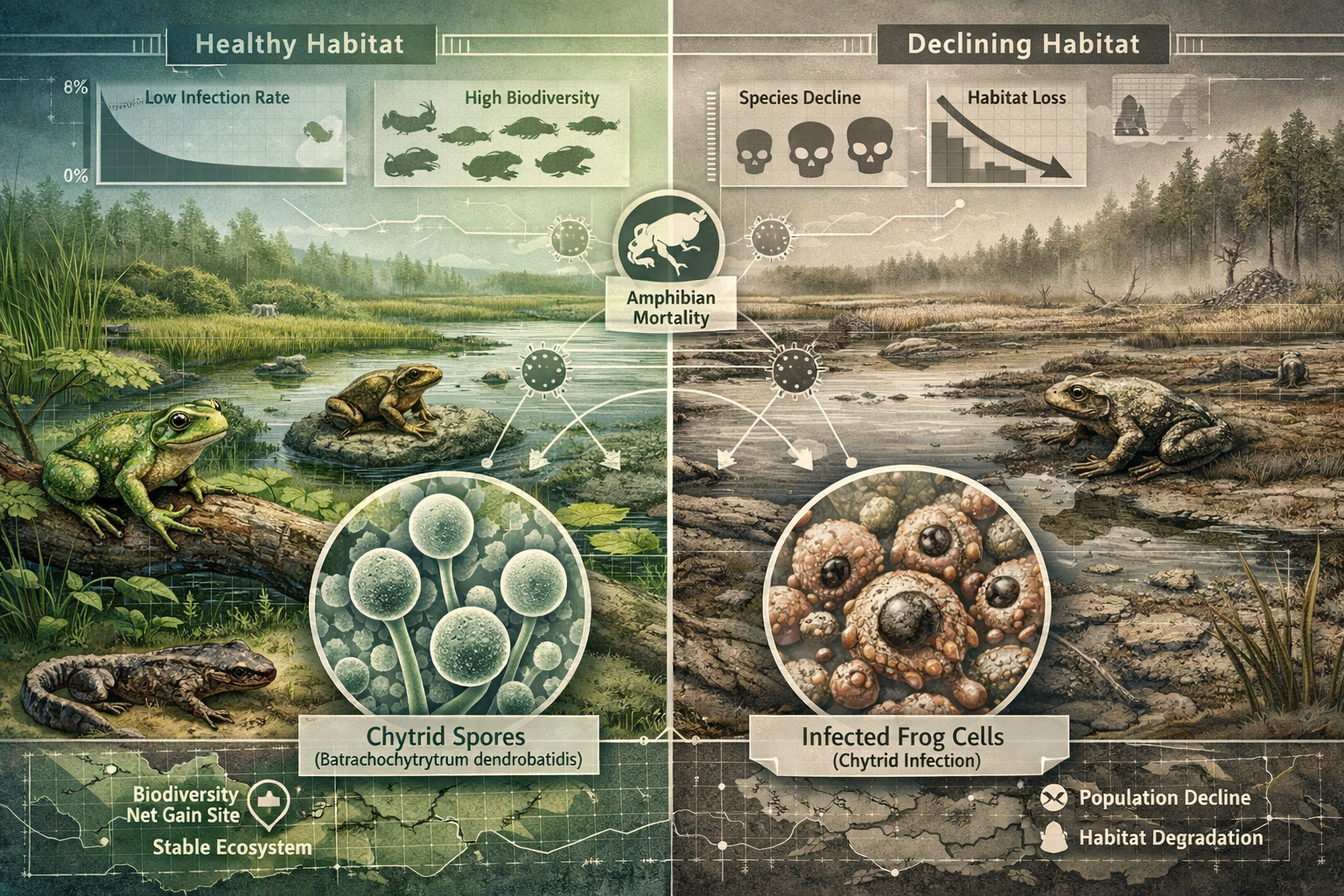
The predictive power of environmental data for disease presence means that comprehensive habitat monitoring serves dual purposes: assessing habitat quality for BNG metric calculations and evaluating disease risk. This integration maximizes data value while controlling costs.
Key environmental parameters to monitor:
| Parameter | Measurement Frequency | Relevance to Disease Risk |
|---|---|---|
| Water temperature | Continuous (data loggers) | Predicts seasonal infection risk |
| Air temperature | Continuous (data loggers) | Influences terrestrial stage exposure |
| Relative humidity | Continuous (data loggers) | Affects zoospore survival outside water |
| Water pH | Monthly during active season | Low pH creates natural refuges |
| Conductivity | Monthly during active season | Indicates water chemistry changes |
| Vegetation structure | Annually | Influences microclimate and behavior |
Continuous temperature and humidity data loggers provide the 15-day historical window needed to interpret disease sampling results accurately[1]. When pathogen screening returns negative results during suboptimal detection conditions, environmental data helps distinguish true absence from detection failure.
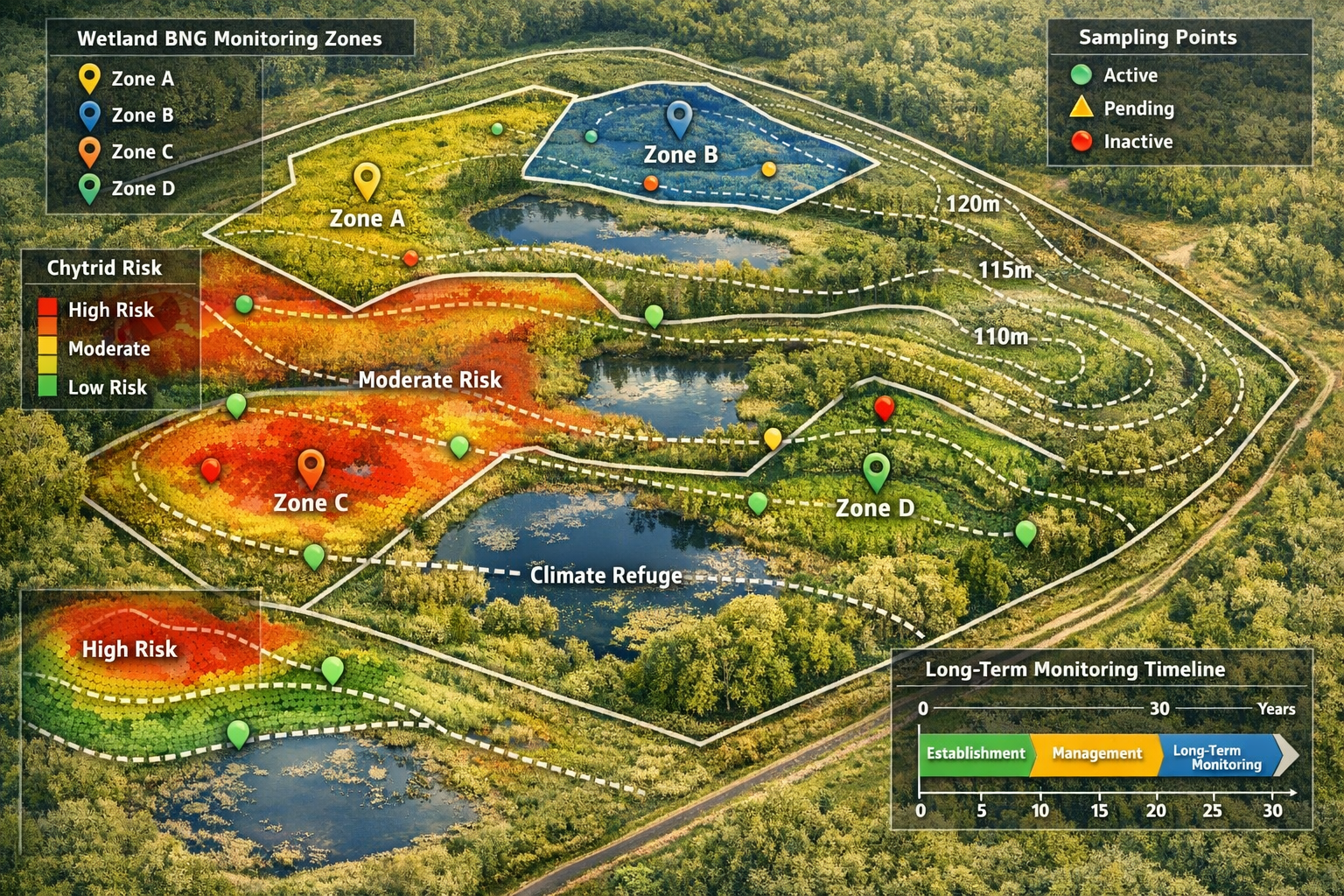
This approach also identifies climate refuges—specific locations within BNG sites where environmental conditions naturally suppress disease. Higher elevations with cooler temperatures, acidic ponds, or thermally stable spring-fed wetlands may harbor healthier amphibian populations[2]. Recognizing and protecting these refuges during habitat creation planning enhances long-term population resilience.
Laboratory Analysis and Result Interpretation
Collected swab samples require specialized molecular analysis to detect and quantify chytrid infection. Most ecological consultancies partner with established wildlife disease laboratories offering PCR-based testing services.
Laboratory considerations:
- Turnaround time: Typically 2-4 weeks for results; plan project timelines accordingly
- Quantification: Request quantitative PCR (qPCR) rather than presence/absence tests to assess infection intensity
- Detection limits: Understand that low-level infections may fall below detection thresholds
- Quality control: Ensure laboratories participate in quality assurance schemes for wildlife disease testing
Interpreting results for BNG applications:
✅ Negative results: No infection detected; continue routine monitoring but maintain biosecurity
⚠️ Low-level positive: Subclinical infections present; increase monitoring frequency and assess population trends
🔴 High-level positive: Active disease likely impacting populations; implement enhanced management and consider intervention
Positive detections don't necessarily doom BNG projects but require adaptive management responses. Some amphibian populations persist with endemic chytrid infections at equilibrium levels. The combination of infection intensity data, population monitoring, and environmental conditions determines whether intervention is necessary.
Designing Disease-Resilient BNG Sites: Proactive Habitat Management
Beyond survey methodology, ecologists can influence long-term disease outcomes through thoughtful BNG site design and management prescriptions. Incorporating disease resilience into habitat creation plans represents genuine innovation in achieving biodiversity net gain without risk.
Habitat Heterogeneity as Disease Management
Creating diverse wetland types within BNG sites provides amphibian populations with options, enabling individuals to select microhabitats that reduce disease exposure or severity.
Design elements that enhance disease resilience:
- Multiple pond types: Include both permanent and ephemeral water bodies; temporary ponds that dry seasonally break disease transmission cycles
- Thermal diversity: Create ponds with varying sun exposure; some amphibians may behaviorally thermoregulate to reduce infection severity
- pH variation: Where geologically feasible, include naturally acidic ponds that inhibit fungal growth
- Terrestrial refuges: Provide abundant upland habitat allowing amphibians to avoid water during high-risk periods
- Connectivity management: Balance colonization facilitation with disease containment through strategic barrier placement
This approach acknowledges that we cannot eliminate chytrid from the landscape but can create conditions where amphibian populations persist despite disease presence. Habitat diversity functions as ecological insurance, ensuring that if disease impacts one habitat type severely, alternative habitats support population persistence.
Long-Term Monitoring Frameworks
BNG legal agreements typically require 30-year monitoring and management. Integrating disease surveillance into these frameworks ensures early detection of emerging problems while populations remain viable for intervention.
Recommended monitoring schedule:
| Survey Year | Monitoring Intensity | Pathogen Screening |
|---|---|---|
| Years 1-3 | Quarterly population surveys | Annual screening (60 samples) |
| Years 4-10 | Biannual population surveys | Biennial screening (30 samples) |
| Years 11-20 | Annual population surveys | Every 3 years (30 samples) |
| Years 21-30 | Biennial population surveys | Every 5 years (30 samples) |
This graduated approach concentrates surveillance during establishment phases when populations are most vulnerable, while maintaining long-term vigilance for disease emergence. Monitoring intensity should increase immediately if disease is detected or if population trends show unexplained declines.
Adaptive management triggers:
📊 Population decline >25% between surveys without obvious habitat degradation
🔬 Detection of chytrid infection where previously absent
🌡️ Environmental conditions shifting toward disease-favorable parameters
🐸 Observation of clinical signs (lethargy, abnormal posture, skin lesions)
When triggers activate, management responses might include: increasing survey frequency, implementing enhanced biosecurity, creating additional refuge habitats, or in severe cases, consulting disease specialists about population intervention options.
Biosecurity in Site Management
Disease prevention extends beyond survey protocols to routine site management activities. Maintenance contractors, volunteers, and visitors can inadvertently introduce or spread pathogens without proper guidance.
Management plan biosecurity provisions:
- Equipment protocols: Dedicated tools for each BNG site; if sharing is unavoidable, thorough disinfection between uses
- Access management: Designated entry/exit points with disinfection stations for public-access sites
- Contractor briefings: Mandatory biosecurity training for all personnel working on or near wetland features
- Signage: Educational signs explaining disease risks and requesting visitor cooperation with biosecurity measures
- Monitoring: Regular checks that biosecurity infrastructure remains functional and adequately stocked
These measures protect the substantial financial and ecological investments represented by BNG sites. When developers purchase biodiversity units or landowners establish habitat banking sites, disease prevention should be explicitly addressed in management plans to safeguard long-term value.
Regulatory Considerations and Professional Standards
As BNG implementation matures in 2026, professional standards for ecological survey work continue to evolve. While current regulations don't explicitly mandate pathogen screening for amphibian populations, the 30-year habitat delivery requirement creates implicit obligations for due diligence.
Professional Competency and Training
Conducting disease surveillance requires additional competencies beyond traditional amphibian survey skills. Ecologists should pursue appropriate training before implementing pathogen screening protocols.
Recommended qualifications:
- Amphibian survey license: Maintain current Natural England survey licenses for protected species
- Disease sampling training: Complete specialized training in wildlife disease sample collection and biosecurity
- Biosecurity certification: Demonstrate understanding of pathogen transmission prevention
- Laboratory partnerships: Establish relationships with accredited wildlife disease testing facilities
- Continuing professional development: Stay current with emerging disease research and detection methodologies
Professional bodies including the Chartered Institute of Ecology and Environmental Management (CIEEM) increasingly recognize wildlife disease as a competency area relevant to ecological consultancy. As BNG questions from planners and developers become more sophisticated, demonstrating disease-aware survey capabilities may provide competitive advantages.
Reporting and Transparency
When pathogen screening is conducted as part of BNG assessments, results should be transparently reported even when infections are detected. Concealing disease presence creates liability risks and undermines conservation objectives.
Essential reporting elements:
- Methods description: Detail sampling protocols, laboratory procedures, and detection limits
- Results presentation: Report both individual-level infection data and population-level prevalence
- Risk interpretation: Contextualize findings with environmental data and population trends
- Management recommendations: Provide specific, actionable guidance for disease-resilient management
- Monitoring proposals: Outline long-term surveillance strategies appropriate to detected risk levels
This transparency enables informed decision-making by all parties involved in BNG delivery. Developers understand the true ecological risks of their investments, landowners can implement appropriate management, and regulators can assess whether proposed BNG sites genuinely deliver lasting biodiversity gains.
Conclusion
The integration of pathogen screening into amphibian survey protocols represents a fundamental evolution in how ecologists approach Amphibian Chytrid Fungus Impacts on BNG Sites: Disease-Resilient Survey Strategies for Ecologists. With 80% of recent amphibian extinctions attributable to chytrid fungus[3], ignoring disease risks in habitats designed for 30-year biodiversity delivery is professionally and ethically untenable. The good news: practical, cost-effective surveillance methods exist that can be seamlessly integrated into existing survey frameworks.
The predictive power of climate data—particularly the 15-day weather window for disease detection optimization[1]—transforms pathogen monitoring from a specialized research activity into a practical consultancy tool. Combined with strategic habitat design that creates natural disease refuges and rigorous biosecurity protocols that prevent human-mediated transmission, ecologists can substantially improve the long-term success probability of BNG wetland sites.
Immediate action steps for ecological consultants:
- Audit current amphibian survey protocols to identify opportunities for disease surveillance integration
- Pursue specialized training in wildlife disease sampling and biosecurity procedures
- Establish laboratory partnerships with accredited wildlife disease testing facilities
- Review existing BNG projects to assess disease risk and monitoring adequacy
- Update proposal templates to include pathogen screening options for amphibian-focused BNG sites
- Engage with clients about the value proposition of disease-resilient habitat design
For developers and landowners involved in BNG delivery, requesting disease-aware survey approaches demonstrates due diligence and protects long-term investments. The relatively modest additional cost of pathogen screening pales in comparison to the financial and reputational risks of BNG site failure due to preventable disease outbreaks.
The field of conservation medicine offers ecological consultancy a powerful toolkit for enhancing biodiversity outcomes. As we move further into 2026 and beyond, disease-resilient survey strategies will likely transition from innovative best practice to expected professional standard. Ecologists who develop these competencies now position themselves—and their clients—for success in an increasingly sophisticated BNG marketplace where genuine, lasting biodiversity gain is the only acceptable outcome.
References
[1] Scientists Use Climate Data Map Predict Amphibian Chytrid Disease – https://nationalzoo.si.edu/news/scientists-use-climate-data-map-predict-amphibian-chytrid-disease
[2] Pmc12967501 – https://pmc.ncbi.nlm.nih.gov/articles/PMC12967501/
[3] Threats To Amphibians – https://www.amphibianark.org/the-crisis/threats-to-amphibians/