

Nearly half of the world's migratory bird species are now in decline, with populations falling faster than surveyors can update baseline assessments. As climate patterns shift migration timing by several days each year, traditional survey methods—limited to specific dates and daylight hours—are missing critical data that could determine whether Biodiversity Net Gain (BNG) sites truly deliver their promised ecological value. The gap between historical migration patterns and current reality is widening, and acoustic monitoring technology offers a solution that captures the full picture without disturbing the very species we aim to protect.
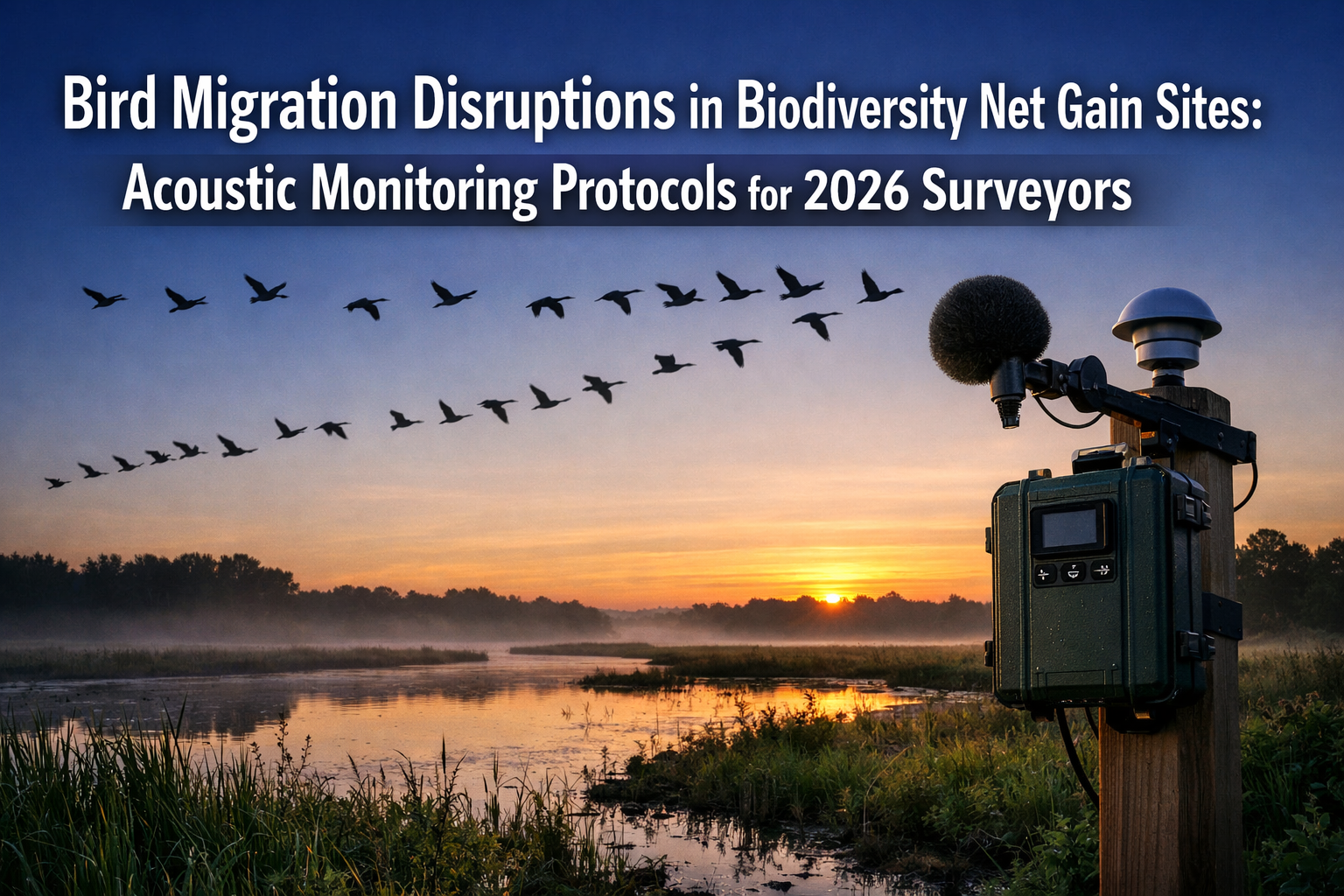
Understanding Bird Migration Disruptions in Biodiversity Net Gain Sites: Acoustic Monitoring Protocols for 2026 Surveyors has become essential for professionals navigating the intersection of climate-shifted migration patterns and regulatory compliance. This comprehensive guide explores how passive acoustic monitoring can revolutionize the way surveyors document migratory bird populations, integrate seasonal data into net gain calculations, and ensure development projects meet their legal obligations while supporting genuine conservation outcomes.
Key Takeaways
- 49% of protected migratory species now have declining populations, with 18 of 26 species moving to higher extinction risk in 2026 being migratory birds, making accurate baseline assessments critical for BNG compliance[4][6]
- Passive acoustic monitoring captures 24/7 data across entire migration periods, detecting nocturnal migrants and climate-shifted timing that traditional point-count surveys miss
- North American birds have shifted ranges an average of 51 miles north since 1966, with migration timing advancing several days earlier, creating mismatches between survey protocols and actual bird presence[1]
- Acoustic data can be integrated directly into BNG metric calculations by providing species richness, abundance indices, and temporal occupancy data that strengthen habitat unit assessments
- Standardized deployment protocols for 2026 require strategic recorder placement, seasonal coverage windows, and quality-controlled analysis to meet regulatory requirements
Understanding the Crisis: Why Bird Migration Disruptions Matter for BNG Sites
The accelerating decline in migratory bird populations presents a fundamental challenge to Biodiversity Net Gain assessments. When baseline surveys fail to capture the full extent of species presence—particularly for migrants whose timing and routes are rapidly changing—the resulting biodiversity unit calculations may significantly underestimate a site's true ecological value or overlook critical conservation opportunities.
The Scale of Migration Disruption
Recent data reveals the severity of the crisis affecting Bird Migration Disruptions in Biodiversity Net Gain Sites:
- Peak night migration timing has shifted several days earlier over the 1996-2016 period, driven by warming temperatures that cause insects to emerge before birds arrive[1]
- Most migratory birds (among 150 North American species studied) still time migration to past conditions rather than current climate patterns, creating dangerous mismatches with food availability[1]
- Habitat loss, intensive agriculture, and warming temperatures are primary drivers of decline, with hotspots associated with high-intensity agricultural regions[3]
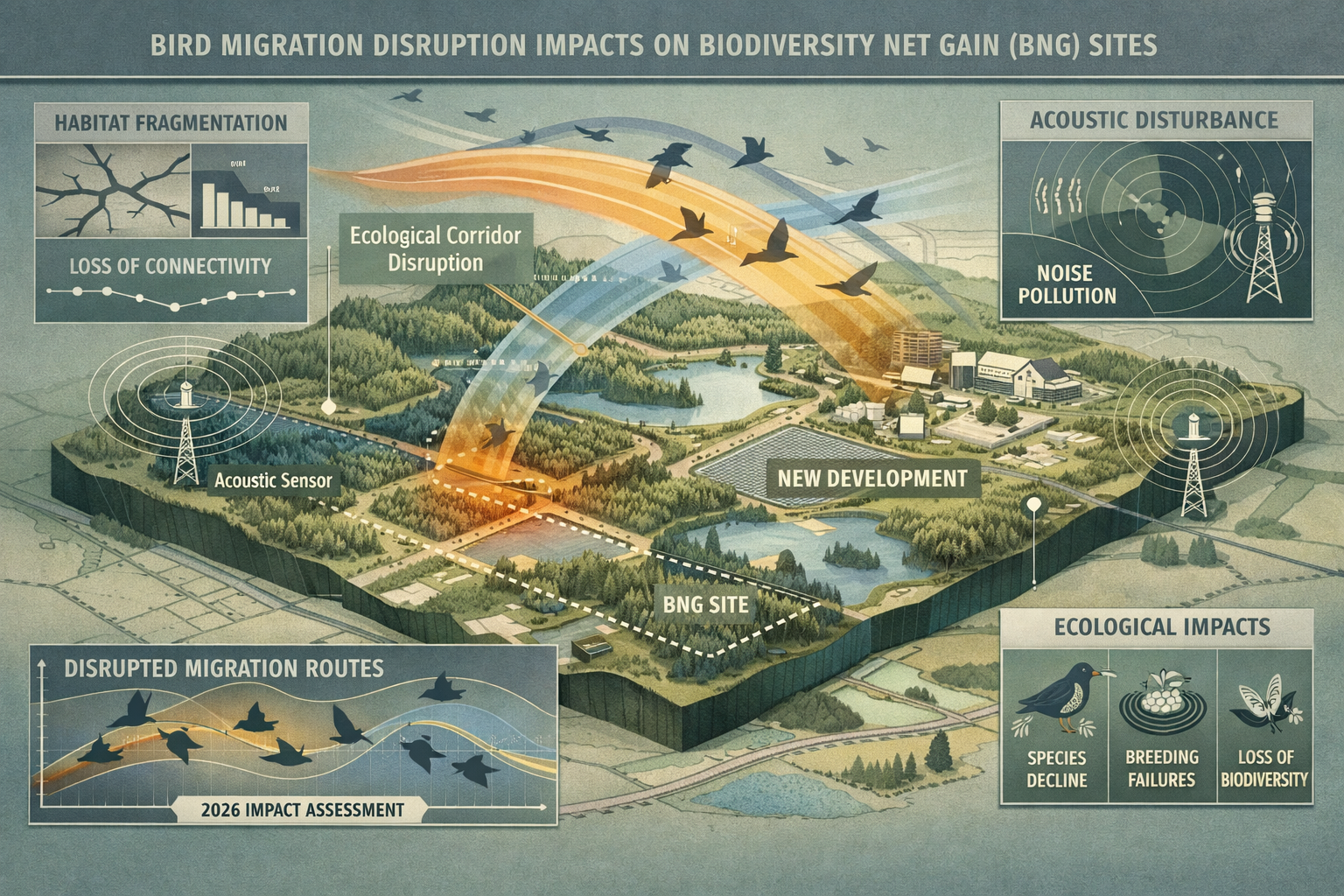
These shifts mean that traditional survey windows—often based on historical migration timing—may miss peak species presence entirely. A site surveyed in early May might receive an "absent" designation for species that now pass through in late April, fundamentally skewing the baseline assessment.
Implications for BNG Compliance
For developers and landowners working to achieve Biodiversity Net Gain, these disruptions create several challenges:
🔍 Baseline accuracy: Historical survey protocols may no longer capture current species assemblages, leading to undervalued pre-development baselines
📊 Metric calculations: BNG metrics rely on habitat distinctiveness and species richness data that may be incomplete without full seasonal coverage
⚖️ Legal compliance: Incomplete surveys could result in insufficient biodiversity unit allocation, creating compliance risks and potential project delays
🌍 Conservation effectiveness: Sites designed without understanding actual migration patterns may fail to provide the ecological functions they're intended to support
Understanding these challenges is essential for anyone involved in planning BNG projects or conducting baseline assessments in 2026.
Acoustic Monitoring Protocols for 2026 Surveyors: Core Methodology
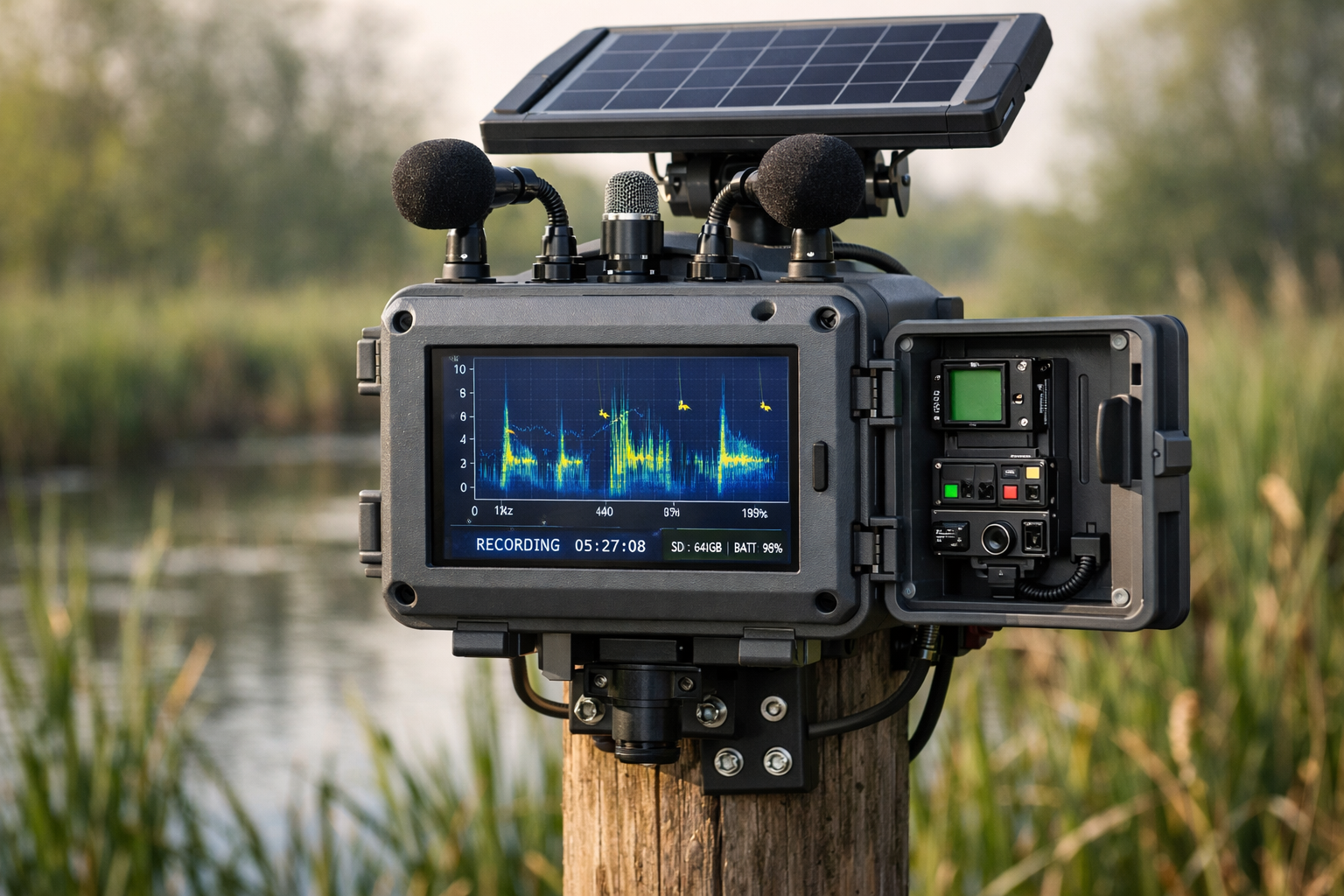
Passive acoustic monitoring represents a transformative approach to documenting Bird Migration Disruptions in Biodiversity Net Gain Sites. Unlike traditional point counts that capture snapshots during specific hours, acoustic recorders operate continuously, building comprehensive datasets that reveal the full temporal dynamics of bird communities.
Why Acoustic Monitoring Excels for Migration Documentation
Acoustic monitoring offers several advantages specifically relevant to detecting climate-shifted migration patterns:
24/7 Coverage 🕐
Recorders operate day and night, capturing nocturnal migrants that traditional surveys miss entirely. Many species migrate primarily at night, making them invisible to standard daytime point counts.
Extended Seasonal Windows 📅
Continuous deployment across entire migration periods (March-May for spring, August-October for autumn) ensures no shifted timing goes undetected, regardless of how climate change alters traditional schedules.
Non-Disturbance 🦜
Passive recording requires no human presence after deployment, eliminating observer effects and allowing natural behavior patterns to continue undisturbed—critical for sensitive species and legally protected sites.
Permanent Records 💾
Audio files create verifiable archives that can be reanalyzed as identification algorithms improve or if regulatory questions arise, providing defensible documentation for BNG assessments.
Weather Independence ☔
Unlike human observers who must avoid surveying in rain or high winds, acoustic recorders continue operating through varied conditions, capturing data during weather events that may coincide with migration pulses.
Equipment Selection and Deployment Standards
For 2026 surveyors implementing acoustic monitoring protocols, equipment selection must balance recording quality, durability, and data management capabilities:
| Equipment Feature | Minimum Standard | Recommended Specification |
|---|---|---|
| Sampling Rate | 32 kHz | 44.1-48 kHz for full bird frequency range |
| Recording Schedule | Dawn/dusk + night hours | Continuous 24/7 or 1-minute every 5 minutes |
| Storage Capacity | 128 GB | 256+ GB for extended deployments |
| Battery Life | 2 weeks | 4+ weeks or solar-powered |
| Weatherproofing | IP65 rating | IP67 rating for wetland sites |
| Microphone Quality | Omnidirectional, 20Hz-20kHz | Low self-noise (<15dBA) |
Strategic Recorder Placement
Proper placement determines detection success. For Bird Migration Disruptions in Biodiversity Net Gain Sites: Acoustic Monitoring Protocols for 2026 Surveyors, consider these placement principles:
-
Habitat Representation: Position recorders to sample each distinct habitat type within the BNG site, ensuring proportional coverage of woodlands, grasslands, wetlands, and hedgerows
-
Edge Effects: Place recorders 30-50 meters from habitat boundaries to capture both interior species and those using transition zones as migration stopover points
-
Height Optimization: Mount recorders 1.5-2 meters above ground for terrestrial species, or higher (3-5 meters) in open areas to maximize detection radius for aerial migrants
-
Acoustic Interference: Avoid placement near roads, machinery, or water features that generate continuous background noise, which can mask bird vocalizations
-
Site Access: Balance optimal acoustic positioning with practical access needs for battery changes and data downloads, particularly during wet seasons
Seasonal Coverage Windows
Climate-shifted migration requires extended survey windows that account for both early arrivals and late stragglers. Recommended coverage for UK BNG sites in 2026:
Spring Migration: March 1 – June 15
Extended start date captures early migrants responding to warming trends; extended end date ensures late-breeding species aren't missed
Breeding Season: May 1 – July 31
Overlaps with late spring migration to document both passage migrants and breeding residents
Autumn Migration: July 15 – November 15
Early start captures post-breeding dispersal; late end captures delayed migrants and partial migrants responding to mild autumns
Winter Monitoring: December 1 – February 28
Documents overwintering species and increasingly common partial migrants that no longer complete full migrations
Integrating Acoustic Data into BNG Metric Calculations
The true value of acoustic monitoring lies in translating raw audio data into actionable metrics that feed directly into Biodiversity Net Gain calculations. This integration ensures that climate-shifted migration patterns inform habitat unit assessments and demonstrate genuine conservation outcomes.
From Audio Files to Species Data
The analytical pathway for Bird Migration Disruptions in Biodiversity Net Gain Sites: Acoustic Monitoring Protocols for 2026 Surveyors follows these steps:
Step 1: Automated Detection 🤖
Modern recognition software scans audio files to identify potential bird vocalizations, filtering out wind, rain, insects, and other non-target sounds. Current algorithms achieve 85-95% accuracy for common species.
Step 2: Species Identification 🔍
Detected vocalizations are matched against reference libraries containing thousands of species-specific calls and songs. Confidence scores indicate identification certainty.
Step 3: Manual Validation ✓
Trained ornithologists review uncertain identifications and random samples of automated results to ensure quality control and catch algorithm errors.
Step 4: Data Compilation 📊
Validated detections are compiled into species lists with temporal metadata: date, time, recording location, and detection frequency.
Step 5: Metric Calculation 📈
Species data are transformed into BNG-relevant metrics: species richness, temporal occupancy, abundance indices, and community composition.
Key Metrics for BNG Integration
Acoustic monitoring provides several metrics that directly enhance biodiversity net gain assessments:
Species Richness 🦆
Total number of species detected across the monitoring period. Higher richness indicates greater habitat distinctiveness and contributes to higher biodiversity unit scores in BNG assessments.
Temporal Occupancy ⏱️
Proportion of recording days on which each species was detected. This metric reveals whether species are transient migrants (low occupancy) or resident/breeding populations (high occupancy), informing habitat condition assessments.
Migration Timing Shifts 📅
Comparison of detection dates against historical baselines reveals climate-induced phenological shifts. Sites supporting early-arriving species demonstrate adaptive habitat value.
Nocturnal Activity Indices 🌙
Frequency of nocturnal detections indicates stopover habitat quality for night migrants—a critical function invisible to traditional surveys.
Community Composition 🌳
Relative abundance of different species groups (woodland specialists, wetland species, farmland birds) characterizes habitat type and condition, directly informing habitat distinctiveness ratings.
Enhancing Habitat Condition Assessments
The Biodiversity Metric 4.0 (current standard for UK BNG) includes habitat condition assessments that determine multipliers for biodiversity unit calculations. Acoustic data strengthens these assessments by providing evidence for several condition criteria:
- Connectivity: Detection of wide-ranging species indicates functional connectivity with surrounding landscapes
- Structural Diversity: Presence of species requiring varied vegetation structures (canopy, shrub, ground layers) confirms structural complexity
- Disturbance Levels: Absence of disturbance-sensitive species may indicate condition issues requiring management intervention
- Seasonal Resource Availability: Continued presence of breeding species throughout nesting season confirms adequate food resources
For off-site BNG delivery, acoustic monitoring provides robust evidence that habitat creation or enhancement has achieved its intended condition targets, supporting biodiversity unit sales and regulatory approval.
Quality Assurance and Regulatory Compliance
Implementing Bird Migration Disruptions in Biodiversity Net Gain Sites: Acoustic Monitoring Protocols for 2026 Surveyors requires rigorous quality assurance to ensure data meet regulatory standards and withstand scrutiny during planning approval processes.
Data Quality Standards
Professional acoustic monitoring for BNG compliance should meet these quality benchmarks:
✅ Recording Quality: Minimum signal-to-noise ratio of 10 dB for analyzed vocalizations; files with excessive wind or rain noise flagged for exclusion
✅ Temporal Coverage: No gaps exceeding 48 hours in deployment during target monitoring windows; minimum 80% operational uptime
✅ Identification Confidence: Species identifications require minimum 80% confidence scores from automated algorithms OR manual validation by experienced ornithologists
✅ Metadata Completeness: All recordings tagged with precise location (GPS coordinates), date/time, equipment specifications, and environmental conditions
✅ Chain of Custody: Clear documentation of who deployed equipment, retrieved data, conducted analysis, and validated results
Regulatory Considerations
When using acoustic monitoring to support BNG reports, surveyors must address several regulatory requirements:
Competency Standards 👨🔬
Acoustic survey design, deployment, and analysis should be conducted by ecologists with demonstrable training in bioacoustics. Many local planning authorities now require evidence of relevant qualifications or professional memberships.
Survey Effort Justification 📋
BNG assessment reports must explain why acoustic monitoring was selected, how it complements or replaces traditional methods, and why the chosen deployment strategy is appropriate for the site and target species.
Integration with Traditional Surveys 🔄
Acoustic monitoring typically supplements rather than entirely replaces visual surveys. Combined approaches provide the most robust datasets, with acoustic data capturing nocturnal and early-morning activity while visual surveys document behavior and breeding evidence.
Data Archiving Requirements 💾
Some authorities require raw audio files to be archived for minimum periods (typically 5-10 years) to allow independent verification if questions arise during post-development monitoring.
Species Protection Compliance ⚖️
Acoustic monitoring must comply with wildlife protection legislation. While passive recording is generally non-disturbance, playback experiments or close approaches to nests for recorder placement may require licenses.
Common Pitfalls and Solutions
Surveyors implementing acoustic protocols should avoid these frequent mistakes:
❌ Insufficient Validation: Relying solely on automated identification without manual checking leads to false positives and regulatory challenges
✅ Solution: Validate minimum 10% of automated identifications plus all rare/protected species detections
❌ Inadequate Spatial Coverage: Single recorder locations miss habitat heterogeneity within larger BNG sites
✅ Solution: Deploy multiple recorders proportional to site size (minimum 1 per 5 hectares for complex sites)
❌ Ignoring Temporal Patterns: Analyzing only presence/absence without considering detection timing misses migration shifts
✅ Solution: Include phenological analysis comparing detection dates to regional historical baselines
❌ Poor Equipment Maintenance: Battery failures and moisture damage create data gaps during critical migration periods
✅ Solution: Implement weekly site visits during peak migration, with backup equipment available for immediate replacement
Practical Implementation: Case Study Applications
Real-world application of Bird Migration Disruptions in Biodiversity Net Gain Sites: Acoustic Monitoring Protocols for 2026 Surveyors demonstrates how acoustic data transforms BNG outcomes. Consider these implementation scenarios:
Scenario 1: Wetland Creation for Housing Development
A 50-hectare housing development in southern England required 15 biodiversity units to achieve 10% net gain. The developer proposed creating 8 hectares of wetland habitat on-site, but initial visual surveys conducted in May detected only common species, suggesting the wetland would generate insufficient units.
Acoustic Monitoring Intervention:
- Deployed 3 recorders across the proposed wetland area from March through November
- Captured 47 species including 12 passage migrants not detected in visual surveys
- Documented nocturnal activity by water rail and bittern, both indicators of high-quality wetland habitat
- Revealed peak migration activity occurred in late March and early October—outside original survey windows
BNG Outcome:
The expanded species list and evidence of migration stopover function increased the wetland's habitat distinctiveness rating from "medium" to "high," generating 18.5 biodiversity units—exceeding the requirement and eliminating the need for off-site biodiversity unit purchases.
Scenario 2: Farmland Diversification with Hedgerow Enhancement
A 120-hectare agricultural estate sought to generate biodiversity units for sale through hedgerow restoration and wildflower meadow creation. Traditional surveys suggested modest biodiversity gains, potentially limiting market value.
Acoustic Monitoring Intervention:
- Deployed 5 recorders along restored hedgerows and in meadow areas
- Continuous monitoring from February through August captured breeding bird territories
- Documented 8 species of conservation concern, including yellowhammer and linnet
- Revealed hedgerows functioned as migration corridors, with 23% higher species richness during migration peaks
BNG Outcome:
Acoustic evidence of conservation-priority species and migration corridor function supported "very high" distinctiveness ratings for hedgerow habitats. The estate generated 42 biodiversity units available for sale to developers, significantly exceeding initial projections based on visual surveys alone.
Scenario 3: Post-Development Monitoring Verification
A commercial development completed three years earlier included BNG commitments for woodland creation expected to generate 25 biodiversity units. Post-development monitoring was required to verify achievement.
Acoustic Monitoring Intervention:
- Deployed recorders in created woodland and reference sites (existing mature woodland)
- Compared species composition, richness, and community structure
- Analyzed temporal occupancy to distinguish resident breeding birds from transient visitors
- Documented seasonal patterns demonstrating year-round habitat functionality
BNG Outcome:
Acoustic data provided objective evidence that created woodland had achieved 78% of reference site species richness within three years—ahead of predicted trajectory. This verification satisfied regulatory requirements and released developer bonds, demonstrating the value of acoustic monitoring for long-term BNG compliance.
Future Developments and Emerging Technologies
As climate change continues to shift migration patterns, Bird Migration Disruptions in Biodiversity Net Gain Sites: Acoustic Monitoring Protocols for 2026 Surveyors will evolve with advancing technology and refined methodologies.
Technological Innovations on the Horizon
Artificial Intelligence Advancement 🤖
Next-generation algorithms incorporating deep learning are achieving 95%+ identification accuracy, reducing manual validation requirements and enabling real-time species alerts during critical migration periods.
Networked Monitoring Systems 📡
Cloud-connected recorders with cellular or satellite uplinks enable remote monitoring of equipment status, immediate data access, and adaptive deployment strategies that respond to detected migration pulses.
Multi-Sensor Integration 🛰️
Combining acoustic recorders with thermal imaging, radar, and weather stations creates comprehensive migration monitoring systems that correlate bird movements with environmental conditions, improving predictive models for future BNG site design.
Miniaturization and Cost Reduction 💰
Smaller, less expensive recorders enable denser deployment networks, improving spatial resolution and detection probability for rare species—critical for demonstrating conservation value in BNG assessments.
Policy and Methodological Evolution
The integration of acoustic monitoring into BNG frameworks will likely accelerate as:
- Standardized protocols emerge from professional bodies and regulatory agencies, providing clear guidance on deployment, analysis, and reporting requirements
- Metric refinement incorporates temporal occupancy and migration functionality explicitly into biodiversity unit calculations
- Long-term datasets accumulate, enabling robust baseline comparisons and quantification of climate-induced migration shifts
- Cross-sector collaboration between developers, ecologists, and technology providers optimizes cost-effectiveness and data quality
For professionals working in biodiversity surveying, staying current with these developments will be essential for delivering competitive, compliant BNG solutions throughout the remainder of this decade and beyond.
Conclusion
The convergence of accelerating bird population declines, climate-shifted migration patterns, and mandatory Biodiversity Net Gain requirements has created an urgent need for more sophisticated monitoring approaches. Traditional survey methods, designed for stable migration timing and predictable species distributions, are increasingly inadequate for capturing the dynamic reality of 2026's ecological landscape.
Bird Migration Disruptions in Biodiversity Net Gain Sites: Acoustic Monitoring Protocols for 2026 Surveyors provides a pathway forward. By deploying passive acoustic recorders that operate continuously across extended seasonal windows, surveyors can document the full temporal dynamics of bird communities—including nocturnal migrants, climate-shifted arrivals, and stopover habitat use that traditional methods miss entirely.
The benefits extend beyond improved species detection. Acoustic data integrates directly into BNG metric calculations, strengthening habitat condition assessments, verifying post-development outcomes, and providing defensible evidence for regulatory compliance. For developers, this means more accurate baseline assessments, optimized habitat creation strategies, and reduced risk of compliance failures. For landowners generating biodiversity units, acoustic monitoring demonstrates conservation value that maximizes market potential.
Actionable Next Steps
For surveyors and ecological consultants implementing acoustic monitoring protocols:
- Invest in training: Develop competency in acoustic survey design, equipment deployment, and data analysis through professional development courses and mentorship
- Build equipment capacity: Acquire sufficient recorders to deploy networks across typical project scales, ensuring adequate spatial coverage
- Establish analysis partnerships: Develop relationships with specialists in bioacoustic analysis or invest in validated software tools and quality assurance protocols
- Update standard methodologies: Integrate acoustic monitoring into standard survey packages for BNG assessments, positioning your services at the forefront of best practice
For developers and planners:
- Specify acoustic monitoring: Include acoustic survey requirements in ecological survey briefs for projects where migration patterns may influence BNG calculations
- Extend survey windows: Ensure survey specifications accommodate extended seasonal coverage that captures climate-shifted migration timing
- Plan for verification: Incorporate acoustic monitoring into post-development monitoring programs to verify BNG delivery and satisfy regulatory requirements
For landowners and habitat bankers:
- Document conservation value: Use acoustic monitoring to demonstrate that habitat creation or enhancement supports migration functions and conservation-priority species, maximizing biodiversity unit values
- Establish baselines: Deploy long-term monitoring to track habitat development trajectories and demonstrate continuous improvement
The crisis facing migratory birds demands that conservation science evolve as rapidly as the climate patterns driving population declines. Acoustic monitoring represents not just a technological advancement, but a fundamental shift toward monitoring approaches that match the scale and complexity of the ecological challenges we face. For 2026 surveyors committed to delivering genuine biodiversity net gain—not just regulatory compliance—these protocols offer the tools to make evidence-based decisions that support both development needs and conservation imperatives.
References
[1] Birds At Risk 2026 – https://www.climatecentral.org/climate-matters/birds-at-risk-2026
[2] Outlook For Migratory Species Worsens Amid Habitat Loss Avian Flu Report Finds – https://news.mongabay.com/2026/03/outlook-for-migratory-species-worsens-amid-habitat-loss-avian-flu-report-finds/
[3] Study Birds Decimated By Intensive Agriculture Warming Temperatures 2026 03 04 – https://biologicaldiversity.org/w/news/press-releases/study-birds-decimated-by-intensive-agriculture-warming-temperatures-2026-03-04/
[4] Plight Of Migratory Species Is Worsening New Report Finds Ahead Of Global Wildlife Meeting – https://www.unep-wcmc.org/en/news/plight-of-migratory-species-is-worsening-new-report-finds-ahead-of-global-wildlife-meeting
[5] Share Of Migratory Wild Animal Species With Declining Populations Despite Un Treaty Protections Worsens From 44 To 49 In Two Years – https://yubanet.com/world/share-of-migratory-wild-animal-species-with-declining-populations-despite-un-treaty-protections-worsens-from-44-to-49-in-two-years/
[6] 5 Key Findings How Nearly Half Worlds Migratory Animal Species Are Decline – https://unu.edu/ehs/article/5-key-findings-how-nearly-half-worlds-migratory-animal-species-are-decline