Top 12 questions by planners about Biodiversity Net Gain (BNG)
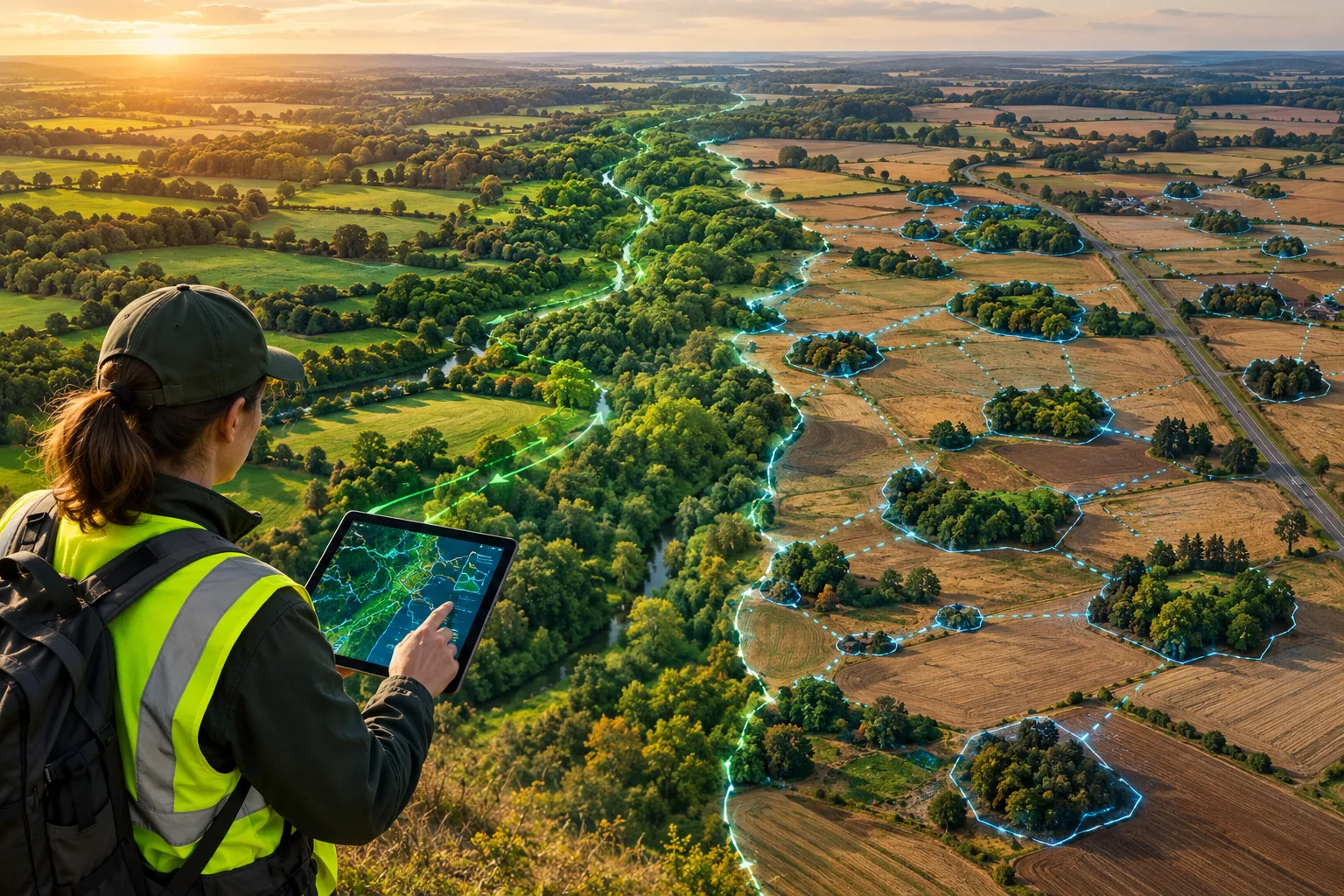
Image: female surveyor with iPad and rucksack standing in forest. 1. How would you create a model that produces zero risk from judicial review? If local planning authorities (LPAs) set

Image: female surveyor with iPad and rucksack standing in forest. 1. How would you create a model that produces zero risk from judicial review? If local planning authorities (LPAs) set

Starting on 2nd April 2024, policies regarding Biodiversity Net Gain (BNG) also apply to smaller development sites. This includes residential locations of less than 1 hectare with fewer than 10

Image: surveyor holding paper and looking over river. The Government’s 25-year Environment Plan has, as one of its objectives, “to leave the environment in a better state than we found

Image: drone hovering over river in field. The Environment Act’s biodiversity net gain (BNG) legislation has a 2-year phasing-in period, which ends in November 2023. That means developers must ensure
As of 6 August 2026, mandatory Biodiversity Net Gain in England operates under a significantly revised regulatory framework, one that will directly affect how thousands of planning applications are assessed, how ecologists structure their advice, and how developers manage compliance risk. The Biodiversity Net Gain BNG changes 6 August 2026…
From today, 6 August 2026, amended regulations reshape mandatory Biodiversity Net Gain (BNG) across England, and the practical consequences for developers, ecologists, and local planning authorities (LPAs) are immediate. The Biodiversity Net Gain changes 6 August 2026 developers ecologists need to act on are not minor tweaks: they introduce new…
Last updated: August 5, 2026 Quick Answer: From 6 August 2026, four significant changes to mandatory Biodiversity Net Gain (BNG) take effect in England under SI 2026 No. 790. A new small-site exemption removes BNG obligations for developments of 0.2 hectares or less (provided no on-site priority habitats are affected),…
Last updated: August 5, 2026 Quick Answer: The Biodiversity Net Gain August 2026 update introduces a significant 0.2 hectare area-based exemption that came into force before 31 July 2026, which the Government estimates could remove roughly 50% of residential planning permissions from BNG obligations. At the same time, the self-build…
As of 6 August 2026, the Biodiversity Net Gain (BNG) regulatory landscape in England shifts significantly, and developers who are not prepared risk costly delays, planning refusals, or missed exemptions that could save thousands of pounds per project. This Biodiversity Net Gain changes 6 August 2026 developers guide covers every…
On 14 July 2026, Defra published amendment regulations that will fundamentally reshape England's Biodiversity Net Gain (BNG) framework, and developers have a narrow window to act before the changes take effect. This Biodiversity Net Gain changes 6 August 2026 developer guide covers every confirmed amendment, who wins, who loses, and…
Just two days from now, on 6 August 2026, the rules governing Biodiversity Net Gain (BNG) in England will shift in ways that affect thousands of planning applications every year. The BNG changes 6 August 2026 small site exemption package, confirmed by DEFRA on 14 July 2026, introduces a new…
Half of all residential planning applications in England may no longer require a mandatory Biodiversity Net Gain assessment, and that shift took effect on 6 August 2026. For developers, ecologists and planning consultants who have spent the past year embedding BNG into their workflows, the amendments introduced on that date…
Last updated: August 3, 2026 Quick Answer: From 6 August 2026, England's Biodiversity Net Gain (BNG) framework changes significantly. A new small-site exemption (0.2 hectares or less with no priority habitat) and a temporary development exemption (five years or less) reduce the burden on many minor projects, while the removal…
Six weeks. That is all the time separating UK developers from the most significant revision to mandatory Biodiversity Net Gain rules since the framework became law in February 2024. On 6 August 2026, four substantive amendments to the BNG regime take legal effect, and every planning application submitted from that…
Last updated: July 31, 2026 Quick Answer: As of 31 July 2026, the BNG 0.2 hectare exemption is now in force, meaning any development site with a total area below 0.2 hectares (2,000 m²) is automatically exempt from the mandatory biodiversity net gain requirement, provided it does not impact a…
Image: surveyor holding a notepad in field with wildlife. What are statutory biodiversity credits? The government will provide statutory biodiversity credits that builders can buy to meet their requirements, which guarantees that BNG (biodiversity net gain) won’t slow down development. A newly released list from DEFRA provides an estimate for…
Image: photograph of biodiversity surveyor. Biodiversity Net Gain Survey Introduction Biodiversity Net Gain (BNG) is a legal necessity in today’s planning world and it became a part of planning law in February 2024. From that moment on, developers were directed to engage ecological consultancies to perform a BNG assessment on…
Image: surveyor sitting and making notes on notepad. 1. DEFRA’s commitment to the natural environment DEFRA says it continues to prioritize on-site delivery and, in so doing, misses an opportunity to secure what they call impactful landscape-scale outcomes for nature. There are still important particulars and directions that need to…
Biodiversity Net Gain is a phrase we are likely to hear with increasing frequency due to its introduction as a requirement in the 2021 Environment Act. Now, all new development and infrastructure projects are mandated to deliver BNG. Biodiversity strategy is being pioneered to counter biodiversity loss: a problem that…
Image: female surveyor writing on notepad in field The biodiversity net gain (BNG) policy, which was created under the Environment Act of 2021, has been implemented. Biodiversity net gain (BNG) is supposed to help in the recovery of England’s ecosystems. It demands that developers secure at least a 10% net…
Image: surveyor in yellow jacket and hardhat looking at diggers in field. Parliament has put in place laws necessary for biodiversity net gain (BNG) to operate, and the promised draft secondary guidance has been published. The Environment Act 2021 requires BNG policy to make sure that nature is left in…
Image: man with hat opening notebook in forest. Biodiversity Net Gain Assessment Reporting Biodiversity net gain (BNG) became a legal requirement in the planning process for the first time in February 2024. It’s a long-term protective and enhancement measure for the natural environment that derives from the Environment Act 2021. …
Image: drone flying over grasslands. Biodiversity Net Gain (BNG) was made official in 2024, so if you are a developer or a planner, you need to think about how to apply this to your projects. Biodiversity Surveyors is building a vast network of nature recovery sites across every local planning…
It is well accepted that the planet’s natural resources have been, and still are, ‘mined’ and consequently depleted for the sake of the financial and economic returns they yield. For the past four centuries, nature has essentially bankrolled our growth and success. Yet, there has been a relentless intensification of…
Biodiversity Net Gain, or “BNG”, aims to balance two important things: the basic need for agriculture and the equally essential need to protect natural ecosystems. It’s an effort to restore biodiversity, which brings many benefits and few drawbacks. Farmers and landowners can help bring back healthy ecosystems and get more…
Introduction After a lengthy wait, biodiversity net gain (BNG) made compulsory by the Environment Act is now in shape. Faced with new regulatory problems, developers are researching new avenues to achieve potent biodiversity net gain (BNG) delivery off-site. We rely on real-life experiences by some of those already grappling with…
Image: surveyor in forest taking a photograph. As of 12th February 2024, virtually all new-build developments must follow the Biodiversity Net Gain (BNG) plan. So, this means that if a building project requires planning permission, it has to include a biodiversity plan in its application, and the plan must show…
Image: surveyor with iPad plotting points. These points lay out a road map for BNG to fulfil the promise that was made in the 2021 Environment Act to actually deliver something meaningful and beneficial for biodiversity. Our primary response is that any legislation must remember the original intent of BNG:…
SFI is the first of three new environmental land management schemes being introduced under the government’s Agricultural Transition Plan. The other two schemes are Local Nature Recovery and Landscape Recovery. Image: man standing in river with colleagues looking at him. SFI helps farmers manage land in a way that boosts…
Image: Photograph of five panellists at the RESI 2022 conference Biodiversity Net Gain is a legal requirement for development in England. If it is shown that a site has not achieved it, planning permission risks denial. Developers must therefore address the potential impact of their projects on biodiversity and either…
Image: surveyor checking stones on the ground. Planners have been discussing the confluence of housing and environmental issues in respect of Biodiversity Net Gain (BNG). Here are the main points: Key questions? What legal requirements stem from the 2021 Environment Act? What is needed for successful implementation? Following the mitigation…
Image: surveyor in green hat with clipboard in field. BNG has been made a requirement to be legally followed in all new construction projects. It should not be viewed as merely another planning hurdle, but as a significant and real opportunity to push for sustainable designs to come into being.…
Image: female surveyor with iPad and rucksack standing in forest. 1. How would you create a model that produces zero risk from judicial review? If local planning authorities (LPAs) set up their own sites that are not separate from the authorities’ planning functions, then there is a significant risk of…
Starting on 2nd April 2024, policies regarding Biodiversity Net Gain (BNG) also apply to smaller development sites. This includes residential locations of less than 1 hectare with fewer than 10 homes and commercial sites of under a hectare or 1,000 square meters. While some types of sites will remain exempt,…
Image: surveyor holding paper and looking over river. The Government’s 25-year Environment Plan has, as one of its objectives, “to leave the environment in a better state than we found it.” As expressed in the Environment Act, starting in 2024, developers will need to ensure at least a 10% net…
Image: drone hovering over river in field. The Environment Act’s biodiversity net gain (BNG) legislation has a 2-year phasing-in period, which ends in November 2023. That means developers must ensure they leave an area of land more ecologically rich and diverse than it was before they started development. Otherwise, you…
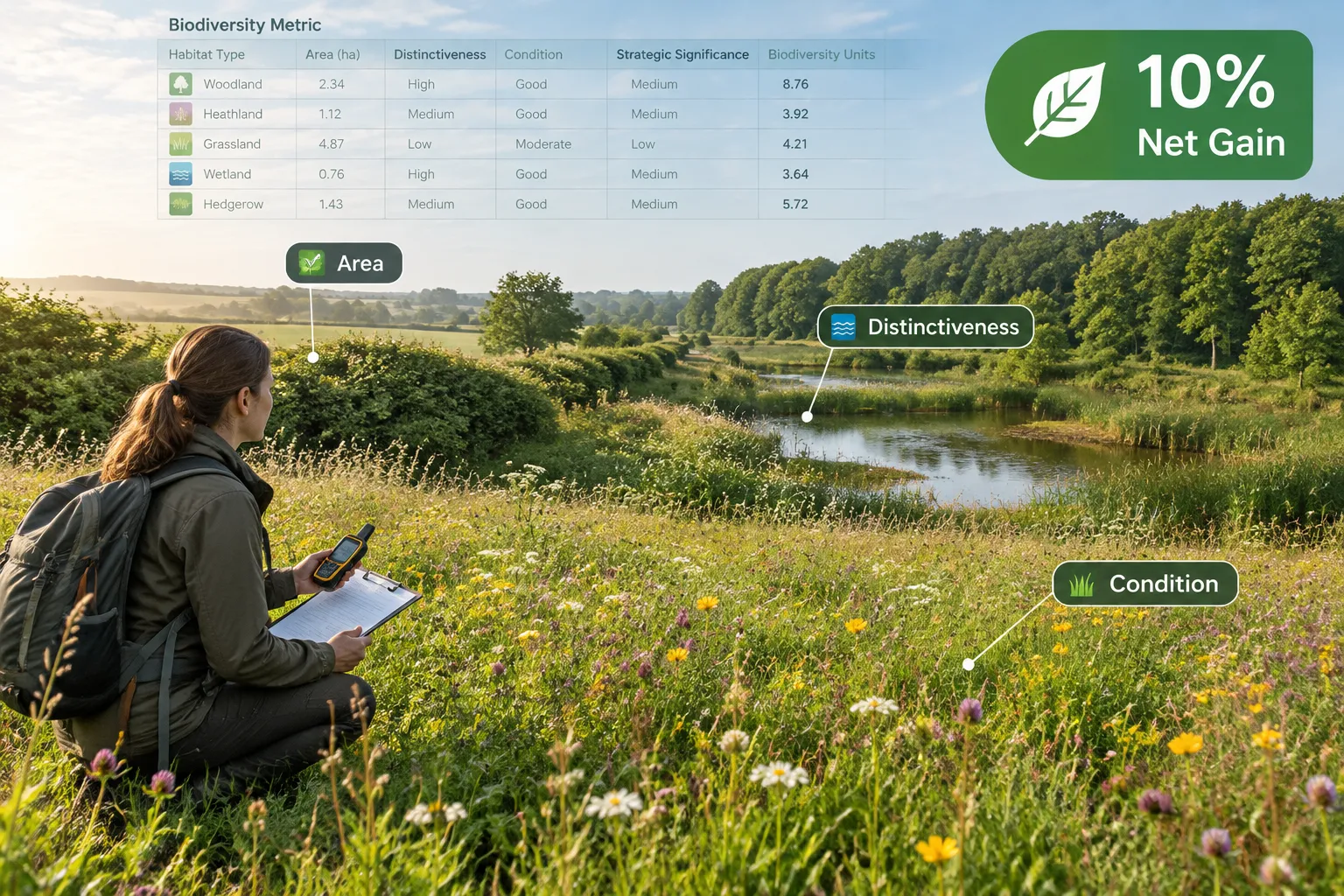
About Biodiversity Net Gain BNG is a concept that could dramatically change the environmental planning scene. It now obligates all developers to ensure that their projects do not diminish the environment but actually enhance it. The “net gain” is determined using the Department for Environment, Food, and Rural Affairs (DEFRA)…