

Fifty thousand pounds. That is the figure the Conservative Party put on the table on the opening day of its October 2026 conference, claiming its policies could knock that much off the price of a new-build home. Roughly £6,000 of that saving, the party said, would come from easing biodiversity rules. It is a striking number for an opposition pledge, and one that deserves scrutiny before developers, landowners or planning consultants change a single survey schedule.
The Conservative conference biodiversity rules Natural England pledge BNG October 2026 announcement has generated plenty of headlines, but it is a policy promise from the opposition, not a change to the law. Biodiversity Net Gain (BNG) remains a legal requirement for most developments in England today, and understanding exactly what was said, and what was not, matters for anyone with a live planning application or a land deal in progress.
Key Takeaways
- On 5 October 2026, the Conservatives pledged to cut around £50,000 from new-build home costs, with about £6,000 attributed to easing biodiversity rules and over £30,000 to scrapping net-zero home standards, as reported by Estate Agent Today.
- The party also pledged to scrap Natural England and the Environment Agency, consolidate building levies into one charge, and tackle "vexatious challenges" to infrastructure projects.
- These are opposition pledges, not legislation. The next general election is not due until 2029, and the current Labour government's position is to retain BNG with targeted simplifications.
- The £6,000-per-home figure is an average that masks huge site-by-site variation in BNG cost, depending on habitat baseline, delivery route and local credit prices.
- BNG remains a live legal condition now: developers should continue baseline UKHab surveys, metric calculations and Biodiversity Gain Plans regardless of future political shifts.
What Was Announced at the Conservative Conference in October 2026
According to Estate Agent Today's report by Graham Norwood on 5 October 2026, the Conservative conference biodiversity rules Natural England pledge BNG October 2026 package contained several distinct commitments. The party said its policies would:
- Cut around £50,000 from the cost of a typical new-build home
- Attribute more than £30,000 of that saving to scrapping net-zero carbon rules for new homes
- Attribute roughly £6,000 to easing biodiversity rules
- Consolidate various building levies into "one simple and transparent levy"
- Scrap Natural England and the Environment Agency, folding their functions elsewhere
- Crack down on "vexatious challenges" to infrastructure projects
- Speed up nuclear regulatory review
Taken together, this is a broad deregulatory platform aimed at housebuilding costs and planning speed, rather than a single, narrowly targeted change to BNG rules. It sits alongside, but is separate from, the government's own, smaller-scale adjustments to BNG already under way in 2026, including the small sites exemption and the brownfield consultation discussed below.
The £6,000 Biodiversity Figure: Why It Should Be Treated With Caution
Headline-friendly numbers like "£6,000 per home" are useful for political messaging but rarely reflect how BNG costs actually behave on the ground. In practice, the cost of meeting a 10% biodiversity gain varies enormously depending on three factors: the ecological baseline of the site, the delivery route chosen, and local market pricing for units or credits.
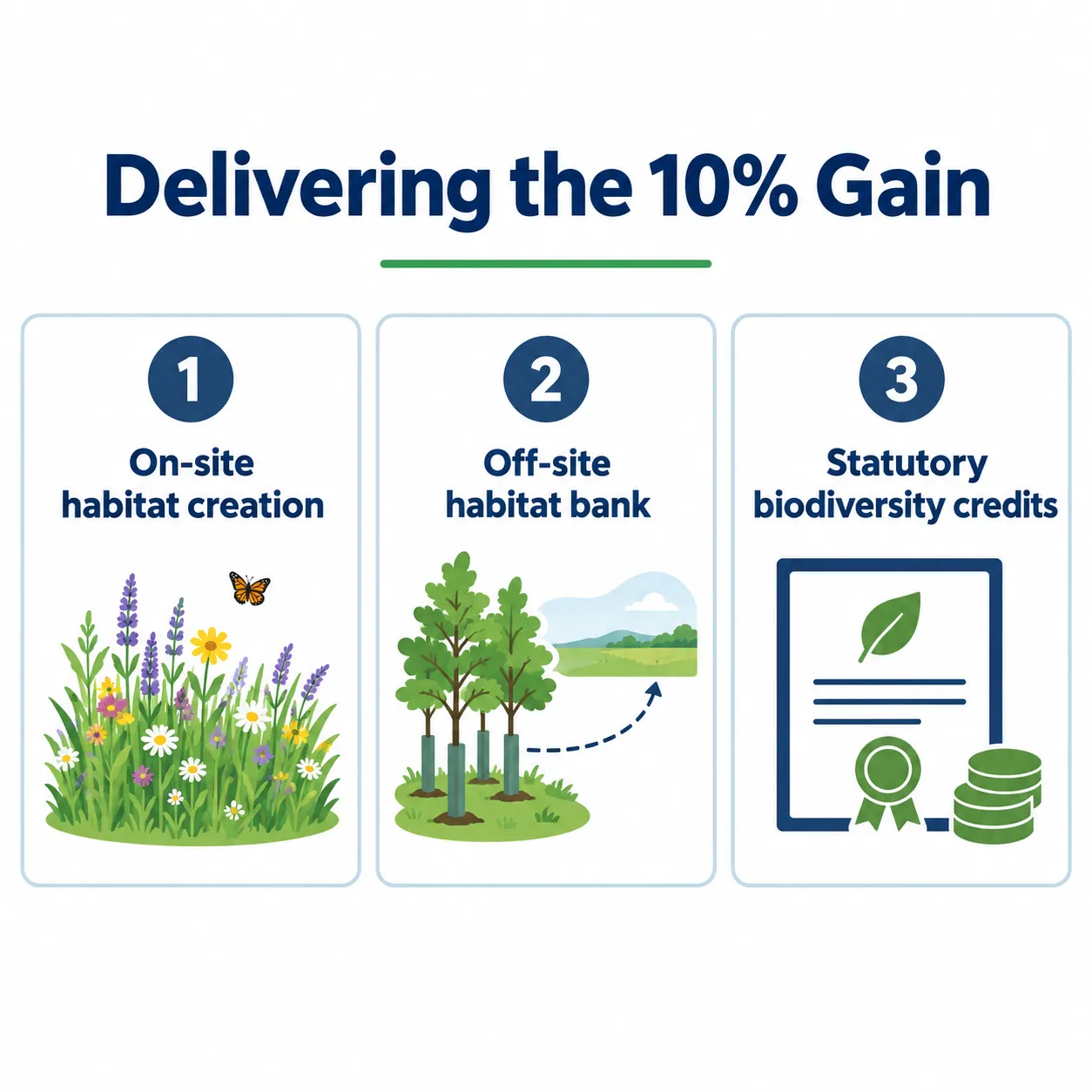
A low-value arable field with poor existing habitat can sometimes be brought into a 10% net gain relatively cheaply through on-site landscaping. A site with species-rich grassland, ancient hedgerows or protected species constraints can cost far more to mitigate, and may require off-site habitat banking or the purchase of statutory biodiversity credits from Natural England at prices that are deliberately set higher than market rate to discourage their use. Our guide to the cost of biodiversity units and statutory credits sets out how widely these figures can swing.
Delivery route matters just as much as baseline. Developers choosing on-site versus off-site delivery face different cost profiles, timescales and long-term management obligations. A single national average, however calculated, cannot capture this spread, which is why planning consultants and land agents should treat the £6,000 figure as illustrative political shorthand rather than a site-specific budgeting tool.
What Scrapping Natural England Would Mean for BNG
Natural England is not a peripheral actor in the BNG system, it is the statutory nature adviser and the body that operates the national biodiversity gain site register and the statutory credit scheme. Any serious proposal to scrap the organisation raises practical questions that go well beyond the headline saving.
If Natural England's functions were folded into another body, as the pledge suggests, developers and local planning authorities would need clarity on:
- Who maintains and verifies the biodiversity gain site register
- Who sets and administers statutory biodiversity credit prices
- Who provides statutory nature consultation responses on planning applications
- Who monitors long-term habitat management agreements already in place
None of this is settled by a conference pledge. Restructuring a statutory regulator typically requires primary legislation, transition arrangements and significant administrative lead time, none of which has been set out. For now, Natural England continues to perform all of these functions as normal, and our overview of Biodiversity Net Gain explains its role in the current system in more detail.
The Counter-Argument: What Ecologists and the Nature Sector Say
The Conservative case rests on cost and delay: biodiversity requirements, the argument runs, add expense and friction to housebuilding at a time when the country needs more homes built faster. That is a legitimate position shared by some developers and land agents who have experienced delays securing off-site habitat agreements or pricing uncertainty around credits.
Ecologists and nature sector bodies typically offer a different reading. Their counter-arguments include:
- BNG was designed specifically to address a long-term decline in English habitats, and weakening it risks reversing recent gains in biodiversity-friendly planning
- Much of the perceived "cost" of BNG reflects genuine ecological survey and habitat management work, not red tape
- Removing a statutory nature adviser could increase legal risk for developers, since planning decisions without proper ecological input are more vulnerable to challenge
- Early data from sites already delivering BNG suggests many habitat measures, hedgerows, ponds, wildflower margins, add relatively modest cost when planned early rather than retrofitted late in the design process
Our article on why Biodiversity Net Gain matters to the UK sets out the ecological rationale in more depth. Both sides of this debate are grounded in real evidence; the disagreement is largely about where the balance between cost, speed and nature recovery should sit.
What Developers and Land Agents Should Do Now
This is the practical heart of the matter. Whatever view one takes of the Conservative conference biodiversity rules Natural England pledge BNG October 2026 announcement, it changes nothing in law today. BNG has been mandatory for most major developments since 12 February 2024 and for small sites since 2 April 2024, requiring a measurable 10% gain. NSIP projects will join the regime in November 2026.
Sensible steps for developers, planning consultants and landowners right now include:
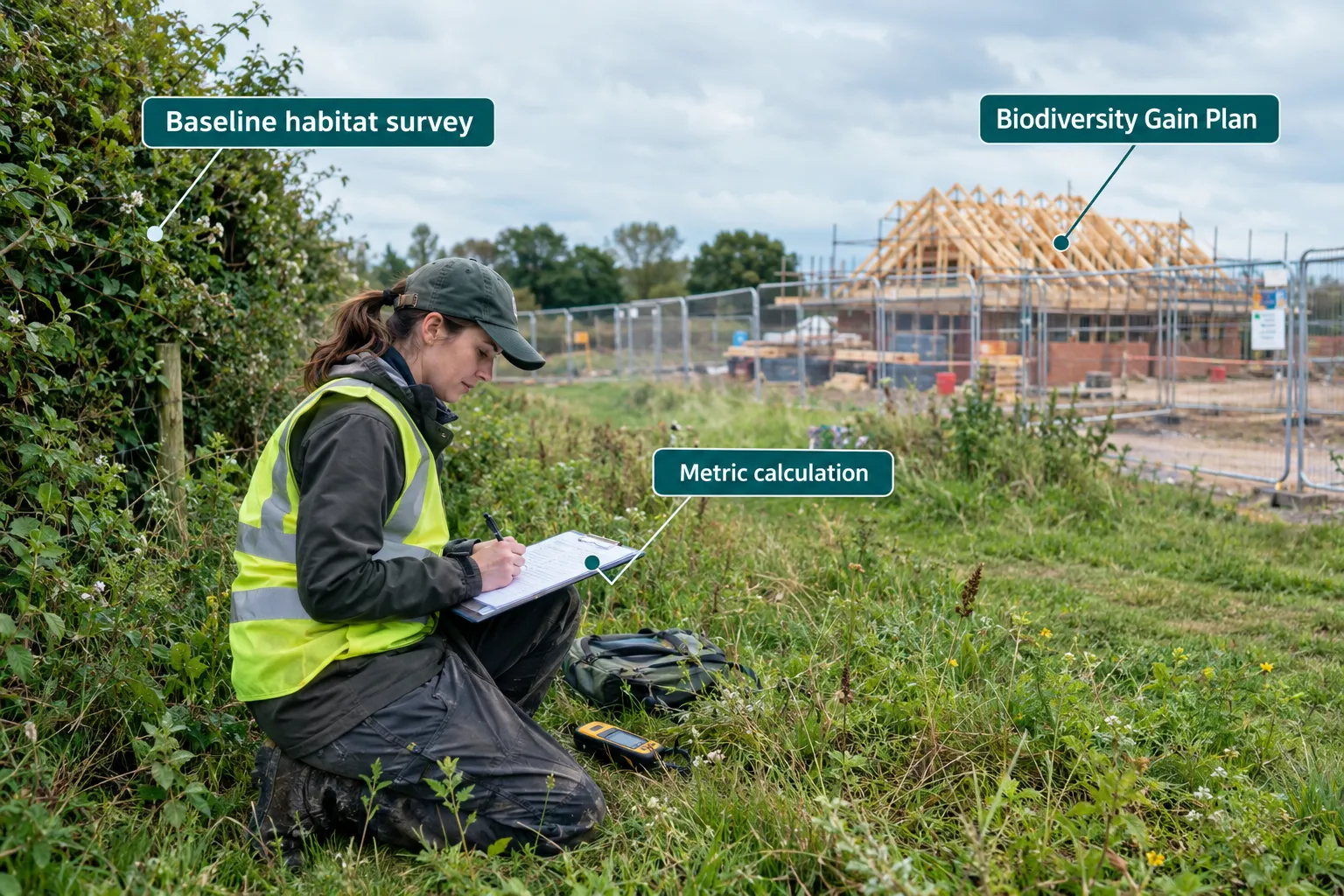
- Continue commissioning baseline UKHab surveys. Planning applications still need an accurate habitat baseline to calculate the biodiversity metric. Our guide on how to create a biodiversity plan for developers walks through this process.
- Prepare Biodiversity Gain Plans on schedule. These remain a condition of planning permission; delaying them in anticipation of a policy change that may never materialise risks holding up a live scheme.
- Factor policy risk into land options and conditional contracts, rather than assuming future deregulation. Our analysis of achieving Biodiversity Net Gain without the risk covers how to structure agreements sensibly under uncertainty.
- Track the brownfield exemption consultation outcome. The government consulted between 15 April and 10 June 2026 on a targeted exemption for residential brownfield development; its response will matter far more immediately than opposition pledges.
- Watch the November 2026 NSIP commencement, which brings nationally significant infrastructure projects into the BNG regime for the first time.
- Keep an eye on planner-facing guidance, including our rundown of key questions planners ask about BNG, as rules are refined rather than removed.
Policy Risk Timeline: Brownfield Exemption and NSIP Commencement
| Date | Development | Status as of October 2026 |
|---|---|---|
| 12 February 2024 | BNG mandatory for most major developments | In force |
| 2 April 2024 | BNG mandatory for small sites | In force |
| 2026 (in force) | Exemption for very small sites under 0.2 hectares | In force |
| 15 April, 10 June 2026 | Consultation on brownfield residential exemption | Response pending |
| November 2026 | BNG commencement for NSIPs | Due to begin |
| 5 October 2026 | Conservative pledge to ease BNG rules, scrap Natural England | Opposition pledge, not law |
| 2029 | Next scheduled general election | Pledge horizon |
This table underlines a simple point: the government's own incremental adjustments to BNG are moving faster and further through the system than any opposition pledge currently on the table.
FAQ: Conservative Conference Biodiversity Rules, Natural England and BNG
Is Biodiversity Net Gain being scrapped?
No. BNG remains mandatory law under the Environment Act 2021. The Conservative pledge is a policy proposal from the opposition, not a change in legislation.
Does the £6,000 saving apply to every new home?
No. It is a party-estimated average. Actual BNG costs vary significantly depending on site baseline, habitat type and delivery route, on-site, off-site, or statutory credits.
Could Natural England really be scrapped?
That would require primary legislation and transition planning, and there is no current government proposal to do so. Natural England continues to run the biodiversity gain site register and statutory credit scheme as normal.
What should I do if I have a live planning application?
Continue as normal. Commission UKHab surveys, complete metric calculations and submit a Biodiversity Gain Plan as required under current rules.
When does BNG start applying to infrastructure projects?
BNG is due to commence for Nationally Significant Infrastructure Projects in November 2026, under existing government plans.
Where can I get help with BNG assessments now?
Biodiversity Surveyors provides UKHab surveys, metric calculations and Biodiversity Gain Plans to keep developments compliant under current law, whatever the political weather.
Conclusion
The Conservative conference biodiversity rules Natural England pledge BNG October 2026 announcement is a notable marker of opposition policy direction, built around a headline £50,000 saving on new-build homes. But it changes nothing about the law developers must follow today. BNG remains mandatory, Natural England remains the statutory nature adviser, and the government's own more modest reforms, the small sites exemption, the brownfield consultation and the November NSIP commencement, are the changes actually moving through the system in 2026.
The sensible course for developers, planning consultants and land agents is to treat this as a story to monitor, not a reason to pause compliance. Keep baseline surveys current, keep Biodiversity Gain Plans on schedule, and build policy risk into land agreements rather than speculative deregulation. For support with UKHab surveys, metric calculations or a Biodiversity Gain Plan under the rules as they stand, contact Biodiversity Surveyors to keep your project compliant and on track.
Conservative Party conference 2026, Biodiversity Net Gain, BNG rules, Natural England, Environment Act 2021, UKHab survey, Biodiversity Gain Plan, planning policy England, statutory biodiversity credits, housebuilding costs, nature recovery, land agents