

{"cover":"Professional landscape format (1536×1024) hero image with bold text overlay 'Electromagnetic Field Impacts on Biodiversity Surveys: Protocols for 5G Infrastructure in BNG Sites' in extra large 70pt white sans-serif font with dark shadow and semi-transparent overlay box, positioned center-upper third. Background shows dramatic split composition: left side features modern 5G telecommunications tower with visible radio waves illustrated as concentric circles, right side shows diverse wildlife including birds in flight, pollinating insects on wildflowers, and small mammals in natural habitat. Foreground includes surveyor with EMF detection equipment and tablet. Color palette: deep forest green, technology blue, white text, subtle purple EMF wave visualization. High contrast, editorial quality, magazine cover aesthetic with rule of thirds composition, professional environmental assessment theme.","content":["Detailed landscape format (1536×1024) image showing professional ecologist conducting baseline biodiversity survey near 5G infrastructure installation. Scene features surveyor in high-visibility vest using handheld EMF meter (displaying numerical readings) while observing bird nesting boxes on wooden posts. Background shows newly installed 5G tower approximately 200 meters distant with visible antenna arrays. Foreground includes survey equipment: binoculars, field notebook, GPS device, and EMF detection tools laid on portable field table. Natural habitat visible with mixed grassland, hedgerows, and woodland edge. Infographic overlay in corner shows EMF frequency spectrum chart with 5G bands highlighted (3.4-3.8 GHz). Lighting: natural daylight, clear sky, professional field research aesthetic, documentary photography style with technical accuracy.","Detailed landscape format (1536×1024) technical infographic illustration showing comprehensive EMF monitoring protocol workflow for BNG sites. Central flowchart displays five connected stages: Pre-Survey Planning, Baseline EMF Mapping, Wildlife Behavior Assessment, Data Integration, and Reporting. Each stage includes specific icons: radio frequency analyzer, heat map grid overlay, wildlife tracking symbols, database integration graphics, and compliance checklist. Side panels show EMF measurement zones at different distances from 5G tower (50m, 100m, 200m, 500m) with color-coded intensity levels (green-yellow-orange-red gradient). Bottom section displays sample data collection table with columns for location coordinates, EMF readings in V/m, species observations, and behavioral notes. Clean technical aesthetic with blue, green, and white color scheme, professional environmental consulting style, clear typography, educational diagram quality.","Detailed landscape format (1536×1024) image showing diverse wildlife species in natural BNG habitat site with subtle EMF monitoring technology integration. Foreground features healthy ecosystem: bee pollinating native wildflower (close-up detail), songbird perched on hawthorn branch, butterfly on vegetation, small mammal burrow entrance. Middle ground shows discrete EMF monitoring station: weatherproof sensor mounted on wooden post with solar panel, data logger box, and wireless transmission antenna. Background displays established 5G tower at safe distance with natural landscape buffer zones of trees and hedgerows. Overlaid transparent data visualization shows EMF field strength contour lines across habitat zones with green 'low impact' areas clearly marked. Natural lighting, vibrant ecosystem health indicators, professional wildlife photography quality merged with environmental technology monitoring aesthetic, hopeful conservation tone, biodiversity net gain success visualization."]
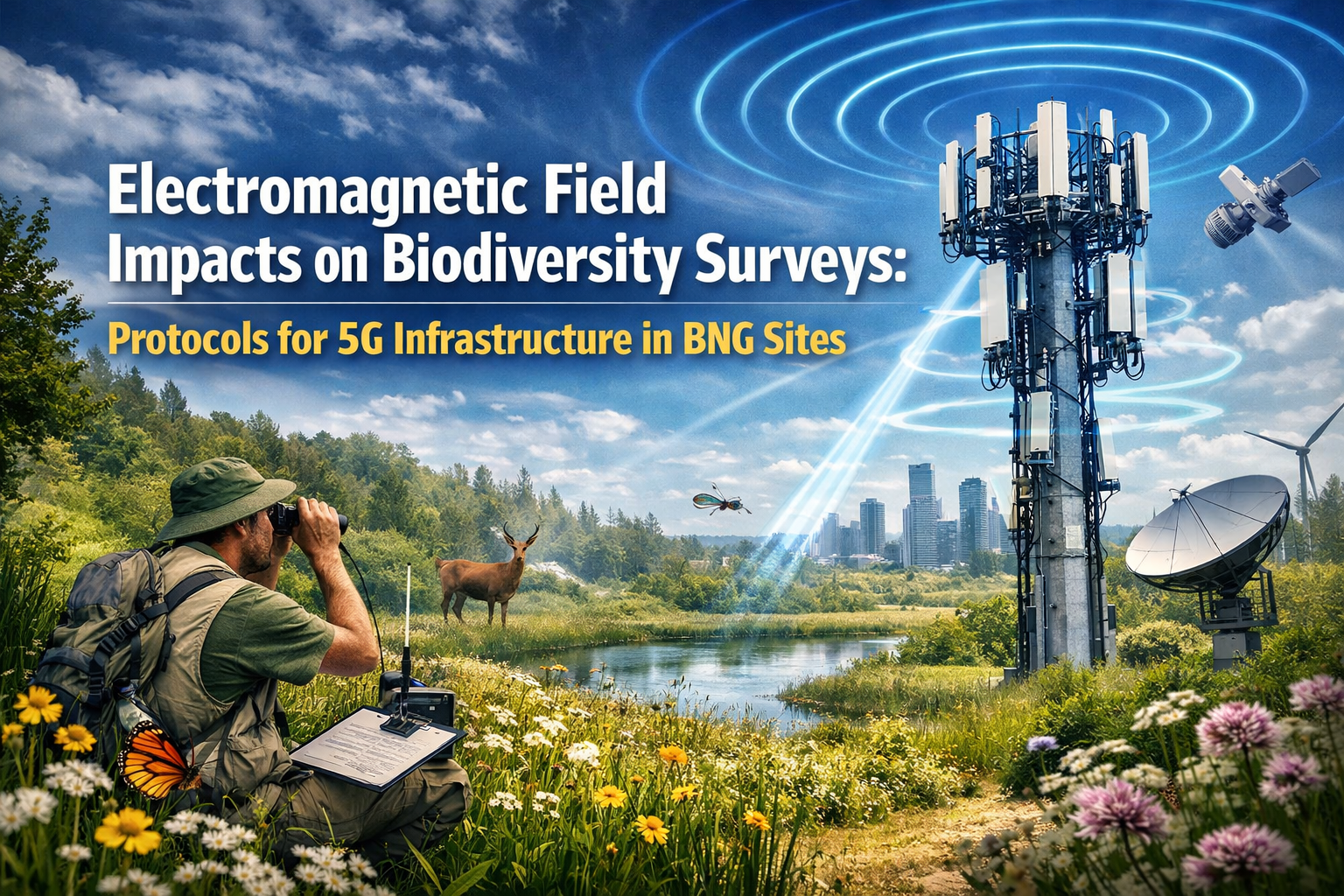
Recent studies from the European Union's EKLIPSE project reveal that electromagnetic radiation affects 593 species across multiple taxa, yet standardized protocols for assessing these impacts in Biodiversity Net Gain (BNG) sites remain virtually non-existent. As the United Kingdom accelerates 5G infrastructure deployment throughout 2026, the intersection of telecommunications development and biodiversity conservation demands urgent attention. Understanding Electromagnetic Field Impacts on Biodiversity Surveys: Protocols for 5G Infrastructure in BNG Sites has become essential for developers, ecologists, and planners navigating this complex landscape.
The challenge intensifies as Biodiversity Net Gain requirements mandate that development projects deliver measurable improvements to habitats and species populations. When 5G towers and associated infrastructure enter BNG sites, the electromagnetic fields (EMF) they generate introduce a variable that traditional ecological surveys never anticipated. This article provides comprehensive guidance for integrating EMF considerations into biodiversity assessment protocols.
Key Takeaways
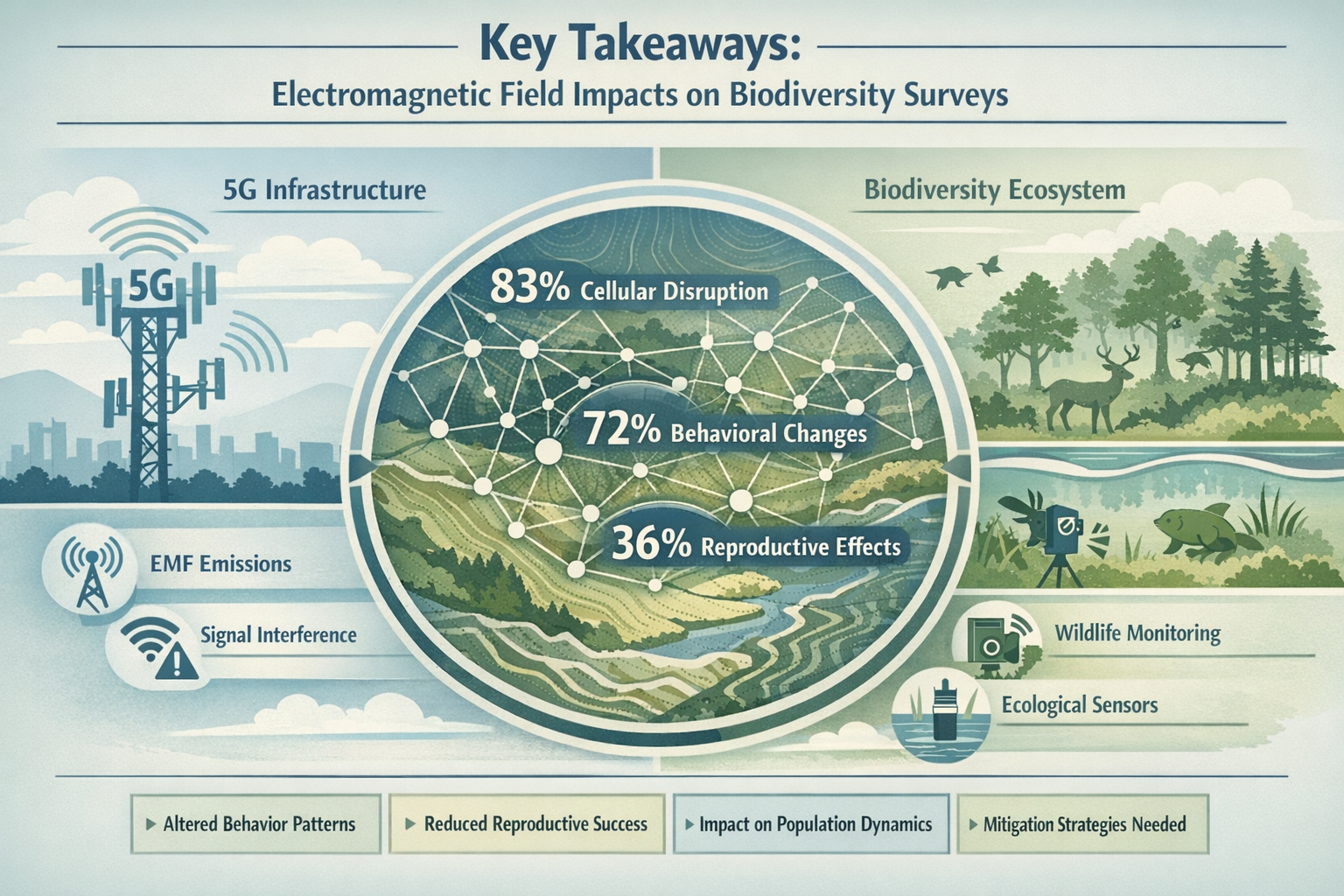
- EMF from 5G infrastructure operates at higher frequencies (3.4-3.8 GHz) than previous generations, with emerging evidence suggesting potential impacts on insect navigation, bird behavior, and plant physiology
- Baseline biodiversity surveys for BNG sites with planned telecommunications infrastructure should incorporate EMF monitoring at multiple distances and habitat zones before installation
- Standardized protocols require EMF measurements in volts per meter (V/m), species-specific behavioral observations, and temporal monitoring across seasons to establish reliable impact assessments
- Buffer zones and mitigation strategies including equipment placement optimization and habitat corridor design can minimize potential EMF effects while achieving BNG objectives
- Integration of EMF data into biodiversity metric calculations ensures transparent reporting and compliance with both telecommunications regulations and environmental legislation
Understanding EMF Characteristics and Biological Interactions in BNG Contexts
The 5G Frequency Spectrum and Biological Relevance
Fifth-generation wireless technology operates primarily within the 3.4-3.8 GHz frequency range in the UK, with some deployments utilizing millimeter wave bands above 24 GHz. These frequencies differ substantially from 4G networks, which typically operate below 2.6 GHz. The biological significance lies not merely in frequency but in signal characteristics: 5G employs beamforming technology that concentrates electromagnetic energy in specific directions, creating variable field strengths across relatively short distances.
Research published in 2024 by the Bioelectromagnetics Society identified three primary mechanisms through which EMF may affect wildlife:
- Magnetoreception disruption in species using Earth's magnetic field for navigation (birds, insects, some mammals)
- Thermal effects from tissue absorption of radiofrequency energy, particularly relevant for small-bodied organisms
- Non-thermal biological responses including oxidative stress, calcium efflux from cells, and altered gene expression patterns
For biodiversity surveyors, these mechanisms translate into observable endpoints: changes in foraging behavior, nesting site selection, migration patterns, and reproductive success. When conducting a biodiversity impact assessment, incorporating EMF as an environmental variable provides a more complete picture of potential development impacts.
Species-Specific Sensitivity Profiles
Not all taxa demonstrate equal sensitivity to electromagnetic fields. Current evidence suggests the following vulnerability hierarchy:
High Sensitivity:
- 🐝 Hymenoptera (bees, wasps): Navigation and waggle dance communication potentially disrupted
- 🦇 Chiroptera (bats): Echolocation and roosting behavior affected
- 🐦 Migratory birds: Compass orientation mechanisms interfered with during critical migration periods
Moderate Sensitivity:
- 🦋 Lepidoptera (butterflies, moths): Potential impacts on metamorphosis and flight patterns
- 🦎 Reptiles: Thermoregulation and spatial orientation effects documented
- 🌳 Vascular plants: Growth rate and stress response alterations observed in laboratory conditions
Lower Documented Sensitivity:
- 🐁 Small mammals: Limited field evidence, though laboratory studies show behavioral changes
- 🐸 Amphibians: Minimal research available; precautionary monitoring recommended
This hierarchy informs survey design priorities. BNG sites supporting Species of Principal Importance from high-sensitivity groups warrant enhanced EMF monitoring protocols.
Electromagnetic Field Impacts on Biodiversity Surveys: Developing Baseline Assessment Protocols
Pre-Installation Survey Framework
Establishing baseline conditions before 5G infrastructure deployment constitutes the foundation of effective impact assessment. The protocol should integrate EMF measurements with standard ecological survey methods, creating a comprehensive dataset that captures both electromagnetic environment and biological communities.
Phase 1: Desktop Assessment (Weeks 1-2)
Begin with thorough desktop analysis incorporating:
- Telecommunications infrastructure mapping: Identify all existing and planned 5G installations within 1 km radius
- Habitat classification: Use UK Habitat Classification system aligned with biodiversity metric calculations
- Protected species records: Consult local environmental records centers for sensitive species presence
- EMF exposure modeling: Request technical specifications from network operators including frequency bands, power output, antenna configurations, and beam patterns
Phase 2: Field Survey Design (Weeks 3-4)
Develop a stratified sampling approach that captures spatial variation in both EMF exposure and habitat quality:
| Survey Zone | Distance from Tower | EMF Measurement Density | Ecological Survey Intensity |
|---|---|---|---|
| Core Zone | 0-50m | High (10m grid) | Standard protected species protocols |
| Inner Buffer | 50-200m | Medium (25m grid) | Enhanced behavioral observations |
| Outer Buffer | 200-500m | Low (50m grid) | Standard ecological surveys |
| Control Area | >500m or shielded | Reference measurements | Identical to buffer zones |
This zonal approach enables comparison between areas experiencing different EMF intensities while controlling for habitat variables.
Equipment and Measurement Standards
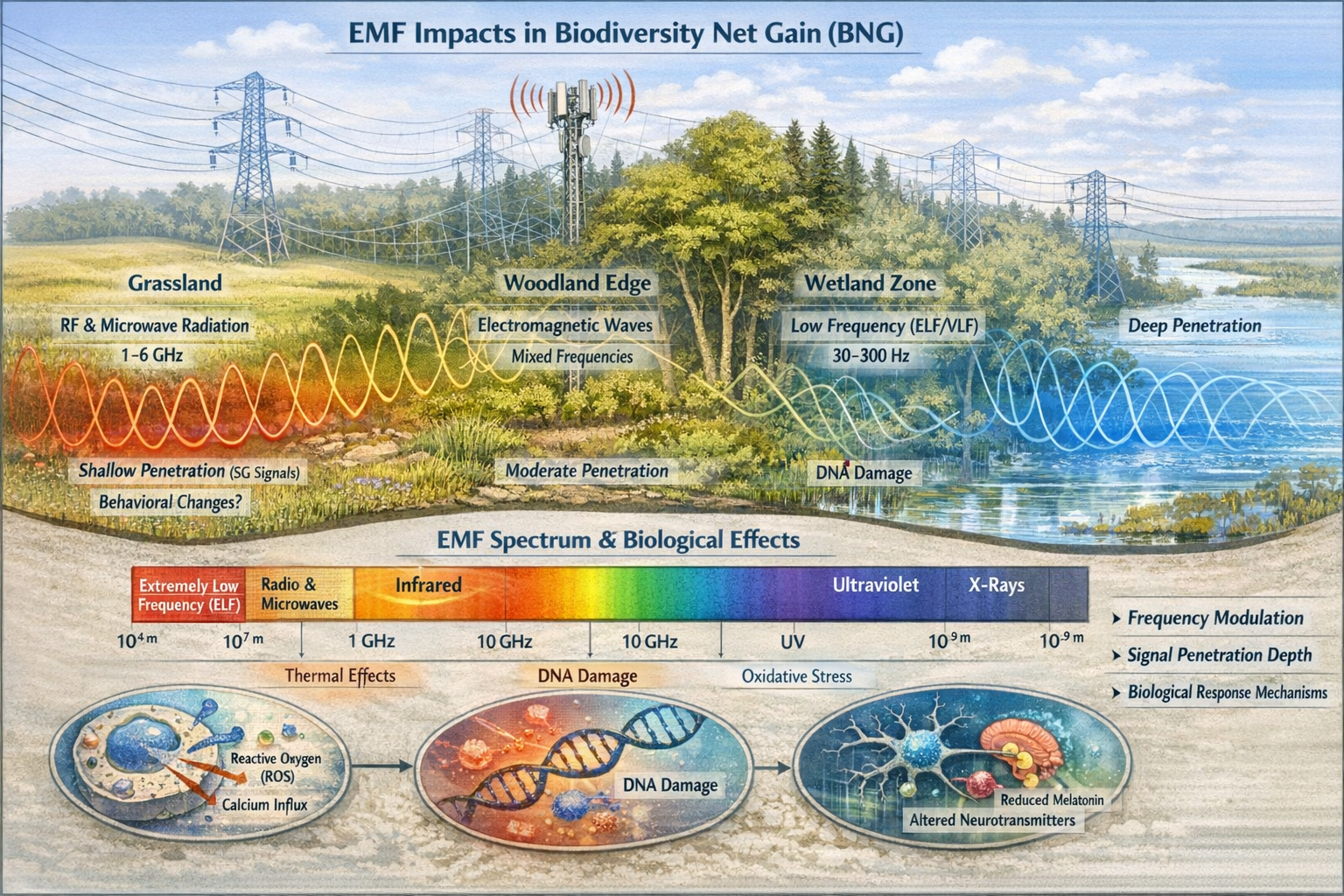
Professional-grade EMF monitoring for biodiversity surveys requires calibrated instrumentation capable of detecting radiofrequency fields across the 5G spectrum. Essential equipment includes:
Primary Measurement Tools:
- Broadband EMF meters: Measuring electric field strength in V/m across 100 MHz to 6 GHz
- Spectrum analyzers: Identifying specific frequency contributions and signal characteristics
- Data loggers: Recording temporal variation in EMF levels over 24-hour periods
- GPS units: Precise georeferencing of measurement points for spatial analysis
Measurement Protocol Standards:
Adopt the International Commission on Non-Ionizing Radiation Protection (ICNIRP) measurement methodologies with biodiversity-specific modifications:
- Height stratification: Measure at ground level (0.1m), mid-height (1.5m), and canopy level (variable) to capture exposure across different ecological niches
- Temporal sampling: Conduct measurements during peak network usage (12:00-14:00, 18:00-20:00) and low usage periods (02:00-04:00)
- Weather standardization: Record temperature, humidity, and precipitation as these affect both EMF propagation and wildlife behavior
- Multiple orientations: Take readings in three perpendicular axes to account for polarization effects
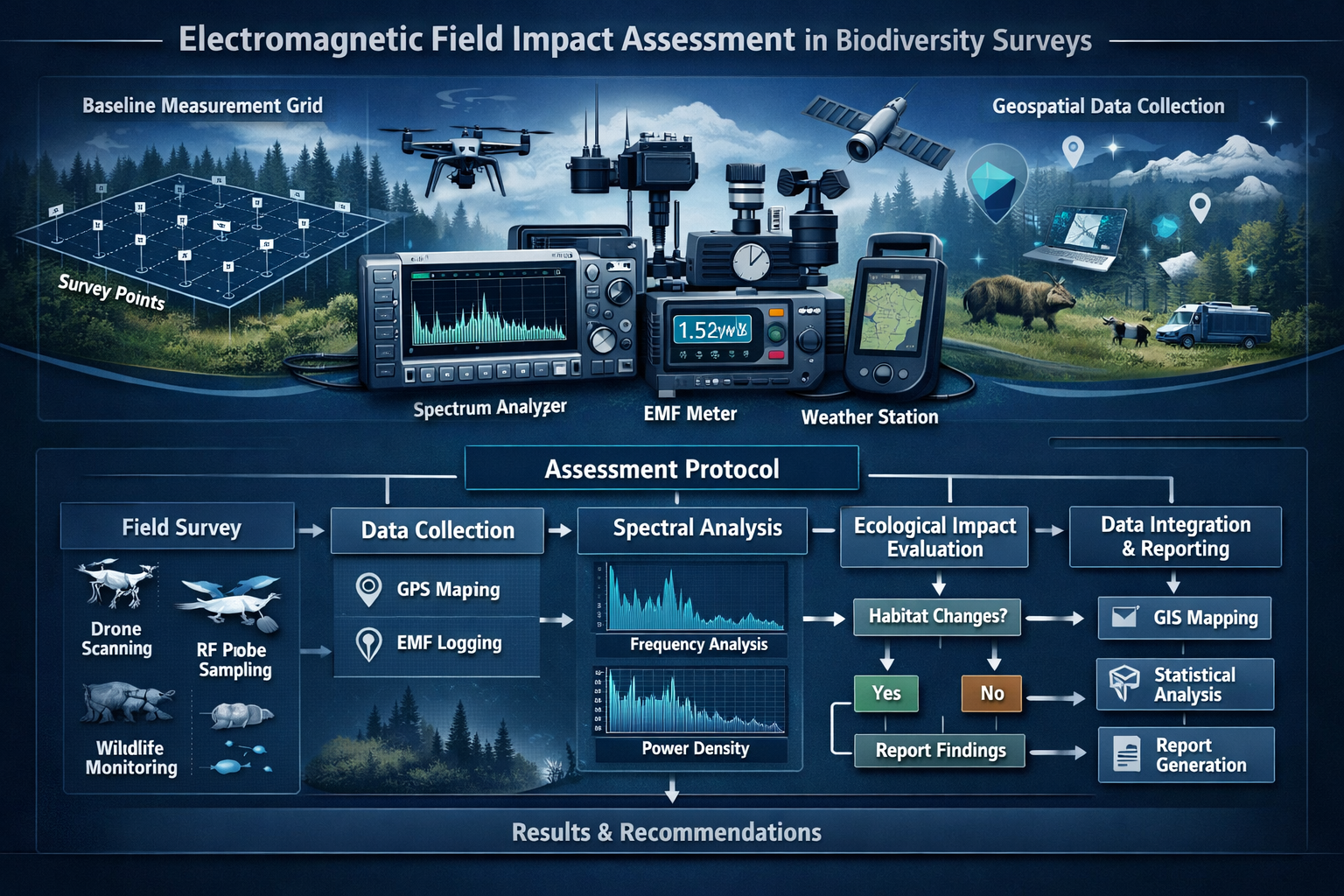
Record all measurements in a standardized format compatible with biodiversity metric tools and Geographic Information Systems (GIS) platforms.
Integrating EMF Data with Traditional Ecological Surveys
The innovation in Electromagnetic Field Impacts on Biodiversity Surveys: Protocols for 5G Infrastructure in BNG Sites lies in synthesizing electromagnetic and ecological data streams. This integration occurs at three levels:
Level 1: Spatial Correlation Analysis
Overlay EMF intensity maps with species distribution data to identify potential exposure-response relationships. For example, if breeding bird territories cluster in areas with EMF readings below 1 V/m while avoiding zones exceeding 3 V/m, this pattern warrants further investigation and potentially influences site design.
Level 2: Behavioral Observation Protocols
Enhance standard survey methods with EMF-relevant behavioral metrics:
- Foraging efficiency: Time spent foraging per food item captured (particularly relevant for insectivorous birds)
- Flight path analysis: Deviation from direct routes, hesitation behaviors near infrastructure
- Nesting site selection: Distance from EMF sources, orientation of nest entrances
- Activity budgets: Proportion of time spent in different behaviors across EMF gradients
Level 3: Physiological Indicators
Where feasible and licensed, collect non-invasive physiological data:
- Stress hormones: Fecal corticosterone metabolites in mammals
- Oxidative stress markers: Feather or fur samples analyzed for malondialdehyde
- Reproductive success: Clutch size, hatching rates, fledgling survival compared across zones
This multi-level approach provides robust evidence for causative relationships rather than mere correlation, strengthening the scientific basis for biodiversity net gain delivery strategies.
Electromagnetic Field Impacts on Biodiversity Surveys: Post-Installation Monitoring and Adaptive Management
Temporal Monitoring Framework
Once 5G infrastructure becomes operational, systematic monitoring tracks actual impacts against baseline predictions. Effective post-installation protocols employ a Before-After-Control-Impact (BACI) design, comparing temporal changes in treatment areas (near 5G infrastructure) against control areas (distant or shielded locations).
Year 1 Monitoring (Intensive Phase):
- Monthly EMF measurements: Document field strength stability and identify any equipment modifications
- Quarterly ecological surveys: Assess immediate responses in breeding success, population densities, and community composition
- Seasonal behavioral studies: Focus on critical life history stages (breeding, migration, hibernation)
- Incident reporting system: Document any unusual wildlife mortality or behavior near infrastructure
Years 2-5 Monitoring (Consolidation Phase):
- Biannual EMF verification: Confirm continued compliance with predicted exposure levels
- Annual ecological surveys: Track population trends and habitat condition
- Adaptive threshold assessment: Refine understanding of impact thresholds for local species assemblages
Long-term Monitoring (Years 6+):
- Integration with standard BNG monitoring: Incorporate EMF considerations into 30-year habitat management plans
- Technology upgrade assessment: Evaluate impacts when network operators implement 6G or enhanced 5G systems
- Knowledge transfer: Contribute data to national databases informing future telecommunications planning
This temporal framework aligns with biodiversity net gain reporting requirements while providing telecommunications operators with evidence-based assurance of environmental compliance.
Mitigation Strategies and Design Optimization
When monitoring reveals potential EMF impacts on biodiversity, several mitigation approaches can reduce exposure while maintaining network functionality:
Infrastructure Design Modifications:
- Antenna height optimization: Elevating antennas increases distance to ground-dwelling species while maintaining coverage
- Directional beamforming: Configure antennas to minimize radiation toward sensitive habitats
- Power reduction protocols: Implement adaptive power control reducing output during critical wildlife periods (dawn/dusk foraging, migration seasons)
- Equipment consolidation: Co-locate multiple operators on single towers rather than proliferating infrastructure
Habitat Management Interventions:
- Buffer zone enhancement: Create dense vegetation screens that provide physical and psychological barriers
- Alternative habitat provision: Establish high-quality habitat in low-EMF zones, encouraging species redistribution
- Connectivity corridors: Design wildlife movement routes avoiding high-exposure areas
- Temporal management: Schedule maintenance activities outside sensitive periods
Regulatory Compliance Mechanisms:
Ensure mitigation strategies satisfy both telecommunications regulations (Ofcom guidelines) and environmental legislation (Environment Act 2021, Wildlife and Countryside Act 1981). Document all measures in the Biodiversity Gain Plan submitted with planning applications, demonstrating how 10% biodiversity net gain targets will be achieved despite EMF considerations.
Data Integration and Reporting Standards
Incorporating EMF Variables into Biodiversity Metrics
The UK's statutory biodiversity metric (currently version 4.0 in 2026) does not explicitly account for electromagnetic field impacts. However, EMF effects can be incorporated through existing metric components:
Habitat Condition Assessment:
Include EMF exposure as a stressor in condition scoring, particularly for:
- Habitat connectivity: High EMF zones may function as partial barriers to movement
- Disturbance levels: Classify EMF as a form of sensory pollution alongside noise and light
- Vegetation structure: Document any growth abnormalities in high-exposure areas
Strategic Significance Multipliers:
Sites supporting EMF-sensitive protected species may warrant enhanced strategic significance scores, recognizing the additional management complexity and conservation value.
Temporal Multipliers:
Account for uncertainty regarding long-term EMF impacts by applying conservative temporal multipliers to habitat creation in high-exposure zones, ensuring genuine net gain delivery over 30-year timeframes.
Professional Reporting Framework
Comprehensive reporting of Electromagnetic Field Impacts on Biodiversity Surveys: Protocols for 5G Infrastructure in BNG Sites should include:
Executive Summary:
- Site context and 5G infrastructure specifications
- Key findings regarding EMF exposure levels and biodiversity impacts
- Mitigation recommendations and BNG compliance statement
Technical Sections:
- Methodology: Detailed protocols for EMF measurement and ecological surveys
- Baseline Results: Pre-installation EMF environment and species assemblages
- Impact Assessment: Statistical analysis of EMF-biodiversity relationships
- Mitigation Design: Specific interventions with predicted effectiveness
- Monitoring Plan: Long-term surveillance protocols and trigger thresholds
Appendices:
- Raw EMF measurement data with spatial coordinates
- Species records and behavioral observation logs
- Photographic documentation of infrastructure and habitats
- Consultation responses from statutory consultees
This reporting structure ensures transparency and enables regulators, developers, and ecologists to make informed decisions about biodiversity impact assessments in telecommunications contexts.
Regulatory Landscape and Stakeholder Coordination
Navigating Dual Regulatory Frameworks
Projects involving 5G infrastructure in BNG sites must satisfy two distinct regulatory regimes:
Telecommunications Regulations:
- Ofcom licensing: Compliance with spectrum allocation and technical standards
- ICNIRP guidelines: Human health protection limits (typically 10 V/m for 5G frequencies)
- Planning permitted development rights: Many telecommunications installations qualify for streamlined approval
Environmental Regulations:
- Environment Act 2021: Mandatory biodiversity net gain for most developments
- Wildlife and Countryside Act 1981: Protected species licensing where impacts occur
- Conservation of Habitats and Species Regulations 2017: Assessment requirements for European protected species
The challenge lies in reconciling these frameworks, particularly when telecommunications permitted development rights conflict with ecological protection objectives. Early engagement with local planning authorities and statutory nature conservation bodies (Natural England, Natural Resources Wales) proves essential.
Multi-Stakeholder Collaboration Models
Successful integration of EMF considerations into BNG delivery requires coordination among diverse parties:
Core Stakeholder Group:
- Telecommunications operators: Technical specifications and operational constraints
- Developers/landowners: Site management and financial considerations
- Ecological consultants: Survey design and impact assessment expertise
- Planning authorities: Regulatory compliance and policy interpretation
Extended Stakeholder Network:
- Local communities: Addressing concerns about both wildlife and human health
- Academic researchers: Contributing cutting-edge science on EMF-biodiversity interactions
- Environmental NGOs: Advocacy for precautionary approaches and monitoring rigor
Establish a Project Steering Group meeting quarterly throughout the development lifecycle, ensuring transparent communication and adaptive management as new evidence emerges.
Emerging Research and Knowledge Gaps
Current State of Scientific Evidence
As of 2026, the scientific consensus on EMF impacts on wildlife remains incomplete, with several key uncertainties:
Well-Established Findings:
- Laboratory studies demonstrate EMF effects on insect navigation at field strengths above 5 V/m
- Migratory bird orientation disrupted by radiofrequency fields in controlled conditions
- Plant growth and stress responses altered at exposure levels exceeding 10 V/m
Contested or Unclear Evidence:
- Field study replication: Many laboratory findings lack confirmation in realistic field conditions
- Chronic low-level exposure: Long-term impacts of continuous exposure below 1 V/m remain poorly understood
- Population-level consequences: Individual behavioral changes may not translate to population declines
- Ecosystem interactions: Cascading effects through food webs and ecological networks require investigation
This scientific uncertainty necessitates precautionary approaches in BNG site management, prioritizing monitoring and adaptive management over assumptions of negligible impact.
Priority Research Directions
To improve Electromagnetic Field Impacts on Biodiversity Surveys: Protocols for 5G Infrastructure in BNG Sites, the following research priorities deserve attention:
- Species-specific dose-response relationships: Establish EMF exposure thresholds for UK priority species
- Cumulative impact assessment: Evaluate combined effects of EMF, noise, light pollution, and habitat fragmentation
- Mitigation effectiveness trials: Rigorously test whether proposed interventions actually reduce impacts
- Long-term population monitoring: Track wildlife populations in BNG sites with varying EMF exposures over decades
- Standardized protocol validation: Compare different survey methodologies to identify most reliable approaches
Developers and consultants can contribute to this knowledge base by implementing robust monitoring programs and sharing data through academic partnerships or industry consortia.
Practical Implementation: Case Study Approach
Hypothetical BNG Site Scenario
Consider a 12-hectare agricultural site in Oxfordshire designated for mixed-use development with mandatory 10% BNG delivery. The site includes:
- 8 hectares of species-poor grassland (arable field margins)
- 3 hectares of hedgerow and scrub
- 1 hectare of woodland edge
A telecommunications operator proposes installing a 5G macro tower (30m height) in the northern section to provide coverage for the development and surrounding area. The site supports breeding populations of yellowhammer (red-listed species) and brown hare (Species of Principal Importance).
Implementation Steps:
Month 1-2: Baseline Assessment
- Desktop review identifies yellowhammer as potentially EMF-sensitive (migratory orientation)
- EMF modeling predicts field strengths: 0.5-2 V/m within 100m, <0.5 V/m beyond 200m
- Ecological surveys document 12 yellowhammer territories, 8 located >200m from proposed tower
Month 3-6: Enhanced Monitoring
- Install temporary EMF loggers at 6 locations across site
- Conduct intensive yellowhammer behavioral observations (foraging rates, territory defense, nest site selection)
- Establish control site 2km distant with similar habitat but no 5G infrastructure
Month 7-8: Impact Analysis and Design Refinement
- Statistical analysis reveals no significant behavioral differences between EMF zones
- As precautionary measure, relocate tower 50m south, increasing distance from primary yellowhammer habitat
- Design BNG habitat creation (hedgerow enhancement, wildflower meadow establishment) concentrated in low-EMF zones
Month 9-12: Implementation and Initial Monitoring
- Complete tower installation with directional antennas oriented away from key habitats
- Implement BNG habitat works
- Begin post-installation monitoring using identical protocols to baseline
Years 2-5: Adaptive Management
- Annual yellowhammer population surveys show stable/increasing trend
- EMF measurements confirm predicted exposure levels
- BNG habitat achieves target condition scores
- Project deemed successful with no detected EMF impacts
This scenario demonstrates how systematic application of Electromagnetic Field Impacts on Biodiversity Surveys: Protocols for 5G Infrastructure in BNG Sites principles enables confident decision-making even amidst scientific uncertainty.
Conclusion
The intersection of 5G telecommunications expansion and biodiversity net gain obligations represents an emerging challenge for the UK's development sector in 2026. While scientific understanding of electromagnetic field impacts on wildlife continues to evolve, the precautionary principle demands that ecological assessments incorporate EMF considerations when telecommunications infrastructure enters BNG sites.
Key implementation priorities include:
✅ Establish baseline EMF conditions alongside traditional ecological surveys before infrastructure installation
✅ Adopt standardized measurement protocols using calibrated equipment and spatially explicit sampling designs
✅ Integrate EMF data with biodiversity metrics, habitat condition assessments, and species-specific monitoring
✅ Implement adaptive management frameworks that respond to monitoring results with evidence-based mitigation
✅ Foster multi-stakeholder collaboration between telecommunications operators, developers, ecologists, and regulators
✅ Contribute to knowledge advancement through rigorous monitoring and data sharing initiatives
For developers navigating this complex landscape, engaging qualified ecological consultants experienced in both biodiversity impact assessment and EMF monitoring proves essential. The protocols outlined in this article provide a foundation for responsible infrastructure development that achieves connectivity objectives while safeguarding ecological values.
As 5G networks continue expanding and 6G technologies emerge on the horizon, the frameworks established today will shape environmental outcomes for decades. By treating electromagnetic fields as a measurable environmental variable—neither ignoring potential impacts nor assuming catastrophic consequences—the development sector can deliver genuine biodiversity net gain alongside essential telecommunications infrastructure.
Next Steps for Practitioners:
- Review existing BNG site assessments for proximity to planned telecommunications infrastructure
- Acquire or partner with EMF measurement expertise to supplement ecological survey capabilities
- Engage telecommunications operators early in project planning to optimize infrastructure placement
- Establish baseline monitoring programs before infrastructure installation wherever feasible
- Consult with statutory bodies regarding appropriate protocols for specific site contexts
- Contribute monitoring data to industry knowledge bases and research initiatives
The challenge of integrating EMF considerations into biodiversity surveys is substantial but manageable. With systematic protocols, collaborative approaches, and commitment to adaptive management, the UK can achieve both connectivity and conservation objectives in the years ahead.
For specialized guidance on implementing these protocols in your development projects, contact biodiversity professionals experienced in navigating the intersection of telecommunications infrastructure and ecological protection.