

Light Pollution Mapping in Nocturnal Biodiversity Surveys: Tools for Ecologists in 2026 Urban Fringe BNG
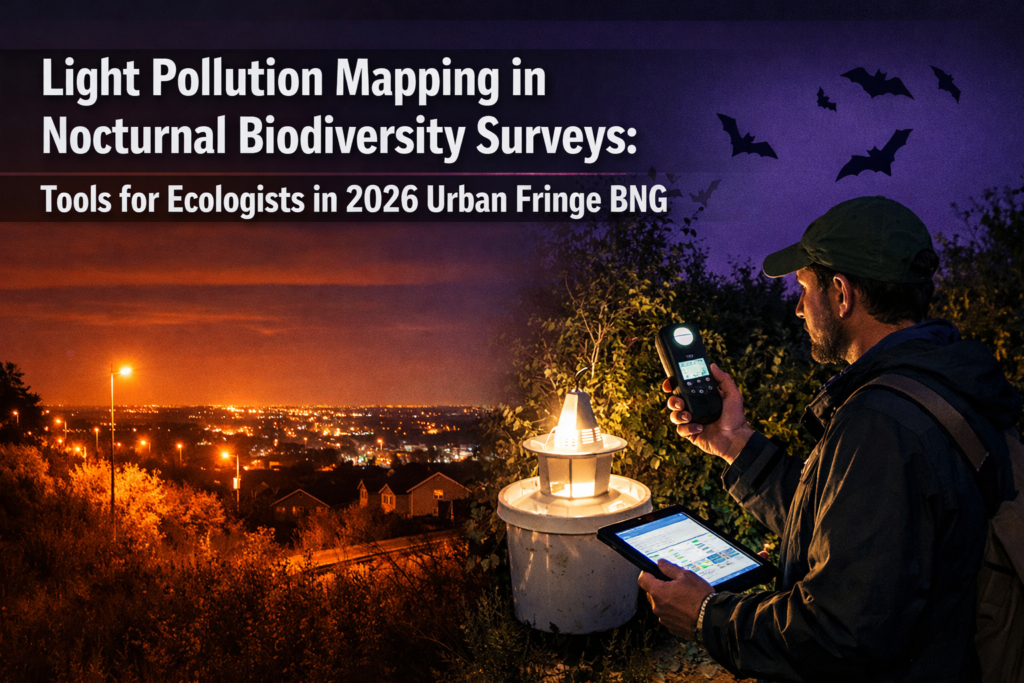
Groundbreaking research published in February 2026 has overturned decades of conservation practice: artificial light at twilight—not midnight—inflicts the greatest harm on nocturnal wildlife, yet current mitigation strategies focus on the wrong hours entirely[3]. This revelation arrives precisely as ecologists face mounting pressure to deliver accurate Biodiversity Net Gain (BNG) baselines across England's expanding urban fringes, […]
Soundscape Ecology for Biodiversity Net Gain: Acoustic Survey Methods to Capture Ecosystem Health in 2026
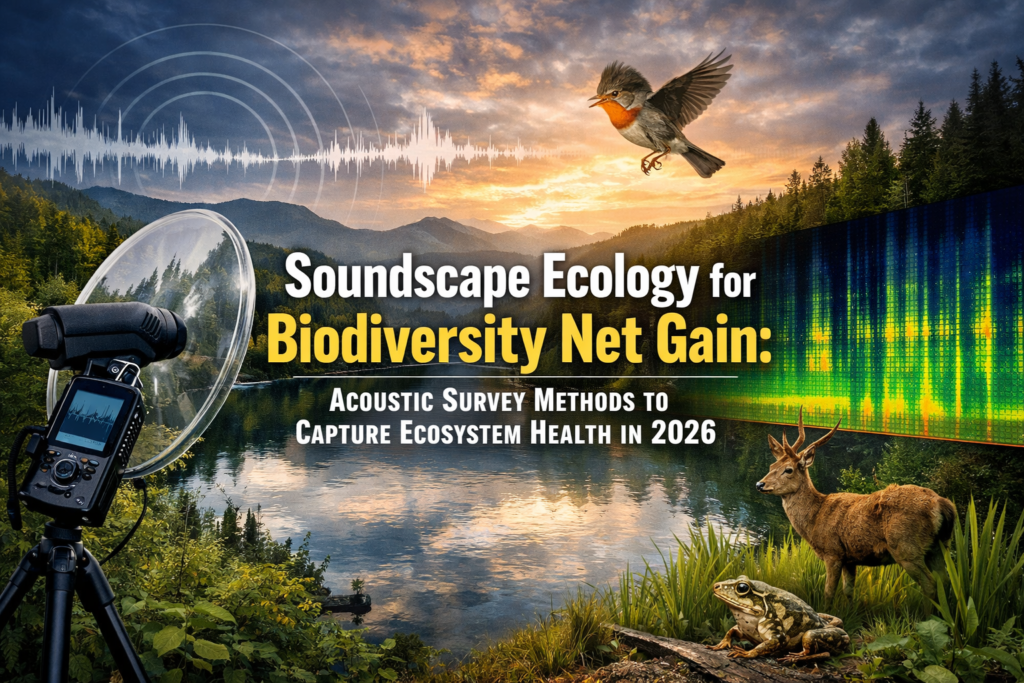
{"cover":"Professional landscape format (1536×1024) hero image with bold text overlay 'Soundscape Ecology for Biodiversity Net Gain: Acoustic Survey Methods to Capture Ecosystem Health in 2026' in extra large 72pt white sans-serif font with dark shadow effect, positioned in upper third with perfect alignment. Background shows split composition: left side features acoustic recording equipment mounted on […]
Electromagnetic Field Impacts on Biodiversity Surveys: Protocols for 5G Infrastructure in BNG Sites

{"cover":"Professional landscape format (1536×1024) hero image with bold text overlay 'Electromagnetic Field Impacts on Biodiversity Surveys: Protocols for 5G Infrastructure in BNG Sites' in extra large 70pt white sans-serif font with dark shadow and semi-transparent overlay box, positioned center-upper third. Background shows dramatic split composition: left side features modern 5G telecommunications tower with visible radio […]
Pharmaceutical Pollutants in Biodiversity Surveys: eDNA Detection Strategies for Aquatic BNG Baselines

Estrogens from contraceptive pills are feminizing male fish in English rivers right now, reducing their breeding capacity and threatening population stability in protected waterways [3]. This stark reality represents just one dimension of pharmaceutical pollution's impact on aquatic biodiversity—a challenge that has escalated dramatically as of 2026, with contaminants now documented across national parks and […]
Vertical Greening Systems in Urban Biodiversity Surveys: Protocols for BNG Compliance on High-Rise Developments
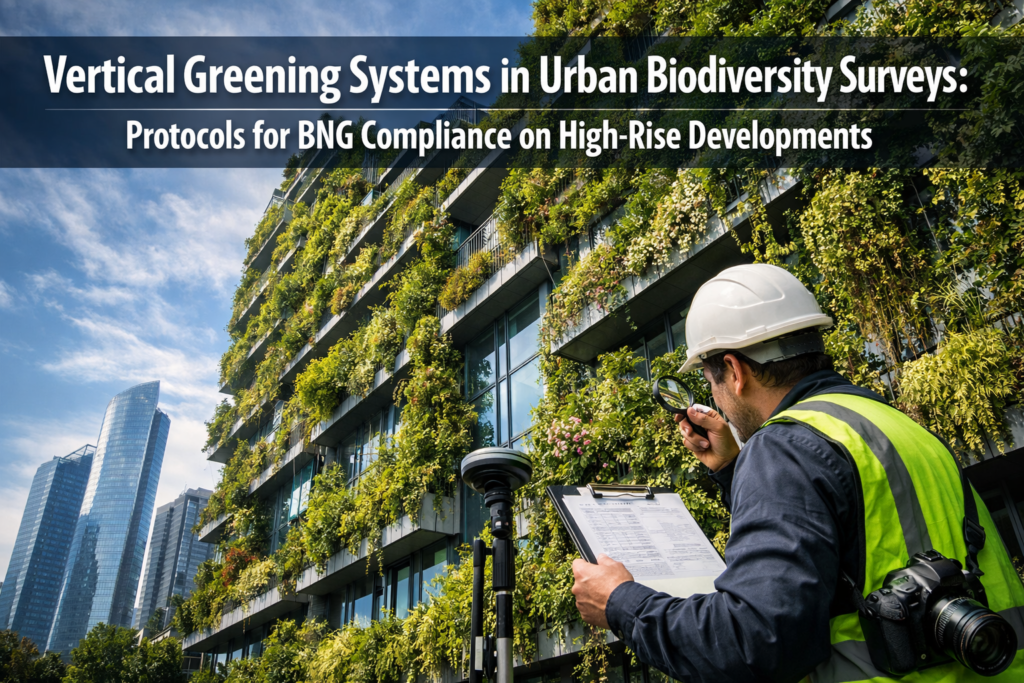
High-rise developments in England now face a biodiversity challenge that traditional ground-level surveys cannot solve. With over 68% of urban land already developed and vertical expansion accelerating across major cities in 2026, ecologists must adapt their survey methodologies to measure biodiversity gains on building facades—not just at ground level. Vertical Greening Systems in Urban Biodiversity […]