

The digital divide continues to widen the gap between data-rich urban centers and underserved remote regions, particularly in biodiversity surveying and environmental monitoring. As we navigate 2026, Low-Power TinyML for Equitable Remote Surveys: 2026 Deployment Guide Beyond Digital Divides emerges as a transformative solution that brings machine learning capabilities directly to the field—no internet required, minimal power consumption, and maximum accessibility. This technology promises to democratize data collection in areas where traditional cloud-based systems have failed, enabling surveyors worldwide to contribute valuable biodiversity data regardless of their location or infrastructure limitations.
Key Takeaways
- 🔋 TinyML devices operate on milliwatts of power, enabling months of continuous operation on small batteries or solar panels, making them ideal for remote biodiversity surveys
- 🌍 Offline-first architecture eliminates dependency on internet connectivity, allowing surveyors in underserved regions to collect and process data locally
- 💰 Cost advantages make mass deployment feasible, with TinyML solutions significantly cheaper than cloud-based alternatives for large-scale survey programs[1]
- 📊 Edge processing reduces data transfer requirements by 90%+, detecting critical information directly from sensors before transmission[2]
- ⚖️ Equitable access to advanced surveying tools empowers communities in digital divide regions to participate in global biodiversity monitoring initiatives
Understanding TinyML Technology for Remote Survey Applications
What Makes TinyML Different?
TinyML (Tiny Machine Learning) represents a paradigm shift in how artificial intelligence operates in the field. Unlike traditional machine learning that requires powerful servers and constant internet connectivity, TinyML runs sophisticated algorithms on microcontrollers smaller than a credit card. These devices consume less power than a standard LED light bulb while performing complex tasks like species identification, sound classification, and environmental pattern recognition.
The technology operates on three core principles:
- Ultra-low power consumption (measured in milliwatts rather than watts)
- On-device inference (processing happens locally, not in the cloud)
- Minimal hardware requirements (affordable microcontrollers costing $5-$50)
For biodiversity surveyors working in remote locations, this means carrying lightweight equipment that can identify bird calls, classify plant species from images, or detect environmental changes—all without needing cellular service or WiFi connectivity.
TinyML Applications in Biodiversity Monitoring
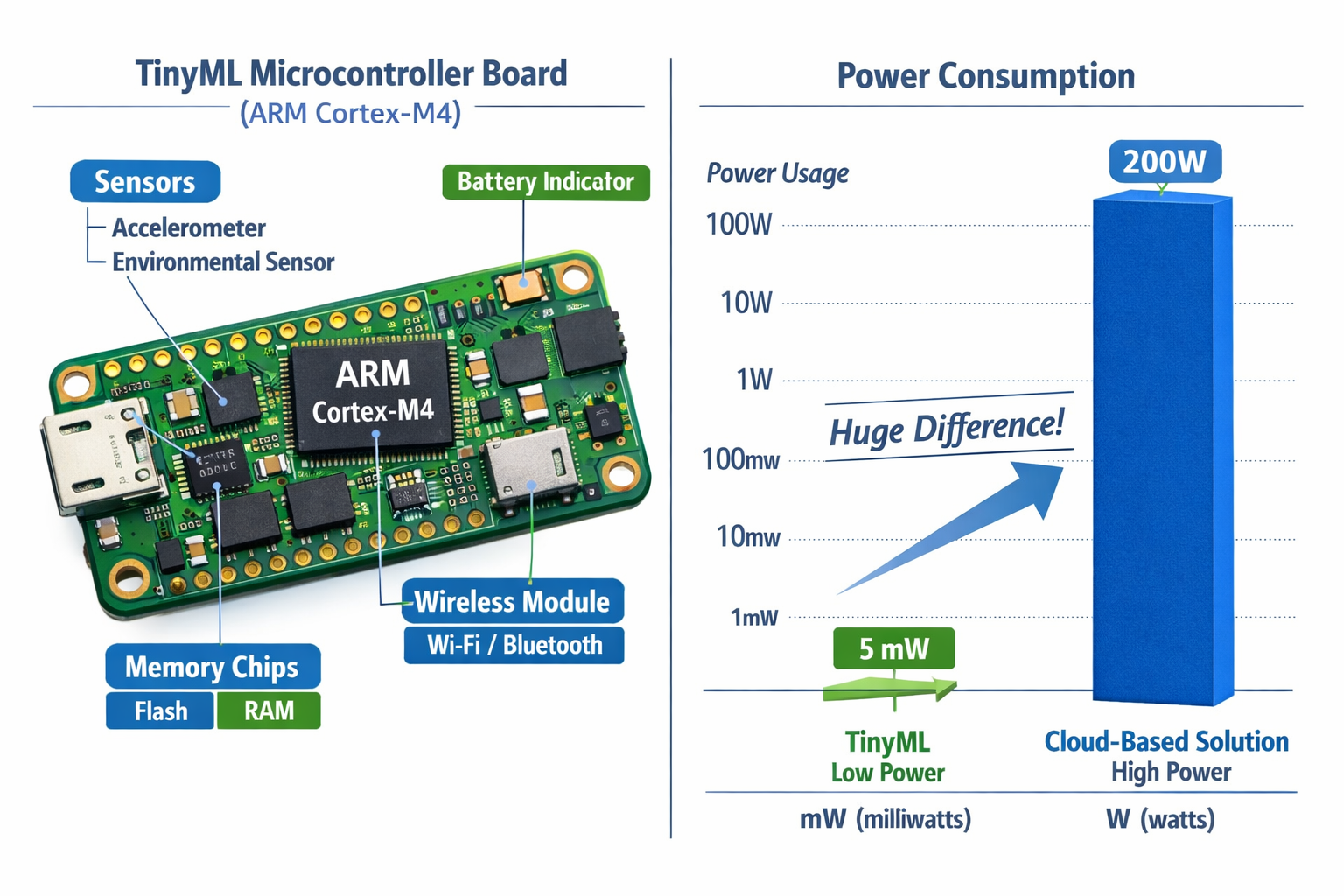
TinyML applications span multiple domains including healthcare monitoring, smart agriculture, and industrial monitoring[3], but their potential for equitable biodiversity surveys remains particularly compelling. Consider these practical applications:
Species Identification Systems 🦜
- Audio classification for bird and amphibian calls
- Image recognition for plant and insect species
- Real-time identification feedback to field surveyors
Environmental Monitoring 🌡️
- Temperature and humidity pattern detection
- Soil quality analysis
- Air quality monitoring with anomaly detection
Habitat Assessment 🌳
- Vegetation density analysis
- Water quality indicators
- Ecosystem health scoring
These applications directly support biodiversity impact assessments and enable more comprehensive data collection for Biodiversity Net Gain (BNG) initiatives.
Low-Power TinyML for Equitable Remote Surveys: Technical Deployment Framework
Selecting the Right Hardware Platform
The foundation of any successful TinyML deployment begins with appropriate hardware selection. TensorFlow Lite Micro (TFLM) is recommended for optimizing models on resource-constrained devices and improving portability for remote deployment[1]. The framework supports multiple microcontroller platforms:
| Platform | Power Consumption | Memory | Cost Range | Best For |
|---|---|---|---|---|
| Arduino Nano 33 BLE | 5-15 mW | 256 KB | $20-$30 | Audio classification |
| ESP32-S3 | 10-40 mW | 512 KB | $5-$15 | Multi-sensor integration |
| STM32L4 | 3-8 mW | 1 MB | $10-$25 | Ultra-low power applications |
| Raspberry Pi Pico | 20-50 mW | 264 KB | $4-$6 | Budget deployments |
For biodiversity survey applications, the ESP32-S3 offers an optimal balance of processing power, connectivity options, and cost-effectiveness. Its built-in WiFi and Bluetooth capabilities enable data synchronization when surveyors return to base stations, while its dual-core processor handles complex machine learning models efficiently.
Model Optimization and Deployment
Deploying machine learning models to resource-constrained devices requires careful optimization:
Quantization Techniques 📉
- Convert 32-bit floating-point models to 8-bit integer representations
- Reduce model size by 75% while maintaining 95%+ accuracy
- Enable faster inference on microcontroller hardware
Pruning Strategies ✂️
- Remove redundant neural network connections
- Decrease computational requirements by 40-60%
- Maintain model performance for specific survey tasks
Knowledge Distillation 🎓
- Train smaller "student" models from larger "teacher" models
- Achieve comparable accuracy with 10x fewer parameters
- Optimize for specific regional biodiversity contexts
TinyML enables near-edge processing that detects critical information directly from sensor feeds before transmission, reducing data transfer requirements[2]—a crucial advantage when surveyors eventually sync their data over limited bandwidth connections.
Power Management Strategies
Battery life determines deployment viability in remote locations. Effective power management strategies include:
- Sleep modes: Microcontrollers enter deep sleep between measurements, consuming microamperes instead of milliamperes
- Duty cycling: Sensors activate only when needed, extending battery life from days to months
- Solar harvesting: Small 5-10W solar panels provide indefinite operation in most climates
- Energy budgeting: Careful calculation of power consumption for each survey task
A well-designed TinyML survey device can operate for 3-6 months on a single 10,000 mAh battery pack, or indefinitely with a modest solar panel—making it practical for long-term deployment in areas without electrical infrastructure.
Bridging Digital Divides: Equitable Deployment Strategies for 2026
Addressing Infrastructure Limitations
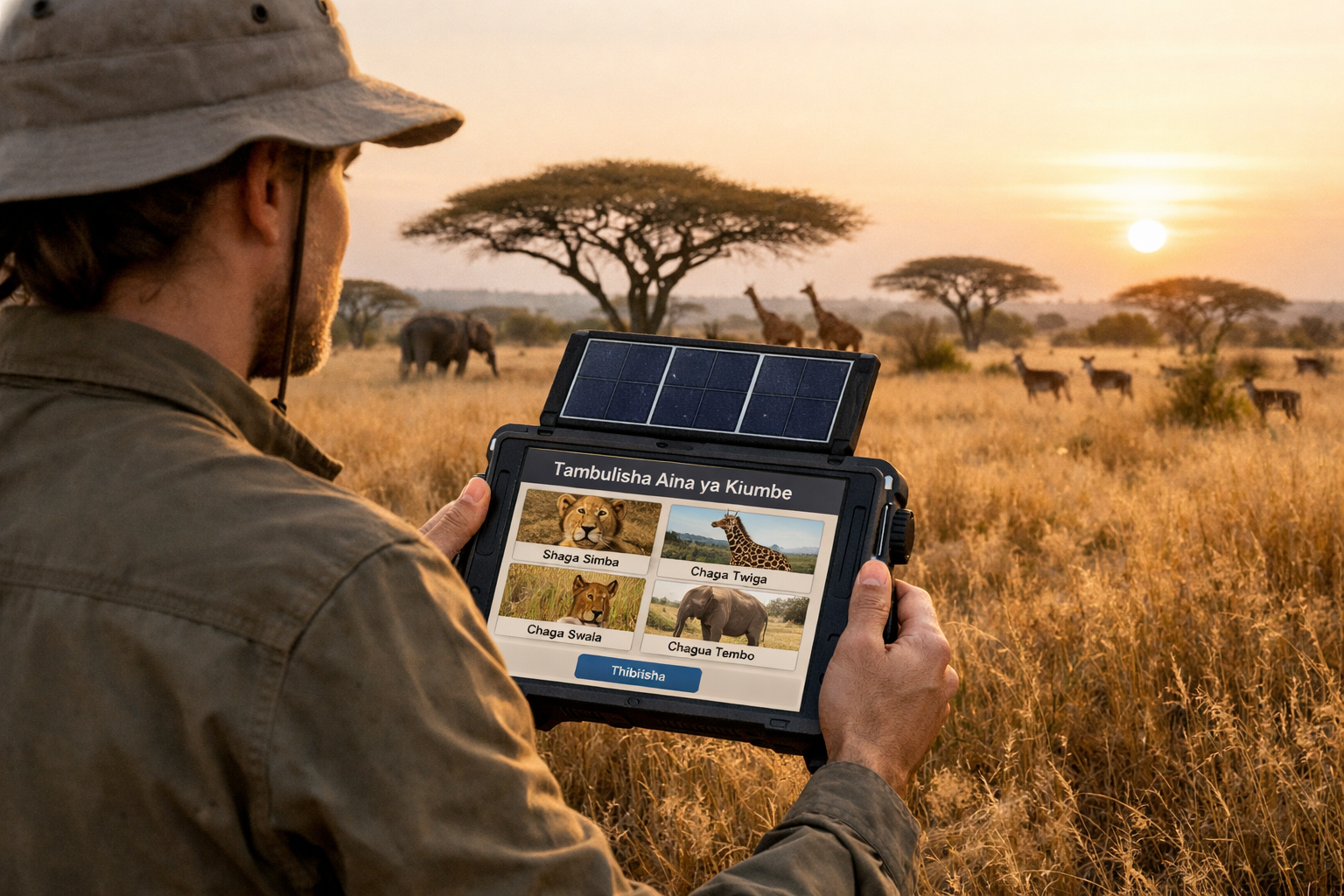
The Low-Power TinyML for Equitable Remote Surveys: 2026 Deployment Guide Beyond Digital Divides recognizes that traditional survey technologies fail in regions lacking reliable electricity, internet connectivity, or technical support infrastructure. TinyML solutions address these limitations through:
Offline-First Architecture 🔌
- Complete functionality without internet access
- Local data storage on SD cards or flash memory
- Batch synchronization when connectivity becomes available
Minimal Training Requirements 📚
- Intuitive interfaces requiring basic literacy only
- Visual feedback systems with icons and colors
- Multi-language support for global deployment
Ruggedized Design 💪
- Weather-resistant enclosures (IP65+ rated)
- Temperature tolerance (-20°C to +60°C)
- Shock and vibration resistance for field conditions
Cost-Effective Mass Deployment
TinyML voice assistants are significantly cheaper than cloud-based solutions and well-suited for mass deployment in resource-limited settings[1]. This cost advantage extends to biodiversity survey applications:
Per-Device Economics 💵
- Hardware cost: $15-$50 per unit
- No ongoing cloud service fees
- Minimal maintenance requirements
- 3-5 year operational lifespan
Scalability Benefits 📈
- Bulk procurement reduces unit costs by 40-60%
- Open-source software eliminates licensing fees
- Community-based maintenance models
- Shared training resources across regions
For organizations conducting biodiversity assessments across multiple sites, deploying 100 TinyML survey devices costs approximately $2,000-$5,000—less than a single high-end traditional survey system.
Building Local Capacity and Ownership
True equity requires more than just distributing technology—it demands local ownership and capacity building:
Community Training Programs 👥
- Hands-on workshops for device operation
- Data interpretation skills development
- Basic troubleshooting and maintenance
- Survey methodology best practices
Open-Source Collaboration 🌐
- Publicly available hardware designs
- Shared model repositories for regional species
- Collaborative data validation networks
- Transparent algorithm development
Cultural Adaptation 🎨
- Integration with traditional ecological knowledge
- Respect for indigenous data sovereignty
- Locally relevant species prioritization
- Community-defined survey objectives
These approaches ensure that TinyML deployments empower rather than extract, supporting sustainable biodiversity initiatives that benefit local communities directly.
Implementation Roadmap for 2026 Deployments
Phase 1: Pilot Programs and Validation (Months 1-3)
Begin with small-scale deployments to validate technology and refine approaches:
- Site Selection: Choose 2-3 representative locations with varying infrastructure levels
- Device Configuration: Customize models for local species and environmental conditions
- Surveyor Training: Conduct intensive workshops with initial user groups
- Data Collection: Gather baseline data while monitoring device performance
- Iteration: Refine hardware, software, and training based on feedback
Phase 2: Scaled Deployment (Months 4-9)
Expand to broader geographic coverage while maintaining quality:
- Manufacturing: Procure devices in quantities of 50-200 units
- Distribution Networks: Establish regional hubs for device distribution and support
- Training Cascade: Train local champions who can train additional surveyors
- Quality Assurance: Implement data validation protocols and feedback loops
- Technical Support: Create helplines and troubleshooting resources
Phase 3: Integration and Sustainability (Months 10-12+)
Ensure long-term viability and integration with existing systems:
Data Integration 🔗
- Synchronization with national biodiversity databases
- Compatibility with BNG reporting requirements
- API connections to global biodiversity platforms
- Standardized data formats and protocols
Maintenance Ecosystem 🔧
- Local repair capabilities
- Spare parts distribution networks
- Firmware update mechanisms
- Device lifecycle management
Impact Measurement 📊
- Survey coverage improvements
- Data quality metrics
- Cost-effectiveness analysis
- Equity indicators and accessibility measures
Real-World Applications: TinyML in Biodiversity Net Gain
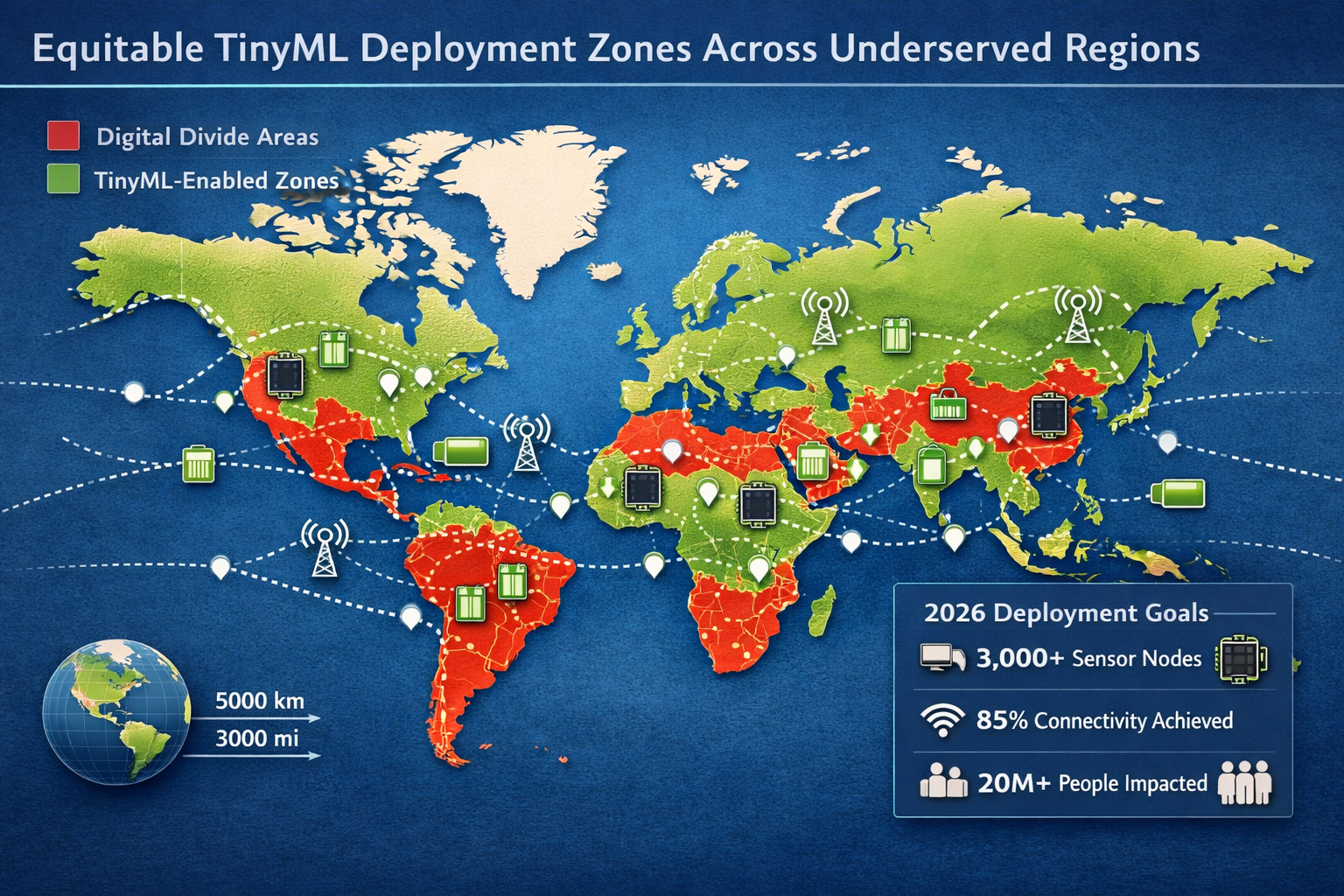
The intersection of TinyML technology and Biodiversity Net Gain requirements creates powerful opportunities for equitable environmental monitoring:
Pre-Development Baseline Surveys
Developers requiring biodiversity impact assessments can deploy TinyML devices to:
- Conduct continuous monitoring over extended periods (weeks to months)
- Capture seasonal variations in species presence
- Document nocturnal and diurnal biodiversity patterns
- Generate comprehensive baseline data at lower costs
Post-Development Monitoring
For achieving Biodiversity Net Gain, TinyML enables:
- Long-term habitat restoration monitoring
- Automated species colonization tracking
- Ecosystem health trend analysis
- Verification of biodiversity unit delivery
Off-Site Habitat Banking
Organizations managing off-site biodiversity units benefit from:
- Distributed monitoring across multiple habitat sites
- Reduced surveyor travel requirements
- Continuous data streams for habitat bank verification
- Transparent reporting for biodiversity credit purchasers
Overcoming Common Deployment Challenges
Technical Challenges and Solutions
Challenge: Limited model accuracy for rare species
Solution: Implement hierarchical classification (genus → species) with human verification for uncertain identifications
Challenge: Environmental interference (wind noise, lighting variations)
Solution: Multi-sensor fusion combining audio, visual, and environmental data for robust detection
Challenge: Device theft or damage in unsupervised locations
Solution: Camouflaged enclosures, GPS tracking, and community stewardship programs
Social and Cultural Considerations
Language Barriers 🗣️
- Develop icon-based interfaces minimizing text dependency
- Provide audio instructions in local languages
- Create visual training materials accessible to low-literacy users
Trust and Adoption 🤝
- Involve community leaders in deployment planning
- Demonstrate immediate local benefits (pest detection, crop monitoring)
- Ensure data sovereignty and privacy protections
- Share results transparently with data contributors
Gender Equity ⚖️
- Design devices accessible to users of all genders
- Ensure training programs reach women and marginalized groups
- Address safety concerns for surveyors in remote locations
- Recognize diverse knowledge systems and contributions
Future Directions: Beyond 2026
The trajectory of Low-Power TinyML for Equitable Remote Surveys points toward increasingly sophisticated and accessible systems:
Emerging Capabilities 🚀
- Multi-modal sensing (audio + visual + environmental)
- Federated learning enabling collaborative model improvement
- Energy harvesting from ambient sources (vibration, thermal)
- Mesh networking for device-to-device communication
Integration Opportunities 🔄
- Citizen science platforms and mobile apps
- Satellite imagery and remote sensing data
- Traditional ecological knowledge databases
- Climate adaptation monitoring systems
Policy Implications 📜
- Standards for TinyML-generated biodiversity data
- Certification programs for device operators
- Funding mechanisms for equitable technology access
- International cooperation frameworks
Organizations like Biodiversity Surveyors are positioned to lead this transformation, combining technical expertise with commitment to accessible, equitable environmental monitoring.
Conclusion
Low-Power TinyML for Equitable Remote Surveys: 2026 Deployment Guide Beyond Digital Divides represents more than a technological advancement—it's a pathway toward environmental data democracy. By eliminating the barriers of cost, connectivity, and complexity that have historically excluded underserved regions from contributing to global biodiversity knowledge, TinyML empowers communities worldwide to participate as equals in environmental stewardship.
The technology delivers concrete advantages: devices operating for months on minimal power, sophisticated species identification without internet access, and deployment costs 80-90% lower than traditional systems. These benefits translate directly to more comprehensive biodiversity data, better-informed conservation decisions, and equitable participation in initiatives like Biodiversity Net Gain.
Actionable Next Steps
For organizations ready to implement TinyML survey systems in 2026:
- Assess Your Context: Identify specific survey needs, infrastructure limitations, and target species or habitats
- Start Small: Launch a pilot program with 5-10 devices to validate approach and build local capacity
- Build Partnerships: Collaborate with local communities, conservation organizations, and technical experts
- Invest in Training: Prioritize comprehensive training programs that build lasting local capacity
- Plan for Scale: Design systems with expansion in mind, using open standards and modular approaches
- Measure Impact: Track both biodiversity outcomes and equity indicators throughout deployment
The digital divide in environmental monitoring is not inevitable—it's a challenge that Low-Power TinyML technology is uniquely positioned to overcome. As we advance through 2026 and beyond, the question is not whether this technology can democratize biodiversity surveying, but how quickly we can deploy it to the communities and ecosystems that need it most.
For developers, landowners, and conservation professionals seeking to integrate cutting-edge survey technology with biodiversity requirements, TinyML offers a proven, accessible, and equitable path forward. The future of biodiversity monitoring is small, efficient, and inclusive—and it's available today.
References
[1] Tinyml Survey – https://www.scribd.com/document/972885787/TinyML-Survey
[2] Watch – https://www.youtube.com/watch?v=0ltJDRcRUlM
[3] Survey Tinyml – https://ait-lab.vercel.app/story/survey-tinyml