

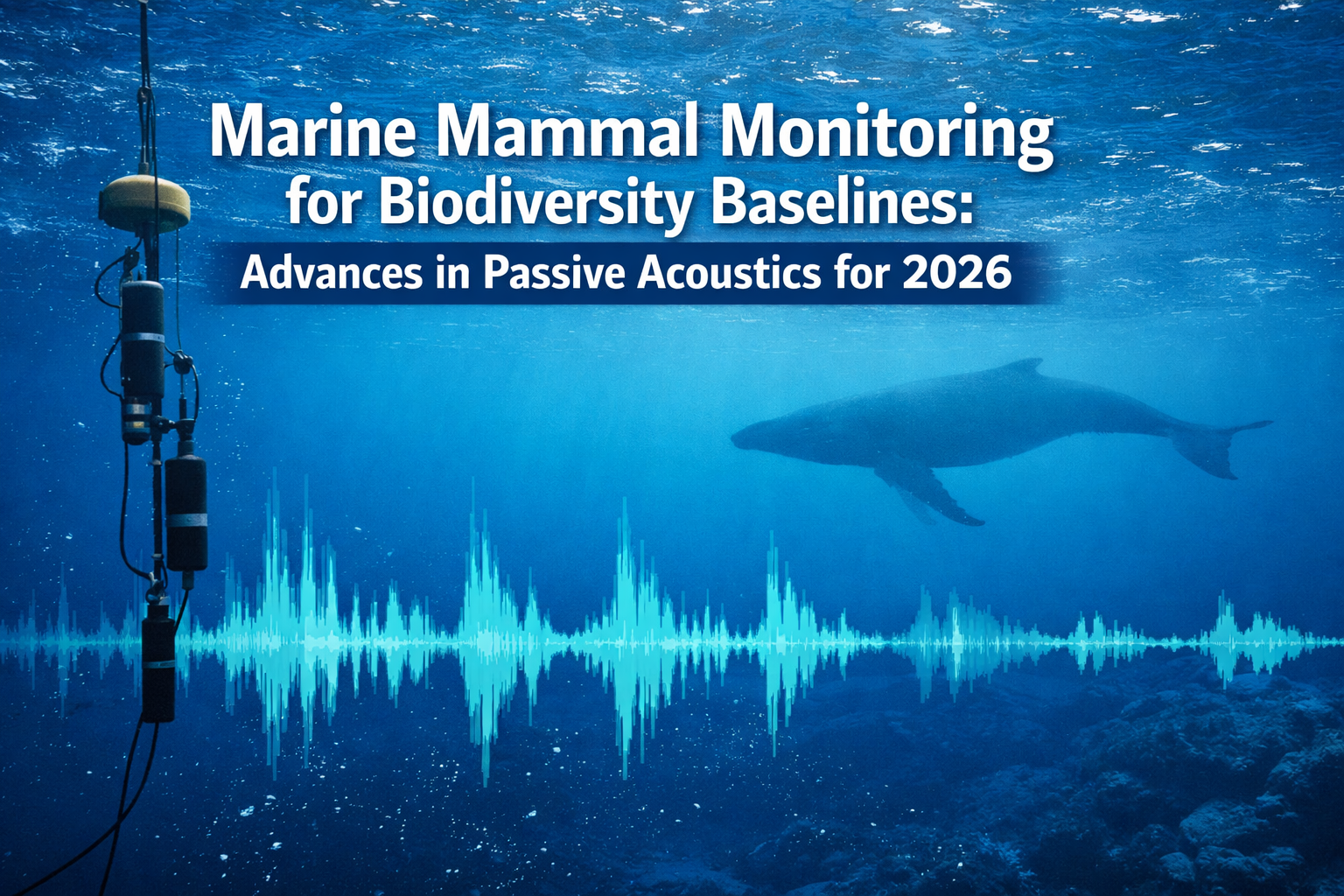
The ocean's soundscape tells stories that human eyes cannot see. Beneath the waves, whales communicate across thousands of miles, dolphins navigate through clicks and whistles, and entire ecosystems pulse with acoustic life. As 2026 unfolds, Marine Mammal Monitoring for Biodiversity Baselines: Advances in Passive Acoustics for 2026 has emerged as a critical tool for understanding these underwater worlds—especially as climate change, offshore development, and pollution reshape marine habitats at unprecedented rates.
For biodiversity surveyors, environmental consultants, and marine resource managers, passive acoustic monitoring (PAM) now offers capabilities that seemed impossible just a few years ago. From three-dimensional whale tracking to petabyte-scale data integration, the field has transformed from simple underwater microphones into a sophisticated cyberinfrastructure that supports real-time conservation decisions and long-term ecosystem assessments.
Key Takeaways
- Advanced 3D tracking systems can now reconstruct individual whale movements underwater by measuring microsecond differences in echolocation clicks across multiple hydrophones, revealing detailed dive behavior and habitat use patterns [4]
- SoundCoop framework launched in December 2025 integrates 17 years of marine acoustic data across 7 geographic regions, establishing standardized processing methods that enable global-scale biodiversity baseline comparisons [2]
- Autonomous monitoring systems including electric gliders and saildrones enable continuous, long-duration recordings across vast ocean areas, supporting both baseline establishment and real-time mitigation decisions [3]
- Federal requirements now mandate at least 200 PAM recorders along the U.S. East Coast, with coordinated West Coast network expansion underway to address offshore wind development and climate change impacts [1]
- Species-specific detection capabilities have advanced significantly, clarifying which marine mammals can be effectively monitored using current PAM technologies based on their unique diving and vocalization behaviors [4]
Understanding Passive Acoustic Monitoring for Marine Biodiversity Baselines
What Makes Passive Acoustics Essential for Marine Mammal Monitoring
Unlike visual surveys that depend on good weather, daylight, and animals surfacing, passive acoustic monitoring operates continuously in all conditions. Underwater microphones (hydrophones) detect the clicks, whistles, songs, and calls that marine mammals produce naturally—without disturbing the animals or requiring human observers at sea.
This non-invasive approach makes PAM particularly valuable for establishing biodiversity baselines. Surveyors can deploy recording systems for months or years, capturing seasonal patterns, migration timing, breeding behaviors, and population presence that would be impossible to document through traditional methods.
The Science Behind Underwater Sound Detection
Marine mammals rely heavily on sound for survival. Water transmits acoustic signals much more efficiently than light, allowing whales to communicate across ocean basins and dolphins to echolocate prey in complete darkness. Different species produce distinctive vocalizations:
- 🐋 Baleen whales (like humpbacks and fin whales) produce low-frequency songs and calls, often below 1,000 Hz
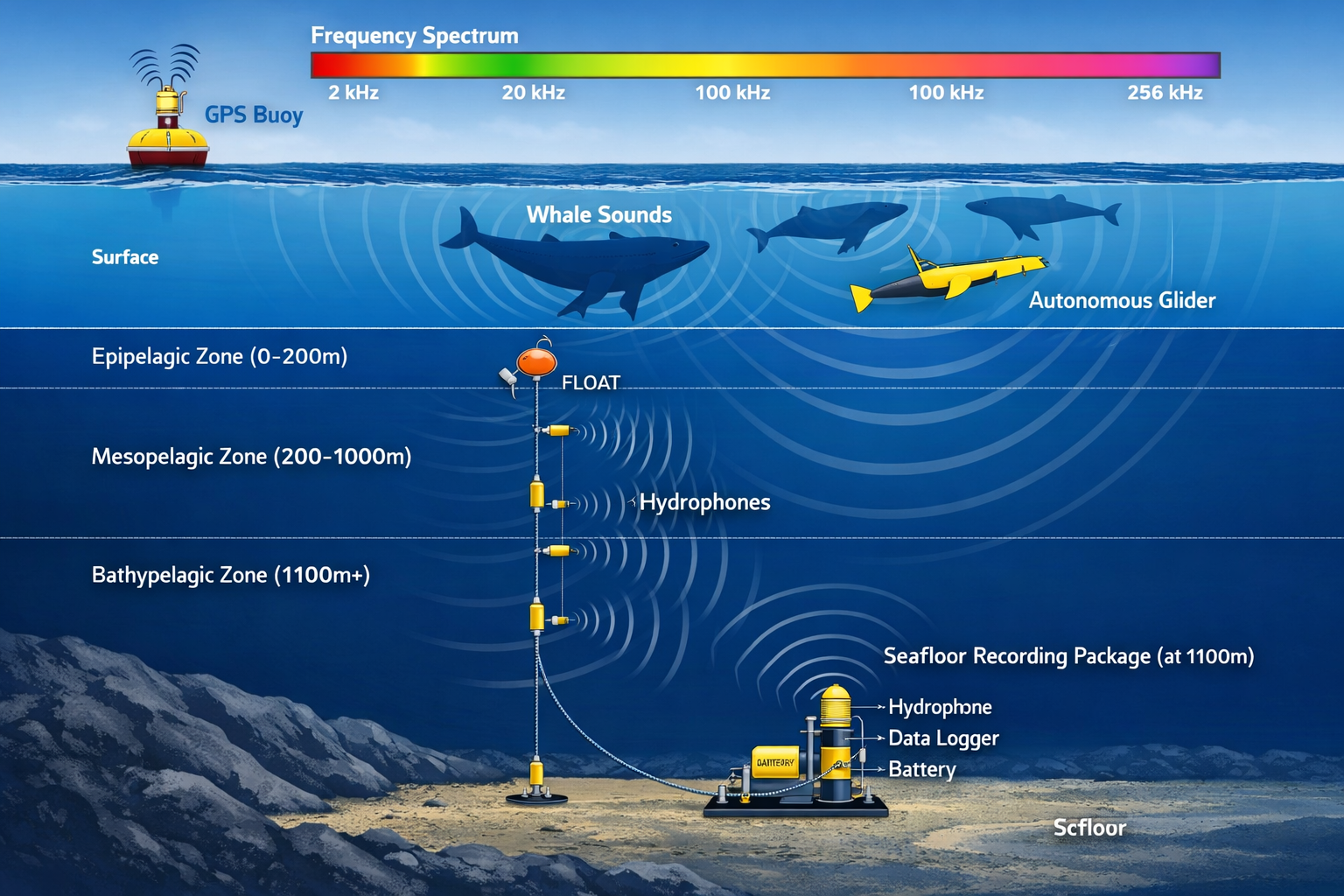
- 🐬 Toothed whales (dolphins, sperm whales, beaked whales) use high-frequency echolocation clicks, ranging from 2 kHz to over 200 kHz
- 🦭 Pinnipeds (seals and sea lions) vocalize both underwater and at the surface, with species-specific call types
Modern PAM systems capture these sounds across broad frequency ranges—the SoundCoop framework now integrates data spanning 2 to 256 kHz sample frequencies, covering virtually all marine mammal vocalizations [2]. This comprehensive acoustic coverage enables surveyors to detect multiple species simultaneously and establish robust biodiversity baselines.
Why 2026 Represents a Turning Point
Several converging factors make 2026 a pivotal year for marine mammal monitoring. Offshore wind energy development has accelerated dramatically along both U.S. coasts, creating regulatory requirements for extensive baseline acoustic monitoring. Climate change continues shifting marine mammal distributions, making historical data less predictive of current conditions. Simultaneously, technological advances have matured to the point where coordinated, large-scale monitoring networks are now feasible and cost-effective.
The establishment of standardized protocols and data-sharing frameworks means that baseline data collected today will remain valuable and comparable for decades—supporting long-term trend analysis and biodiversity impact assessments across multiple development projects.
Technological Advances in Passive Acoustics for 2026
Three-Dimensional Acoustic Tracking: A Game-Changing Innovation
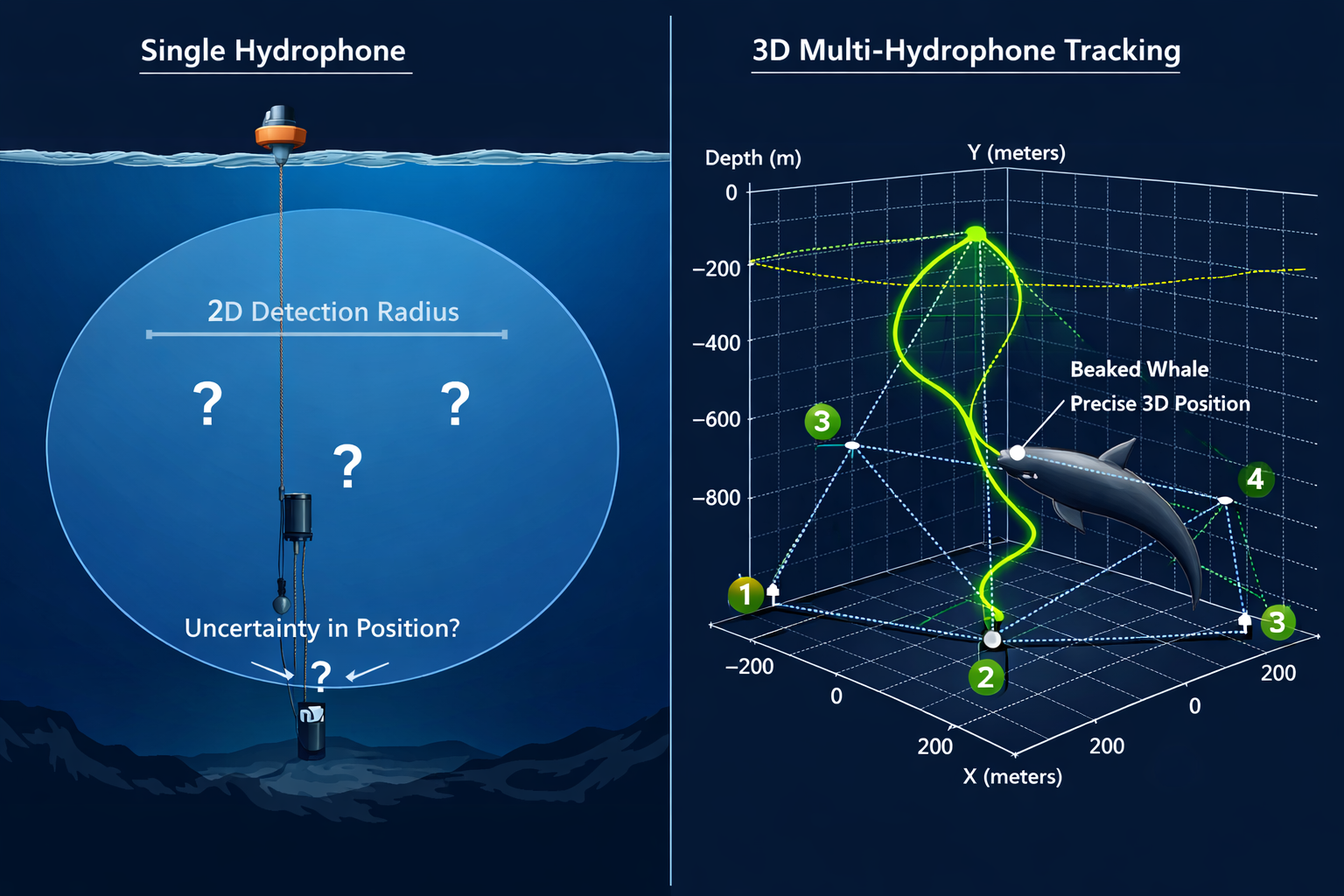
One of the most significant breakthroughs in Marine Mammal Monitoring for Biodiversity Baselines: Advances in Passive Acoustics for 2026 comes from NOAA researchers who published findings in February 2026 demonstrating three-dimensional whale tracking capabilities [4].
The technology works by deploying multiple hydrophones in an array configuration. When a whale produces an echolocation click, the sound reaches each hydrophone at slightly different times—differences measured in milliseconds or even microseconds. By precisely calculating these time-of-arrival differences, researchers can triangulate the whale's exact position in three-dimensional space.
In a groundbreaking study off Louisiana, scientists deployed High-Frequency Acoustic Recording Packages at approximately 1,100 meters depth to track individual beaked whales. The system successfully reconstructed complete dive profiles, revealing:
- Detailed foraging behavior patterns
- Precise depth preferences during different dive phases
- Movement speeds and turning behaviors
- Habitat use within specific depth zones
This level of detail transforms biodiversity baseline assessments. Rather than simply noting "beaked whales present," surveyors can now document specific behaviors, preferred depths, and fine-scale habitat associations—critical information for predicting how species might respond to environmental changes or development activities.
Species-Specific Detection: Understanding What We Can and Cannot Monitor
Not all marine mammals are equally detectable using passive acoustics. Recent research has clarified why different beaked whale species show varying detectability, based on their species-specific diving and echolocation behaviors [4].
Some species vocalize frequently and predictably, making them ideal candidates for PAM monitoring:
| Marine Mammal Group | Detection Reliability | Key Factors |
|---|---|---|
| Sperm whales | Excellent | Frequent, loud echolocation clicks |
| Humpback whales | Excellent | Long, complex songs; frequent calling |
| Cuvier's beaked whales | Good | Regular echolocation during deep dives |
| Harbor porpoises | Good | High-frequency clicks, predictable patterns |
| Blue whales | Moderate-Good | Very low frequency calls; seasonal variation |
| Minke whales | Moderate | Quieter vocalizations; less frequent calling |
Understanding these detection capabilities helps surveyors design appropriate monitoring programs and interpret baseline data accurately. A lack of acoustic detections doesn't necessarily mean a species is absent—it might simply be acoustically cryptic or vocalizing outside the monitoring frequency range.
The SoundCoop Framework: Standardizing Global Marine Acoustic Data
In December 2025, an international research team led by NOAA launched SoundCoop, a revolutionary cyberinfrastructure project that addresses one of passive acoustics' biggest challenges: data compatibility and integration [2].
SoundCoop integrates:
- 📊 12 distinct research projects
- 🎤 10 different recording system types
- 🌍 7 geographic regions
- 📅 17 years of historical data
- 📈 2–256 kHz frequency coverage
The framework establishes standardized processing methods for ocean sound level metrics using freeware software toolkits, ensuring that data collected by different teams, using different equipment, in different locations can be meaningfully compared. This standardization is essential for establishing biodiversity baselines that extend beyond individual project boundaries.
For surveyors conducting environmental assessments, SoundCoop's approach offers a model for ensuring that monitoring data will remain valuable and comparable over time—a critical consideration for long-term biodiversity net gain initiatives and adaptive management programs.
Autonomous Remote Monitoring Systems: Expanding Coverage and Duration
Traditional PAM deployments required vessels to retrieve recording devices periodically, limiting monitoring duration and geographic coverage. Advances in autonomous systems have transformed these limitations into opportunities [3].
Modern autonomous monitoring platforms include:
Moored Recording Systems
- Anchored to the seafloor for 6-12 months
- Continuous recording or duty-cycled schedules
- Minimal maintenance requirements
- Cost-effective for long-term baseline establishment
Electric Gliders
- Self-propelled underwater vehicles
- Cover large areas while recording
- Programmable survey patterns
- Real-time data transmission capabilities
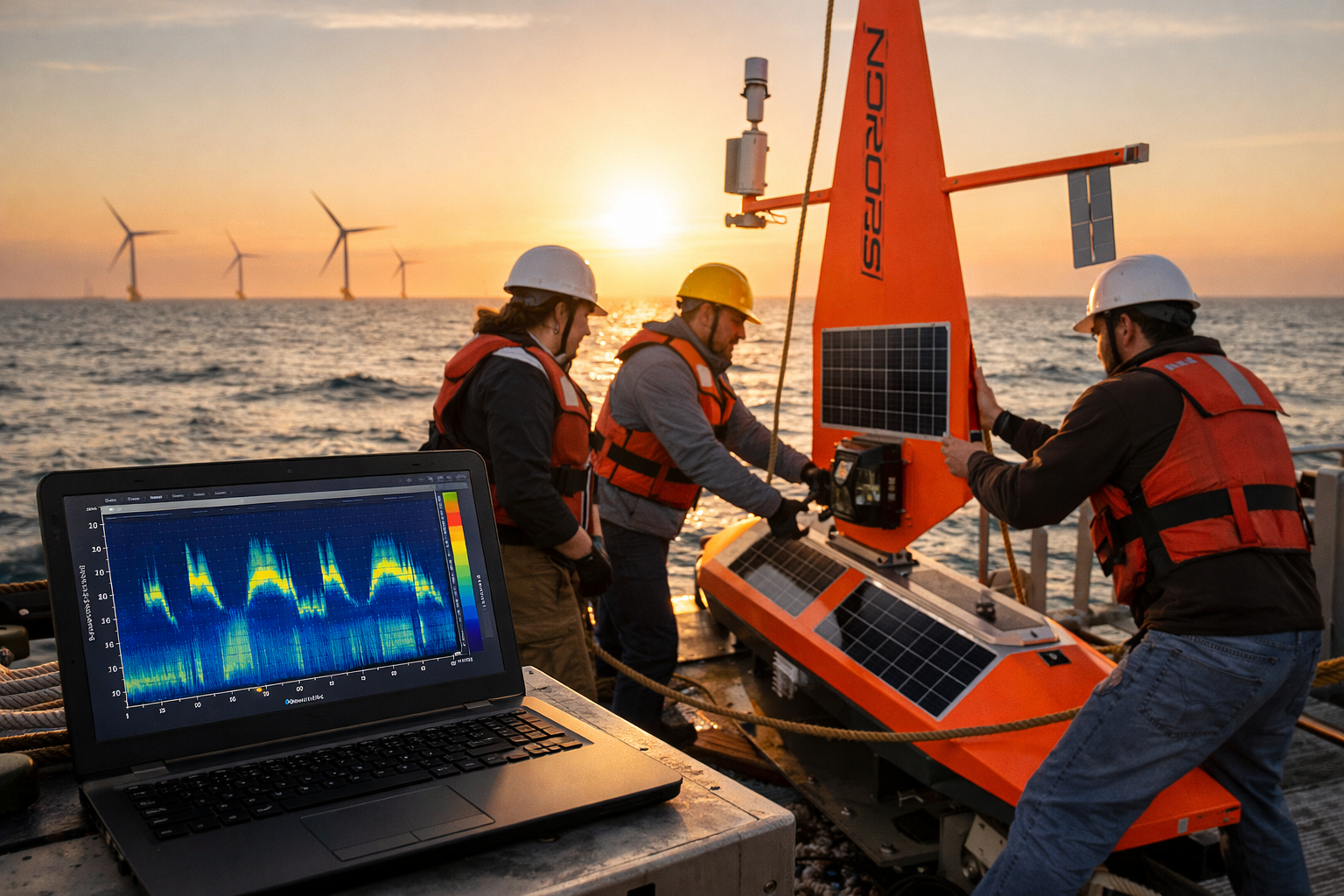
Saildrones
- Surface vessels powered by wind and solar
- Equipped with hydrophone arrays
- Extended deployment periods (months)
- GPS-tracked positioning for precise data georeferencing
These autonomous systems enable surveyors to establish biodiversity baselines across vast ocean areas that would be prohibitively expensive to monitor using crewed vessels. The technology particularly benefits offshore wind development projects, where regulatory requirements mandate extensive spatial and temporal coverage.
Implementing Marine Mammal Monitoring for Biodiversity Baselines: Advances in Passive Acoustics for 2026
National Guidelines and Standardized Protocols
As passive acoustic monitoring has matured, the need for standardized protocols has become critical—especially for regulatory applications. In 2026, authoritative guidelines now establish minimum procedures, system requirements, and consistency standards across industry monitoring plans [3].
These guidelines, developed by leading scientists including Sofie Van Parijs of NOAA's Northeast Fisheries Science Center, address:
- Equipment specifications: Hydrophone sensitivity, frequency response, recording schedules
- Deployment protocols: Depth requirements, spatial distribution, deployment duration
- Data processing standards: Detection algorithms, quality control procedures, metadata requirements
- Reporting frameworks: Standardized metrics, visualization approaches, data accessibility
For biodiversity surveyors working on development projects, these guidelines provide clear benchmarks for designing monitoring programs that will satisfy regulatory requirements while generating scientifically robust baseline data. The standards also ensure that data collected for one project can contribute to broader regional assessments—maximizing the value of monitoring investments.
East Coast Implementation: A Model for Baseline Monitoring
The U.S. East Coast has become a testing ground for large-scale passive acoustic monitoring networks. Federal requirements now mandate at least 200 PAM recorders deployed along the East Coast, with three years of baseline data collection completed prior to offshore wind construction [1].
This extensive monitoring effort has generated unprecedented insights into marine mammal distributions, seasonal movements, and habitat use patterns. Key lessons from the East Coast implementation include:
✅ Coordinated deployment strategies maximize spatial coverage while minimizing equipment redundancy
✅ Multi-year baseline periods capture inter-annual variability and establish robust reference conditions
✅ Real-time data sharing enables adaptive management and immediate mitigation responses
✅ Standardized processing pipelines ensure data compatibility across multiple project developers
The East Coast model demonstrates how passive acoustic monitoring can serve dual purposes: establishing biodiversity baselines for environmental impact assessment while simultaneously supporting real-time conservation decisions during construction and operation phases.
West Coast Network Expansion: Addressing Regional Priorities
Building on East Coast successes, the Bureau of Ocean Energy Management convened 56 participants in May 2024 to develop a vision for expanding the U.S. West Coast PAM network [1]. The workshop identified several regional priorities that distinguish West Coast monitoring needs from East Coast approaches.
Near-Term Priorities (Years 1-3):
- Collate existing PAM data sources from research institutions, universities, and previous monitoring efforts
- Integrate data into the West Coast Ocean Data Portal for centralized access and analysis
- Develop West Coast-specific scientific questions addressing unique species assemblages and oceanographic conditions
- Establish coordination mechanisms between federal agencies, state regulators, and project developers
The West Coast faces distinct challenges compared to the East Coast, including:
- Greater water depths in potential development areas
- Different marine mammal species assemblages (gray whales, blue whales, diverse dolphin species)
- Complex oceanographic conditions with strong seasonal upwelling
- Existing maritime traffic and naval operations requiring acoustic coordination
These regional differences underscore the importance of tailored monitoring approaches while maintaining standardized data collection and processing methods that enable cross-regional comparisons.
Real-Time Decision Support and Adaptive Management
Perhaps the most practical application of Marine Mammal Monitoring for Biodiversity Baselines: Advances in Passive Acoustics for 2026 lies in supporting real-time operational decisions [3]. Modern PAM systems can now:
- 🚨 Detect endangered whale presence and trigger automatic alerts to construction vessels
- ⏸️ Delay pile-driving activities when marine mammals enter exclusion zones
- 🚢 Send vessel speed-reduction warnings to shipping traffic in high-risk areas
- 📊 Provide immediate feedback on mitigation measure effectiveness
This real-time capability transforms passive acoustic monitoring from a purely assessment tool into an active conservation mechanism. Baseline data establishes expected conditions, while ongoing monitoring detects deviations that might require management responses—creating an adaptive framework that protects marine mammals while allowing development activities to proceed responsibly.
For surveyors and environmental consultants, this dual-purpose approach strengthens project proposals by demonstrating proactive conservation commitments that extend beyond minimum regulatory requirements. Similar adaptive management frameworks are increasingly expected in terrestrial biodiversity net gain projects, making cross-domain expertise increasingly valuable.
Addressing Climate Change and Contaminant Impacts Through Acoustic Baselines
Detecting Climate-Driven Distribution Shifts
Climate change is fundamentally altering marine ecosystems, shifting species distributions poleward and deeper as ocean temperatures rise. Passive acoustic monitoring provides a powerful tool for detecting these shifts before they become obvious through other methods.
Long-term acoustic baselines enable researchers to identify:
- Phenological changes: Earlier or later arrival of migratory species
- Range expansions: New species appearing in previously unoccupied areas
- Behavioral modifications: Changes in calling patterns or dive behaviors
- Community composition shifts: Alterations in the relative abundance of different species
The SoundCoop framework's integration of 17 years of historical data creates unprecedented opportunities for climate change analysis [2]. By comparing current acoustic conditions against historical baselines, researchers can quantify the rate and magnitude of ecosystem changes—information critical for predicting future conditions and designing effective conservation strategies.
Integrating Acoustic Data with Contaminant Assessments
Marine mammal health reflects overall ecosystem condition. Contaminants like heavy metals, persistent organic pollutants, and plastic microparticles accumulate in marine food webs, ultimately affecting top predators like whales and dolphins.
While passive acoustic monitoring cannot directly measure contaminant levels, acoustic baselines provide essential context for interpreting health assessments:
- Acoustic data documents which species use specific areas and when
- Behavioral patterns revealed through acoustics indicate foraging locations
- Seasonal presence patterns help identify exposure periods
- Population-level changes might correlate with contaminant trends
Comprehensive biodiversity assessments increasingly integrate multiple data streams—acoustics, tissue sampling, visual surveys, and environmental measurements—to build holistic pictures of ecosystem health. This integrated approach mirrors terrestrial biodiversity impact assessment methodologies, where multiple survey techniques combine to establish robust baselines.
Regional Monitoring Plans for Long-Term Ecosystem Tracking
Proposed passive acoustic regional monitoring frameworks can systematically collect baseline data and determine large-scale, long-term shifts in whale movements and behavior from both human activities and climate change [3].
These regional frameworks offer several advantages over project-specific monitoring:
- Consistent methodology across multiple projects enables cumulative impact assessment
- Longer time series improve statistical power for detecting trends
- Broader spatial coverage captures ecosystem-scale patterns
- Cost sharing among multiple stakeholders reduces individual project expenses
For biodiversity surveyors, participating in regional monitoring networks provides access to broader context for interpreting project-specific data. Understanding regional trends helps distinguish project impacts from broader ecosystem changes—a critical capability for demonstrating biodiversity net gain outcomes and adaptive management effectiveness.
Practical Applications for Biodiversity Surveyors and Environmental Consultants
Designing Effective PAM Programs for Development Projects
When incorporating passive acoustic monitoring into biodiversity baseline assessments, several design considerations optimize data quality and regulatory acceptance:
Temporal Coverage
- Minimum 12-month baseline period to capture seasonal variation
- Multi-year monitoring preferred for detecting inter-annual patterns
- Continuous recording or duty-cycling based on target species and battery/storage constraints
Spatial Distribution
- Stratified sampling design covering different habitat types
- Sufficient recorder density for species detection probability analysis
- Consideration of sound propagation characteristics in local conditions
Equipment Selection
- Frequency response appropriate for target species
- Recording schedule balancing data quality and storage capacity
- Autonomous capabilities for extended deployments
Quality Assurance
- Automated detection algorithms with manual verification
- Standardized metadata documentation
- Regular equipment calibration and performance checks
These design principles align with broader biodiversity assessment best practices, ensuring that monitoring investments generate defensible, scientifically robust baseline data.
Integrating PAM Data with Traditional Survey Methods
Passive acoustic monitoring works best as part of a comprehensive assessment strategy that includes complementary methods:
- Visual surveys provide species identification confirmation and group size estimates
- Telemetry studies reveal individual movement patterns and habitat connectivity
- Environmental DNA (eDNA) sampling detects species presence through genetic traces
- Oceanographic measurements provide context for interpreting distribution patterns
This multi-method approach mirrors terrestrial biodiversity assessment strategies, where bat acoustic surveys complement breeding bird surveys, camera traps, and habitat assessments. The integration of multiple data types strengthens baseline characterizations and improves impact prediction accuracy.
Data Management and Long-Term Value
The petabyte-scale data generated by marine passive acoustic monitoring presents both opportunities and challenges [2]. Effective data management strategies ensure that monitoring investments deliver long-term value:
Immediate Applications
- Regulatory compliance documentation
- Environmental impact statement support
- Mitigation measure design and evaluation
Medium-Term Value
- Adaptive management decision support
- Cumulative impact assessment contributions
- Regional monitoring network integration
Long-Term Benefits
- Climate change trend analysis
- Ecosystem model validation
- Scientific research contributions
Surveyors should ensure that PAM data collection includes comprehensive metadata, follows standardized processing protocols, and incorporates data-sharing agreements that enable broader scientific use while protecting proprietary interests. This approach maximizes return on monitoring investments while contributing to collective understanding of marine ecosystem changes.
Communicating Acoustic Monitoring Results to Stakeholders
Passive acoustic monitoring generates complex technical data that requires careful translation for non-specialist audiences. Effective communication strategies include:
📊 Visual presentations: Spectrograms, detection time series, seasonal presence plots
🗺️ Spatial visualizations: Distribution maps, hotspot analyses, movement corridors
📈 Trend summaries: Year-over-year comparisons, before-after analyses
🎯 Conservation context: Explaining why detected patterns matter for species protection
These communication approaches help project developers, regulators, and community stakeholders understand monitoring results and their implications for project design and mitigation measures. Clear communication of baseline conditions also supports biodiversity net gain planning, where stakeholder engagement strengthens project acceptance and long-term success.
Future Directions and Emerging Technologies
Artificial Intelligence and Machine Learning Applications
The volume of acoustic data now being collected far exceeds human capacity for manual analysis. Artificial intelligence and machine learning are increasingly essential for processing PAM datasets efficiently:
- Automated species identification algorithms
- Anomaly detection for unusual acoustic events
- Pattern recognition for behavioral state classification
- Predictive models for species occurrence forecasting
These AI applications will continue improving in 2026 and beyond, making large-scale acoustic monitoring increasingly practical and cost-effective. For surveyors, familiarity with these analytical approaches will become increasingly important as the technology matures.
Integration with Other Ocean Observing Systems
Marine passive acoustic monitoring is increasingly integrated with broader ocean observing infrastructure:
- Satellite remote sensing provides oceanographic context (temperature, productivity)
- Ocean glider networks combine acoustic, physical, and chemical measurements
- Coastal radar systems track vessel traffic for noise source attribution
- Weather stations document environmental conditions affecting sound propagation
This integration creates comprehensive marine ecosystem monitoring systems that support multiple management objectives simultaneously—from marine mammal protection to fisheries management to climate change research.
Expanding Global Coverage and Collaboration
While this article has focused primarily on U.S. developments, passive acoustic monitoring for marine mammal baseline assessment is expanding globally. International collaboration through frameworks like SoundCoop [2] and emerging initiatives like the Global Library of Underwater Biological Sounds will enable:
- Cross-regional species distribution comparisons
- Migration route tracking across international boundaries
- Global ocean noise trend assessment
- Coordinated conservation strategy development
For biodiversity surveyors working on international projects, awareness of global monitoring standards and data-sharing protocols will facilitate cross-border assessments and strengthen conservation outcomes.
Conclusion
Marine Mammal Monitoring for Biodiversity Baselines: Advances in Passive Acoustics for 2026 represents a transformative moment in marine conservation science. The convergence of technological innovation, standardized protocols, and coordinated monitoring networks has created unprecedented capabilities for understanding and protecting ocean ecosystems.
For biodiversity surveyors, environmental consultants, and marine resource managers, these advances offer powerful tools for establishing robust baselines that account for climate change, contaminant impacts, and development pressures. The three-dimensional tracking capabilities, autonomous monitoring systems, and standardized data frameworks developed over the past year provide practical solutions to long-standing assessment challenges.
As offshore development accelerates and climate change continues reshaping marine ecosystems, the baseline data being collected today will prove invaluable for decades to come. The key to maximizing this value lies in adopting standardized methods, participating in regional monitoring networks, and ensuring that data management practices preserve long-term accessibility and usability.
Actionable Next Steps
For professionals looking to implement or improve marine mammal monitoring programs:
- Review national guidelines for passive acoustic monitoring to ensure program designs meet current standards
- Explore regional monitoring networks and opportunities for data sharing and collaboration
- Invest in training on acoustic data analysis, including emerging AI/ML tools
- Develop integrated assessment strategies that combine PAM with complementary survey methods
- Establish data management protocols that preserve long-term value and enable broader scientific contributions
- Engage with stakeholders early to communicate monitoring approaches and expected outcomes
- Consider connections to terrestrial biodiversity assessment frameworks for comprehensive project evaluation
The ocean's acoustic landscape holds essential information about ecosystem health, species distributions, and environmental changes. By leveraging the advances in passive acoustic monitoring available in 2026, surveyors and conservationists can establish biodiversity baselines that support informed decision-making and effective marine mammal protection for years to come.
References
[1] Reeb Etal 2024 – https://tethys.pnnl.gov/sites/default/files/publications/Reeb_etal_2024.pdf
[2] eurekalert – https://www.eurekalert.org/news-releases/1119182
[3] New Guidelines For Acoustic Monitoring Of Sea Life And Wind Energy Projects – https://www.nationalfisherman.com/national-international/new-guidelines-for-acoustic-monitoring-of-sea-life-and-wind-energy-projects
[4] Three Dimensional Acoustic Tracking Sheds Light Beaked Whale Dive Behavior And – https://www.fisheries.noaa.gov/feature-story/three-dimensional-acoustic-tracking-sheds-light-beaked-whale-dive-behavior-and