

The soil beneath our feet holds an invisible world that determines whether ecosystem restoration succeeds or fails. As 2026 progresses, soil inoculation has emerged as a promising intervention identified in horizon scans, offering ecologists and land managers a powerful tool to accelerate recovery in degraded landscapes. With biodiversity net gain (BNG) requirements now mandatory across England, understanding how to effectively implement Soil Inoculation for Ecosystem Restoration: Field Protocols for 2026 Biodiversity Net Gain Projects has become essential for achieving measurable conservation outcomes.
Recent research demonstrates that restoring soil microbial communities can dramatically improve plant establishment, enhance nutrient cycling, and build ecosystem resilience—particularly critical as climate pressures intensify moisture decline across restoration sites[1]. This comprehensive guide provides practical field protocols for implementing soil inoculation strategies that support biodiversity net gain compliance while addressing the real-world challenges restoration practitioners face.
Key Takeaways
🌱 Microbial function matters more than diversity alone: Successful soil inoculation restores complementary functional traits—nitrogen fixation, phosphorus solubilization, stress tolerance—rather than simply maximizing species numbers[1].
🔬 Context-dependent outcomes require site-specific evaluation: Soil properties, climate conditions, resident microbiomes, and plant communities all influence inoculation success, making standardized approaches ineffective[1].
🌍 Native microbial sources minimize ecological risk: Using microbial communities from nearby reference ecosystems ensures better compatibility and reduces potential disruption to local biotic interactions[1].
💰 Cost-effective restoration acceleration: Microbial inoculants represent economically viable tools that enhance soil quality, plant productivity, and long-term ecosystem services including carbon sequestration and erosion control[1].
📊 Proven field results validate the approach: Commercial applications have demonstrated 20% increases in tree survival and growth rates, while research sites show significant improvements in plant diversity, biomass, and soil fertility[1][4].
Understanding Soil Inoculation Science for Biodiversity Net Gain
The Microbial Foundation of Ecosystem Recovery
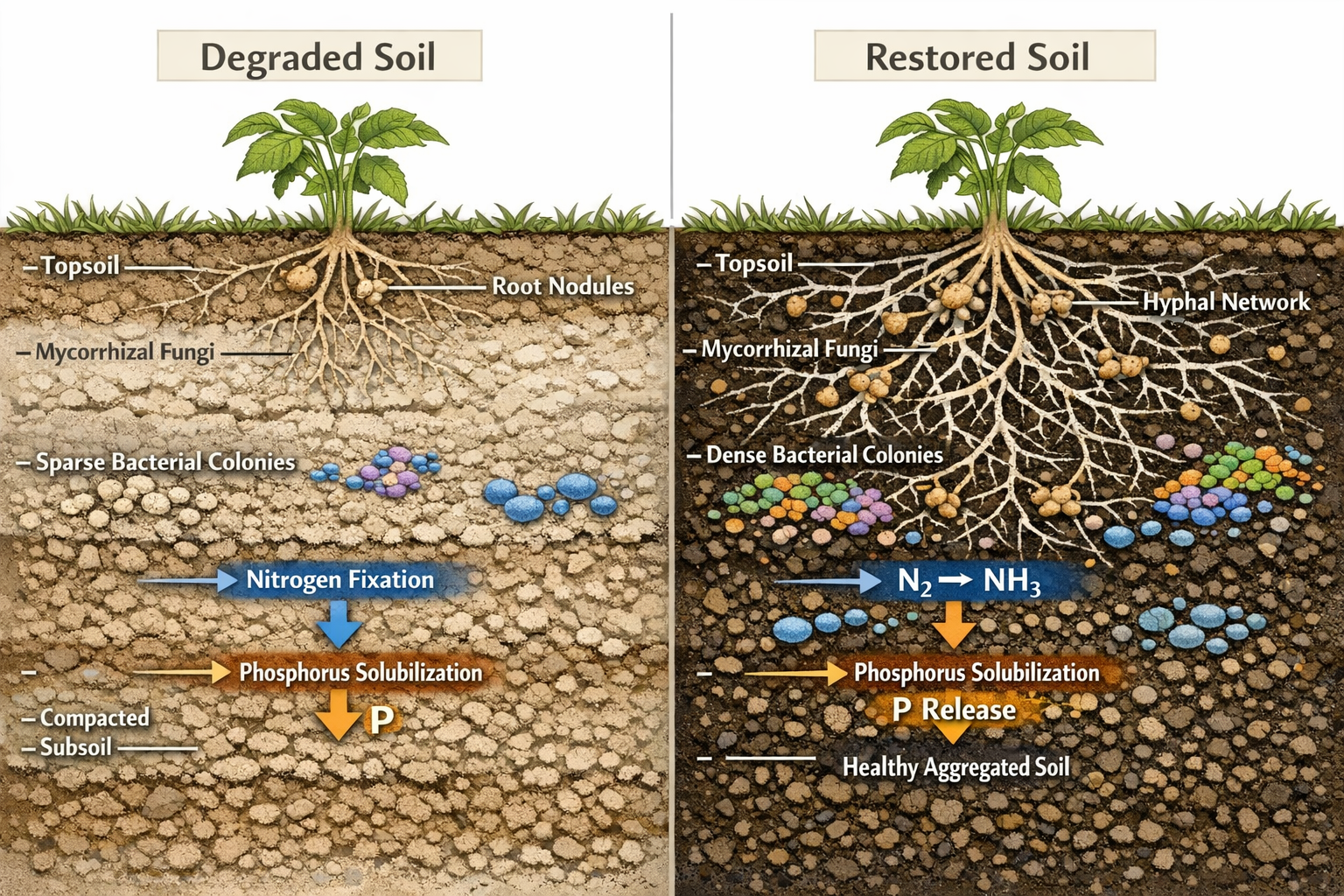
Soil microbial communities perform essential functions that determine whether restoration efforts thrive or struggle. These microscopic organisms—bacteria, fungi, archaea, and other microbes—create the biological infrastructure that supports plant establishment, nutrient cycling, and ecosystem resilience[1].
Why microbial inoculation works:
- Nutrient acquisition enhancement: Specialized microbes solubilize phosphorus, fix atmospheric nitrogen, and mobilize essential minerals that plants cannot access independently[1]
- Soil structure improvement: Fungal hyphae and bacterial exopolysaccharides bind soil particles into stable aggregates, reducing erosion and improving water infiltration
- Plant stress tolerance: Mycorrhizal associations and beneficial bacteria strengthen plant resistance to drought, pathogens, and environmental extremes[1]
- Accelerated succession: Introducing functional microbial communities jumpstarts ecological processes that would otherwise take years to develop naturally
Research on China's Loess Plateau demonstrated these principles in action. Scientists introduced microbial communities from healthy grasslands into degraded sites, resulting in significant improvements in plant diversity, biomass production, and soil fertility. Critically, the microbial communities shifted toward nutrient-cycling assemblages that enhanced long-term resilience[1].
Mycorrhizal Fungi: The Underground Network
Mycorrhizal fungi represent one of the most important functional groups for restoration success. These organisms form symbiotic relationships with plant roots, extending the plant's effective root system through vast hyphal networks.
Key mycorrhizal benefits for BNG projects:
| Function | Restoration Benefit | Biodiversity Impact |
|---|---|---|
| Phosphorus uptake | Enhanced plant establishment in nutrient-poor soils | Supports diverse plant communities |
| Water acquisition | Improved drought tolerance | Maintains plant cover during dry periods |
| Stress resistance | Greater survival under environmental pressure | Reduces restoration failure rates |
| Soil aggregation | Improved structure and erosion control | Creates habitat for soil fauna |
| Carbon transfer | Nutrient sharing between plants | Facilitates community assembly |
Native mycorrhizal fungi inoculation has demonstrated improved soil microbial diversity, enhanced plant growth, and increased plant species richness in degraded landscapes[1]. Companies like Rhizocore have successfully treated more than 600,000 trees across the U.K., Europe, and Australia, with Sitka spruce showing a 20 percent increase in both survival and growth rates using mycorrhizal pellets[4].
Multi-Kingdom Consortia: Beyond Single-Species Approaches
Modern soil inoculation strategies increasingly employ tailored microbial communities that combine bacteria, fungi, and archaea with complementary functions. This multi-kingdom approach recognizes that ecosystem restoration requires diverse functional capabilities rather than any single microbial group[1].
Functional synergies in microbial consortia:
- Nitrogen-fixing bacteria (e.g., Rhizobium, Azospirillum) provide bioavailable nitrogen for plant growth
- Phosphate-solubilizing bacteria mobilize locked phosphorus from soil minerals and organic matter
- Mycorrhizal fungi extend nutrient acquisition range and improve water uptake
- Decomposer communities accelerate organic matter breakdown and nutrient cycling
- Biocontrol organisms suppress plant pathogens and reduce establishment failures
Recent genomic advances have identified new phosphate-solubilizing bacterial species, informing development of targeted inoculants for improving phosphorus availability in nutrient-poor soils commonly encountered in biodiversity net gain projects[1].
Field Protocols for Soil Inoculation for Ecosystem Restoration: Field Protocols for 2026 Biodiversity Net Gain Projects
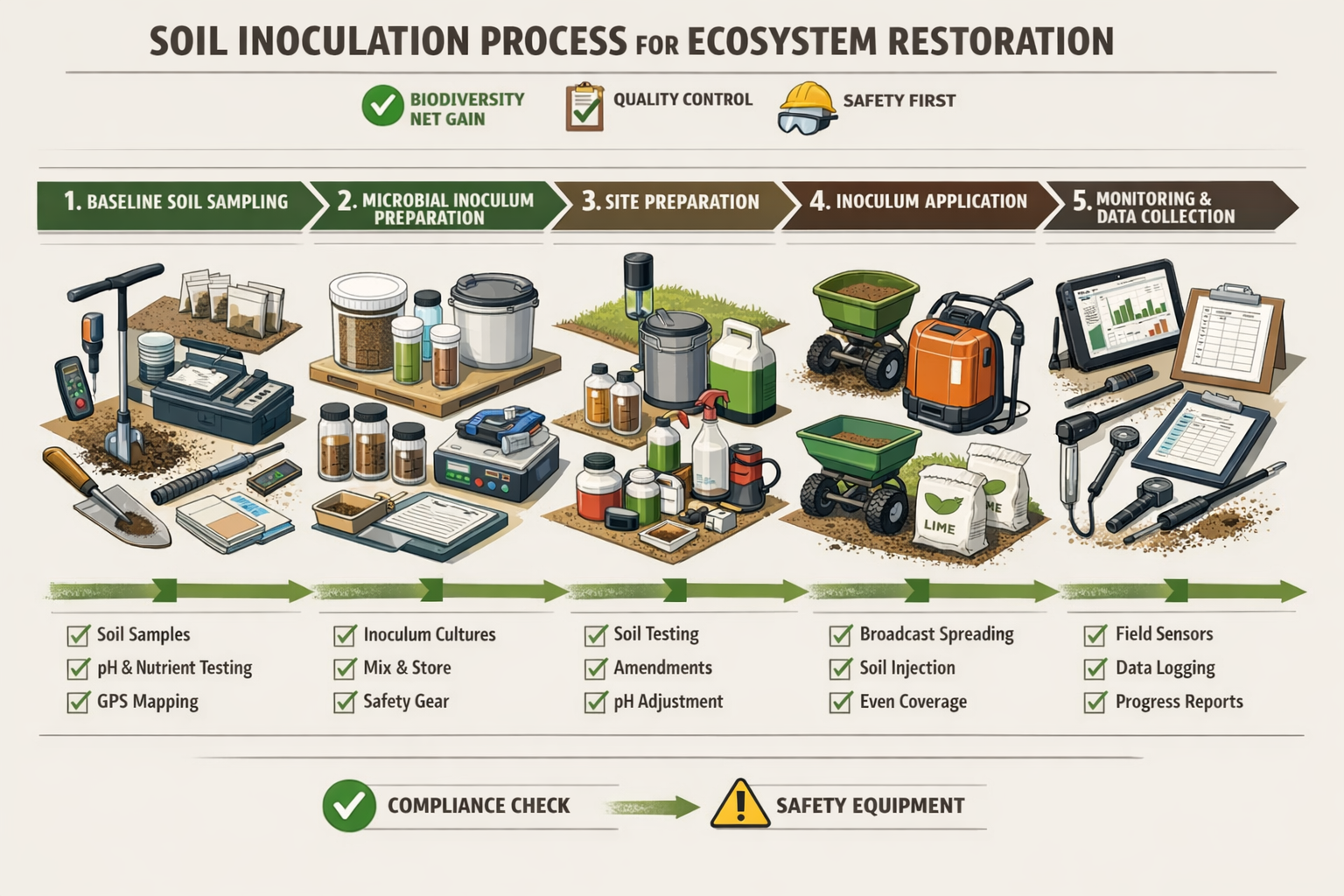
Phase 1: Baseline Assessment and Site Characterization
Successful soil inoculation begins with thorough site evaluation. Since outcomes are frequently context-dependent and shaped by soil properties, climate, resident microbiomes, and plant community composition[1], careful baseline assessment prevents wasted effort and resources.
Essential baseline measurements:
📋 Soil physical properties
- Texture (sand, silt, clay percentages)
- Bulk density and compaction levels
- Water holding capacity
- Drainage characteristics
- Erosion risk assessment
📋 Soil chemical properties
- pH (critical for microbial activity)
- Organic matter content
- Available nitrogen, phosphorus, potassium
- Micronutrient status
- Contamination screening
📋 Soil biological properties
- Existing microbial biomass
- Mycorrhizal colonization rates
- Functional diversity indicators
- Soil respiration rates
- Enzyme activity profiles
📋 Site conditions
- Climate data (rainfall, temperature, drought frequency)
- Vegetation cover and composition
- Disturbance history
- Proximity to reference ecosystems
- Moisture availability patterns
"Microbial inoculation outcomes are frequently context-dependent, shaped by soil properties, climate, resident microbiomes, and plant community composition, requiring careful site-specific evaluation rather than standardized approaches."[1]
This assessment informs which microbial functional groups will provide greatest benefit. For example, severely compacted soils with poor structure benefit from fungal-dominated inocula that improve aggregation, while nitrogen-depleted sites require nitrogen-fixing bacterial consortia.
Phase 2: Inoculum Selection and Sourcing
Choosing appropriate microbial inocula represents the most critical decision in restoration planning. The selection must balance functional requirements, ecological compatibility, and practical constraints.
Native versus commercial inoculants:
Native microbial sources (recommended for most BNG projects):
- ✅ Collected from nearby reference ecosystems with similar conditions
- ✅ Ensures ecological compatibility with local plant species
- ✅ Minimizes risk of introducing invasive or problematic organisms
- ✅ Contains locally adapted strains suited to regional climate
- ⚠️ Requires identification of suitable donor sites
- ⚠️ May need permits for collection
- ⚠️ Quality varies with donor site condition
Commercial inoculants:
- ✅ Standardized quality and composition
- ✅ Readily available with consistent supply
- ✅ Well-characterized functional properties
- ✅ Often certified for specific applications
- ⚠️ May not be adapted to local conditions
- ⚠️ Potential ecological compatibility issues
- ⚠️ Higher costs for large-scale applications
Inoculum types and applications:
| Inoculum Type | Best Applications | Handling Requirements |
|---|---|---|
| Soil transfers | Grassland restoration, diverse communities | Fresh application, 1:10 dilution typical |
| Mycorrhizal pellets | Tree planting, woody vegetation | Dry storage, direct root contact |
| Liquid consortia | Broadcast application, large areas | Temperature control, short shelf life |
| Compost-based | General soil improvement, organic matter addition | Mature compost, quality testing |
| Species-specific | Targeted functions (N-fixation, P-solubilization) | Strain verification, viability testing |
Research projects like the mycelial inoculation protocol being tested in Northern British Columbia demonstrate innovative approaches. This project uses mycelial inoculation in wood chips for remediating logging roads, targeting riparian areas to reduce soil erosion and improve revegetation rates, with expected completion in December 2025[2].
Phase 3: Site Preparation and Application Methods
Proper site preparation dramatically influences inoculation success. The goal is creating conditions that allow introduced microbes to establish, proliferate, and interact effectively with plants and resident communities.
Pre-application site preparation:
🔧 Physical preparation
- Remove invasive species that might outcompete target vegetation
- Address severe compaction through decompaction or deep ripping
- Create appropriate seedbed conditions
- Install erosion control measures if needed
- Ensure adequate drainage or address waterlogging
🔧 Chemical preparation
- Adjust pH if extremely acidic or alkaline (target pH 5.5-7.5 for most applications)
- Address severe nutrient deficiencies that would limit microbial activity
- Test for and remediate contamination if present
- Avoid broad-spectrum biocides that would kill introduced microbes
🔧 Timing considerations
- Apply during favorable weather (avoid extreme heat or drought)
- Coordinate with planting schedules for maximum plant-microbe contact
- Consider seasonal moisture patterns
- Plan for adequate post-application irrigation if natural rainfall insufficient
Application methods for different inoculum types:
Broadcast application:
- Suitable for liquid consortia, soil slurries, compost-based inocula
- Uniform coverage across large areas
- Requires incorporation through light cultivation or rainfall
- Application rate: 5-10 tonnes/hectare for soil transfers, 500-1000 L/hectare for liquid inocula
Direct root inoculation:
- Used for mycorrhizal pellets, granular products during planting
- Maximum contact between inoculum and plant roots
- Labor-intensive but highly effective for tree/shrub establishment
- Application rate: 10-50g per planting hole depending on product
Drill or injection application:
- Delivers inoculum directly into root zone without surface disturbance
- Useful for established vegetation or sensitive sites
- Requires specialized equipment
- Application rate: 100-500 mL per injection point, 1-2m spacing
Mulch incorporation:
- Combines inoculated wood chips, compost, or organic matter as surface mulch
- Provides sustained microbial release as material decomposes
- Excellent for erosion control and moisture retention
- Application rate: 5-10 cm depth, 50-100 tonnes/hectare
When planning on-site or off-site biodiversity net gain delivery, soil inoculation protocols should be integrated into the overall habitat creation strategy from the earliest planning stages.
Phase 4: Post-Application Monitoring and Adaptive Management
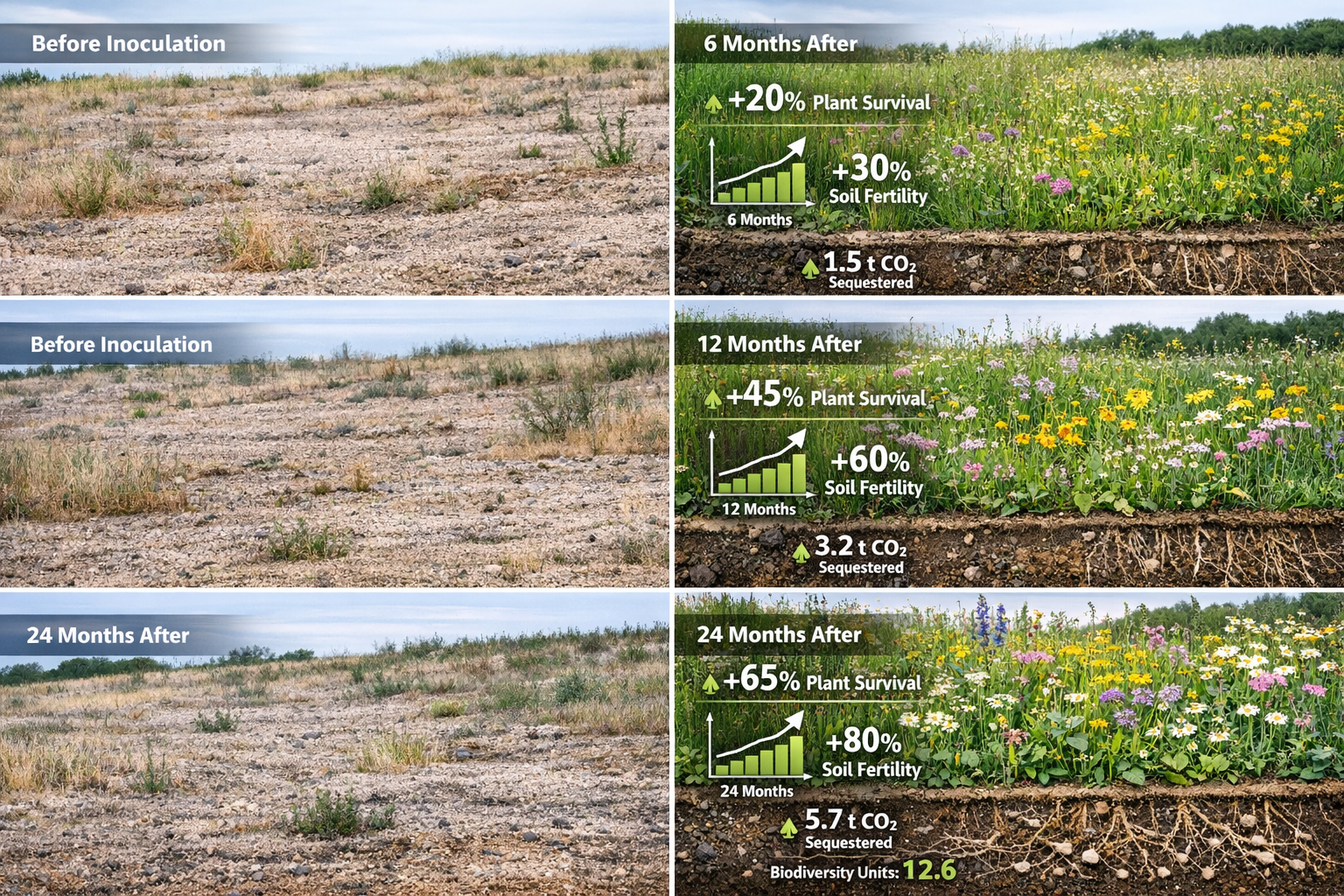
Monitoring determines whether soil inoculation achieves intended restoration outcomes and provides data for adaptive management decisions. For biodiversity net gain compliance, demonstrating measurable improvements in ecosystem function is essential.
Monitoring timeline and parameters:
Immediate (0-3 months):
- Plant establishment rates and survival
- Visible signs of stress or disease
- Erosion and soil stability
- Moisture retention
- Initial mycorrhizal colonization (root sampling)
Short-term (3-12 months):
- Plant growth rates and vigor
- Species richness and diversity
- Soil microbial biomass
- Nutrient cycling indicators
- Soil structure improvements
- Weed pressure and competition
Medium-term (1-3 years):
- Vegetation community composition
- Soil organic matter accumulation
- Carbon sequestration rates
- Functional diversity metrics
- Ecosystem service provision
- Self-sustaining community development
Long-term (3+ years):
- Trajectory toward reference conditions
- Resilience to environmental stress
- Biodiversity unit calculations
- Habitat quality assessments
- Maintenance requirements
Key performance indicators for BNG projects:
| Indicator | Target Threshold | Measurement Method |
|---|---|---|
| Plant survival rate | >80% at 12 months | Direct count, quadrat sampling |
| Species richness | 75% of reference site | Vegetation surveys, seasonal |
| Mycorrhizal colonization | >50% of fine roots | Root staining, microscopy |
| Soil organic matter | +0.5% per year | Laboratory analysis |
| Soil microbial biomass | +25% vs baseline | Fumigation-extraction method |
| Plant biomass | +50% vs control | Harvest, dry weight |
"Commercial applications have treated more than 600,000 trees across the U.K., Europe, and Australia, with Sitka spruce showing a 20 percent increase in both survival and growth rates using mycorrhizal pellets."[4]
Adaptive management responses:
When monitoring reveals underperformance, several interventions can improve outcomes:
- Supplemental inoculation: Additional applications if initial colonization insufficient
- Moisture management: Irrigation during establishment if drought threatens survival
- Nutrient supplementation: Targeted fertilization if severe deficiencies limit microbial activity
- Weed control: Removal of aggressive competitors that suppress target species
- Replanting: Replacement of failed areas with adjusted species mix or planting density
Understanding what's included in a biodiversity net gain assessment helps ensure monitoring protocols align with regulatory requirements and provide necessary documentation for compliance.
Optimizing Soil Inoculation for Ecosystem Restoration: Field Protocols for 2026 Biodiversity Net Gain Projects
Habitat-Specific Protocols
Different habitat types require tailored inoculation approaches that reflect their distinct ecological requirements and functional characteristics.
Grassland restoration:
Grasslands depend heavily on diverse microbial communities that support the wide range of plant species characteristic of species-rich meadows and prairies.
Recommended approach:
- Source inoculum from nearby species-rich grassland reference sites
- Use soil slurry (1:5 ratio donor soil to water) broadcast at 1000 L/hectare
- Apply during autumn or early spring to coincide with natural germination periods
- Combine with diverse native seed mix (30+ species for lowland meadows)
- Target mycorrhizal colonization >60% within 12 months
- Monitor for characteristic grassland indicator species establishment
Woodland and forest restoration:
Tree establishment depends critically on ectomycorrhizal or arbuscular mycorrhizal partnerships, making inoculation particularly valuable for woodland creation.
Recommended approach:
- Use species-specific mycorrhizal inoculants matched to tree species (ectomycorrhizal for oak, beech; arbuscular for ash, field maple)
- Apply 25-50g mycorrhizal pellets per planting hole in direct root contact
- Consider nurse crop of nitrogen-fixing shrubs (e.g., alder) to improve soil nitrogen
- Apply organic mulch (wood chips with incorporated mycelium) at 5-10 cm depth
- Monitor canopy development, leaf color, and annual growth increments
- Assess understory vegetation development as indicator of ecosystem function
Wetland and riparian restoration:
Wetland restoration faces unique challenges from waterlogged, anaerobic conditions that limit many microbial groups while favoring specialized anaerobic communities.
Recommended approach:
- Source inoculum from wetlands with similar hydrology and vegetation
- Focus on anaerobic nitrogen-fixing bacteria and methane-cycling communities
- Apply inoculum to hummocks and elevated microsites where plants establish
- Use emergent vegetation plugs pre-inoculated with appropriate microbes
- Monitor water quality improvements (nutrient removal, filtration)
- Assess development of characteristic wetland plant communities
Heathland and acid grassland:
These nutrient-poor, acidic habitats require specialized ericoid mycorrhizal fungi and acid-tolerant bacterial communities.
Recommended approach:
- Source from nearby heathland with healthy heather (Calluna, Erica) populations
- Use ericoid mycorrhizal inoculants specific to heather family plants
- Avoid pH adjustment—maintain acidic conditions (pH 4.5-5.5)
- Remove nutrient-rich topsoil if site previously fertilized
- Apply inoculum with heather cuttings or plug plants
- Monitor heather establishment and characteristic acid grassland species
Scaling Considerations for Large BNG Projects
Implementing soil inoculation across large sites requires careful planning to maintain quality while managing costs and logistics.
Small-scale projects (<1 hectare):
- Hand application methods feasible
- High-quality commercial inoculants cost-effective
- Detailed monitoring possible
- Intensive management practical
- Typical cost: £2,000-5,000/hectare including inoculum and application
Medium-scale projects (1-10 hectares):
- Mechanized broadcast application recommended
- Combination of commercial and site-sourced inoculum
- Stratified monitoring design
- Targeted intensive management of key areas
- Typical cost: £1,000-3,000/hectare with economies of scale
Large-scale projects (>10 hectares):
- Bulk soil transfer from donor sites most economical
- Establish on-site inoculum production areas
- Representative monitoring plots with remote sensing
- Prioritize high-value or high-visibility zones for intensive treatment
- Typical cost: £500-1,500/hectare for extensive application
For developers working on achieving 10% biodiversity net gain, soil inoculation can significantly improve the quality and establishment speed of created or enhanced habitats, potentially reducing the total land area required for offsetting.
Risk Management and Quality Assurance
Effective risk management ensures soil inoculation contributes to restoration success rather than introducing new problems.
Ecological risks and mitigation:
⚠️ Risk: Introduction of invasive species
- Mitigation: Source inoculum from sites without invasive plants; screen donor soil; use commercial products from certified suppliers
⚠️ Risk: Pathogen introduction
- Mitigation: Avoid collection from diseased areas; test inoculum for plant pathogens; use heat-treated or composted materials when appropriate
⚠️ Risk: Disruption of resident beneficial microbes
- Mitigation: Use native sources when possible; apply at moderate rates; avoid broad-spectrum antimicrobials
⚠️ Risk: Poor establishment due to incompatibility
- Mitigation: Match inoculum to site conditions; conduct small-scale trials; monitor early indicators
⚠️ Risk: Regulatory non-compliance
- Mitigation: Obtain necessary permits for soil movement; document provenance; follow biosecurity protocols
Quality assurance protocols:
✅ Inoculum quality verification
- Test viability before application (microbial counts, germination bioassays)
- Verify absence of contaminants and pathogens
- Confirm species composition matches specifications
- Check storage conditions and shelf life
✅ Application quality control
- Calibrate equipment for accurate application rates
- Document application dates, rates, and conditions
- Photographic records of pre- and post-application conditions
- GPS mapping of treatment areas
✅ Documentation for BNG compliance
- Maintain chain of custody for inoculum sources
- Record all amendments and interventions
- Systematic monitoring data collection
- Professional ecological reports for biodiversity net gain assessments
Emerging Innovations and Future Directions
Genomic-Guided Inoculum Design
Advances in microbial genomics are revolutionizing how restoration practitioners select and design inoculum communities. Rather than relying on taxonomic composition alone, genomic approaches identify functional genes that encode specific ecosystem services.
Applications in 2026 restoration:
- Screening potential inoculants for genes encoding phosphate solubilization, nitrogen fixation, stress tolerance
- Designing synthetic communities with complementary functional capabilities
- Predicting inoculum performance under future climate scenarios
- Optimizing microbial community assembly for specific restoration goals
Recent research has identified new phosphate-solubilizing bacterial species through genomic analysis, informing development of targeted inoculants for improving phosphorus availability in nutrient-poor soils[1].
Microbiome Engineering for Climate Resilience
As climate change intensifies environmental pressures on restoration sites, microbiome engineering offers tools to build resilience into recovering ecosystems.
Drought tolerance enhancement:
Specific bacterial and fungal strains improve plant water use efficiency and drought tolerance through multiple mechanisms:
- Production of osmolytes and stress hormones
- Enhanced root system development
- Improved soil water retention through aggregation
- Reduced stomatal conductance under water stress
Multi-kingdom consortia combining bacteria, fungi, and archaea with complementary functions have demonstrated enhanced nitrogen fixation, plant drought tolerance, and soil structure improvements[1].
Temperature stress adaptation:
Microbial communities can be selected for thermal tolerance, helping restored ecosystems cope with increasing temperature extremes and heatwaves that characterize the 2026 climate.
Integration with Natural Capital and Carbon Markets
Soil inoculation's ability to accelerate carbon sequestration and improve ecosystem service provision creates opportunities for integration with emerging natural capital markets.
Carbon sequestration benefits:
- Enhanced plant productivity increases carbon capture
- Improved soil structure stabilizes organic carbon
- Mycorrhizal networks transfer carbon belowground
- Reduced soil disturbance preserves existing carbon stocks
Ecosystem service quantification:
- Erosion control and sediment retention
- Water quality improvement through nutrient cycling
- Pollinator habitat provision
- Climate regulation through carbon storage
For landowners considering selling biodiversity units, soil inoculation can enhance habitat quality and accelerate the timeline to achieving target condition, potentially increasing unit values and revenue generation.
Regulatory Evolution and Standardization
As soil inoculation becomes more widespread in BNG projects, regulatory frameworks and industry standards are evolving to ensure quality and effectiveness.
Developing standards:
- Inoculum quality specifications and testing protocols
- Application rate guidelines for different habitat types
- Monitoring requirements and success criteria
- Certification schemes for commercial products
- Professional competency standards for practitioners
The secondary BNG legislation continues to develop, and soil inoculation protocols may become formally recognized as enhancement techniques that contribute to biodiversity unit calculations.
Case Studies: Soil Inoculation Success in 2026 BNG Projects
Case Study 1: Lowland Meadow Creation, Oxfordshire
Project context:
- 5-hectare agricultural field conversion to species-rich lowland meadow
- Part of off-site BNG compensation for housing development
- Target: 8.5 biodiversity units through habitat creation
- Baseline: improved grassland (low distinctiveness)
Soil inoculation approach:
- Donor inoculum sourced from ancient meadow 3 km away
- Soil slurry application (1:5 ratio) at 800 L/hectare
- Combined with green hay transfer and local seed mix
- Application timing: September 2024
Results (18-month monitoring):
- Plant species richness: 42 species (vs. 12 baseline, 35 target)
- Mycorrhizal colonization: 68% of sampled roots
- Soil organic matter: +1.2% increase
- Biodiversity units achieved: 9.2 (108% of target)
- Cost-effectiveness: £1,800/hectare total establishment cost
Key success factors:
- High-quality donor site with diverse microbial community
- Appropriate timing with favorable autumn moisture
- Integration with complementary techniques (green hay, diverse seed)
- Effective weed control during establishment
Case Study 2: Woodland Edge Restoration, Yorkshire
Project context:
- 2-hectare degraded woodland edge adjacent to ancient woodland
- On-site BNG enhancement for commercial development
- Target: improved condition from poor to moderate
- Challenges: compacted soil, invasive rhododendron, edge effects
Soil inoculation approach:
- Ectomycorrhizal pellets (25g per tree) for oak, birch, hazel planting
- Arbuscular mycorrhizal inoculum for field maple, hawthorn
- Soil transfer from adjacent ancient woodland (5 tonnes/hectare)
- Wood chip mulch with incorporated mycelium
Results (24-month monitoring):
- Tree survival: 89% (vs. 65% in control areas without inoculation)
- Average height growth: +35% compared to non-inoculated trees
- Understory species colonization: 23 woodland indicator species
- Mycorrhizal colonization: 72% of oak fine roots
- Condition assessment: achieved moderate condition 12 months ahead of projection
Key success factors:
- Species-specific mycorrhizal matching
- Proximity to source woodland providing natural colonization
- Effective rhododendron removal before inoculation
- Mulch providing sustained microbial habitat
Case Study 3: Riparian Buffer Restoration, Cumbria
Project context:
- 1.5 km riparian buffer along degraded watercourse
- Part of catchment-scale BNG and water quality improvement
- Target: wet woodland and marshy grassland mosaic
- Challenges: periodic flooding, agricultural runoff legacy
Soil inoculation approach:
- Inoculum from healthy riparian woodland 5 km upstream
- Application to elevated microsites and hummocks
- Pre-inoculated willow, alder cuttings
- Timing coordinated with low-flow summer period
Results (12-month monitoring):
- Willow and alder establishment: 82% success rate
- Emergent vegetation coverage: 65% of target area
- Water quality improvement: 35% reduction in nitrate levels
- Soil stability: 60% reduction in bank erosion
- Biodiversity indicators: otter, kingfisher, water vole evidence
Key success factors:
- Strategic timing to avoid inoculum washout during floods
- Focus on naturally elevated establishment zones
- Nitrogen-fixing species (alder) improving soil fertility
- Integration with natural flood management objectives
These case studies demonstrate how Soil Inoculation for Ecosystem Restoration: Field Protocols for 2026 Biodiversity Net Gain Projects can be successfully implemented across diverse habitat types and project scales, delivering measurable biodiversity outcomes while supporting broader environmental objectives.
Common Challenges and Troubleshooting
Challenge 1: Poor Initial Establishment
Symptoms:
- Low plant survival rates (<60%)
- Weak growth and chlorosis
- Minimal mycorrhizal colonization
- High weed competition
Potential causes and solutions:
| Cause | Diagnostic Indicators | Solution |
|---|---|---|
| Drought stress | Wilting, soil moisture <10% | Supplemental irrigation, mulching |
| Inoculum failure | No root colonization, low microbial counts | Reapplication with verified viable inoculum |
| Soil compaction | Bulk density >1.6 g/cm³, poor drainage | Decompaction, organic matter addition |
| pH incompatibility | Extreme pH (<4.5 or >8.5) | Targeted pH adjustment, acid/lime application |
| Herbivory | Evidence of grazing, damaged plants | Fencing, tree guards, deterrents |
Challenge 2: Invasive Species Dominance
Symptoms:
- Target species suppressed by aggressive competitors
- Reduced plant diversity
- Failure to achieve species richness targets
Solutions:
- Pre-treatment herbicide application to reduce weed seed bank
- Repeated cutting or pulling of invasive species during establishment
- Dense native planting to outcompete invaders
- Soil inversion or removal if seed bank extremely problematic
- Consider alternative species better able to compete
Challenge 3: Inconsistent Results Across Site
Symptoms:
- High spatial variability in establishment success
- Some areas thriving while others fail
- Difficulty achieving consistent habitat quality
Solutions:
- Detailed site characterization to identify microsites with different conditions
- Tailored inoculation rates and methods for different zones
- Address underlying soil variability (drainage, compaction, contamination)
- Stratified monitoring to understand spatial patterns
- Adaptive management with targeted interventions in underperforming areas
Challenge 4: Regulatory and Documentation Requirements
Symptoms:
- Uncertainty about compliance requirements
- Difficulty demonstrating measurable outcomes
- Challenges with long-term monitoring commitments
Solutions:
- Early consultation with local planning authorities and ecologists
- Professional biodiversity net gain assessment to establish baseline and targets
- Systematic photographic and data documentation from project start
- Engagement with qualified ecologists for monitoring and reporting
- Understanding what planners need to know about BNG to ensure alignment
Practical Recommendations for Practitioners
For Developers and Landowners
✅ Integrate early in project planning: Soil inoculation is most effective when incorporated into initial site design rather than added as an afterthought. Consider inoculation requirements when planning your biodiversity net gain project.
✅ Budget appropriately: Allocate £500-5,000 per hectare depending on scale, habitat type, and inoculum source. Factor in monitoring costs over the 30-year BNG commitment period.
✅ Engage qualified professionals: Work with ecologists experienced in restoration and soil microbiology. Professional guidance significantly improves success rates and compliance confidence.
✅ Document thoroughly: Maintain comprehensive records of all inoculation activities, sources, application rates, and monitoring results. This documentation proves essential for demonstrating BNG compliance.
✅ Plan for long-term management: Soil inoculation accelerates establishment but doesn't eliminate ongoing management needs. Budget for weed control, supplemental planting, and adaptive interventions.
For Ecological Consultants
✅ Conduct site-specific assessments: Avoid one-size-fits-all approaches. Evaluate soil conditions, climate, and ecological context to design appropriate inoculation strategies.
✅ Identify quality donor sites: Invest time in locating high-quality reference ecosystems for inoculum sourcing. Donor site quality directly determines inoculation success.
✅ Design robust monitoring protocols: Establish clear success criteria linked to BNG targets. Include both process indicators (mycorrhizal colonization, microbial biomass) and outcome indicators (plant diversity, habitat condition).
✅ Communicate realistic expectations: Soil inoculation improves outcomes but doesn't guarantee success. Help clients understand context-dependency and the need for adaptive management.
✅ Stay current with research: The field is rapidly evolving. Engage with recent publications, attend conferences, and participate in practitioner networks to maintain expertise.
For Land Managers
✅ Protect donor sites: If managing reference ecosystems that could serve as inoculum sources, maintain their quality through appropriate management and avoid degradation.
✅ Consider inoculum production: Larger estates might establish dedicated inoculum production areas, growing out microbial communities for use across multiple restoration projects.
✅ Integrate with existing management: Coordinate soil inoculation with grazing regimes, cutting schedules, and other land management activities to maximize synergies.
✅ Monitor and learn: Systematic observation of what works in specific site conditions builds valuable local knowledge that improves future project success.
✅ Explore revenue opportunities: High-quality habitats established through effective soil inoculation may generate income through biodiversity unit sales or ecosystem service payments.
Conclusion
Soil Inoculation for Ecosystem Restoration: Field Protocols for 2026 Biodiversity Net Gain Projects represents a scientifically validated, cost-effective approach to accelerating ecological recovery in degraded landscapes. As biodiversity net gain requirements drive unprecedented habitat creation and enhancement across England, understanding how to effectively harness soil microbial communities provides practitioners with a powerful tool for achieving measurable conservation outcomes.
The evidence is compelling: properly implemented soil inoculation improves plant establishment, enhances ecosystem function, and builds resilience against environmental pressures including the moisture decline challenges facing many restoration sites in 2026[1]. Commercial applications have demonstrated 20% improvements in tree survival and growth[4], while research projects show significant gains in plant diversity, soil fertility, and ecosystem service provision[1].
Success requires moving beyond standardized approaches to embrace context-specific strategies that account for soil properties, climate conditions, resident microbiomes, and restoration objectives. Native microbial sources ensure ecological compatibility while minimizing risks. Multi-kingdom consortia combining bacteria, fungi, and archaea deliver complementary functional benefits. Careful monitoring and adaptive management transform initial interventions into self-sustaining ecological communities.
Next Steps for Implementation
Immediate actions (next 1-3 months):
- Assess current projects: Review existing and planned BNG projects to identify opportunities where soil inoculation could improve outcomes
- Identify reference sites: Locate high-quality donor ecosystems that could provide native inoculum for your restoration targets
- Baseline testing: Conduct soil analyses on restoration sites to characterize conditions and identify limiting factors
- Engage specialists: Consult with qualified ecologists and biodiversity professionals to develop site-specific protocols
- Budget planning: Incorporate soil inoculation costs into project budgets and funding applications
Medium-term actions (3-12 months):
- Pilot testing: Implement small-scale trials to test inoculation approaches before full-scale application
- Establish monitoring: Set up systematic monitoring protocols to track inoculation effectiveness
- Build partnerships: Develop relationships with inoculum suppliers, donor site managers, and restoration practitioners
- Training and capacity building: Ensure team members understand soil inoculation principles and protocols
- Documentation systems: Create templates and procedures for recording inoculation activities and outcomes
Long-term integration (1+ years):
- Adaptive management: Use monitoring data to refine protocols and improve future project success
- Knowledge sharing: Contribute to practitioner networks and share lessons learned
- Innovation adoption: Stay current with emerging techniques like genomic-guided inoculum design
- Scaling up: Expand successful approaches across larger portfolios of BNG projects
- Natural capital integration: Explore opportunities to monetize ecosystem services enhanced through soil inoculation
The microbial world beneath our feet holds tremendous potential for restoring biodiversity and ecosystem function. By implementing rigorous field protocols for soil inoculation, practitioners can accelerate the journey from degraded landscapes to thriving ecosystems that deliver lasting environmental, social, and economic benefits.
For comprehensive support with biodiversity net gain planning, assessment, and implementation, contact experienced biodiversity professionals who can guide you through every stage of your restoration project.
References
[1] Full – https://www.frontiersin.org/journals/microbiology/articles/10.3389/fmicb.2026.1741287/full
[2] Mycelium Inoculation In Wood Chips To Promote Soil Restoration – https://cnc.bc.ca/research/projects/research-projects/2024/12/16/mycelium-inoculation-in-wood-chips-to-promote-soil-restoration
[3] Scientific Sessions – https://landdegradationrestoration.eu/scientific-sessions/
[4] Environmental Triumph Fungi Forest Soil Restoration Climate Change – https://reasonstobecheerful.world/environmental-triumph-fungi-forest-soil-restoration-climate-change/
[5] globalsoilbiodiversity – https://www.globalsoilbiodiversity.org
[6] Now Available Restoration Ecology Volume 33 Issue 3 March 2025 – https://www.ser.org/news/696749/Now-Available-Restoration-Ecology-Volume-33-Issue-3-March-2025.htm
[7] Ece3 – https://onlinelibrary.wiley.com/doi/10.1002/ece3.70994