

{"cover":"Professional landscape format (1536x1024) hero image with bold text overlay 'Soil Inoculation Effectiveness in BNG Projects: Field Testing Protocols for 2026 Biodiversity Surveyors' in extra large 72pt white sans-serif font with dark gradient shadow, centered in upper third. Background shows biodiversity surveyor in high-visibility vest kneeling in restored grassland habitat, collecting soil samples with field testing equipment, microscope and test tubes visible, lush native wildflowers and grasses, clipboard with data sheets, morning sunlight, professional ecological survey aesthetic. Color scheme: deep green, earth brown, white text with high contrast. Magazine cover quality, editorial style, conservation science focus.","content":["Landscape format (1536x1024) detailed illustration showing field testing protocol workflow for soil inoculation assessment in BNG projects. Split-screen composition: left side shows surveyor extracting soil core samples with specialized auger tool in meadow habitat, labeled collection bags and GPS device visible; right side displays laboratory analysis setup with microscope examining mycorrhizal fungi colonization, petri dishes with fungal cultures, data recording tablets, soil aggregate testing equipment. Infographic elements showing sampling grid pattern overlay on habitat map, measurement icons for pH, moisture, microbial biomass. Professional scientific documentation aesthetic with clean annotations, natural lighting, conservation ecology focus.","Landscape format (1536x1024) comprehensive visual comparison chart showing soil inoculation effectiveness metrics across different BNG habitat types. Three-column layout displaying before-and-after soil health indicators: column one shows woodland restoration with AMF colonization percentages (bar graphs 0-85%), column two displays grassland creation with aggregate stability measurements (pie charts showing 27.5% improvement), column three presents wetland enhancement with nutrient uptake data (nitrogen 67% increase, phosphorus 100% increase shown as upward trend arrows). Each column includes microscopic imagery of soil organisms, plant root systems with visible mycorrhizal networks, color-coded effectiveness ratings (red-amber-green). Clean infographic style with professional data visualization, scientific accuracy, biodiversity monitoring context.","Landscape format (1536x1024) field surveyor implementing 2026 standardized testing protocol in active BNG restoration site. Foreground shows professional ecologist using tablet with digital survey app, recording soil inoculation viability test results, portable soil testing kit open displaying pH meters, moisture sensors, colonization assessment slides. Mid-ground displays marked quadrat sampling areas with flags indicating 128kg/hectare application zones, visible native plant establishment with healthy root development. Background shows broader habitat creation area with diverse vegetation structure, hedgerow planting, buffer zones. Equipment includes: soil corer, GPS unit, field microscope, sample storage containers with proper labeling. Golden hour lighting, professional conservation work aesthetic, practical ecology documentation style, emphasis on standardized methodology and quality assurance protocols."]
}
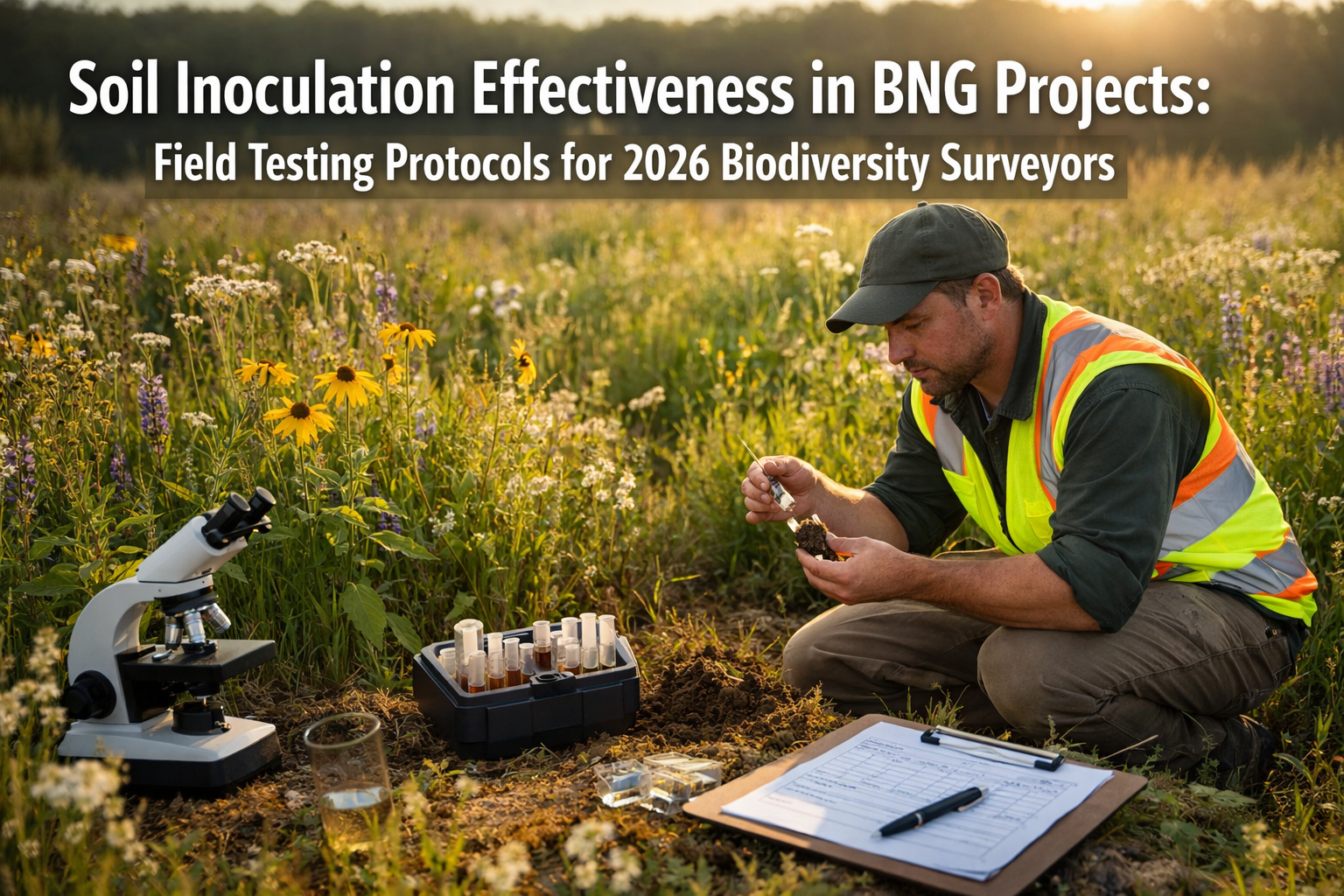
The promise of soil inoculation in habitat restoration has captivated ecologists and developers alike, yet a troubling reality lurks beneath the surface. Recent meta-analyses reveal that approximately 84% of commercial soil inoculants tested were completely nonviable—producing zero colonization when applied to plants[1]. As Biodiversity Net Gain (BNG) projects accelerate across England in 2026, surveyors face a critical challenge: how can they validate whether soil inoculation interventions genuinely restore microbial diversity and deliver measurable habitat gains?
Understanding Soil Inoculation Effectiveness in BNG Projects: Field Testing Protocols for 2026 Biodiversity Surveyors has become essential for ecological professionals working to achieve the mandatory 10% biodiversity uplift. This article explores practical survey methods that address a key uncertainty identified in the 2026 Horizon Scan for ecologists—validating the role of soil microbiome restoration in achieving genuine conservation outcomes.
Key Takeaways
- 🔬 84% of commercial soil inoculants are nonviable, making rigorous field testing protocols essential for BNG project success
- 📊 Optimal application rates matter: Research identifies 128 kg/hectare as the most effective concentration, with diminishing returns at higher or lower rates
- 🌱 Arbuscular mycorrhizal fungi (AMF) drive 85% of positive outcomes in field-tested inoculants for plant establishment and survival
- 🧪 Standardized testing protocols must assess viability, colonization rates, and habitat-specific effectiveness before large-scale application
- 💰 Cost-effectiveness requires validation: With funding constraints affecting biodiversity goals, surveyors must verify inoculant performance to justify investment
Understanding Soil Inoculation in the BNG Context
What Is Soil Inoculation?
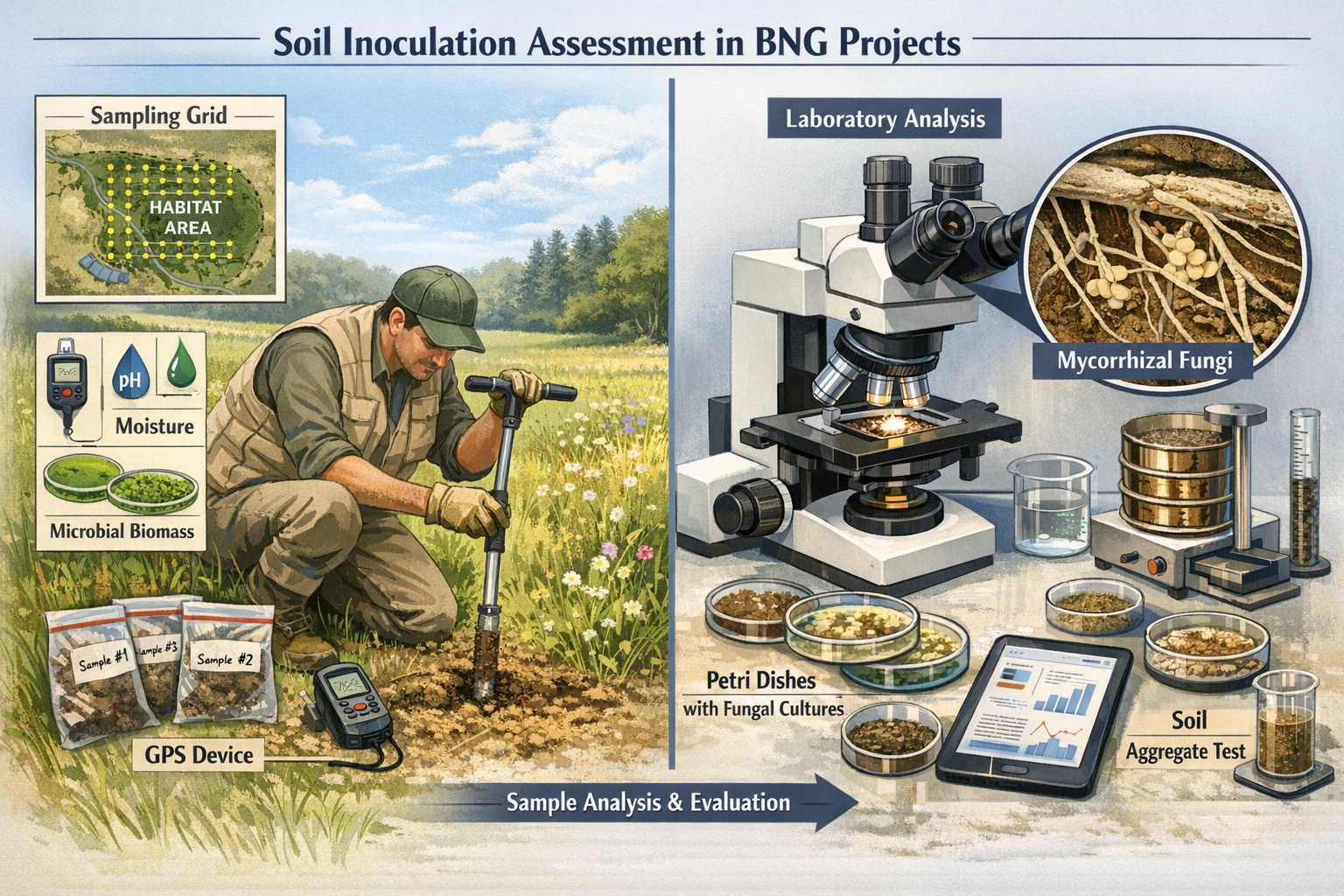
Soil inoculation involves introducing beneficial microorganisms—including bacteria, fungi, and other microbial communities—into degraded or newly created habitats. The goal is to accelerate ecological succession and establish the underground biological networks that support diverse plant communities.
In BNG projects, soil inoculation serves multiple purposes:
- Enhancing nutrient cycling to support native plant establishment
- Improving soil structure and water retention capacity
- Facilitating mycorrhizal associations between fungi and plant roots
- Accelerating habitat maturation to meet 30-year outcome targets
The Critical Role in Achieving 10% Biodiversity Net Gain
When developers create biodiversity plans for building projects in England, they must demonstrate measurable improvements in habitat condition and distinctiveness. Soil health directly influences both metrics through:
Habitat Condition Scores: The Biodiversity Metric 4.0 assesses soil condition through indicators like structure, organic matter content, and biological activity—all influenced by microbial communities.
Habitat Distinctiveness: Priority habitats like species-rich grasslands and ancient woodlands depend on specific soil microbiome compositions that cannot establish without appropriate inoculation in created or restored sites.
However, the effectiveness of soil inoculation remains highly variable. A comprehensive meta-analysis of 80 experiments showed an average plant biomass response of 64% across studies, but with "wildly variable" results[1]. Most concerning for BNG practitioners: commercial fungal inoculants showed an average effect size of approximately zero[1].
The Product Viability Crisis: Why Most Inoculants Fail
Shocking Statistics from Recent Research
The soil inoculation industry faces a credibility crisis that directly impacts BNG project outcomes. Recent field testing has revealed:
- 84% of commercial inoculants were nonviable upon testing[1]
- 4% of products actually killed the crops they were designed to improve[1]
- Commercial fungal products showed zero average effectiveness in meta-analytic reviews[1]
These findings have profound implications for biodiversity surveyors assessing biodiversity net gain strategies. Projects relying on unverified commercial products risk failing to achieve promised habitat outcomes, potentially triggering compliance issues and financial penalties.
Why Commercial Products Underperform
Several factors contribute to the widespread failure of commercial soil inoculants:
Storage and Handling Issues: Beneficial microorganisms are living entities requiring specific temperature, moisture, and oxygen conditions. Many products lose viability during warehousing and transport.
Generic Formulations: Commercial inoculants often contain microbial strains isolated from agricultural contexts that don't match the ecological requirements of native habitats being restored.
Inadequate Application Protocols: Without proper soil preparation, moisture management, and timing, even viable inoculants fail to establish.
Lack of Quality Control: The industry operates with minimal regulatory oversight regarding product viability and effectiveness claims.
"The disconnect between marketing claims and field performance represents one of the most significant challenges facing restoration ecology in 2026. Surveyors must become critical evaluators of inoculant products rather than passive consumers." — Field Research Synthesis[1]
Field Testing Protocols for 2026 Biodiversity Surveyors
Pre-Application Viability Assessment
Before incorporating soil inoculation into any BNG project, surveyors should implement these mandatory viability checks:
Laboratory Testing Protocol
- Request product samples from suppliers at least 30 days before planned application
- Conduct spore germination tests using standard microbiological techniques
- Assess colonization potential by inoculating test plants under controlled conditions
- Document baseline viability with photographic evidence and quantitative measurements
Field-Compatible Rapid Assessment
For surveyors working on-site, simplified viability tests include:
- Visual inspection for signs of contamination, unusual odor, or separation in liquid formulations
- Microscopic examination using portable field microscopes (200x magnification minimum)
- Bioassay testing with fast-growing indicator plants (results within 14-21 days)
Optimal Application Rates and Timing
Field research has identified 128 kilograms per hectare as the optimal application rate for soil inoculants, with responses declining at both higher and lower concentrations[1]. This finding challenges the common assumption that "more is better" and provides surveyors with evidence-based guidelines.
Application Rate Table:
| Application Rate (kg/ha) | Expected Plant Response | Cost-Effectiveness | Recommended Use Case |
|---|---|---|---|
| < 100 | Poor to moderate | Low | Not recommended |
| 128 (optimal) | Strong positive response | High | Primary recommendation |
| 150-200 | Moderate response | Moderate | Specific soil conditions only |
| > 200 | Declining response | Very low | Avoid—wasteful |
Seasonal Timing Considerations
Successful inoculation requires coordination with plant establishment windows:
Spring Applications (March-May): Ideal for grassland creation when soil temperatures exceed 10°C and moisture levels support microbial activity.
Autumn Applications (September-November): Preferred for woodland restoration, allowing fungal networks to establish before tree planting.
Avoid Summer Applications: High temperatures and potential drought stress reduce colonization success rates.
Measuring Soil Inoculation Effectiveness in BNG Projects
Essential Field Metrics for 2026
Biodiversity surveyors must move beyond simple "applied vs. not applied" documentation to quantitative effectiveness monitoring. The following metrics align with BNG reporting requirements while validating inoculation outcomes:
Mycorrhizal Colonization Assessment
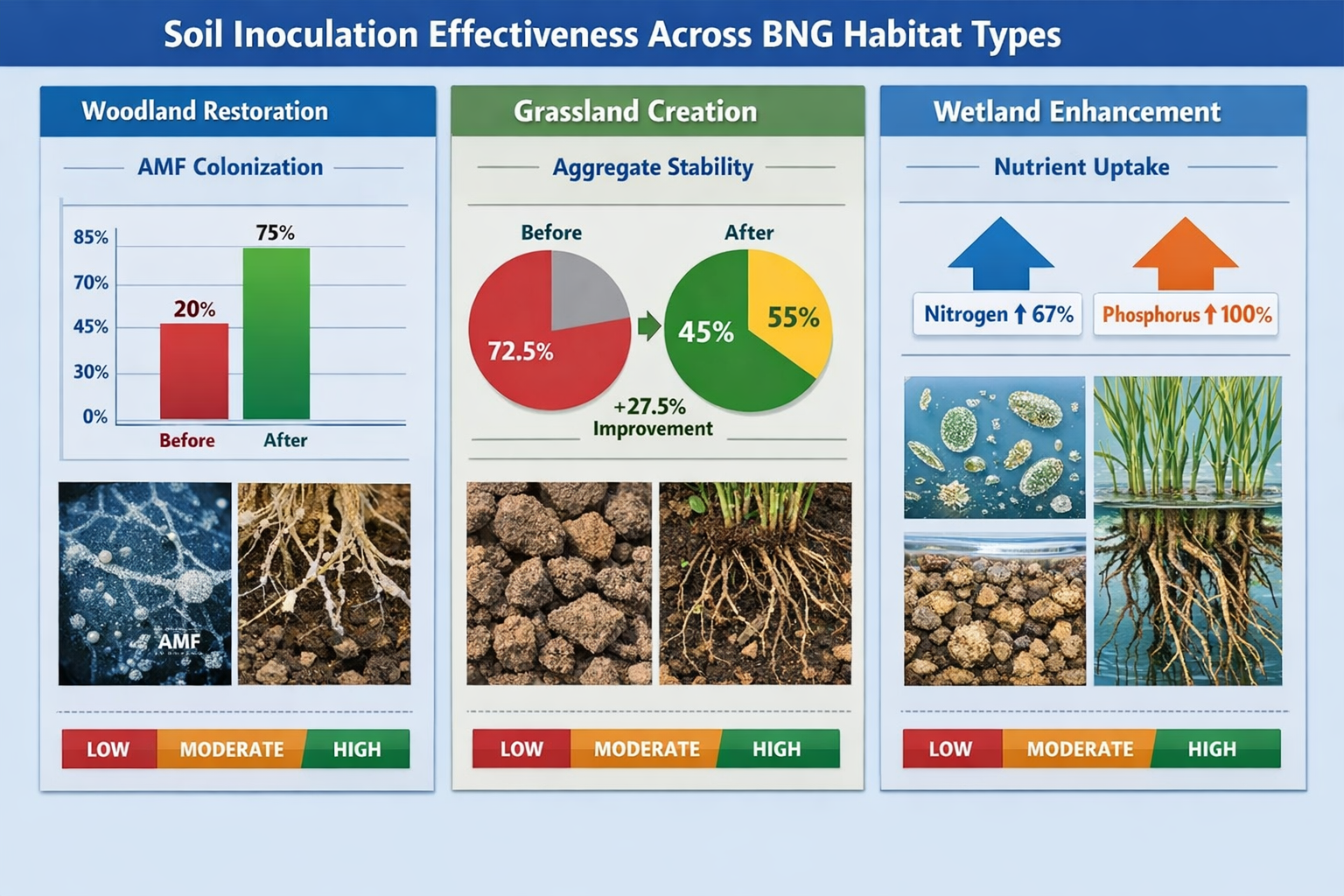
Arbuscular mycorrhizal fungi (AMF) drive 85% of positive outcomes in field-tested inoculants for tree growth and survival[1]. Measuring colonization rates provides direct evidence of inoculant establishment:
Sampling Protocol:
- Collect root samples from 10-15 representative plants per 0.1 hectare
- Process samples using trypan blue staining technique
- Quantify colonization percentage using gridline intersect method
- Target: >40% colonization within 6 months for successful establishment
Soil Aggregate Stability Testing
Microbial inoculation increases large and medium soil aggregates by 27.5%, with corresponding decreases in soil loss (93.7%) and runoff (68.8%)[2]. These structural improvements directly support habitat condition scores in BNG assessments.
Field Testing Method:
- Collect undisturbed soil cores (5cm diameter, 10cm depth)
- Perform wet-sieving aggregate stability test
- Calculate mean weight diameter (MWD) of stable aggregates
- Compare against baseline measurements from pre-development surveys
Nutrient Uptake Indicators
Recent meta-analytic evidence indicates mean whole-plant nitrogen uptake increases of 67% and phosphorus uptake increases of approximately 100% with AMF inoculation[2]. These improvements support faster vegetation establishment and higher habitat condition scores.
Practical Assessment Approach:
- Conduct foliar tissue analysis on indicator plant species
- Measure N and P concentrations at 3, 6, and 12 months post-establishment
- Compare nutrient levels against reference sites with established habitats
- Document correlation between inoculation and nutrient status
Integrating Results with BNG Metric Calculations
Soil inoculation effectiveness data should inform habitat condition assessments within the Biodiversity Metric 4.0 framework. When conducting biodiversity impact assessments, surveyors can justify higher condition scores by documenting:
✅ Improved soil structure through aggregate stability testing
✅ Enhanced biological activity via mycorrhizal colonization rates
✅ Accelerated vegetation establishment supported by nutrient uptake data
✅ Reduced erosion risk demonstrated through runoff measurements
This evidence-based approach strengthens BNG reports and provides defensible justification for achieving 10% biodiversity net gain targets.
Alternative Approaches: Whole Soil Microbiome Transplants
The Forest Restoration Success Story
While commercial inoculants show disappointing results, whole soil microbiome transplants from reference sites demonstrate remarkable effectiveness. Research on tallgrass prairie restoration found that plants grew approximately twice as well compared to plants without microbiome additions[1].
This approach involves:
- Identifying high-quality donor sites with established target habitat types
- Harvesting topsoil (typically top 10-15cm) containing complete microbial communities
- Transporting and applying fresh soil to restoration sites within 24-48 hours
- Spreading donor soil at rates of 200-500 kg per hectare
Enriched Biochar Integration
An innovative approach gaining traction in 2026 BNG projects combines enriched biochar with beneficial microorganisms. Enriched biochar can be inoculated with beneficial fungi and bacteria to enhance soil biodiversity while supporting habitat creation[4].
Benefits for BNG Projects:
- 🌊 Improved water retention creates favorable conditions for native plant establishment
- 🫧 Enhanced soil aeration supports root development and microbial activity
- 🔄 Long-term carbon sequestration provides additional climate benefits
- 🦠 Microbial habitat provision through biochar's porous structure
This dual-function approach addresses both biodiversity and carbon objectives, potentially qualifying projects for additional environmental credits beyond BNG units.
Cyanobacteria-Based Biocrusts
For sites with severe erosion challenges, cyanobacteria-dominated biocrusts offer exceptional protection. Research demonstrates sediment concentration reductions of 92-99% and soil loss reductions of 72%[2].
Application scenarios include:
- Steep slopes in woodland creation projects
- Exposed soils in grassland restoration
- Buffer zones adjacent to watercourses
- Temporary stabilization during vegetation establishment
Addressing the 2026 Funding Reality
Cost-Effectiveness Considerations
Recent reporting indicates that global biodiversity goals face significant funding limitations[5], which directly impacts BNG project budgets. With biodiversity unit costs remaining substantial, every intervention must demonstrate value.
Cost Comparison Analysis:
| Approach | Cost per Hectare | Viability Rate | Cost-Effectiveness Score |
|---|---|---|---|
| Commercial inoculants | £800-1,500 | 16% (viable products) | Low |
| Whole soil transplant | £2,000-3,500 | 90%+ | High |
| Enriched biochar | £1,200-2,200 | 75-85% | High |
| No inoculation | £0 | N/A | Variable (slower establishment) |
While whole soil transplants and enriched biochar carry higher upfront costs, their superior effectiveness rates make them more cost-effective when accounting for:
- Reduced replanting requirements
- Faster achievement of habitat condition targets
- Lower risk of BNG compliance failures
- Decreased long-term management costs
Optimizing Investment Through Targeted Testing
Rather than blanket application across entire sites, surveyors should recommend strategic inoculation focused on:
Priority Areas:
- Habitat creation zones requiring rapid establishment
- Sites with severely degraded soil conditions
- Areas critical for achieving overall BNG targets
- Locations where natural colonization is unlikely within 30-year timeframes
Lower Priority Areas:
- Sites adjacent to high-quality donor habitats (natural colonization likely)
- Temporary habitats with short-term management objectives
- Areas with existing soil biological activity
This targeted approach maximizes limited budgets while ensuring critical project outcomes remain achievable.
Standardized Testing Protocols for 2026 Biodiversity Surveyors
Developing Site-Specific Testing Frameworks
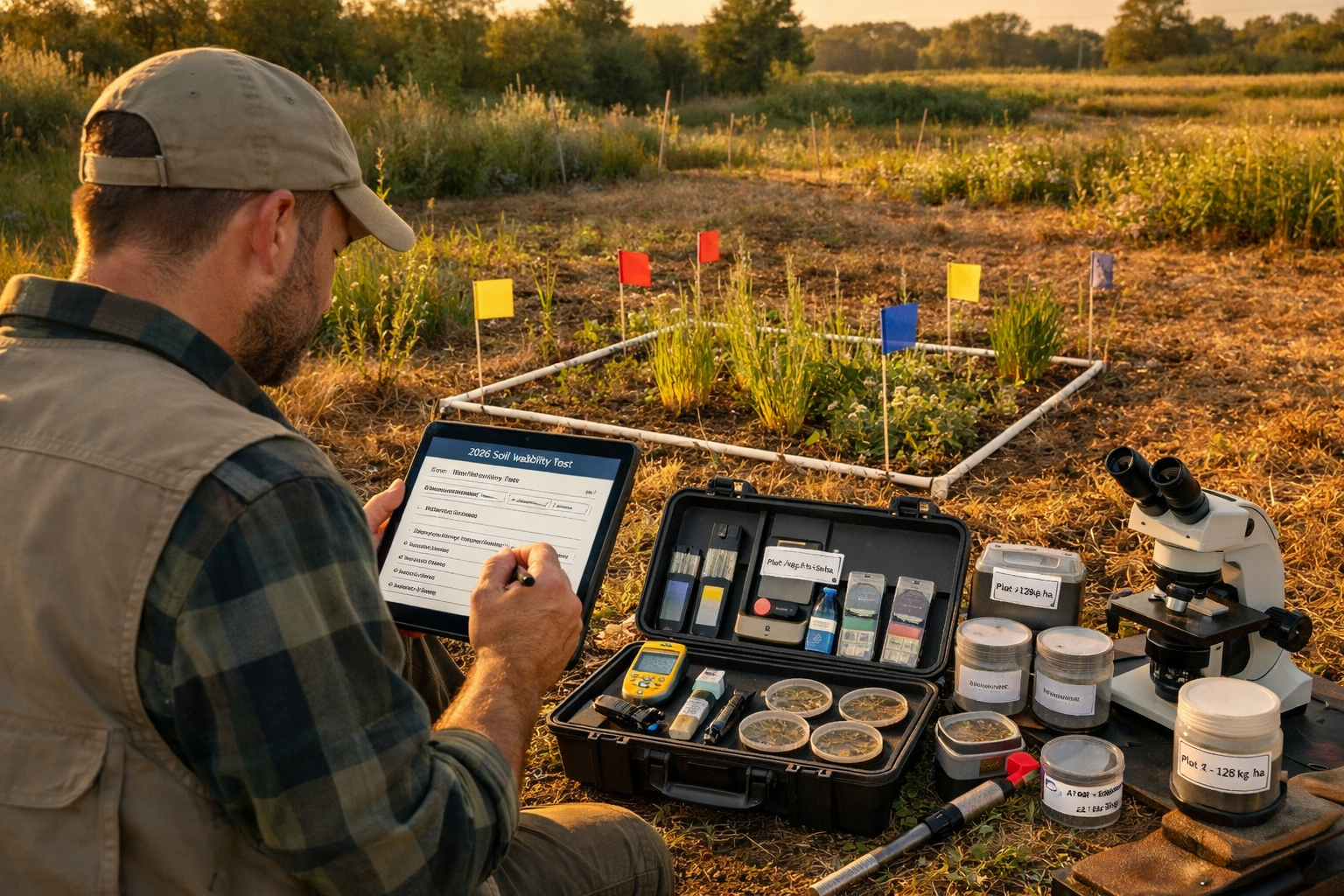
The USDA's 2026 R&D roadmap prioritizes regenerative soil practices, input optimization, and water-use efficiency, with upcoming grant cycles emphasizing soil biology research[3]. UK biodiversity surveyors can adapt these research priorities into practical field protocols.
Phase 1: Pre-Application Assessment (Weeks 1-4)
Baseline Documentation:
- Soil physical properties (texture, structure, bulk density)
- Chemical parameters (pH, organic matter, NPK levels)
- Biological indicators (earthworm counts, microbial biomass)
- Photographic documentation of site conditions
Product Evaluation:
- Request third-party viability certification from suppliers
- Conduct independent laboratory testing if budget allows
- Review published research on specific product formulations
- Assess compatibility with target habitat requirements
Phase 2: Application and Establishment (Weeks 5-12)
Implementation Monitoring:
- Document actual application rates and coverage
- Record weather conditions during and after application
- Monitor soil moisture levels weekly
- Track any visible plant responses or issues
Early Effectiveness Indicators:
- Root colonization sampling at 6 weeks (preliminary assessment)
- Soil aggregate stability testing at 8 weeks
- Vegetation establishment rates compared to control areas
- Photographic monitoring of plant vigor
Phase 3: Outcome Validation (Months 4-12)
Comprehensive Assessment:
- Full mycorrhizal colonization analysis
- Nutrient uptake measurements via tissue analysis
- Soil structural improvements quantification
- Vegetation community composition surveys
BNG Metric Integration:
- Calculate habitat condition scores incorporating soil health data
- Document biodiversity unit gains attributable to inoculation
- Prepare evidence packages for planning authority submission
- Establish monitoring protocols for 30-year management period
Quality Assurance and Documentation Standards
For BNG projects requiring biodiversity net gain reports, soil inoculation effectiveness must be documented to professional standards:
Essential Documentation Elements:
📋 Product Specifications: Complete supplier information, batch numbers, viability certifications, storage conditions
📊 Application Records: GPS-referenced application zones, rates applied, equipment used, personnel involved
🔬 Testing Results: Laboratory reports, field measurements, photographic evidence, statistical analyses
📈 Outcome Tracking: Time-series data showing progression from baseline through establishment phases
This comprehensive documentation serves multiple purposes:
- Supports BNG metric calculations and planning submissions
- Provides evidence for achieving biodiversity net gain without risk
- Enables adaptive management if interventions underperform
- Contributes to industry knowledge base on effective practices
Practical Recommendations for Different Project Scales
Small Development Projects
For BNG small development projects with limited budgets, surveyors should prioritize:
Simplified Testing Approach:
- Visual product viability assessment
- Single baseline and 6-month follow-up sampling
- Focus on one key indicator (mycorrhizal colonization)
- Comparison against nearby reference sites
Cost-Effective Inoculation Strategy:
- Consider whole soil transplants from adjacent habitats
- Apply to small, critical areas only (e.g., 10-20% of site)
- Rely on natural colonization for remaining areas
- Partner with local conservation organizations for donor soil access
Large-Scale Habitat Creation
Major projects delivering off-site biodiversity net gain require more rigorous protocols:
Comprehensive Testing Framework:
- Full laboratory viability assessment of all products
- Replicated trial areas testing multiple inoculation approaches
- Quarterly monitoring for first year, biannual thereafter
- Statistical analysis comparing treatment effectiveness
Strategic Implementation:
- Zone sites by soil condition and inoculation requirements
- Apply optimal rates (128 kg/ha) to priority areas
- Establish control plots for scientific comparison
- Integrate findings into adaptive management plans
Landowner-Led Habitat Banking
For landowners selling biodiversity units, demonstrating soil inoculation effectiveness strengthens unit marketability:
Value-Adding Documentation:
- Professional soil health assessments at establishment
- Annual monitoring reports showing habitat maturation
- Photographic evidence of vegetation development
- Third-party verification of inoculation outcomes
This evidence supports premium pricing for high-quality units and reduces buyer risk.
Future Directions: Research Gaps and Emerging Practices
Key Uncertainties Requiring Further Investigation
Despite growing research, several critical questions remain for 2026 biodiversity surveyors:
Species-Specific Responses: How do different native plant species respond to various inoculant formulations? Current research focuses primarily on agricultural crops.
Long-Term Persistence: Do inoculated microbial communities remain stable over 30-year BNG monitoring periods, or do they require periodic reapplication?
Interaction Effects: How do soil inoculation outcomes vary with other restoration interventions like grazing management, mowing regimes, or hydrological modifications?
Climate Resilience: Will inoculated habitats show greater resilience to drought, flooding, or temperature extremes under changing climate conditions?
Emerging Technologies and Methods
Several innovations show promise for improving soil inoculation effectiveness:
DNA Sequencing for Verification: Affordable metagenomic analysis allows surveyors to verify that applied microbial communities actually establish in treated soils.
Precision Application Technologies: GPS-guided spreaders ensure accurate application rates and eliminate gaps or overlaps in coverage.
Custom Inoculant Production: Site-specific formulations based on donor habitat microbiome analysis may outperform generic commercial products.
Digital Monitoring Platforms: Smartphone apps and sensor networks enable real-time tracking of soil conditions and microbial activity indicators.
Conclusion
Soil inoculation holds genuine potential for accelerating habitat establishment and improving outcomes in BNG projects—but only when applied with scientific rigor and appropriate skepticism. The sobering reality that 84% of commercial products are nonviable demands that biodiversity surveyors in 2026 adopt comprehensive field testing protocols rather than accepting supplier claims at face value.
Key implementation principles for effective soil inoculation in BNG projects include:
✅ Always verify product viability through independent testing before large-scale application
✅ Apply optimal rates (128 kg/ha) based on research evidence, not supplier recommendations
✅ Prioritize whole soil transplants and enriched biochar over commercial fungal inoculants when budgets allow
✅ Document effectiveness through standardized metrics: mycorrhizal colonization, aggregate stability, and nutrient uptake
✅ Target strategic areas where inoculation provides greatest value rather than blanket application
✅ Integrate results into BNG metric calculations with robust evidence supporting habitat condition scores
Next Steps for Biodiversity Surveyors
To implement these protocols effectively:
- Develop site-specific testing frameworks adapted to project scale and budget constraints
- Establish relationships with reputable suppliers who provide viability certifications and support independent verification
- Create standardized documentation templates that meet planning authority requirements while supporting adaptive management
- Contribute field data to the growing evidence base on soil inoculation effectiveness in UK restoration contexts
- Advocate for industry standards requiring minimum viability thresholds for commercial products
For projects requiring professional guidance on implementing these protocols, contact experienced biodiversity surveyors who can provide site-specific recommendations and quality assurance.
The path to genuine biodiversity net gain runs through the soil. By adopting rigorous field testing protocols in 2026, surveyors can ensure that soil inoculation interventions deliver measurable habitat improvements rather than expensive disappointments. The science is clear: effectiveness varies wildly, but with proper validation and strategic application, soil microbiome restoration can accelerate the achievement of conservation goals that benefit both nature and development.
References
[1] Watch – https://www.youtube.com/watch?v=a8cdwvSP1Es
[2] Pmc12735955 – https://pmc.ncbi.nlm.nih.gov/articles/PMC12735955/
[3] Usdas 2026 Rd Roadmap Pivots To Soil Health Precision Nutrition And Long Term Farm Profitability – https://www.global-agriculture.com/global-agriculture/usdas-2026-rd-roadmap-pivots-to-soil-health-precision-nutrition-and-long-term-farm-profitability/
[4] Biodiversitynetgain 2 – https://www.carbongold.com/biodiversitynetgain-2/
[5] Big Biodiversity Goals Run Up Against Small Funding Realities – https://news.mongabay.com/2026/02/big-biodiversity-goals-run-up-against-small-funding-realities/