

Nature's renewal engine is grinding to a halt. In February 2026, researchers unveiled a startling discovery that challenges decades of assumptions about how ecosystems respond to climate change. Instead of accelerating species turnover as temperatures rise, biodiversity surveys worldwide are documenting a dramatic slowdown—a one-third decline in the rate at which species naturally replace one another since the 1970s. This unexpected pattern of slowing species turnover in surveys: adapting 2026 protocols amid climate-driven slowdown demands immediate attention from conservation professionals, developers, and policymakers working to achieve meaningful biodiversity outcomes.
The implications extend far beyond academic curiosity. For professionals implementing Biodiversity Net Gain requirements and conducting ecological assessments, this research fundamentally reshapes how survey data should be collected, interpreted, and applied to conservation planning. Understanding why nature's "revolving door" is slowing—and what it means for measuring biodiversity change—has become essential for anyone working at the intersection of development and environmental protection in 2026.
Key Takeaways
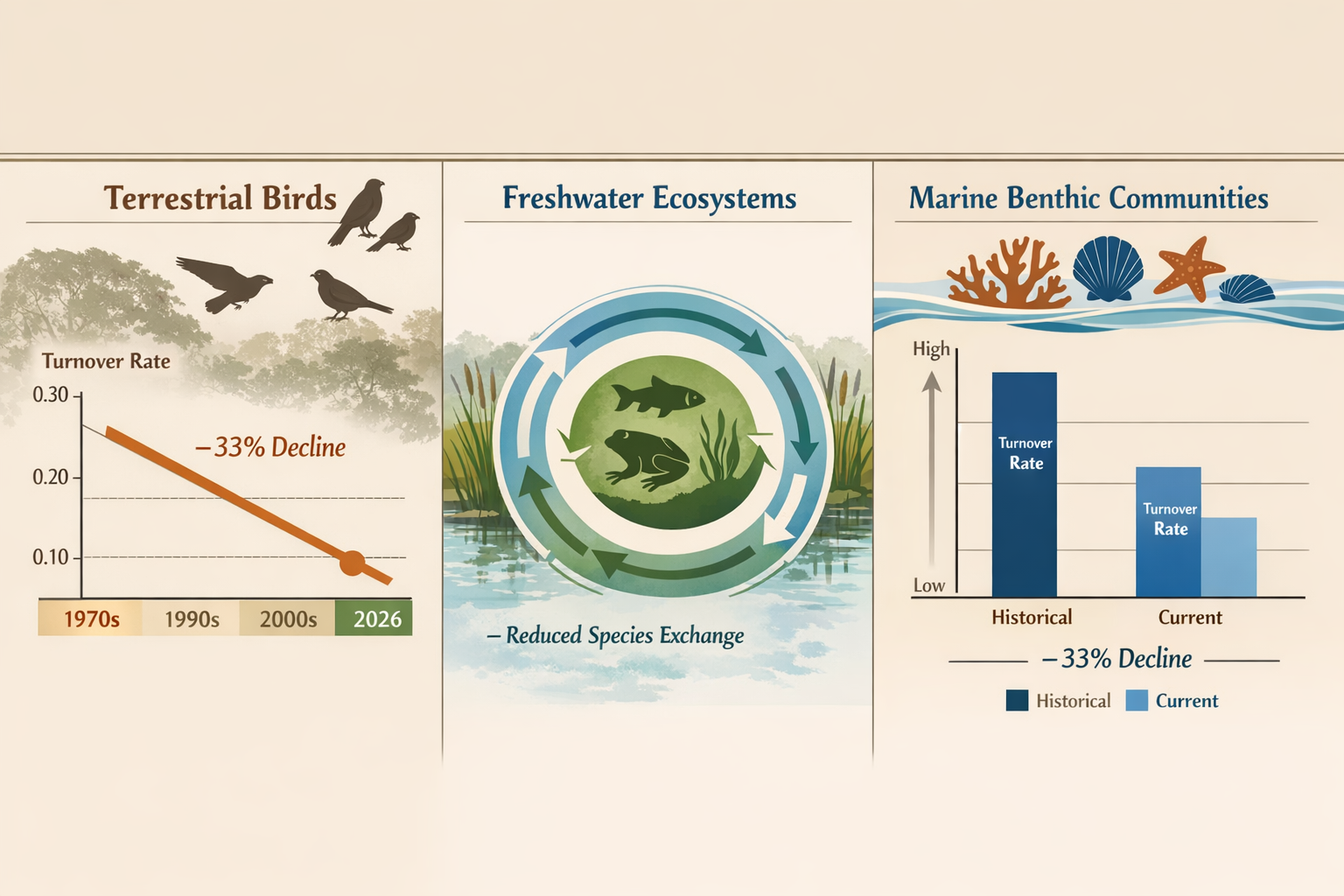
- 🔬 Global species turnover has declined by approximately one-third across terrestrial, freshwater, and marine ecosystems since the 1970s, based on analysis of nearly 9 million species records
- 🌍 Environmental degradation, not climate alone, drives the slowdown by depleting regional species pools that supply newcomer species to local communities
- 📊 Survey protocols require adaptation to capture this nuanced trend, moving beyond assumptions of linear climate-driven change to account for internal ecosystem dynamics
- ⚠️ The slowdown signals ecosystem degradation, not stability—reduced turnover indicates constrained natural renewal capacity rather than ecological health
- 🎯 Conservation and development strategies must integrate extended monitoring periods and regional species pool assessments to accurately measure biodiversity outcomes
Understanding the Species Turnover Slowdown Discovery
In early 2026, researchers Emmanuel Nwankwo and Axel Rossberg from Queen Mary University of London published groundbreaking findings in Nature Communications that sent ripples through the conservation community [1]. Their analysis of the BioTIME database—containing nearly 9 million species-identification records spanning roughly the last century—revealed an unexpected and universal pattern: species turnover rates have declined substantially across virtually all ecosystem types.
What the Research Revealed
The study focused specifically on short-term turnover intervals of 1-5 years, the timeframe most relevant for capturing modern ecological trends and climate impacts [5]. What they discovered contradicted scientific expectations shaped by decades of climate change research.
Key findings include:
- One-third reduction in turnover rates across land, freshwater, and marine ecosystems since the 1970s [2]
- Universal pattern across ecosystem types including bird communities, freshwater environments, benthic ocean floor communities, and marine systems [3]
- Consistent signal despite geographic variation, appearing in surveys from diverse regions worldwide
- Notable exception in fish communities, likely due to fisheries management disrupting natural community dynamics [3]
As Dr. Axel Rossberg noted: "We were surprised how strong the effect is. Turnover rates typically declined by one third" [4]. This isn't a subtle measurement artifact or regional anomaly—it represents a significant ecological shift observable across the planet's biodiversity.
The Mechanism Behind the Slowdown
The research identifies anthropogenic environmental degradation as the primary driver rather than climate change itself [2]. This distinction fundamentally alters how professionals should interpret survey data when conducting biodiversity impact assessments.
The mechanism works like this:
- Regional species pools shrink due to habitat loss, fragmentation, pollution, and overexploitation
- Fewer potential newcomer species remain available in the wider landscape to colonize local communities
- Local turnover slows because the "bench" of replacement species has been depleted
- Ecosystems become trapped in constrained states despite internal dynamics that would normally drive change
The researchers describe this as a "multiple attractors" phase where ecosystems operate with strong internal dynamics—an "unending game of rock-paper-scissors" or "revolving door"—but this natural capacity becomes constrained by species pool depletion [5]. Dr. Nwankwo emphasized the concern: "In other research we are seeing clear indications that human impacts cause the slowing of turnover. It is worrying" [4].
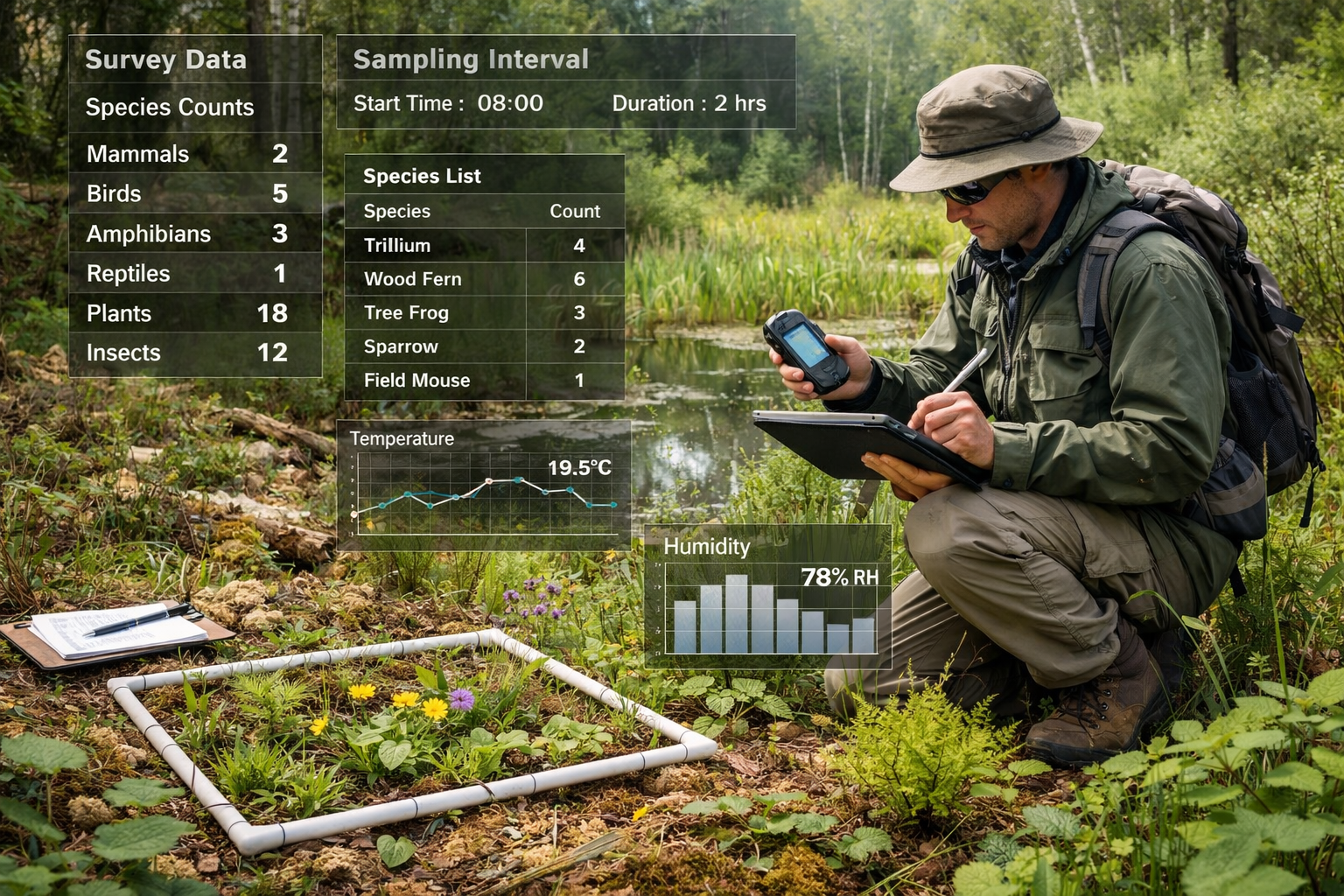
Implications for Slowing Species Turnover in Surveys: Adapting 2026 Protocols Amid Climate-Driven Slowdown
The discovery of widespread turnover slowdown creates immediate challenges for biodiversity survey protocols used throughout 2026. Traditional methodologies were designed with different assumptions about ecosystem dynamics—assumptions that no longer hold in our degraded landscapes.
Why Traditional Survey Approaches Fall Short
Conventional biodiversity surveys typically operate under several now-questionable assumptions:
❌ Climate forcing dominates species composition changes – The research shows internal ecosystem dynamics and species pool constraints often matter more than direct climate effects
❌ Turnover rates remain relatively stable over time – The one-third decline since the 1970s invalidates baseline comparisons using historical turnover rates
❌ Short-term surveys capture representative trends – Slowed turnover may require extended monitoring periods to detect meaningful change
❌ Local survey data reflects local processes – Regional species pool depletion now critically influences local community dynamics
These outdated assumptions can lead to misinterpretation of survey results, potentially undermining efforts to achieve 10% Biodiversity Net Gain targets or accurately assess conservation interventions.
Rethinking Baseline Comparisons
The slowdown has profound implications for how professionals establish ecological baselines. When species turnover was faster in the 1970s-1990s, historical survey data may overestimate the natural rate of community change expected today. This creates several practical challenges:
| Challenge | Impact on Surveys | 2026 Protocol Adaptation |
|---|---|---|
| Historical baseline mismatch | Overestimating expected natural change | Adjust baselines using turnover correction factors |
| Temporal sampling design | Standard intervals may miss slow changes | Extend monitoring periods beyond traditional 3-5 years |
| Change attribution | Incorrectly attributing changes to climate | Assess regional species pool status alongside local surveys |
| Success metrics | Unrealistic expectations for community recovery | Recalibrate success criteria for constrained systems |
For developers and planners working on biodiversity net gain strategies, these adaptations aren't optional—they're essential for producing defensible ecological assessments that reflect current ecosystem realities.
Regional Species Pool Assessment Integration
Perhaps the most significant protocol adaptation involves integrating regional species pool assessments into local survey work. The research demonstrates that understanding the wider landscape context has become critical for interpreting local biodiversity patterns.
Recommended 2026 protocol enhancements include:
- Landscape-scale species inventories – Document the full regional pool of potential colonizers within dispersal distance
- Connectivity mapping – Assess habitat connectivity that facilitates species movement from regional pools to survey sites
- Degradation gradient analysis – Position survey sites within regional degradation contexts to understand constraints
- Multi-scale temporal sampling – Combine intensive local monitoring with extensive regional surveys
These enhancements align with broader biodiversity net gain planning requirements that emphasize landscape-scale thinking and long-term ecological outcomes.
Practical Protocol Adaptations for 2026 Biodiversity Surveys
Translating research findings into actionable survey protocols requires concrete methodological adjustments. The following adaptations help professionals conducting biodiversity surveys in 2026 capture the nuanced reality of slowing species turnover in surveys: adapting 2026 protocols amid climate-driven slowdown.
Extended Temporal Monitoring Frameworks
Standard approach: Single-season surveys or 1-2 year monitoring periods
2026 adaptation: Implement minimum 3-5 year baseline monitoring with provisions for extended follow-up
The slowdown in turnover means that meaningful community change now unfolds over longer timescales than previously assumed. Single-season "snapshot" surveys may capture only static patterns, missing the constrained dynamics that characterize degraded ecosystems.
Implementation strategies:
- Phased survey design – Establish initial baseline with commitment to follow-up surveys at 3 and 5-year intervals
- Adaptive monitoring triggers – Define thresholds that trigger extended monitoring when preliminary results suggest constrained turnover
- Coordinated multi-project monitoring – Pool resources across nearby development projects to maintain long-term survey continuity
- Remote monitoring integration – Deploy camera traps, acoustic sensors, and eDNA sampling to reduce costs of extended monitoring
For developers concerned about project timelines, these extended frameworks can be structured to provide adequate information for initial planning approvals while building in the longer-term data needed for adaptive management and biodiversity net gain verification.
Turnover-Specific Metrics and Analysis
Traditional biodiversity metrics like species richness and abundance provide valuable information but may miss the turnover dynamics that the 2026 research highlights as critical indicators of ecosystem health.
Recommended turnover-focused metrics:
📊 Temporal beta diversity – Quantify compositional change between time periods using Jaccard or Sørensen indices
📊 Colonization-extinction ratios – Track the balance between species gains and losses over survey intervals
📊 Turnover rate calculations – Calculate explicit turnover rates comparable to the BioTIME database metrics used in the research [1]
📊 Community stability indices – Assess whether apparent stability reflects healthy equilibrium or constrained degradation
These metrics help distinguish between healthy ecosystem stability (where species pools remain robust and turnover potential exists) and degraded system stagnation (where depleted species pools constrain natural dynamics).
Regional Context Documentation
Every local survey should now include explicit documentation of regional context factors that influence species pool availability and turnover potential.
Essential regional context elements:
- Species pool inventory – Compile regional species lists from existing databases, museum records, and landscape-scale surveys
- Habitat connectivity assessment – Map and quantify connectivity between survey sites and potential source populations
- Degradation pressure mapping – Document land use intensity, pollution sources, and other stressors affecting regional pools
- Historical species loss documentation – Review historical records to identify species extirpated from the region
This regional context transforms local survey data from isolated snapshots into ecologically meaningful assessments that acknowledge the landscape-scale processes driving turnover dynamics. For professionals working on biodiversity net gain delivery, this regional perspective is increasingly essential for identifying viable off-site compensation locations.
Quality Assurance and Taxonomic Consistency
The BioTIME database analysis that revealed the turnover slowdown relied on nearly 9 million carefully curated species-identification records [5]. This scale and quality of data underscores the importance of rigorous taxonomic standards in survey work.
2026 quality assurance priorities:
✅ Consistent taxonomic resolution – Maintain uniform identification standards across survey periods to avoid artificial turnover signals
✅ Expert verification – Ensure species identifications are verified by qualified taxonomists, especially for challenging groups
✅ Voucher specimen protocols – Collect and archive voucher specimens or photographs for future verification
✅ Database integration – Contribute survey data to national and international biodiversity databases to support meta-analyses
✅ Uncertainty documentation – Explicitly document identification confidence levels and potential taxonomic ambiguities
These quality measures ensure that observed turnover patterns (or lack thereof) reflect genuine ecological dynamics rather than survey methodology artifacts.
Strategic Implications for Conservation and Development
The research on slowing species turnover extends beyond technical survey protocols to reshape strategic thinking about conservation planning and development impacts.
Reinterpreting Ecosystem Change
The finding that past species composition changes often reflected natural internal ecosystem dynamics rather than direct climate forcing [1] fundamentally alters how professionals should interpret monitoring data. This has immediate implications for:
Impact assessment – Observed compositional changes at development sites may reflect natural turnover dynamics rather than development impacts, requiring more sophisticated attribution analysis
Mitigation effectiveness – Conservation interventions should be evaluated based on whether they restore turnover capacity (by enhancing regional species pools and connectivity) rather than simply maintaining static species lists
Climate adaptation planning – Strategies should address the dual challenges of climate change AND species pool depletion, recognizing that degraded systems may be unable to respond adaptively even when climate-suitable habitat exists
For professionals developing biodiversity plans for building projects, this means moving beyond simple "before and after" comparisons to assess whether interventions genuinely enhance ecosystem renewal capacity.
Prioritizing Connectivity and Species Pool Restoration
Given that depleted regional species pools drive the turnover slowdown [2], conservation strategies must prioritize:
🌿 Habitat connectivity enhancement – Creating corridors and stepping stones that reconnect fragmented landscapes
🌿 Source population protection – Safeguarding robust populations that can serve as colonization sources
🌿 Regional-scale planning – Coordinating conservation efforts across property boundaries and jurisdictions
🌿 Species reintroduction programs – Actively restoring extirpated species to regional pools where natural recolonization is impossible
These priorities align well with emerging biodiversity net gain off-site delivery approaches that emphasize landscape-scale habitat networks rather than isolated compensation sites.
Adaptive Management in Constrained Systems
The research suggests that ecosystems currently operate in a "multiple attractors" phase [5] where internal dynamics remain active but are constrained by external limitations. This creates both challenges and opportunities for adaptive management:
Challenge: Traditional restoration targets based on historical baselines may be unachievable if regional species pools cannot support them
Opportunity: Understanding constraint mechanisms allows targeted interventions to remove specific bottlenecks
Challenge: Slow turnover rates extend the timescales needed to evaluate management effectiveness
Opportunity: Turnover-focused metrics provide early warning indicators of ecosystem trajectory changes before species richness or abundance shifts
Adaptive management frameworks should explicitly incorporate turnover dynamics monitoring as a core performance indicator, with decision triggers based on whether interventions successfully enhance or constrain natural renewal processes.
Implications for Biodiversity Credit Markets
The slowdown in species turnover has subtle but important implications for biodiversity unit markets and credit systems. If ecosystems in degraded landscapes have inherently constrained turnover capacity, then:
- Habitat creation in species-poor regions may deliver fewer biodiversity units than expected if regional pools cannot support diverse communities
- Connectivity enhancement interventions may deserve premium valuation for their role in restoring turnover capacity
- Long-term monitoring requirements for biodiversity credits should extend beyond current standards to capture slow turnover dynamics
- Credit retirement schedules may need adjustment to account for longer timescales of ecosystem response
These considerations are particularly relevant for professionals navigating the cost of biodiversity units and statutory credits when evaluating off-site compensation options.
Conclusion: Embracing Complexity in 2026 Biodiversity Surveys
The discovery that species turnover has slowed by one-third across global ecosystems represents a watershed moment for biodiversity science and conservation practice. Far from being an obscure academic finding, this research fundamentally reshapes how professionals should conduct surveys, interpret ecological data, and plan conservation interventions in 2026 and beyond.
The message is clear: ecosystems are not responding to environmental change in the ways we expected. Climate warming hasn't accelerated nature's renewal engine—instead, anthropogenic degradation has thrown sand in the gears, depleting the regional species pools that fuel local community dynamics. This reality demands humility about our understanding of ecosystem change and flexibility in our survey protocols and conservation strategies.
Key Actions for Biodiversity Professionals
For those working at the intersection of development and conservation, the path forward involves several concrete steps:
- Update survey protocols to incorporate extended temporal monitoring, regional species pool assessments, and turnover-specific metrics
- Revise baseline assumptions to account for historical turnover rates that no longer apply in degraded landscapes
- Prioritize connectivity in conservation planning to address the root cause of turnover slowdown
- Integrate landscape-scale thinking into biodiversity net gain assessments and compensation strategies
- Contribute to data infrastructure by ensuring survey data meets quality standards for integration into national and international databases
The research also carries a sobering warning: the slowdown itself signals ecosystem degradation, not stability. Dr. Nwankwo's concern that "human impacts cause the slowing of turnover" [4] reminds us that constrained turnover represents diminished ecological resilience and reduced capacity for adaptation to future environmental change.
Looking Ahead
As we move through 2026, the biodiversity conservation community faces the challenge of translating this new understanding into practical improvements in survey methodology, impact assessment, and conservation planning. The adaptations outlined in this article—extended monitoring frameworks, regional context integration, turnover-focused metrics—represent starting points rather than final solutions.
The researchers themselves acknowledge uncertainty about future trajectories, noting that "one can expect environmental drivers to dominate species turnover eventually" as climate change continues to accelerate [1]. This suggests we may be witnessing a transitional phase where the balance between internal ecosystem dynamics and external forcing is shifting in complex ways.
For professionals committed to achieving meaningful biodiversity outcomes—whether through Biodiversity Net Gain compliance, voluntary conservation initiatives, or development project mitigation—the imperative is clear: embrace the complexity, adapt the protocols, and focus on interventions that restore ecosystems' fundamental capacity for renewal rather than simply maintaining static species lists.
The slowing of species turnover challenges us to think differently about what biodiversity conservation means in degraded landscapes. By adapting our survey approaches and strategic frameworks to this new reality, we can work more effectively toward the ultimate goal: restoring nature's renewal engine so that ecosystems can once again respond dynamically to environmental change.
References
[1] pubmed.ncbi.nlm.nih.gov – https://pubmed.ncbi.nlm.nih.gov/41634019/
[2] Species Turnover Is Slowing Across Land Lakes And Oceans – https://www.earth.com/news/species-turnover-is-slowing-across-land-lakes-and-oceans/
[3] Natures Renewal Has Slowed Down Despite Rising Temperatures Study – https://www.downtoearth.org.in/wildlife-biodiversity/natures-renewal-has-slowed-down-despite-rising-temperatures-study
[4] sciencedaily – https://www.sciencedaily.com/releases/2026/02/260217005714.htm
[5] Nature Engine Species Turnover – https://www.popularmechanics.com/science/animals/a70332942/nature-engine-species-turnover/