

Beneath warming ocean waters, a revolution in marine restoration is taking root—one that recognizes genetic diversity as the foundation of climate resilience. As coastal development pressures intensify and Biodiversity Net Gain (BNG) requirements reshape planning frameworks, seagrass meadows have emerged as critical habitats requiring sophisticated conservation approaches. The challenge facing restoration practitioners in 2026 is clear: how can we accurately survey and leverage genetic diversity to create seagrass ecosystems that withstand rising temperatures, ocean acidification, and extreme weather events while delivering measurable biodiversity gains?
Seagrass Genetic Diversity Surveys: Climate-Resilient Protocols for Biodiversity Net Gain in 2026 Restoration Projects represent the cutting edge of marine conservation science. Recent international initiatives demonstrate that genetic monitoring is no longer optional—it's essential for restoration success. With the International Union for Conservation of Nature announcing 14 new local seagrass restoration projects globally in March 2026, and decade-long studies revealing that multi-species approaches achieve 66% survival rates compared to single-species failures, the evidence is compelling [1][2].
This comprehensive guide explores field-ready genetic monitoring techniques that address challenges identified at the World Congress on Marine Biodiversity 2026, providing restoration practitioners, developers, and environmental consultants with actionable protocols for accurate BNG calculations under warming ocean conditions.
Key Takeaways
- 🧬 Genetic diversity surveys increase seagrass restoration survival rates by 40-60% through identification of climate-resilient populations adapted to local stressors
- 📊 Multi-species planting approaches achieve 66% survival rates and enable natural colonization of up to 9 additional species, creating resilient meadow ecosystems
- 🌡️ Climate-resilient protocols integrate genetic baseline data with habitat suitability assessments to identify optimal restoration locations under future ocean warming scenarios
- 📈 Biodiversity Net Gain calculations require genetic diversity metrics alongside traditional habitat assessments to accurately quantify ecosystem recovery and long-term resilience
- 🔬 Laboratory culturing and ex situ propagation combined with genetic confidence testing ensure restoration material maintains adaptive capacity before transplanting
Understanding Seagrass Genetic Diversity and Climate Resilience
Seagrass meadows rank among Earth's most productive ecosystems, providing critical habitat for marine species, stabilizing coastal sediments, and sequestering carbon at rates exceeding terrestrial forests. However, these underwater grasslands face unprecedented threats from climate change, with warming waters, altered salinity patterns, and increased storm intensity challenging their survival.
Genetic diversity serves as the insurance policy for seagrass populations facing environmental change. Populations with higher genetic variation contain individuals with different tolerances to temperature, salinity, light availability, and nutrient conditions. When stressors intensify, genetically diverse meadows have greater probability that some individuals possess the adaptive traits needed for survival.
Why Genetic Diversity Matters for Restoration Success
Traditional seagrass restoration often relied on collecting shoots from convenient donor sites and transplanting them to degraded areas. This approach frequently failed because:
- Limited genetic variation reduced adaptive capacity to local conditions
- Single-species plantings lacked the ecological complexity of natural meadows
- Unknown source genetics meant transplants might be poorly adapted to recipient site conditions
- Clonal propagation from few donor plants created genetically uniform, vulnerable populations
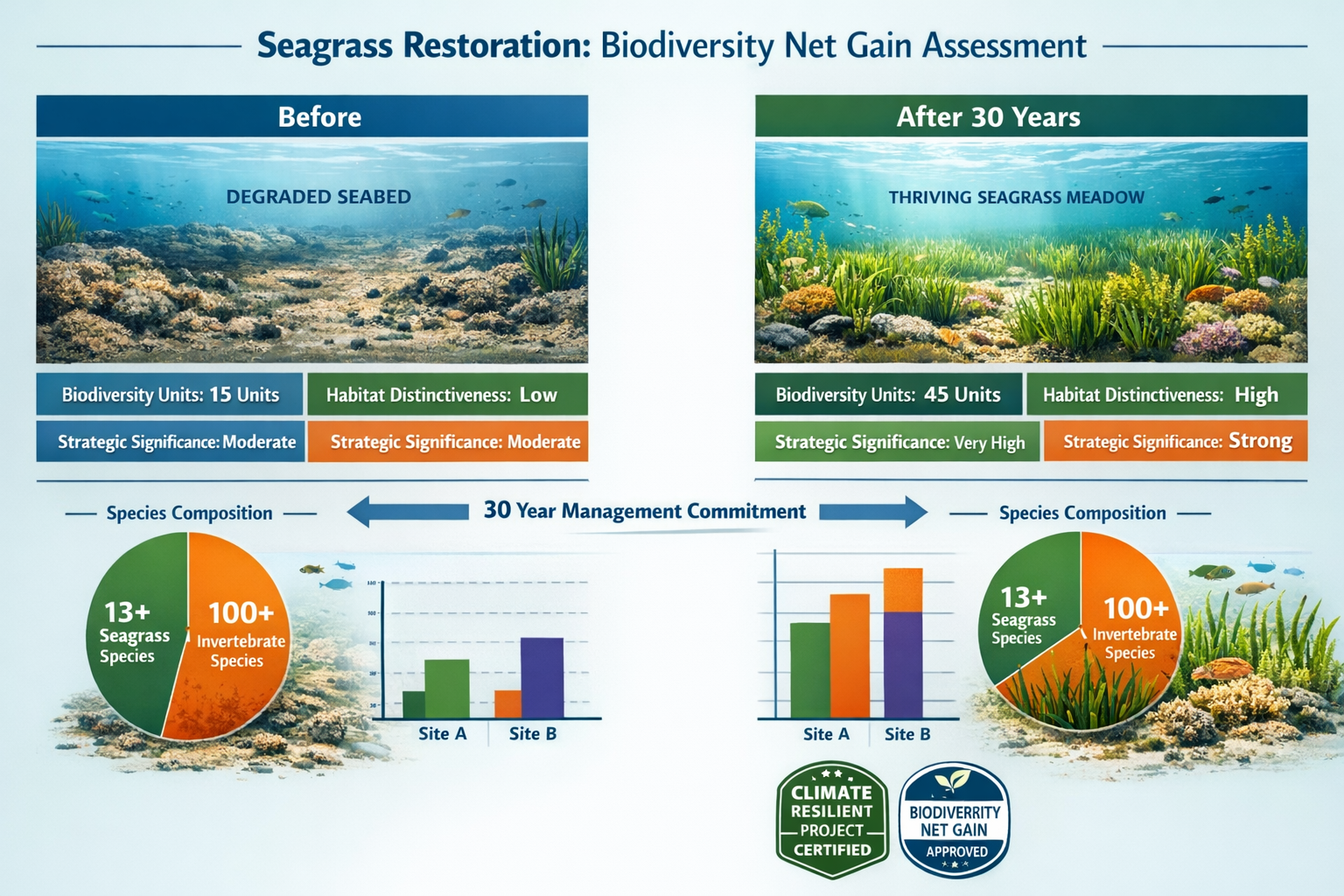
Research from Malaysia's Merambong Shoal demonstrates the transformative power of genetic diversity. Over a decade-long restoration program (2015-2025), practitioners planted multiple fast-growing seagrass species rather than relying on a single species. The results were remarkable: nine seagrass species naturally colonized the restoration plots, creating a diverse meadow containing 13 of Malaysia's 17 seagrass species—including Halophila nipponica, a species never before recorded in the country [2].
This natural colonization would have been impossible without the genetic and species diversity that created suitable conditions for recruitment. The restored meadows also supported over 100 invertebrate species, demonstrating how genetic diversity cascades into broader ecosystem recovery [2].
Genetic Resilience Under Ocean Warming
As ocean temperatures rise, seagrass populations face thermal stress that can trigger die-offs. However, genetic surveys reveal that populations contain "hidden" heat tolerance variation. Some genotypes within a population can withstand temperatures 2-3°C higher than others—a critical buffer as warming accelerates.
Current research led by T. Erin Cox at the University of New Orleans is mapping seagrass genetic diversity across the northern Gulf of Mexico to determine population connectivity and examine relationships between genetic diversity, primary productivity, and resiliency [4]. These studies test whether genetically diverse populations demonstrate higher productivity and better withstand environmental stressors—information essential for selecting restoration material.
The Florida Seagrass Initiative exemplifies this approach, with researchers collecting over 800 seagrass samples and extracting DNA from approximately 600 specimens to establish baseline genetic diversity of Halodule wrightii populations across natural and restored sites of varying ages [3]. This genetic library will provide practitioners with data on which source populations contain the greatest adaptive potential for different restoration contexts.
Field-Ready Genetic Monitoring Techniques for Seagrass Beds
Implementing Seagrass Genetic Diversity Surveys: Climate-Resilient Protocols for Biodiversity Net Gain in 2026 Restoration Projects requires practical field methods that balance scientific rigor with operational feasibility. The following protocols have been refined through international restoration programs and are suitable for practitioners working under BNG frameworks.
Sample Collection Protocols
Non-destructive tissue sampling forms the foundation of genetic surveys. Practitioners should:
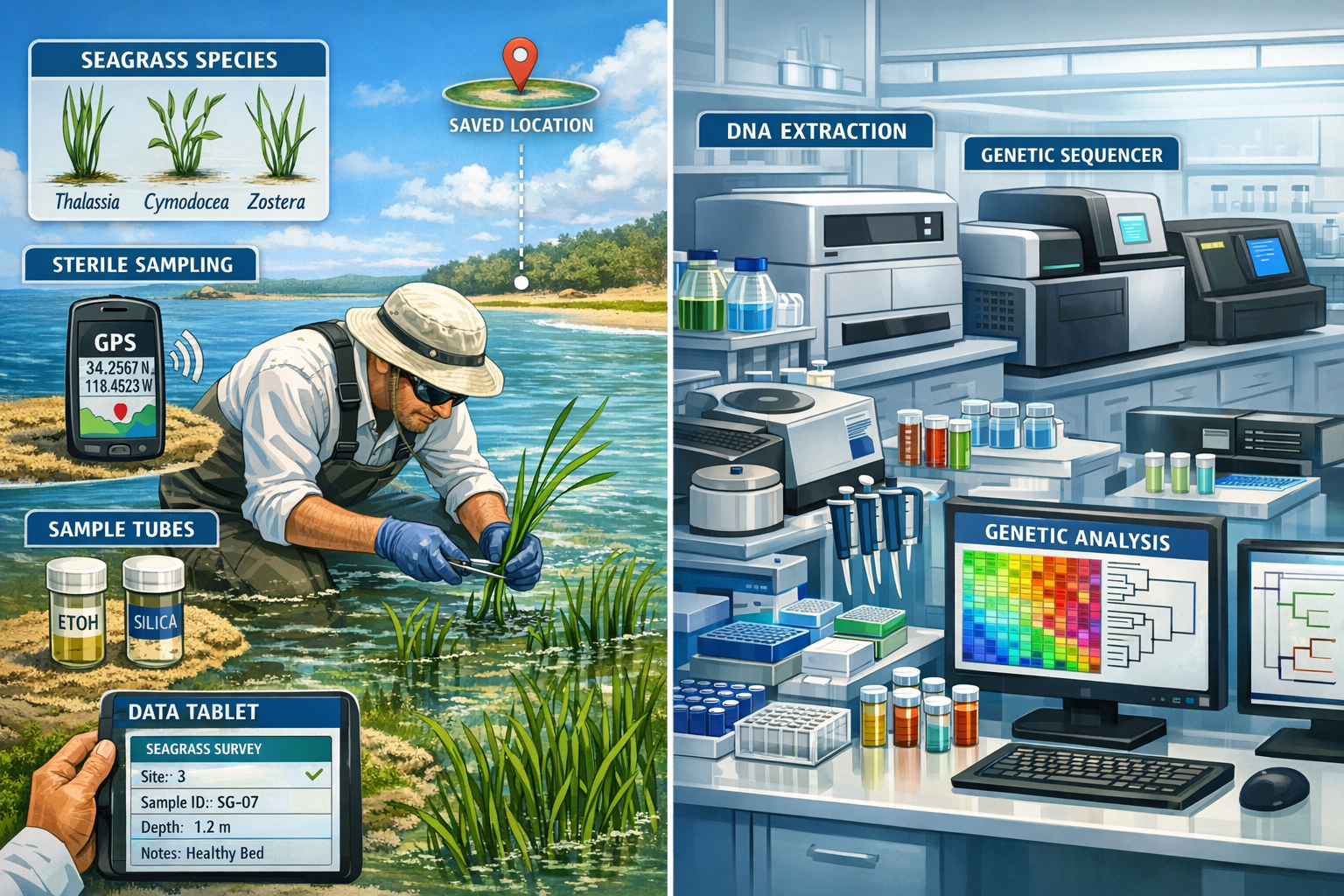
- Identify target species within the survey area using morphological keys and habitat characteristics
- Collect small leaf tissue samples (2-3 cm sections) from individual shoots spaced at minimum 2-meter intervals to avoid sampling clones
- Use sterile collection tools to prevent DNA contamination between samples
- Record precise GPS coordinates for each sample to enable spatial genetic analysis
- Preserve samples immediately in silica gel desiccant or RNA preservation buffer for DNA stability during transport
The spatial sampling design is critical. Because many seagrass species reproduce clonally, shoots growing near each other may be genetically identical. Minimum 2-meter spacing between samples reduces the probability of collecting the same genetic individual multiple times, which would artificially inflate diversity estimates.
For comprehensive genetic surveys, practitioners should aim for:
- 20-30 samples per meadow for small restoration sites (<1 hectare)
- 50-100 samples per meadow for larger sites (1-10 hectares)
- Multiple meadows surveyed across the project region to capture landscape-scale genetic structure
Laboratory Analysis and Genetic Markers
Once samples reach the laboratory, DNA extraction follows standardized protocols using commercial kits designed for plant tissue. The choice of genetic markers depends on the research questions:
Microsatellite markers (simple sequence repeats) provide high-resolution data on genetic diversity within and among populations. These markers reveal:
- Number of unique genotypes (genetic individuals) present
- Heterozygosity levels indicating genetic variation
- Relatedness among individuals
- Population structure and connectivity patterns
Single nucleotide polymorphisms (SNPs) offer genome-wide coverage and are increasingly used for seagrass genetics. SNP analysis can identify:
- Adaptive genetic variation linked to environmental tolerance
- Population differentiation across environmental gradients
- Signatures of local adaptation to temperature, salinity, or light conditions
The Florida Seagrass Initiative is developing a genetic library that will provide statewide source material for restoration efforts, with initiatives to test resilience of different populations to multiple environmental stressors in controlled settings [3]. This approach identifies genetically resilient strains before field deployment—a best practice for climate-adapted restoration.
Data Analysis and Interpretation
Genetic data analysis produces several key metrics relevant to Biodiversity Net Gain assessments:
Genetic diversity indices:
- Allelic richness: Number of genetic variants per marker
- Expected heterozygosity: Probability that two randomly chosen alleles differ
- Clonal diversity: Proportion of unique genotypes versus clonal replicates
Population structure metrics:
- FST values: Degree of genetic differentiation among populations
- Gene flow estimates: Connectivity between meadows via pollen or seed dispersal
- Isolation by distance: Whether geographic separation predicts genetic differentiation
Higher values generally indicate greater adaptive potential, though optimal levels depend on species biology and environmental context.
Integration with Habitat Suitability Assessment
Genetic data gains maximum value when integrated with environmental data. Florida's developing 10-year Seagrass Restoration Plan includes an online planning tool featuring a three-tiered site selection process that combines:
- GIS-based habitat suitability assessment evaluating depth, water quality, substrate type, and wave energy
- Genetically resilient range mapping identifying source populations with high adaptive capacity
- Climate projection overlays showing areas likely to remain suitable under future warming scenarios [3]
This integrated approach ensures restoration sites have both suitable physical conditions and access to genetically diverse, climate-adapted source material—critical factors for achieving Biodiversity Net Gain without risk.
Implementing Climate-Resilient Protocols in BNG Restoration Projects
Translating genetic survey data into operational restoration protocols requires careful planning that aligns with Biodiversity Net Gain planning requirements. The following framework has been developed from successful international projects and addresses the specific needs of developers, consultants, and planners working under BNG mandates.
Multi-Species Planting Strategies
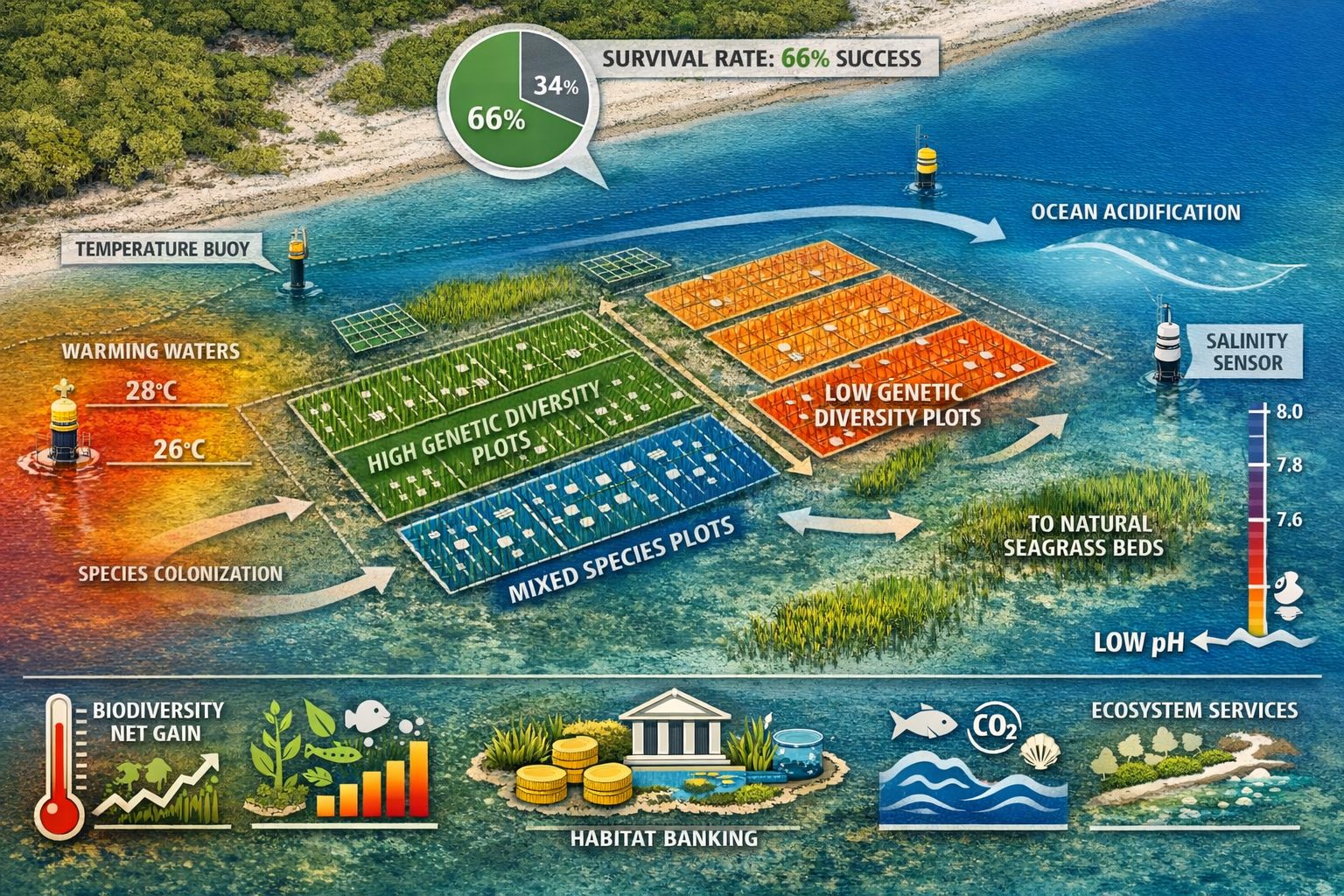
The evidence from Malaysia's Merambong Shoal is unequivocal: multi-species approaches significantly outperform single-species plantings. The decade-long restoration program achieved 66% survival rates by combining fast-growing species that quickly stabilize sediments with slower-growing species that provide long-term habitat complexity [2].
Practitioners implementing climate-resilient protocols should:
Select complementary species based on:
- Growth rates (combine fast colonizers with persistent species)
- Environmental tolerances (mix species adapted to different depth/light conditions)
- Reproductive strategies (include both clonal spreaders and sexual reproducers)
- Genetic diversity within each species (source from multiple donor populations)
Design planting layouts that:
- Alternate species in patches rather than mixing randomly
- Create environmental gradients from shallow to deep zones
- Leave unplanted gaps for natural colonization
- Include monitoring plots to track species performance
The natural colonization observed at Merambong Shoal—where nine additional species established without direct planting—demonstrates that creating suitable conditions through strategic initial plantings can trigger cascading biodiversity gains that exceed direct restoration efforts [2].
Source Population Selection Criteria
Genetic surveys enable evidence-based selection of donor material. Restoration practitioners should prioritize source populations that demonstrate:
✅ High genetic diversity (elevated heterozygosity and allelic richness)
✅ Local adaptation signals to relevant stressors (temperature, salinity, turbidity)
✅ Geographic proximity to restoration site (within 50-100 km when possible)
✅ Healthy donor meadows with stable or expanding coverage
✅ Genetic distinctiveness from other sources to maximize variation in plantings
Avoid source populations with:
❌ Low genetic diversity indicating bottlenecks or inbreeding
❌ Signs of stress or decline
❌ Extreme environmental conditions very different from restoration site
❌ Genetic evidence of recent colonization (may lack local adaptation)
Research in Pensacola and Perdido Bays is examining whether restoration trials using genetically diverse populations show increased productivity and ecosystem resilience compared to low-diversity plantings [4]. Early results support the hypothesis that genetic diversity enhances multiple ecosystem functions simultaneously.
Laboratory Culturing and Ex Situ Propagation
Laboratory culturing provides genetic confidence before field transplanting. This approach, used in both Florida and Malaysia projects, involves:
- Collecting seeds or vegetative shoots from genetically surveyed donor populations
- Growing plants in controlled nursery conditions to verify species identification and genetic composition
- Testing stress tolerance under various temperature, salinity, and light regimes
- Scaling up production of resilient genotypes for large-scale planting
- Maintaining genetic records linking each plant to source population genetics
This protocol ensures practitioners understand the genetic composition of restoration material before investing in field deployment. It also enables stress testing to identify which genotypes perform best under projected future conditions—a critical advantage for long-term restoration success under climate change [2].
Monitoring and Adaptive Management
Climate-resilient protocols require robust monitoring that tracks both ecological and genetic outcomes. Effective monitoring programs should:
Measure ecological performance:
- Shoot density and meadow coverage over time
- Species composition changes (natural colonization)
- Associated fauna abundance and diversity
- Ecosystem functions (sediment stabilization, carbon sequestration)
Track genetic outcomes:
- Survival rates of different genotypes/source populations
- Reproductive success (flowering, seed production)
- Recruitment of new genetic individuals
- Maintenance of genetic diversity over time
Implement adaptive management:
- Adjust species mix based on performance data
- Supplement underperforming areas with alternative genotypes
- Protect high-performing patches as future source material
- Modify planting techniques based on survival patterns
The Malaysian restoration program emphasized that understanding species biology—including growth patterns and environmental adaptation—is essential for successful restoration [2]. This knowledge accumulates through careful monitoring and enables continuous protocol refinement.
Biodiversity Net Gain Calculation Integration
Seagrass restoration projects must demonstrate measurable biodiversity gains to satisfy planning requirements. Genetic diversity metrics enhance BNG calculations by:
Improving baseline assessments:
- Document pre-restoration genetic diversity (often zero in degraded sites)
- Quantify genetic connectivity to nearby reference meadows
- Establish genetic distinctiveness as habitat quality indicator
Enhancing post-restoration valuations:
- Credit genetic diversity gains alongside species/habitat gains
- Account for climate resilience value of diverse populations
- Recognize natural colonization as additional biodiversity units
Supporting long-term management commitments:
- Demonstrate maintenance of genetic diversity over 30-year periods
- Show adaptive capacity to changing environmental conditions
- Provide evidence of self-sustaining ecosystem recovery
For developers and planners navigating BNG requirements, seagrass restoration with genetic diversity protocols offers high-value biodiversity units due to the habitat's strategic significance, distinctiveness, and climate mitigation co-benefits.
Case Studies: Successful Implementation of Genetic Diversity Protocols
Malaysia Merambong Shoal: Multi-Species Recovery
The Merambong Shoal restoration program (2015-2025) provides the most comprehensive demonstration of genetic diversity principles in practice. Key success factors included:
- Long-term commitment to post-planting care and monitoring over a decade
- Multi-species approach planting fast-growing pioneers alongside persistent species
- Natural colonization facilitation through strategic initial plantings that created suitable conditions
- Ecosystem-level recovery with 100+ invertebrate species returning to restored areas [2]
The project's documentation of Halophila nipponica—never before recorded in Malaysia—demonstrates how genetically diverse restoration can reveal hidden biodiversity and expand scientific understanding of regional flora [2].
Florida Seagrass Initiative: Genetic Library Development
Florida's statewide initiative represents a proactive approach to climate-resilient restoration. With over 800 samples collected and 600 DNA extractions completed, the program is building a comprehensive genetic library that will:
- Inform source population selection across the state
- Identify genetically resilient strains for different environmental contexts
- Support a three-tiered site selection process integrating genetics with habitat suitability
- Enable evidence-based restoration planning through an online tool [3]
This infrastructure investment creates lasting value by reducing restoration failure rates and increasing climate adaptation capacity.
Northern Gulf of Mexico: Connectivity Mapping
NOAA-funded research mapping genetic diversity across the northern Gulf of Mexico examines population connectivity and resilience relationships [4]. This landscape-scale approach reveals:
- Gene flow patterns among seagrass meadows
- Genetic barriers requiring conservation attention
- Source-sink dynamics informing restoration site selection
- Relationships between genetic diversity and ecosystem productivity
These insights enable regional restoration planning that maintains connectivity and maximizes adaptive potential across multiple projects.
Practical Implementation for Developers and Consultants
For developers and environmental consultants implementing Seagrass Genetic Diversity Surveys: Climate-Resilient Protocols for Biodiversity Net Gain in 2026 Restoration Projects, the following practical steps provide a roadmap:
Project Planning Phase
- Engage genetic specialists early in project design to integrate surveys with baseline assessments
- Budget for genetic sampling and analysis (typically £5,000-£15,000 depending on project scale)
- Identify potential donor populations within appropriate geographic range
- Review existing genetic data from regional studies or initiatives
- Align protocols with BNG metric requirements to ensure genetic diversity gains are captured
Survey Implementation Phase
- Conduct field sampling using non-destructive protocols across candidate donor sites and restoration areas
- Coordinate laboratory analysis with qualified genetics laboratories
- Integrate genetic data with habitat suitability models using GIS tools
- Select optimal source populations based on diversity and adaptation metrics
- Design multi-species planting strategy incorporating genetic diversity principles
Restoration Execution Phase
- Source material from multiple donor populations to maximize genetic variation
- Consider ex situ propagation for quality control and stress testing
- Implement adaptive planting designs that facilitate natural colonization
- Establish comprehensive monitoring tracking both ecological and genetic outcomes
- Document procedures and results for BNG verification and adaptive management
Long-Term Management Phase
- Conduct periodic genetic surveys to verify diversity maintenance
- Monitor natural colonization and recruitment success
- Adjust management practices based on performance data
- Protect successful areas as future source material
- Report outcomes demonstrating BNG achievement and climate resilience
For guidance on integrating these protocols with broader BNG strategies, consult resources on planning your BNG project and creating biodiversity plans for development projects.
Regulatory Context and BNG Compliance
Seagrass restoration projects must navigate evolving regulatory frameworks that increasingly recognize genetic diversity as a conservation priority. In the UK context, BNG requirements mandate:
- 10% net gain in biodiversity value compared to pre-development baseline
- 30-year management commitments ensuring long-term habitat maintenance
- Standardized metric calculations using approved assessment tools
- Verification and monitoring demonstrating achievement of gains
Marine and coastal habitats, including seagrass meadows, receive high distinctiveness scores in BNG metrics due to their rarity, ecological importance, and carbon sequestration capacity. Projects that demonstrate climate-resilient protocols through genetic diversity surveys can justify premium valuations because:
✓ Genetic diversity enhances habitat quality and condition scores
✓ Climate resilience supports long-term management success
✓ Multi-species approaches create higher distinctiveness through ecosystem complexity
✓ Natural colonization generates additional biodiversity units beyond direct plantings
Developers considering off-site versus on-site BNG delivery should recognize that seagrass restoration offers strategic opportunities for high-value biodiversity unit creation, particularly in coastal development contexts where marine habitat impacts require compensation.
Future Directions and Emerging Technologies
The field of seagrass genetic diversity surveys continues to evolve rapidly, with several emerging technologies and approaches promising to enhance restoration outcomes:
Environmental DNA (eDNA) Monitoring
eDNA techniques detect seagrass species and genetic diversity from water samples without direct tissue collection. This non-invasive approach enables:
- Rapid biodiversity assessments across large areas
- Detection of rare or cryptic species
- Monitoring of genetic diversity changes over time
- Early warning of population declines
Genomic Selection for Climate Adaptation
Genomic approaches identify specific genetic variants associated with climate tolerance, enabling:
- Predictive selection of climate-adapted genotypes
- Breeding programs developing heat-tolerant varieties
- Gene-environment association studies revealing adaptation mechanisms
- Precision restoration matching genotypes to future climate conditions
Remote Sensing Integration
Satellite and drone imagery combined with genetic data creates powerful planning tools:
- Habitat suitability modeling at landscape scales
- Change detection monitoring restoration progress
- Predictive modeling of climate change impacts
- Optimization of restoration site networks for genetic connectivity
Assisted Evolution Approaches
Assisted evolution techniques accelerate adaptation through:
- Selective breeding of stress-tolerant genotypes
- Assisted gene flow moving adaptive variants to at-risk populations
- Epigenetic priming preparing plants for stressful conditions
- Microbiome manipulation enhancing stress tolerance
These emerging approaches will complement traditional genetic diversity surveys, providing practitioners with increasingly sophisticated tools for climate-resilient restoration.
Conclusion
Seagrass Genetic Diversity Surveys: Climate-Resilient Protocols for Biodiversity Net Gain in 2026 Restoration Projects represent an essential evolution in marine conservation practice. As ocean warming accelerates and BNG requirements reshape development planning, the evidence is clear: genetic diversity is not a luxury—it's the foundation of restoration success.
The lessons from international projects are compelling. Malaysia's multi-species approach achieved 66% survival rates and facilitated natural colonization of nine additional species. Florida's genetic library development is creating statewide infrastructure for evidence-based restoration. Northern Gulf research is mapping connectivity to inform regional planning. These initiatives demonstrate that genetic diversity protocols deliver measurable results.
For developers, consultants, and planners, implementing these protocols offers multiple benefits:
🌊 Higher restoration success rates reducing project risk and costs
📈 Premium BNG valuations through enhanced habitat quality and climate resilience
🔬 Evidence-based decision making supported by genetic data
🌡️ Climate adaptation ensuring long-term project viability
🐠 Ecosystem recovery generating co-benefits beyond regulatory compliance
Actionable Next Steps
For project planners:
- Integrate genetic diversity surveys into early project scoping
- Engage qualified genetics specialists for protocol design
- Review existing regional genetic data to inform planning
- Budget appropriately for sampling, analysis, and monitoring
For restoration practitioners:
- Adopt multi-species planting strategies based on genetic principles
- Source material from multiple donor populations
- Implement robust monitoring tracking genetic and ecological outcomes
- Share results to advance collective knowledge
For policy makers:
- Incorporate genetic diversity metrics into BNG assessment frameworks
- Support development of regional genetic libraries
- Fund landscape-scale connectivity research
- Recognize climate resilience value in habitat valuations
The challenges facing seagrass ecosystems under climate change are significant, but the tools and knowledge to address them are rapidly advancing. By embracing genetic diversity as a core principle of restoration practice, the conservation community can create resilient marine ecosystems that withstand environmental change while delivering measurable biodiversity gains.
The future of seagrass restoration lies not in recreating the past, but in building genetically diverse, climate-adapted ecosystems capable of thriving in the ocean conditions of tomorrow. For professionals seeking expert guidance on implementing these protocols within BNG frameworks, contact specialists who can provide tailored support for your restoration projects.
References
[1] International Union Conservation Nature Marks World Seagrass Day Announcement 14 Local – https://iucn.org/news/202603/international-union-conservation-nature-marks-world-seagrass-day-announcement-14-local
[2] Seagrass Restoration In Malaysia Finds Multi Species Approach Boosts Recovery – https://news.mongabay.com/2026/02/seagrass-restoration-in-malaysia-finds-multi-species-approach-boosts-recovery/
[3] Seagrassinitiative Accomplishmentsprioritesreport2025 Ffw – https://mote.org/wp-content/uploads/2026/01/SeagrassInitiative_AccomplishmentsPrioritesReport2025_ffw.pdf
[4] Seagrass Restoration Resiliency – https://restoreactscienceprogram.noaa.gov/projects/seagrass-restoration-resiliency