

The relationship between thriving ecosystems and prosperous communities has never been more critical. As biodiversity decline accelerates to nearly 2% per year across terrestrial and marine ecosystems—and a staggering 4% per year in freshwater systems—the urgent need to connect nature conservation with human development has become undeniable[1]. In 2026, a groundbreaking approach is transforming how we conduct ecological assessments: Nature for Development in Biodiversity Surveys: Integrating Human Wellbeing Metrics into 2026 Ecology Protocols.
This innovative framework, championed by organizations like UNEP-WCMC, represents a fundamental shift from traditional biodiversity surveys that measure only species counts and habitat quality. Instead, modern protocols now incorporate hybrid methodologies that simultaneously quantify ecosystem services and human health outcomes, creating a powerful tool for sustainable planning—particularly in emerging economies where development pressures and conservation needs intersect most intensely.
The integration of human wellbeing metrics into biodiversity surveys isn't just theoretical anymore. With new software tools like the "estar" package enabling comprehensive ecological stability quantification[4], and standardized psychometric scales like BIO-WELL measuring wellbeing across five domains[5], surveyors now possess practical instruments to demonstrate nature's direct contribution to human prosperity.
Key Takeaways
- 🌍 Biodiversity loss ranks as a critical global risk for 2026, with ecosystem collapse and natural resource shortage topping the World Economic Forum's emerging risk outlook[1]
- 📊 New integrated metrics combine ecological, health, and socioeconomic data to establish causal links between biodiversity and human wellbeing, moving beyond traditional species-counting approaches
- 🔧 Breakthrough software tools released in 2026 enable practical measurement of ecological stability and community resilience, translating complex theory into actionable survey protocols
- 🏥 Health-biodiversity indicators now use standardized units (DALYs, QALYs, YLLs) to quantify nature's role as a determinant of public health outcomes
- 🌱 Hybrid survey protocols equip practitioners to measure ecosystem services alongside Biodiversity Net Gain (BNG) requirements, supporting sustainable development in both emerging and developed economies
Understanding the Nature-Development Nexus in 2026 Biodiversity Surveys
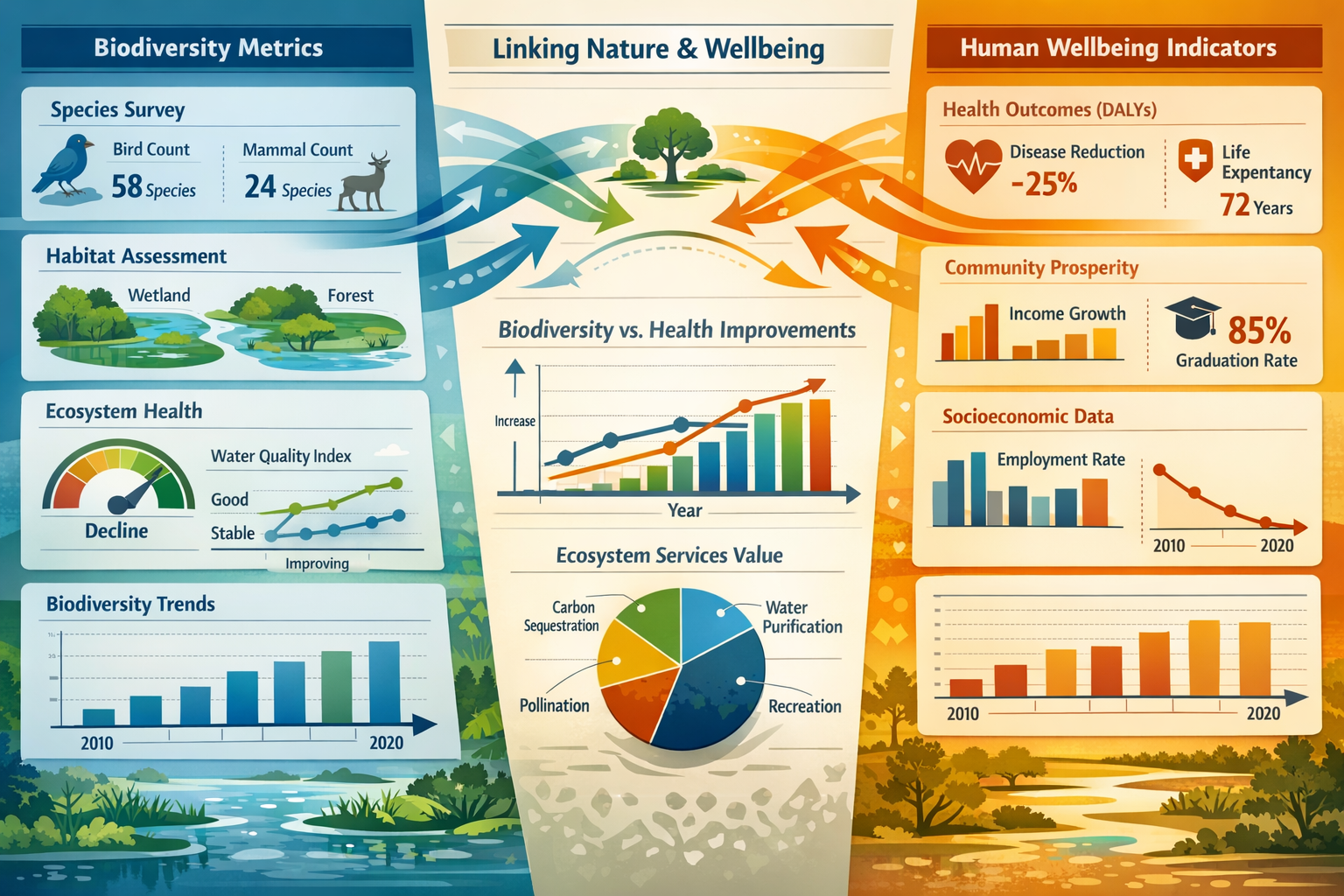
The concept of Nature for Development in Biodiversity Surveys: Integrating Human Wellbeing Metrics into 2026 Ecology Protocols emerges from a critical recognition: nature and human prosperity are inseparable. Traditional biodiversity assessments have long focused exclusively on ecological parameters—species richness, habitat integrity, genetic diversity—while treating human communities as external factors or potential threats.
The Evolution of Survey Methodologies
Modern 2026 protocols represent a paradigm shift. Researchers at Oxford's Environmental Change Institute, collaborating with the UN Development Programme, have proposed a new global index framework specifically designed to measure how well people and nature thrive together[2]. This practical approach drives stronger action by demonstrating tangible development benefits alongside conservation outcomes.
The framework addresses several critical gaps:
- Theoretical grounding: Metrics must be based on empirical evidence from established hypotheses (Insurance Hypothesis, Dilution Effect, Biodiversity Buffering, or Harm Hypotheses)[1]
- Multi-scale biodiversity reflection: Measurements span from genetic diversity through species and functional diversity to ecosystem-level processes
- Health outcome linkages: Exposure-response models connect biodiversity changes to measurable health impacts using standardized units
Why Integration Matters for Surveyors
For biodiversity professionals conducting impact assessments, the integration of wellbeing metrics offers several advantages:
| Traditional Approach | Integrated 2026 Protocol |
|---|---|
| Species counts only | Species counts + ecosystem service valuation |
| Habitat quality assessment | Habitat quality + community health indicators |
| Conservation value ranking | Conservation value + development benefit quantification |
| Single-sector reporting | Cross-sector stakeholder engagement |
| Limited policy influence | Direct SDG and NBSAP alignment |
This evolution directly supports the Kunming-Montreal Global Biodiversity Framework (2022), which established progressive commitments from Convention on Biological Diversity parties, though integrated biodiversity and health indicators remain limited in practice as of early 2026[1].
Core Components of Integrated Wellbeing Metrics in Ecology Protocols
The practical implementation of Nature for Development in Biodiversity Surveys: Integrating Human Wellbeing Metrics into 2026 Ecology Protocols relies on several key measurement frameworks and technological tools that have matured sufficiently for field deployment.
The BIO-WELL Psychometric Scale
The BIO-WELL scale provides a standardized method for measuring human wellbeing across five interconnected domains in relation to biodiversity exposure[5]:
- Physical health outcomes: Respiratory function, infectious disease incidence, chronic condition prevalence
- Mental health and cognitive function: Stress reduction, attention restoration, psychological resilience
- Social cohesion and cultural identity: Community bonds strengthened through shared natural spaces, traditional ecological knowledge preservation
- Economic security: Ecosystem service-dependent livelihoods, natural resource access, climate resilience
- Spiritual and aesthetic values: Nature connection, sense of place, recreational opportunities
While further in situ testing continues to refine its application, the BIO-WELL framework offers surveyors a reproducible methodology for capturing wellbeing data alongside traditional ecological metrics.
Breakthrough Software: The "estar" Package
Released in March 2026, the "estar" R package represents a technological breakthrough for biodiversity research[4]. This software enables comprehensive measurement of ecological stability across multiple biological organizational levels—from individual organisms to populations to entire communities.
Key capabilities include:
- ✅ Jacobian matrix analysis: Quantifies community stability by mapping species interaction strength within ecosystems
- ✅ Multi-level stability assessment: Measures resilience at organism, population, and community scales simultaneously
- ✅ Theoretical-to-practical translation: Converts complex mathematical relationships into usable statistical tools for field surveyors
- ✅ Integration compatibility: Outputs can be combined with health and socioeconomic datasets for comprehensive reporting
This addresses a previously unmet gap in biodiversity research, providing surveyors with the technical capacity to demonstrate not just species presence, but ecosystem resilience—a critical factor for development planning.
Health Metrics Integration: DALYs, QALYs, and YLLs
To establish credible causal links between biodiversity and human wellbeing, integrated protocols employ standardized health measurement units:
- DALYs (Disability-Adjusted Life Years): Quantifies overall disease burden, combining years of life lost and years lived with disability
- QALYs (Quality-Adjusted Life Years): Measures health improvement value, incorporating both longevity and quality of life
- YLLs (Years of Life Lost): Calculates premature mortality impact from environmental factors
Research confirms that reduced biodiversity and limited contact with nature contribute to public health problems[3], with growing evidence linking these factors to adverse outcomes including increased cardiovascular disease, mental health disorders, and infectious disease vulnerability.
By incorporating these health metrics into biodiversity surveys, practitioners can demonstrate nature's role as a determinant of health—not merely an aesthetic or ecological concern, but a fundamental development priority.
Implementing Nature for Development Protocols in Field Surveys
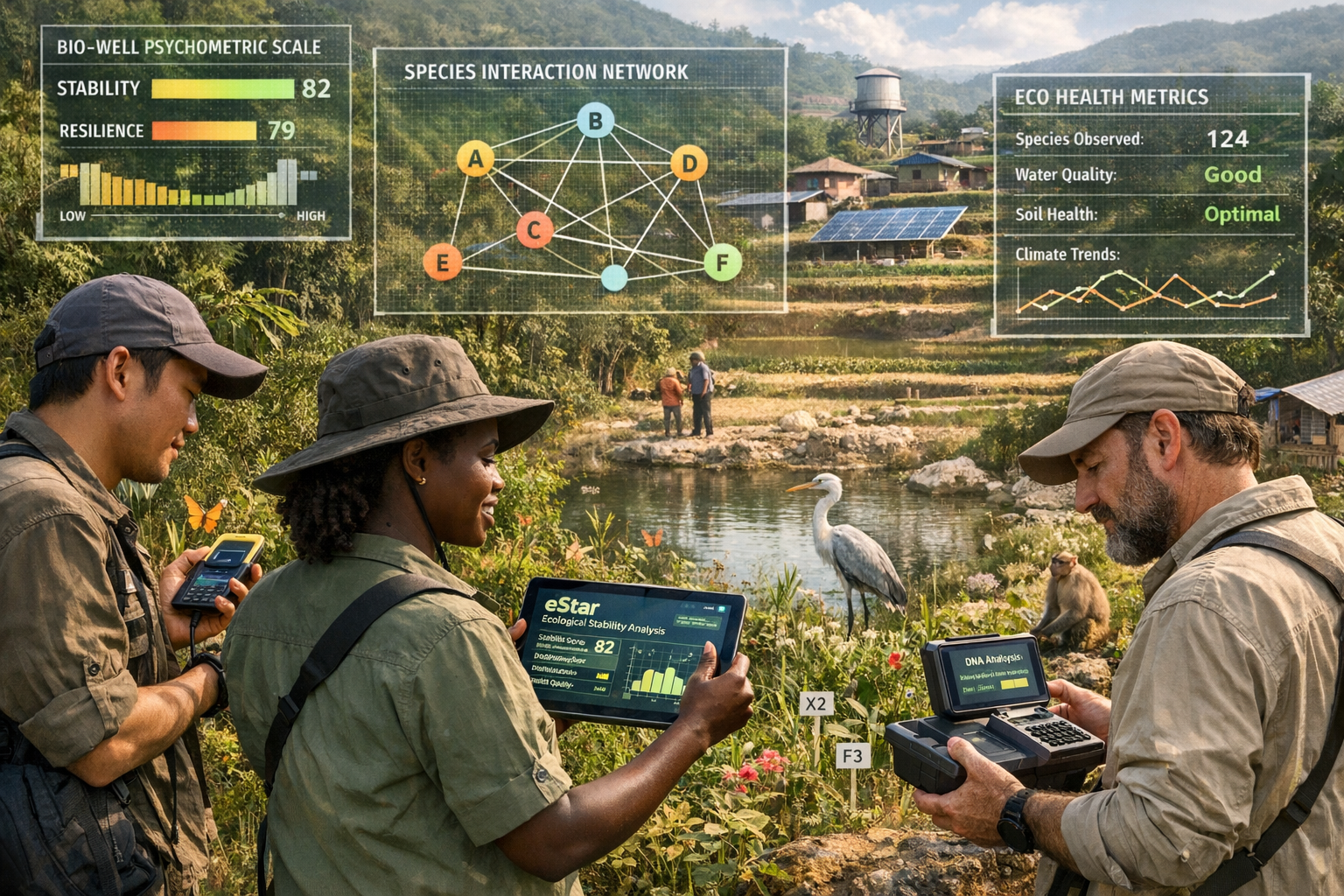
The practical application of Nature for Development in Biodiversity Surveys: Integrating Human Wellbeing Metrics into 2026 Ecology Protocols requires methodological adjustments to standard survey procedures. For professionals familiar with BNG assessments or traditional ecological surveys, the integration process involves several additional steps.
Pre-Survey Planning and Stakeholder Engagement
Expanded stakeholder consultation forms the foundation of integrated surveys:
- Community representatives: Engage local populations who depend on ecosystem services
- Health authorities: Coordinate with public health officials to access baseline health data
- Development planners: Align survey metrics with regional development objectives
- Traditional knowledge holders: Incorporate indigenous and local ecological knowledge
This broader stakeholder base ensures that wellbeing metrics reflect actual community priorities and development needs, not just externally imposed frameworks.
Field Data Collection Protocols
Integrated surveys combine traditional biodiversity assessment methods with wellbeing data collection:
Ecological Component:
- Species inventories using standard taxonomic protocols
- Habitat quality assessment (following established methodologies)
- Ecosystem service mapping (provisioning, regulating, cultural, supporting services)
- Ecological stability quantification using estar software[4]
Wellbeing Component:
- BIO-WELL psychometric surveys administered to community samples[5]
- Health outcome data collection (in partnership with health authorities)
- Socioeconomic indicator assessment (income, food security, resource access)
- Cultural value documentation (traditional practices, spiritual sites, recreational use)
Data Integration and Analysis
The analytical phase requires cross-disciplinary expertise:
Statistical modeling establishes relationships between biodiversity variables and wellbeing outcomes. For example:
- Correlation between riparian forest integrity and waterborne disease incidence
- Association between urban green space diversity and mental health indicators
- Linkage between agricultural biodiversity and nutritional security
Spatial analysis maps ecosystem service flows to beneficiary populations, identifying:
- Service provision areas (where ecosystems generate benefits)
- Service flow pathways (how benefits move through landscapes)
- Beneficiary locations (communities receiving ecosystem services)
Economic valuation quantifies ecosystem service contributions using established methodologies, enabling comparison with conventional development metrics.
Reporting and Policy Integration
Integrated survey outputs serve multiple policy frameworks simultaneously:
📋 National Biodiversity Strategies and Action Plans (NBSAPs): The Global Action Plan on Biodiversity and Health (2024) provides a renewed policy entry point for integrating health into biodiversity strategies, enabling governments to embed biodiversity-health metrics into their NBSAPs[1].
📋 Sustainable Development Goals (SDGs): Integrated metrics directly support SDG 3 (Good Health and Wellbeing), SDG 15 (Life on Land), and SDG 11 (Sustainable Cities and Communities).
📋 Development Planning: Wellbeing data demonstrates nature's contribution to poverty reduction, food security, and climate resilience—core development priorities.
📋 Biodiversity Net Gain Planning: For development projects, integrated assessments show how BNG delivery can simultaneously enhance ecological and human wellbeing outcomes.
Challenges and Solutions in Protocol Implementation
Despite significant advances, implementing Nature for Development in Biodiversity Surveys: Integrating Human Wellbeing Metrics into 2026 Ecology Protocols faces several practical challenges.
Challenge 1: Lack of Standardized Metrics
The Problem: Weak indicators continue to hinder policy enforcement, funding allocation, and environmental management[1]. Different organizations employ incompatible measurement frameworks, preventing data comparison and synthesis.
The Solution:
- Adopt internationally recognized frameworks (BIO-WELL, Global Biodiversity Framework indicators)
- Participate in collaborative metric development initiatives
- Contribute field data to standardization efforts
- Use software tools with standardized outputs (estar package[4])
Challenge 2: Capacity and Resource Constraints
The Problem: Integrated surveys require multidisciplinary expertise (ecology, public health, economics, social science) and extended field time, increasing costs.
The Solution:
- Develop partnerships across sectors to share expertise and costs
- Prioritize integration in high-impact contexts (large developments, protected area planning)
- Use tiered approaches: comprehensive integration for major projects, simplified metrics for smaller developments
- Leverage existing data sources (health records, census data) rather than collecting all primary data
Challenge 3: Data Quality and Causality
The Problem: Establishing causal relationships between biodiversity changes and health outcomes requires rigorous study designs that may be impractical in standard surveys.
The Solution:
- Use established exposure-response models from peer-reviewed literature
- Document correlations and associations where causality cannot be definitively proven
- Clearly communicate certainty levels in reporting
- Contribute to long-term monitoring programs that can establish causality over time
Challenge 4: Policy Integration Gaps
The Problem: Despite frameworks like the Kunming-Montreal Global Biodiversity Framework, integrated biodiversity and health monitoring mechanisms remain limited in policy structures as of early 2026[1].
The Solution:
- Frame integrated assessments within existing policy requirements (BNG compliance, environmental impact assessment)
- Demonstrate added value to decision-makers through case studies
- Engage with policy development processes to advocate for integrated approaches
- Align with international commitments (SDGs, Convention on Biological Diversity targets)
Case Applications: Where Integrated Protocols Deliver Maximum Value
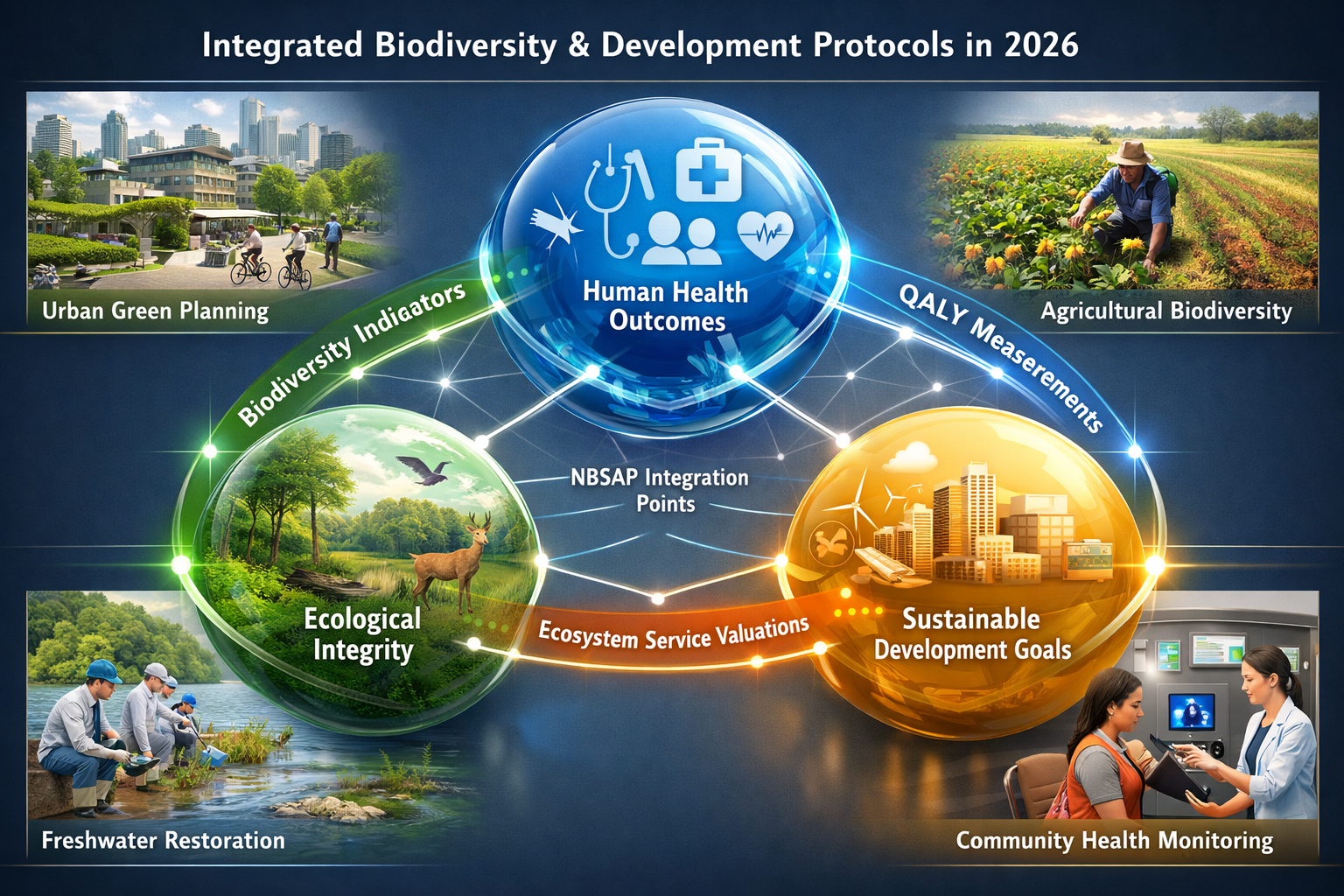
Certain contexts particularly benefit from Nature for Development in Biodiversity Surveys: Integrating Human Wellbeing Metrics into 2026 Ecology Protocols:
Urban Development and Green Infrastructure
Cities in emerging economies experiencing rapid growth can use integrated protocols to:
- Quantify mental health benefits of urban green spaces
- Demonstrate air quality improvements from urban forests
- Calculate heat island mitigation values
- Support biodiversity net gain delivery in urban contexts
Agricultural Landscape Planning
Agricultural biodiversity directly impacts food security, nutrition, and farmer livelihoods. Integrated surveys can:
- Link crop diversity to nutritional outcomes
- Quantify pollinator service values for agricultural productivity
- Assess soil biodiversity contributions to food production
- Evaluate traditional agricultural practices' biodiversity and wellbeing benefits
Protected Area Management
Conservation areas often provide critical ecosystem services to surrounding communities. Integrated assessments can:
- Document clean water provision to downstream populations
- Quantify climate regulation services
- Measure cultural and recreational values
- Demonstrate disease regulation through biodiversity maintenance
Infrastructure Development
Large infrastructure projects (roads, dams, energy facilities) require comprehensive environmental assessments. Integrated protocols:
- Capture full scope of biodiversity impacts on dependent communities
- Identify mitigation measures that protect both nature and wellbeing
- Support biodiversity impact assessments with human dimensions
- Inform compensation and offset strategies that benefit local populations
The Future of Integrated Biodiversity-Wellbeing Assessment
As 2026 progresses, several trends are shaping the evolution of Nature for Development in Biodiversity Surveys: Integrating Human Wellbeing Metrics into 2026 Ecology Protocols:
Technological Advancement
- Remote sensing integration: Satellite and drone imagery combined with ground-truthing enables landscape-scale ecosystem service mapping
- Artificial intelligence: Machine learning algorithms identify patterns in complex biodiversity-health datasets
- Mobile data collection: Smartphone apps facilitate community-based monitoring and wellbeing data collection
- Real-time monitoring: Sensor networks track environmental parameters linked to health outcomes
Policy Evolution
The Global Action Plan on Biodiversity and Health (2024) represents growing political commitment to integration[1]. Future policy developments likely include:
- Mandatory integrated assessments for development projects above certain thresholds
- Biodiversity-health indicators incorporated into national reporting requirements
- Funding mechanisms specifically supporting integrated approaches
- International standards for integrated metric reporting
Scientific Refinement
Ongoing research continues to strengthen the evidence base:
- Long-term studies establishing causal pathways between biodiversity and health
- Refinement of psychometric wellbeing scales for diverse cultural contexts
- Development of ecosystem service valuation methods specific to emerging economies
- Expansion of the estar software package[4] to include additional stability metrics
Professional Capacity Building
The surveyor community is adapting to integrated approaches through:
- Interdisciplinary training programs combining ecology, health, and social science
- Professional certifications in integrated assessment methodologies
- Collaborative practice models bringing together specialists from different fields
- Knowledge-sharing platforms for integrated assessment practitioners
Conclusion: Advancing Nature and Development Together
The integration of human wellbeing metrics into biodiversity surveys represents far more than a methodological refinement—it embodies a fundamental recognition that nature and human prosperity are inseparable. As biodiversity loss accelerates and ranks among the most critical global risks of 2026[1], the imperative to demonstrate nature's contribution to development has never been more urgent.
Nature for Development in Biodiversity Surveys: Integrating Human Wellbeing Metrics into 2026 Ecology Protocols provides practitioners with the frameworks, tools, and evidence base to make this connection tangible. From the BIO-WELL psychometric scale[5] to the breakthrough estar software package[4], surveyors now possess practical instruments to quantify what communities have always known: healthy ecosystems support healthy, prosperous societies.
For biodiversity professionals, the path forward involves several actionable steps:
Immediate Actions
- Familiarize yourself with integrated frameworks: Review the BIO-WELL scale, Global Action Plan on Biodiversity and Health, and Kunming-Montreal Global Biodiversity Framework
- Acquire technical capabilities: Learn to use the estar R package and other integrated assessment tools
- Build partnerships: Establish relationships with public health professionals, social scientists, and development planners
- Start small: Incorporate basic wellbeing metrics into your next survey, even if comprehensive integration isn't immediately feasible
Medium-Term Development
- Contribute to standardization efforts: Participate in professional networks developing integrated assessment standards
- Document case studies: Publish examples of integrated assessments to build the evidence base
- Advocate for policy integration: Engage with planning authorities to incorporate wellbeing metrics into BNG requirements and development approval processes
- Invest in capacity building: Pursue training in health metrics, ecosystem service valuation, and cross-disciplinary collaboration
Long-Term Vision
The ultimate goal is a future where every biodiversity assessment automatically considers human wellbeing—where the question isn't whether to integrate these dimensions, but how to do so most effectively for the specific context. This vision aligns with the broader sustainable development agenda, supporting benefits for both nature and developers while ensuring that communities dependent on ecosystem services have their needs recognized and protected.
As the World Economic Forum's 2024 Global Risk Insights Report makes clear, biodiversity loss, ecosystem collapse, and natural resource shortage top the outlook for emerging global risks[1]. Integrated protocols that demonstrate nature's contribution to human wellbeing aren't just good practice—they're essential tools for navigating the intertwined environmental and development challenges of our time.
The frameworks are established. The tools are available. The evidence base is growing. Now it's time for the biodiversity surveying community to embrace Nature for Development in Biodiversity Surveys: Integrating Human Wellbeing Metrics into 2026 Ecology Protocols as standard practice, ensuring that every assessment contributes to a future where people and nature thrive together.
References
[1] Pmc12212572 – https://pmc.ncbi.nlm.nih.gov/articles/PMC12212572/
[2] New Global Index Aims Help People And Nature Thrive Together – https://www.eci.ox.ac.uk/news/new-global-index-aims-help-people-and-nature-thrive-together
[3] Searchrxiv.2026 – https://www.cabidigitallibrary.org/doi/10.1079/searchRxiv.2026.01239
[4] 2026 03 Software Biodiversity Enables Comprehensive Quantification – https://phys.org/news/2026-03-software-biodiversity-enables-comprehensive-quantification.html
[5] 57bb060b 6bae 41c6 B970 09094235353d – https://spiral.imperial.ac.uk/entities/publication/57bb060b-6bae-41c6-b970-09094235353d