

The corporate world is experiencing a seismic shift in how it measures and reports environmental impact. As businesses race to make bold "nature-positive" commitments in their sustainability reports, ecology and biodiversity surveyors find themselves at a critical crossroads. The question facing the profession in 2026 is clear: how can traditional survey methods evolve to meet the demands of new corporate disclosure frameworks while maintaining scientific rigor?
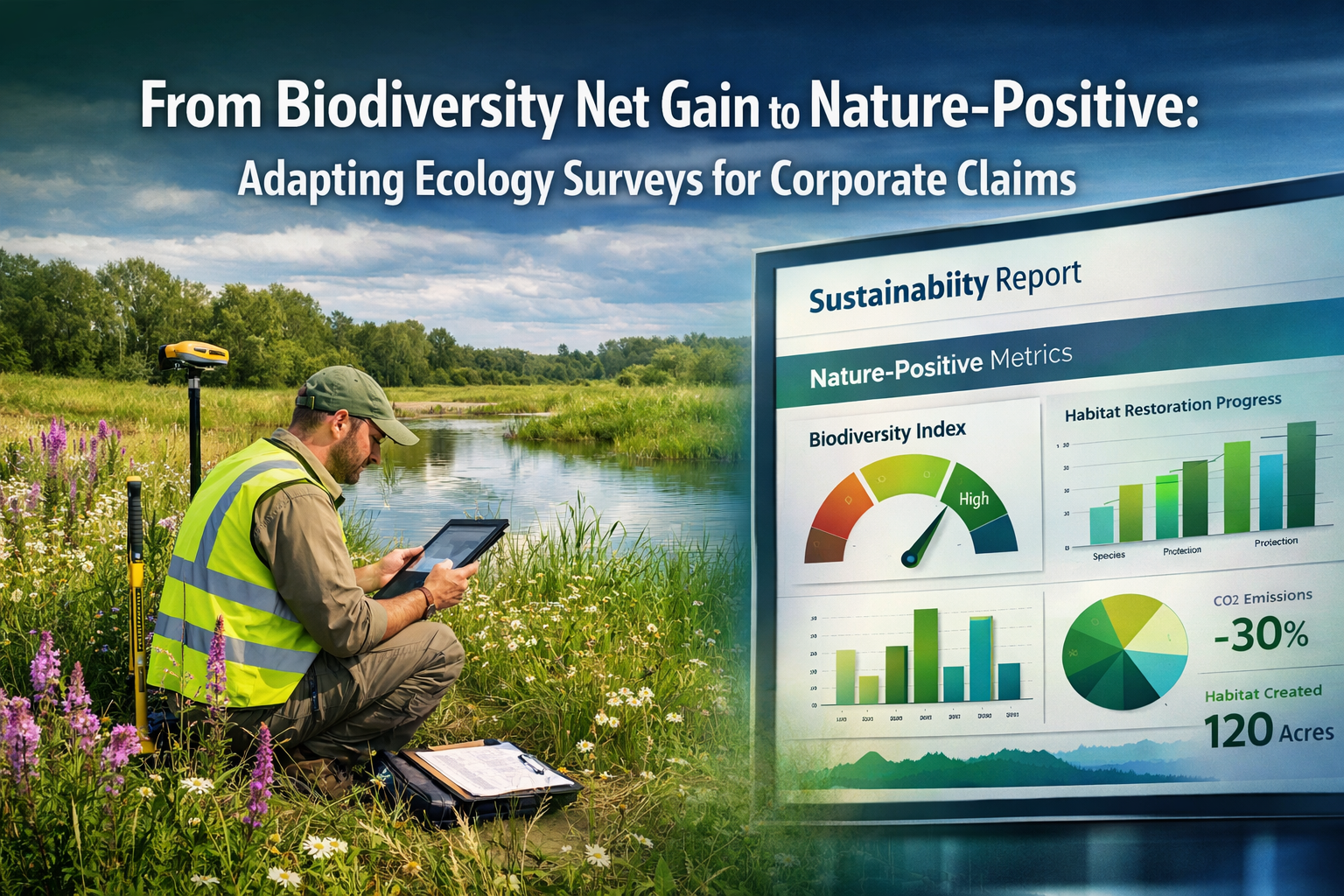
From Biodiversity Net Gain to Nature-Positive: How Ecologists Should Adapt Survey Methods for Corporate 'Nature' Claims represents more than just a technical challenge—it's a fundamental transformation in how ecological data serves business accountability. With regulatory frameworks like the Taskforce on Nature-related Financial Disclosures (TNFD) gaining traction and investors demanding measurable nature outcomes, surveyors must bridge the gap between field ecology and corporate reporting requirements.
Key Takeaways
- 🌱 Corporate demand is reshaping ecology: Nature-positive commitments and disclosure frameworks are driving new requirements for biodiversity data collection and reporting
- 📊 Metrics must align across frameworks: Ecologists need to adapt survey methods to serve both statutory BNG requirements and voluntary corporate sustainability standards
- 🔄 Integration is essential: Field survey protocols must now capture data compatible with multiple reporting systems, from the Statutory Biodiversity Metric to TNFD indicators
- ⏱️ Long-term monitoring becomes critical: The 30-year habitat protection mandate and corporate accountability timelines demand robust baseline data and monitoring frameworks
- 🎯 Transparency and verification matter: Corporate nature claims require third-party validation, elevating the role of professional ecologists in ensuring credible reporting
Understanding the Shift: From BNG Compliance to Nature-Positive Ambitions
The BNG Foundation
Biodiversity Net Gain (BNG) has established a solid foundation for measuring biodiversity outcomes in development projects across England. Since becoming mandatory, projects must achieve a minimum 10% increase in biodiversity units calculated using the Statutory Biodiversity Metric[1]. This habitat-based accounting system converts habitats into measurable units by comparing pre- and post-development values across four core factors: habitat size, condition, distinctiveness, and strategic significance[2].
The framework operates within a clear mitigation hierarchy that prioritizes avoidance first, followed by mitigation, on-site compensation, registered off-site gains, and finally statutory credits as a last resort[1]. All new or enhanced habitats must be secured and managed for at least 30 years through planning obligations or conservation covenants[1].
The Nature-Positive Evolution
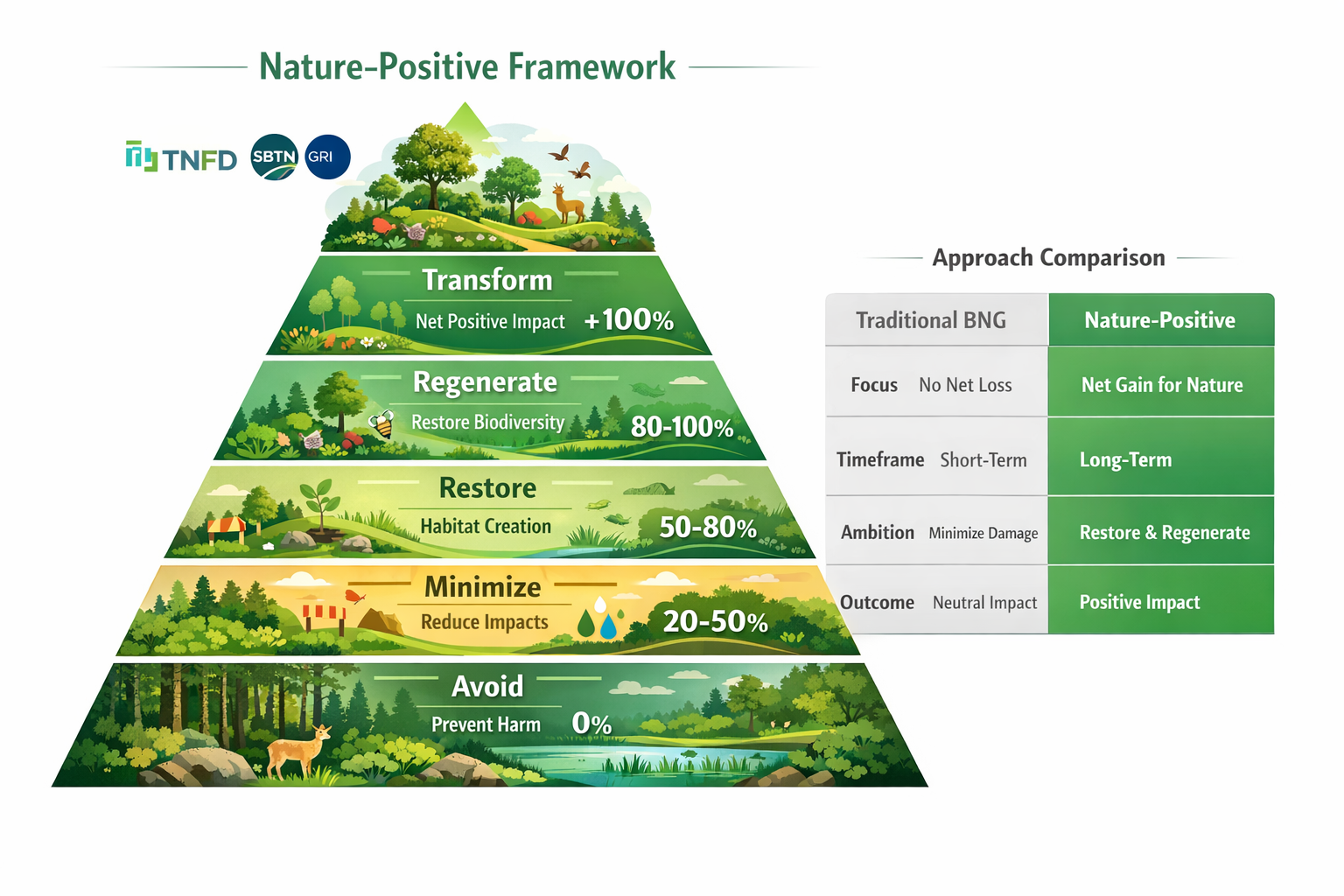
While BNG focuses primarily on development-related impacts, the nature-positive movement represents a broader corporate commitment. The Nature Positive Initiative established an overarching definition in 2023 and has spent the past 18 months piloting State of Nature indicators and metrics, initially for terrestrial ecosystems and now expanding to freshwater and marine systems[3].
Nature-positive goes beyond "no net loss" to actively improve nature's health, resilience, and abundance. For corporations, this means:
- Setting science-based targets for nature restoration
- Measuring impacts across entire value chains
- Reporting against standardized disclosure frameworks
- Demonstrating positive trajectories over time
- Integrating nature considerations into financial decision-making
This evolution creates both opportunities and challenges for ecologists conducting surveys. Corporate clients increasingly expect survey outputs that serve multiple purposes: regulatory compliance, voluntary sustainability reporting, investor communications, and public accountability.
How Corporate Nature Claims Are Reshaping Survey Requirements
From Single-Purpose to Multi-Framework Data Collection
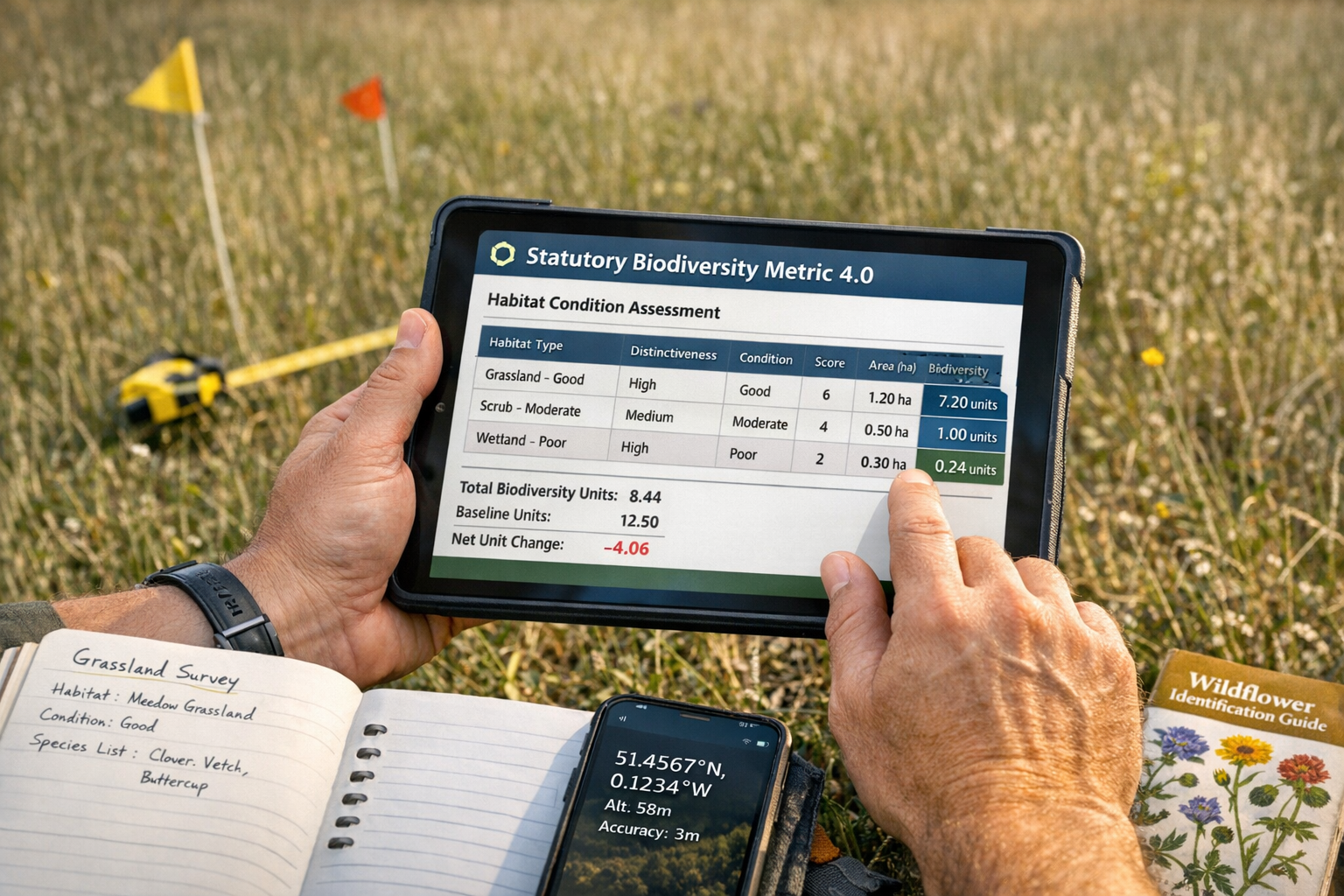
Traditional ecological surveys typically focused on specific regulatory requirements—protected species assessments, habitat evaluations for planning applications, or Environmental Impact Assessments. In 2026, corporate clients need survey data that feeds into multiple reporting frameworks simultaneously:
Regulatory Frameworks:
- Statutory BNG assessments using the Biodiversity Metric
- Planning condition compliance
- Environmental permitting requirements
Voluntary Disclosure Frameworks:
- TNFD (Taskforce on Nature-related Financial Disclosures)
- SBTN (Science Based Targets Network for Nature)
- GRI (Global Reporting Initiative) biodiversity indicators
- CDP (Carbon Disclosure Project) forests and water security
Corporate Sustainability Standards:
- ISO 14001 environmental management systems
- Internal ESG (Environmental, Social, Governance) metrics
- Supply chain sustainability requirements
This multi-framework reality means ecologists must understand what data elements each system requires and design surveys that capture compatible information efficiently.
Enhanced Baseline Documentation
Corporate nature claims require robust baseline data to demonstrate progress over time. Unlike one-off planning assessments, BNG assessments now serve as the foundation for decades of monitoring and reporting.
Key baseline enhancements include:
| Traditional Survey | Enhanced Corporate Baseline |
|---|---|
| Habitat classification | Detailed condition assessments with photographic records |
| Species presence/absence | Population estimates and trend indicators |
| Single-season surveys | Multi-season data to establish temporal variation |
| Site-level focus | Landscape context and connectivity analysis |
| Qualitative descriptions | Quantified metrics aligned with reporting frameworks |
The 30-year habitat protection mandate means baseline surveys must be sufficiently detailed to support long-term monitoring programs and detect meaningful change over time[1].
Spatial and Temporal Expansion
Corporate sustainability reporting often extends beyond individual development sites to encompass:
- Entire operational footprints across multiple locations
- Supply chain impacts in diverse geographic regions
- Cumulative effects of business activities over time
- Landscape-scale outcomes rather than site-specific metrics
For ecologists, this requires adapting survey methodologies to work at different scales—from detailed site assessments to broader landscape evaluations using remote sensing, habitat modeling, and strategic sampling approaches.
Adapting Survey Methods for Corporate Nature-Positive Claims
Metric Alignment and Data Compatibility
The Statutory Biodiversity Metric provides a standardized approach for calculating biodiversity units, but corporate frameworks often require additional indicators. Ecologists should design surveys to capture:
Habitat-Level Data:
- Habitat type classification (UK Hab or equivalent)
- Condition assessment scores with documented criteria
- Distinctiveness ratings based on rarity and ecological value
- Strategic significance related to local/national priorities
- Spatial extent with accurate GIS mapping
Species-Level Data:
- Priority species presence and abundance
- Functional diversity indicators
- Invasive species documentation
- Species of corporate concern (e.g., pollinators, flagship species)
Ecosystem Service Indicators:
- Carbon sequestration potential
- Water quality and regulation functions
- Pollination service provision
- Cultural and recreational values
By capturing this expanded dataset, a single survey effort can serve multiple reporting needs. For example, planning your BNG project with corporate reporting in mind from the outset saves time and resources.
Enhanced Quality Assurance and Verification
Corporate nature claims face increasing scrutiny from investors, regulators, and the public. This elevates the importance of quality assurance in ecological surveys:
✅ Professional competency: Surveyors must demonstrate relevant qualifications and experience
✅ Methodological transparency: Survey protocols should be documented and reproducible
✅ Data quality standards: Implement quality control checks and peer review processes
✅ Independent verification: Third-party validation of survey findings and calculations
✅ Audit trails: Maintain comprehensive records of survey decisions and data processing
The rise of "greenwashing" concerns means corporate clients need ecologists who can provide defensible, verifiable data that withstands external scrutiny.
Technology Integration for Efficiency and Transparency
Modern survey methods increasingly leverage technology to improve data quality and reporting efficiency:
Field Data Collection:
- Mobile apps for standardized data entry
- GPS-enabled photography for precise habitat documentation
- Drone surveys for habitat mapping and change detection
- Environmental DNA (eDNA) for species detection
Data Management and Analysis:
- Cloud-based databases for real-time data access
- Automated metric calculations with audit trails
- GIS platforms for spatial analysis and visualization
- Integration with corporate sustainability management systems
Reporting and Communication:
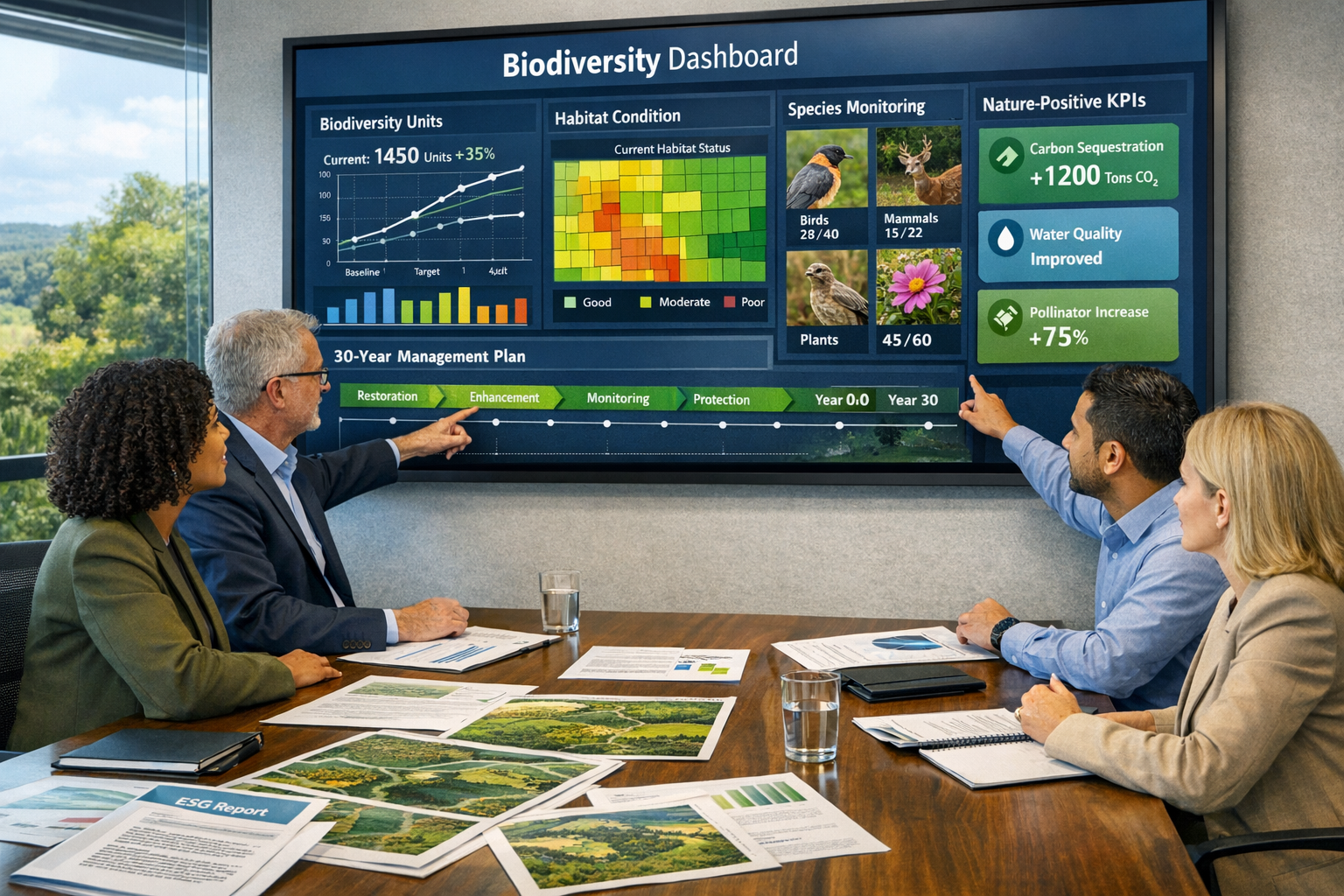
- Interactive dashboards for stakeholder engagement
- Automated report generation for multiple frameworks
- Blockchain for data verification and transparency
- API connections to corporate ESG platforms
These technological approaches support the data transparency and accessibility that corporate disclosure frameworks demand.
Practical Guidance: Bridging BNG and Nature-Positive Frameworks
Survey Design Considerations
When designing surveys for clients with corporate nature-positive commitments, ecologists should:
1. Conduct a Framework Mapping Exercise
Before fieldwork begins, identify which reporting frameworks the client must or wants to address. Map the data requirements of each framework to identify overlaps and unique elements. This prevents redundant surveys and ensures comprehensive data collection.
2. Establish Clear Objectives and Scope
Work with clients to define:
- Geographic boundaries (site vs. operational footprint vs. value chain)
- Temporal scope (baseline vs. ongoing monitoring)
- Priority habitats and species
- Reporting timelines and milestones
- Budget constraints and phasing options
3. Design Multi-Purpose Survey Protocols
Develop survey methodologies that efficiently capture data for multiple purposes. For instance, a habitat condition assessment can simultaneously:
- Generate biodiversity unit calculations for BNG compliance
- Provide ecosystem health indicators for TNFD reporting
- Document baseline conditions for long-term monitoring
- Identify priority areas for enhancement interventions
4. Plan for Long-Term Monitoring
Corporate accountability extends decades into the future. Survey designs should include:
- Permanent monitoring plots or transects
- Photographic monitoring points with precise coordinates
- Standardized protocols that different surveyors can replicate
- Data storage systems that ensure long-term accessibility
- Quality assurance procedures for consistency over time
Reporting Adaptations
Survey reports for corporate clients should evolve beyond traditional ecological assessment formats:
Executive Summaries for Non-Technical Audiences
Corporate decision-makers may lack ecological expertise. Reports should include:
- Clear explanations of methods and findings in plain language
- Visual data presentations (charts, maps, infographics)
- Explicit connections between ecological data and business implications
- Recommendations framed in terms of corporate objectives
Modular Report Structures
Design reports with modular sections that can be extracted for different purposes:
- Technical appendices for regulatory submissions
- Summary metrics for sustainability reports
- Detailed methodologies for verification audits
- Visual assets for stakeholder communications
Metric Translation Tables
Include tables that translate ecological findings into the specific metrics required by different frameworks. For example:
| Ecological Finding | BNG Metric | TNFD Indicator | SBTN Target |
|---|---|---|---|
| 2.5 ha of species-rich grassland created | +15 biodiversity units | Extent of natural ecosystems increased | Contribution to ecosystem integrity target |
| Wetland condition improved from moderate to good | +8 aquatic units | Ecosystem condition improved | Water-related ecosystem restoration |
Addressing Common Challenges
Challenge 1: Budget Constraints vs. Expanded Requirements
Corporate clients may not initially understand the additional effort required for multi-framework reporting. Address this by:
- Clearly articulating the value proposition of comprehensive surveys
- Offering phased approaches that prioritize critical data needs
- Demonstrating cost savings from integrated surveys vs. multiple separate efforts
- Highlighting risks of inadequate baseline data for future accountability
Challenge 2: Balancing Standardization and Site-Specific Context
Corporate frameworks favor standardized metrics for comparability, while ecological reality is highly context-dependent. Navigate this by:
- Using standardized metrics where appropriate (e.g., Biodiversity Metric)
- Supplementing with qualitative context that explains local significance
- Documenting assumptions and limitations transparently
- Recommending site-specific targets within standardized frameworks
Challenge 3: Data Ownership and Accessibility
Corporate clients may want to control survey data for competitive reasons, while transparency is essential for credibility. Establish clear agreements about:
- Data ownership and usage rights
- Public disclosure requirements and timelines
- Third-party verification access
- Long-term data stewardship responsibilities
For developers navigating these complexities, understanding how to achieve 10% biodiversity net gain provides a solid foundation for expanding into broader nature-positive commitments.
Case Studies: BNG Solutions Supporting Corporate Nature Claims
High-Value Brownfield Site Transformation
In January 2026, Natural England documented a BNG solution for a high-value brownfield site that allowed development while creating a mixed grassland, scrub, and pond habitat bank to strengthen Northumberland's natural environment[4]. This case demonstrates several principles relevant to corporate nature-positive claims:
Key Success Factors:
- Comprehensive baseline surveys that identified both development constraints and enhancement opportunities
- Creative habitat design that delivered biodiversity gains while enabling development
- Long-term management commitments secured through legal agreements
- Monitoring frameworks to demonstrate outcomes over time
For the corporate developer, this project provided:
- Regulatory compliance through BNG delivery
- Positive sustainability reporting content
- Demonstration of nature-positive development approach
- Stakeholder engagement opportunities around environmental stewardship
Scaling from Site to Portfolio
Leading property developers are now applying BNG methodologies across their entire development portfolios to support corporate nature-positive commitments. This involves:
- Standardized survey protocols across all sites
- Centralized biodiversity unit tracking systems
- Portfolio-level biodiversity targets beyond the 10% minimum
- Strategic allocation of enhancement efforts to maximize ecological outcomes
- Integrated reporting that connects site-level data to corporate KPIs
Ecologists supporting these portfolio approaches must develop scalable survey methodologies that maintain quality while managing costs across multiple sites. Understanding off-site versus on-site delivery options becomes particularly important for optimizing portfolio-level outcomes.
The Future of Ecological Surveying in a Nature-Positive Economy
Emerging Trends and Opportunities
The convergence of regulatory BNG requirements and voluntary corporate nature commitments is creating new opportunities for ecology professionals:
Expanded Service Offerings:
- Corporate biodiversity strategy development
- Nature-related risk assessments aligned with TNFD
- Supply chain biodiversity footprinting
- Nature-positive target setting and validation
- Long-term monitoring and verification services
Professional Development Needs:
- Understanding corporate sustainability frameworks and disclosure requirements
- Financial literacy to communicate nature in business terms
- Data science skills for large-scale biodiversity monitoring
- Stakeholder engagement and communication capabilities
- Technology adoption for efficient data collection and reporting
Collaborative Approaches:
- Partnerships between ecologists, sustainability consultants, and financial advisors
- Industry-specific guidance development (e.g., for agriculture, infrastructure, extractives)
- Standardization efforts to improve comparability and reduce costs
- Knowledge sharing platforms for best practices
Maintaining Scientific Integrity
As ecological surveys increasingly serve corporate purposes, the profession must maintain rigorous scientific standards:
⚠️ Guard against "metric gaming" where survey methods are manipulated to produce favorable results rather than accurate assessments
⚠️ Ensure independence in survey execution and reporting, even when clients have strong preferences for particular outcomes
⚠️ Communicate uncertainty transparently, including limitations of methods and confidence in conclusions
⚠️ Prioritize ecological outcomes over reporting convenience—metrics should serve nature, not just corporate communications
Professional bodies like CIEEM (Chartered Institute of Ecology and Environmental Management) play a critical role in establishing standards and guidance that protect both ecological integrity and professional credibility.
Policy and Regulatory Evolution
The regulatory landscape continues to evolve. Scotland's adoption of a hybrid approach to biodiversity metrics, adapting Natural England's Biodiversity Metric 3.1 with Scottish-specific refinements[2], demonstrates how different jurisdictions are developing context-appropriate frameworks.
Ecologists should anticipate:
- Expansion of mandatory BNG-type requirements to other sectors and regions
- Greater integration between environmental and financial regulation
- Standardization of corporate nature disclosure requirements
- Enhanced enforcement and verification mechanisms
- Evolution of metrics to incorporate climate-biodiversity interactions
Staying informed about these developments helps ecologists provide forward-looking advice to clients. Resources like top questions planners ask about BNG can help professionals understand the broader regulatory context.
Conclusion
From Biodiversity Net Gain to Nature-Positive: How Ecologists Should Adapt Survey Methods for Corporate 'Nature' Claims represents a defining challenge and opportunity for the ecology profession in 2026. The surge in corporate nature commitments is fundamentally reshaping client expectations, demanding that surveyors bridge the gap between field ecology and corporate accountability frameworks.
The path forward requires ecologists to:
- Embrace multi-framework thinking by designing surveys that efficiently serve both regulatory requirements like BNG and voluntary corporate disclosure frameworks like TNFD
- Invest in enhanced baselines that support long-term monitoring and credible reporting of nature-positive trajectories over decades
- Adopt technology thoughtfully to improve data quality, transparency, and reporting efficiency without compromising scientific rigor
- Develop business literacy to communicate ecological findings in terms that resonate with corporate decision-makers and investors
- Maintain professional standards that prioritize ecological integrity and independence, even as commercial pressures increase
The convergence of statutory BNG requirements and corporate nature-positive ambitions creates unprecedented demand for high-quality ecological data. Surveyors who successfully adapt their methods to meet these evolving needs will find themselves at the center of the nature-positive economy, translating field observations into the metrics that drive corporate accountability and environmental outcomes.
Actionable Next Steps
For Ecology Professionals:
- Review current survey protocols and identify opportunities to capture data compatible with multiple reporting frameworks
- Develop technical knowledge of corporate disclosure frameworks (TNFD, SBTN, GRI)
- Invest in technology and data management systems that support long-term monitoring and multi-purpose reporting
- Engage with professional development opportunities focused on corporate sustainability
For Corporate Clients:
- Engage ecologists early in sustainability strategy development to ensure survey programs align with reporting needs
- Invest in comprehensive baseline surveys that support long-term accountability
- Establish clear data governance frameworks that balance transparency with commercial considerations
- Build long-term relationships with ecology professionals who understand both regulatory and voluntary frameworks
For the Profession:
- Develop standardized guidance on adapting survey methods for corporate nature-positive claims
- Create training programs that build business and communication skills alongside technical competencies
- Establish quality assurance frameworks for corporate biodiversity reporting
- Foster dialogue between ecologists, corporate sustainability professionals, and financial stakeholders
The journey from Biodiversity Net Gain to nature-positive represents more than a technical evolution—it's a transformation in how society values and accounts for nature. Ecologists who adapt their survey methods to meet this moment will help ensure that corporate nature claims translate into genuine environmental outcomes. For guidance on beginning this journey, explore resources on achieving biodiversity net gain without risk and benefitting both nature and developers.
References
[1] Guide To Biodiversity Net Gain Assessment Bng – https://gentian.io/blog/guide-to-biodiversity-net-gain-assessment-bng
[2] Biodiversity Enhancement Approaches – https://cieem.net/i-am/biodiversity-enhancement-approaches/
[3] Demonstrating Nature Positive Outcomes – https://www.naturepositive.org/news/latest-news/demonstrating-nature-positive-outcomes/
[4] A Biodiversity Net Gain Solution For A High Value Brownfield Site – https://naturalengland.blog.gov.uk/2026/01/07/a-biodiversity-net-gain-solution-for-a-high-value-brownfield-site/