

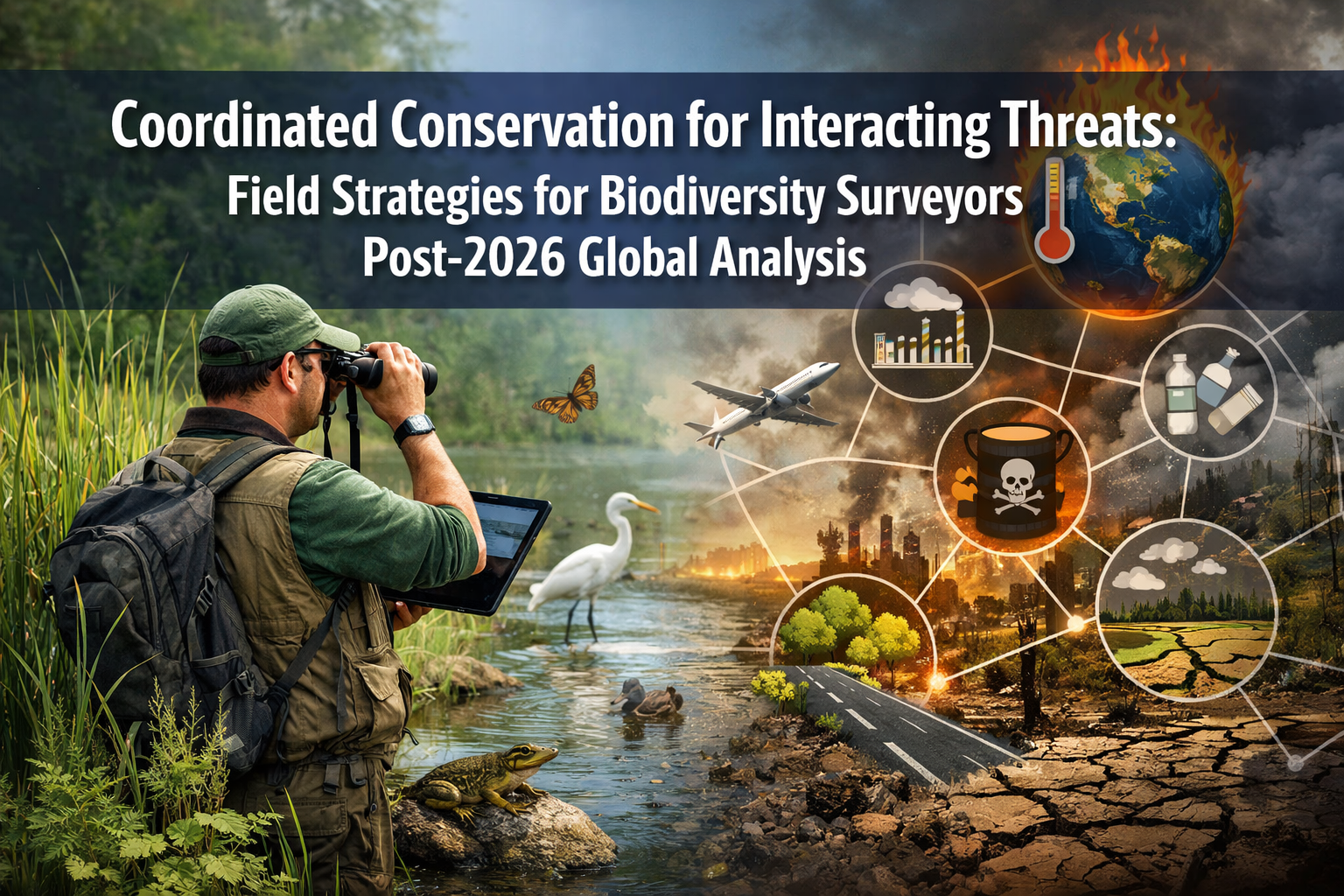
The world's wildlife populations are declining faster than ever before—but not for the reasons many conservationists expect. A groundbreaking 2026 global analysis reveals that populations exposed to multiple, interacting threats are disappearing at alarming rates, far exceeding declines from single pressures alone. This discovery fundamentally changes how biodiversity surveyors must approach field work, assessment protocols, and conservation planning in the years ahead.
The implications of Coordinated Conservation for Interacting Threats: Field Strategies for Biodiversity Surveyors Post-2026 Global Analysis extend beyond academic research into practical, on-the-ground conservation work. For professionals conducting biodiversity impact assessments, understanding threat interactions is no longer optional—it's essential for designing effective mitigation strategies that actually work.
Key Takeaways
- Multiple threats accelerate decline: Vertebrate populations facing combinations of threats like climate change, disease, pollution, and invasive species decline faster than those affected by single pressures [1]
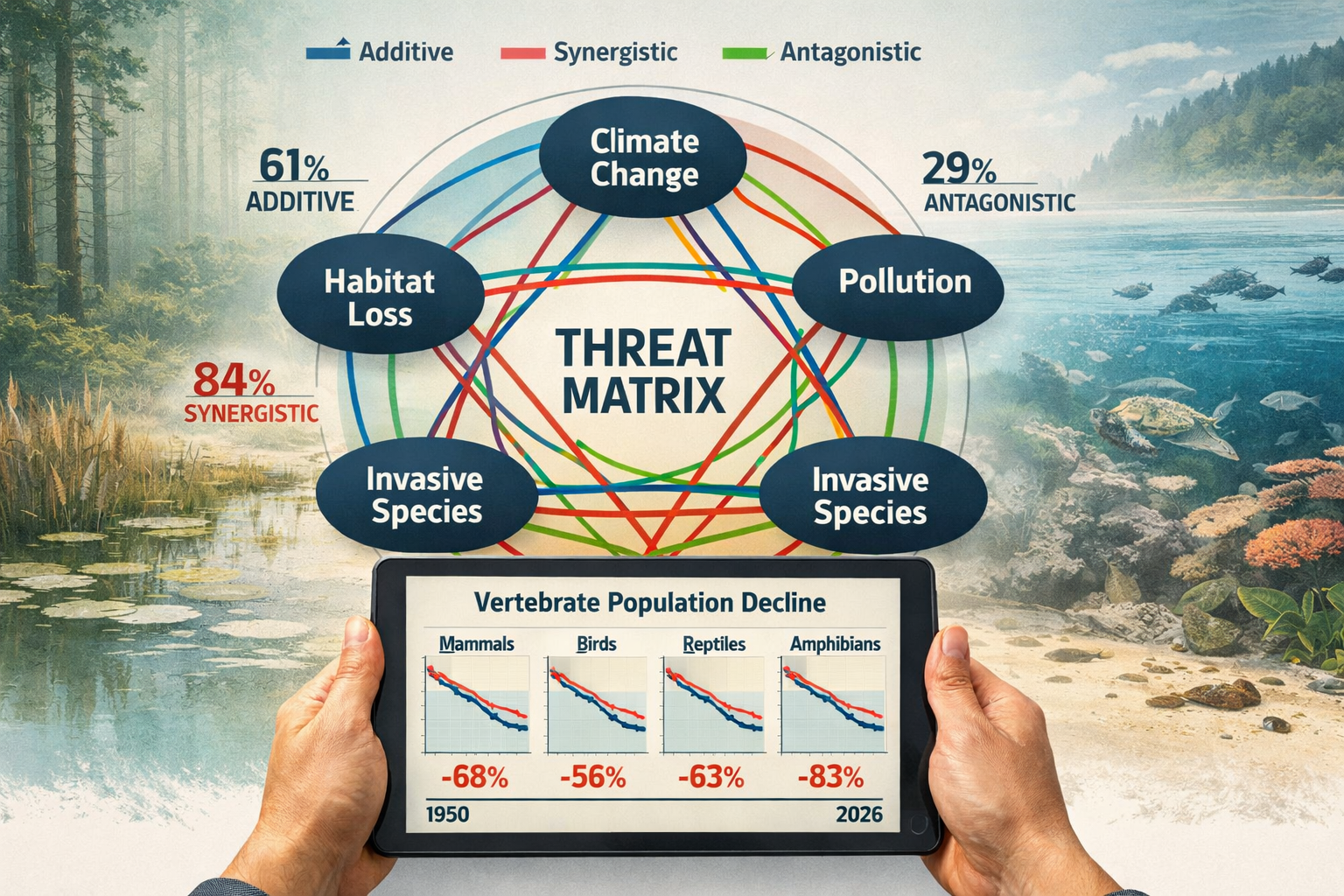
- Additive interactions dominate: Research shows 61-100% of threat interactions are additive rather than synergistic, challenging common assumptions about global change [2]
- Single-threat interventions fail: Simulation models demonstrate that addressing only one threat is insufficient to reverse global decline trends—coordinated multi-threat mitigation is essential [1]
- Amphibians show unique vulnerability: Amphibians are the only taxonomic group exhibiting synergies as the primary interaction type, particularly with disease, exploitation, and invasive species [2]
- Integrated management is critical: Effective conservation requires coordinated action across sectors, scales, and governance levels to address multiple stressors simultaneously [3]
Understanding Threat Interactions: The 2026 Global Analysis Findings
The landmark 2026 study analyzed 3,129 vertebrate populations spanning seven decades (1950-2020) to understand how different threats interact to drive biodiversity loss. The results challenge conventional conservation wisdom and provide crucial guidance for biodiversity surveyors working in the field today.
The Three Types of Threat Interactions
Biodiversity surveyors must understand three fundamental interaction types when assessing field conditions:
🔵 Additive Interactions (Most Common)
- Threats combine their effects without amplifying or reducing each other
- Account for 61-100% of observed interactions [2]
- Combined impact equals the sum of individual threat effects
- Example: Habitat loss + pollution affecting a wetland equally
🔴 Synergistic Interactions (Least Common)
- Multiple threats amplify each other's negative effects
- The combined impact exceeds the sum of individual effects
- Most prevalent in amphibian populations [2]
- Example: Climate warming increasing disease susceptibility
🟢 Antagonistic Interactions (Context-Dependent)
- One threat reduces the impact of another
- More prevalent at population levels than laboratory studies suggest [2]
- Indicates buffered or context-dependent responses
- Example: Predator removal reducing competition pressure
Key Threat Categories Driving Decline
The analysis identified six primary threat categories that biodiversity surveyors should prioritize during field assessments:
| Threat Category | Primary Impact | Interaction Frequency | Priority Level |
|---|---|---|---|
| Climate Change | Temperature, precipitation shifts | High (multiple interactions) | Critical |
| Habitat Loss | Direct population reduction | Very High | Critical |
| Overexploitation | Unsustainable harvest | High | Critical |
| Pollution | Toxicity, water quality | Moderate-High | High |
| Invasive Species | Competition, predation | Moderate | High |
| Disease | Direct mortality (especially amphibians) | Moderate (synergistic in amphibians) | High |
When conducting biodiversity net gain assessments, surveyors must now evaluate not just the presence of these threats, but their potential interactions within specific ecosystems.
Taxonomic Differences in Threat Response
The 2026 analysis revealed significant differences in how various vertebrate groups respond to interacting threats:
Amphibians 🐸
- Only group showing synergies as the main nonadditive interaction type [2]
- Extremely vulnerable to disease-exploitation-invasive species combinations
- Terrestrial amphibians drive synergistic patterns in terrestrial ecosystems [2]
- Require specialized monitoring protocols
Birds 🦅
- Show primarily additive threat interactions
- Migratory species particularly vulnerable (49% of populations declining) [5]
- Habitat loss and climate change are dominant pressures
Mammals 🦁
- Predominantly additive interactions
- Overexploitation remains a critical single threat
- Habitat fragmentation amplifies other pressures
Reptiles 🐢
- Mixed interaction patterns depending on ecosystem type
- Climate change increasingly significant
- Invasive predators create additive pressures
Field Strategies for Coordinated Conservation Post-2026
The global analysis findings demand fundamental changes in how biodiversity surveyors approach field work. Traditional single-threat assessment protocols are no longer sufficient for understanding population dynamics or designing effective conservation interventions.
Multi-Threat Assessment Protocols
Comprehensive Baseline Surveys
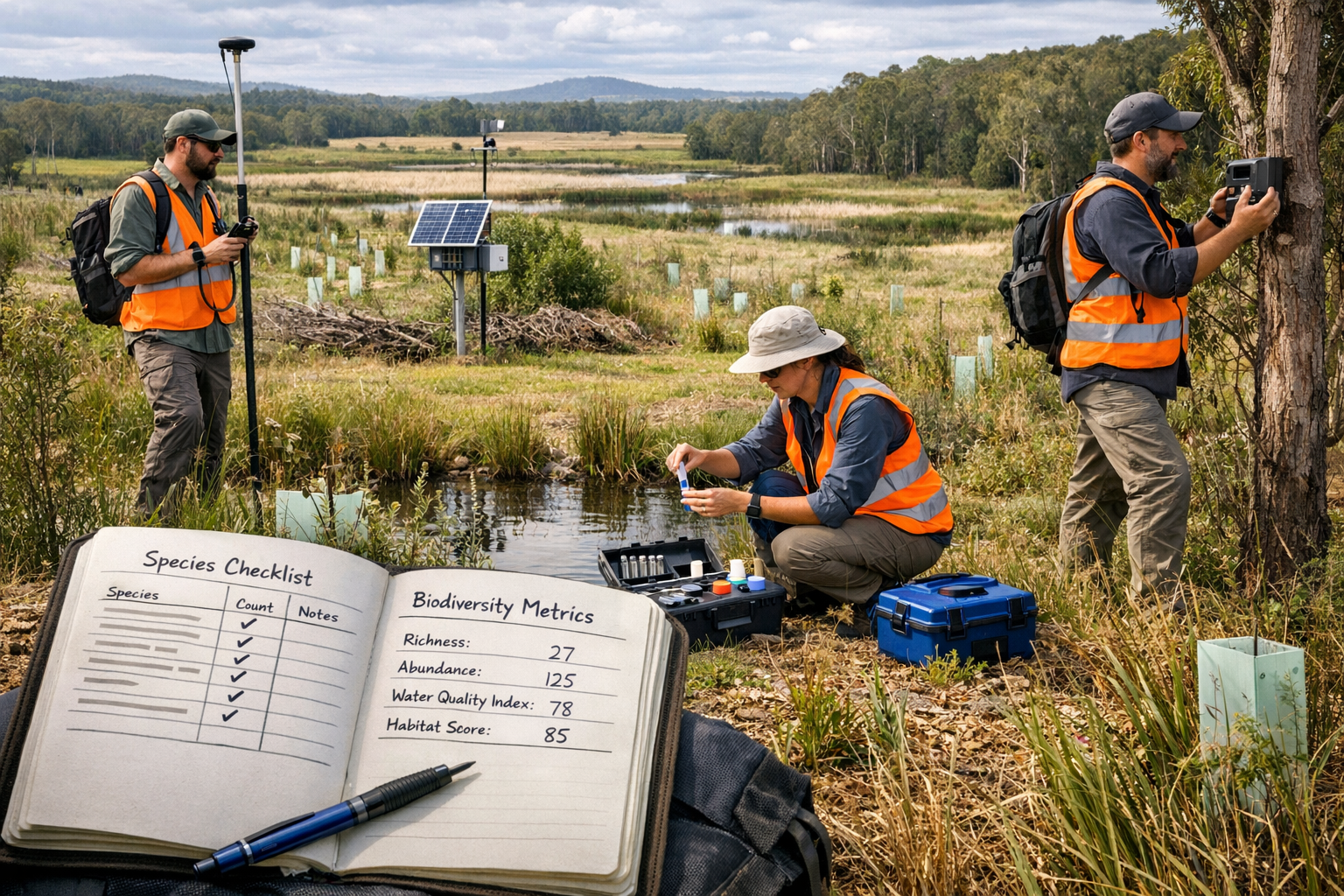
Modern biodiversity surveyors must expand baseline assessments to capture multiple threat indicators simultaneously:
- Climate metrics: Temperature trends, precipitation patterns, extreme weather frequency
- Habitat quality: Fragmentation indices, connectivity measures, edge effects
- Pollution indicators: Water quality parameters, soil contamination, air quality
- Biological pressures: Invasive species presence, disease prevalence, predator-prey dynamics
- Human activities: Harvest rates, land-use intensity, development pressure
When creating biodiversity plans for development projects, surveyors should integrate these multiple threat assessments from the initial site visit through final monitoring phases.
Prioritizing Threats When Resources Are Limited
The 2026 analysis provides clear guidance when conservation resources cannot address all threats simultaneously. If only one threat can be prioritized, reducing these three would deliver the greatest global benefits [4]:
- Overexploitation – Sustainable harvest management, enforcement
- Habitat Loss – Protection, restoration, connectivity enhancement
- Climate Change Impacts – Adaptation strategies, refuge creation
However, the research emphasizes that single-threat interventions are unlikely to reverse decline trends [1]. Biodiversity surveyors should advocate for multi-threat approaches whenever possible, even if interventions are phased over time.
Ecosystem-Specific Survey Approaches
Terrestrial Systems 🌳
Terrestrial ecosystems show synergistic threat interactions, primarily driven by amphibian vulnerabilities [2]. Field strategies should include:
- Integrated amphibian disease monitoring protocols
- Climate microhabitat assessments (temperature, moisture refugia)
- Invasive species early detection systems
- Habitat connectivity mapping for climate adaptation
Aquatic Systems 💧
Marine and freshwater systems display different interaction patterns requiring specialized approaches:
- Water quality monitoring across multiple parameters
- Fishery exploitation assessments combined with climate data
- Pollution source identification and tracking
- Invasive species surveillance at multiple trophic levels
Agricultural Landscapes 🌾
Working lands present unique conservation challenges where multiple sectors intersect. Surveyors should coordinate with sustainable farming initiatives to integrate:
- Pesticide and fertilizer impact assessments
- Habitat provision within production systems
- Climate-smart agriculture practices
- Wildlife-friendly management protocols
Technology Integration for Multi-Threat Monitoring
Modern biodiversity surveyors have access to powerful tools that enable simultaneous multi-threat assessment:
📱 Mobile Data Collection
- Real-time threat documentation
- GPS-enabled threat mapping
- Photo documentation with metadata
- Integrated species and threat databases
🛰️ Remote Sensing Integration
- Satellite imagery for habitat change detection
- Climate data overlay capabilities
- Land-use change tracking
- Pollution plume identification
🤖 Automated Monitoring Systems
- Camera traps for species and threat documentation
- Acoustic monitors for biodiversity and disturbance
- Environmental sensors for continuous data
- Early warning systems for emerging threats
Implementing Coordinated Conservation: Practical Applications
Understanding threat interactions is only valuable if biodiversity surveyors can translate findings into actionable conservation strategies. The post-2026 landscape requires new frameworks for implementation that span multiple scales and sectors.
Multi-Sector Coordination Frameworks
Integrating Biodiversity into Development Planning
The construction and development sector presents both challenges and opportunities for coordinated conservation. Biodiversity net gain requirements now provide leverage points for multi-threat mitigation:
- Climate adaptation: Design developments that enhance landscape connectivity for species movement under climate change
- Pollution control: Integrate sustainable drainage systems (SuDS) that address water quality and habitat provision
- Habitat restoration: Create on-site and off-site biodiversity units that buffer against multiple threats
- Long-term management: Establish 30-year monitoring protocols that track threat interactions over time
For developers seeking to achieve 10% biodiversity net gain, addressing multiple threats simultaneously creates more resilient ecological outcomes than single-focus interventions.
Governance and Policy Integration
Embedding Biodiversity Targets in Climate and Development Policy
The 2026 analysis demonstrates that effective conservation requires integration across policy domains [2]. Biodiversity surveyors play a crucial advocacy role by:
- Providing evidence of threat interactions to policymakers
- Demonstrating co-benefits of integrated approaches
- Quantifying costs of single-threat versus multi-threat strategies
- Supporting cross-sectoral planning processes
Comanagement Strategies Linking Local and Global Scales
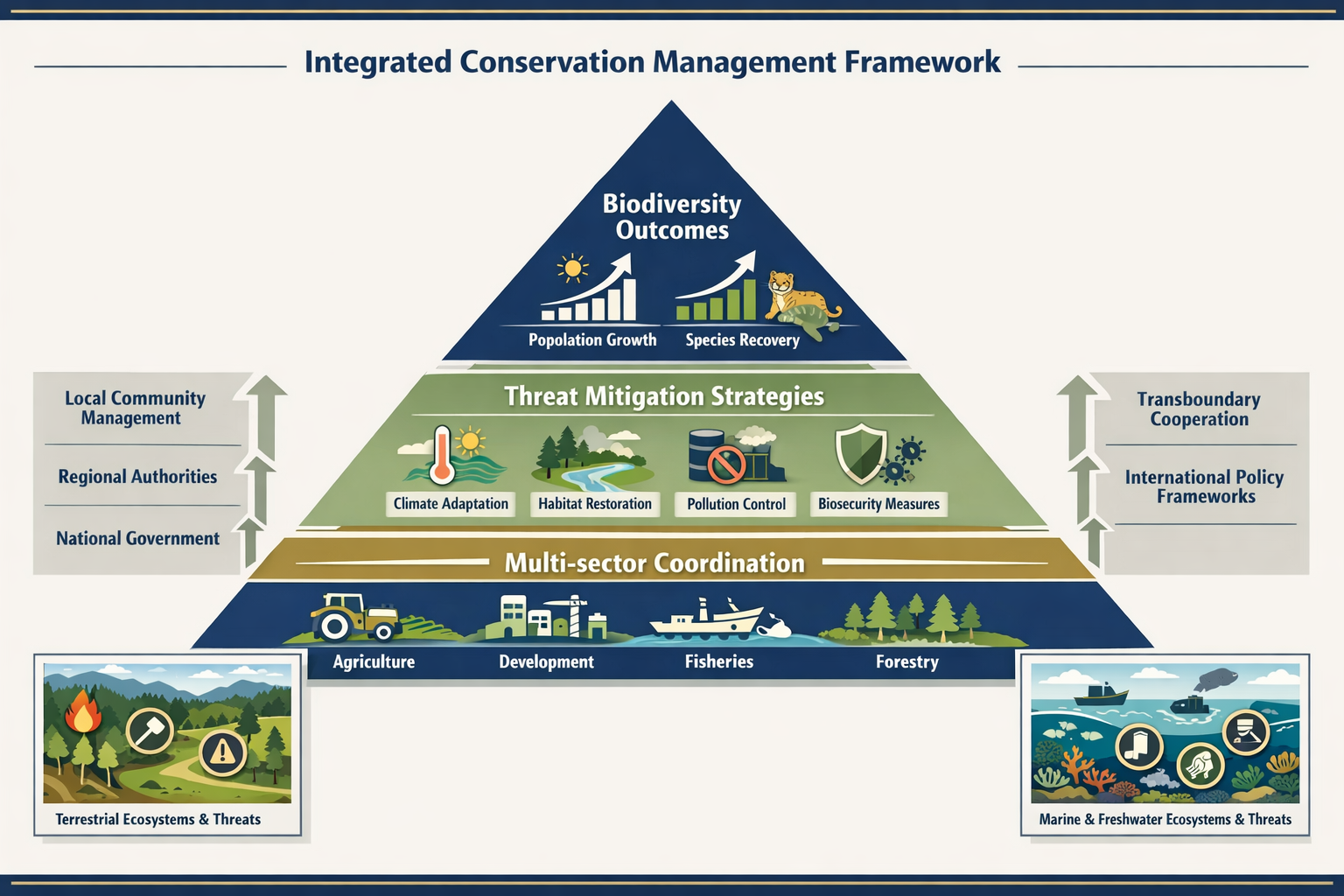
Multi-threat mitigation requires comanagement approaches that connect local restoration with global-scale policy [2]:
- Local scale: Community-based monitoring, habitat restoration, sustainable use practices
- Regional scale: Landscape connectivity planning, watershed management, invasive species control
- National scale: Protected area networks, species recovery programs, regulatory frameworks
- Global scale: Climate emissions reduction, international trade regulation, biosecurity coordination
Case Study Applications
Example 1: Amphibian Conservation in Fragmented Landscapes
A biodiversity surveyor working in a fragmented forest landscape identifies declining amphibian populations. Traditional approaches might focus solely on habitat restoration. The coordinated conservation approach recognizes that amphibians show synergistic threat interactions [2] and implements:
✅ Habitat connectivity restoration (addresses fragmentation)
✅ Disease monitoring and biosecurity protocols (addresses disease)
✅ Invasive predator control (addresses invasive species)
✅ Climate refugia identification and protection (addresses climate change)
✅ Pollution source reduction in breeding ponds (addresses water quality)
Example 2: Migratory Bird Populations
With 49% of migratory species populations declining [5], surveyors must coordinate across jurisdictions and seasons:
✅ Breeding habitat protection (addresses habitat loss)
✅ Migration corridor conservation (addresses fragmentation)
✅ Wintering ground management (addresses multiple threats across range)
✅ Climate adaptation planning (addresses shifting phenology)
✅ Sustainable harvest management (addresses overexploitation)
Monitoring and Adaptive Management
Establishing Multi-Threat Monitoring Protocols
Long-term monitoring must capture threat interactions, not just species responses:
- Baseline establishment: Document all present threats and their intensities
- Interaction assessment: Identify which threats co-occur and potential interaction types
- Population tracking: Monitor target species responses over time
- Threat dynamics: Track changes in threat intensity and new threat emergence
- Management effectiveness: Evaluate whether interventions address threat interactions
- Adaptive adjustment: Modify strategies based on monitoring outcomes
Reporting and Communication
Biodiversity surveyors must communicate complex threat interactions to diverse audiences:
- Technical reports: Include threat interaction matrices, statistical analyses, and detailed methodologies
- Stakeholder summaries: Translate findings into accessible management recommendations
- Policy briefs: Highlight need for coordinated, multi-sector approaches
- Public engagement: Build support for integrated conservation strategies
Resource Allocation and Prioritization
Cost-Benefit Analysis of Coordinated Approaches
While addressing multiple threats simultaneously requires greater initial investment, the 2026 analysis demonstrates it's the only approach likely to reverse decline trends [1]. When evaluating biodiversity unit costs, consider:
- Single-threat mitigation: Lower upfront costs but likely insufficient for population recovery
- Sequential threat mitigation: Moderate costs but delayed benefits and continued decline during phased implementation
- Coordinated multi-threat mitigation: Higher initial investment but greatest probability of achieving stable or recovering populations
For landowners considering selling biodiversity units, integrated management approaches that address multiple threats simultaneously create more valuable, resilient conservation outcomes.
Training and Capacity Building
Upskilling Biodiversity Surveyors
The post-2026 conservation landscape requires expanded competencies:
- Threat interaction ecology: Understanding additive, synergistic, and antagonistic effects
- Multi-disciplinary assessment: Competence across climate, pollution, disease, and habitat disciplines
- Stakeholder coordination: Facilitating multi-sector collaboration
- Adaptive management: Implementing flexible, responsive conservation strategies
- Data integration: Combining diverse data sources for comprehensive threat assessment
Future Directions: Evolving Field Strategies Beyond 2026
The global analysis represents a watershed moment for conservation science and practice. As biodiversity surveyors implement these findings, several emerging trends will shape field strategies in coming years.
Predictive Threat Interaction Modeling
Advances in ecological modeling enable proactive identification of threat interactions before population declines become severe:
- Machine learning algorithms that predict interaction types based on species traits and threat characteristics
- Scenario planning tools that simulate management outcomes under different threat combinations
- Early warning systems that flag emerging threat interactions requiring intervention
Climate Change as a Threat Multiplier
As climate impacts intensify, surveyors must recognize climate change as a universal threat multiplier that interacts with virtually all other pressures:
- Shifting species distributions increase exposure to novel threats
- Extreme weather events amplify habitat loss and pollution impacts
- Temperature changes alter disease dynamics and invasive species establishment
- Phenological mismatches create new interaction pathways
Integration with Nature-Based Solutions
Coordinated conservation aligns perfectly with nature-based solutions that address multiple challenges simultaneously:
- Wetland restoration that provides flood protection, carbon storage, water purification, and biodiversity habitat
- Urban green infrastructure that reduces heat island effects, manages stormwater, sequesters carbon, and supports wildlife
- Agroforestry systems that enhance food security, climate resilience, soil health, and biodiversity
Expanding Taxonomic Coverage
While the 2026 analysis focused on vertebrates, future research and field protocols must expand to:
- Invertebrates: Particularly pollinators and soil fauna facing multiple agricultural pressures
- Plants: Foundation species experiencing climate, disease, and invasive species interactions
- Fungi: Mycorrhizal networks critical for ecosystem function under stress
- Microbiomes: Microbial communities mediating threat responses
Enhanced International Cooperation
Threat interactions transcend political boundaries, requiring strengthened international collaboration:
- Harmonized monitoring protocols across jurisdictions
- Shared databases documenting threat interactions globally
- Coordinated management of transboundary populations
- International biosecurity frameworks addressing invasive species and disease
Conclusion
The 2026 global analysis on Coordinated Conservation for Interacting Threats: Field Strategies for Biodiversity Surveyors Post-2026 Global Analysis represents a paradigm shift in conservation science and practice. The evidence is unequivocal: populations facing multiple, interacting threats decline faster than those affected by single pressures, and single-threat interventions are insufficient to reverse global decline trends [1][3].
For biodiversity surveyors working in the field today, this research demands fundamental changes in assessment protocols, management recommendations, and stakeholder engagement. The traditional approach of identifying and addressing the "primary" threat must give way to comprehensive, multi-threat strategies that recognize the complex interactions shaping population dynamics.
Key Implementation Steps
Biodiversity surveyors should immediately:
- Expand assessment protocols to document multiple threats simultaneously, not sequentially
- Evaluate threat interactions using the additive-synergistic-antagonistic framework established by recent research
- Prioritize amphibian monitoring given their unique vulnerability to synergistic threat combinations [2]
- Advocate for integrated management that coordinates action across sectors, scales, and governance levels [3]
- Build stakeholder coalitions capable of implementing multi-threat mitigation strategies
- Establish long-term monitoring that tracks both species responses and threat dynamics over time
Moving Forward
The path forward requires coordinated action from surveyors, developers, landowners, policymakers, and communities. Those working within biodiversity net gain frameworks have unprecedented opportunities to implement multi-threat conservation strategies that create resilient ecological outcomes.
While the challenges are significant, the 2026 analysis also provides hope: coordinated conservation works. By addressing multiple threats together rather than in isolation, we can achieve stable and recovering populations. The question is no longer whether we need coordinated approaches, but how quickly we can implement them at the scale required to stem biodiversity loss.
The future of conservation depends on biodiversity surveyors who understand threat interactions, implement comprehensive field strategies, and advocate for the integrated management approaches that evidence demonstrates are essential. The time for coordinated conservation is now.
References
[1] Global Analysis Of Wildlife Decline Warns Conservation Action Must Be Coordinate – https://www.bristol.ac.uk/news/2026/february/global-analysis-of-wildlife-decline-warns-conservation-action-must-be-coordinate.html
[2] Pmc12893280 – https://pmc.ncbi.nlm.nih.gov/articles/PMC12893280/
[3] Sciadv – https://www.science.org/doi/10.1126/sciadv.adx7973
[4] Global Wildlife Decline Demands Coordinated 1618696 – https://www.miragenews.com/global-wildlife-decline-demands-coordinated-1618696/
[5] Plight Of Migratory Species Is Worsening New Report Finds Ahead Of Global Wildlife Meeting – https://www.unep-wcmc.org/en/news/plight-of-migratory-species-is-worsening-new-report-finds-ahead-of-global-wildlife-meeting