

Tipping Points in Ecosystem Surveys: Early Warning Protocols for Biodiversity Surveyors Post-2026
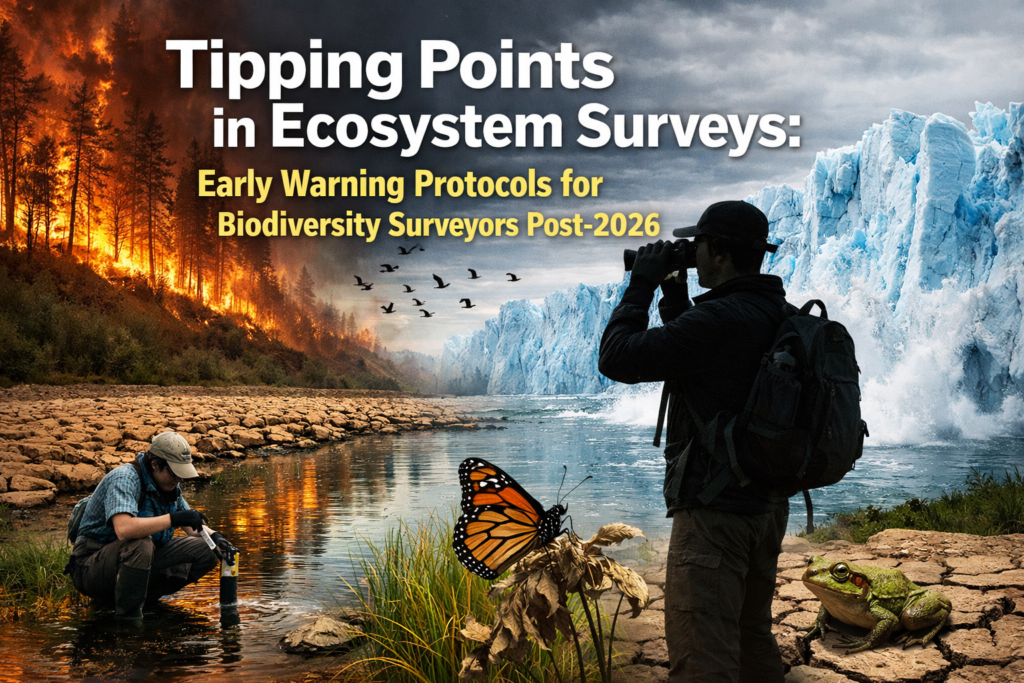
{"cover":"Professional landscape format (1536×1024) hero image with bold text overlay 'Tipping Points in Ecosystem Surveys: Early Warning Protocols for Biodiversity Surveyors Post-2026' in extra large 72pt white sans-serif font with dark gradient shadow, positioned center-upper third. Background shows split composition: left side displays field surveyor using tablet near wetland with monitoring equipment and data overlays, […]
Ocean Acidification Impacts on Coastal Biodiversity Surveys: Adaptive Protocols for 2026 Marine Ecologists
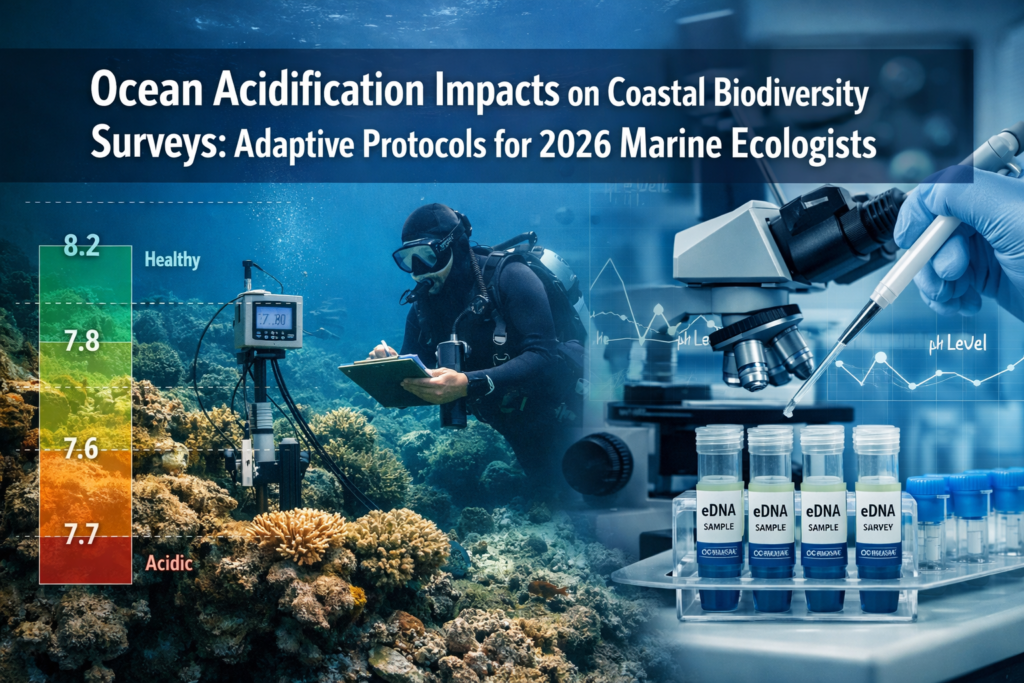
Ocean acidity has increased by 25-26% since pre-industrial times—a rate of change unprecedented in the last 2 million years [3]. For marine ecologists conducting coastal biodiversity surveys in 2026, this dramatic shift presents a fundamental challenge: the baseline itself is moving. Traditional survey protocols designed for stable pH conditions now face a dynamic environment where […]
Land-Sea Interface Surveys for Integrated BNG: Protocols for Coastal Ecologists in 2026
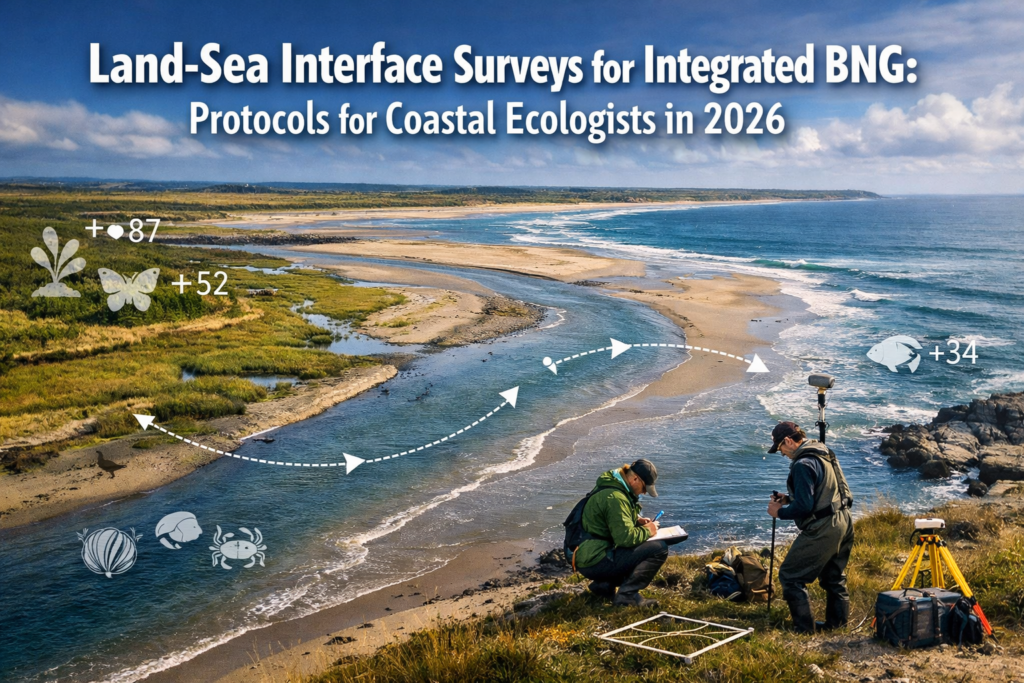
Coastal ecosystems contribute approximately £48 billion annually to the UK economy, yet fewer than 15% of development projects adequately assess biodiversity impacts across the land-sea transition zone. As Biodiversity Net Gain (BNG) regulations mature in 2026, this critical oversight threatens both compliance and ecological integrity. The challenge facing coastal ecologists is clear: traditional survey methods […]
Urban Biodiversity Hotspots for Net Gain Compliance: Survey Strategies for City Ecologists in 2026
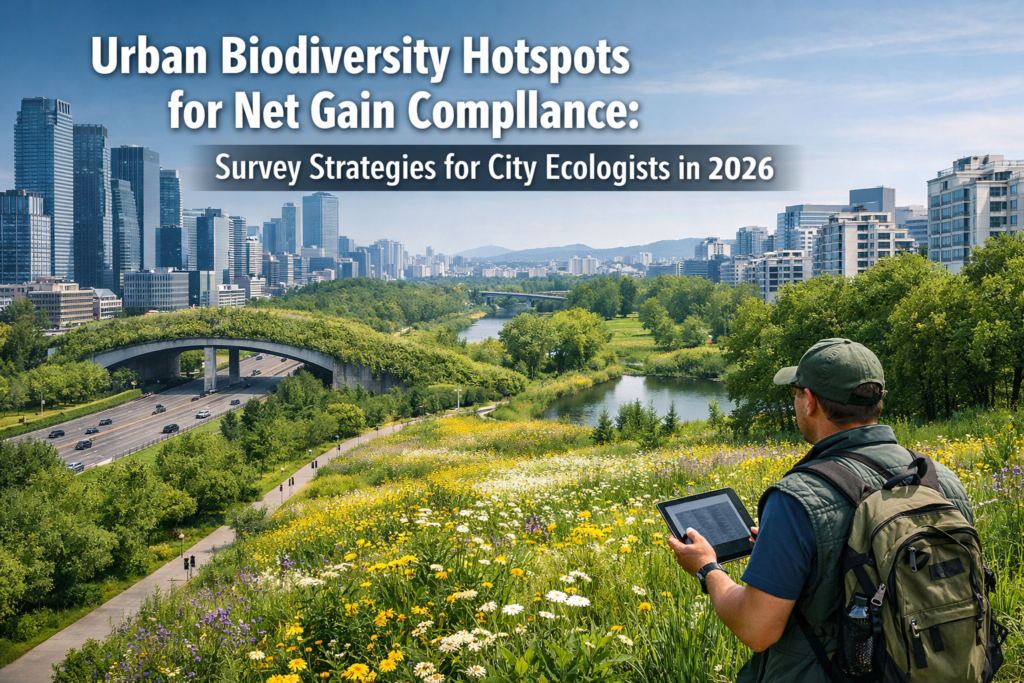
More than 80% of the UK population now lives in urban areas, yet these concrete jungles harbor surprising pockets of ecological value that could unlock millions in biodiversity credits. Since mandatory Biodiversity Net Gain (BNG) requirements took effect in February 2024, city ecologists face an unprecedented challenge: identifying, quantifying, and enhancing urban biodiversity hotspots while […]
Symbiotic Fungi Networks in Forest BNG Baselines: Advanced Survey Techniques for Ecologists
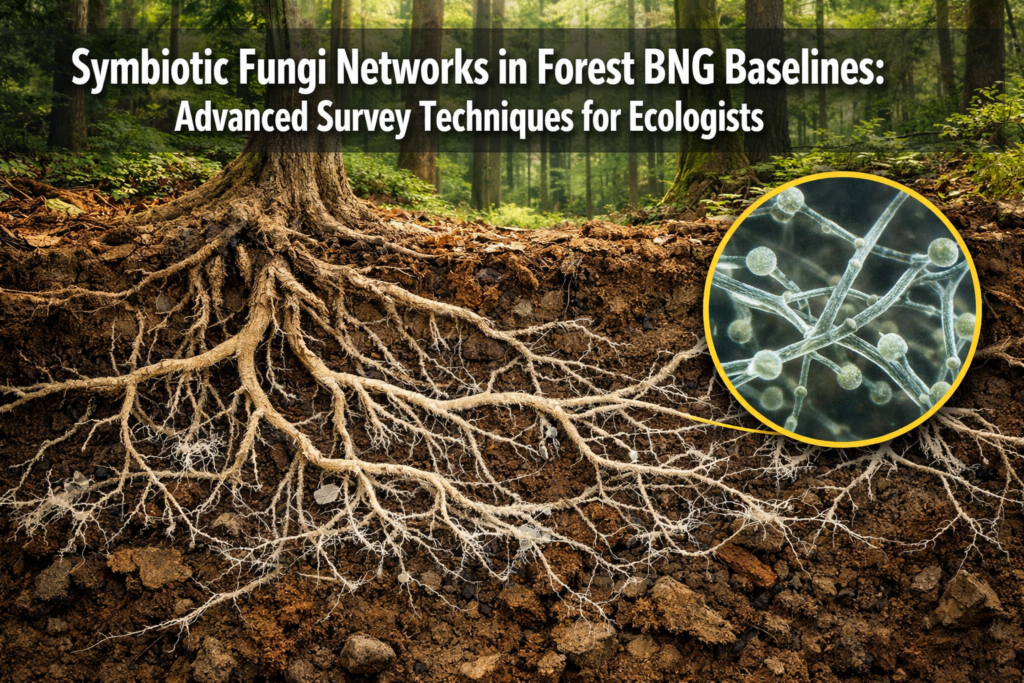
Less than 10% of the world's mycorrhizal fungi biodiversity hotspots fall within existing protected areas—a conservation blind spot that threatens the underground infrastructure supporting more than 80% of terrestrial plant species.[3] This revelation from 2026 global mapping research exposes a critical gap in how ecologists assess forest health and calculate Biodiversity Net Gain (BNG) baselines. […]