

Leveraging Indigenous Knowledge in Biodiversity Surveys: Integrating Traditional Observations with Scientific Monitoring in 2026
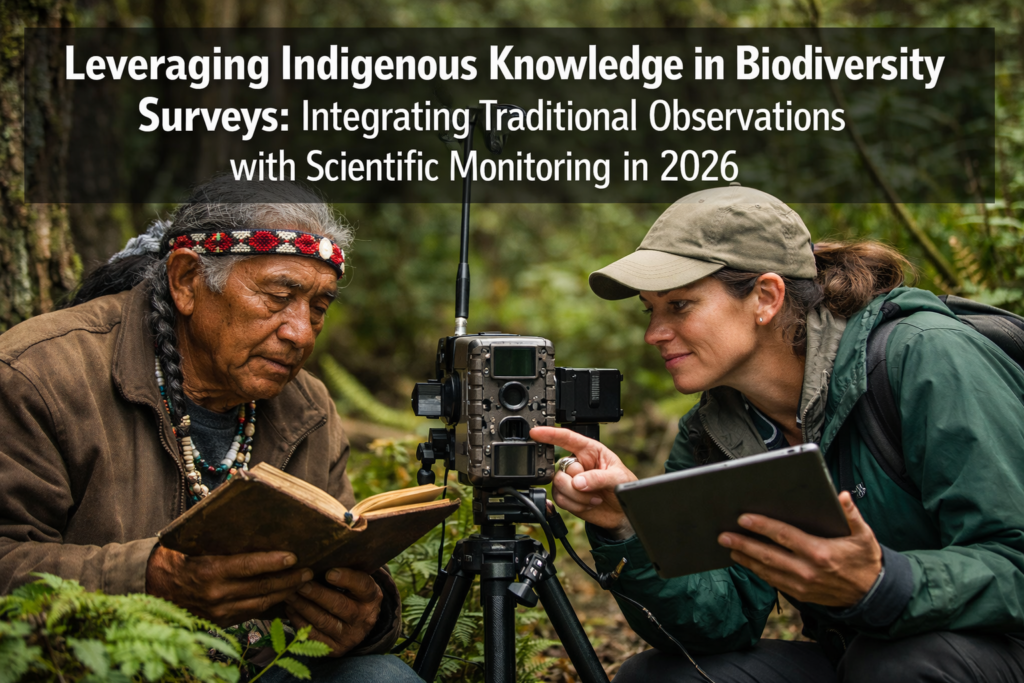
Recent research spanning three continents has confirmed what Indigenous communities have known for generations: their observations of species decline and ecosystem changes align remarkably with scientific findings. As biodiversity loss accelerates globally in 2026, the integration of Indigenous knowledge with conventional scientific monitoring is no longer optional—it's essential for creating comprehensive, culturally grounded biodiversity surveys […]
Ocean Darkening and Marine Biodiversity Surveys: Monitoring Light Penetration Impacts on Coastal Ecosystems in 2026
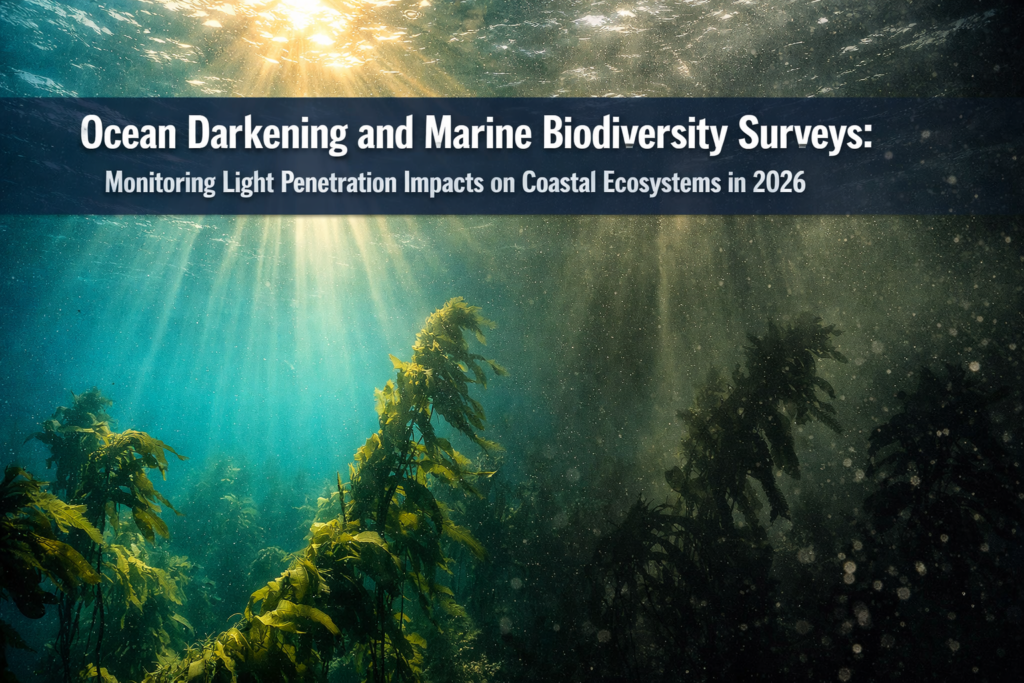
Ocean darkening—declining light penetration across wide ocean regions—is reshaping marine food webs in ways scientists are only beginning to understand. As of 2026, researchers have documented that 21% of the global ocean has experienced significant darkening over the past two decades, threatening the foundation of marine ecosystems from kelp forests to coral reefs[2]. This emerging […]
Macroalgal Habitat Loss and Kelp Forest Surveys: Assessing Coastal Ecosystem Vulnerability to Warming in 2026
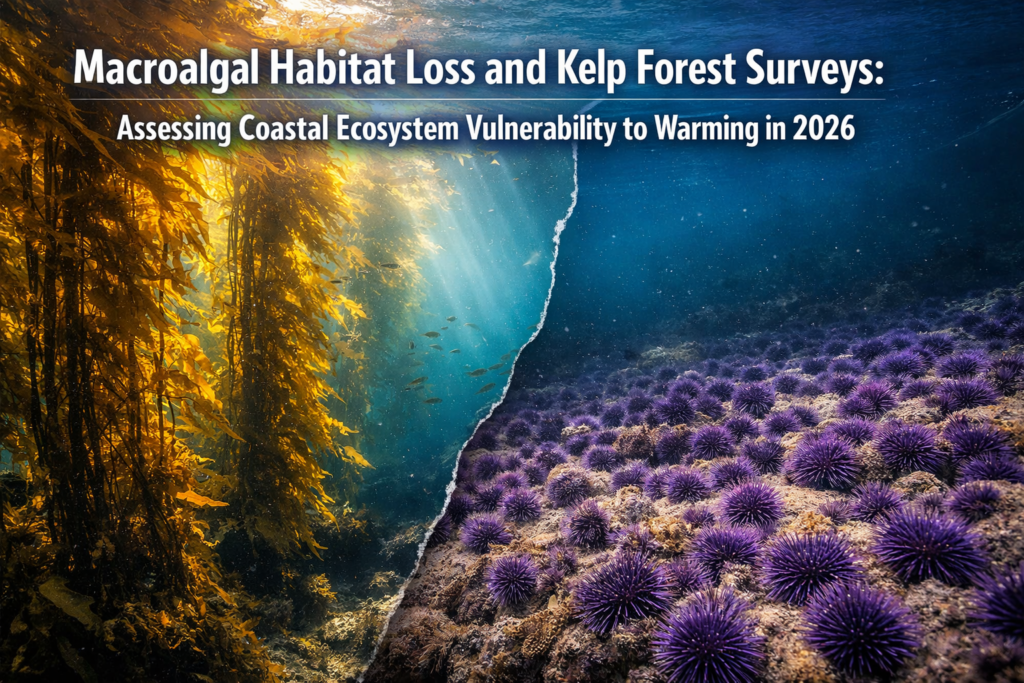
The ocean's underwater forests are disappearing at an alarming rate. Along California's northern coastline, more than 95% of kelp forests have collapsed since 2014, replaced by barren seafloors dominated by purple sea urchins [2]. This dramatic transformation represents one of the most significant marine ecosystem shifts documented in modern history. As ocean temperatures continue rising […]
Continuous vs. Snapshot Monitoring: Why Spring-to-Fall Biodiversity Surveys Outperform One-Off Assessments in 2026
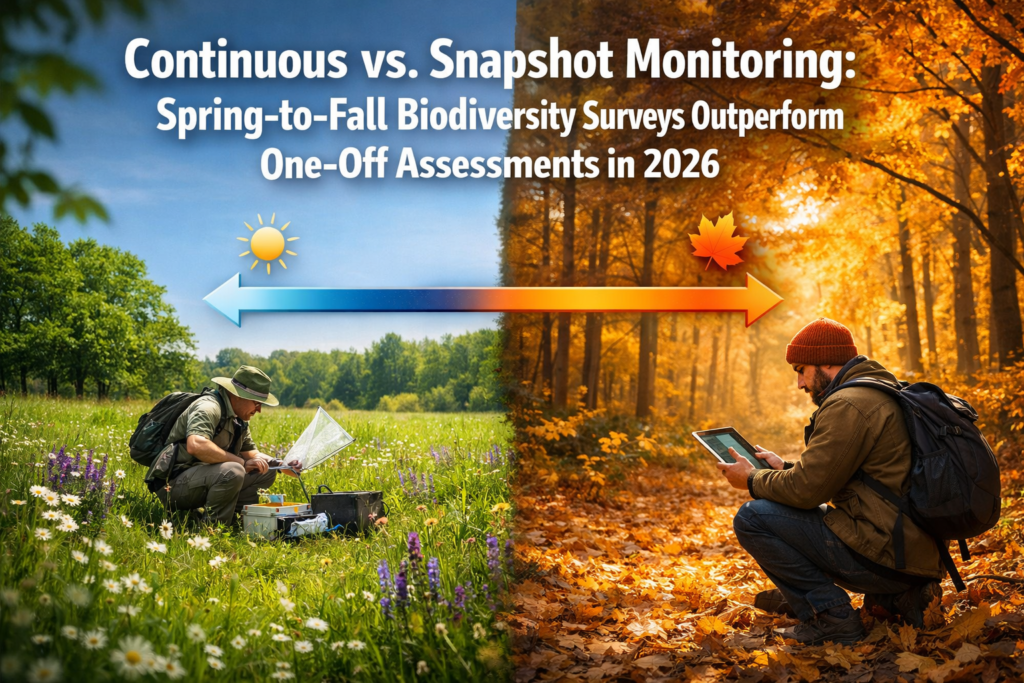
Picture this: A developer commissions a biodiversity survey in July, receives a clean report showing minimal ecological value, and breaks ground in autumn—only to discover that the site hosts a protected newt population that breeds exclusively in March. The project halts. Costs spiral. Legal challenges emerge. This scenario plays out repeatedly across development sites in […]
TinyML Devices for Remote Biodiversity Surveys: Deploying Low-Power AI in Data-Scarce Regions During 2026
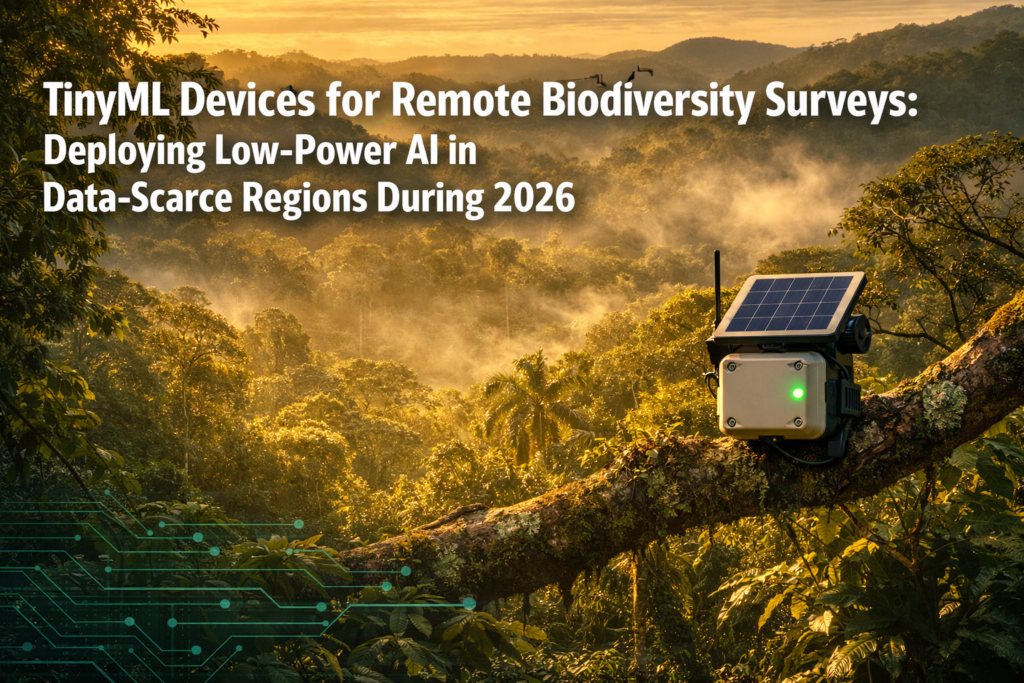
The world's most biodiverse regions often exist far beyond cellular networks and reliable power grids. In 2026, conservation scientists face a persistent challenge: how can they monitor endangered species, detect illegal activities, and track ecosystem health in locations where traditional technology fails? The answer lies in TinyML devices for remote biodiversity surveys: deploying low-power AI […]