

The ocean's underwater forests are disappearing at an alarming rate. Along California's northern coastline, more than 95% of kelp forests have collapsed since 2014, replaced by barren seafloors dominated by purple sea urchins [2]. This dramatic transformation represents one of the most significant marine ecosystem shifts documented in modern history. As ocean temperatures continue rising in 2026, understanding Macroalgal Habitat Loss and Kelp Forest Surveys: Assessing Coastal Ecosystem Vulnerability to Warming in 2026 has become critical for coastal communities, marine scientists, and conservation planners worldwide.
Kelp forests provide essential services worth billions of dollars annually—supporting commercial fisheries, protecting coastlines from erosion, sequestering carbon, and hosting incredible biodiversity. Yet these vital ecosystems face accelerating loss from warming waters and extreme climate events. The challenge now is developing robust survey protocols that capture vulnerability signals before collapse occurs, providing early warning systems for timely intervention.
Key Takeaways
- 🌊 Northern California lost 90% of kelp canopy during the 2014-2016 marine heat wave, with over 95% collapse in some regions
- 🛡️ Marine protected areas showed 8.5% faster kelp recovery compared to unprotected waters, demonstrating the value of fishing restrictions
- 🔬 40 years of satellite monitoring using Landsat imagery now provides baseline data for assessing kelp forest vulnerability across entire coastlines
- ⚠️ Trophic cascade disruption from sunflower sea star die-off eliminated natural urchin control, creating a critical ecosystem tipping point
- 📊 2026 monitoring programs are expanding survey protocols to capture early warning signals and guide restoration efforts
Understanding Macroalgal Habitat Loss and Current Kelp Forest Decline
The Scale of Kelp Forest Collapse
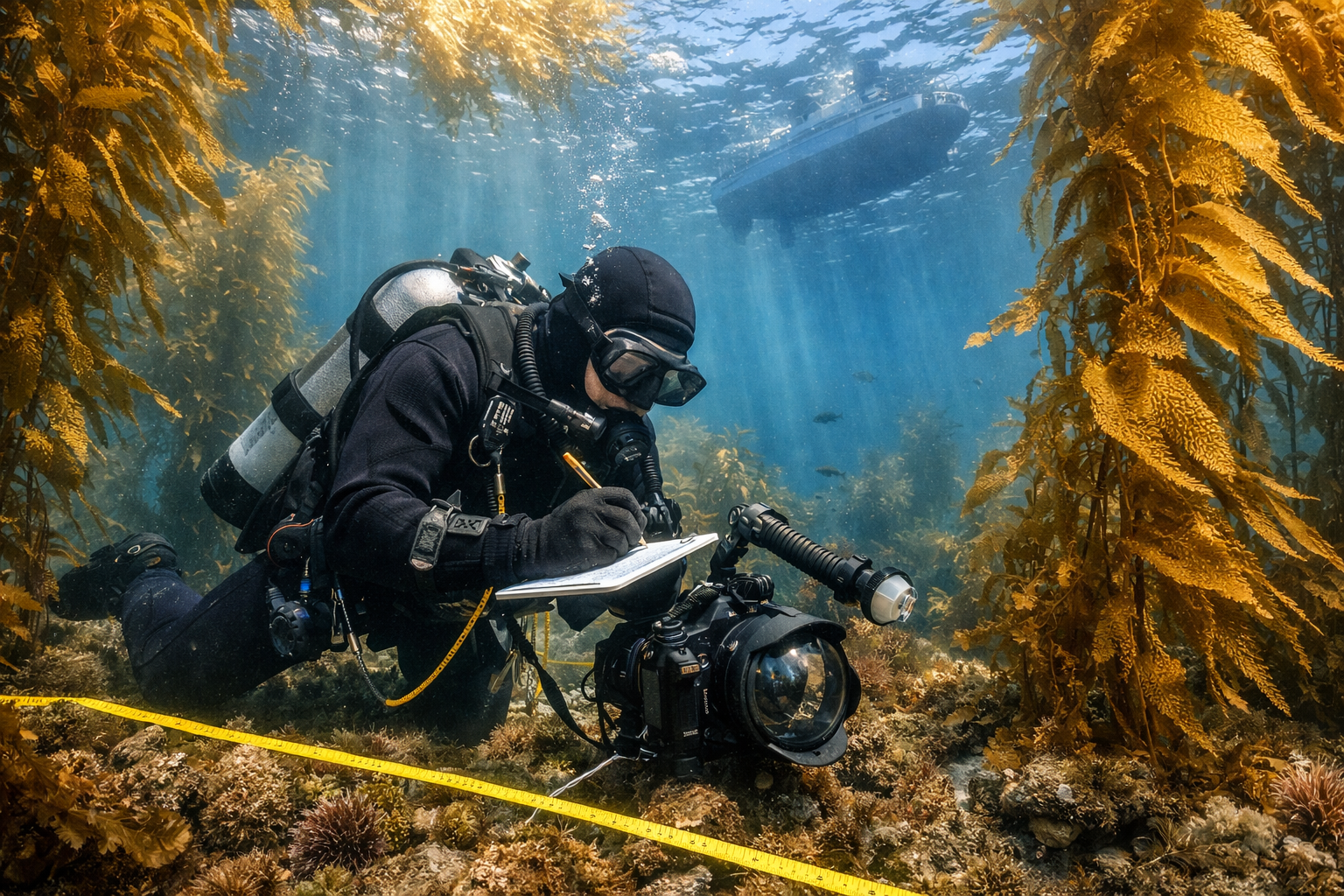
Kelp forests—underwater ecosystems dominated by large brown seaweeds (macroalgae)—once stretched continuously along California's coast. These towering marine plants can grow up to two feet per day, creating dense canopies that rival terrestrial forests in productivity. However, recent decades have witnessed unprecedented declines.
The catastrophic warming event from 2014-2016, known as "the Blob," devastated Northern California's marine ecosystems. Research shows that 90% of kelp canopy disappeared during this marine heat wave [1]. In regions north of San Francisco, the situation proved even more dire, with more than 95% ecosystem collapse documented through satellite imagery [2].
This transformation didn't happen in isolation. Several interconnected factors created perfect conditions for collapse:
- Elevated sea surface temperatures from climate change and El Niño events
- Sunflower sea star wasting disease eliminating key urchin predators
- Purple sea urchin population explosions overgrazing remaining kelp
- Disrupted nutrient upwelling reducing kelp growth rates
Why Kelp Forests Matter for Coastal Ecosystems
The importance of kelp forests extends far beyond their visual beauty. These ecosystems provide:
Biodiversity Hotspots: Kelp forests support over 1,000 species of fish, invertebrates, marine mammals, and seabirds. Commercial species like rockfish, lingcod, and abalone depend on kelp habitat throughout their life cycles.
Carbon Sequestration: Like terrestrial forests, kelp absorbs carbon dioxide through photosynthesis. Healthy kelp forests sequester significant amounts of "blue carbon," helping mitigate climate change impacts.
Coastal Protection: Dense kelp canopies reduce wave energy by up to 50%, protecting shorelines from erosion and storm damage—services becoming increasingly valuable as sea levels rise.
Economic Value: California's kelp-dependent fisheries and tourism industries generate hundreds of millions of dollars annually. The collapse has devastated coastal communities reliant on these resources [1].
Understanding these interconnections is essential for biodiversity conservation strategies that recognize ecosystem services beyond single species management.
Kelp Forest Survey Methodologies for Assessing Vulnerability in 2026
Traditional Underwater Survey Techniques
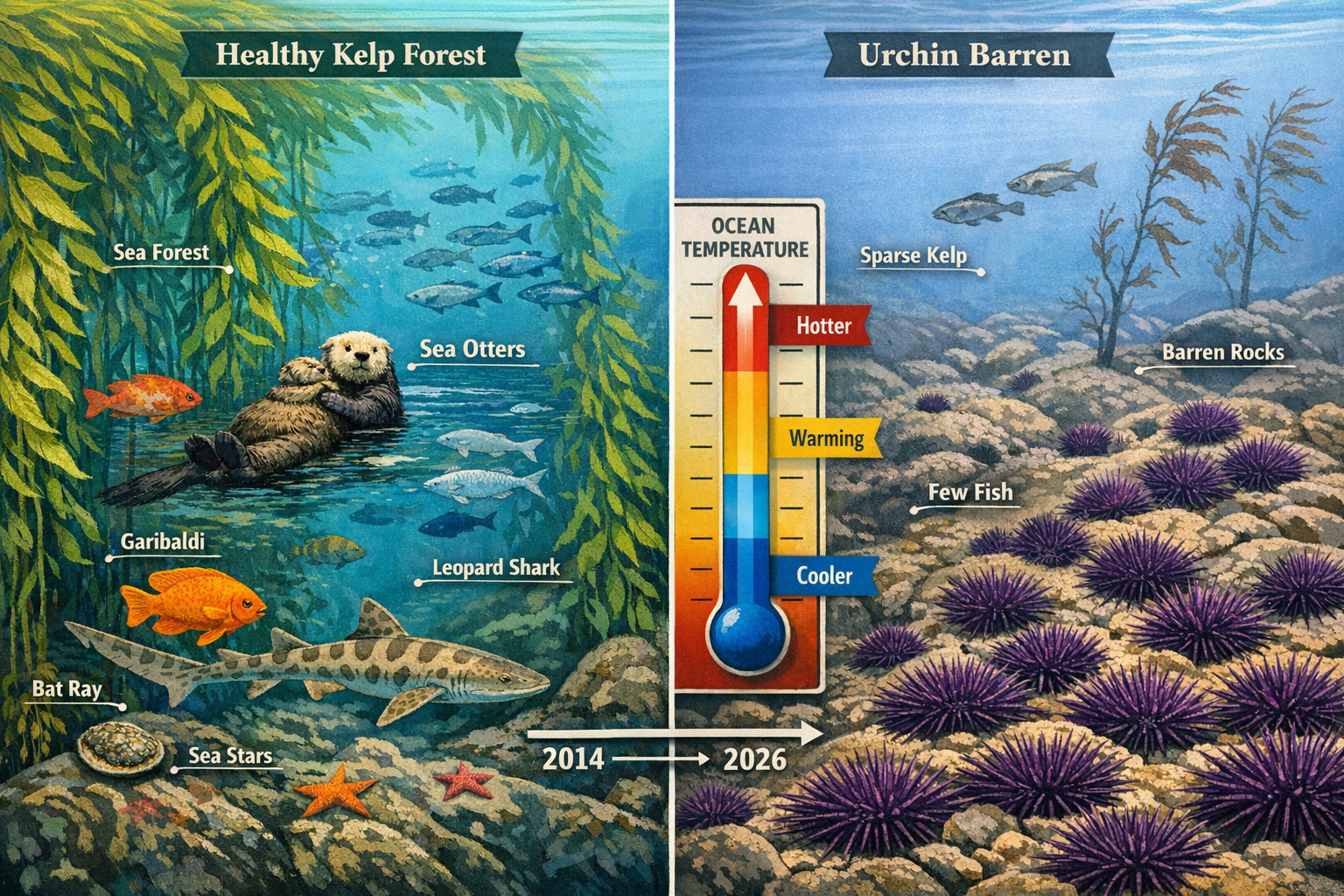
Kelp forest monitoring has historically relied on diver-based surveys conducted by trained marine biologists and citizen scientists. These methods remain valuable for detailed assessments:
Transect Surveys: Divers swim along predetermined paths (typically 30 meters), recording:
- Kelp density and canopy height
- Species composition and age structure
- Understory algae coverage
- Invertebrate populations (especially urchins)
- Fish abundance and diversity
Quadrat Sampling: Researchers place standardized frames on the seafloor to count organisms within defined areas, providing quantitative density measurements.
Roving Diver Surveys: Less structured approaches where experienced divers document general ecosystem conditions, unusual observations, and qualitative health indicators.
Organizations like Reef Check have expanded their 2026 kelp forest monitoring training programs across California [7], recognizing the urgent need for standardized data collection as ecosystems face mounting climate pressures.
Satellite Remote Sensing and Long-Term Monitoring
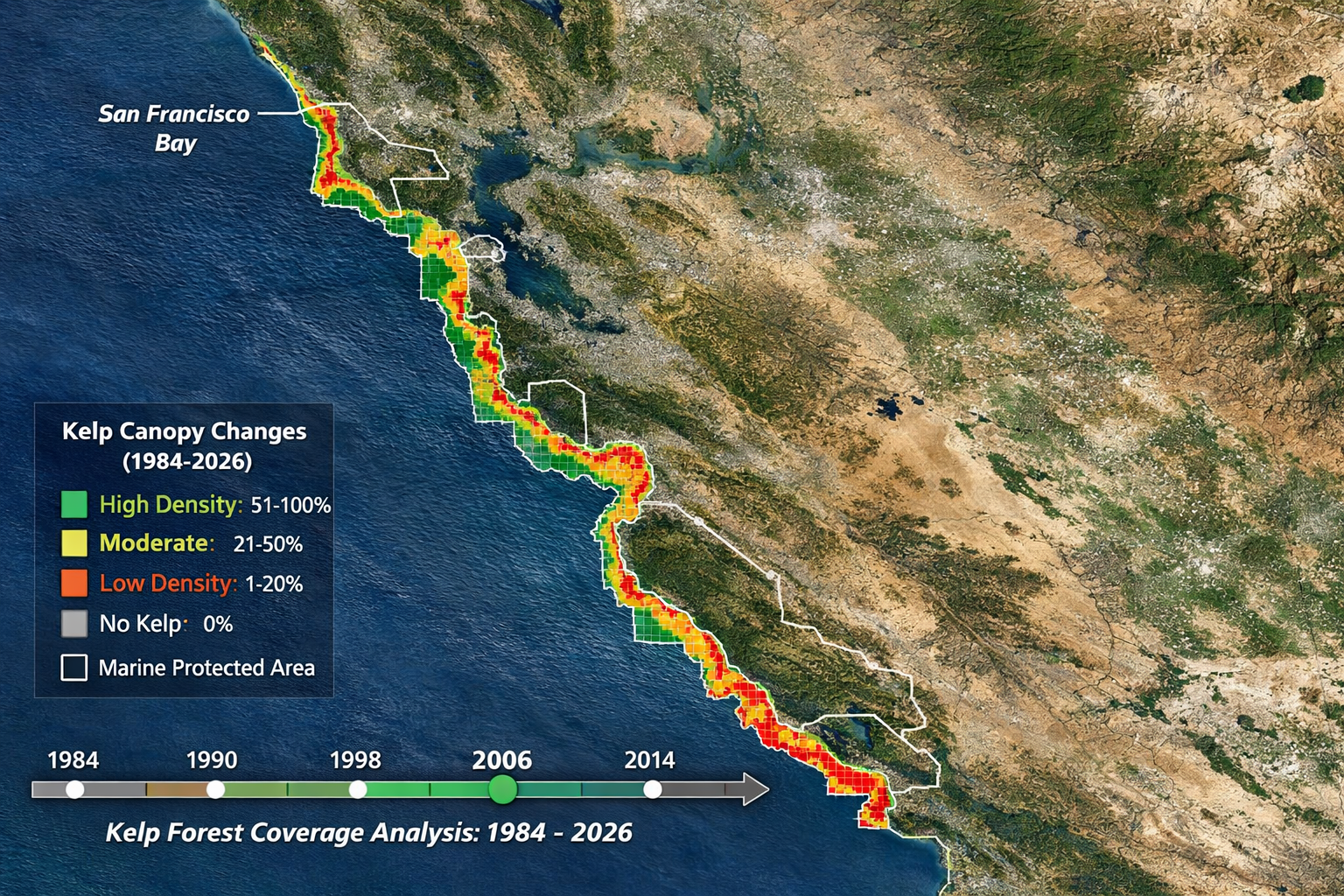
Revolutionary advances in satellite technology have transformed kelp forest assessment. UCLA researchers analyzed 40 years of Landsat satellite imagery (1984-present) to track kelp canopy changes across California's entire coastline [3]. This NASA/USGS program provides Earth's longest continuous satellite record, enabling unprecedented historical analysis.
Advantages of satellite monitoring include:
- Comprehensive coverage: Entire coastlines surveyed simultaneously
- Historical baselines: Decades of data revealing long-term trends
- Cost efficiency: Monitoring vast areas without expensive vessel time
- Frequent revisits: Regular imagery captures seasonal and event-driven changes
- Kelp canopy detection: Surface-floating kelp creates distinctive spectral signatures
The research examined 54 kelp forests across protected and unprotected waters, comparing similar environmental features to isolate the effects of management interventions [1]. This comparative approach revealed that fishing-restricted marine protected areas showed 8.5% greater kelp coverage following marine heat waves compared to unprotected sites [1].
Integrated Survey Protocols for Early Warning Systems
Effective vulnerability assessment in 2026 requires combining multiple monitoring approaches:
| Survey Method | Strengths | Limitations | Best Applications |
|---|---|---|---|
| Diver Transects | Detailed species data, understory assessment | Limited spatial coverage, weather dependent | Intensive site monitoring, biodiversity assessment |
| Satellite Imagery | Large-scale coverage, historical trends | Surface canopy only, cloud interference | Regional trends, MPA effectiveness |
| Drone Surveys | High-resolution, flexible deployment | Limited depth penetration, regulatory restrictions | Shallow water mapping, rapid assessment |
| Acoustic Monitoring | Continuous data collection, fish populations | Requires interpretation expertise | Ecosystem function, trophic dynamics |
Integrated protocols should capture:
- Baseline ecosystem structure: Kelp density, species composition, age distribution
- Trophic relationships: Predator-prey dynamics, grazing pressure indicators
- Environmental stressors: Temperature anomalies, nutrient availability, wave exposure
- Recovery potential: Reproductive capacity, recruitment success, refugia identification
These comprehensive approaches align with biodiversity impact assessment methodologies that evaluate ecosystem resilience across multiple indicators.
Macroalgal Habitat Loss and Climate Vulnerability: Key Findings from Recent Research
Marine Protected Areas and Kelp Forest Resilience
One of the most significant findings from recent research involves the protective effect of marine reserves during climate disturbances. The UCLA study published in the Journal of Applied Ecology identified kelp canopy coverage as a measurable metric for assessing MPA effectiveness under climate stress [1].
Southern California demonstrated the strongest MPA benefits, where fishing restrictions protect predators like California sheephead fish and spiny lobsters that control sea urchin populations [3]. This creates a trophic cascade—indirect benefits flowing through food webs when top predators are protected.
However, the research also revealed important limitations. MPAs cannot directly mitigate ocean warming—they reduce secondary stressors like overfishing and habitat degradation but cannot address the primary threat of elevated sea temperatures [3]. This finding emphasizes that marine reserves represent one tool in a comprehensive climate adaptation strategy, not a complete solution.
The geographic variation in MPA effectiveness highlights the importance of regional ecosystem differences. Central and northern California lack the predatory fish species present in southern waters, making these regions more vulnerable to urchin overgrazing even within protected areas [3].
The Critical Role of Trophic Cascades
The collapse of Northern California's kelp forests illustrates how ecosystem resilience depends on intact food webs. The sunflower sea star die-off from wasting disease proved to be the critical tipping point [2]. These large predators historically consumed purple sea urchins, keeping populations in check.
When marine heat waves struck an ecosystem already missing its key urchin predator, nothing prevented urchin populations from exploding. The result: urchin barrens—barren seafloors where millions of sea urchins have consumed all available kelp and other algae [2].
This transformation demonstrates that climate vulnerability assessment must consider species interactions, not just temperature tolerance of individual species. An ecosystem may appear resilient based on kelp's physiological capacity to survive warmer waters, yet collapse when supporting food web components fail.
Recovery Challenges and Restoration Efforts
Despite the promising finding that MPAs enhance post-disturbance recovery, kelp forests continue struggling to recover from the 2013-2017 marine heat wave [5]. Major restoration efforts by scientists and conservation organizations have achieved limited success, highlighting the complexity of ecosystem rehabilitation.
Restoration challenges include:
- Persistent urchin barrens: Without natural predators, urchin populations remain high
- Altered oceanographic conditions: Warming trends continue, reducing optimal kelp habitat
- Recruitment failures: Young kelp struggle to establish in degraded conditions
- Funding limitations: Large-scale restoration requires sustained investment
Some experimental approaches show promise:
🔧 Urchin removal programs: Divers manually harvest purple sea urchins to reduce grazing pressure
🌱 Kelp transplantation: Moving fertile kelp from healthy areas to degraded sites
🦦 Predator reintroduction: Exploring sea otter range expansion and sunflower sea star recovery
These efforts mirror principles found in habitat banking and biodiversity offsetting, where ecosystem restoration requires long-term commitment and adaptive management.
Implementing Effective Kelp Forest Surveys for Climate Adaptation in 2026
Standardized Monitoring Frameworks
As kelp forest vulnerability increases, the scientific community recognizes the need for standardized survey protocols that enable data comparison across regions and time periods. The 2026 kelp forest monitoring trainings offered by organizations like Reef Check represent important steps toward building consistent datasets [7].
Essential components of standardized frameworks include:
Temporal Resolution: Regular surveys capturing seasonal variation and detecting acute disturbances. Quarterly assessments provide minimum temporal resolution, with monthly surveys ideal for high-priority sites.
Spatial Coverage: Stratified sampling designs ensuring representation across depth gradients, exposure levels, and management zones. Surveys should include both MPA and reference sites for comparative analysis.
Indicator Selection: Prioritizing metrics that signal ecosystem vulnerability:
- Kelp canopy density and continuity
- Understory algae diversity
- Urchin abundance and size distribution
- Predator presence and behavior
- Recruitment success (young kelp establishment)
Data Management: Centralized databases enabling researchers, managers, and policymakers to access real-time ecosystem status information.
Technology Integration for Enhanced Detection
Emerging technologies are expanding survey capabilities beyond traditional methods:
Autonomous Underwater Vehicles (AUVs): Programmable robots conduct systematic surveys without human divers, collecting high-resolution imagery and environmental data across large areas.
Environmental DNA (eDNA): Water samples reveal species presence through genetic material, detecting rare or cryptic organisms that visual surveys might miss.
Machine Learning Analysis: Artificial intelligence algorithms process thousands of images, automatically identifying and counting organisms with increasing accuracy.
Sensor Networks: Permanent monitoring stations track temperature, light, nutrients, and other environmental variables continuously, providing context for biological observations.
These technological advances complement rather than replace traditional survey methods, creating multi-layered monitoring systems that capture ecosystem complexity.
Community Engagement and Citizen Science
Effective monitoring in 2026 increasingly involves citizen scientists—trained volunteers who expand survey coverage while building public awareness. Programs like Reef Check have demonstrated that properly trained recreational divers collect data comparable in quality to professional surveys.
Benefits of community-based monitoring:
- 📈 Increased survey frequency: More observers enable more frequent site visits
- 🌍 Broader geographic coverage: Local volunteers monitor remote or difficult-to-access locations
- 💡 Public education: Participants become ecosystem advocates, supporting conservation policies
- 💰 Cost efficiency: Volunteer efforts multiply limited research funding
Successful citizen science programs require:
- Comprehensive training on survey protocols
- Quality control measures ensuring data reliability
- Clear communication channels between volunteers and scientists
- Recognition and feedback maintaining volunteer engagement
This collaborative approach mirrors the stakeholder engagement essential for biodiversity planning in development projects, where diverse participants contribute to conservation outcomes.
Policy Implications and Management Recommendations
Adaptive Management Strategies
Macroalgal Habitat Loss and Kelp Forest Surveys: Assessing Coastal Ecosystem Vulnerability to Warming in 2026 provides critical information for adaptive management—decision-making processes that adjust based on monitoring results.
Key management recommendations include:
Expand Marine Protected Area Networks: The research demonstrates MPA effectiveness for enhancing resilience [1][3]. Strategic expansion should prioritize:
- Regions with intact predator populations
- Areas showing recovery potential
- Connectivity corridors enabling species movement
- Climate refugia with favorable conditions
Implement Active Restoration: Passive protection alone proves insufficient in degraded systems. Management agencies should support:
- Large-scale urchin removal in priority areas
- Kelp transplantation and seeding programs
- Predator recovery initiatives
- Experimental approaches testing novel techniques
Reduce Cumulative Stressors: While MPAs cannot prevent ocean warming, they can minimize additional pressures:
- Maintain fishing restrictions protecting key predators
- Reduce coastal pollution and nutrient runoff
- Manage sediment inputs affecting water clarity
- Regulate coastal development impacts
Enhance Monitoring Infrastructure: Sustained funding for long-term monitoring programs enables early detection and rapid response to emerging threats.
Integration with Broader Conservation Frameworks
Kelp forest conservation in 2026 exists within larger environmental policy contexts. The principles emerging from marine ecosystem monitoring inform terrestrial conservation approaches, including Biodiversity Net Gain frameworks that require measurable ecosystem improvements.
Cross-sector applications include:
Climate Adaptation Planning: Kelp forest vulnerability assessments provide models for evaluating climate risks across ecosystem types. The integrated monitoring approaches developed for marine systems can inform sustainable land management incentives in terrestrial environments.
Ecosystem Service Valuation: Quantifying kelp forest benefits—fisheries support, coastal protection, carbon sequestration—strengthens economic arguments for conservation investment, similar to biodiversity credit systems valuing habitat creation.
Regulatory Frameworks: Standardized survey protocols enable regulatory agencies to set measurable conservation targets and assess compliance, paralleling biodiversity impact assessment requirements for development projects.
Future Research Priorities
Despite significant advances, critical knowledge gaps remain:
🔬 Climate Threshold Identification: At what temperature do kelp forests lose recovery capacity? Understanding physiological limits enables better predictions.
🧬 Genetic Adaptation Potential: Can kelp populations evolve heat tolerance fast enough to match warming rates? Genetic research may identify resilient strains for restoration.
🌊 Oceanographic Modeling: Improved predictions of marine heat wave frequency and intensity would enable proactive management responses.
🦐 Food Web Complexity: Better understanding of species interactions beyond simple predator-prey relationships would reveal additional vulnerability factors.
Addressing these questions requires sustained research funding and collaboration across institutions—investments that will determine whether kelp forests persist through the 21st century.
Conclusion
Macroalgal Habitat Loss and Kelp Forest Surveys: Assessing Coastal Ecosystem Vulnerability to Warming in 2026 represents both a scientific challenge and a conservation imperative. The dramatic collapse of Northern California's kelp forests—with over 95% loss in some regions—demonstrates the devastating impacts of climate change on marine ecosystems [2]. Yet research also provides hope: marine protected areas show 8.5% faster recovery following disturbances [1], and 40 years of satellite monitoring now enables comprehensive vulnerability assessment across entire coastlines [3].
The path forward requires integrated approaches combining traditional diver surveys, satellite remote sensing, emerging technologies, and citizen science participation. Standardized monitoring protocols must capture early warning signals—changes in kelp density, urchin populations, predator abundance, and environmental conditions—that indicate declining resilience before catastrophic collapse occurs.
For coastal communities, conservation organizations, and policymakers, the evidence is clear: protecting and restoring kelp forests requires immediate action. Expanding marine protected area networks, implementing active restoration programs, reducing cumulative stressors, and maintaining robust monitoring infrastructure represent essential investments in ocean health and coastal resilience.
Actionable Next Steps
For Marine Managers and Policymakers:
- Expand MPA networks in regions showing recovery potential
- Fund long-term monitoring programs with standardized protocols
- Support active restoration including urchin removal and kelp transplantation
- Integrate kelp forest protection into climate adaptation planning
For Researchers and Monitoring Organizations:
- Continue developing integrated survey methodologies
- Enhance data sharing through centralized platforms
- Investigate climate thresholds and adaptation potential
- Expand citizen science training programs like the 2026 Reef Check initiatives [7]
For Coastal Communities:
- Participate in citizen science monitoring programs
- Support policies protecting marine ecosystems
- Reduce local stressors including pollution and runoff
- Engage in restoration volunteer opportunities
The underwater forests that support marine biodiversity, protect coastlines, and sustain coastal economies face unprecedented threats in 2026. Yet with comprehensive vulnerability assessment, adaptive management, and sustained commitment, these vital ecosystems can persist and recover. The tools exist—satellite monitoring, standardized surveys, marine protected areas, and restoration techniques. Success depends on implementing them with urgency and scale matching the challenge ahead.
For organizations seeking to understand how ecosystem monitoring and biodiversity assessment principles apply across marine and terrestrial environments, the lessons from kelp forest research provide valuable insights into building resilience in a changing climate.
References
[1] Marine Protected Areas Show Promise For Kelp Forest Recovery – https://eos.org/articles/marine-protected-areas-show-promise-for-kelp-forest-recovery
[2] Collapse Northern California Kelp Forests Will Be – https://www.nsf.gov/news/collapse-northern-california-kelp-forests-will-be
[3] Marine Protected Areas Protect Help Climate Change – https://newsroom.ucla.edu/releases/marine-protected-areas-protect-help-climate-change
[5] The Planets Other Forest Crisis – https://bluefront.org/articles/the-planets-other-forest-crisis/
[7] 2026 Kelp Forest Monitoring Trainings Now Open Register Today – https://www.reefcheck.org/2026-kelp-forest-monitoring-trainings-now-open-register-today/