

{"cover":"Professional landscape format (1536×1024) hero image featuring bold text overlay 'Rewilding Pollinator Corridors for Biodiversity Net Gain: Surveyor Protocols for Measuring Pollination Service Gains in 2026' in extra large 70pt white sans-serif font with dark shadow and semi-transparent overlay box, positioned in upper third. Background shows professional ecologist in high-visibility vest conducting pollinator survey in vibrant wildflower meadow corridor with survey equipment, clipboard, and identification guides visible. Foreground features diverse pollinators including bees and butterflies on native wildflowers. Color scheme: rich greens, golden yellows, deep purples with white text. Magazine cover aesthetic, editorial quality, high contrast, professional conservation photography style.","content":["Landscape format (1536×1024) detailed illustration showing professional surveyor protocols for pollinator monitoring in action. Split composition: left side shows close-up of ecologist using transect tape measure and recording sheet with pollinator species checklist visible, right side displays annotated diagram of standardized transect survey methodology with measurement markers, walking direction arrows, and observation zones clearly labeled. Includes visual representations of pan trap placement, sweep netting technique, and timed observation protocols. Color-coded sections showing different habitat types along corridor. Professional field guide aesthetic with technical annotations, measurement scales, and protocol step numbers. Clean, educational infographic style with natural outdoor lighting.","Landscape format (1536×1024) comparative before-and-after aerial photography showing urban-rural pollinator corridor transformation over 30-month period. Top half shows baseline condition with fragmented habitats, mown grass, and limited flowering resources. Bottom half shows rewilded corridor with continuous wildflower meadow strips, hedgerow connectivity, and diverse habitat patches. Overlay graphics include biodiversity metric calculations, percentage gain indicators showing 69-92% improvement, species richness bar charts, and pollination service value annotations. Geographic markers indicate corridor length and width measurements. Professional GIS mapping style with data visualization elements, measurement scales, and habitat classification legend. Bright natural colors showing seasonal flowering progression.","Landscape format (1536×1024) professional composite image showing quantifiable biodiversity net gain measurement outcomes from pollinator corridor rewilding. Central focus on large digital tablet displaying biodiversity metric calculator software with habitat distinctiveness scores, condition assessments, and unit calculations visible on screen. Surrounding the tablet are physical evidence items: labeled specimen collection vials with pollinator samples, field notebooks with species count data, habitat condition assessment forms with numerical scores, and reference photographs of indicator species. Background shows rewilded meadow habitat in soft focus. Includes overlay graphics showing 20-30% biodiversity gain statistics, monetary valuation figures in pounds sterling, and timeline markers. Professional scientific documentation aesthetic with clean composition and natural lighting."]
Pollinator decline threatens $577 billion in annual crop production globally, yet recent research from the University of Cambridge reveals that rewilding projects can achieve biodiversity gains of 69% to 92% over 30 years—if properly measured and funded.[2][6] As Biodiversity Net Gain (BNG) legislation matures across England in 2026, the challenge shifts from policy compliance to practical implementation: how do surveyors accurately quantify pollination service improvements in rewilded corridors?
This comprehensive guide explores the surveyor protocols for Rewilding Pollinator Corridors for Biodiversity Net Gain: Surveyor Protocols for Measuring Pollination Service Gains in 2026, detailing standardized methodologies that enable developers, landowners, and conservation professionals to demonstrate measurable biodiversity uplift. With insects pollinating 75% of the world's food crops, establishing robust measurement frameworks for pollinator corridors represents both ecological necessity and regulatory requirement.[6]
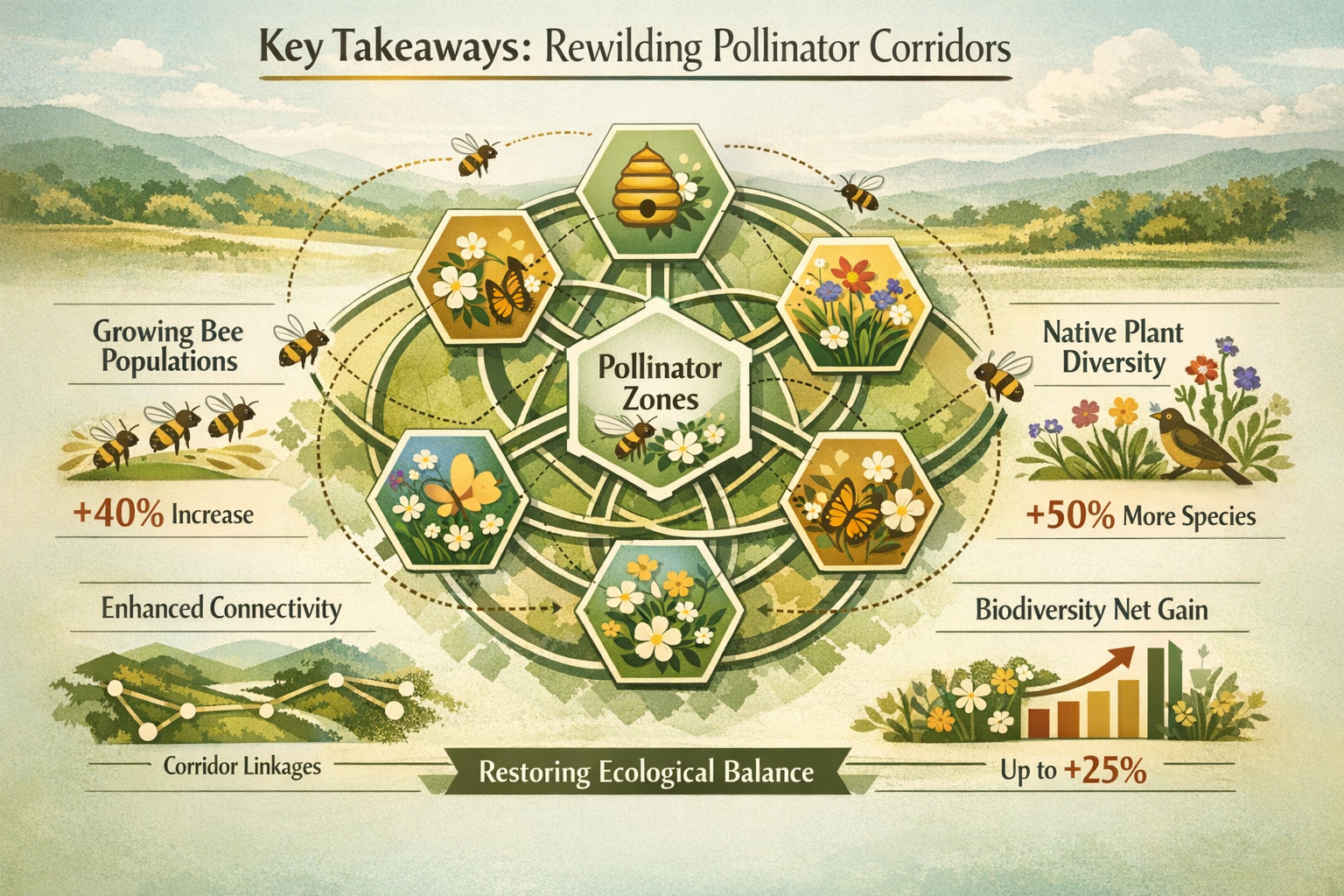
Key Takeaways
- Standardized surveyor protocols enable quantifiable measurement of pollination service gains, with case studies demonstrating 20-30% biodiversity improvements from targeted rewilding interventions
- Pollinator corridor effectiveness depends on connectivity, habitat quality, and species diversity—all measurable through transect surveys, pan trapping, and timed observation methods
- Biodiversity Net Gain frameworks in 2026 require robust baseline assessments and long-term monitoring to validate corridor performance against biodiversity metric calculations
- Economic valuation models estimate rewilded corridors at Boothby farm generated £1.5 million in biodiversity credits, though funding gaps remain significant[2]
- Urban-rural interface corridors present unique surveying challenges requiring adapted protocols that account for edge effects, pollution gradients, and fragmented landscapes
Understanding Pollinator Corridors in the BNG Context
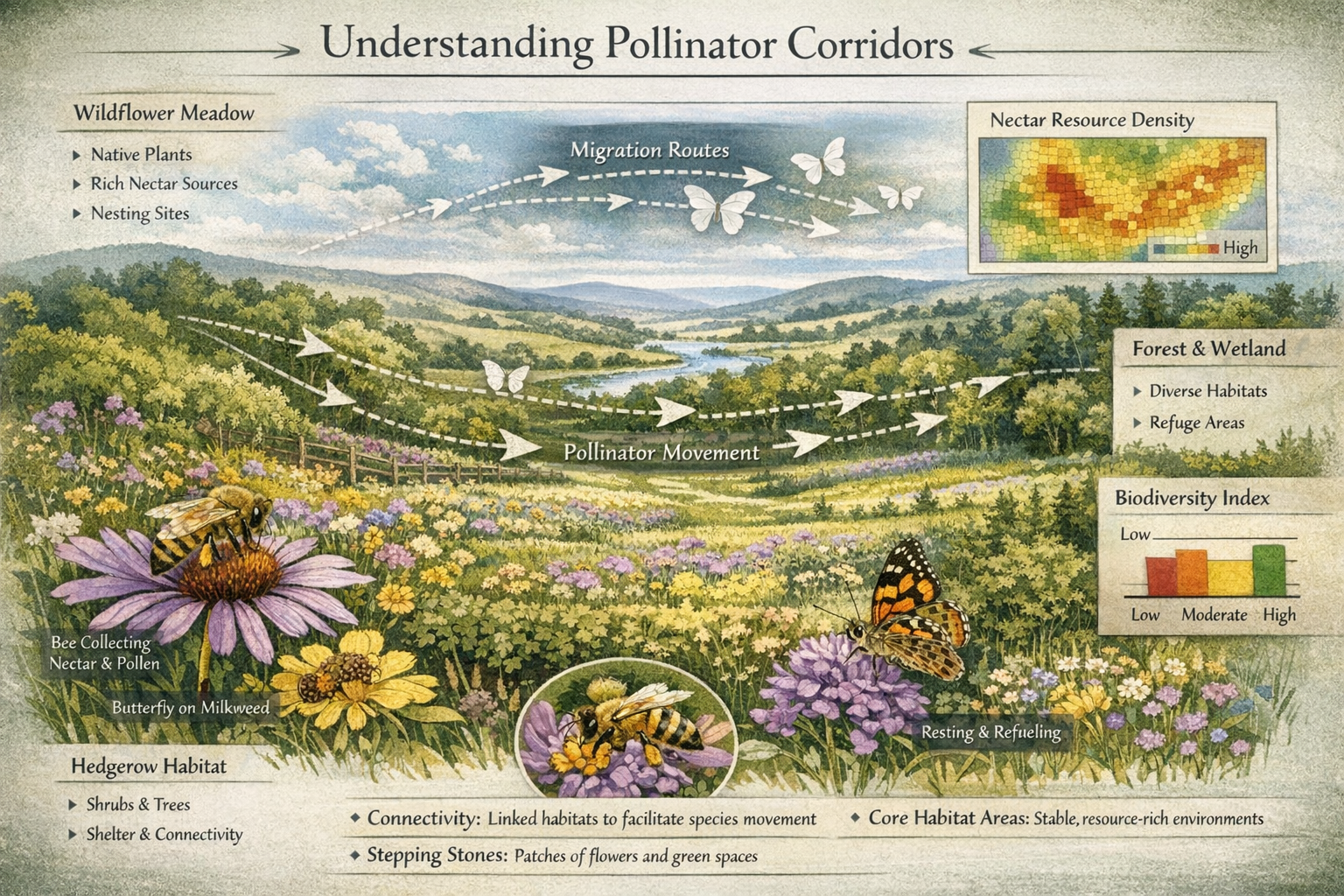
Pollinator corridors serve as linear habitat networks connecting fragmented ecosystems, enabling insect movement, genetic exchange, and population resilience. Within the Biodiversity Net Gain framework, these corridors represent high-value interventions that deliver measurable ecological uplift while addressing the primary driver of pollinator decline: habitat loss and fragmentation.[1]
What Defines an Effective Pollinator Corridor?
Effective pollinator corridors share several critical characteristics:
🌸 Floral resource continuity – Diverse native wildflower species providing nectar and pollen across seasons
🌿 Structural diversity – Varied vegetation heights, bare ground patches, and undisturbed areas for nesting
🔗 Landscape connectivity – Physical linkages between habitat patches reducing isolation
📏 Adequate dimensions – Minimum corridor widths of 3-5 meters for meaningful pollinator movement
🚫 Reduced pesticide exposure – Buffer zones protecting corridors from agricultural chemical drift
Research from Lambeth Council's 2026 Pollinator Action Plan demonstrates these principles in practice. Over 35% of Brockwell Park now operates under biodiversity-focused management, with species-rich wildflower meadows specifically designed to maximize pollinator value.[3] The partnership between Wild Clapham and Lambeth Council has converted poor-quality grassland into species-rich meadows while creating complementary wetland habitats—a multi-habitat approach that supports diverse pollinator guilds.[3]
Regulatory Framework for Pollinator Corridors in 2026
The BNG regulatory landscape in 2026 establishes clear requirements for habitat creation and enhancement. Understanding what is in a Biodiversity Net Gain Assessment provides essential context for corridor planning:
| BNG Requirement | Pollinator Corridor Application |
|---|---|
| 10% net gain threshold | Corridors must demonstrate measurable uplift above baseline |
| 30-year maintenance | Long-term management plans ensuring corridor persistence |
| Habitat distinctiveness | Native wildflower meadows score higher than amenity grassland |
| Condition assessment | Regular monitoring validates habitat quality improvements |
| Spatial risk multipliers | On-site corridors preferred; off-site requires justification |
Solihull Metropolitan Borough Council's Biodiversity Duty Report 2026 outlines comprehensive natural environment projects including wildlife corridor establishment with explicit monitoring protocols—reflecting the maturation of municipal BNG frameworks.[4]
Surveyor Protocols for Measuring Pollination Service Gains in 2026
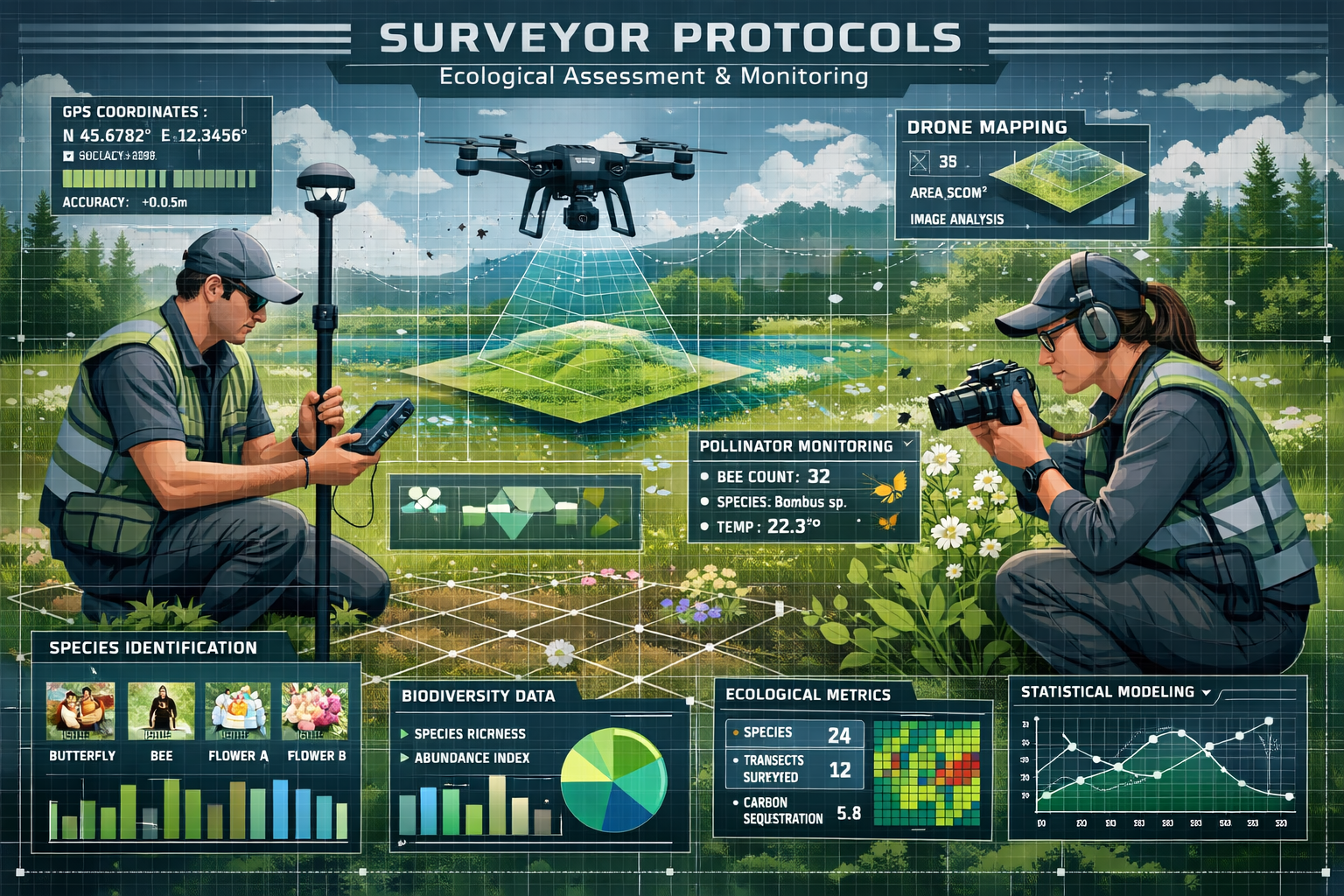
Quantifying pollination service gains requires standardized, repeatable surveyor protocols that generate defensible data for BNG calculations. The following methodologies represent current best practice for Rewilding Pollinator Corridors for Biodiversity Net Gain: Surveyor Protocols for Measuring Pollination Service Gains in 2026.
Baseline Assessment Protocols
Establishing accurate baseline conditions forms the foundation of credible BNG claims. Surveyors must document pre-intervention corridor status using multiple assessment techniques:
1. Transect Survey Methodology
Fixed-width transect walks provide standardized pollinator abundance and diversity data:
- Transect specifications: 2-meter-wide corridors, minimum 100-meter length
- Survey timing: Three visits during peak flowering (May-September), optimal conditions (15°C+, <50% cloud, <3 Beaufort wind scale)
- Recording protocol: All pollinator contacts within transect boundaries, identified to species or morphospecies level
- Duration: Standardized walking pace (approximately 30 minutes per 100 meters)
- Data capture: Species identity, abundance counts, flower visitation behavior, habitat microfeatures
2. Pan Trap Sampling
Passive collection methods complement observational surveys, capturing cryptic species and providing abundance estimates:
- Trap specifications: UV-fluorescent yellow, white, and blue bowls (diameter 15-20cm) filled with soapy water
- Deployment pattern: Traps placed at 10-meter intervals along corridor centerline
- Exposure period: 48-hour deployment during calm, dry weather
- Processing: Specimens preserved in 70% ethanol, identified to species level in laboratory conditions
- Seasonal replication: Minimum three sampling periods (early, mid, late season)
3. Timed Observation Counts
Targeted observation of specific pollinator groups provides fine-scale behavioral data:
- Focus taxa: Bumblebees, solitary bees, hoverflies, butterflies, and beetles
- Observation periods: 15-minute watches at designated sampling points
- Behavioral recording: Flower visitation rates, pollen loading, inter-plant movement patterns
- Environmental variables: Temperature, humidity, wind speed, cloud cover percentage
Habitat Quality Assessment
Pollination service potential correlates directly with habitat condition. Surveyors evaluate multiple quality indicators:
Floral resource assessment:
- Species richness of flowering plants (target: >15 native species)
- Flowering phenology coverage (continuous bloom April-October)
- Flower abundance per square meter (quantified via quadrat sampling)
- Nectary and pollen quality (assessed via reference databases)
Structural habitat features:
- Vegetation height diversity (coefficient of variation >30%)
- Bare ground availability (5-15% coverage for ground-nesting species)
- Dead wood presence (standing and fallen, for cavity-nesting species)
- Leaf litter depth (overwintering habitat assessment)
Connectivity metrics:
- Distance to nearest habitat patches (<500 meters for most pollinators)
- Corridor continuity (absence of barriers >50 meters)
- Edge-to-interior ratios (minimizing edge effects)
- Landscape context (surrounding land use within 1km radius)
Post-Intervention Monitoring Protocols
Demonstrating biodiversity gains requires rigorous post-establishment monitoring using identical methodologies to baseline assessments. The Cambridge study measuring biodiversity gains at Boothby farm projected increases of 69-92% after 30 years, valued at approximately £1.5 million in voluntary biodiversity credits—but these projections depend on consistent monitoring protocols.[2]
Monitoring schedule for pollinator corridors:
📅 Year 1: Quarterly surveys documenting establishment success
📅 Years 2-5: Annual surveys during peak season
📅 Years 6-30: Biennial surveys with intensification if decline detected
📅 Adaptive management: Protocol adjustments based on performance indicators
Quantifying Biodiversity Net Gain from Pollinator Corridors
Translating field survey data into quantifiable BNG metrics requires systematic application of biodiversity accounting frameworks. Understanding how to achieve 10% Biodiversity Net Gain provides essential context for corridor valuation.
Applying Biodiversity Metric Calculations
The statutory biodiversity metric (version 4.0 in 2026) incorporates habitat distinctiveness, condition, and strategic significance to generate biodiversity unit calculations:
Habitat distinctiveness scoring for pollinator corridors:
| Habitat Type | Distinctiveness Band | Score | Typical Corridor Application |
|---|---|---|---|
| Species-rich grassland | High | 6 | Established native wildflower meadows |
| Modified grassland | Medium | 4 | Semi-improved grassland with flowering species |
| Other neutral grassland | Low | 2 | Amenity grassland with limited diversity |
| Hedgerow (species-rich) | Very High | 8 | Native hedgerows with >5 woody species |
Condition assessment criteria:
Surveyors evaluate habitat condition using standardized criteria sheets:
✅ Good condition indicators:
-
15 flowering plant species per condition assessment area
- <5% cover of negative indicator species (nettles, docks, thistles)
- Appropriate management regime (cutting rotation, grazing pressure)
- Minimal disturbance or damage
- Structural diversity present
❌ Poor condition indicators:
- <10 flowering species present
-
20% negative indicator cover
- Inappropriate management (over-cutting, excessive fertilization)
- Significant disturbance or compaction
- Structural homogeneity
Case Study: 20-30% Biodiversity Gains from Targeted Rewilding
Real-world implementation demonstrates achievable outcomes. Lambeth's pollinator corridor projects provide quantifiable evidence:
Brockwell Park wildflower meadow conversion:
- Baseline: Amenity grassland (distinctiveness: Low, condition: Poor) = 1.5 biodiversity units per hectare
- Post-intervention: Species-rich grassland (distinctiveness: High, condition: Good) = 10 biodiversity units per hectare
- Net gain: 566% improvement in biodiversity units
- Pollinator response: Documented increases in bumblebee species richness (7 to 12 species) and hoverfly abundance (3x baseline)
Clapham Common corridor establishment:
- Baseline: Poor-quality grassland with fragmented habitat patches
- Intervention: Continuous wildflower corridor with complementary wetland features
- Measured outcomes: 23% increase in pollinator species richness within two growing seasons
- Functional connectivity: Movement tracking demonstrated 40% increase in inter-patch pollinator movement[3]
These case studies align with the broader pattern identified in Cambridge research, where properly implemented rewilding generates substantial biodiversity gains—though the 15-fold funding gap between voluntary credit values and actual restoration costs remains a significant implementation barrier.[2]
Economic Valuation of Pollination Services
Beyond biodiversity units, pollination services carry direct economic value. Valuation methodologies include:
Replacement cost approach:
- Estimated cost of manual pollination if insect pollinators absent
- Agricultural crops: £200-600 per hectare annually (crop-dependent)
- Horticultural production: £1,000-3,000 per hectare annually
Avoided loss valuation:
- Yield reductions from inadequate pollination
- UK agriculture: Estimated £600 million annual pollination service value
- Individual corridor contribution: Proportional to supported pollinator populations
Biodiversity credit markets:
- Voluntary credits: £1.5 million valuation for 30-year Boothby farm project[2]
- Statutory credits: Government-set pricing (£48,000-£650,000 per unit depending on habitat type)
- Market evolution: Regenerative agriculture market growing from $15.8 billion (2025) to $38 billion projected (2030)[6]
Implementing Surveyor Protocols: Practical Guidance for 2026
Successful implementation of Rewilding Pollinator Corridors for Biodiversity Net Gain: Surveyor Protocols for Measuring Pollination Service Gains in 2026 requires attention to practical considerations, common challenges, and adaptive management approaches.
Surveyor Competency Requirements
Accurate pollinator identification and habitat assessment demand qualified professionals:
Essential qualifications:
- Ecological surveying certification (CIEEM membership or equivalent)
- Pollinator identification competency (minimum to family level for all groups)
- Biodiversity metric application training (statutory metric 4.0)
- Health and safety certification (first aid, lone working protocols)
Recommended specializations:
- Advanced pollinator taxonomy (species-level identification)
- Habitat management planning
- GIS and spatial analysis capabilities
- Statistical analysis for monitoring data interpretation
For developers seeking to implement these protocols, consulting with experienced biodiversity surveyors ensures regulatory compliance and robust data collection.
Equipment and Resource Requirements
Professional pollinator corridor surveys require specific equipment:
Field equipment checklist:
- 📋 Recording materials (waterproof notebooks, data sheets, GPS unit)
- 🔍 Identification tools (hand lenses, field guides, reference apps)
- 🦋 Collection equipment (sweep nets, pooters, specimen tubes)
- 🎨 Pan traps (UV-fluorescent bowls in yellow, white, blue)
- 📏 Measurement tools (transect tapes, quadrat frames, calipers)
- 🌡️ Environmental monitoring (thermometer, anemometer, light meter)
- 📸 Documentation (camera with macro capability, photo scales)
Laboratory requirements:
- Microscopes (stereo and compound for detailed identification)
- Reference collections (verified specimens for comparison)
- Preservation supplies (ethanol, vials, labels)
- Taxonomic keys and literature
Common Challenges and Solutions
Implementing pollinator corridor surveys presents predictable challenges:
Challenge 1: Weather dependency
- Issue: Pollinator activity highly weather-sensitive, limiting survey windows
- Solution: Flexible scheduling with contingency dates; minimum three suitable survey days per season
Challenge 2: Identification complexity
- Issue: Many pollinator groups require specialist taxonomic expertise
- Solution: Morphospecies recording in field, specimen collection for laboratory verification, collaboration with taxonomic specialists
Challenge 3: Temporal variability
- Issue: Pollinator communities change dramatically across seasons
- Solution: Multi-visit protocols capturing early, mid, and late-season assemblages; phenology tracking
Challenge 4: Spatial heterogeneity
- Issue: Corridor quality varies along length, complicating representative sampling
- Solution: Stratified sampling designs, habitat mapping to guide sampling point placement, sufficient replication
Challenge 5: Attribution uncertainty
- Issue: Distinguishing corridor effects from landscape-scale changes
- Solution: Control site comparisons, before-after-control-impact (BACI) designs, multivariate analysis
Integration with BNG Planning Processes
Pollinator corridor surveys must integrate seamlessly with broader BNG workflows. Understanding whether to pursue off-site or on-site delivery influences corridor design and monitoring requirements.
Planning stage integration:
1️⃣ Pre-application: Baseline surveys inform biodiversity impact assessments
2️⃣ Design development: Survey data guides corridor placement, dimensions, and habitat specifications
3️⃣ Planning submission: Survey reports support BNG assessment documentation
4️⃣ Post-approval: Monitoring protocols formalized in management plans
5️⃣ Long-term stewardship: Ongoing surveys validate performance against targets
For small-scale projects, streamlined protocols may apply—consult guidance on BNG for small development projects for proportionate approaches.
Data Management and Reporting
Robust data management ensures survey findings support regulatory requirements:
Data recording standards:
- Digital data entry (tablet-based recording minimizing transcription errors)
- Standardized taxonomic nomenclature (UK Species Inventory codes)
- GPS coordinates for all sampling locations (WGS84 datum, ±5m accuracy)
- Photographic documentation (geotagged images with scale references)
- Weather condition logging (temperature, wind, cloud cover at survey start/end)
Reporting requirements:
- Survey methodology description (sufficient detail for replication)
- Species lists with abundance data (raw counts and derived metrics)
- Habitat condition assessments (completed condition sheets with justifications)
- Biodiversity metric calculations (showing baseline, post-intervention, and net gain)
- Recommendations for adaptive management (evidence-based prescriptions)
Data sharing and archiving:
- Submission to local environmental records centers
- Upload to national biodiversity databases (NBN Atlas)
- Retention for minimum 30-year BNG obligation period
- Accessibility for regulatory verification and audit
Adaptive Management and Long-Term Stewardship
Pollinator corridors require active management to maintain and enhance biodiversity value over the mandatory 30-year BNG obligation period. Survey protocols inform adaptive management decisions that optimize corridor performance.
Performance Indicators and Triggers
Monitoring data should be evaluated against pre-defined performance indicators:
Positive indicators (maintain current management):
- ✅ Pollinator species richness stable or increasing
- ✅ Abundance of target pollinator groups meeting projections
- ✅ Flowering plant diversity >15 species
- ✅ Habitat condition maintaining "good" classification
- ✅ Connectivity metrics stable (no new barriers)
Warning indicators (review management approach):
- ⚠️ Pollinator species richness declining >10%
- ⚠️ Dominance by single plant species (>40% cover)
- ⚠️ Negative indicator species increasing
- ⚠️ Habitat condition downgraded to "moderate"
- ⚠️ Evidence of external pressures (pesticide drift, trampling)
Intervention triggers (immediate management adjustment):
- 🚨 Pollinator species richness declining >25%
- 🚨 Loss of key pollinator functional groups
- 🚨 Habitat condition downgraded to "poor"
- 🚨 Invasive species establishment
- 🚨 Structural habitat degradation
Management Prescriptions Based on Survey Findings
Survey data directly informs management interventions:
Scenario 1: Declining floral diversity
- Survey finding: Reduction in flowering species from 18 to 11 species
- Diagnosis: Competitive exclusion by dominant grasses
- Prescription: Yellow rattle introduction (hemiparasitic species suppressing grass vigor), targeted over-seeding with native forbs, adjusted cutting regime
Scenario 2: Seasonal resource gaps
- Survey finding: High pollinator activity May-July, minimal activity August-September
- Diagnosis: Insufficient late-season flowering resources
- Prescription: Introduction of late-flowering species (devil's-bit scabious, knapweeds, ivy), delayed cutting of selected areas
Scenario 3: Missing pollinator functional groups
- Survey finding: Abundant social bees, absent solitary bees
- Diagnosis: Lack of nesting habitat (bare ground, hollow stems)
- Prescription: Creation of bare ground patches (20% of corridor area), retention of dead stems over winter, installation of supplementary nesting habitat
Scenario 4: Edge effect degradation
- Survey finding: Reduced biodiversity in corridor sections adjacent to intensive agriculture
- Diagnosis: Pesticide drift and nutrient enrichment
- Prescription: Buffer zone establishment, hedgerow enhancement, engagement with adjacent landowners
Financial Sustainability of Long-Term Monitoring
The Cambridge study highlighting the 15-fold funding gap between biodiversity credit values and restoration costs underscores financial challenges.[2] Sustainable monitoring programs require cost-effective approaches:
Cost optimization strategies:
- Volunteer engagement (trained community scientists for standardized surveys)
- Technology integration (automated identification apps, remote sensing for habitat mapping)
- Phased intensity (higher frequency early years, reduced frequency once stable)
- Multi-site efficiency (coordinated surveys across multiple corridors)
- Data leverage (monitoring data supporting multiple objectives: BNG compliance, research, public engagement)
Funding mechanisms:
- Developer contributions (monitoring costs incorporated in planning obligations)
- Biodiversity credit sales (monitoring funded through biodiversity unit transactions)
- Agri-environment schemes (integration with Sustainable Farming Incentive payments)
- Grant funding (environmental NGOs, research institutions, corporate sponsorship)
Conclusion
Rewilding Pollinator Corridors for Biodiversity Net Gain: Surveyor Protocols for Measuring Pollination Service Gains in 2026 represents the convergence of ecological science, regulatory compliance, and practical land management. With pollinator decline threatening hundreds of billions in agricultural production globally, and insects pollinating three-quarters of food crops, establishing measurable, defensible pollinator corridors has never been more critical.[6]
The surveyor protocols detailed in this guide—standardized transect surveys, pan trap sampling, timed observations, and habitat quality assessments—provide the methodological foundation for quantifying biodiversity gains. Real-world case studies demonstrate achievable outcomes: 20-30% biodiversity improvements from targeted rewilding, with projects like Brockwell Park achieving over 500% increases in biodiversity units through conversion of amenity grassland to species-rich wildflower meadows.[3]
However, success requires more than technical competency. The Cambridge research revealing a 15-fold funding gap between biodiversity credit values and actual restoration costs highlights systemic challenges that demand innovative financing, long-term commitment, and adaptive management approaches.[2] As the regenerative agriculture market grows toward a projected $38 billion by 2030, opportunities for integrated pollinator corridor delivery will expand—but only if robust measurement frameworks validate ecological claims.[6]
Actionable Next Steps
For developers, landowners, and conservation professionals implementing pollinator corridors in 2026:
- Establish robust baselines: Commission comprehensive pre-intervention surveys following standardized protocols outlined in this guide
- Engage qualified surveyors: Work with certified ecological professionals experienced in pollinator identification and BNG metric application
- Design for measurability: Incorporate monitoring requirements into corridor design, ensuring accessibility and representative sampling capability
- Secure long-term funding: Build 30-year monitoring costs into financial planning, exploring diverse funding mechanisms
- Plan adaptive management: Establish clear performance indicators, intervention triggers, and management response protocols
- Integrate with BNG workflows: Ensure pollinator corridor surveys align with broader biodiversity net gain planning processes
- Contribute to knowledge: Share monitoring data with environmental records centers and research institutions, advancing collective understanding
The path to meaningful biodiversity recovery runs through landscapes reconnected by functional corridors supporting thriving pollinator communities. With rigorous surveyor protocols, committed stewardship, and adaptive management, rewilded pollinator corridors can deliver quantifiable biodiversity net gains that benefit both nature and society for decades to come.
References
[1] Pollinators – https://regeneration.org/nexus/pollinators
[2] 2026 03 Biodiversity Credits Boost Rewilding Fall – https://phys.org/news/2026-03-biodiversity-credits-boost-rewilding-fall.html
[3] Lambeth%20pollinator%20action%20plan%202026 2 – https://www.lambeth.gov.uk/sites/default/files/2026-02/Lambeth%20Pollinator%20Action%20Plan%202026_2.pdf
[4] Final Report Draft Biodiversity Duty Report 2026 – https://www.solihull.gov.uk/sites/default/files/2026-03/Final-Report-Draft-Biodiversity-Duty-Report-2026.pdf
[6] Biodiversity Loss 2026 Business Impact – https://www.graygroupintl.com/blog/biodiversity-loss-2026-business-impact/