

Between 2020 and 2026, invasive species have cost the global economy an estimated $423 billion annually while driving native species toward extinction at unprecedented rates. Yet a revolutionary genetic tool promises to shift this battle dramatically—if biodiversity professionals can navigate its complex ethical and ecological terrain with precision.
Gene Drive Technologies in Invasive Species Control: Risk Assessment Protocols for Biodiversity Surveyors in 2026 represent a critical intersection of cutting-edge genetic engineering and traditional conservation practice. As CRISPR-Cas9-based gene drives move from laboratory testing to potential field deployment, surveyors face an urgent need to understand monitoring protocols that balance eradication benefits against off-target ecological risks.
This comprehensive guide equips biodiversity professionals with the frameworks, checklists, and ethical considerations necessary to assess gene drive applications within biodiversity net gain (BNG) sites and conservation areas.
Key Takeaways
- 🧬 Gene drives use CRISPR-Cas9 technology to spread genetic modifications through invasive populations, offering species-specific control without chemical pesticides
- ⚠️ Risk assessment protocols require pre-deployment baseline surveys documenting all species present, genetic diversity, and ecosystem relationships
- 📋 Surveyors must implement multi-generational monitoring tracking both target and non-target species for 8-10 generations minimum
- 🛡️ Self-limiting gene drive designs like ClvR and e-Drive technologies provide built-in safeguards against uncontrolled spread
- ✅ Ethical frameworks demand transparent stakeholder engagement and reversibility plans before any field deployment
Understanding Gene Drive Mechanisms and Current Applications
What Are Gene Drives?
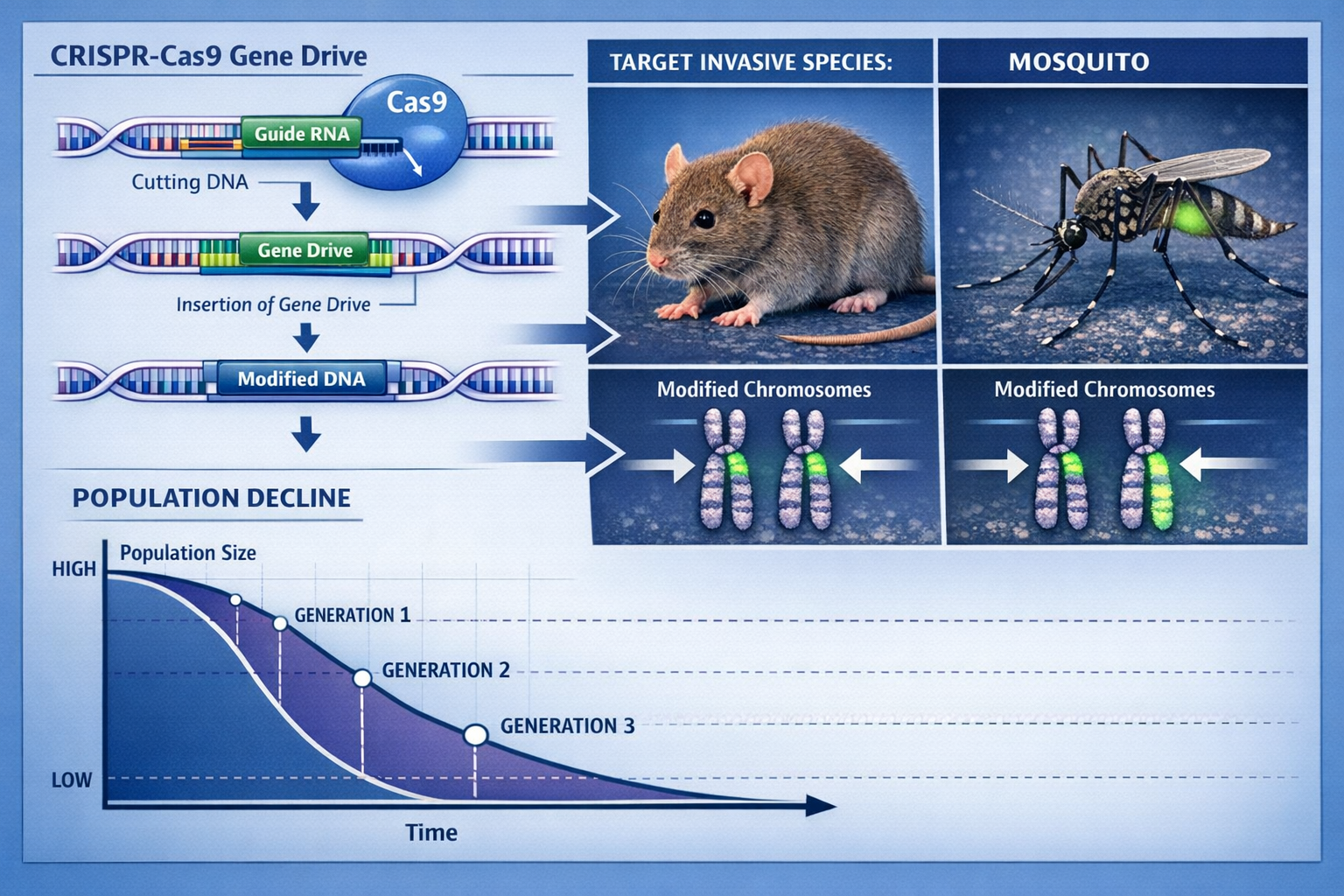
Gene drives represent a powerful genetic engineering approach that overrides normal Mendelian inheritance patterns. Instead of a genetic trait having a 50% chance of passing to offspring, gene drives can achieve transmission rates exceeding 99%[1]. This exponential spread through populations makes them particularly attractive for controlling invasive species that reproduce rapidly.
The primary mechanism relies on CRISPR-Cas9 technology, which enables precise DNA sequence modification coupled with gene drive systems to alter reproductive capabilities in target species[1]. When an organism carrying a gene drive mates with a wild-type individual, the drive copies itself onto the partner chromosome, ensuring nearly all offspring inherit the modification.
Target Species in Development
As of 2026, gene drive research focuses on several high-priority invasive species:
| Species Category | Specific Targets | Control Mechanism | Development Stage |
|---|---|---|---|
| Rodents | Island rats, mice | Single-sex offspring promotion | Field trial preparation |
| Insects | Anopheles mosquitoes | Population replacement/suppression | Advanced testing[7] |
| Aquatic Species | Asian carps | Reproductive disruption | Laboratory phase[2] |
| Plants | Herbicide-resistant weeds | Trait reversal | Proof-of-concept[5] |
The USDA's Animal and Plant Health Inspection Service (APHIS) scientists are actively studying gene-drive technology to promote single-sex offspring in invasive rodents, which would eventually breed populations into extinction without chemical pesticides in island ecosystems[4]. This approach offers particular promise for protecting vulnerable seabird colonies on remote islands where traditional control methods prove logistically challenging.
Safety Innovations in Gene Drive Design
Concerns about uncontrollable spread have driven significant innovation in containment technologies. The ClvR (Cleave and Rescue) system developed by Caltech researchers represents a major advancement—this customizable gene drive for plant species can be self-limiting, spreading desired genes for only a limited number of generations to prevent uncontrolled dispersal[5].
Similarly, e-Drive technology addresses spread concerns through a phasing mechanism that naturally eliminates itself within 8-10 generations, providing safer management for pesticide resistance while maintaining temporal control[6]. These built-in safeguards allow surveyors to predict and monitor the geographic and temporal boundaries of gene drive effects.
Risk Assessment Frameworks for Gene Drive Technologies in Invasive Species Control: Risk Assessment Protocols for Biodiversity Surveyors in 2026
Ecological Risk Categories
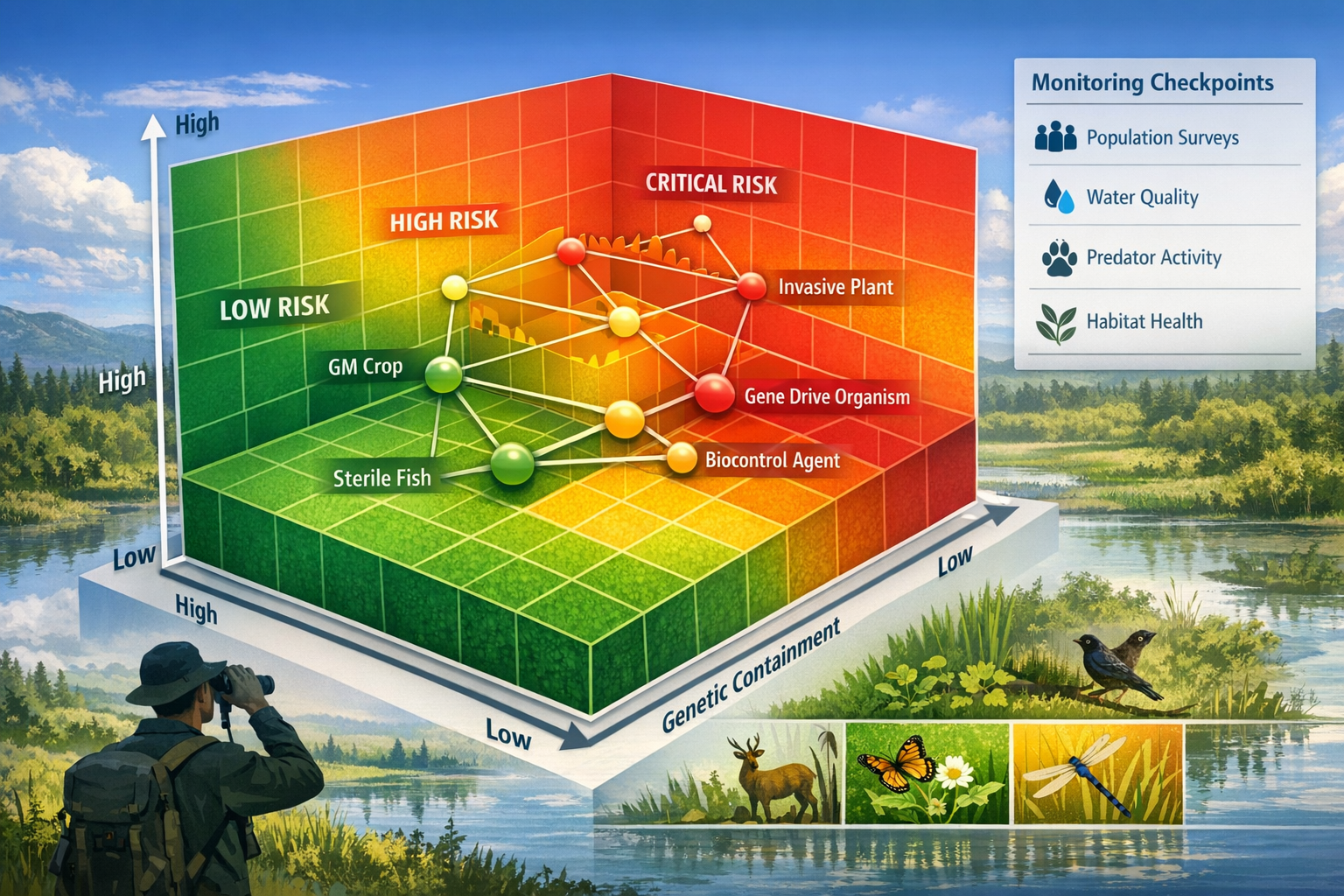
Biodiversity surveyors must evaluate gene drive proposals across multiple risk dimensions. The following framework provides a systematic approach aligned with current biodiversity impact assessment methodologies:
Primary Risk Categories:
-
Genetic Containment Risks 🧬
- Probability of drive spreading beyond target population
- Potential for horizontal gene transfer to non-target species
- Drive persistence beyond intended timeframe
- Mutation rates affecting drive function
-
Non-Target Species Impact 🦋
- Effects on species sharing ecological niches
- Impacts on predators dependent on target species
- Disruption of pollination or seed dispersal networks
- Changes to competitive dynamics
-
Ecosystem Stability Concerns 🌍
- Food web disruption from target species removal
- Trophic cascade effects
- Habitat structure changes
- Nutrient cycling alterations
-
Socioeconomic and Ethical Dimensions 👥
- Community consent and engagement
- Indigenous rights and traditional knowledge
- Reversibility and liability frameworks
- Transboundary governance issues
Comparative Risk Analysis: Gene Drives vs. Traditional Methods
Gene drives offer distinct advantages over conventional control approaches. Unlike rodenticides, they are described as having no consequences for non-target species and no ecosystem implications, offering species-focused precision and scale[3]. Additionally, gene drives are considered more humane than poisoning or culling methods, as organisms that are not born or are born sterile experience higher life quality than hunted individuals[3].
However, this comparison requires nuanced evaluation within specific contexts. Traditional methods like trapping and chemical control have well-established risk profiles and reversibility, while gene drives introduce novel uncertainties requiring precautionary approaches.
Integration with Biodiversity Net Gain Assessments
For surveyors working within BNG frameworks, gene drive applications present unique assessment challenges. The potential for invasive species eradication could significantly enhance biodiversity unit calculations, but only if:
- Baseline conditions are thoroughly documented before deployment
- Monitoring continues for sufficient timeframes to detect ecosystem adjustments
- Mitigation measures address identified risks to protected species
- Contingency plans enable intervention if unexpected impacts occur
When evaluating gene drive proposals for achieving biodiversity net gain, surveyors should require demonstration that benefits substantially outweigh risks across multiple ecological scales.
Pre-Deployment and Post-Deployment Survey Protocols for Biodiversity Surveyors
Pre-Deployment Baseline Survey Checklist
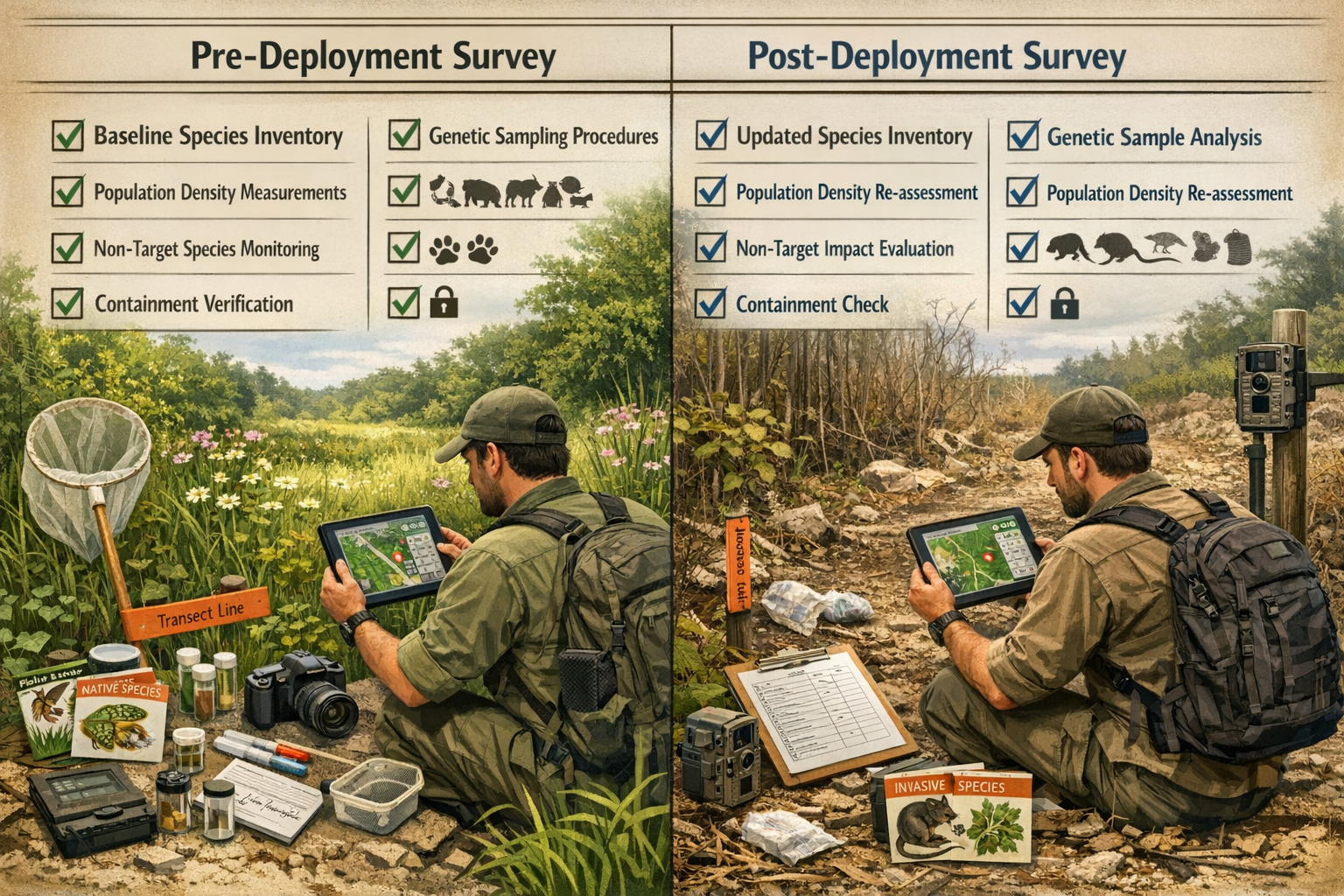
Before any gene drive release, comprehensive baseline documentation establishes the reference point for detecting changes. This checklist provides essential survey components:
Phase 1: Target Species Assessment ✅
- Population density estimation using standardized methods
- Genetic diversity analysis (minimum 30 individuals sampled)
- Age structure and reproductive rate documentation
- Distribution mapping with GPS coordinates
- Behavioral observations and activity patterns
- Disease prevalence screening
Phase 2: Non-Target Species Inventory ✅
- Complete species list for all taxonomic groups present
- Abundance estimates for species sharing ecological niches
- Identification of predators dependent on target species
- Documentation of mutualistic relationships
- Rare, threatened, or protected species locations
- Genetic sampling of species with hybridization potential
Phase 3: Ecosystem Function Documentation ✅
- Food web mapping with trophic relationships
- Vegetation structure and composition surveys
- Soil health indicators and nutrient cycling rates
- Water quality parameters (if aquatic systems involved)
- Pollination network observations
- Seed dispersal mechanism documentation
Phase 4: Reference Site Establishment ✅
- Identification of comparable control sites (minimum 3)
- Matching habitat characteristics documentation
- Baseline surveys at reference sites using identical methods
- Access agreements for long-term monitoring
- Photographic documentation from fixed points
This comprehensive approach aligns with professional standards outlined in biodiversity net gain assessments while addressing the unique requirements of genetic intervention monitoring.
Post-Deployment Monitoring Framework
Following gene drive release, monitoring intensity must match the technology's potential for rapid population-level changes. The following framework provides temporal guidance:
Immediate Phase (Months 0-6):
- Weekly target species population surveys
- Bi-weekly non-target species checks
- Daily observation of any unusual mortality events
- Genetic sampling every 2 months to track drive frequency
- Continuous environmental parameter monitoring
Establishment Phase (Months 6-24):
- Monthly target species surveys
- Quarterly comprehensive biodiversity surveys
- Seasonal reproductive success monitoring
- Genetic analysis every 4 months
- Comparison with reference sites
Long-Term Phase (Years 2-10):
- Quarterly target species surveys
- Annual complete biodiversity inventories
- Yearly genetic diversity assessments
- Five-year ecosystem function evaluations
- Continuous comparison with reference sites
Key Performance Indicators for Monitoring
Surveyors should track specific metrics that indicate whether gene drive deployment remains within acceptable parameters:
Containment Indicators:
- Drive allele frequency remaining below threshold in buffer zones
- Zero detection of drive in non-target species
- Geographic spread matching predictive models (±10%)
- Temporal persistence aligning with design specifications
Ecological Health Indicators:
- Non-target species populations within 15% of baseline
- No statistically significant changes at reference sites
- Trophic relationships maintaining functional integrity
- Protected species showing stable or improving trends
Intervention Triggers:
- Drive detected beyond designated containment zone
- Non-target species decline exceeding 20% from baseline
- Protected species showing negative population trends
- Unpredicted ecosystem changes affecting multiple species
When intervention triggers are reached, surveyors must immediately notify regulatory authorities and implement contingency protocols, which may include supplementary releases of wild-type organisms, habitat manipulation to reduce drive spread, or activation of reversal drives if available.
Ethical Considerations and Stakeholder Engagement
Informed Consent and Community Participation
Gene drive deployment decisions cannot rest solely with scientists and regulators. Meaningful stakeholder engagement requires:
- Early consultation with affected communities before research begins
- Transparent communication of risks, uncertainties, and potential benefits
- Recognition of indigenous rights and traditional ecological knowledge
- Establishment of community advisory boards with decision-making authority
- Accessible educational materials in local languages
- Ongoing dialogue throughout all project phases
For surveyors, this means documenting community perspectives and incorporating local ecological knowledge into monitoring protocols. Traditional ecological observations often detect subtle changes that standardized surveys might miss.
Transboundary Governance Challenges
Invasive species and gene drives both ignore political boundaries. A gene drive released for rodent control on one nation's islands could potentially spread to neighboring territories. This reality demands:
- International coordination frameworks before any deployment
- Shared monitoring data across jurisdictions
- Harmonized risk assessment standards
- Liability agreements addressing transboundary impacts
- Dispute resolution mechanisms
Surveyors working near international borders must coordinate with counterparts in adjacent countries, establishing joint monitoring protocols and data-sharing agreements.
Reversibility and Contingency Planning
Despite self-limiting designs, gene drives may require active reversal if unexpected impacts occur. Contingency planning should include:
- Reversal drive development running parallel to suppression drive programs
- Cryopreserved wild-type populations enabling genetic rescue
- Habitat refugia where wild-type populations remain protected
- Financial reserves dedicated to intervention measures
- Clear decision-making protocols specifying who can authorize reversal
Biodiversity surveyors play a crucial role in reversibility planning by identifying suitable refugia locations and monitoring wild-type population viability throughout deployment phases.
Regulatory Landscape and Compliance Requirements in 2026
Current Regulatory Frameworks
As of 2026, gene drive regulation remains fragmented across jurisdictions. Key regulatory considerations include:
United Kingdom: Gene drives fall under GMO regulations requiring environmental risk assessments aligned with biodiversity net gain requirements. Any deployment must demonstrate no net loss to biodiversity and preferably contribute to the mandatory 10% gain.
European Union: The precautionary principle dominates, with strict containment requirements and extensive public consultation mandates before any field trials.
United States: Oversight involves multiple agencies—EPA for environmental releases, USDA-APHIS for agricultural applications, and FDA for human health concerns—creating complex approval pathways[4].
International: The Cartagena Protocol on Biosafety provides frameworks for transboundary movement of living modified organisms, though specific gene drive guidance continues evolving.
Documentation Requirements for Surveyors
Biodiversity professionals must maintain meticulous records meeting regulatory standards:
- Detailed survey methodologies with statistical power analyses
- Raw data with quality assurance/quality control documentation
- Photographic and video evidence with metadata
- Genetic analysis results with chain-of-custody records
- Deviation reports explaining any protocol departures
- Regular progress reports to regulatory authorities
- Public-facing summaries in accessible language
These documentation standards mirror those required for biodiversity net gain reports, ensuring consistency with established professional practices.
Case Studies: Gene Drive Applications in Conservation Contexts
Island Rodent Eradication Programs
Island ecosystems provide ideal testing grounds for gene drive technologies due to natural geographic containment. Several programs are advancing toward field trials:
Scenario: A remote island hosts critically endangered seabird colonies threatened by invasive rats. Traditional poisoning campaigns risk non-target species mortality and require repeated applications.
Gene Drive Approach: A sex-ratio distortion drive engineered to produce male-only offspring in subsequent generations. Models predict population collapse within 4-6 generations (approximately 2-3 years for rats).
Surveyor Responsibilities:
- Pre-deployment inventory of all vertebrate and invertebrate species
- Genetic baseline for native rodent species on nearby landmasses
- Weekly rat population monitoring using tracking tunnels and cameras
- Monthly seabird breeding success documentation
- Quarterly invertebrate surveys to detect food web changes
Outcomes to Date: Laboratory trials show 95%+ drive transmission rates with no detected off-target effects. Field trials await regulatory approval and community consent processes.
Mosquito Vector Control for Disease Prevention
Anopheles mosquito gene drives represent the most advanced application, with programs targeting malaria vector reduction in Africa[7]. While primarily a public health intervention, these programs have significant biodiversity implications:
Ecological Considerations:
- Mosquitoes serve as prey for fish, birds, and other insects
- Pollination roles for certain plant species
- Potential competitive release of other mosquito species
- Aquatic ecosystem impacts from larval population changes
Monitoring Protocols:
- Molecular surveillance tracking drive allele frequencies
- Entomological surveys of non-target mosquito species
- Vertebrate predator population monitoring
- Aquatic invertebrate community assessments
- Plant-pollinator interaction observations
These programs demonstrate the complexity of assessing gene drive impacts across multiple ecological scales, reinforcing the need for comprehensive surveyor training.
Future Directions and Emerging Technologies
Next-Generation Gene Drive Designs
Research continues advancing toward safer, more controllable systems:
Daisy Chain Drives: Multiple linked genetic elements that degrade over generations, providing built-in obsolescence while maintaining effectiveness during critical control periods.
Split Drives: Separating drive components across multiple genetic loci, requiring all elements to be present for function, reducing accidental activation risks.
Precision Drives: Targeting highly specific genetic sequences found only in invasive populations of particular species, minimizing any possibility of affecting native relatives.
Integration with Broader Conservation Strategies
Gene drives should not be viewed in isolation but as potential tools within comprehensive conservation programs. Integration considerations include:
- Combining with habitat restoration to support native species recovery
- Coordinating with biodiversity net gain delivery strategies
- Sequencing with traditional control methods during transition periods
- Supporting with public education and community engagement initiatives
For surveyors, this means developing skills in multi-method impact assessment and understanding how genetic interventions interact with landscape-scale conservation planning.
Professional Development Needs
As gene drive technologies advance, biodiversity professionals require enhanced competencies:
- Molecular ecology fundamentals understanding genetic sampling and analysis
- Population genetics interpreting drive frequency data and inheritance patterns
- Risk communication skills translating complex genetic concepts for stakeholders
- Ethical reasoning frameworks navigating novel conservation dilemmas
- Adaptive management approaches responding to monitoring results with protocol adjustments
Professional organizations should develop certification programs ensuring surveyors possess necessary competencies for gene drive monitoring roles.
Conclusion
Gene Drive Technologies in Invasive Species Control: Risk Assessment Protocols for Biodiversity Surveyors in 2026 represent a frontier where cutting-edge genetic engineering meets traditional conservation practice. These powerful tools offer unprecedented potential for addressing invasive species that threaten native biodiversity, yet they demand equally sophisticated monitoring and risk assessment approaches.
Biodiversity surveyors stand at the critical interface between laboratory innovation and field reality. The protocols outlined in this guide—from comprehensive pre-deployment baselines through multi-generational post-deployment monitoring—provide frameworks for ensuring gene drive applications deliver conservation benefits while safeguarding against unintended ecological consequences.
Actionable Next Steps for Biodiversity Professionals:
-
Enhance molecular ecology competencies through professional development courses focusing on genetic sampling and analysis techniques
-
Establish reference site networks in your survey areas now, creating baseline data that will prove invaluable if gene drive proposals emerge
-
Engage with stakeholder communities early and often, building trust and communication channels before controversial decisions arise
-
Develop institutional protocols for gene drive assessment aligned with existing biodiversity impact assessment frameworks
-
Participate in policy development by contributing field expertise to regulatory discussions shaping gene drive governance
-
Collaborate across disciplines connecting with geneticists, ethicists, and social scientists to build comprehensive assessment teams
-
Document and share lessons learned contributing to the evolving knowledge base guiding responsible gene drive deployment
The path forward requires balancing innovation with precaution, scientific rigor with ethical sensitivity, and technical expertise with community wisdom. By implementing robust risk assessment protocols and maintaining unwavering commitment to ecological integrity, biodiversity surveyors can help ensure that gene drive technologies serve conservation goals while respecting the complexity and value of natural systems.
For additional guidance on integrating emerging technologies into biodiversity assessment frameworks, explore our resources on achieving biodiversity net gain and contact our team for project-specific consultation.
References
[1] Gene Drive Technology For Invasive Species Management 104425 – https://www.longdom.org/open-access/gene-drive-technology-for-invasive-species-management-104425.html
[2] Gene Editing Next Generation Tool Invasive Species Management – https://www.eli.org/events/gene-editing-next-generation-tool-invasive-species-management
[3] Default – https://www.isaaa.org/kc/cropbiotechupdate/gdn/article/default.asp?ID=20054
[4] Scientists Explore Gene Editing Manage Invasive Species – https://www.usda.gov/about-usda/news/blog/scientists-explore-gene-editing-manage-invasive-species
[5] A New Crispr Driven Technology For Gene Drive In Plants – https://www.caltech.edu/about/news/a-new-crispr-driven-technology-for-gene-drive-in-plants
[6] Gene Drives Engineering Natures Future – https://www.connectedideasproject.com/p/gene-drives-engineering-natures-future
[7] Editorial Overview Insect Genomics 2026 Enhancing Public Health Food Security And Biodiversity Through Genetic Biocontrol – https://www.geneconvenevi.org/articles/editorial-overview-insect-genomics-2026-enhancing-public-health-food-security-and-biodiversity-through-genetic-biocontrol/