

Last updated: October 20, 2026
Quick Answer
The Norfolk Environmental Delivery Plan consultation, published by Natural England on 17 September 2026, closes at 9.29am on Tuesday 27 October 2026. It proposes a £2,675-per-dwelling Nature Restoration Levy (before indexation and VAT) to address nutrient pollution affecting The Broads SAC, the Broadland Ramsar site and the River Wensum SAC, potentially unlocking up to 15,780 homes over a 10-year plan period. Developers, landowners and ecologists working in these catchments have until the deadline to submit views, because the final scheme will reshape how nutrient neutrality is dealt with across central and eastern Norfolk.
Key Takeaways
- Consultation closes 9.29am, Tuesday 27 October 2026, a 28 working-day window from the 17 September 2026 publication.
- The draft levy is £2,675 per new home, excluding indexation and VAT.
- The EDP covers three protected sites: The Broads SAC (Yare and Bure), the Broadland Ramsar site, and the River Wensum SAC.
- Up to 15,780 homes could be unlocked over the plan's 10-year life, subject to passing an "overall improvement test."
- The Nature Restoration Levy Regulations 2026 were published 10 September 2026, under Part 3 of the Planning and Infrastructure Act 2025.
- Sixteen nutrient EDPs are currently in development nationally; nutrient neutrality already applies in 27 catchments covering 31 protected sites and 74 local planning authorities.
- Critics, including the Environmental Farmers Group, CLA and CIEEM, warn the levy could undercut private nutrient mitigation markets priced at £2,500-£10,000 per home.
- The levy sits alongside, not instead of, Biodiversity Net Gain obligations under the BNG rules updated on 6 August 2026.
What Is the Norfolk Environmental Delivery Plan?
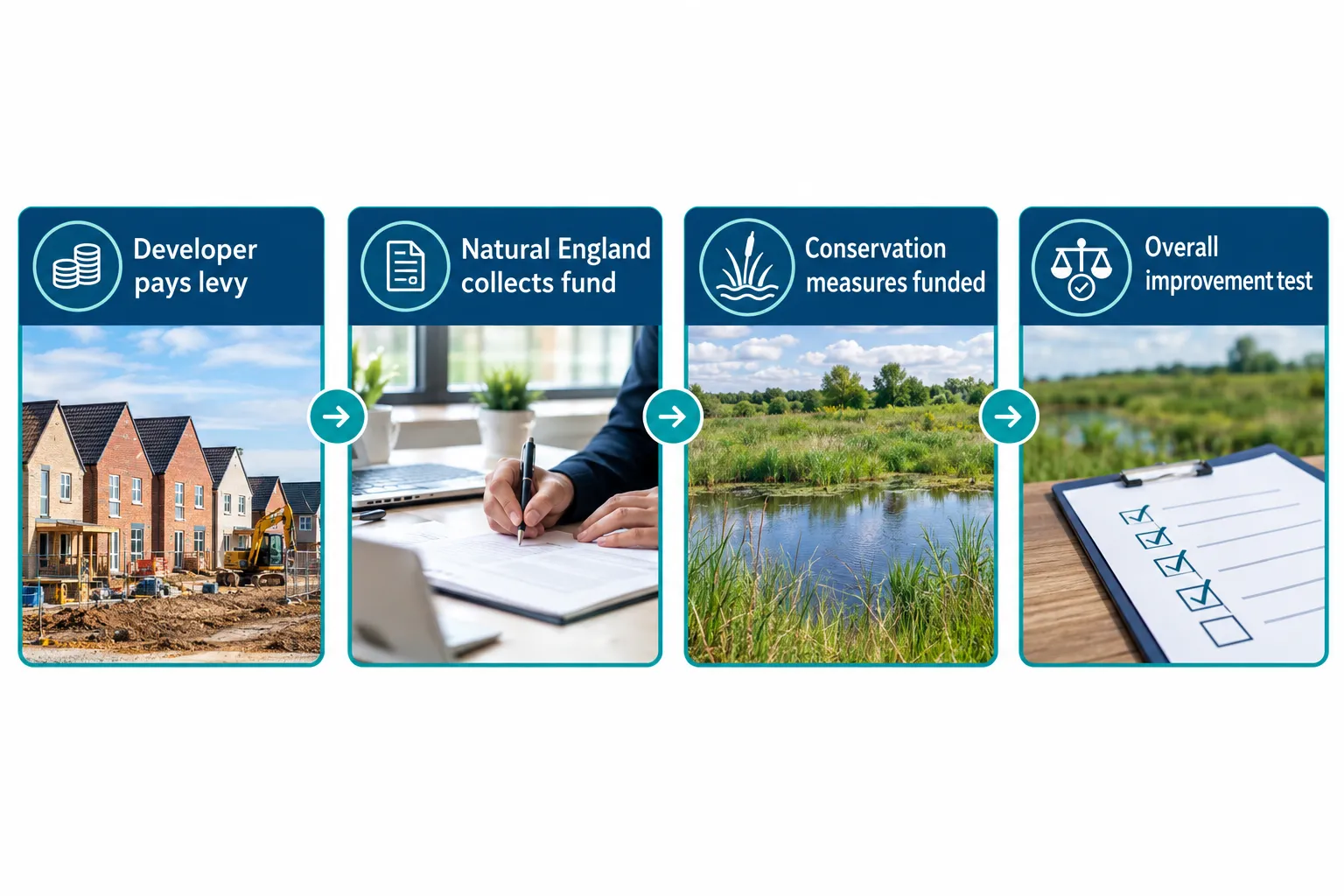
The Norfolk Environmental Delivery Plan is a draft strategy from Natural England that lets developers pay a fixed levy instead of arranging individual nutrient mitigation, in exchange for pooled, landscape-scale conservation works. It is the first EDP published under the Planning and Infrastructure Act 2025 framework and focuses specifically on nutrient pollution.
The plan runs for 10 years and must satisfy an "overall improvement test" by its end date, meaning the conservation measures it funds must materially outweigh the negative effects of the development it enables. If that test cannot be met, the plan's legal basis for unlocking development weakens. Natural England has stated 16 nutrient EDPs are in development across England, so Norfolk is a test case others will watch closely.
What Does the £2,675 Nature Restoration Levy Actually Cover?
The levy is intended to fund nutrient-reducing conservation measures across the three protected sites named in the plan, rather than site-specific mitigation for each individual development. It is a per-dwelling charge, set before indexation and VAT are applied.
Sally Hayns of CIEEM has raised a direct concern worth noting here: only about a third of the proposed measures in the draft appear to reduce nutrient loads directly, prompting questions about whether the fund is large enough to deliver the promised outcomes. Ecologists reviewing the consultation should check this ratio carefully against the published measures list.
Who Has to Pay the Nature Restoration Levy in Norfolk?
Any developer building new dwellings within the catchments of The Broads SAC, the Broadland Ramsar site or the River Wensum SAC, who chooses the EDP route rather than arranging bespoke nutrient mitigation, would pay the levy. The charge applies per new home, not per site or per planning application.
Developers already holding agreements for site-specific nutrient credits are not automatically required to switch to the levy, it is designed as an alternative route, not a mandatory replacement, at least under the current draft.
How Is the Per-Home Levy Amount Calculated?
Natural England has set the £2,675 figure based on the estimated cost of delivering sufficient nutrient-reducing conservation measures across the plan area, divided to reflect anticipated housing numbers over the 10-year period. The figure excludes indexation (future inflation adjustments) and VAT, so the real cost paid by developers will rise over time and may be higher than the headline figure once tax is added.
- Decision rule: if a scheme is phased over several years, budget for the levy to increase through indexation before it is actually paid.
- Common mistake: treating £2,675 as a fixed, final cost rather than a baseline figure.
What Happens if Developers Don't Pay the Norfolk Levy?
Developers who do not pay the levy and have no alternative mitigation in place cannot rely on the EDP to discharge their nutrient neutrality obligations, meaning their planning application would still need to satisfy Habitats Regulations 2017 requirements through other means. In practice, that means falling back on site-specific nutrient credits, on-site mitigation, or delaying the scheme until mitigation is secured.
This is not optional for sites within a nutrient-neutrality catchment, some lawful route to neutrality is required before homes can be occupied, whether through the EDP levy or a conventional credit purchase.
Are There Exemptions From the Nature Restoration Levy?
The draft consultation does not set out blanket exemptions from the levy itself, since it is a voluntary alternative route rather than a universal charge. However, developers should not confuse this with Biodiversity Net Gain exemptions, which are separate and follow different rules.
Under BNG regulations that came into force 6 August 2026:
- Small sites under 0.2 hectares are exempt where no priority habitat is affected.
- Temporary developments of up to five years have an exemption.
- The self/custom-build exemption was removed.
- A revised gain hierarchy now applies to non-major development.
These BNG exemptions do not extend to the nutrient levy, which operates under its own regulations.
How Does Norfolk's Scheme Compare to Other Environmental Levies?
Norfolk's EDP levy is the first of its kind under the new Nature Restoration Fund model, pooling money for landscape-scale works rather than funding site-by-site projects, which is the key structural difference from existing nutrient credit markets. Private mitigation schemes, by contrast, price credits individually per catchment and per provider.
| Feature | Norfolk EDP Levy | Private Nutrient Credits |
|---|---|---|
| Price per home | £2,675 (before VAT/indexation) | £2,500-£10,000 (EFG, Greenshank estimates) |
| Funding model | Pooled, landscape-scale | Site-specific, market-based |
| Oversight | Natural England | Private providers, variable |
| Flexibility | Fixed national-style pricing | Negotiable, market-driven |
| Legal test | Overall improvement test by year 10 | Immediate neutrality demonstration |
Matthew Tucker of Burges Salmon has warned that private credit values "could be drastically influenced by Natural England's charging schedules," meaning the levy's price may itself reshape the private market it sits alongside.
What Are Alternatives to Paying the Nature Restoration Levy?
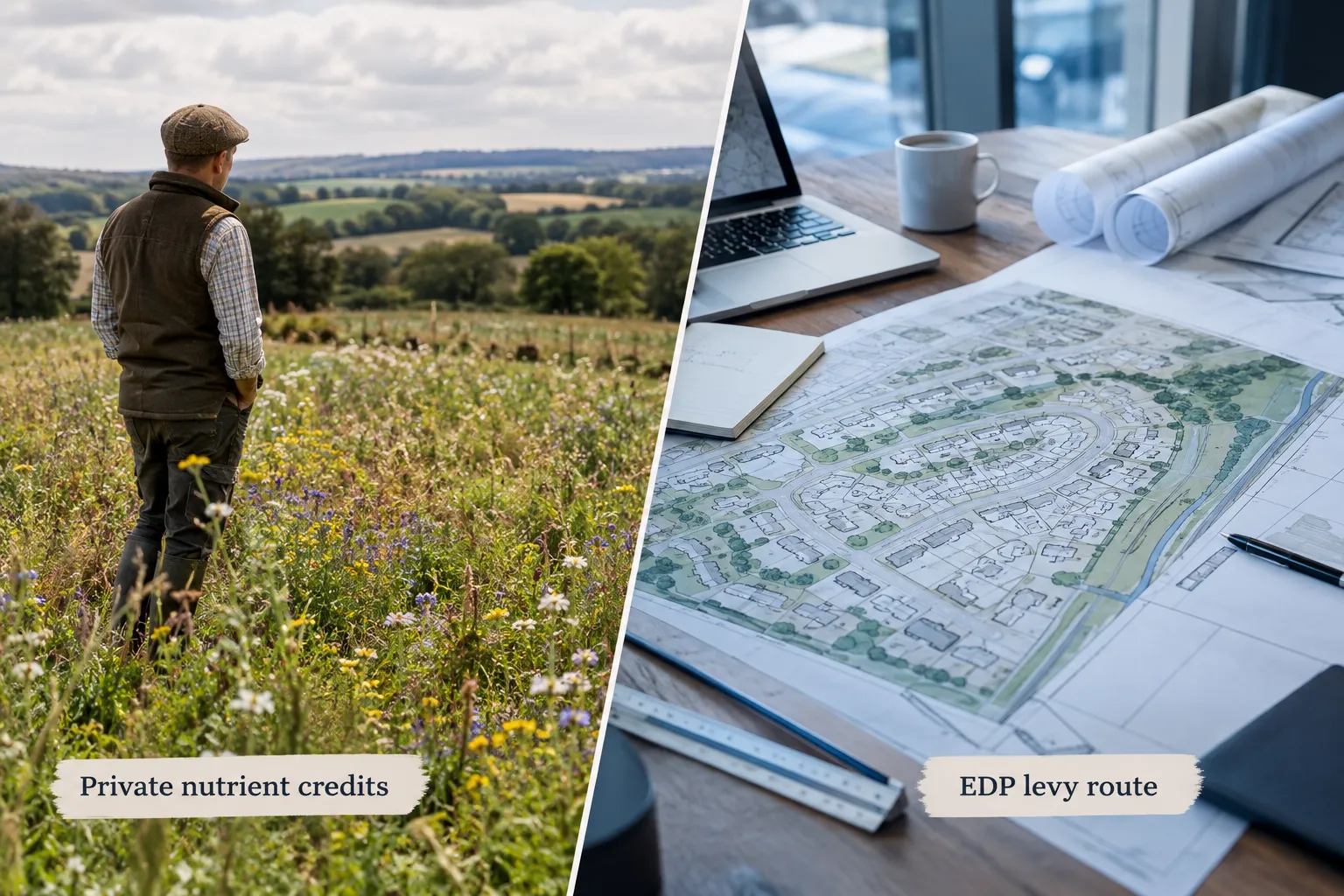
Developers can still pursue site-specific nutrient mitigation through established private credit markets, buy credits from farmer-led schemes such as those represented by the Environmental Farmers Group, or deliver on-site nutrient reduction measures directly. Digby Sowerby of EFG has warned the levy could "severely impact the private market" these alternatives rely on, since a lower-priced government levy may undercut farmer-led mitigation income.
- Choose private credits if you need certainty tied to a specific site timeline rather than a 10-year pooled plan.
- Choose the EDP levy if cost certainty and administrative simplicity matter more than controlling exactly which conservation project your money funds.
When and How Do You Pay the Norfolk Environmental Levy?
Payment mechanics will be confirmed once the consultation closes and Natural England finalises the plan, but the Nature Restoration Levy Regulations 2026, published 10 September 2026, set the legal framework for collection. Developers should expect payment to be tied to planning permission stages rather than completion, though exact timing details remain part of the consultation process.
What Can the Levy Money Be Spent On?
The levy is intended to fund conservation measures that reduce nutrient loads reaching The Broads SAC, the Broadland Ramsar site and the River Wensum SAC, such as fen restoration and other landscape-scale projects. Supporters argue pooling funds this way enables larger projects than scattered, site-specific schemes could achieve individually.
CIEEM's Sally Hayns has questioned whether the current measures list delivers enough direct nutrient reduction, so the final measures schedule, expected after consultation, deserves close scrutiny from ecologists submitting responses.
Do Small House Builders Have to Pay the Full £2,675?
The draft consultation applies the levy on a per-dwelling basis, so small house builders generally pay the same rate per home as larger developers, since the charge is not currently structured as a sliding scale by company size. Small builders should factor the levy into viability assessments for even modest schemes within the three affected catchments.
What's the Deadline for the Norfolk Consultation?
The Norfolk Environmental Delivery Plan consultation closes at exactly 9.29am on Tuesday 27 October 2026, giving respondents 28 working days from the 17 September 2026 publication date. Developers, landowners, farmers and ecologists wanting to influence the final levy rate, measures list or catchment boundaries must submit responses before this precise time.
What Common Mistakes Are Developers Making With This Levy?
The most common mistake is assuming the £2,675 figure is the final, all-in cost, when indexation and VAT will push the real figure higher by the time payment is due. A second common mistake is treating the EDP route as mandatory, when it remains an alternative to existing nutrient credit arrangements. A third is overlooking that BNG obligations under the August 2026 regulations apply separately and are not resolved by paying the nutrient levy.
Will the Nature Restoration Levy Actually Improve the Environment?
Whether the levy delivers genuine environmental improvement depends on passing the overall improvement test by the plan's 10-year end date, and critics including Alexa Culver of RSK Wilding have already called the EDP system "not fit for purpose." Campaigners have gone further, labelling the approach "pay-to-pollute," arguing that allowing development to proceed against a promise of future conservation gains risks prioritising housing delivery over immediate ecological protection.
Supporters counter that pooled funding allows measures like fen restoration at a scale individual developers could never finance alone, and that it gives developers cost certainty they currently lack under fragmented private credit markets.
What This Means for Developers and Ecologists Now
Developers with live or pending schemes in the Yare, Bure, Broadland or Wensum catchments should model both routes, the EDP levy and private nutrient credits, against current scheme viability before 27 October 2026. Ecologists and BNG specialists should review the measures list behind the overall improvement test and flag any gaps, particularly given CIEEM's concern that only a third of measures look like they directly cut nutrient loads. Landowners involved in farmer-led mitigation schemes should consider how a government-set price of £2,675 might affect negotiating power for private credits going forward.
Conclusion
The Norfolk Environmental Delivery Plan consultation represents the first real test of the Nature Restoration Fund model created under the Planning and Infrastructure Act 2025, and its outcome will likely shape the other 16 nutrient EDPs now in development nationally. Developers should not wait for the final scheme to start planning: model the levy against private credit costs now, factor in indexation and VAT, and submit consultation responses before 9.29am on 27 October 2026. Ecologists and landowners with direct experience of nutrient mitigation markets are particularly well placed to comment on whether the proposed measures will genuinely meet the overall improvement test, and should do so before the window closes.
FAQ
What is the Norfolk Environmental Delivery Plan consultation about?
It is Natural England's consultation on a draft plan allowing developers to pay a £2,675-per-home levy instead of arranging individual nutrient mitigation, covering three protected Norfolk sites, open for responses until 27 October 2026.
When exactly does the consultation close?
At 9.29am on Tuesday 27 October 2026, 28 working days after its 17 September 2026 publication.
Is the £2,675 figure final?
No. It excludes indexation and VAT, so the actual amount paid will be higher and may rise over the plan's 10-year life.
Do I have to use the EDP levy instead of private nutrient credits?
No. The levy is an alternative route; developers can still use existing private nutrient credit markets or on-site mitigation.
How many homes could the Norfolk EDP unlock?
Up to 15,780 homes over the plan's 10-year period, subject to the overall improvement test being met.
Does this affect Biodiversity Net Gain requirements?
No, BNG obligations are separate and governed by regulations that came into force 6 August 2026, including a small-site exemption and revised gain hierarchy.