

Three out of twenty-three. That is the blunt scorecard The Wildlife Trusts handed the UK government on 6 October 2026, and it lands squarely on the desks of planners, landowners and developers already navigating mandatory Biodiversity Net Gain. The report, Runway to Recovery, Fixing Nature in the UK, confirms the UK off track nature targets 2030 biodiversity net gain October 2026 story is no longer a future risk. It is today's reality, arriving just weeks before world leaders meet at COP17 in Armenia to review the same global framework.
For anyone involved in land development, ecology surveys or planning applications, the findings are a wake-up call. They also sharpen the stakes around existing BNG rules, the upcoming extension to major infrastructure, and a separate political proposal to restructure England's environmental watchdogs.
Key Takeaways
- The Wildlife Trusts report finds the UK on track for only 3 of 23 Global Biodiversity Framework targets due by 2030, with 20 showing insufficient progress.
- The report was published 6 October 2026, ahead of UN COP17 (19-30 October 2026, Armenia).
- Progress highlights include most Local Nature Recovery Strategies now published in England and a sandeel fishing ban in English and Scottish waters.
- Mandatory Biodiversity Net Gain, its small-sites exemption, and the planned November 2026 extension to Nationally Significant Infrastructure Projects remain central tools for closing the gap.
- Developers should start ecological baselining and BNG planning early to avoid delays as scrutiny on nature delivery intensifies.
UK Off Track Nature Targets 2030 Biodiversity Net Gain October 2026: The Headline Findings
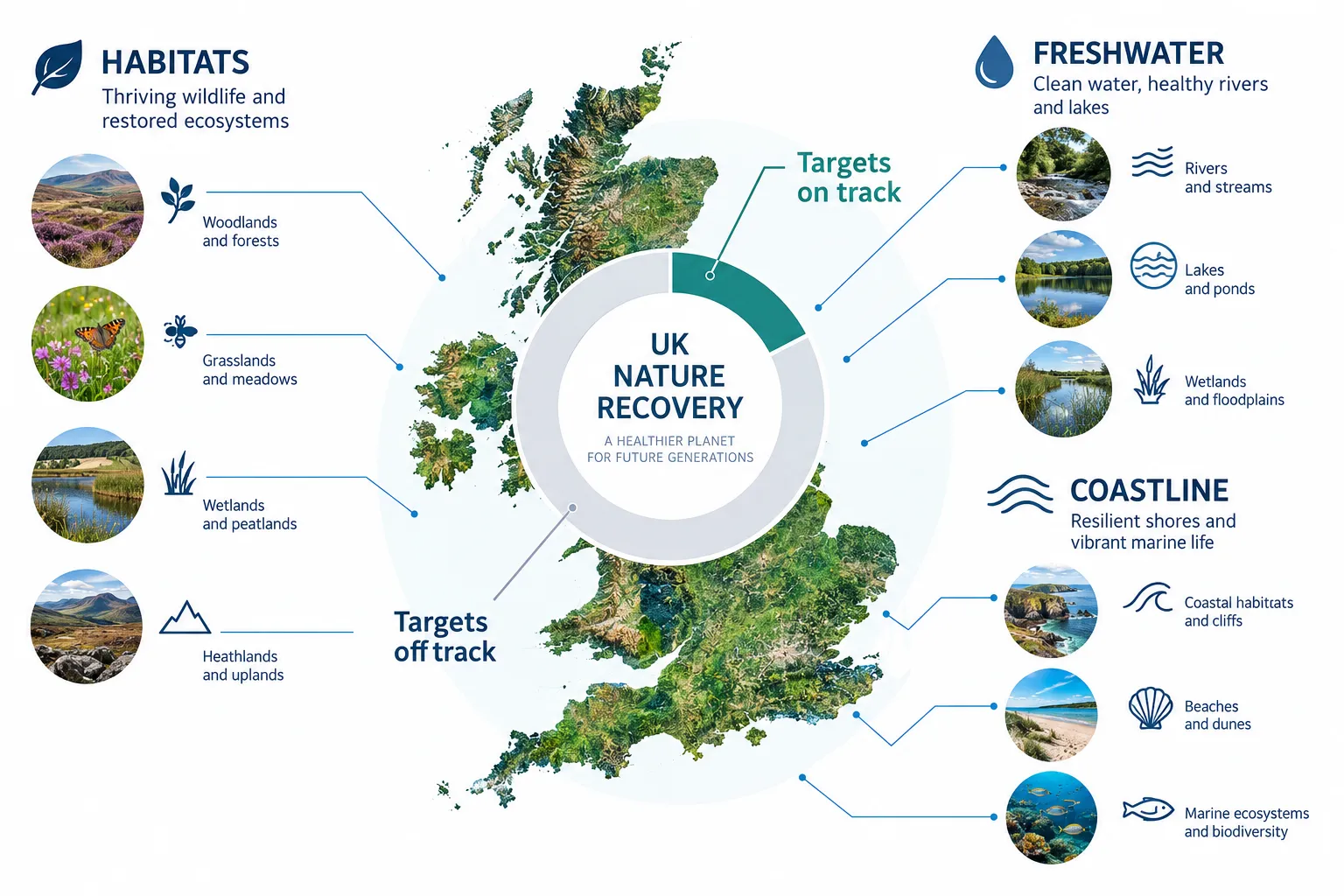
The Global Biodiversity Framework was agreed by 196 countries in 2022, setting 23 targets to halt and reverse nature loss by 2030. The Wildlife Trusts' new assessment is the clearest signal yet that the UK off track nature targets 2030 biodiversity net gain October 2026 narrative is grounded in hard evidence, not speculation. Of the 23 targets, only three are judged on track. The remaining 20 show what the report calls insufficient progress.
Zoe Quiroz Cullen, Head of Climate and International Policy at The Wildlife Trusts, did not soften the message: "The UK may have made important commitments to protect and restore nature, but we are not seeing action at the scale or speed needed." She added that "nature must therefore be treated as essential national infrastructure," warning that "the stakes go far beyond meeting environmental targets."
That framing matters for development. If nature is infrastructure, then biodiversity delivery sits alongside roads, energy and housing as a national priority, not a side issue in planning.
What The Wildlife Trusts Are Asking For
The report sets out a clear action list for government:
- Deliver the 30×30 commitment: 30 percent of land, freshwater and sea protected and managed for nature by 2030.
- Restore and reconnect fragmented habitats across the country.
- Reduce pollution and curb unsustainable development pressure.
- Use nature-based solutions to tackle climate change.
- Properly fund national, devolved and local government to deliver nature recovery.
- Adopt a whole-of-society approach, involving businesses, communities and landowners.
Where Progress Is Real
It is not all bad news. The report credits two concrete wins: Local Nature Recovery Strategies have now been published across most of England, giving councils and developers a shared map of priority habitats. And a ban on sandeel fishing in the English North Sea and Scottish waters protects a key food source for seabirds and marine mammals. These are modest steps against 20 lagging targets, but they show delivery is possible when policy and funding align.
Biodiversity Net Gain's Role in Closing the Gap
Mandatory Biodiversity Net Gain is arguably England's most direct planning tool for tackling the UK off track nature targets 2030 biodiversity net gain October 2026 shortfall. Under the current rules, most planning permissions must deliver at least a 10 percent net gain in biodiversity value, secured through a 30-year management commitment and measured using the statutory biodiversity metric.
Earlier this year, a small-sites exemption was introduced to ease the compliance burden on minor developments, allowing a simplified approach for qualifying projects. Looking ahead, BNG requirements are set to extend to Nationally Significant Infrastructure Projects from November 2026, bringing major energy, transport and water schemes into the same net gain framework that already applies to housing and commercial development.
This matters directly for the 30×30 ambition. Every site that delivers genuine, well-managed habitat gain contributes, however incrementally, to the connected network of protected and recovering land the Global Biodiversity Framework calls for. The table below summarises how each BNG element connects to the wider nature recovery picture.
| BNG Element | Current Status | Link to 30×30 and Nature Recovery |
|---|---|---|
| 10% net gain requirement | Mandatory on most applicable developments | Adds new or enhanced habitat area over baseline |
| 30-year management period | Secured via legal agreement or conservation covenant | Supports long-term habitat connectivity, not just short-term planting |
| Statutory biodiversity metric | Required for measuring gain | Provides consistent data for tracking national progress |
| Small-sites exemption | Introduced earlier in 2026 | Simplifies compliance for minor schemes |
| NSIP extension | From November 2026 | Brings major infrastructure into net gain obligations |
The Opposition's Proposal on Natural England and the Environment Agency
On the same day the Wildlife Trusts report was published, the Conservative Party conference saw a separate and unrelated political development. The opposition proposed abolishing Natural England and the Environment Agency, folding their functions into Defra directly. It is important to be clear: this is an opposition proposal, not government policy, and no legislative timetable has been set.
For developers and ecologists, the proposal raises questions worth watching rather than acting on immediately. Natural England currently plays a central role in biodiversity metric guidance, protected species licensing and BNG oversight. Any future restructuring of regulatory bodies would need to preserve continuity in these functions to avoid disrupting live planning applications. For now, current processes, consultees and statutory requirements remain unchanged.
What Developers Should Do Now
Given the scrutiny building around UK off track nature targets 2030 biodiversity net gain October 2026, and the imminent NSIP extension, developers have practical reasons to act early rather than wait for further policy clarity.
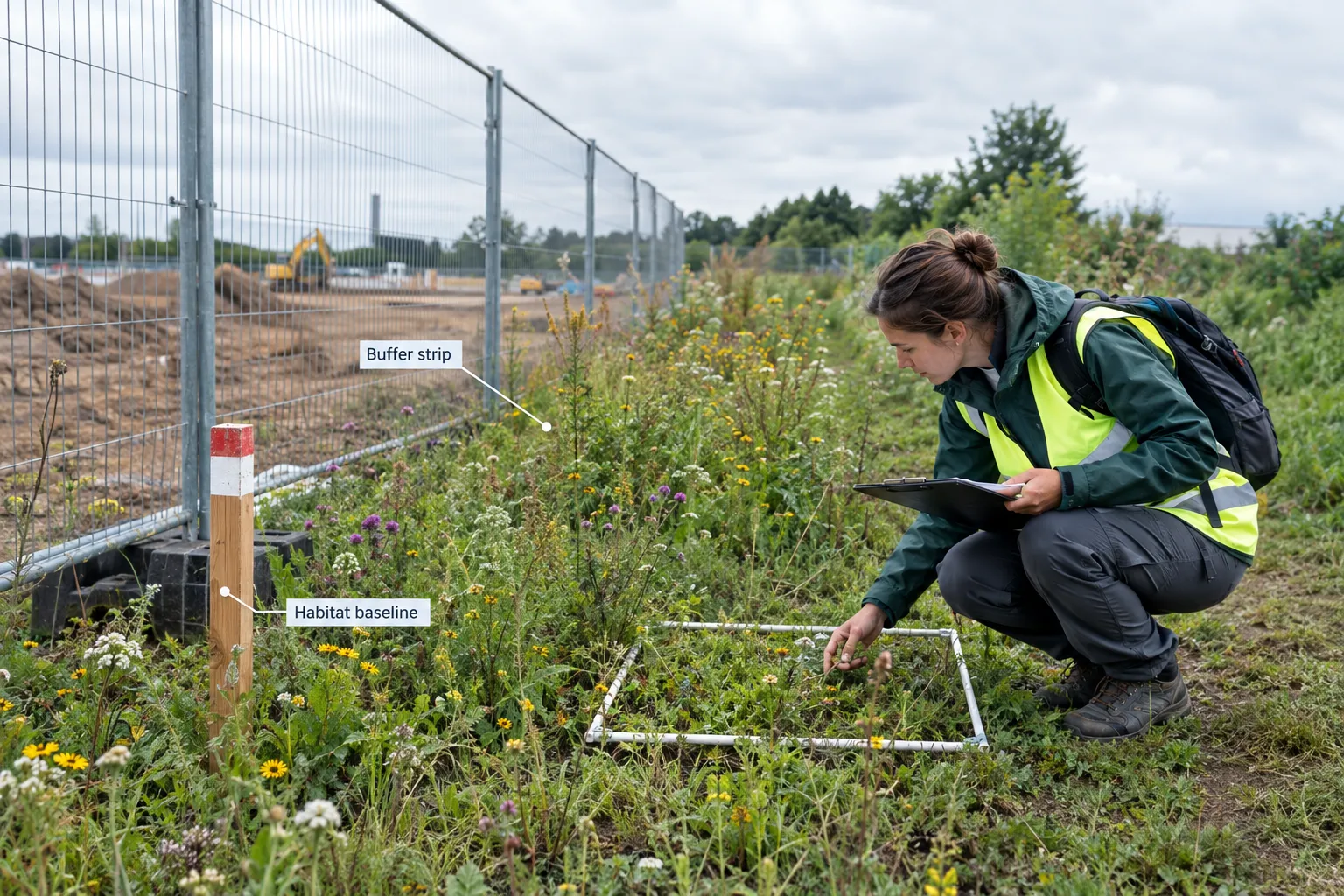
- Commission ecological surveys early. Baseline habitat condition assessments take time and are season-dependent; starting late can delay planning submissions by months.
- Build a robust habitat baseline. Accurate baseline data underpins the statutory metric calculation and protects against disputes over net gain claims later.
- Draft a BNG delivery plan before submission. Decide early whether gains will be delivered on-site, off-site, or through biodiversity credits, and factor the 30-year management commitment into project costings.
- Check Local Nature Recovery Strategy priorities. With strategies now published across most of England, aligning site habitat choices with local priorities can smooth planning consultation.
- Track the NSIP extension timeline. Infrastructure developers should prepare metric calculations well ahead of the November 2026 widening of BNG obligations.
"Nature must therefore be treated as essential national infrastructure.", Zoe Quiroz Cullen, The Wildlife Trusts
Frequently Asked Questions
What does "UK off track nature targets 2030" actually mean?
It means the UK is judged likely to miss most of the 23 Global Biodiversity Framework targets due by 2030, according to The Wildlife Trusts' October 2026 assessment, which found only 3 targets on track.
Does this affect existing Biodiversity Net Gain rules for developers?
Not directly in legal terms. Current BNG requirements, including the 10 percent net gain and 30-year management rule, remain unchanged, but the report increases political and public pressure to strengthen delivery and enforcement.
What is changing in November 2026?
Biodiversity Net Gain requirements are set to extend to Nationally Significant Infrastructure Projects, bringing major schemes into the same net gain framework already used for most other developments.
Is Natural England being abolished?
No decision has been made. It is currently an opposition proposal floated at the Conservative Party conference to fold Natural England and the Environment Agency into Defra. It is not government policy.
What is 30×30?
It is the global commitment to protect and sustainably manage 30 percent of land, freshwater and sea by 2030, one of the key asks highlighted in the Wildlife Trusts report.
Conclusion
The Wildlife Trusts' verdict is stark: only three of twenty-three global nature targets are on track, and the UK off track nature targets 2030 biodiversity net gain October 2026 story will likely dominate discussion through COP17 and beyond. For developers, the practical response is not to wait for policy shifts around Natural England or future funding announcements. It is to treat Biodiversity Net Gain as a core project requirement now: commission early ecological surveys, establish a defensible habitat baseline, and build a BNG delivery plan that accounts for the 30-year management horizon and the coming NSIP extension. Acting early protects project timelines and contributes, site by site, to the connected nature recovery the UK still urgently needs.