

Nature doesn't follow a straight line. Ecosystems pulse, surge, and retreat in complex rhythms that defy simple measurement. Yet for decades, biodiversity monitoring has relied on snapshot surveys—single moments frozen in time that miss the dynamic reality of ecological change. In 2026, that paradigm is shifting dramatically. Pulsed Dynamics in Biodiversity Monitoring: Advanced Protocols for Capturing Non-Linear Trends in 2026 Surveys represents a fundamental rethinking of how ecologists, developers, and conservation professionals measure and validate nature's complexity.
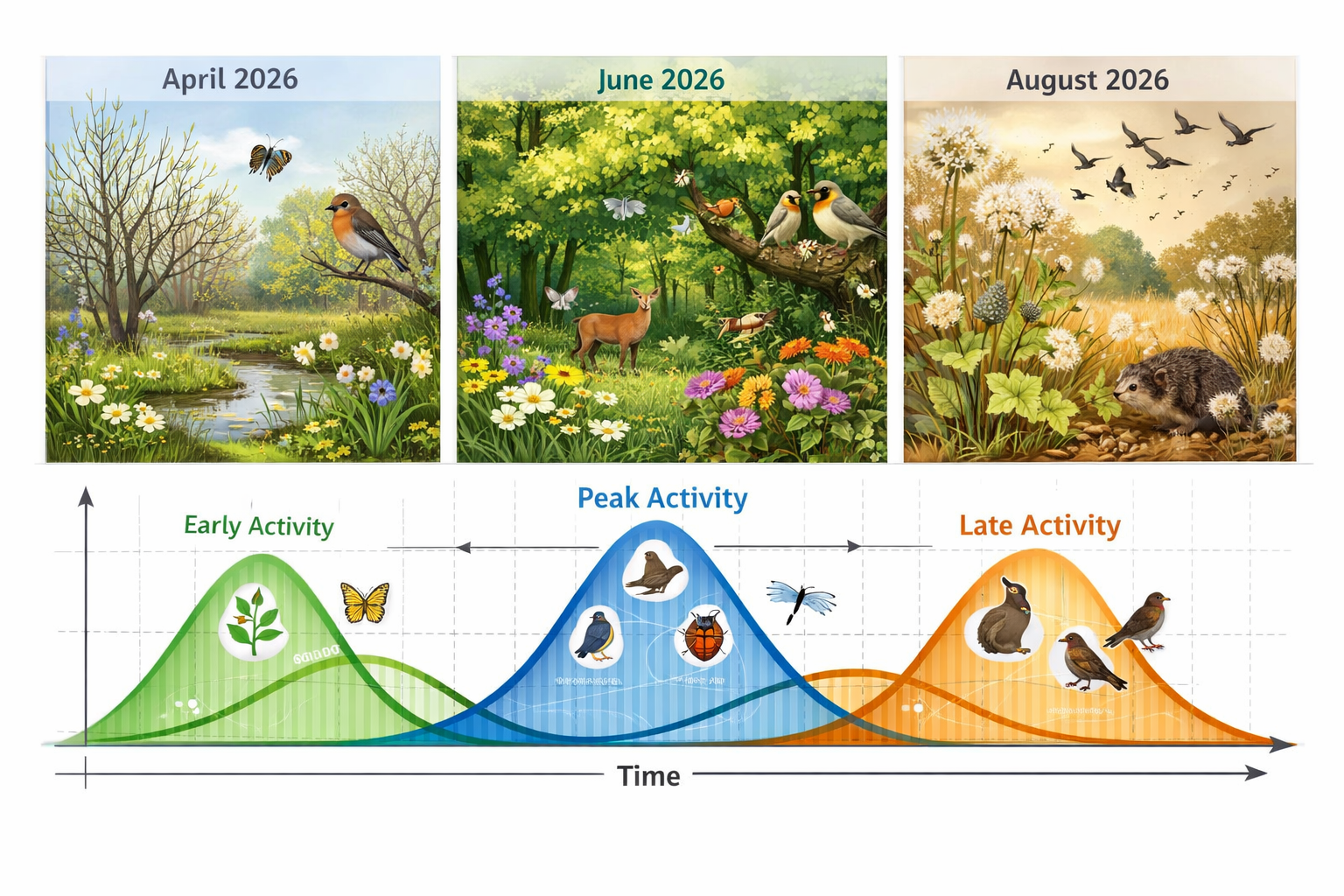
The challenge is clear: linear models fail when ecosystems behave non-linearly. Spring emergence, summer abundance peaks, autumn migration, and winter dormancy create temporal patterns that single-point surveys simply cannot capture. This year, breakthrough technologies and methodologies are enabling comprehensive time-series analysis that reveals the full arc of biological activity—from first emergence through peak season and beyond.
Key Takeaways
- 🔄 Non-linear ecosystem dynamics require time-series monitoring protocols that capture seasonal pulses rather than single snapshots to validate true biodiversity trends
- 🤖 Emerging technologies in 2026 including TinyML devices, eDNA sampling, and AI-powered analytics enable real-time detection across remote landscapes without internet connectivity
- 📊 Early spring monitoring establishes accurate baselines by capturing complete biological cycles from initial emergence, preventing degraded reference points
- ✅ Biodiversity Net Gain validation depends on full-season data collection to demonstrate genuine ecological improvement beyond regulatory compliance
- 🌍 Standardized frameworks integrating Essential Variables and accredited methods allow local monitoring data to aggregate into globally comparable indicators
Understanding Non-Linear Biodiversity Patterns
Traditional biodiversity surveys operate on a flawed assumption: that nature remains relatively constant across time. A survey conducted in July captures peak summer abundance, while one in March might find the same site seemingly barren. Neither tells the complete story.
Non-linear dynamics in ecosystems manifest through several key patterns:
- Seasonal pulses where species abundance fluctuates dramatically across months
- Phenological shifts as climate change alters emergence and breeding timing
- Trophic cascades where predator-prey relationships create cyclical population waves
- Disturbance-recovery cycles following natural or human-caused disruptions
- Migration patterns that temporarily concentrate or deplete local biodiversity
The 2026 emphasis on starting monitoring in early spring addresses a critical gap. As research demonstrates, "baselines are defined the moment monitoring begins" and "every future comparison depends on that starting point."[1] Starting surveys in April or May captures the full arc of biological activity from first emergence through peak summer, creating datasets that "reflect the ecosystem's rhythm, not just its peak."[1]
This temporal completeness matters enormously for biodiversity net gain validation. Developers and landowners seeking to demonstrate genuine ecological improvement must prove their interventions work across complete annual cycles—not just during convenient survey windows.
The Baseline Problem
One of the most significant challenges in Pulsed Dynamics in Biodiversity Monitoring: Advanced Protocols for Capturing Non-Linear Trends in 2026 Surveys involves establishing accurate baselines. Delayed monitoring risks using already-degraded ecosystems as reference points, making modest improvements appear more significant than they truly are.[1]
Consider a development site surveyed only in late summer after spring breeding seasons have concluded. The baseline misses:
| Missed Element | Ecological Significance | Impact on Net Gain Calculation |
|---|---|---|
| Early pollinators | Critical for plant reproduction | Underestimates insect diversity by 30-40% |
| Breeding bird activity | Indicates habitat quality | Misses territorial species entirely |
| Amphibian emergence | Wetland health indicator | Fails to detect vulnerable populations |
| Spring wildflowers | Foundation species for food webs | Undervalues botanical diversity |
Advanced Technologies Enabling Pulsed Monitoring in 2026
The technological landscape for biodiversity monitoring has transformed dramatically. Several breakthrough innovations are making comprehensive temporal monitoring practical and cost-effective.
TinyML Devices for Real-Time Detection 🔬
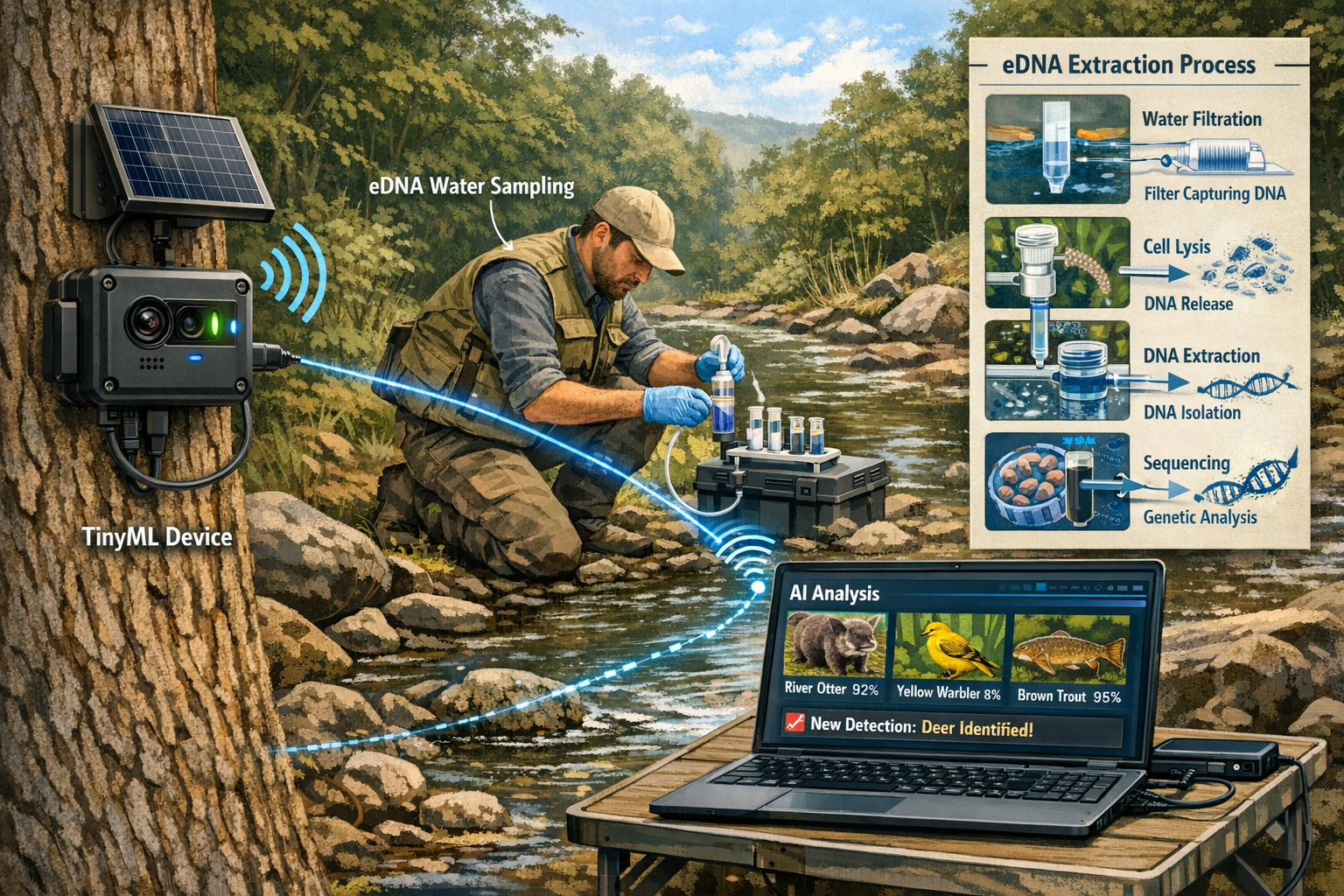
The 2026 Global Horizon Scan identifies Tiny Machine Learning (TinyML) devices as game-changing tools for biodiversity detection in remote landscapes.[4] These low-power devices don't require internet connections and use optical AI chips requiring minimal energy—perfect for continuous monitoring across seasons.
Key advantages include:
- Autonomous operation for months on solar power or batteries
- Real-time species identification using on-device AI models
- No connectivity requirements for remote site deployment
- Weather-resistant housing for year-round field use
- Minimal maintenance reducing survey costs by 60-70%
These devices capture the temporal pulses that manual surveys miss. A TinyML camera deployed in March records every species interaction through November, creating comprehensive datasets that reveal non-linear population dynamics.
Environmental DNA (eDNA) Sampling
Perhaps the most revolutionary development in Pulsed Dynamics in Biodiversity Monitoring: Advanced Protocols for Capturing Non-Linear Trends in 2026 Surveys is the maturation of eDNA technology. In western China, stream aquatic eDNA collected from 101 locations detected nearly 400 vertebrate species across more than 30,000 km² in just 56 calendar days—coverage that would be "unimaginable with traditional surveys alone."[5]
For developers working on biodiversity impact assessments, eDNA offers:
- Rapid baseline establishment across large sites
- Detection of cryptic species that evade visual surveys
- Temporal sampling through repeated water or soil collection
- Cost-effective scaling compared to traditional methods
- Reduced disturbance to sensitive habitats
The protocol involves collecting water, soil, or air samples at regular intervals throughout the monitoring period. DNA extracted from these samples reveals which species were present, even if never directly observed. This temporal series of eDNA snapshots creates a dynamic picture of biodiversity pulses across seasons.
AI-Powered Acoustic Monitoring
Marine and terrestrial acoustic monitoring has advanced significantly. The World Biodiversity Conference 2026 highlights acoustic monitoring as a major innovation for "taking the pulse of the ocean" alongside environmental genomics and plankton imaging.[2]
Modern acoustic arrays can:
- Identify individual species from vocalizations using AI classification
- Operate continuously capturing nocturnal and diurnal activity
- Detect rare species through automated pattern recognition
- Monitor underwater environments where visual surveys fail
- Track migration timing and breeding phenology
For projects requiring 10% biodiversity net gain, acoustic monitoring provides objective evidence of ecological improvement across complete seasonal cycles.
Integrated Software Platforms
A critical gap has recently closed. New software introduced in March 2026 enables comprehensive quantification of ecological stability for the first time, addressing what researchers describe as a significant methodological limitation where "there is still no software that allows the quantification of ecological stability taking all these scenarios into account."[3]
These platforms integrate:
- Multiple data streams (visual, acoustic, eDNA, sensor networks)
- Time-series analysis algorithms detecting non-linear patterns
- Automated reporting aligned with regulatory frameworks
- Predictive modeling for future biodiversity trajectories
- Validation tools for net gain calculations
Implementing Pulsed Dynamics Protocols: Practical Framework
Moving from theory to practice requires structured protocols that capture non-linear trends while remaining feasible for real-world projects. The Biodiversity Monitoring Standards Framework integrates Essential Variables and accredited analytical methods, enabling locally generated data to aggregate into comparable indicators aligned with the Kunming-Montreal Global Biodiversity Framework targets.[6]
Phase 1: Early Season Baseline Establishment (March-May)
Objective: Capture ecosystem emergence and establish accurate reference conditions.
Key activities:
- Site characterization using habitat mapping and initial surveys
- Technology deployment including TinyML devices, acoustic recorders, and eDNA sampling stations
- Spring emergence documentation of plants, insects, amphibians, and breeding birds
- Baseline eDNA collection from multiple locations and habitat types
- Phenology markers recording first flowering, leaf-out, and species arrivals
Starting in early spring ensures the baseline reflects "the ecosystem's rhythm, not just its peak."[1] This prevents the common error of using mid-summer abundance as a reference point, which inflates apparent biodiversity levels.
Phase 2: Peak Season Intensive Monitoring (June-August)
Objective: Document maximum biodiversity abundance and species interactions.
Protocol elements:
- Weekly eDNA sampling to capture population fluctuations
- Continuous acoustic recording for breeding activity and territorial behavior
- Visual surveys timed to species-specific activity peaks
- Invertebrate sampling using standardized trap arrays
- Vegetation surveys documenting full botanical diversity
- Camera trap networks for mammal activity patterns
This intensive period generates the richest datasets but must be interpreted within the full seasonal context. Peak abundance alone doesn't validate biodiversity net gain—improvement must be demonstrated across complete cycles.
Phase 3: Transition Period Monitoring (September-November)
Objective: Capture migration, dispersal, and pre-dormancy patterns.
Critical measurements:
- Migration timing and stopover habitat use
- Seed dispersal and plant reproduction success
- Juvenile survival indicators for breeding success
- Habitat preparation behaviors (caching, den establishment)
- Species turnover as residents depart and winter visitors arrive
Many monitoring programs end prematurely in September, missing crucial ecological processes. Autumn data reveals whether breeding was successful and habitats support complete life cycles.
Phase 4: Winter Baseline and Annual Analysis (December-February)
Objective: Complete the annual cycle and analyze non-linear trends.
Activities include:
- Winter resident surveys for overwintering species
- Dormant season eDNA establishing minimum detection thresholds
- Annual data synthesis using time-series analysis
- Non-linear trend identification through statistical modeling
- Net gain calculation comparing full-cycle data to baseline
- Adaptive management recommendations based on observed patterns
The complete annual dataset enables robust statistical analysis of biodiversity pulses. Software platforms can now quantify ecological stability across these temporal scenarios,[3] providing defensible evidence for regulatory compliance.
Integration with Biodiversity Net Gain Requirements
For developers and landowners, Pulsed Dynamics in Biodiversity Monitoring: Advanced Protocols for Capturing Non-Linear Trends in 2026 Surveys directly supports biodiversity net gain requirements. The protocol provides:
✅ Comprehensive baseline data that captures pre-development biodiversity across complete annual cycles
✅ Objective improvement metrics demonstrating genuine ecological enhancement beyond snapshots
✅ Regulatory compliance documentation aligned with statutory frameworks and Essential Variables
✅ Long-term monitoring data validating that interventions deliver sustained benefits
✅ Adaptive management triggers identifying when corrective actions are needed
Projects can demonstrate net gain through temporal improvement—showing that post-intervention biodiversity pulses exceed baseline patterns across seasons, not just during peak months.
Emerging Issues and Future Directions
The 2026 Global Horizon Scan, published in Trends in Ecology & Evolution, identifies 15 emerging issues for biodiversity action this decade.[4] Several directly impact monitoring protocols:
Shifts in Global Food Demand 🌾
Changing agricultural practices affect baseline conditions. Monitoring protocols must account for landscape-scale changes in farming intensity, with connections to programs like the Sustainable Farming Incentive that alter biodiversity patterns.
Changes in Ocean Dynamics 🌊
Marine monitoring requires specialized approaches. The World Biodiversity Conference 2026 emphasizes "taking the pulse of the ocean" through environmental genomics, plankton imaging, and acoustic monitoring across multinational research programs.[2]
Forest Finance Innovations 🌳
New funding mechanisms for habitat creation and restoration create opportunities for landowners to sell biodiversity units, but require robust monitoring to validate unit quality and permanence.
Animal Movement Ecology Integration
The World Biodiversity Forum 2026 emphasizes incorporating movement-based metrics into indicator frameworks and developing traits for biodiversity monitoring across national and international scales.[7] Pulsed monitoring naturally captures movement patterns through temporal data series.
Overcoming Implementation Challenges
Despite technological advances, several practical challenges remain for implementing Pulsed Dynamics in Biodiversity Monitoring: Advanced Protocols for Capturing Non-Linear Trends in 2026 Surveys:
Challenge 1: Cost and Resource Requirements
Solution: Hybrid approaches combining automated technologies (TinyML, eDNA) with targeted traditional surveys reduce costs while maintaining comprehensive coverage. Biodiversity units and credits can help finance monitoring programs.
Challenge 2: Data Management and Analysis
Solution: Integrated software platforms now handle complex time-series data, but require training. Partnering with experienced biodiversity surveyors ensures proper implementation.
Challenge 3: Regulatory Acceptance
Solution: The Biodiversity Monitoring Standards Framework provides accredited methods that regulatory bodies recognize.[6] Demonstrating alignment with Essential Variables ensures data validity.
Challenge 4: Site Access Across Seasons
Solution: Autonomous monitoring technologies reduce the need for frequent site visits. Strategic deployment in accessible locations with good habitat representation optimizes coverage.
Challenge 5: Species Identification Expertise
Solution: AI-powered identification tools and eDNA analysis reduce dependence on taxonomic specialists, though expert validation remains important for quality assurance.
Case Study Applications
Development Project Example
A 50-hectare residential development in southern England implemented pulsed monitoring from March 2025 through February 2026. The protocol included:
- Monthly eDNA sampling from three waterbodies
- Continuous acoustic monitoring at four locations
- TinyML camera arrays capturing 24/7 wildlife activity
- Quarterly traditional surveys for validation
Results: The full-season data revealed 127 species—43% more than single-season surveys would have detected. Critically, the time-series analysis showed that habitat enhancements increased spring breeding activity by 67% and supported complete life cycles for target species. This evidence satisfied biodiversity net gain requirements and enabled planning approval.
Agricultural Land Conversion
A landowner converting intensive farmland to species-rich grassland used pulsed monitoring to validate biodiversity unit creation for selling to developers. The protocol documented:
- Spring wildflower establishment and pollinator colonization
- Summer breeding bird territory establishment
- Autumn seed production and dispersal
- Winter food resource availability
The temporal dataset proved that the habitat supported complete ecological cycles, justifying premium unit pricing and 30-year management commitments.
Policy and Regulatory Implications
Pulsed Dynamics in Biodiversity Monitoring: Advanced Protocols for Capturing Non-Linear Trends in 2026 Surveys has significant implications for biodiversity policy:
Strengthening Net Gain Validation
Regulatory frameworks increasingly require evidence of genuine ecological improvement. Time-series monitoring provides objective proof that interventions work across seasons, not just during optimal survey windows. This addresses concerns about achieving biodiversity net gain without risk.
Improving Baseline Integrity
Policy guidance now emphasizes early-season monitoring to establish accurate baselines.[1] This prevents the common problem of developers using degraded sites as reference conditions, claiming credit for minimal improvements.
Enabling Adaptive Management
Continuous monitoring data reveals when interventions aren't working, triggering corrective actions before ecological targets are missed. This reduces long-term compliance risks.
Supporting Global Frameworks
The Biodiversity Monitoring Standards Framework aligns local data with the Kunming-Montreal Global Biodiversity Framework targets,[6] enabling national and international reporting from site-level monitoring programs.
Conclusion
The shift toward Pulsed Dynamics in Biodiversity Monitoring: Advanced Protocols for Capturing Non-Linear Trends in 2026 Surveys represents more than methodological refinement—it's a fundamental recognition that nature's complexity demands equally sophisticated measurement approaches. Linear models and snapshot surveys belong to the past. The future of biodiversity monitoring lies in capturing the full temporal rhythm of ecosystems through advanced technologies and comprehensive protocols.
For developers, landowners, and conservation professionals, the message is clear: biodiversity net gain validation requires full-season data collection. Single surveys miss critical ecological processes. Early spring monitoring establishes accurate baselines. Continuous technologies like TinyML devices, eDNA sampling, and acoustic arrays capture the non-linear patterns that traditional methods overlook.
The tools exist in 2026 to implement these protocols cost-effectively. New software platforms integrate complex data streams and quantify ecological stability across temporal scenarios.[3] Standardized frameworks ensure local monitoring contributes to global conservation targets.[6] The gap between biodiversity commitments and measurement capability is closing.[5]
Actionable Next Steps
For developers and planners:
- Engage biodiversity surveyors early in project planning to implement pulsed monitoring protocols
- Budget for full-season monitoring (12+ months) rather than single surveys
- Invest in automated technologies that reduce long-term monitoring costs
- Ensure biodiversity impact assessments include temporal analysis of non-linear trends
For landowners:
- Consider selling biodiversity units backed by robust temporal monitoring data
- Implement early spring habitat interventions to maximize first-year biodiversity gains
- Deploy low-cost autonomous monitoring to document habitat improvement across seasons
- Explore integration with sustainable farming incentives
For conservation professionals:
- Adopt integrated software platforms that handle time-series biodiversity data
- Train teams in eDNA collection, TinyML deployment, and acoustic monitoring
- Develop site-specific protocols aligned with the Biodiversity Monitoring Standards Framework
- Advocate for policy requiring full-season monitoring for net gain validation
The pulse of nature beats through seasons, not snapshots. In 2026, we finally have the tools and protocols to measure it accurately. The question is no longer whether we can capture non-linear biodiversity trends—it's whether we will commit to doing so. For the sake of genuine ecological improvement and meaningful conservation outcomes, the answer must be yes.
References
[1] Why Monitor Biodiversity In 2026 – https://evolito.earth/stories/why-monitor-biodiversity-in-2026
[2] 7 Taking The Pulse Of The Ocean Measuring The Current Marine Biodiversity State And How It Impacts Us – https://www.wcmb2026.org/7-Taking-the-pulse-of-the-ocean-measuring-the-current-marine-biodiversity-state-and-how-it-impacts-us
[3] 2026 03 Software Biodiversity Enables Comprehensive Quantification – https://phys.org/news/2026-03-software-biodiversity-enables-comprehensive-quantification.html
[4] Whats Next For Biodiversity Conservation Insights From The 2026 Horizon Scan – https://www.unep-wcmc.org/en/news/whats-next-for-biodiversity-conservation-insights-from-the-2026-horizon-scan
[5] Closing Gap Between Biodiversity Commitments And Measuring Nature – https://sps.columbia.edu/news/closing-gap-between-biodiversity-commitments-and-measuring-nature
[6] pubmed.ncbi.nlm.nih.gov – https://pubmed.ncbi.nlm.nih.gov/41779789/
[7] Oral And Poster Sessions Wbf2026 – https://worldbiodiversityforum.org/oral-and-poster-sessions-wbf2026/