

The 2026 horizon scan for emerging threats to biodiversity has identified a startling new challenge: mirror cells. These synthetic organisms, created with reversed molecular building blocks, represent an unprecedented risk to natural ecosystems. As biotechnology laboratories push the boundaries of synthetic biology, biodiversity surveyors face a critical question: How can we detect and monitor these artificial life forms before they contaminate wild populations? 🔬
The concept of Mirror Cells in Conservation: Emerging Protocols for Biodiversity Surveyors Detecting Synthetic Biology Risks has rapidly evolved from theoretical concern to practical necessity. With thirty-eight leading researchers worldwide issuing warnings about mirror bacteria in 2024, and international summits convening to address these risks, conservation professionals must now adapt their monitoring strategies to include synthetic biology threats[1].
This comprehensive guide explores the emerging protocols that biodiversity surveyors need to implement in 2026 and beyond, particularly when working near biotech facilities where genetic contamination poses the greatest risk.
Key Takeaways
- 🧬 Mirror cells are synthetic organisms with reversed molecular chirality that could evade natural ecological controls and predators
- 🔍 Detection protocols require specialized molecular screening techniques beyond traditional biodiversity survey methods
- ⚠️ High-risk zones include areas within 5-10 kilometers of synthetic biology research facilities and biotech laboratories
- 📊 Integration with existing frameworks like Biodiversity Net Gain assessments ensures comprehensive risk monitoring
- 🌍 International coordination through global summits and dialogue initiatives is shaping standardized detection protocols for 2026
Understanding Mirror Cells and Their Threat to Natural Ecosystems
What Are Mirror Cells?
Mirror cells represent a revolutionary—and potentially dangerous—frontier in synthetic biology. These organisms are constructed using mirror-image versions of life's fundamental building blocks. In nature, biological molecules exist in specific orientations called chirality. DNA, proteins, and sugars all have a particular "handedness." Mirror cells flip this script entirely[3].
Think of it like looking at your hands in a mirror. Your left and right hands are similar but reversed—they cannot perfectly overlap. Mirror cells work the same way, using left-handed amino acids instead of the right-handed versions found in all natural life, or right-handed sugars instead of left-handed ones.
Why Mirror Cells Pose Unique Ecological Risks
The danger of mirror cells lies in their fundamental incompatibility with natural life systems:
Immune System Evasion 🛡️
Natural organisms, including humans, animals, and plants, have evolved immune systems designed to recognize and combat normal bacteria and pathogens. Mirror bacteria would present molecular structures that immune systems have never encountered, potentially rendering natural defenses useless[1].
Predator Resistance
Ecological balance depends on predator-prey relationships. Bacteriophages (viruses that infect bacteria) and other microbial predators might not recognize mirror cells as food sources, allowing them to multiply unchecked[1].
Disrupted Nutrient Cycles
Mirror bacteria could interfere with critical ecosystem processes like nitrogen fixation, decomposition, and soil health. Their presence might reshape nutrient cycles in ways that affect crops, native plants, and entire food webs[1].
Persistence in Environments
Without natural predators or effective immune responses to control their populations, mirror cells could establish persistent colonies in soil, water, and living organisms.
Current State of Mirror Cell Research
As of 2026, mirror cell creation remains technically challenging but increasingly feasible. Researchers have successfully synthesized mirror versions of individual proteins and small molecular systems[2]. A major biomedical research institute in Paris convened an international summit in 2025 through the Mirror Biology Dialogues Fund to examine these risks[1].
The scientific consensus is clear: mirror bacteria should not be created until adequate safety protocols and containment strategies exist[1]. However, this makes the role of biodiversity surveyors even more critical—monitoring must begin now to establish baseline data and detection capabilities.
Mirror Cells in Conservation: Emerging Detection Protocols for Field Surveyors
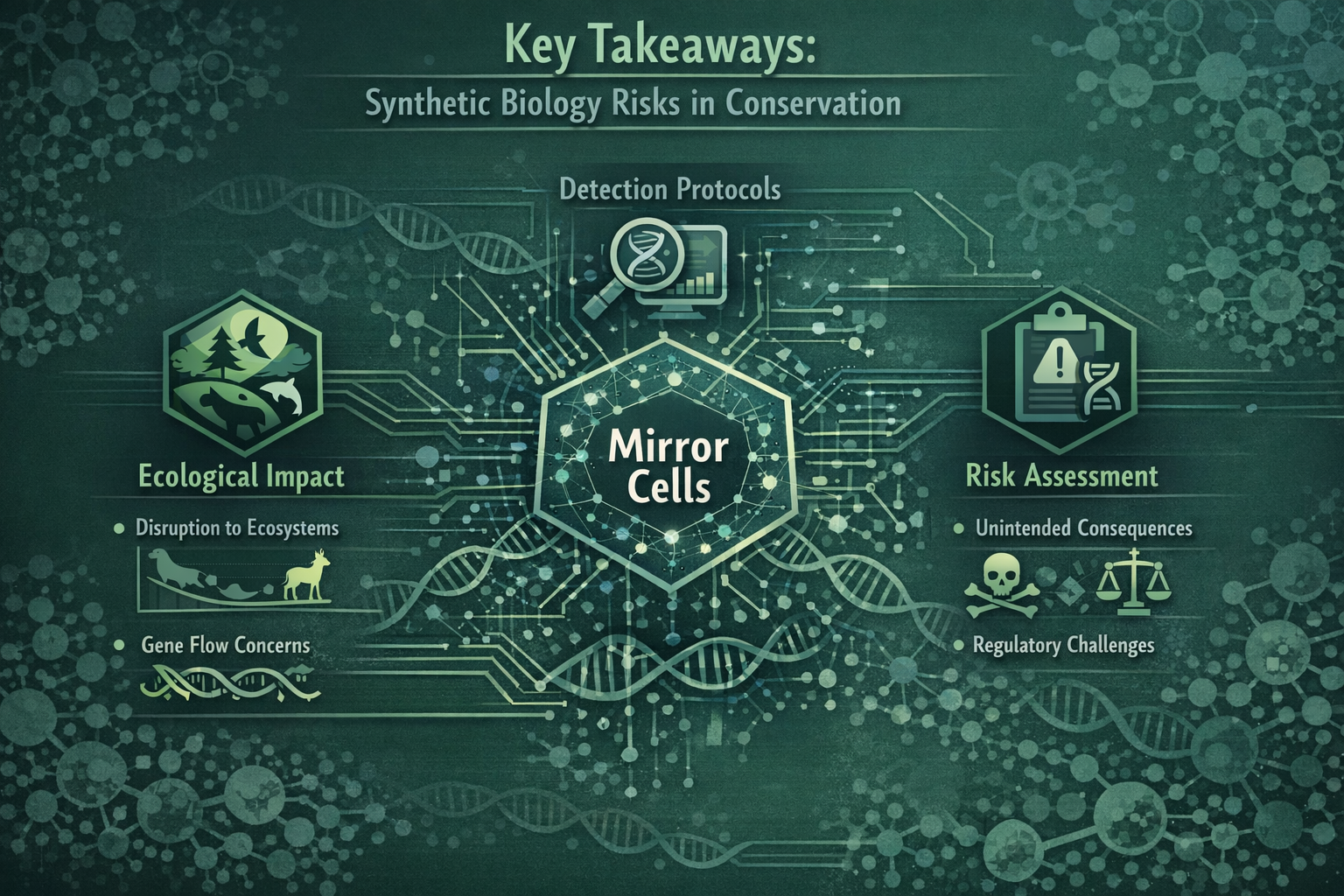
Biodiversity surveyors working in 2026 must expand their toolkit beyond traditional species identification and habitat assessment. Detecting synthetic biology risks requires new protocols that integrate molecular screening with conventional survey methods.
Priority Monitoring Zones
Not all survey areas carry equal risk for mirror cell contamination. Surveyors should prioritize:
High-Risk Zones (Immediate Priority)
- Areas within 5 kilometers of synthetic biology research facilities
- Downstream water bodies from biotech laboratory discharge points
- Agricultural land receiving biosolids from treatment plants near research centers
- Nature reserves adjacent to university research campuses with synthetic biology programs
Medium-Risk Zones (Regular Monitoring)
- Areas 5-10 kilometers from biotech facilities
- Urban green spaces in cities with significant biotech industry presence
- Wetlands and riparian corridors that could transport contamination
Baseline Monitoring Zones (Periodic Assessment)
- Remote natural areas for establishing uncontaminated reference data
- Protected sites far from synthetic biology activities
This risk-based approach allows efficient resource allocation while maintaining comprehensive coverage, similar to strategies used in conducting biodiversity impact assessments.
Sample Collection Protocols
Soil Sampling
- Collect composite samples from 0-10cm depth at multiple points within survey area
- Use sterile equipment to prevent cross-contamination
- Store samples at 4°C and process within 48 hours
- Include control samples from verified uncontaminated reference sites
Water Sampling
- Collect surface water and sediment samples from water bodies
- Sample upstream and downstream of potential contamination sources
- Filter samples through 0.22-micron filters to concentrate bacterial cells
- Record temperature, pH, and conductivity for correlation analysis
Vegetation and Soil Microbial Sampling
- Swab root surfaces and rhizosphere soil
- Collect leaf surface samples from indicator species
- Document plant health indicators that might suggest microbial disruption
Molecular Screening Techniques
Traditional DNA sequencing cannot distinguish mirror cells from normal organisms—the genetic code is identical, just reversed. New detection methods include:
Chirality-Specific Chemical Assays
- Use chiral-sensitive reagents that react differently to mirror versus normal amino acids
- Implement polarimetry to detect optical rotation differences
- Apply chiral chromatography to separate and identify mirror molecules
Functional Metabolic Testing
- Culture samples with mirror-amino acid substrates
- Growth on mirror nutrients indicates potential mirror cell presence
- Compare metabolic profiles against baseline natural communities
Mass Spectrometry Analysis
- Advanced mass spec can identify mirror peptides through fragmentation patterns
- Requires specialized equipment typically available at partner laboratories
- Essential for confirmation of preliminary field test results
Integration with Existing Survey Workflows
Mirror cell detection should complement, not replace, traditional biodiversity survey methods. Integration points include:
- Phase 1 Habitat Surveys: Add soil and water sample collection to standard walkover surveys
- Protected Species Surveys: Include microbial sampling from habitats of sensitive species
- Biodiversity Net Gain assessments: Incorporate synthetic biology risk evaluation into baseline condition assessments
- Post-Development Monitoring: Track potential contamination in areas near new biotech facilities
Implementing Mirror Cells in Conservation: Protocols for Risk Assessment and Reporting
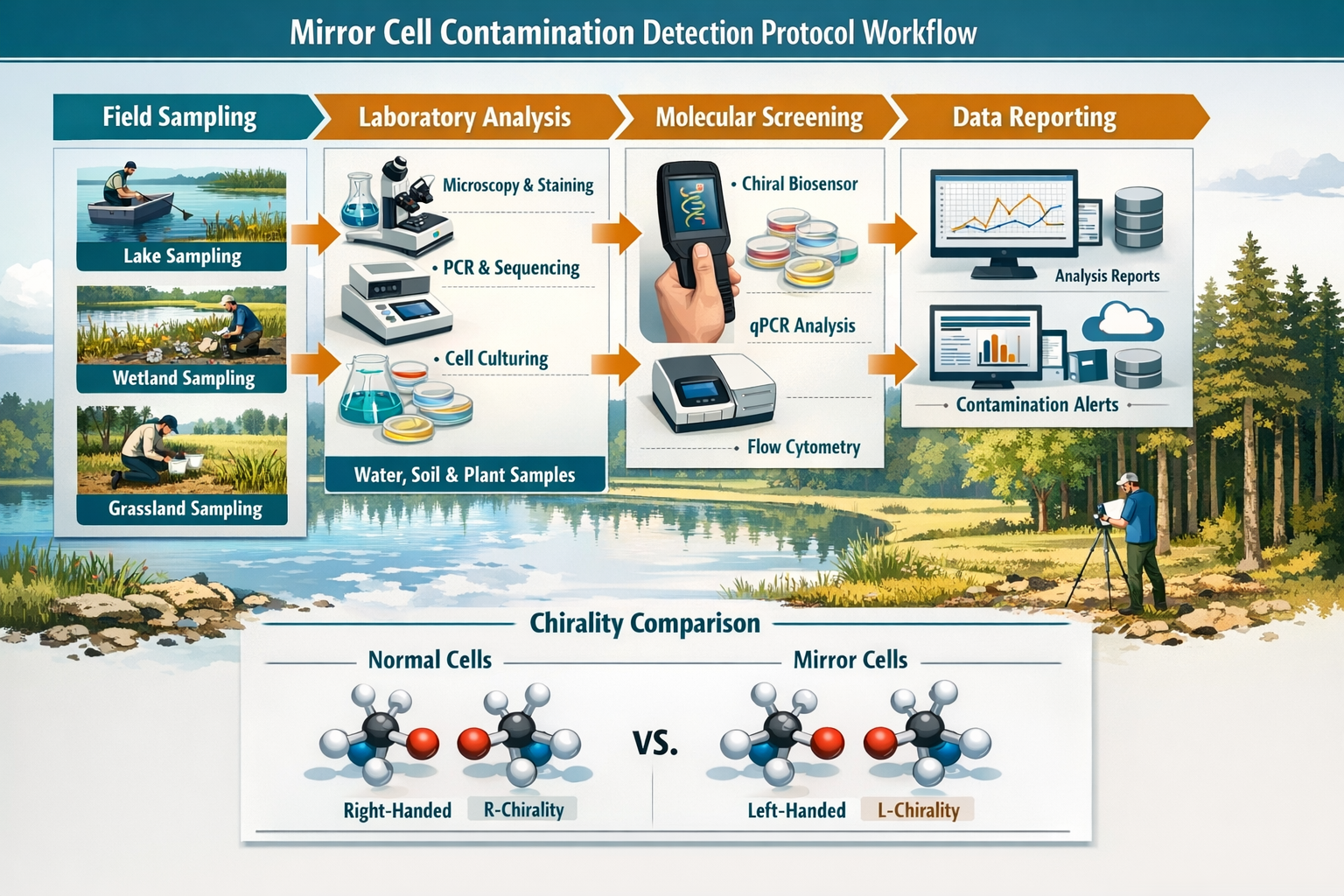
Detection is only the first step. Biodiversity surveyors must also assess the significance of findings and report results through appropriate channels to trigger protective responses.
Risk Assessment Framework
When mirror cell presence is suspected or confirmed, surveyors should evaluate risk using a structured framework:
Likelihood Assessment
High Likelihood Indicators:
- Proximity to known synthetic biology research facilities (< 2km)
- Recent biosafety incidents or laboratory accidents reported in area
- Unusual microbial community patterns inconsistent with natural succession
- Unexplained decline in natural predator populations (bacteriophages, protozoa)
Medium Likelihood Indicators:
- Location 2-10km from biotech facilities
- Presence of novel metabolic activity in environmental samples
- Changes in soil or water chemistry not explained by other factors
Low Likelihood Indicators:
- Remote location far from synthetic biology activities
- Typical microbial community structure and function
- No unusual ecological indicators
Impact Assessment
Potential impacts should be evaluated across multiple dimensions:
| Impact Category | Low Impact | Medium Impact | High Impact |
|---|---|---|---|
| Ecosystem Function | Localized, reversible changes | Regional disruption to nutrient cycles | Widespread ecosystem collapse |
| Protected Species | No direct threat to priority species | Potential indirect effects on food web | Direct threat to rare/endangered species |
| Human Health | Minimal exposure risk | Moderate exposure in occupational settings | High public exposure risk |
| Agricultural Systems | No crop or livestock effects | Reduced productivity in some crops | Widespread agricultural failure |
Overall Risk Matrix
Combine likelihood and impact to determine overall risk level:
- Critical Risk: High likelihood + High impact = Immediate containment and notification
- Significant Risk: Medium/high combinations = Enhanced monitoring and precautionary measures
- Moderate Risk: Low/medium combinations = Standard monitoring protocols
- Low Risk: Low likelihood + Low impact = Baseline surveillance
This risk-based approach aligns with established frameworks used in achieving biodiversity net gain without risk.
Reporting Protocols and Regulatory Coordination
Immediate Notification (Critical Risk)
- Contact national biosafety authorities within 24 hours
- Notify local environmental health departments
- Alert facility operators if contamination source is identified
- Implement temporary access restrictions to affected areas
Standard Reporting (Significant to Moderate Risk)
- Submit findings to regional biodiversity monitoring databases
- Include results in standard survey reports to planning authorities
- Coordinate with public health officials for risk communication
- Document findings in project-specific biodiversity impact assessments
Data Sharing and Research Collaboration
- Contribute anonymized detection data to international mirror biology monitoring networks
- Participate in regional surveyor networks for information exchange
- Support academic research partnerships for method validation
Containment and Mitigation Strategies
When mirror cell contamination is confirmed, surveyors should support implementation of containment measures:
Physical Containment
- Establish buffer zones around contaminated areas
- Restrict soil and water movement from affected sites
- Implement biosecurity protocols for personnel and equipment
Biological Mitigation
- Support research into natural or engineered predators for mirror cells
- Assist with trials of competitive exclusion using native microbes
- Monitor effectiveness of remediation efforts
Long-term Monitoring
- Establish permanent monitoring stations in affected areas
- Conduct quarterly follow-up sampling for minimum 2 years
- Track ecosystem recovery indicators
Training and Capacity Building
Effective implementation of Mirror Cells in Conservation: Emerging Protocols for Biodiversity Surveyors Detecting Synthetic Biology Risks requires investment in professional development:
Essential Training Components:
- 🎓 Molecular biology fundamentals for field surveyors
- 🔬 Proper sample collection and chain-of-custody procedures
- 📊 Risk assessment methodology and decision frameworks
- 🤝 Communication protocols with biosafety authorities
- 💻 Data management for synthetic biology monitoring programs
Professional organizations should develop certification programs specifically for synthetic biology risk assessment, similar to existing credentials for protected species surveys or biodiversity net gain assessments.
Policy Landscape and International Coordination in 2026
The governance framework for mirror cell risks is rapidly evolving. Understanding the policy context helps surveyors navigate reporting requirements and contribute to protective measures.
International Initiatives
The Mirror Biology Dialogues Fund has catalyzed global coordination through:
- Public symposiums bringing together scientists, policymakers, and conservationists
- Development of standardized detection protocols
- Creation of international data-sharing platforms
- Funding for monitoring capacity in developing nations[1]
The consensus among 38 leading researchers worldwide emphasizes the precautionary principle: mirror bacteria should not be created until adequate safety measures exist[1]. This scientific agreement provides strong foundation for regulatory action.
National and Regional Regulations
As of 2026, regulatory frameworks are emerging in several jurisdictions:
United Kingdom
- Integration of synthetic biology risk assessment into Environmental Impact Assessment regulations
- Requirements for biosafety monitoring in planning conditions for biotech facilities
- Funding for surveyor training through environmental skills programs
European Union
- Expanded biosafety regulations covering mirror organisms
- Mandatory environmental monitoring for synthetic biology research facilities
- Cross-border notification protocols for contamination events
United States
- NIH guidelines for mirror cell research oversight
- EPA authority over environmental release of synthetic organisms
- State-level monitoring programs in biotech hubs
Role of Biodiversity Surveyors in Policy Implementation
Surveyors serve as the eyes and ears of biosafety governance, providing:
- Early Warning Systems: Field detection before contamination becomes widespread
- Evidence Base: Data to inform regulatory decisions and risk assessments
- Public Trust: Independent professional verification of industry safety claims
- Adaptive Management: Feedback on effectiveness of containment measures
This role parallels surveyor contributions to other environmental frameworks, such as benefitting nature and developers through biodiversity net gain.
Practical Implementation: Case Study Scenarios
Scenario 1: Development Site Near Biotech Facility
Context: A developer plans residential construction 3 kilometers from a synthetic biology research center. The site includes priority habitats requiring biodiversity net gain compliance.
Survey Approach:
- Conduct standard Phase 1 habitat survey with added soil and water sampling
- Collect baseline microbial community data from representative habitat types
- Implement quarterly monitoring during construction and 2 years post-completion
- Include synthetic biology risk assessment in biodiversity management plan
Risk Mitigation:
- Design landscape features to minimize contamination pathways
- Establish buffer zones with enhanced monitoring
- Coordinate with facility operators on biosafety protocols
Scenario 2: Nature Reserve Adjacent to University Research Campus
Context: A protected wetland borders a university with active synthetic biology programs. Declining amphibian populations raise concerns about ecosystem health.
Survey Approach:
- Comprehensive water and sediment sampling across wetland
- Analysis of amphibian skin microbiome for unusual bacterial communities
- Comparison with reference wetlands distant from research facilities
- Integration with existing protected species monitoring programs
Findings and Response:
- Unusual bacterial metabolic profiles detected in samples near campus boundary
- Coordination with university biosafety committee for source investigation
- Enhanced containment measures at research facility
- Ongoing monitoring shows ecosystem recovery
Future Directions and Emerging Technologies
The field of synthetic biology risk detection continues to evolve rapidly. Surveyors should anticipate:
Technological Advances
- Portable field detection devices using biosensor technology for real-time screening
- AI-powered analysis of microbial community data to flag anomalies
- Drone-based sampling for large-scale or difficult-to-access areas
- Environmental DNA (eDNA) methods adapted for chirality detection
Expanded Scope
- Detection protocols for other synthetic organisms beyond mirror bacteria
- Integration with climate change monitoring programs
- Application to marine and freshwater ecosystems
- Coordination with agricultural biosecurity systems
Professional Development
- Specialized graduate programs in conservation synthetic biology
- Industry certifications for synthetic biology risk assessment
- International exchange programs for knowledge sharing
- Research partnerships between surveyors and academic institutions
Conclusion
Mirror Cells in Conservation: Emerging Protocols for Biodiversity Surveyors Detecting Synthetic Biology Risks represents a fundamental expansion of the biodiversity surveyor's role in 2026. As synthetic biology capabilities advance, the potential for environmental contamination with mirror cells and other engineered organisms becomes increasingly real. The scientific consensus is clear: these risks require proactive monitoring and robust governance frameworks[1].
Biodiversity surveyors stand at the frontline of this emerging challenge. By integrating molecular screening techniques with traditional survey methods, implementing risk-based monitoring strategies, and coordinating with biosafety authorities, surveyors can provide essential early warning of contamination events before they cause irreversible ecological harm.
Actionable Next Steps for Biodiversity Surveyors
✅ Assess Your Risk Exposure: Identify whether your survey areas include high-risk zones near biotech facilities
✅ Invest in Training: Pursue professional development in molecular biology fundamentals and sample collection protocols
✅ Update Survey Protocols: Integrate synthetic biology risk assessment into standard workflows, particularly for biodiversity impact assessments
✅ Build Laboratory Partnerships: Establish relationships with facilities capable of specialized molecular analysis
✅ Engage with Policy Development: Participate in consultation processes shaping synthetic biology regulations
✅ Join Professional Networks: Connect with other surveyors addressing these emerging risks through information-sharing platforms
✅ Advocate for Resources: Support funding initiatives for monitoring capacity and detection technology development
The challenge of mirror cells in conservation is unprecedented, but not insurmountable. With proper protocols, adequate training, and coordinated action, biodiversity surveyors can protect natural ecosystems from synthetic biology risks while supporting responsible innovation. The time to act is now—before contamination becomes widespread and ecological damage becomes irreversible.
For surveyors working on development projects, remember that synthetic biology risk assessment should complement, not replace, existing requirements for achieving biodiversity net gain and protecting priority habitats. Integrated approaches that address both traditional and emerging threats will deliver the most robust conservation outcomes.
As we navigate this new frontier in 2026 and beyond, the expertise and vigilance of biodiversity surveyors will be essential to safeguarding the natural world for future generations. 🌍
References
[1] Scientists Warn Of New Biological Risk Mirror Life Call For Global Summit – https://www.earth.com/news/scientists-warn-of-new-biological-risk-mirror-life-call-for-global-summit/
[2] Adma – https://advanced.onlinelibrary.wiley.com/doi/10.1002/adma.202510791
[3] Scientists Weigh The Risks Of Mirror Life Synthetic Molecules With A Reverse Version Of Lifes Building Blocks 180987360 – https://www.smithsonianmag.com/smart-news/scientists-weigh-the-risks-of-mirror-life-synthetic-molecules-with-a-reverse-version-of-lifes-building-blocks-180987360/