

The future of biodiversity monitoring has arrived, and it looks nothing like what ecologists expected. As conservation professionals gather soil samples and catalog species in 2026, a revolutionary technology is transforming how genetic diversity is measured in the field. Mirror Cells in Biodiversity Surveys: Emerging Protocols for Ecologists Tracking Genetic Diversity in 2026 represents both an unprecedented opportunity and a complex challenge that demands immediate attention from the global conservation community.
Identified as one of 15 critical emerging issues in the 2026 Global Horizon Scan published in Trends in Ecology & Evolution, mirror cell technology has captured the attention of ecologists worldwide[2]. These synthetic molecules and potentially entire cells—mirror images of their natural counterparts—offer the promise of real-time genetic monitoring without invasive sampling. Yet this same technology carries risks that could fundamentally alter ecosystems if not properly managed.
Key Takeaways
🔬 Mirror cell technology enables non-invasive, real-time genetic diversity monitoring in field surveys, revolutionizing traditional biodiversity assessment methods
⚠️ Dual-edged innovation: While mirror biomolecules offer exceptional durability and reduced immune reactions, mirror bacteria could evade natural predators and disrupt ecosystem functions[3][4]
📊 Conservation applications include enhanced biodiversity net gain assessments and improved tracking of genetic diversity without disturbing sensitive species
🌍 Global regulatory response is underway, with scientists calling for international summits and early safeguards before widespread deployment[3]
✅ Emerging protocols in 2026 focus on controlled field applications that maximize conservation benefits while minimizing ecological risks
Understanding Mirror Cell Technology and Its Conservation Applications
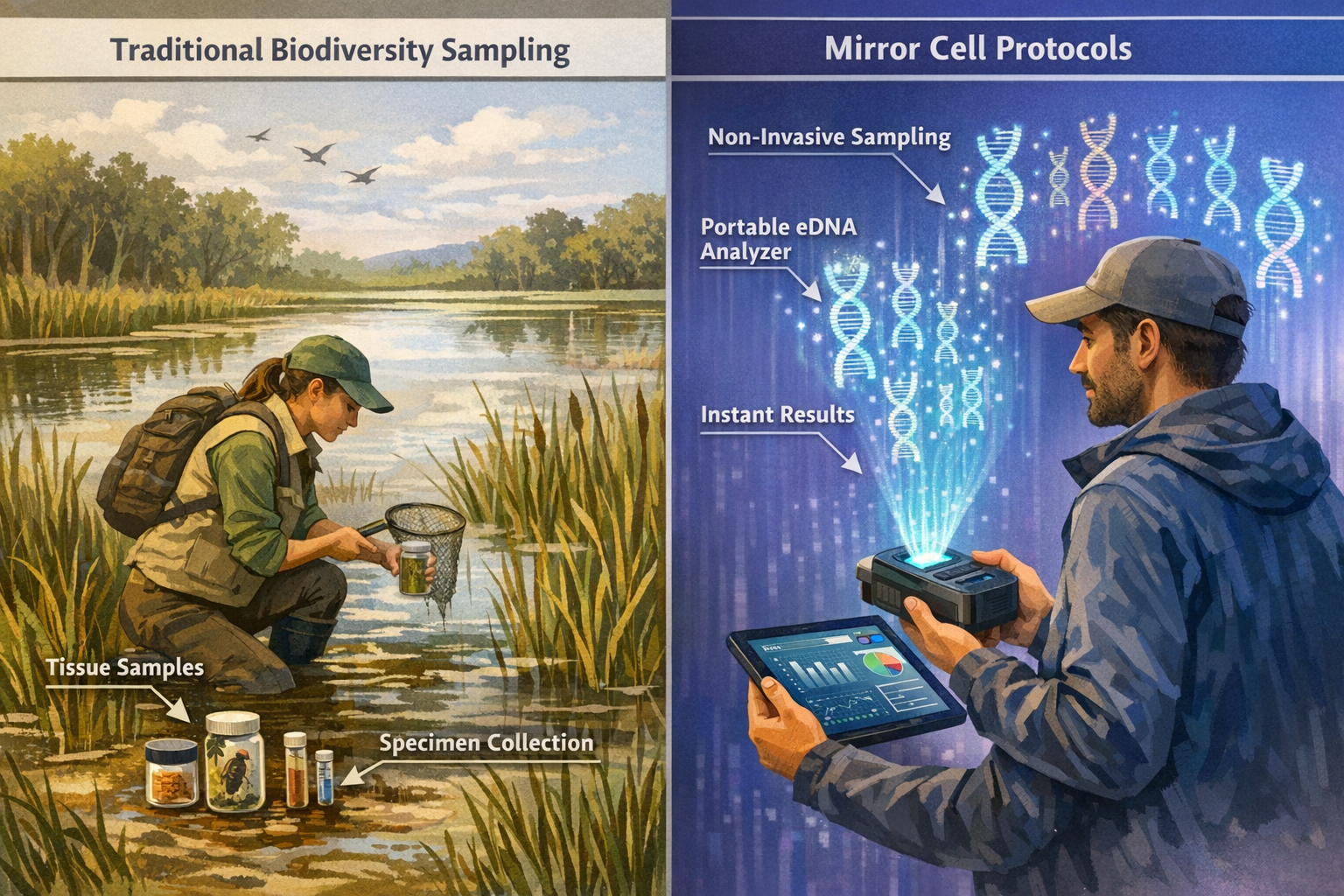
What Are Mirror Cells?
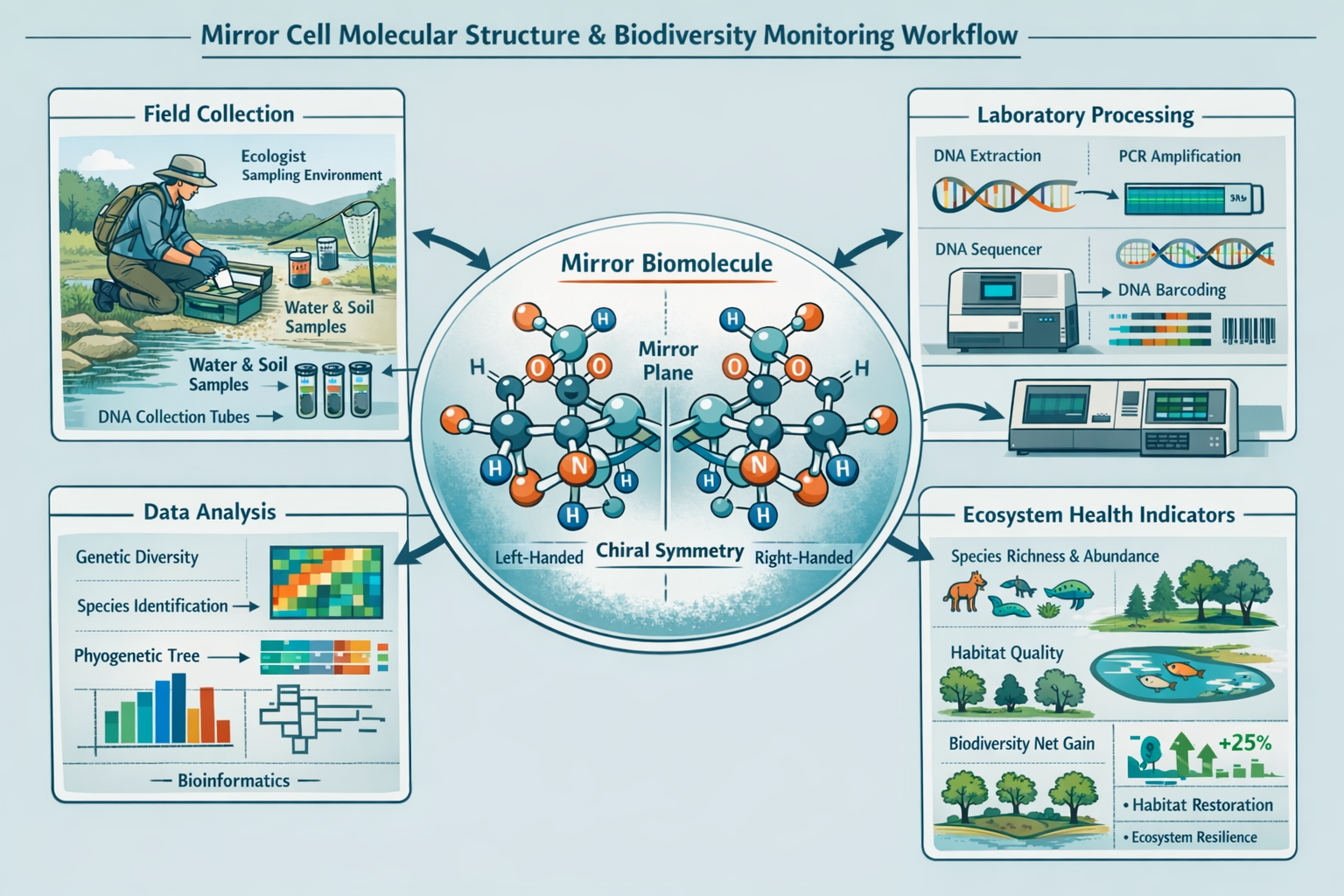
Mirror cells represent a groundbreaking advancement in synthetic biology. These are biomolecules or potentially complete cellular organisms constructed with reversed molecular chirality—essentially mirror images of naturally occurring biological structures. Just as your left hand mirrors your right hand but cannot be superimposed on it, mirror cells possess the same components as natural cells but with opposite three-dimensional orientations.
The technology builds on decades of research into chiral molecules—compounds that exist in two forms that are mirror images of each other. In nature, life almost exclusively uses "left-handed" amino acids and "right-handed" sugars. Mirror cells flip this script entirely.
The Promise for Biodiversity Monitoring
For ecologists conducting biodiversity surveys in 2026, mirror cell technology offers several compelling advantages:
Non-invasive sampling: Traditional genetic diversity assessments often require tissue samples, blood draws, or other invasive procedures that stress wildlife populations. Mirror cell-based sensors can detect and analyze environmental DNA (eDNA) from water, soil, or air samples without disturbing organisms.
Real-time data collection: Unlike conventional laboratory analysis that requires days or weeks, mirror cell biosensors provide immediate genetic diversity metrics in the field. This accelerates decision-making for biodiversity impact assessments and conservation planning.
Enhanced durability: Mirror biomolecules resist degradation by natural enzymes and microorganisms[4]. This exceptional stability allows sensors to function in harsh field conditions—from acidic peatlands to tropical rainforests—where conventional biological reagents would quickly break down.
Reduced contamination risk: Because mirror cells operate on reversed chirality, they're less likely to interfere with natural biological processes during sample collection and analysis.
Mirror Cells in Biodiversity Surveys: Emerging Protocols for Field Ecologists
Current Protocol Development in 2026
As Mirror Cells in Biodiversity Surveys: Emerging Protocols for Ecologists Tracking Genetic Diversity in 2026 becomes a reality, several standardized approaches are emerging:
Protocol 1: eDNA Mirror Cell Amplification (EMCA)
This protocol uses mirror-chiral primers and polymerase enzymes to amplify genetic material from environmental samples. The process works as follows:
- Sample collection: Water, soil, or air samples gathered using standard field equipment
- Mirror cell processing: Samples mixed with mirror-chiral reagents that selectively bind target DNA
- Amplification: Mirror polymerase enzymes copy genetic sequences for analysis
- Real-time sequencing: Portable devices read genetic diversity markers immediately
- Data integration: Results uploaded to biodiversity assessment databases
Protocol 2: Mirror Biosensor Arrays (MBA)
These field-deployable sensor networks use mirror cell technology to continuously monitor genetic diversity:
| Component | Function | Mirror Cell Advantage |
|---|---|---|
| Detection layer | Captures target DNA sequences | Resists environmental degradation |
| Signal amplification | Enhances weak genetic signals | No cross-reactivity with natural enzymes |
| Data transmission | Sends results to central database | Long-term stability in field conditions |
| Power supply | Solar or battery operation | Minimal maintenance requirements |
Protocol 3: Targeted Species Monitoring (TSM)
For tracking rare or endangered species, mirror cell protocols enable:
- Species-specific detection without visual confirmation or capture
- Population genetics assessment from trace DNA in habitat
- Migration pattern tracking through genetic markers in environmental samples
- Breeding success monitoring via offspring genetic signatures
Integration with Biodiversity Net Gain Frameworks
The protocols for Mirror Cells in Biodiversity Surveys: Emerging Protocols for Ecologists Tracking Genetic Diversity in 2026 align particularly well with biodiversity net gain requirements. Development projects can now:
✅ Establish genetic diversity baselines before construction begins
✅ Monitor ecosystem recovery during habitat restoration with unprecedented precision
✅ Verify species colonization of created habitats through eDNA analysis
✅ Document genetic connectivity between habitat patches to prove functional ecological networks
✅ Demonstrate 10% biodiversity net gain with molecular evidence
This molecular approach complements traditional habitat-based metrics, providing developers and ecologists with robust data to support conservation claims.
The Ecological Risks and Regulatory Landscape
Primary Concerns About Mirror Organisms
While mirror cell technology offers remarkable benefits for biodiversity monitoring, the exact impacts of mirror biomolecules on global biodiversity remain unknown[1]. The 2026 Horizon Scan identifies several critical risks:
Evasion of natural controls: Mirror bacteria could potentially evade bacteriophages (viruses that infect bacteria) and other natural predators because these control organisms evolved to recognize and attack normal-chirality cells[3]. This could lead to:
- Unchecked population growth of mirror microorganisms
- Disruption of nutrient cycling in soils and aquatic systems
- Altered decomposition rates affecting carbon sequestration
- Stress on agricultural crops dependent on soil microbiome health
Unknown ecosystem interactions: Scientists cannot yet predict how mirror cells might interact with:
- 🌱 Plant root systems and mycorrhizal networks
- 🦠 Existing microbial communities
- 🐛 Soil invertebrates and decomposers
- 💧 Aquatic food webs
Persistence in the environment: The exceptional durability that makes mirror biomolecules valuable for field sensors[4] also means they could accumulate in ecosystems without natural degradation pathways.
The Call for Global Regulation
Recognizing these risks, scientists have called for a global summit to establish early limits on mirror bacteria and other mirror organisms[3]. Proposed safeguards include:
Funding restrictions: Limiting research grants for projects that could create self-replicating mirror organisms until safety protocols are established.
Laboratory standards: Requiring biosafety level 3 or 4 containment for any work involving viable mirror cells.
Grant requirements: Mandating open reporting and outside review for all mirror cell research, particularly applications in environmental settings.
Clear stopping points: Establishing research thresholds that trigger mandatory safety reviews before proceeding to more advanced stages.
For ecologists using mirror cell technology in biodiversity surveys, these regulations will likely require:
- 📋 Detailed environmental release protocols
- 🔒 Containment strategies for field equipment
- 🧪 Regular monitoring for mirror cell persistence
- 📊 Impact assessments on local ecosystems
- ⚠️ Emergency response plans for accidental releases
Practical Implementation for Conservation Projects
Case Study: Mirror Cells in Habitat Restoration Monitoring
Consider a typical biodiversity net gain scenario: A development project creates compensatory wetland habitat to offset impacts. Traditional monitoring might involve:
- Annual vegetation surveys (labor-intensive)
- Periodic wildlife observations (weather-dependent)
- Occasional water quality testing (limited parameters)
With Mirror Cells in Biodiversity Surveys: Emerging Protocols for Ecologists Tracking Genetic Diversity in 2026, the same project can implement:
Month 0 (Pre-construction)
- Establish genetic diversity baseline using mirror cell eDNA analysis
- Document species composition through environmental sampling
- Map genetic connectivity with surrounding habitats
Months 1-12 (Construction phase)
- Deploy mirror biosensor arrays to monitor disturbance impacts
- Track species displacement through genetic signatures
- Verify mitigation effectiveness in real-time
Years 2-5 (Restoration monitoring)
- Quarterly genetic diversity assessments showing ecosystem recovery
- Species colonization tracking without physical surveys
- Breeding population confirmation through offspring genetics
- Comparison with baseline to demonstrate net gain achievement
Equipment and Training Requirements
Implementing these protocols requires:
Field Equipment (2026 standard kit):
- Portable mirror cell eDNA analyzer (£8,000-£15,000)
- Sample collection materials (sterile, mirror-contamination-free)
- GPS-enabled data logger for spatial analysis
- Protective equipment for biosafety compliance
Laboratory Support:
- Mirror cell reagent preparation facility
- Quality control protocols for chiral purity
- Waste disposal systems for mirror biomolecules
- Backup conventional analysis for validation
Personnel Training:
- Molecular ecology fundamentals
- Mirror cell technology principles
- Biosafety and containment procedures
- Data interpretation and statistical analysis
- Regulatory compliance requirements
Cost-Benefit Analysis
| Aspect | Traditional Methods | Mirror Cell Protocols |
|---|---|---|
| Initial investment | £2,000-£5,000 | £10,000-£20,000 |
| Per-sample cost | £50-£200 | £20-£80 |
| Time to results | 2-6 weeks | Hours to days |
| Species detection | Visual confirmation required | eDNA-based, no sighting needed |
| Seasonal limitations | High (weather, breeding cycles) | Low (year-round sampling) |
| Data granularity | Species presence/absence | Genetic diversity metrics |
| Regulatory acceptance | Well-established | Emerging (2026 frameworks) |
For many biodiversity assessment projects, the higher initial investment is offset by reduced labor costs, faster project timelines, and superior data quality.
Future Directions and Best Practices
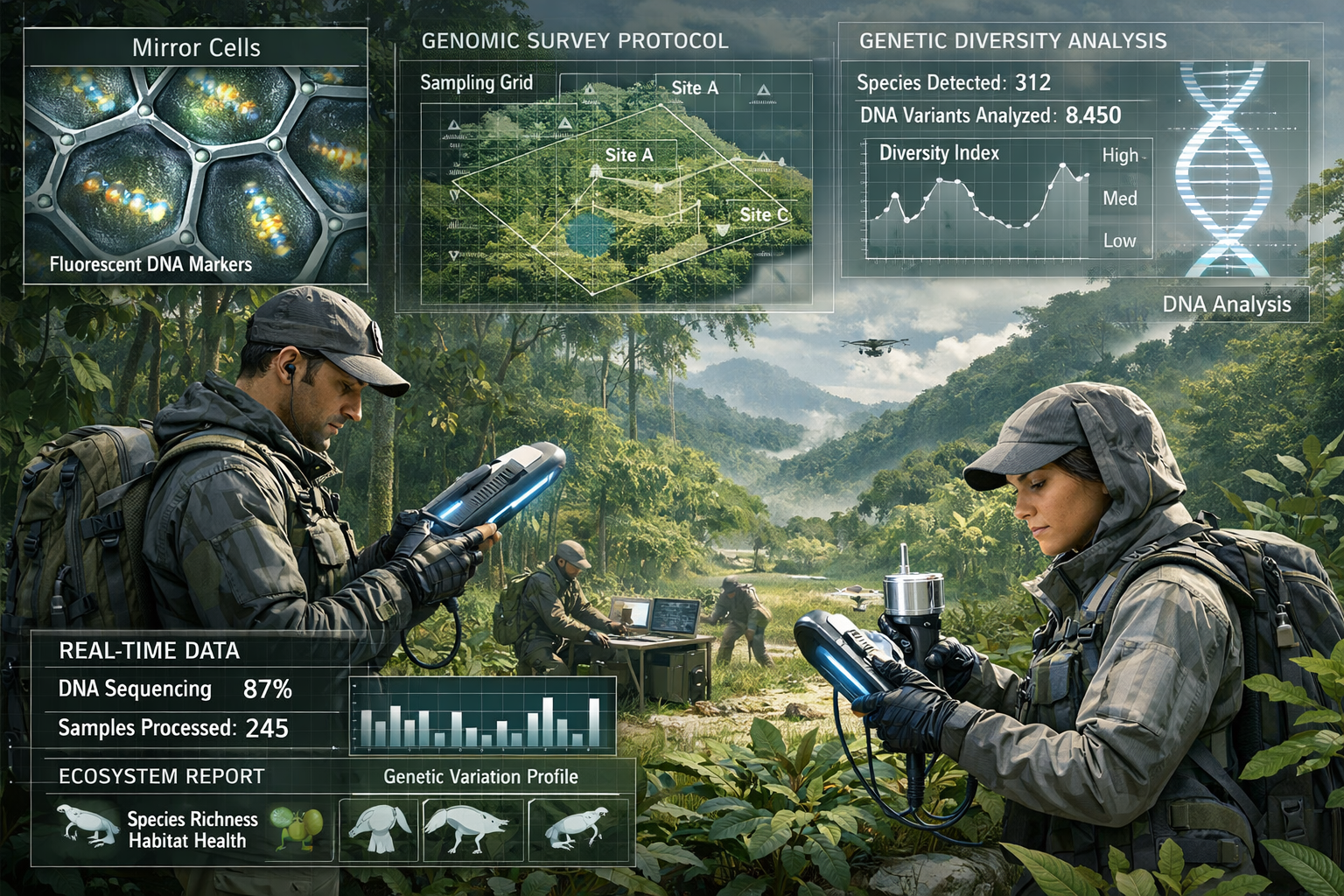
Emerging Standards for 2026 and Beyond
As mirror cell technology matures, several best practices are crystallizing:
1. Hybrid Approaches: Combining mirror cell genetic analysis with traditional ecological surveys provides the most robust biodiversity assessments. Visual confirmation validates molecular findings, while genetic data reveals hidden diversity.
2. Standardized Reporting: Industry groups are developing common formats for presenting mirror cell biodiversity data in biodiversity net gain reports, ensuring regulatory acceptance.
3. Quality Assurance: Regular calibration against conventional methods maintains data integrity and builds confidence in mirror cell protocols.
4. Biosafety Integration: Every field protocol must include containment measures, monitoring for environmental persistence, and contingency plans.
5. Transparent Communication: Explaining mirror cell technology to stakeholders, including planners and developers, ensures informed decision-making about its use.
Research Priorities
The conservation community has identified key research needs:
🔬 Long-term environmental fate studies: Tracking mirror biomolecules in diverse ecosystems to understand persistence and degradation
🧬 Ecological interaction research: Investigating how mirror cells affect soil microbiomes, aquatic communities, and plant health
📐 Standardization efforts: Developing universal protocols that work across habitat types and geographic regions
⚖️ Regulatory framework development: Creating science-based guidelines that enable beneficial applications while preventing harmful ones
🌍 Global capacity building: Training ecologists worldwide in mirror cell technology, particularly in biodiversity hotspots
Recommendations for Practitioners
For ecologists considering Mirror Cells in Biodiversity Surveys: Emerging Protocols for Ecologists Tracking Genetic Diversity in 2026:
Start small: Pilot mirror cell protocols on a single project before widespread adoption. Compare results with traditional methods to build confidence.
Stay informed: The regulatory landscape is evolving rapidly. Subscribe to updates from conservation organizations and biosafety authorities.
Collaborate: Partner with molecular ecologists and synthetic biologists who understand both the opportunities and risks.
Document everything: Maintain detailed records of mirror cell use, environmental monitoring, and outcomes to contribute to the growing evidence base.
Engage stakeholders early: Discuss mirror cell technology with clients, regulators, and the public before incorporating it into biodiversity plans.
Conclusion
Mirror Cells in Biodiversity Surveys: Emerging Protocols for Ecologists Tracking Genetic Diversity in 2026 represents a transformative moment in conservation science. This technology offers unprecedented capabilities for non-invasive, real-time genetic monitoring that can revolutionize how biodiversity is assessed, protected, and enhanced. From supporting biodiversity net gain requirements to enabling more effective habitat restoration monitoring, mirror cell protocols provide tools that were unimaginable just years ago.
However, the same characteristics that make mirror biomolecules valuable for conservation—their durability, resistance to degradation, and ability to evade natural biological processes—also present genuine ecological risks[3][4]. The unknown impacts on global biodiversity demand a precautionary approach[1], with robust safeguards, international coordination, and ongoing research into environmental effects.
As the 2026 Horizon Scan emphasizes[2], early engagement with emerging technologies determines whether they become powerful conservation tools or new threats to the ecosystems we aim to protect. The path forward requires balancing innovation with responsibility, embracing the potential of mirror cells while implementing the regulatory frameworks and safety protocols necessary to prevent unintended consequences.
Next Steps for Ecologists
✅ Educate yourself: Attend workshops and training sessions on mirror cell technology and its applications in biodiversity monitoring
✅ Engage with regulators: Participate in consultations about mirror cell governance to ensure practical, science-based policies
✅ Pilot responsibly: Test mirror cell protocols in controlled settings with comprehensive biosafety measures
✅ Share knowledge: Contribute to the growing body of evidence about mirror cell effectiveness and environmental impacts
✅ Advocate for research: Support funding for studies addressing key unknowns about mirror cell ecology
The future of biodiversity monitoring is being written today. By approaching mirror cell technology with both enthusiasm for its conservation potential and vigilance about its risks, ecologists can harness this powerful tool while safeguarding the ecosystems that depend on our stewardship.
References
[1] 510639f4 E3af 48c7 B60f 01cfb0d558e0 – https://www.repository.cam.ac.uk/items/510639f4-e3af-48c7-b60f-01cfb0d558e0
[2] Whats Next For Biodiversity Conservation Insights From The 2026 Horizon Scan – https://www.unep-wcmc.org/en/news/whats-next-for-biodiversity-conservation-insights-from-the-2026-horizon-scan
[3] Scientists Warn Of New Biological Risk Mirror Life Call For Global Summit – https://www.earth.com/news/scientists-warn-of-new-biological-risk-mirror-life-call-for-global-summit/
[4] Conservation Horizon Scan Ai Drought Climate Change Tropical Forests Seaweed Southern Ocean – https://www.theinvadingsea.com/2026/01/02/conservation-horizon-scan-ai-drought-climate-change-tropical-forests-seaweed-southern-ocean/