

Research across three continents shows Indigenous knowledge holders confirm bird species replacement patterns scientists document. In 2026, the integration of traditional ecological knowledge with modern scientific methodology represents one of the most promising frontiers in biodiversity conservation. Indigenous Knowledge Integration in Biodiversity Surveys: Validating Local Observations Against Scientific Data in 2026 is transforming how researchers, developers, and conservation professionals approach environmental assessment and species monitoring.
This convergence of wisdom systems isn't merely academic—it's producing measurably better outcomes for biodiversity surveys, conservation planning, and sustainable development projects. When Indigenous communities report shifts in migratory bird patterns or changes in plant flowering times, scientific instruments increasingly validate these observations with remarkable precision.
Key Takeaways
- 🌍 Indigenous ecological knowledge provides multi-generational baseline data that scientific surveys often lack, extending observational records back decades or centuries
- 🤝 Validation frameworks combining both knowledge systems produce more comprehensive biodiversity assessments than either approach alone
- 📊 2026 research initiatives across multiple continents demonstrate measurable improvements in species detection rates when Indigenous observations guide scientific survey design
- ⚖️ Ethical protocols and equitable partnerships form the foundation of successful knowledge integration, requiring proper consent, attribution, and benefit-sharing
- 🔬 Modern technology enables new validation methods including DNA analysis, acoustic monitoring, and satellite imagery that can confirm traditional ecological observations
Understanding Indigenous Knowledge Systems in Biodiversity Context
Indigenous knowledge systems represent accumulated observations, practices, and beliefs developed by communities with long-standing relationships to specific landscapes. Unlike scientific knowledge that prioritizes standardization and replicability, Indigenous ecological knowledge emphasizes context-specific understanding developed through generations of direct interaction with local ecosystems.
What Makes Indigenous Knowledge Valuable for Biodiversity Surveys?
Traditional ecological knowledge offers several distinct advantages:
- Temporal depth: Indigenous communities often maintain oral histories spanning centuries, providing baseline data from periods before scientific documentation
- Continuous monitoring: Daily subsistence activities create ongoing observational records of species behavior, population trends, and ecosystem changes
- Holistic understanding: Indigenous knowledge integrates ecological, cultural, and spiritual dimensions, revealing relationships scientists might overlook
- Local specificity: Traditional knowledge captures micro-habitat variations and localized species behaviors that broad-scale scientific surveys miss
- Early warning indicators: Indigenous observers often detect subtle environmental changes before they become measurable through scientific instruments
In 2026, major research institutions recognize these strengths. The National Science Foundation is hosting sessions specifically focused on "Supporting and Raising Awareness on Indigenous Leadership in Research," emphasizing strategies to expand engagement with Indigenous communities through culturally safe research practices and equitable partnerships[1].
The Scientific Method and Its Limitations
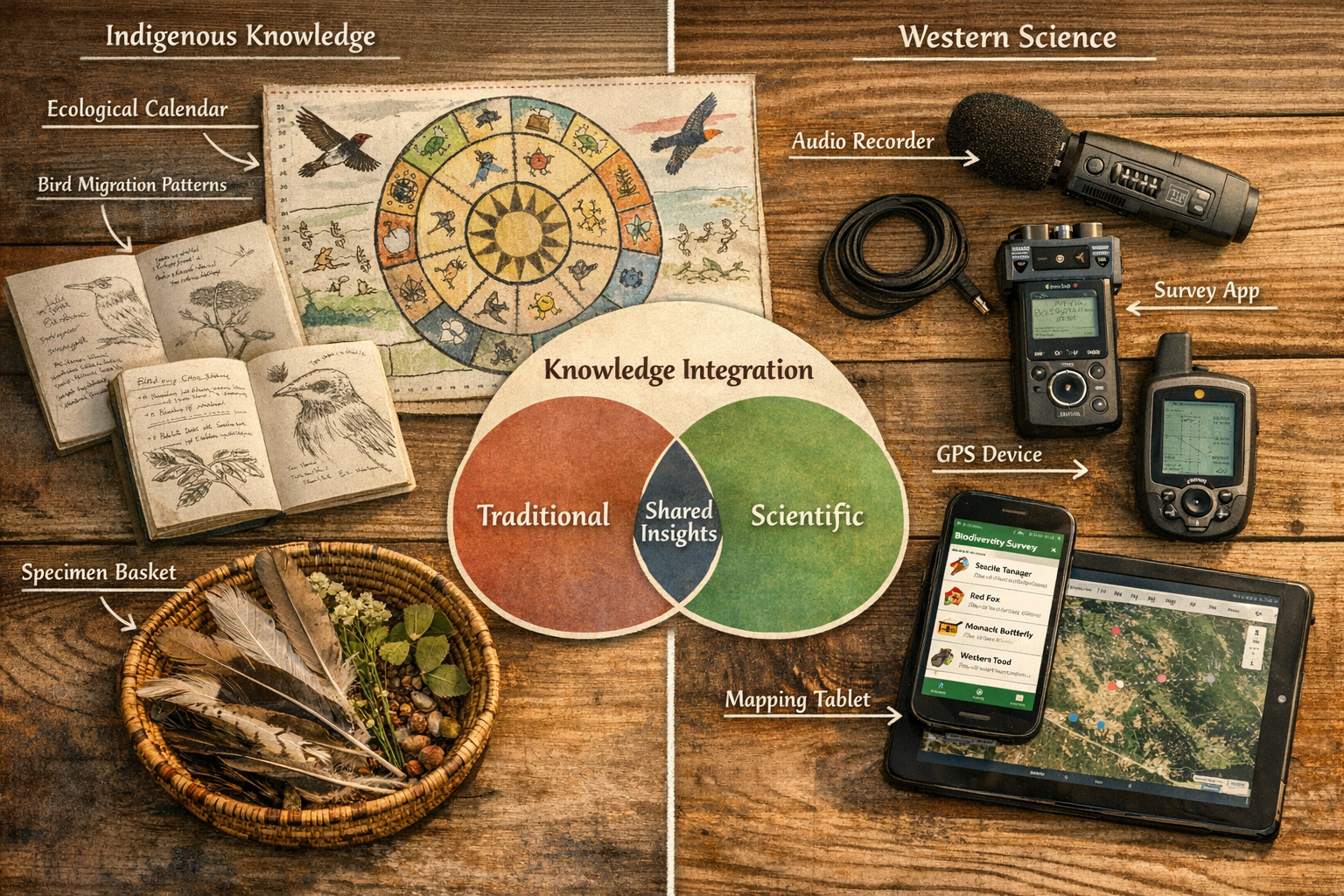
Scientific biodiversity surveys excel at quantification, standardization, and replicability. Modern techniques including DNA barcoding, acoustic monitoring, camera trapping, and satellite remote sensing generate vast datasets with statistical rigor.
However, scientific approaches face constraints:
- Limited temporal scope: Most scientific studies span months or years, missing long-term ecological trends
- Seasonal gaps: Research funding and academic calendars create observational blind spots
- Species detection biases: Standard survey protocols may miss cryptic, rare, or seasonally variable species
- Cultural blind spots: Scientific frameworks may overlook culturally significant species or ecological relationships
When developers and planners work on biodiversity impact assessments, incorporating Indigenous knowledge can address these limitations while strengthening the scientific foundation of conservation decisions.
Indigenous Knowledge Integration in Biodiversity Surveys: Validating Local Observations Against Scientific Data in 2026
The validation process requires methodological rigor that respects both knowledge systems while establishing verifiable connections between traditional observations and scientific measurements. In 2026, researchers are developing sophisticated frameworks that avoid treating Indigenous knowledge as merely anecdotal while maintaining scientific standards.
Validation Methodologies and Frameworks
Several validation approaches have emerged:
1. Parallel Documentation
Research teams conduct simultaneous surveys using both Indigenous observational methods and scientific instruments. Indigenous knowledge holders identify species, behaviors, or ecological patterns using traditional indicators while scientists deploy standardized survey protocols in the same locations.
Example: In bird migration studies, Indigenous observers note arrival dates based on traditional seasonal calendars and behavioral cues, while scientists use acoustic monitoring and banding data to confirm species presence and timing.
2. Retrospective Validation
Historical Indigenous observations are tested against contemporary scientific data or historical records. This approach works particularly well for long-term ecological changes.
Example: Indigenous accounts of species range shifts over decades can be validated through museum specimen records, historical survey data, or climate modeling.
3. Predictive Validation
Indigenous knowledge predicts ecological phenomena that scientists subsequently measure and confirm.
Example: Traditional knowledge about fruiting cycles attracting specific wildlife can be validated through camera trap deployment and phenological monitoring.
4. Collaborative Survey Design
Indigenous knowledge guides the spatial and temporal design of scientific surveys, improving detection rates and survey efficiency.
Example: Traditional knowledge about seasonal habitat use patterns determines optimal camera trap placement, resulting in higher species detection rates than random or grid-based placement.
Case Studies: Successful Validation Projects
Bird Species Replacement Patterns
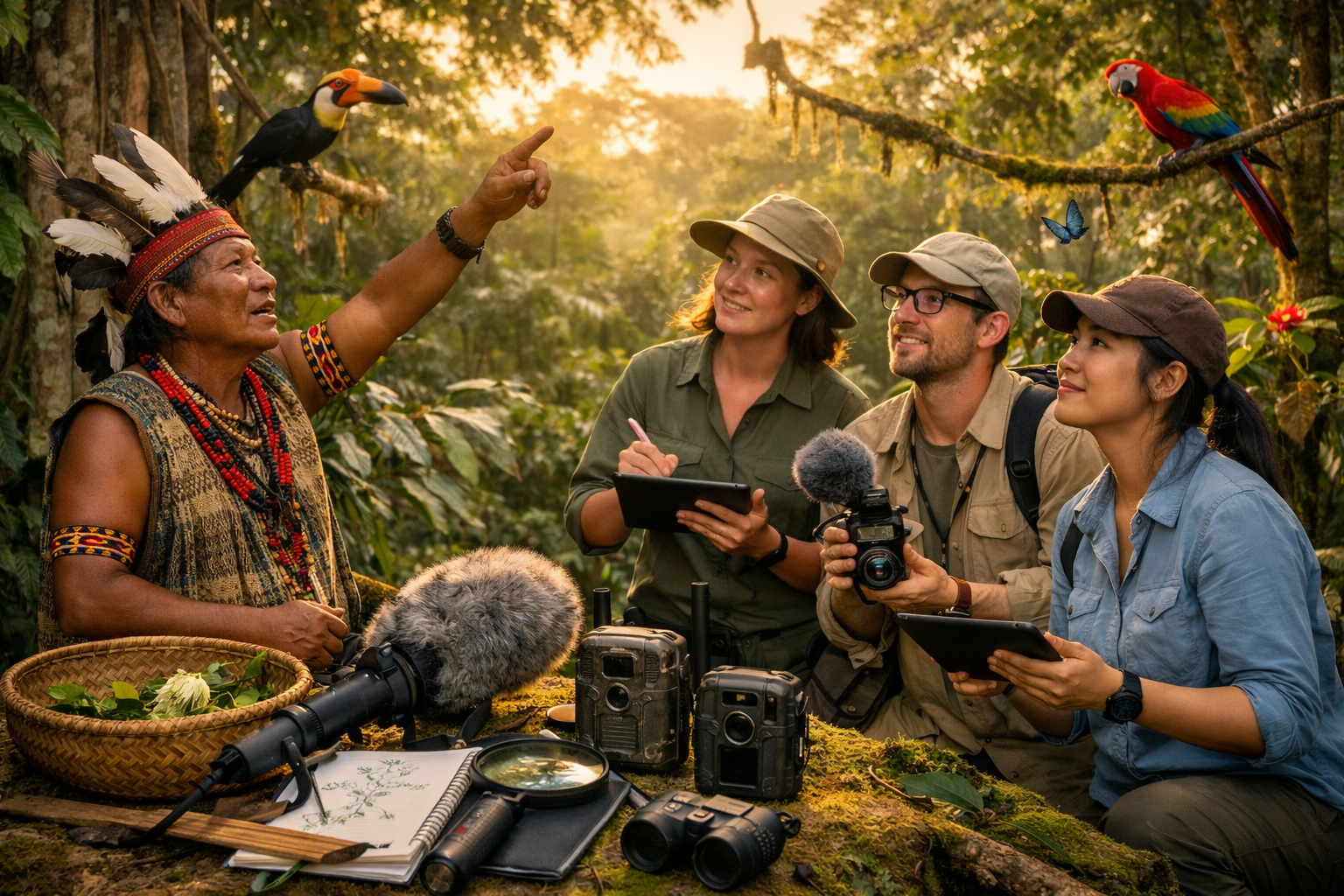
Research across North America, Africa, and Southeast Asia demonstrates remarkable concordance between Indigenous observations and scientific data regarding bird community composition changes. Indigenous knowledge holders reported specific species becoming less common while others increased—patterns subsequently confirmed through point-count surveys, mist-netting data, and citizen science databases.
The Science Summit 2026 featured a major plenary session titled "Harnessing Archaeology and SDGs for the Better Future of Africa," presented by ALECSO and the Institute of Arabic Manuscripts, focusing specifically on how Indigenous knowledge systems contribute to biodiversity conservation and support SDG 15 (Life on Land)[1].
Plant Phenology and Climate Change
Indigenous agricultural communities maintain detailed knowledge of plant flowering and fruiting times, often encoded in traditional calendars and seasonal ceremonies. Scientific phenological studies using permanent monitoring plots and herbarium specimens validate Indigenous reports of earlier flowering times and shifted growing seasons, providing crucial climate change indicators.
Freshwater Ecosystem Health
Indigenous fishing communities possess detailed knowledge of fish population trends, water quality indicators, and aquatic ecosystem changes. Validation through scientific water quality testing, fish population surveys, and macroinvertebrate assessments confirms traditional indicators of ecosystem health and degradation.
Practical Implementation for Biodiversity Surveys in 2026
For professionals conducting biodiversity assessments—whether for biodiversity net gain requirements or conservation planning—integrating Indigenous knowledge requires careful planning and ethical protocols.
Establishing Ethical Partnerships
Free, Prior, and Informed Consent (FPIC) forms the foundation of ethical Indigenous knowledge integration. This principle requires:
- Free: Participation without coercion, intimidation, or manipulation
- Prior: Consultation before project activities begin
- Informed: Complete information about project goals, methods, risks, and benefits
- Consent: Genuine agreement from appropriate Indigenous authorities and knowledge holders
The Yale University School of Medicine is leading initiatives on integrating traditional Indigenous practices with modern approaches, emphasizing community-based methodologies and culturally appropriate engagement[1].
Benefit-Sharing Arrangements
Equitable partnerships ensure Indigenous communities receive tangible benefits:
| Benefit Type | Examples |
|---|---|
| Financial | Research payments, royalties from commercial applications, employment opportunities |
| Capacity Building | Training in scientific methods, equipment provision, educational programs |
| Recognition | Co-authorship on publications, acknowledgment in reports, intellectual property rights |
| Conservation Outcomes | Protected areas supporting traditional practices, restoration of culturally significant species |
| Data Access | Sharing research findings, collaborative data management, joint decision-making authority |
Methodological Integration Steps
Step 1: Community Engagement
Begin with respectful dialogue to understand community priorities, concerns, and knowledge governance protocols. Identify appropriate knowledge holders and establish communication channels.
Step 2: Protocol Development
Collaboratively design research protocols that accommodate both Indigenous and scientific methods. Determine data collection procedures, documentation formats, and validation criteria.
Step 3: Collaborative Data Collection
Conduct field surveys with Indigenous knowledge holders and scientific researchers working together. Document both traditional indicators and scientific measurements.
Step 4: Validation Analysis
Compare Indigenous observations with scientific data using appropriate statistical methods. Identify areas of concordance, complementarity, and divergence.
Step 5: Interpretation and Reporting
Jointly interpret findings, ensuring Indigenous perspectives shape conclusions. Prepare reports that appropriately attribute knowledge sources and respect confidentiality agreements.
When planning development projects requiring biodiversity net gain assessments, early engagement with Indigenous communities can strengthen baseline surveys and inform more effective mitigation strategies.
Technological Tools Supporting Knowledge Integration
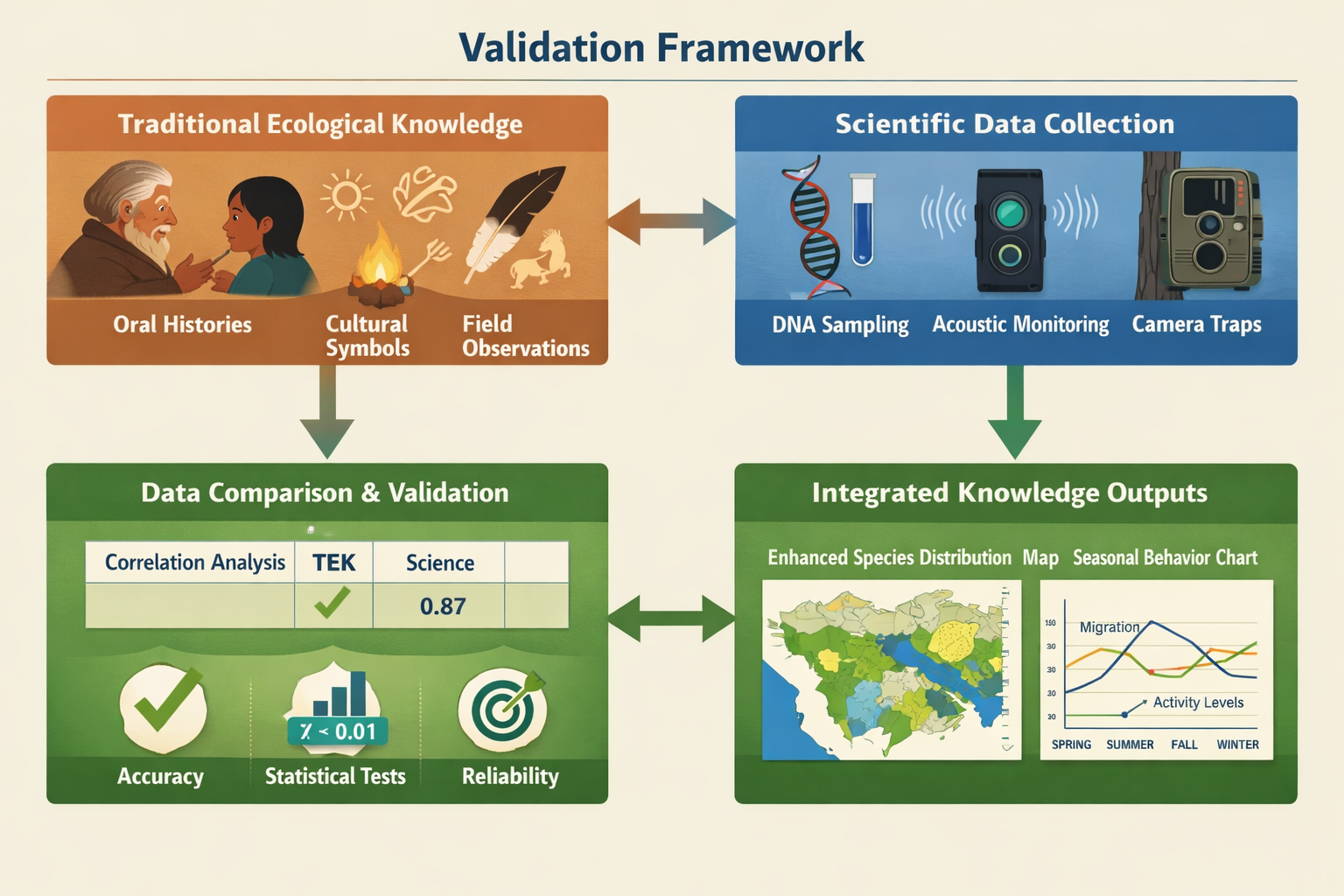
Modern technology provides new opportunities for validating and integrating Indigenous knowledge:
Digital Documentation Platforms
Mobile applications and digital recording systems enable Indigenous knowledge holders to document observations in culturally appropriate formats while creating datasets compatible with scientific analysis.
Features include:
- 📱 Multilingual interfaces supporting Indigenous languages
- 🗺️ GPS-enabled spatial documentation
- 📷 Photo and video documentation with metadata
- 🔊 Audio recording for oral knowledge transmission
- ☁️ Cloud-based data storage with community-controlled access
Remote Sensing and Satellite Imagery
Satellite data can validate Indigenous observations about landscape-scale changes including forest cover, wetland extent, and vegetation phenology across timeframes matching traditional knowledge.
Environmental DNA (eDNA)
Water and soil samples analyzed for environmental DNA can confirm Indigenous knowledge about species presence, particularly for cryptic or rare species difficult to detect through visual surveys.
Acoustic Monitoring
Automated recording units validate Indigenous observations about bird and amphibian species composition, breeding activity, and temporal patterns while creating permanent records for future comparison.
Camera Traps
Motion-activated cameras placed based on Indigenous knowledge of wildlife movement patterns achieve higher detection rates while providing scientific documentation of species presence and behavior.
Challenges and Solutions in Knowledge Validation
Challenge 1: Different Epistemological Frameworks
Indigenous and scientific knowledge systems operate from fundamentally different worldviews regarding what constitutes valid knowledge and how it should be acquired.
Solution: Adopt pluralistic validation frameworks that recognize multiple forms of evidence without requiring Indigenous knowledge to conform to scientific standards. Focus on practical concordance rather than theoretical equivalence.
Challenge 2: Intellectual Property and Data Sovereignty
Indigenous communities rightfully assert ownership over traditional knowledge, raising concerns about extraction and misappropriation.
Solution: Implement Indigenous data sovereignty principles, ensuring communities maintain control over knowledge documentation, storage, access, and use. Establish clear data governance agreements before research begins.
Challenge 3: Temporal and Spatial Scale Mismatches
Indigenous knowledge often operates at different temporal and spatial scales than scientific surveys, making direct comparison difficult.
Solution: Design multi-scale validation approaches that accommodate different observational frameworks. Use Indigenous knowledge to guide scientific survey design rather than forcing direct comparison.
Challenge 4: Confidentiality and Sacred Knowledge
Some Indigenous knowledge is sacred, restricted, or confidential, creating tension with scientific norms of transparency and replicability.
Solution: Establish clear confidentiality protocols that protect sensitive knowledge while allowing validation of non-restricted information. Respect community decisions about knowledge sharing.
Challenge 5: Power Imbalances
Historical and ongoing colonialism creates power imbalances that can undermine genuine partnership.
Solution: Implement Indigenous leadership structures within research projects, ensuring Indigenous community members hold decision-making authority, not merely advisory roles.
Global Initiatives and Conferences in 2026
The growing recognition of Indigenous knowledge integration is reflected in major 2026 initiatives:
The International Conference on Indigenous Knowledge Systems in Biodiversity Conservation is scheduled at multiple locations throughout 2026, including June 16 in Zurich, Switzerland[5], October 31 in Chicago, USA[2], and December 26 in San Francisco[3], bringing together researchers, Indigenous leaders, and conservation professionals.
Additionally, the 1st Indigenous Wisdom International Conference with a submission deadline of March 25, 2026[4], focuses specifically on Indigenous knowledge systems and their applications to contemporary environmental challenges.
Yachaq Warmi is organizing "Indigenous Women in STEM for Sustainable Development," showcasing projects that integrate traditional knowledge with modern science for climate action and sustainable innovation[1].
These gatherings facilitate knowledge exchange, establish best practices, and build networks supporting Indigenous knowledge integration in biodiversity conservation.
Policy and Regulatory Considerations
For developers and planners working within regulatory frameworks like the UK's biodiversity net gain requirements, Indigenous knowledge integration raises important policy questions:
Recognition in Environmental Assessment
Should Indigenous knowledge be formally recognized in environmental impact assessments and biodiversity surveys? Many jurisdictions are moving toward mandatory Indigenous consultation, though standards vary.
Validation Standards
What validation standards should apply when Indigenous knowledge informs regulatory decisions? Establishing appropriate evidence standards that respect both knowledge systems remains an evolving challenge.
Benefit-Sharing Requirements
Should regulations mandate benefit-sharing when Indigenous knowledge contributes to commercial or development projects? Some jurisdictions are implementing such requirements, following models from traditional medicine and genetic resources.
For professionals navigating these requirements, understanding how to achieve biodiversity net gain while respecting Indigenous rights requires careful attention to emerging policy frameworks.
Future Directions: Indigenous Knowledge Integration Beyond 2026
The trajectory of Indigenous knowledge integration in biodiversity surveys points toward several promising developments:
Artificial Intelligence and Machine Learning
AI systems trained on both Indigenous observational data and scientific datasets may identify patterns invisible to either knowledge system alone, creating truly integrated analytical frameworks.
Climate Change Adaptation
As climate change accelerates ecosystem transformations, Indigenous knowledge of historical variability and traditional adaptation strategies becomes increasingly valuable for predicting and responding to ecological shifts.
Biocultural Conservation
Conservation approaches that explicitly link biological and cultural diversity—recognizing that Indigenous knowledge and biodiversity co-evolved—are gaining traction as more effective than purely biological conservation.
Indigenous-Led Research
The shift toward Indigenous-led research, where Indigenous communities design and control research agendas with scientists in supporting roles, represents a fundamental transformation of knowledge production.
Policy Integration
Increasing recognition of Indigenous rights, including the UN Declaration on the Rights of Indigenous Peoples, is creating policy frameworks that mandate Indigenous knowledge integration in environmental decision-making.
For organizations working on biodiversity planning and development projects, staying informed about these trends will be essential for conducting effective and ethical biodiversity surveys.
Conclusion
Indigenous Knowledge Integration in Biodiversity Surveys: Validating Local Observations Against Scientific Data in 2026 represents far more than methodological innovation—it embodies a fundamental shift toward more just, effective, and comprehensive approaches to biodiversity conservation. The convergence of traditional ecological knowledge with modern scientific methods produces biodiversity assessments that are temporally deeper, spatially more nuanced, and ecologically more comprehensive than either approach alone.
The evidence is clear: when Indigenous knowledge holders report bird species replacement patterns, shifts in plant phenology, or changes in ecosystem health, scientific instruments increasingly validate these observations with remarkable precision. This concordance demonstrates that Indigenous knowledge is not merely anecdotal or culturally interesting—it is empirically accurate and scientifically valuable.
Actionable Next Steps
For professionals conducting biodiversity surveys in 2026:
-
Establish early engagement with Indigenous communities in project planning areas, seeking Free, Prior, and Informed Consent before fieldwork begins
-
Develop equitable partnerships that include benefit-sharing arrangements, co-authorship agreements, and respect for Indigenous data sovereignty
-
Design integrated methodologies that accommodate both Indigenous observational methods and scientific survey protocols without forcing one system to conform to the other
-
Invest in capacity building that supports Indigenous community members in both traditional knowledge transmission and scientific skill development
-
Advocate for policy frameworks that formally recognize Indigenous knowledge in environmental assessment and regulatory processes
-
Participate in knowledge networks including conferences and initiatives focused on Indigenous knowledge integration
-
Document and share successful validation methodologies and partnership models to advance the field
The future of biodiversity conservation depends on our ability to bridge knowledge systems with respect, rigor, and reciprocity. Whether working on biodiversity impact assessments, conservation planning, or research projects, integrating Indigenous knowledge isn't merely ethical—it's essential for understanding and protecting the biodiversity upon which all life depends.
References
[1] Indigenous Knowledge – https://sciencesummitnyc.org/science-summit-unga79/indigenous-knowledge/
[2] conferencealerts.co.in – https://conferencealerts.co.in/event/100871782
[3] Eventdetails – https://allconferencealert.net/eventdetails.php?id=100981736
[4] 1st Indigenous Wisdom International Conference On Indigenous Knowledge Systems – https://call-for-papers.sas.upenn.edu/cfp/2026/02/13/1st-indigenous-wisdom-international-conference-on-indigenous-knowledge-systems
[5] Eventdetails – https://internationalconferencealerts.com/eventdetails.php?id=100411505