

The voluntary carbon market stands at a critical crossroads in 2026. With $14.7 million in fresh funding recently secured by Equitable Earth, biodiversity surveyors are now positioned at the forefront of a transformative shift in how nature-based carbon credits are certified, monitored, and validated. The Equitable Earth Carbon Certification: Biodiversity Surveyor Roles in High-Integrity Nature Projects for 2026 framework represents more than just another certification standard—it embodies a fundamental reimagining of how environmental finance, ecological integrity, and community equity intersect in the fight against climate change.
As environmental, social, and governance (ESG) finance demands intensify, the role of biodiversity surveyors has evolved from simple species counting to sophisticated ecosystem assessment that bridges scientific rigor with carbon accounting precision. This evolution comes at a pivotal moment when the Integrity Council for the Voluntary Carbon Market (ICVCM) and the International Carbon Reduction and Offset Alliance (ICROA) have formally recognized Equitable Earth's methodologies as meeting the highest quality benchmarks in the industry.[3][5]
Key Takeaways
🌿 Funding Acceleration: Equitable Earth's €12.6 million seed funding round brings total capitalization to over €25 million, enabling rapid expansion of certification capabilities and surveyor team growth across Research & Development, Engineering, and Certification divisions.[2][3]
✅ Dual International Validation: The certification programme has received both ICVCM Core Carbon Principles approval and ICROA conditional endorsement, establishing it as the gold standard for high-integrity nature-based carbon projects.[3][5]
📊 Digital-First Methodology: Advanced remote sensing technology combined with standardized carbon accounting creates transparent, verifiable monitoring systems that biodiversity surveyors must master for 2026 project certification.[2][3]
🤝 Triple-Bottom-Line Requirements: Certified projects must deliver measurable benefits across climate mitigation, biodiversity conservation, and equitable community outcomes—requiring surveyors to assess far beyond traditional ecological metrics.[3]
🌍 Global Scale Ambitions: Plans to certify millions of additional hectares across threatened ecosystems worldwide demand standardized surveyor protocols that maintain quality while achieving unprecedented scale.[2][4]
Understanding the Equitable Earth Carbon Certification Framework
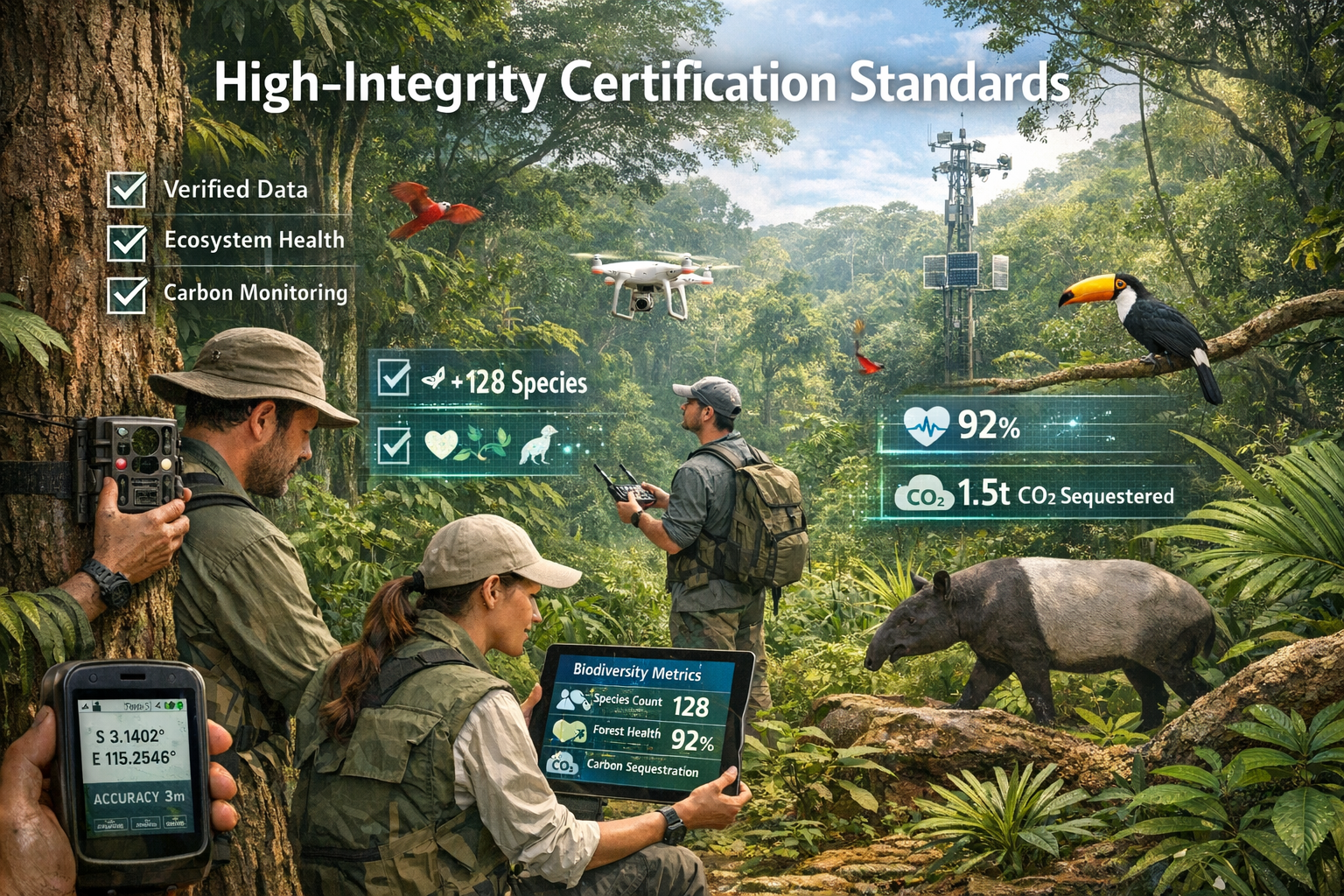
The Evolution of High-Integrity Carbon Standards
The Equitable Earth Carbon Certification: Biodiversity Surveyor Roles in High-Integrity Nature Projects for 2026 framework emerged from years of criticism directed at the voluntary carbon market. Traditional carbon offset programmes frequently faced accusations of greenwashing, inadequate monitoring, and failure to deliver genuine climate benefits. Equitable Earth, founded in 2020, positioned itself as a response to these systemic failures by creating what independent carbon ratings agency Sylvera recognizes as "among the most rigorous and trustworthy" methodologies in the market.[2][3]
The certification model distinguishes itself through several core architectural features:
Digital Platform Architecture 🖥️
- Fully digitized certification processes eliminating paper-based inefficiencies
- Centralized standardized carbon accounting accessible to all project stakeholders
- Real-time data integration from remote sensing technologies
- Transparent reporting mechanisms visible to credit purchasers
Methodological Rigor 📋
- Afforestation, Reforestation and Revegetation (ARR) methodology with proven track record
- Recently released REDD+ (Reducing Emissions from Deforestation and Forest Degradation) methodology
- Expansion into new methodologies covering additional threatened ecosystems planned for 2026
- Independent third-party validation at multiple project stages
Triple Verification Standards ✓
- ICVCM Core Carbon Principles (CCPs) formal approval
- ICROA conditional endorsement and Code of Best Practice listing
- Sylvera high-quality ratings for methodology robustness
This multi-layered validation structure creates unprecedented confidence for corporate carbon credit purchasers while simultaneously raising the bar for what biodiversity surveyors must deliver in the field.
Why Biodiversity Surveyors Are Central to Certification Success
Biodiversity surveyors serve as the critical ground-truth validators in the Equitable Earth certification ecosystem. While remote sensing technology provides broad-scale monitoring capabilities, surveyors deliver the granular, species-level data that distinguishes high-integrity projects from superficial carbon accounting exercises.
The surveyor's role encompasses:
| Core Responsibility | Certification Requirement | Technical Skill Needed |
|---|---|---|
| Baseline Biodiversity Assessment | Document pre-project species richness, abundance, and habitat quality | Species identification, habitat classification, statistical sampling |
| Carbon Stock Measurement | Quantify above-ground and below-ground biomass | Allometric equations, soil sampling, biomass calculation |
| Community Benefit Verification | Validate equitable benefit-sharing with Indigenous Peoples and local communities | Participatory assessment, social impact measurement, cultural sensitivity |
| Ongoing Monitoring | Track biodiversity changes throughout 30+ year project lifecycle | Long-term data management, trend analysis, adaptive monitoring protocols |
| Additionality Verification | Confirm project delivers outcomes beyond business-as-usual scenarios | Counterfactual modeling, land-use change analysis, regulatory knowledge |
This expanded scope requires biodiversity surveyors to develop competencies far beyond traditional ecological survey work. The integration of carbon accounting with biodiversity metrics represents a fundamental shift in professional requirements for 2026 and beyond.
For professionals seeking to understand how biodiversity assessment integrates with development projects, our guide on benefitting nature and developers with biodiversity surveyors provides foundational context applicable to carbon certification contexts.
Biodiversity Surveyor Roles in Equitable Earth Carbon Certification: Biodiversity Surveyor Roles in High-Integrity Nature Projects for 2026
Field Assessment Protocols for High-Integrity Projects
The Equitable Earth Carbon Certification: Biodiversity Surveyor Roles in High-Integrity Nature Projects for 2026 framework demands standardized yet context-appropriate field protocols. Surveyors must balance scientific rigor with practical implementation across diverse geographic contexts, from Brazilian Amazon rainforests to Papua New Guinea coastal ecosystems.
Pre-Project Baseline Establishment 🔍
Before any carbon credits can be issued, surveyors must establish comprehensive baseline conditions documenting:
- Species Inventory: Complete cataloging of flora and fauna using standardized taxonomic protocols, including threatened and endemic species identification
- Habitat Mapping: Detailed classification of habitat types, successional stages, and ecological connectivity
- Carbon Stock Quantification: Measurement of existing carbon storage in vegetation and soils using approved methodologies
- Threat Assessment: Documentation of current and projected threats including deforestation drivers, degradation patterns, and land-use pressures
- Community Resource Use: Mapping of traditional resource utilization patterns and cultural significance areas
This baseline work typically requires 3-6 months of intensive field assessment depending on project scale and ecosystem complexity. The data collected forms the foundation against which all future project claims will be measured.
Monitoring and Verification Cycles 📊
Unlike traditional development projects with finite timelines, carbon certification projects extend across decades. Equitable Earth's framework requires surveyors to implement ongoing monitoring protocols that track:
- Annual biodiversity surveys documenting species population trends
- Biennial carbon stock remeasurement validating sequestration claims
- Quarterly remote sensing analysis detecting early warning signs of project failure
- Continuous community engagement ensuring benefit-sharing agreements remain equitable
The integration of advanced remote sensing technology fundamentally transforms how surveyors conduct this monitoring work. Rather than relying solely on ground-based transects, surveyors now interpret:
🛰️ Satellite imagery showing vegetation health indices and land cover changes
🚁 Drone-based LiDAR measuring canopy structure and biomass
📱 Mobile applications enabling real-time data upload and quality control
🤖 AI-powered species identification accelerating biodiversity assessment workflows
This technological integration doesn't eliminate the need for skilled surveyors—instead, it elevates their role to data integration specialists who combine multiple information streams into holistic project assessments.
Integrating Biodiversity Metrics with Carbon Accounting
The most challenging aspect of the Equitable Earth Carbon Certification: Biodiversity Surveyor Roles in High-Integrity Nature Projects for 2026 framework involves seamlessly integrating biodiversity outcomes with carbon quantification. Traditional carbon projects often treated biodiversity as a secondary "co-benefit" rather than a core certification requirement. Equitable Earth's approach fundamentally rejects this hierarchy.
Biodiversity as Primary Certification Criteria 🦋
Projects seeking Equitable Earth certification must demonstrate:
- Net positive biodiversity outcomes measured against baseline conditions
- Habitat quality improvements beyond simple area metrics
- Threatened species population recovery where applicable
- Ecosystem functionality restoration including nutrient cycling, pollination services, and hydrological regulation
Surveyors must develop integrated assessment frameworks that connect biodiversity metrics to carbon outcomes. For example:
"A reforestation project may sequester substantial carbon through fast-growing monoculture plantations, but such approaches fail Equitable Earth certification if they reduce biodiversity relative to natural forest restoration alternatives."
This requirement forces surveyors to evaluate trade-offs and synergies between carbon sequestration speed and biodiversity value—a nuanced analytical task requiring ecological expertise combined with carbon accounting knowledge.
Standardized Biodiversity Metrics 📈
To enable comparison across diverse project types and geographies, Equitable Earth has developed standardized biodiversity metrics that surveyors must calculate:
- Species Richness Index: Total number of species documented relative to reference ecosystems
- Functional Diversity Score: Representation of ecological functional groups (pollinators, seed dispersers, apex predators, etc.)
- Habitat Heterogeneity Measure: Structural complexity and microhabitat diversity
- Connectivity Assessment: Landscape-scale evaluation of habitat linkages
- Threatened Species Recovery: Population trends for IUCN Red List species
These standardized metrics enable transparent comparison between projects while accommodating ecosystem-specific variations. Surveyors must master both the field techniques for data collection and the analytical methods for metric calculation.
For professionals developing comprehensive biodiversity strategies, our resource on how to create a biodiversity plan for developers offers transferable planning frameworks applicable to carbon certification contexts.
Community Engagement and Equitable Benefit Verification
A distinguishing feature of Equitable Earth Carbon Certification: Biodiversity Surveyor Roles in High-Integrity Nature Projects for 2026 is the mandatory requirement for equitable benefit-sharing with Indigenous Peoples and local communities. This requirement transforms biodiversity surveyors into social-ecological assessors who must navigate complex community dynamics alongside ecological monitoring.
Free, Prior, and Informed Consent (FPIC) 🤝
Before project certification can proceed, surveyors must verify that communities have provided genuine FPIC through:
- Culturally appropriate consultation processes
- Full disclosure of project implications in local languages
- Adequate time for community decision-making
- Documentation of consent without coercion
Surveyors often work alongside social scientists and community liaisons to conduct this verification, but they bear responsibility for ensuring ecological monitoring plans respect community knowledge and access rights.
Benefit-Sharing Monitoring 💰
Throughout the project lifecycle, surveyors must verify that promised community benefits materialize:
- Direct financial payments from carbon credit revenues
- Employment opportunities in project implementation and monitoring
- Capacity building for community members in conservation skills
- Infrastructure improvements such as schools, health clinics, or water systems
- Resource access maintenance ensuring traditional use rights continue
This monitoring requires surveyors to develop social impact assessment skills complementing their ecological expertise. The integration of these dimensions reflects the holistic approach that defines high-integrity nature-based projects in 2026.
Representatives from major tropical forest nations including Brazil, the Democratic Republic of Congo, and Papua New Guinea have specifically endorsed Equitable Earth's framework, emphasizing the importance of equitable approaches for carbon markets serving these biodiversity-rich regions.[1]
Technical Skills and Professional Development for 2026 Biodiversity Surveyors
Remote Sensing and Digital Technology Competencies
The $14.7 million funding injection into Equitable Earth signals massive expansion of digital certification infrastructure.[3] Biodiversity surveyors must rapidly develop technological competencies that were optional just five years ago but are now essential for 2026 certification work.
Essential Digital Skills 💻
Modern biodiversity surveyors working on Equitable Earth certified projects must demonstrate proficiency in:
Geographic Information Systems (GIS)
- Spatial data analysis and habitat mapping
- Integration of satellite imagery with ground-truth data
- Change detection analysis across monitoring periods
- Spatial modeling of biodiversity patterns
Remote Sensing Interpretation
- Multispectral and hyperspectral imagery analysis
- LiDAR data processing for vegetation structure assessment
- Synthetic Aperture Radar (SAR) for forest monitoring
- Drone operation and aerial survey design
Data Management Platforms
- Cloud-based data storage and sharing systems
- Mobile data collection applications
- Quality assurance and quality control protocols
- Integration with Equitable Earth's centralized platform
Statistical Analysis Software
- Biodiversity metric calculation
- Trend analysis and population modeling
- Carbon stock estimation and uncertainty quantification
- Reporting and visualization tools
The shift toward fully digital certification platforms means surveyors must be equally comfortable with field boots and software interfaces.[2] Traditional field skills remain essential, but technological literacy determines career advancement in 2026.
Carbon Accounting and ESG Finance Literacy
Understanding environmental, social, and governance (ESG) finance has become a core competency for biodiversity surveyors working in carbon certification. Surveyors must comprehend how their field data translates into financial instruments traded in voluntary carbon markets.
Key Carbon Market Concepts 📊
Surveyors must understand:
- Additionality: How to demonstrate that carbon sequestration wouldn't occur without project intervention
- Permanence: Ensuring carbon storage persists for required timeframes (typically 30-100 years)
- Leakage: Preventing displacement of deforestation to adjacent areas
- Baseline scenarios: Establishing credible counterfactual land-use trajectories
- Credit issuance: How biodiversity data influences the quantity and quality of credits issued
ESG Reporting Requirements 📋
Corporate purchasers of carbon credits face increasing scrutiny regarding ESG claims. Surveyors must provide data that enables:
- Transparent reporting of biodiversity co-benefits
- Verification of community impact claims
- Documentation of governance structures
- Risk assessment and mitigation strategies
This financial literacy enables surveyors to communicate effectively with project developers, investors, and certification bodies—bridging the gap between ecological science and market mechanisms.
For professionals navigating the intersection of biodiversity and development finance, our analysis of biodiversity net gain points for planning projects offers relevant strategic frameworks.
Interdisciplinary Collaboration and Cultural Competency
The Equitable Earth Carbon Certification: Biodiversity Surveyor Roles in High-Integrity Nature Projects for 2026 framework requires surveyors to work within diverse interdisciplinary teams spanning:
🌍 Ecological scientists (botanists, zoologists, soil scientists)
💼 Carbon project developers and financial analysts
👥 Social scientists and community engagement specialists
🏛️ Legal experts in land tenure and Indigenous rights
🔬 Remote sensing specialists and data scientists
🌱 Restoration ecologists and land management practitioners
Cultural Competency Development 🌏
Working across tropical forest nations requires surveyors to develop:
- Language skills or effective interpreter collaboration
- Cultural sensitivity to diverse worldviews and knowledge systems
- Conflict resolution capabilities for stakeholder disagreements
- Ethical frameworks for respectful engagement with Indigenous communities
- Adaptive communication tailoring technical information to varied audiences
The endorsements from Brazil, DRC, and Papua New Guinea representatives underscore the global nature of this work and the importance of culturally appropriate approaches.[1]
Implementation Challenges and Solutions for High-Integrity Nature Projects
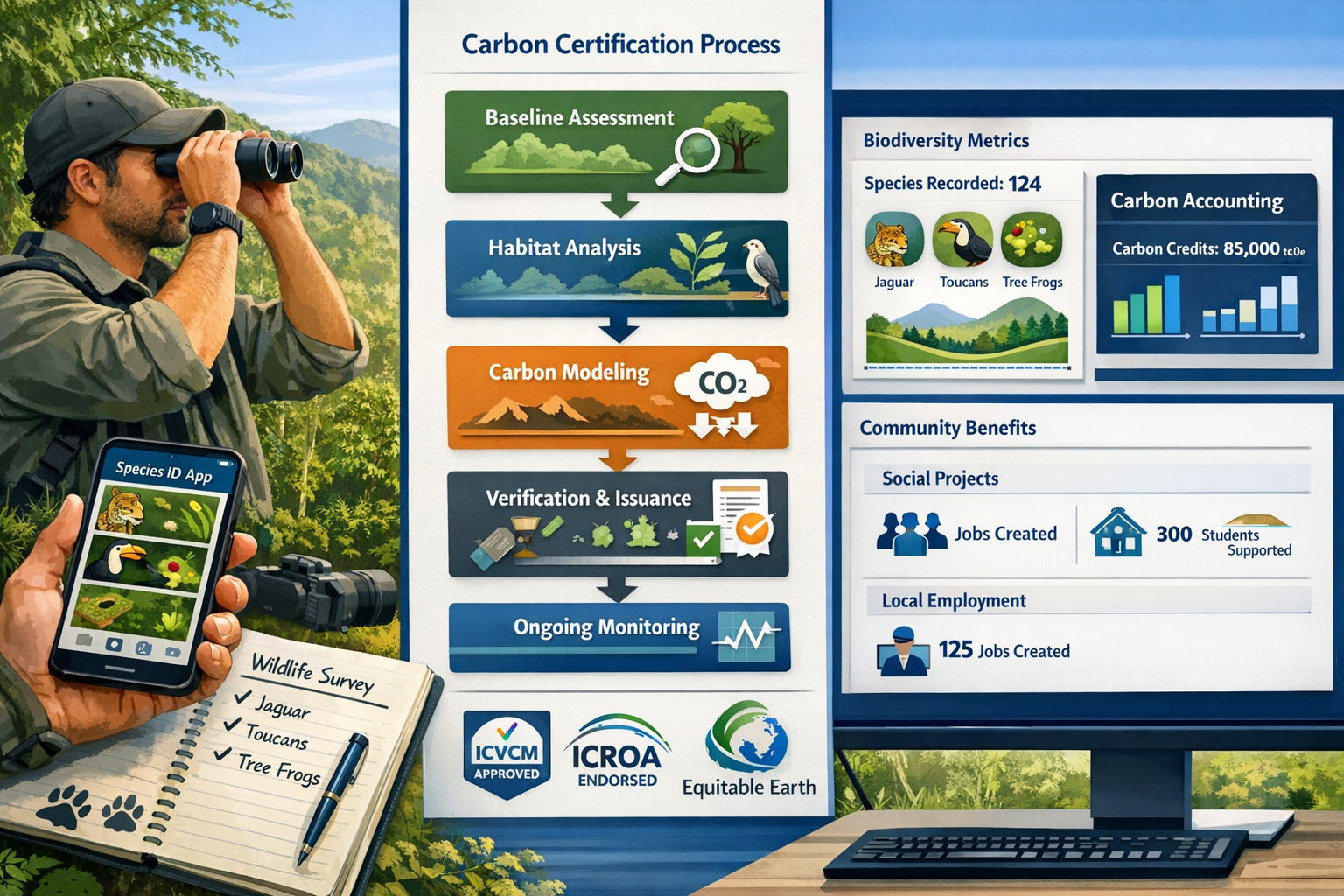
Scaling Quality Assurance Across Millions of Hectares
Equitable Earth's ambitious goal to certify millions of additional hectares in 2026 and beyond creates unprecedented quality assurance challenges.[2][4] How can certification standards maintain rigor while achieving scale?
Standardization vs. Context-Specificity ⚖️
The tension between standardized protocols and ecosystem-specific requirements represents a fundamental challenge:
Standardization Benefits:
- Enables comparison across projects
- Reduces training complexity for surveyors
- Facilitates automated quality control
- Builds market confidence through consistency
Context-Specific Needs:
- Different ecosystems require different survey methods
- Cultural contexts demand varied community engagement approaches
- Regional regulations and land tenure systems vary
- Threat profiles differ across geographies
Solution Framework: Equitable Earth addresses this through tiered protocols featuring:
- Core universal requirements applicable to all projects
- Ecosystem-specific modules for major biome types (tropical forests, mangroves, grasslands, etc.)
- Regional adaptations addressing local regulatory and cultural contexts
- Expert review panels providing quality oversight for novel situations
This approach enables scalability while maintaining the flexibility essential for high-integrity certification.
Addressing Permanence and Long-Term Monitoring
Carbon projects face the permanence challenge: ensuring that sequestered carbon remains stored for decades or centuries. Biodiversity surveyors play crucial roles in early detection of threats to permanence.
Monitoring for Permanence Risks 🔍
Surveyors must identify early warning indicators of:
- Climate change impacts: Drought stress, pest outbreaks, fire vulnerability
- Social pressures: Land tenure conflicts, resource use disputes, political instability
- Economic pressures: Commodity price changes incentivizing deforestation
- Ecological failures: Poor seedling survival, invasive species, disease
The integration of remote sensing technology enables continuous monitoring between field visits, with algorithms flagging anomalies for surveyor investigation.[2][3]
Buffer Pool Mechanisms 💰
To address permanence uncertainty, Equitable Earth employs buffer pool mechanisms where a percentage of credits are withheld to cover potential reversals. Surveyor data directly influences:
- Buffer pool contribution percentages based on risk assessment
- Release of buffer credits when permanence is demonstrated
- Remediation requirements when reversals occur
This creates strong incentives for thorough, honest surveyor reporting rather than optimistic projections.
Navigating Regulatory Landscapes and Market Evolution
The voluntary carbon market continues rapid evolution in 2026, with regulatory frameworks emerging in multiple jurisdictions. Biodiversity surveyors must stay current with:
Regulatory Developments 📜
- EU Carbon Removal Certification Framework: New requirements for carbon removal projects
- UK Woodland Carbon Code: Integration with Equitable Earth standards
- California Compliance Market: Potential acceptance of high-integrity voluntary credits
- National biodiversity credit systems: Interaction with carbon markets
Market Quality Initiatives ✅
The ICVCM Core Carbon Principles approval and ICROA endorsement represent major market quality initiatives.[3][5] Surveyors must understand how these frameworks influence:
- Credit pricing and market access
- Corporate purchasing decisions
- Regulatory acceptance
- Reputational risk management
Staying informed about these developments requires ongoing professional development and engagement with industry associations.
For context on how biodiversity frameworks interact with development projects, our resource on achieving biodiversity net gain without risk provides relevant risk management perspectives.
Career Pathways and Professional Opportunities in 2026
Growing Demand for Specialized Biodiversity Surveyors
The €12.6 million funding round specifically targets team expansion across Research & Development, Engineering, Commercial, and Certification divisions.[2][4] This investment signals explosive growth in career opportunities for qualified biodiversity surveyors.
Employment Sectors 💼
Biodiversity surveyors with carbon certification expertise find opportunities across:
- Certification Bodies (like Equitable Earth): Core certification team members conducting project assessments
- Project Developers: In-house ecological teams designing and implementing nature-based projects
- Verification and Validation Bodies: Independent third-party auditors
- Conservation NGOs: Organizations developing community-based carbon projects
- Corporate Sustainability Teams: Companies developing insetting strategies
- Consulting Firms: Specialized advisory services for carbon project development
- Government Agencies: Regulatory bodies overseeing carbon market integrity
Salary Expectations 💰
As of 2026, biodiversity surveyors with carbon certification expertise command premium compensation:
| Experience Level | Annual Salary Range (USD) | Key Qualifications |
|---|---|---|
| Entry-Level Surveyor | $45,000 – $65,000 | Bachelor's degree, basic field skills, GIS proficiency |
| Mid-Career Specialist | $65,000 – $95,000 | 3-5 years experience, remote sensing skills, carbon methodology knowledge |
| Senior Certification Expert | $95,000 – $140,000 | 7+ years experience, multiple methodology certifications, team leadership |
| Principal Scientist | $140,000 – $200,000+ | Advanced degree, methodology development, international project portfolio |
These figures reflect the specialized nature of carbon certification work and the high stakes of ESG finance applications.
Professional Certifications and Training Pathways
Formal certification programmes for biodiversity surveyors in carbon markets are emerging in 2026. Key credentials include:
Equitable Earth Certified Surveyor Programme 🎓
While details remain under development, Equitable Earth is expected to launch a formal surveyor certification programme featuring:
- Methodology-specific training modules (ARR, REDD+, etc.)
- Digital platform competency requirements
- Field assessment standardization
- Community engagement protocols
- Ongoing continuing education requirements
Complementary Certifications 📜
Surveyors enhance marketability through:
- ICVCM Approved Methodology Training: Understanding Core Carbon Principles
- GIS Professional Certifications: ESRI or open-source platform credentials
- Remote Sensing Certifications: Satellite imagery and LiDAR analysis
- Social Impact Assessment: Community engagement and FPIC protocols
- Carbon Accounting Standards: GHG Protocol, ISO 14064, etc.
Academic Pathways 🎓
Universities are developing specialized programmes in:
- Nature-based Solutions and Carbon Markets
- Conservation Finance and ESG Investment
- Ecological Monitoring and Remote Sensing
- Community-Based Natural Resource Management
These interdisciplinary programmes prepare the next generation of surveyors for the integrated assessment requirements of high-integrity carbon certification.
For professionals seeking to understand broader biodiversity frameworks, our guide on biodiversity net gain explained provides foundational concepts applicable across conservation finance contexts.
The Future of Equitable Earth Carbon Certification: Biodiversity Surveyor Roles in High-Integrity Nature Projects for 2026 and Beyond
Methodology Expansion and Innovation
Equitable Earth's expansion into new methodologies to cover additional threatened ecosystems represents significant opportunities for biodiversity surveyors to develop specialized expertise.[2][4]
Emerging Methodology Areas 🌱
Beyond the established ARR and REDD+ methodologies, surveyors can expect certification frameworks for:
Coastal Blue Carbon Ecosystems
- Mangrove restoration and conservation
- Seagrass bed protection
- Salt marsh rehabilitation
- Unique marine biodiversity assessment requirements
Grassland and Savanna Conservation
- Avoided grassland conversion
- Sustainable grazing management
- Fire regime optimization
- Grassland-dependent species monitoring
Peatland Restoration
- Rewetting degraded peatlands
- Preventing peat fires and emissions
- Specialized hydrology and soil carbon monitoring
- Unique vegetation succession patterns
Agroforestry Systems
- Integrated tree-crop systems
- Shade coffee and cacao certification
- Silvopastoral landscapes
- Agricultural biodiversity enhancement
Each methodology requires ecosystem-specific surveyor expertise, creating specialization opportunities and career differentiation.
Technology Integration and Artificial Intelligence
The fully digital certification platform will continue evolving with cutting-edge technologies.[2][3] Biodiversity surveyors must prepare for:
AI-Powered Assessment Tools 🤖
- Automated species identification: Camera trap image analysis and acoustic monitoring
- Predictive modeling: Machine learning algorithms forecasting biodiversity trajectories
- Anomaly detection: Automated flagging of monitoring data inconsistencies
- Natural language processing: Streamlined reporting and documentation
Blockchain and Transparency 🔗
- Immutable data records: Blockchain-based surveyor data storage
- Credit traceability: Linking specific biodiversity outcomes to individual credits
- Smart contracts: Automated benefit-sharing payment triggers based on surveyor verification
Internet of Things (IoT) Sensors 📡
- Continuous environmental monitoring: Temperature, humidity, soil moisture sensors
- Wildlife tracking: GPS collars and movement pattern analysis
- Illegal activity detection: Acoustic sensors for chainsaw detection
- Integration challenges: Combining automated sensor data with surveyor assessments
These technologies augment rather than replace surveyor expertise, but they fundamentally transform workflow and skill requirements.
Global Scaling and Market Maturation
As the voluntary carbon market matures, Equitable Earth Carbon Certification: Biodiversity Surveyor Roles in High-Integrity Nature Projects for 2026 will increasingly influence global conservation finance.
Market Growth Projections 📈
Industry analysts project the voluntary carbon market will reach:
- $50-100 billion annual value by 2030
- Nature-based solutions representing 30-40% of total credit volume
- High-integrity certified projects commanding 50-200% price premiums over uncertified alternatives
This growth translates to thousands of new surveyor positions globally over the next five years.
Geographic Expansion Priorities 🌍
Equitable Earth's endorsements from Brazil, DRC, and Papua New Guinea representatives signal priority geographies.[1] Surveyors with expertise in these regions will find exceptional opportunities:
- Amazon Basin: Largest tropical forest carbon potential
- Congo Basin: Second-largest tropical forest, significant biodiversity
- Southeast Asia: High deforestation rates, critical biodiversity hotspots
- Madagascar: Unique endemic species, restoration opportunities
- Central America: Biological corridors and community forestry traditions
Integration with Biodiversity Credit Markets 🦎
Emerging biodiversity credit markets complement carbon markets, creating dual-certification opportunities. Surveyors who can assess projects for both carbon and biodiversity credits will command premium positioning.
For professionals exploring the intersection of biodiversity and development, our analysis of biodiversity net gain off-site versus on-site delivery offers relevant strategic frameworks applicable to carbon project design.
Conclusion: Positioning for Success in High-Integrity Carbon Certification
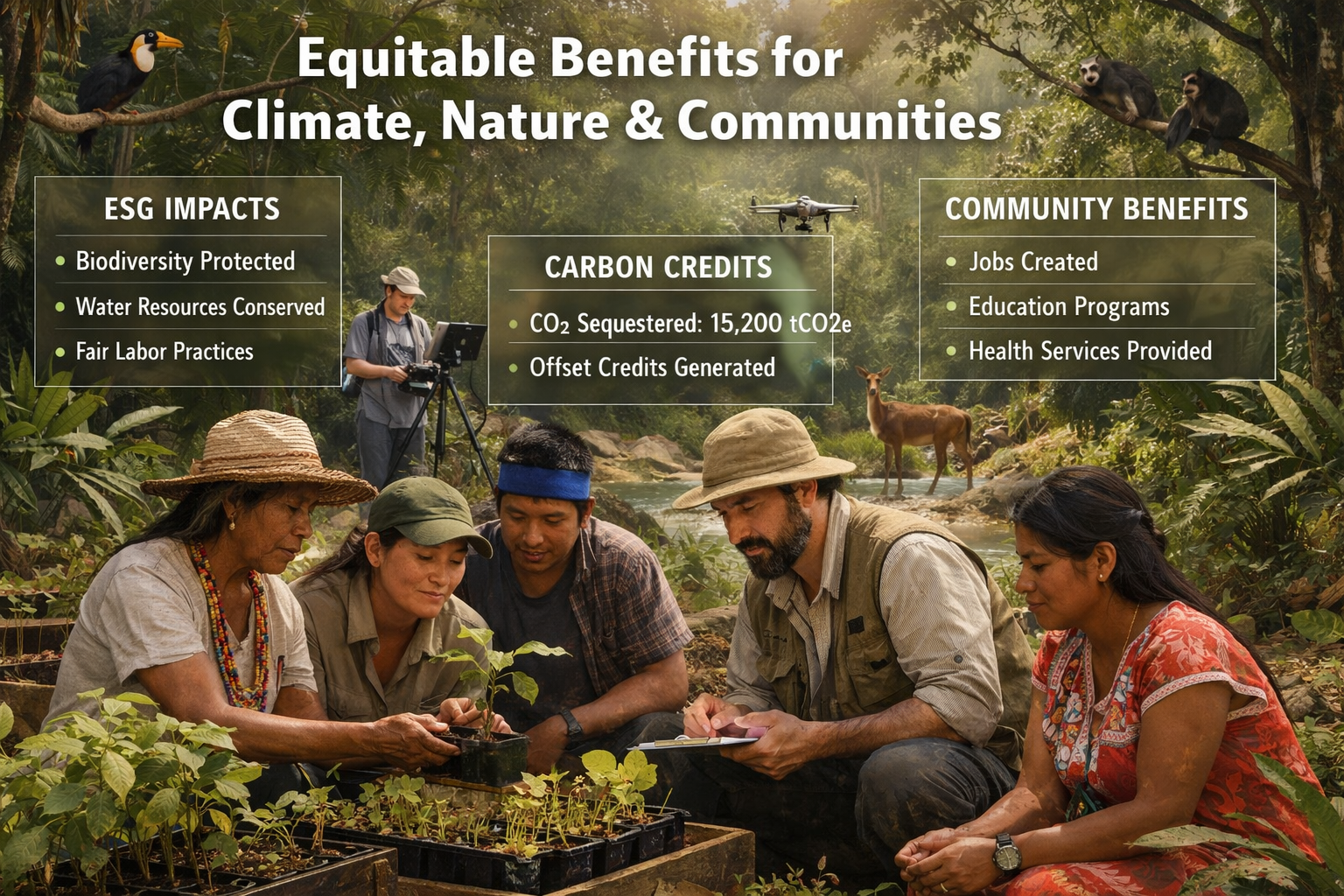
The Equitable Earth Carbon Certification: Biodiversity Surveyor Roles in High-Integrity Nature Projects for 2026 framework represents a watershed moment in conservation finance. With €12.6 million in fresh capital, ICVCM and ICROA endorsements, and ambitious plans to certify millions of additional hectares, Equitable Earth is establishing itself as the global standard for nature-based carbon projects.[2][3][4][5]
For biodiversity surveyors, this evolution creates unprecedented professional opportunities—but only for those who adapt to the expanded role requirements. The integration of carbon accounting with biodiversity metrics, mastery of digital platforms and remote sensing technologies, and development of community engagement competencies now define professional excellence in this field.
Actionable Next Steps for Aspiring Carbon Certification Surveyors
Immediate Actions (Next 30 Days) ✅
- Assess current skills against the competency framework outlined in this article
- Identify knowledge gaps in carbon accounting, remote sensing, or community engagement
- Research training programmes offering relevant certifications and credentials
- Join professional networks focused on nature-based solutions and carbon markets
- Follow Equitable Earth and similar certification bodies for emerging opportunities
Medium-Term Development (3-6 Months) 📚
- Complete foundational training in carbon methodologies (ARR, REDD+, or ecosystem-specific approaches)
- Develop GIS and remote sensing proficiency through online courses or university programmes
- Gain field experience with biodiversity assessment projects, even outside carbon contexts
- Build cultural competency through language learning or cross-cultural training
- Network with project developers and certification professionals in target geographies
Long-Term Career Positioning (1-2 Years) 🎯
- Pursue formal certification through Equitable Earth or complementary programmes as they become available
- Specialize in high-demand methodologies or geographies with significant project pipelines
- Develop methodology expertise by contributing to protocol development and refinement
- Build international experience through projects in multiple countries and ecosystems
- Establish thought leadership through publications, presentations, and professional contributions
The Broader Impact: Climate, Nature, and Communities
Beyond individual career opportunities, biodiversity surveyors working within the Equitable Earth Carbon Certification framework contribute to transformative global impact:
🌍 Climate Mitigation: Ensuring certified projects deliver genuine, additional carbon sequestration at the scale needed to meet Paris Agreement targets
🦋 Biodiversity Conservation: Protecting and restoring threatened ecosystems and species populations through high-integrity project design
🤝 Community Empowerment: Verifying equitable benefit-sharing that improves livelihoods for Indigenous Peoples and local communities stewarding critical ecosystems
💼 Market Integrity: Building corporate and investor confidence in nature-based solutions through transparent, rigorous certification
As CEO Thibault Sorret stated regarding the recent funding round, Equitable Earth aims to "establish ourselves as the global standard for nature-based projects" delivering "scalable, reliable projects that deliver real climate, ecological, and social outcomes."[3] Biodiversity surveyors are the ground-truth validators making this vision achievable.
The voluntary carbon market stands at a critical juncture in 2026. The choices made now—in certification standards, surveyor training, and project design—will determine whether nature-based solutions deliver on their enormous potential or become another chapter in greenwashing history. Biodiversity surveyors, equipped with the right skills and supported by frameworks like Equitable Earth's, hold the key to ensuring high-integrity outcomes.
For professionals committed to this vision, the pathway forward is clear: develop integrated competencies spanning ecology, technology, finance, and community engagement; pursue formal certification as programmes emerge; and contribute to the standardization of protocols that will govern billions of dollars in conservation investment over the coming decades.
The Equitable Earth Carbon Certification: Biodiversity Surveyor Roles in High-Integrity Nature Projects for 2026 framework is not just a certification standard—it's a blueprint for how biodiversity professionals can drive meaningful climate action while advancing conservation and equity goals. The opportunity is substantial, the timing is now, and the impact potential is transformative.
References
[1] Weekly Esg Update 02 2026 Equitable Earth Raised 12 6 Million Eur Funding – https://sustainablefinancedaily.com/esg-news/weekly-esg-update-02-2026-equitable-earth-raised-12-6-million-eur-funding/
[2] Equitable Earth Secures Eu12 6m To Accelerate Certification Of Nature Based Climate Solutions – https://www.eq-earth.com/blog/equitable-earth-secures-eu12-6m-to-accelerate-certification-of-nature-based-climate-solutions
[3] Equitable Earth Raises 14 7 Million To Advance Certification Standard For Nature Based Carbon Projects – https://www.esgtoday.com/equitable-earth-raises-14-7-million-to-advance-certification-standard-for-nature-based-carbon-projects/
[4] Equitable Earth To Accelerate Nature Based Cdr Certification With New 14 6m Funding – https://carbonherald.com/equitable-earth-to-accelerate-nature-based-cdr-certification-with-new-14-6m-funding/
[5] Equitable Earth Conditionally Endorsed By Icroa And Officially Listed In Their Code Of Best Practice – https://www.eq-earth.com/blog/equitable-earth-conditionally-endorsed-by-icroa-and-officially-listed-in-their-code-of-best-practice