

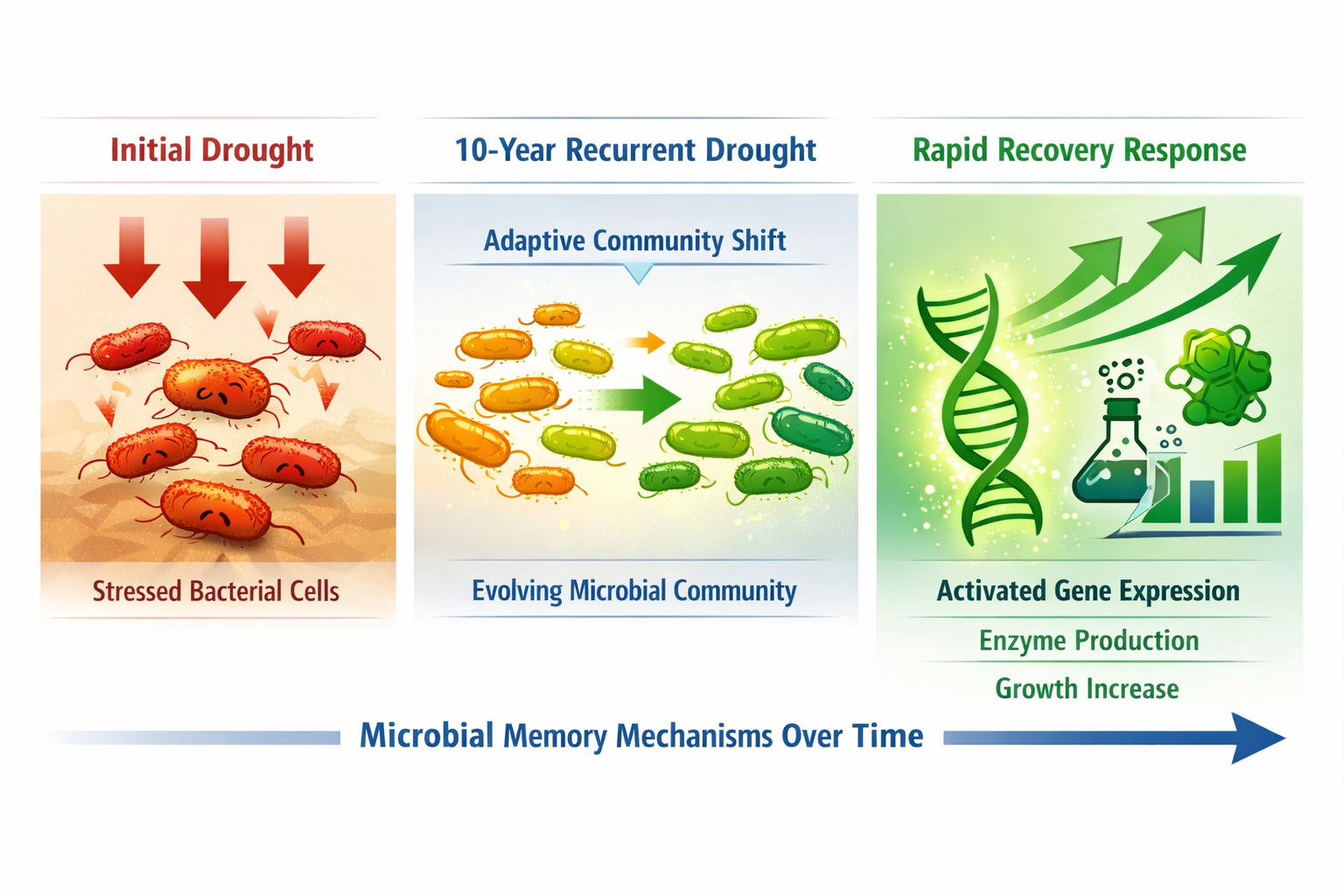
Recent research reveals that soil microbial communities subjected to 10 years of recurrent drought demonstrate faster recovery rates and enhanced stress tolerance compared to communities experiencing single drought events—a phenomenon ecologists now recognize as "microbial memory" that could revolutionize how we measure and predict ecosystem resilience. As climate extremes intensify across the UK and development pressures mount, Drought-Memory Soil Microbes: Integrating Microbial Resilience into 2026 Biodiversity Net Gain Baselines represents a critical frontier for ecological assessment and land management strategy.
The implications extend far beyond academic curiosity. With Biodiversity Net Gain (BNG) requirements now mandatory for most development projects in England, establishing accurate baseline conditions has never been more important. Traditional biodiversity assessments focus primarily on visible flora and fauna, yet the invisible microbial world beneath our feet drives fundamental ecosystem processes—from carbon sequestration to nutrient cycling—that determine whether restoration efforts succeed or fail over decades.
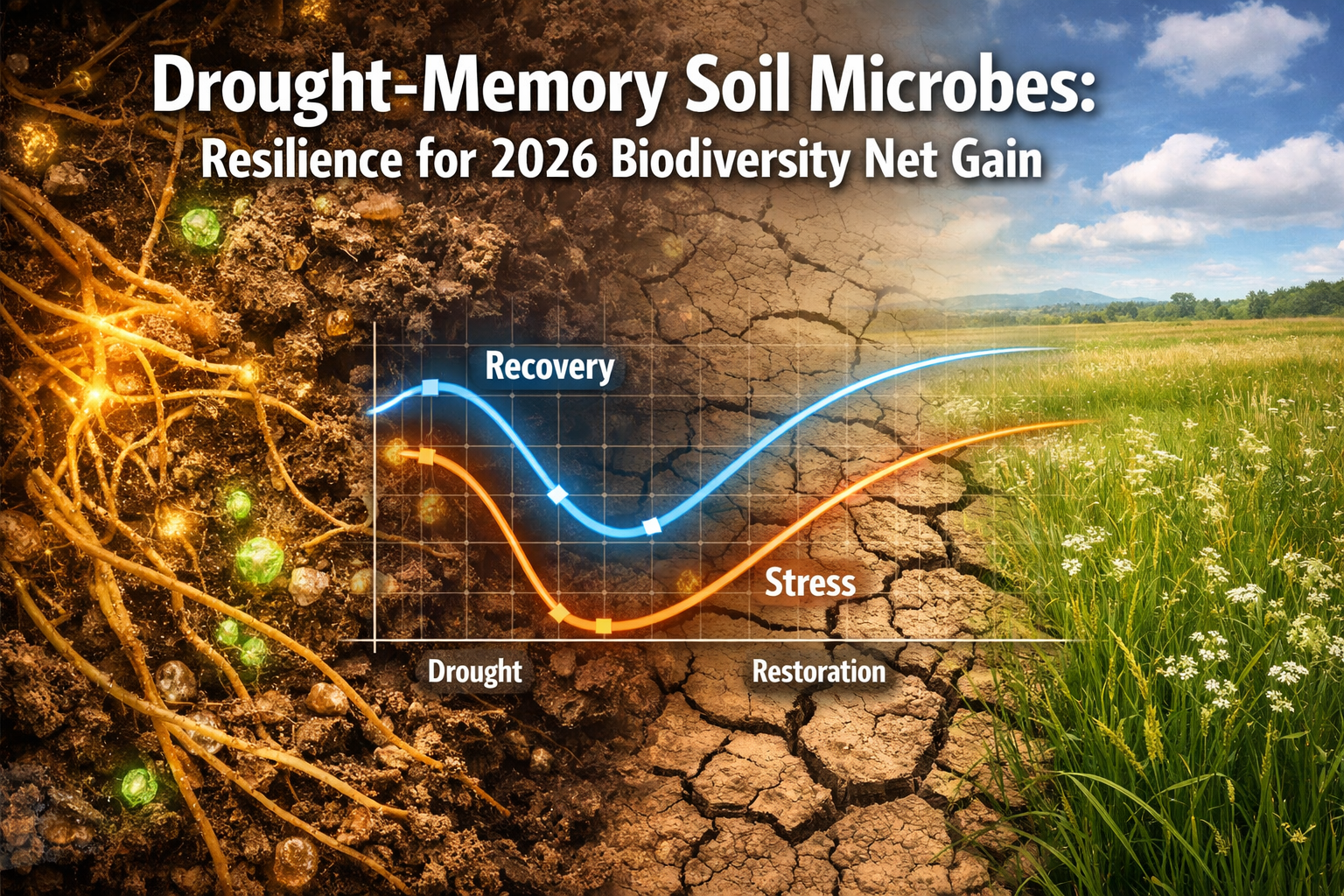
Key Takeaways
- 🦠 Microbial communities develop "memory" of past drought events, enabling faster recovery and enhanced stress tolerance after 10+ years of recurrent exposure
- 🌱 Plant diversity directly enhances microbial drought resistance through high-quality carbon inputs that support stress tolerance strategies
- 📊 BNG baselines that ignore microbial resilience may significantly underestimate long-term habitat viability under climate change scenarios
- 🔬 Specific gene expression patterns in drought-adapted microbes trigger protective mechanisms in plants, creating legacy effects across growing seasons
- ⚡ Rapid assessment techniques now allow practitioners to incorporate microbial resilience metrics into standard biodiversity surveys without prohibitive cost increases
Understanding Drought-Memory Soil Microbes and Their Ecological Significance
Soil microbes—bacteria, archaea, fungi, and other microscopic organisms—form the foundation of terrestrial ecosystems. These invisible workers decompose organic matter, cycle nutrients, regulate water infiltration, and support plant health through complex symbiotic relationships. Recent discoveries have fundamentally changed our understanding of how these communities respond to environmental stress.
The Science Behind Microbial Memory
Research published in 2026 from the Jena Experiment demonstrates that higher plant diversity positively affects microbial growth resistance to drought, with diverse plant communities promoting resilience through enhanced carbon availability.[1] This finding builds upon groundbreaking work showing that microbial communities exposed to recurrent drought over 10 years exhibit large shifts in bacterial, archaeal, and fungal composition—changes that buffer soil multifunctionality against subsequent drought effects.[2]
The mechanism operates through several interconnected pathways:
Genetic Adaptation 🧬
Drought-adapted bacterial communities show enrichment of specific genes including:
- murA and murB genes for peptidoglycan biosynthesis (cell wall strengthening)
- Superoxide dismutase (SOD2) and catalase genes for reactive oxygen species scavenging
- Enhanced expression of complex-substrate-degrading enzymes (amylases, chitinases, lignin-degradation pathways)[2]
Metabolic Shifts 🔄
Long-term drought exposure selects for communities with increased acquisition strategies toward carbon and nitrogen compounds, reflecting adaptive resource utilization patterns that persist even after moisture returns.[2]
Plant-Microbe Signaling 🌿
Perhaps most remarkably, soil microbes carrying drought memory trigger specific gene expression in plants. Research from Kansas identified the nicotianamine synthase gene, which produces molecules for iron acquisition but also influences drought tolerance—with activation occurring only when plants grow with drought-experienced microbial communities.[4]
Why This Matters for Biodiversity Net Gain in 2026
Traditional biodiversity assessments measure visible species richness, habitat structure, and ecological connectivity. While these metrics remain essential, they capture only part of the resilience picture. Two sites with identical plant communities may possess vastly different capacities to withstand future drought stress based on their soil microbial legacy.
Consider a practical scenario: A developer proposes habitat creation to achieve the mandatory 10% Biodiversity Net Gain. The restoration plan establishes native grassland on former agricultural land. Standard metrics might show excellent progress within 5 years—diverse plant establishment, returning invertebrates, and appropriate habitat structure. However, if the soil microbial community lacks drought memory and the region experiences intensifying dry periods (as climate projections suggest), the habitat may collapse during the first severe drought, failing to deliver the 30-year outcomes BNG requires.
Drought-Memory Soil Microbes: Integrating Microbial Resilience into 2026 Biodiversity Net Gain Baselines Through Assessment Protocols
Incorporating microbial resilience into BNG baselines requires practical, cost-effective assessment methods that complement existing survey protocols. The good news: advances in molecular techniques and ecological understanding now make this feasible for standard projects.
Establishing Baseline Microbial Resilience Metrics
When conducting biodiversity impact assessments, practitioners can integrate microbial resilience through tiered approaches:
Tier 1: Desktop Assessment 📋
- Review historical climate data for drought frequency and intensity over past 10-20 years
- Analyze land use history (agricultural practices, irrigation, previous vegetation)
- Assess soil type and drainage characteristics
- Score sites based on likelihood of drought-adapted microbial communities
Tier 2: Soil Health Indicators 🔬
- Measure soil organic matter content (correlates with microbial biomass)
- Test aggregate stability (indicates fungal network development)
- Assess water holding capacity
- Conduct basic respiration tests under moisture stress
Tier 3: Molecular Analysis 🧪
For high-value or high-risk projects:
- Phospholipid fatty acid (PLFA) analysis to characterize microbial community structure
- Amplicon sequencing to identify drought-tolerant taxa abundance
- Functional gene analysis targeting stress-response pathways
The Plant Diversity Connection
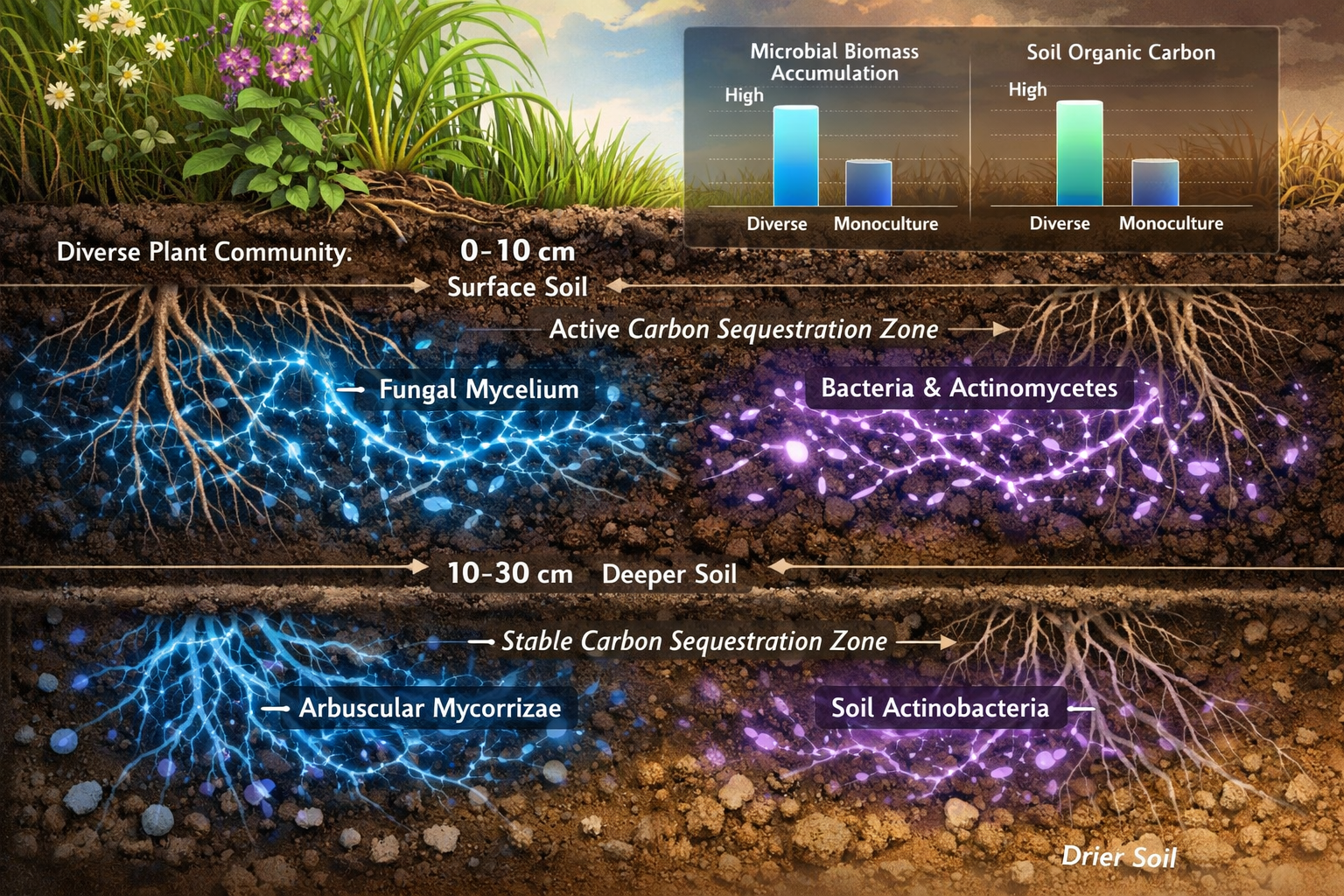
The 2026 Jena Experiment findings provide actionable guidance: plant diversity directly enhances microbial drought resistance.[1] Under moist conditions, higher plant diversity increased respiration rates while maintaining stable microbial growth rates, resulting in microbial biomass accumulation that contributes to soil carbon storage at both 0-10 cm and 10-30 cm depths.[1]
This creates a virtuous cycle for BNG delivery:
- Diverse plantings → Enhanced root exudate diversity
- Quality carbon inputs → Support for stress-tolerance microbial strategies
- Drought-resistant microbes → Improved plant drought tolerance
- Stable plant communities → Sustained habitat quality over 30+ years
Practical recommendations for achieving BNG without risk include:
✅ Prioritize plant diversity over monocultures in restoration schemes
✅ Include deep-rooted perennials that support microbial communities at multiple soil depths
✅ Avoid excessive soil disturbance that disrupts established microbial networks
✅ Consider inoculation with soil from drought-adapted donor sites in similar habitats
Addressing the Climate-Health Nexus
A March 2026 study from Caltech revealed an unexpected dimension: drought increases the abundance of antibiotic-resistant microorganisms in soils, with regions experiencing high aridity showing elevated levels of antibiotic-resistant infections in hospitals.[5] As soil dries, available living space shrinks, increasing bacterial contact with antibiotic compounds and enriching resistant strains.[5]
While this finding primarily concerns human health, it underscores the interconnectedness of soil microbial communities, climate stress, and broader ecosystem services. BNG schemes that enhance soil moisture retention and microbial diversity may provide co-benefits beyond biodiversity—a consideration relevant for planners evaluating BNG proposals.
Practical Implementation: Drought-Memory Soil Microbes in 2026 Biodiversity Net Gain Project Planning
Translating scientific understanding into field practice requires integration across project phases—from initial site assessment through long-term monitoring.
Pre-Development Assessment Enhancements
When preparing BNG reports, consider these microbial resilience factors:
Site History Analysis 📊
Document:
- Years under current land use
- Drought events experienced (frequency, severity, duration)
- Management intensity (tillage, chemical inputs, irrigation)
- Previous vegetation diversity and structure
Soil Sampling Strategy 🎯
- Collect samples from multiple depths (0-10 cm, 10-30 cm minimum)
- Sample across habitat gradients (wet to dry areas)
- Time sampling to capture seasonal variation
- Archive samples for potential future molecular analysis
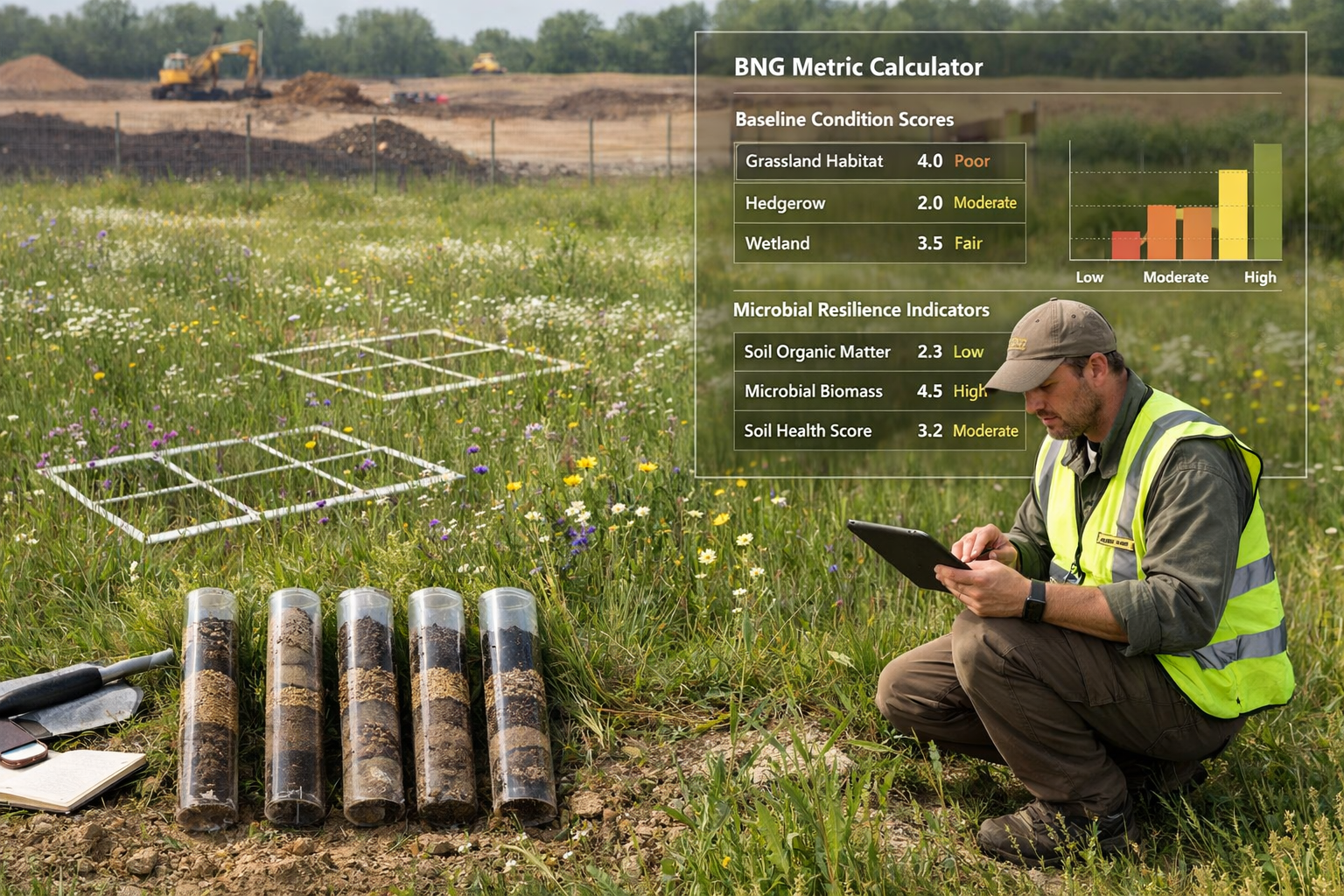
Baseline Condition Scoring ⭐
Develop microbial resilience modifiers for standard habitat condition assessments:
| Factor | Low Resilience (0.5x) | Moderate Resilience (1.0x) | High Resilience (1.5x) |
|---|---|---|---|
| Drought history | No significant droughts in 10 years | 2-3 moderate droughts | 4+ droughts with recovery |
| Plant diversity | Monoculture/low diversity | Moderate diversity (5-10 species) | High diversity (15+ species) |
| Soil organic matter | <2% | 2-4% | >4% |
| Management intensity | Intensive tillage/chemicals | Moderate management | Low-input/regenerative |
Design and Enhancement Strategies
For on-site or off-site BNG delivery, incorporate microbial resilience-building approaches:
Habitat Creation 🌱
- Maximize plant species richness from project initiation (target 20+ species for grasslands)
- Include functional diversity: grasses, legumes, forbs with varied root architectures
- Establish nurse crops that rapidly build soil organic matter
- Consider mycorrhizal inoculation to accelerate fungal network development
Soil Management 🌍
- Minimize compaction during construction phases
- Preserve topsoil with existing microbial communities where possible
- Add compost or biochar to boost microbial habitat and water retention
- Implement swale or berm systems to create moisture gradients
Phased Implementation 📅
Rather than uniform habitat creation, consider:
- Year 1-2: Establish pioneer communities with stress-tolerant species
- Year 3-5: Introduce additional diversity as microbial networks develop
- Year 5+: Allow natural colonization to increase complexity
This approach mirrors natural succession while intentionally building microbial resilience into the system from the start.
Monitoring and Adaptive Management
The 30-year BNG requirement demands monitoring protocols that detect early warning signs of declining resilience:
Short-term Indicators (Years 1-5) 📈
- Soil respiration rates under controlled moisture stress
- Plant community composition shifts
- Soil organic matter accumulation rates
- Aggregate stability improvements
Medium-term Indicators (Years 5-15) 📊
- Response to natural drought events (recovery speed, community stability)
- Microbial biomass measurements
- Functional diversity assessments (enzyme activity profiles)
- Carbon sequestration rates at multiple depths
Long-term Indicators (Years 15-30+) 🎯
- Demonstrated drought memory effects (faster recovery after recurrent events)
- Self-sustaining nutrient cycles
- Stable plant-microbe-soil feedbacks
- Maintained multifunctionality under climate variability
Research confirms that plant fitness is strongly linked to rapid responses of soil microbial community structure to drought, with changes in specific bacterial taxa associated with increased plant drought tolerance.[2] Monitoring these shifts provides early warning of declining habitat condition before visible plant community collapse occurs.
Policy Implications and Future Directions for Microbial Resilience in BNG
As the UK's BNG framework matures in 2026, incorporating microbial resilience metrics represents both an opportunity and a challenge for policy development.
Current Policy Gaps
Existing BNG guidance focuses on habitat types, condition assessments, and species inventories. The statutory biodiversity metric does not explicitly account for:
- Soil microbial community composition or diversity
- Drought resilience capacity of established habitats
- Legacy effects of land use on microbial functional potential
- Climate adaptation capacity beyond structural habitat features
This creates potential risks for long-term BNG delivery, particularly as climate projections indicate:
- 🌡️ Increased frequency of drought events across southern and eastern England
- 📉 Higher variability in precipitation patterns
- ⚠️ Greater stress on newly created habitats during establishment phases
Emerging Best Practices
Forward-thinking practitioners and landowners considering BNG opportunities can adopt emerging best practices:
Integrated Assessment Frameworks 🔄
Combine traditional biodiversity surveys with:
- Soil health assessments using standardized protocols
- Climate vulnerability analysis specific to site conditions
- Microbial resilience scoring based on land use history and plant diversity
Enhanced Condition Assessments ✅
Modify standard habitat condition sheets to include:
- Soil organic matter thresholds appropriate to habitat type
- Plant functional diversity metrics (not just species counts)
- Evidence of drought adaptation (deep-rooted species presence, stress-tolerant community composition)
Adaptive Management Triggers ⚡
Establish clear intervention points based on:
- Declining soil respiration under stress
- Shifts in plant community composition toward stress-intolerant species
- Reduced recovery rates following drought events
Research Priorities for 2026 and Beyond
Several knowledge gaps require attention to fully operationalize microbial resilience in BNG:
- Cost-effective rapid assessment methods suitable for standard projects
- Threshold values for microbial resilience metrics across habitat types
- Inoculation protocols for accelerating drought memory in restored habitats
- Long-term validation of microbial metrics as predictors of 30-year habitat persistence
- Regional variation in drought-adapted microbial communities across UK soil types
The Global Plant Council notes that ecological memory enables ecosystem resilience, with soil microbial communities demonstrating capacity to "remember" and adapt to past environmental conditions—a phenomenon with clear implications for designing climate-resilient systems.[3] Translating this understanding into practical guidance for developers and consultants represents a priority for the ecological profession.
Conclusion: Building Climate-Resilient Biodiversity Outcomes
Drought-Memory Soil Microbes: Integrating Microbial Resilience into 2026 Biodiversity Net Gain Baselines is not merely an academic exercise—it represents a fundamental shift in how we conceptualize, measure, and deliver lasting biodiversity gains in an era of climate uncertainty. The evidence is compelling: microbial communities with 10 years of drought exposure show faster growth and respiration rates upon rewetting, demonstrating memory effects that enable rapid reactivation.[2] Plant diversity directly enhances this resilience through quality carbon inputs that support stress tolerance strategies.[1]
For practitioners navigating BNG requirements, the path forward involves:
Immediate Actions 🎯
- Incorporate soil health assessments into baseline biodiversity surveys
- Prioritize plant diversity in all habitat creation and enhancement schemes
- Document site drought history and land use legacy during desktop assessments
- Preserve existing soil microbial communities where baseline condition is good
- Consider moisture management in design to create resilience gradients
Medium-term Developments 📈
- Advocate for policy updates that recognize microbial resilience in BNG metrics
- Develop standardized protocols for microbial resilience assessment
- Build monitoring programs that track soil function alongside species composition
- Share case studies demonstrating long-term benefits of microbial-informed approaches
- Invest in training for ecological consultants on soil microbiology fundamentals
Long-term Vision 🌍
The ultimate goal is BNG delivery that creates habitats genuinely resilient to the climate conditions of 2050 and beyond—not merely replicating historical ecosystems that may prove maladapted to future conditions. By integrating our growing understanding of drought-memory soil microbes into baseline assessments and restoration design, we can:
- ✅ Reduce risk of habitat failure during the 30-year BNG period
- ✅ Enhance carbon sequestration co-benefits through stable microbial biomass accumulation
- ✅ Support plant communities better equipped to withstand climate variability
- ✅ Deliver more cost-effective outcomes by designing for long-term stability from the outset
The invisible world beneath our feet holds remarkable capacity for adaptation and memory. As we face the dual challenges of biodiversity loss and climate change, harnessing this microbial resilience may prove essential for achieving the ambitious conservation outcomes that BNG promises. The science is emerging, the tools are developing, and the imperative is clear: 2026 is the year to integrate microbial resilience into biodiversity baselines, ensuring that today's restoration efforts create tomorrow's thriving ecosystems.
References
[1] Plant Diversity Increases Microbial Resistance To Drought And Soil Carbon Accumulation – https://the-jena-experiment.de/index.php/2026/02/06/plant-diversity-increases-microbial-resistance-to-drought-and-soil-carbon-accumulation/
[2] Pmc8421443 – https://pmc.ncbi.nlm.nih.gov/articles/PMC8421443/
[3] Soil Memory Can Help Plants Respond To Drought – https://globalplantcouncil.org/soil-memory-can-help-plants-respond-to-drought/
[4] New Study Explores Legacy Effects Of Soil Microbes On Plants Across Kansas – https://news.ku.edu/news/article/new-study-explores-legacy-effects-of-soil-microbes-on-plants-across-kansas
[5] 2026 03 Drought Spurs Antibiotic Resistant Soil – https://phys.org/news/2026-03-drought-spurs-antibiotic-resistant-soil.html