

nn
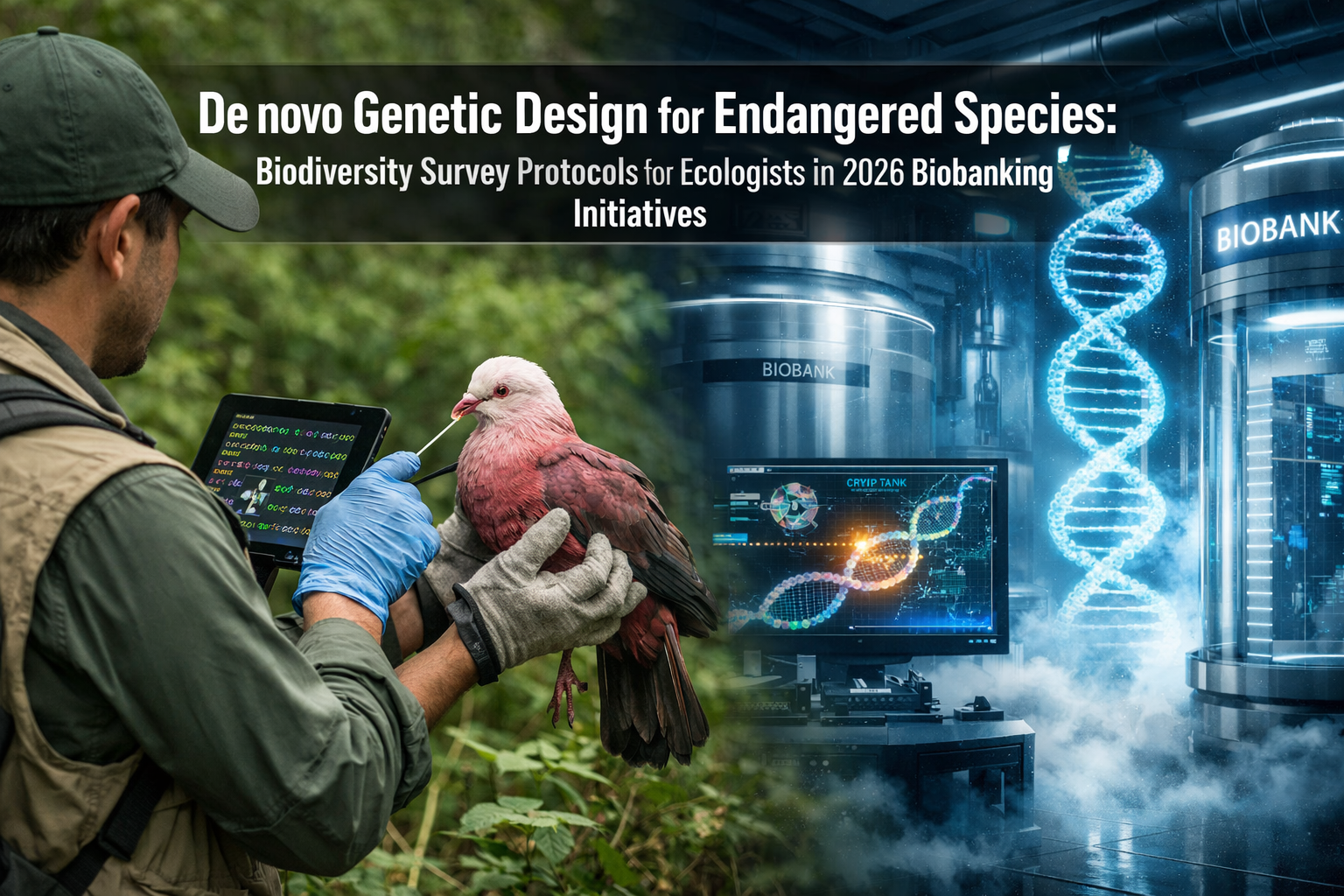
The race to save Earth's vanishing species has entered uncharted territory. As ecologists survey remote habitats in 2026, they carry not just traditional field guides and specimen jars, but portable DNA sequencers and cryogenic collection kits. The frontier of conservation biology now extends beyond protecting habitats—it reaches into the molecular architecture of life itself. De novo Genetic Design for Endangered Species: Biodiversity Survey Protocols for Ecologists in 2026 Biobanking Initiatives represents a revolutionary convergence of synthetic biology, field ecology, and genetic preservation that promises to rewrite the rules of species recovery.
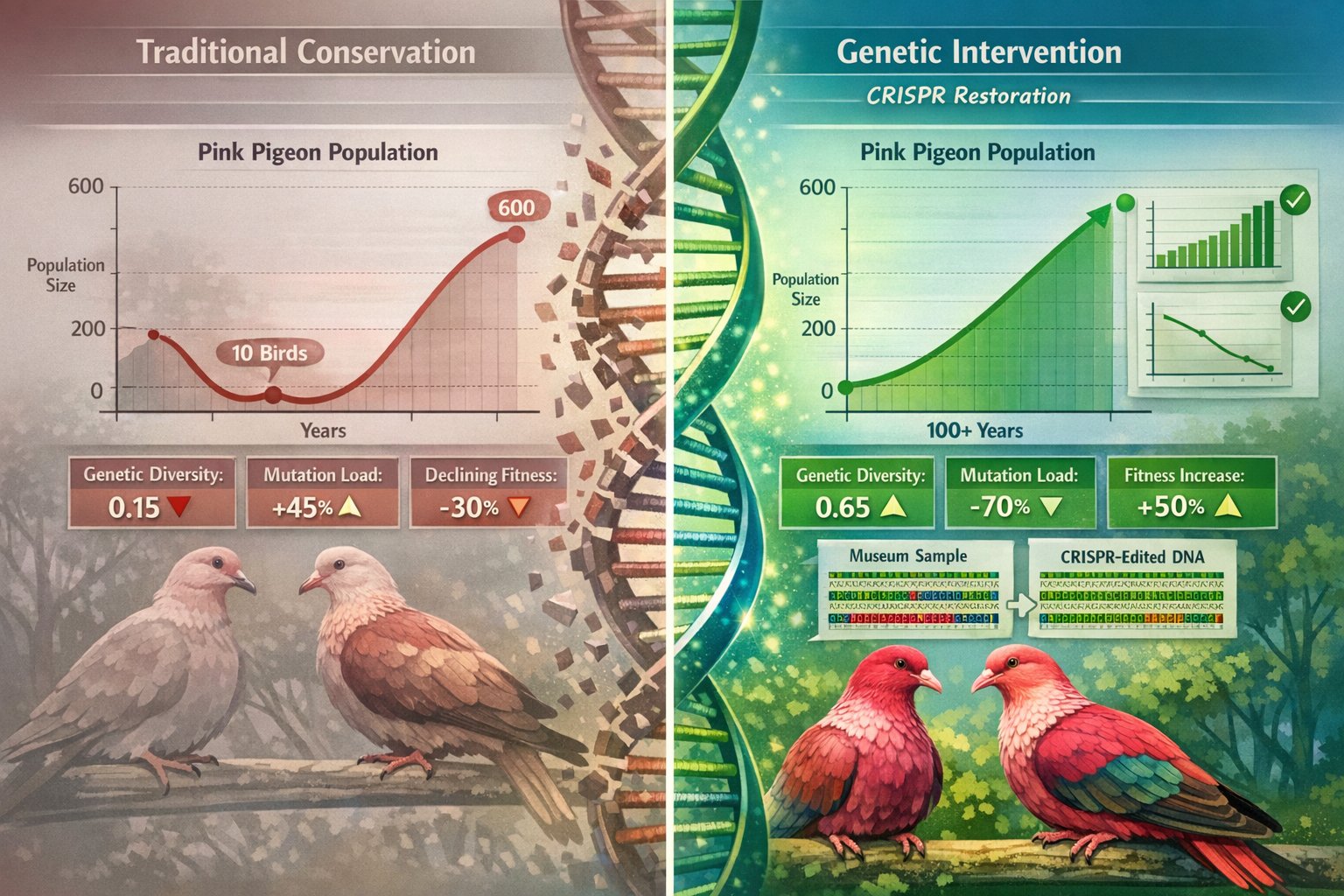
This transformation stems from a sobering reality: traditional conservation methods, while essential, often leave species genetically compromised even after population numbers recover. The pink pigeon exemplifies this challenge—rebounding from approximately 10 individuals to over 600 birds through intensive captive breeding, yet continuing to experience substantial genomic erosion that threatens extinction within 50-100 years without genetic intervention.[2] 🧬
As synthetic biology tools become more accessible and powerful, field surveyors find themselves at the intersection of ecology and genetic engineering, collecting baseline data that will inform unprecedented conservation strategies. Yet this technological revolution raises profound questions: Are we creating "designer ecosystems"? Where do we draw ethical boundaries? How should biodiversity survey protocols adapt to serve these new biobanking initiatives?
Key Takeaways
- De novo genetic design uses CRISPR-Cas9 and related technologies to restore lost genetic diversity in endangered species using historical DNA from museum samples, biobanks, and related species.[2]
- Three primary conservation applications have been established: restoring lost genetic variation, facilitating adaptation through cross-species gene transfer, and reducing harmful mutations accumulated during population bottlenecks.[2]
- Field survey protocols in 2026 now integrate genetic baseline collection, requiring ecologists to gather tissue samples, environmental DNA, and metadata that support future genetic interventions.
- Active conservation projects demonstrate real-world applications, including pink pigeon genetic diversity restoration, northern quoll cane toad resistance, and southern corroboree frog disease immunity.[1]
- Ethical frameworks remain under development as the conservation community debates the implications of synthetic biology interventions in wild populations and the concept of "genetic authenticity."
Understanding De novo Genetic Design in Conservation Context
What Is De novo Genetic Design?
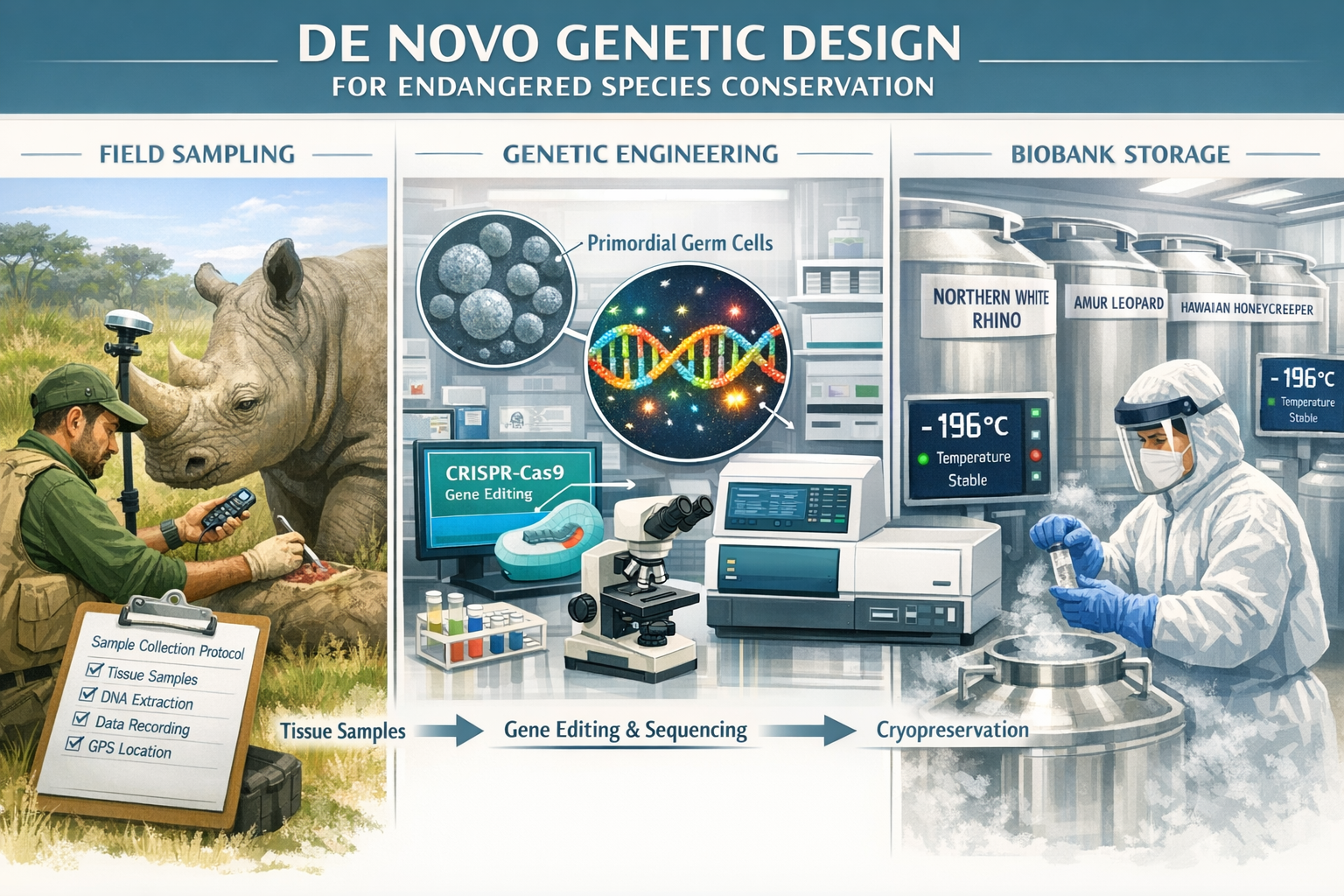
De novo genetic design refers to the intentional creation or reconstruction of genetic sequences that may not currently exist in a species' genome but once did, or that could enhance survival prospects. Unlike traditional genetic modification that typically involves transferring existing genes between organisms, de novo design can synthesize entirely new genetic elements or resurrect historical genetic variants from archived samples.
In conservation biology, this approach takes three distinct forms:
- Genetic archaeology: Reconstructing lost genetic diversity from museum specimens, biobank samples, or closely related species
- Facilitated adaptation: Introducing beneficial genes for traits like heat tolerance or disease resistance from better-adapted relatives
- Genetic load reduction: Removing harmful mutations that accumulated during population crashes[2]
The technology builds upon proven agricultural applications where pest and drought-resistant crops using gene editing already cover millions of hectares worldwide.[2] However, applying these tools to endangered species presents unique challenges related to small population sizes, limited reproductive rates, and complex ecological relationships.
The Genomic Erosion Crisis
Species recovery through traditional conservation methods often masks a hidden crisis. When populations crash to critically low numbers, genetic diversity plummets through bottleneck effects. Even when populations rebound numerically, they carry this genetic impoverishment forward, manifesting as:
- Reduced disease resistance
- Lower reproductive success
- Decreased adaptability to environmental change
- Accumulation of harmful mutations (genetic load)
- Inbreeding depression
The pink pigeon case illustrates this paradox perfectly. Despite successful population recovery through captive breeding programs, genetic analysis reveals the species remains on a trajectory toward extinction due to genomic erosion—a problem that habitat protection alone cannot solve.[2]
This reality has prompted conservation biologists to consider genetic interventions not as replacements for traditional methods, but as complementary tools in an expanded conservation toolkit. Understanding how to conduct a biodiversity impact assessment becomes crucial as these assessments now must account for genetic as well as population-level metrics.
Biodiversity Survey Protocols for Genetic Baseline Collection
Traditional Surveys Meet Molecular Requirements
The evolution of biodiversity survey protocols in 2026 reflects the dual mandate of documenting species presence while simultaneously gathering genetic baseline data for potential future interventions. Ecologists conducting field surveys now follow enhanced protocols that integrate:
Standard Ecological Metrics:
- Population counts and density estimates
- Distribution mapping
- Habitat quality assessment
- Behavioral observations
- Reproductive success monitoring
Genetic Baseline Requirements:
- Tissue sample collection (blood, feathers, skin biopsies)
- Environmental DNA (eDNA) sampling from water, soil, or surfaces
- Photographic documentation for individual identification
- Detailed metadata (GPS coordinates, date, environmental conditions)
- Chain-of-custody documentation for biobanking
This integrated approach ensures that field surveys contribute not only to immediate conservation status assessments but also to long-term genetic resource banks that may prove critical for species survival decades into the future.
Sample Collection Protocols for Biobanking Initiatives
Modern biobanking initiatives in 2026 require field ecologists to follow rigorous sample collection protocols that preserve genetic material for potential future use. These protocols vary by species and tissue type but share common principles:
| Sample Type | Collection Method | Storage Requirements | Applications |
|---|---|---|---|
| Blood | Venipuncture with sterile needles | Cryopreservation at -80°C or liquid nitrogen | Whole genome sequencing, cell culture, iPSC generation |
| Tissue biopsies | Sterile punch biopsy or feather collection | RNA-later solution or flash freezing | DNA/RNA extraction, gene expression analysis |
| Environmental DNA | Water filtration, soil sampling, surface swabs | Preservation buffer, -20°C storage | Population monitoring, genetic diversity assessment |
| Gametes/embryos | Species-specific reproductive protocols | Cryopreservation in specialized media | Assisted reproduction, genetic rescue |
| Primordial germ cells | Embryonic extraction (research contexts) | Specialized cryopreservation protocols | Host transfer, genetic modification[1] |
Field teams must balance the scientific value of samples against animal welfare considerations, minimizing stress and injury during collection. Non-invasive sampling methods—such as collecting shed feathers, feces, or environmental DNA—are prioritized whenever possible.
The connection to broader biodiversity net gain initiatives becomes apparent when considering how genetic baseline data informs habitat restoration planning and species reintroduction strategies.
Data Management and Metadata Standards
Genetic samples lose much of their value without comprehensive metadata. In 2026, biodiversity survey protocols mandate detailed documentation including:
- Taxonomic information: Species identification, subspecies, population designation
- Geographic data: Precise GPS coordinates, elevation, habitat type
- Temporal data: Collection date and time, season, year
- Individual characteristics: Age class, sex, physical condition, unique identifiers
- Environmental context: Temperature, weather conditions, associated species
- Collection details: Collector name, institution, sample type, preservation method
- Genetic relationships: Known parentage, population genetics data if available
This metadata enables researchers to contextualize genetic information, identify geographic patterns of genetic diversity, and make informed decisions about which genetic variants to prioritize for conservation interventions.
Digital platforms now integrate field collection apps with centralized biobank databases, allowing real-time data upload and quality control. These systems ensure samples remain traceable and accessible to authorized researchers while maintaining appropriate security and ethical oversight.
De novo Genetic Design for Endangered Species: Current Applications and Case Studies
Proven Conservation Projects Using Genetic Design
Several pioneering projects demonstrate how De novo Genetic Design for Endangered Species: Biodiversity Survey Protocols for Ecologists in 2026 Biobanking Initiatives translates from theory to practice:
Pink Pigeon (Nesoenas mayeri) – Genetic Diversity Restoration 🕊️
Researchers are using CRISPR-Cas9 technology to increase genetic diversity in this Mauritius endemic by incorporating genetic variants identified in sequenced museum samples. The project aims to restore lost genetic variation and reduce the accumulated genetic load that threatens the species despite numerical recovery.[1] Field surveys now prioritize collecting tissue samples from all accessible individuals to create a comprehensive genetic map of the current population, identifying which individuals would most benefit from genetic intervention.
Northern Quoll (Dasyurus hallucatus) – Invasive Species Resistance
This Australian marsupial faces extinction from invasive cane toads whose bufotoxin proves lethal. Scientists are developing CRISPR-Cas9 gene editing to confer bufotoxin resistance, potentially enabling biocontrol strategies and species recovery.[1] Biodiversity surveys for this project include mapping quoll populations in relation to cane toad distribution, identifying genetically distinct populations, and collecting samples for genetic baseline establishment before intervention trials begin.
Northern White Rhinoceros (Ceratotherium simum cottoni) – Assisted Reproduction
With only two females remaining and no viable males, this subspecies represents an extreme case requiring induced pluripotent stem cells (iPSCs) and in vitro fertilization using cryopreserved cell lines from deceased individuals.[1] The genetic diversity preserved in biobanks from individuals that died decades ago now represents the only hope for species continuation, underscoring the critical importance of comprehensive biobanking protocols.
Southern Corroboree Frog (Pseudophryne corroboree) – Disease Resistance
This critically endangered Australian amphibian faces extinction from chytrid fungus. Researchers are developing multiplex CRISPR-Cas9 editing to enhance disease resistance and antifungal peptide expression.[1] Field protocols include extensive eDNA sampling to monitor wild populations, habitat quality assessment, and collection of skin swabs to characterize microbiome composition that may interact with genetic interventions.
Facilitated Adaptation: Cross-Species Gene Transfer
The only demonstrated proof of concept for facilitated adaptation through genetic design comes from coral research. Scientists successfully edited the genome of Acropora millepora coral to enhance heat tolerance—a critical adaptation as ocean temperatures rise.[3] Additional projects in development include:
- Iiwi Honeycreeper: Introducing disease resistance genes to combat avian malaria
- Southern Corroboree Frog: Enhancing antifungal defenses against chytrid fungus[3]
These projects require sophisticated biodiversity surveys that assess not only the target species but also potential gene donors among related species. Ecologists must identify populations that have evolved beneficial adaptations, collect comparative samples, and characterize the genetic basis of advantageous traits.
This approach connects to broader ecosystem management strategies, including benefitting nature and developers through scientifically informed conservation planning.
Avian Conservation: Primordial Germ Cell Technology
A breakthrough technique for avian species involves injecting primordial germ cells (PGCs) from endangered bird embryos into domesticated host species. Research demonstrated that chicken PGCs injected into guinea fowl hosts produced donor-derived sperm, resulting in normal chicken embryos.[1]
This technology offers transformative potential for endangered birds by:
- Using common domesticated species as surrogate parents
- Rapidly increasing population numbers of endangered species
- Preserving genetic diversity through multiple breeding lines
- Reducing captive breeding infrastructure requirements
Field survey protocols supporting this approach must collect fertile eggs from endangered populations, document breeding success rates, and maintain detailed genetic records to prevent inbreeding when PGC-derived offspring reproduce.
Ethical Considerations and the Designer Ecosystem Debate
Defining Genetic Authenticity in Conservation
The application of de novo genetic design to endangered species raises fundamental questions about what constitutes a "natural" or "authentic" species. Critics argue that genetic interventions create artificial organisms that blur the line between conservation and creation. Proponents counter that:
- Genetic variation is being restored, not invented: Many interventions recover lost diversity rather than creating novel traits
- Human impacts necessitate human solutions: Anthropogenic threats (habitat loss, climate change, invasive species) justify technological interventions
- Extinction is irreversible: Genetic compromise is preferable to permanent loss
- Precedent exists in agriculture: Proven technologies are being adapted rather than experimental approaches deployed
The concept of "genetic authenticity" becomes particularly complex when considering facilitated adaptation. If genes from a heat-tolerant coral subspecies are introduced into a temperature-sensitive population, is the result still the same species? Does it matter if the alternative is extinction?
These philosophical debates have practical implications for biodiversity survey protocols. Ecologists must decide:
- Which genetic variants to prioritize for preservation
- How to define population boundaries for genetic interventions
- Whether to collect samples from related species as potential gene donors
- How to document and communicate genetic modifications in conservation databases
Regulatory Frameworks and Governance Gaps
As of 2026, regulatory frameworks for genetic interventions in endangered species remain fragmented and inconsistent across jurisdictions. Key challenges include:
Approval Pathways: No standardized international process exists for approving genetic interventions in endangered species. Projects navigate a patchwork of national regulations, institutional review boards, and international conventions (CITES, CBD).
Release Protocols: Guidelines for releasing genetically modified organisms into wild populations remain underdeveloped, particularly for species with large ranges crossing multiple jurisdictions.
Monitoring Requirements: Long-term monitoring protocols for genetically modified populations need standardization, including metrics for assessing intervention success and detecting unintended consequences.
Public Engagement: Mechanisms for meaningful public participation in decisions about genetic interventions vary widely, raising concerns about democratic oversight of powerful technologies.
Biodiversity surveyors working within these initiatives must navigate complex ethical terrain, often collecting samples under protocols approved by multiple oversight bodies. Understanding the regulatory landscape becomes as important as mastering field techniques.
The intersection with development projects adds another layer of complexity, as biodiversity net gain requirements may eventually need to account for genetic as well as species-level diversity metrics.
Risk Assessment and Unintended Consequences
Responsible application of genetic design requires rigorous risk assessment addressing potential unintended consequences:
Ecological Risks:
- Off-target genetic effects affecting fitness or behavior
- Disruption of co-evolved relationships with other species
- Competitive advantages that alter community structure
- Gene flow into non-target populations
- Reduced adaptive potential if interventions prove maladaptive
Evolutionary Risks:
- Reduced natural selection pressure if genetic interventions become routine
- Loss of unique locally adapted populations
- Homogenization of genetic diversity across populations
- Unknown long-term effects on evolutionary trajectories
Social Risks:
- Reduced support for habitat protection if technology is seen as a "fix"
- Diversion of limited conservation funding toward high-tech solutions
- Exacerbation of inequalities in conservation capacity between regions
- Erosion of indigenous relationships with species and landscapes
Biodiversity survey protocols supporting genetic interventions must include baseline data collection that enables detection of these potential consequences. This requires long-term monitoring frameworks extending decades beyond initial interventions—a commitment that challenges typical project funding cycles.
Integrating Genetic Design into Comprehensive Conservation Strategies
The Complementary Role of Technology and Habitat Protection
Conservation biologists emphasize that genetic interventions must complement rather than replace traditional conservation approaches. The most effective strategies integrate:
- Habitat protection and restoration: Maintaining viable ecosystems where genetically enhanced populations can thrive
- Threat mitigation: Addressing root causes of decline (poaching, pollution, invasive species)
- Population management: Maintaining demographic viability through captive breeding and reintroduction
- Genetic intervention: Addressing genomic erosion and facilitating adaptation
- Community engagement: Ensuring local support and benefit-sharing
This integrated approach requires biodiversity surveys that assess multiple dimensions simultaneously. Ecologists must evaluate not only genetic baselines but also habitat quality, threat intensity, and social context—a holistic perspective that informs comprehensive conservation planning.
The connection to biodiversity impact assessments becomes clear when considering how development projects might affect populations targeted for genetic interventions or habitats designated for reintroduction of genetically enhanced individuals.
Prioritization Frameworks: Which Species Receive Genetic Interventions?
With thousands of endangered species and limited resources, conservation organizations must develop prioritization frameworks for genetic interventions. Criteria under consideration include:
Biological Factors:
- Severity of genetic erosion
- Availability of historical genetic material
- Reproductive biology compatibility with intervention techniques
- Ecological importance (keystone species, ecosystem engineers)
- Evolutionary distinctiveness
Technical Feasibility:
- Genome sequencing completeness
- Availability of gene editing protocols for the taxonomic group
- Captive population availability for technique development
- Reproductive rate enabling population recovery
Conservation Context:
- Likelihood of success with traditional methods alone
- Habitat availability for reintroduction
- Threat mitigation feasibility
- Existing conservation infrastructure
- Funding availability
Ethical and Social Considerations:
- Cultural significance
- Public support
- Indigenous rights and perspectives
- Regulatory approval likelihood
- Potential for unintended consequences
These frameworks remain contested, with ongoing debate about whether to prioritize species most likely to succeed (maximizing conservation return on investment) or those most desperately in need (ethical imperative regardless of success probability).
Biodiversity surveyors contribute to these prioritization decisions by providing comprehensive baseline data that enables evidence-based assessment across multiple criteria. The quality and completeness of field surveys directly influence which species receive consideration for genetic interventions.
Training and Capacity Building for Field Ecologists
The integration of genetic baseline collection into biodiversity surveys requires expanded training for field ecologists. Professional development programs in 2026 increasingly include:
Technical Skills:
- Sterile sample collection techniques
- Proper use of preservation media and storage
- Portable DNA sequencing equipment operation
- Chain-of-custody documentation
- Biosafety protocols
Theoretical Knowledge:
- Population genetics fundamentals
- Genetic diversity metrics and interpretation
- Biobanking principles and applications
- Ethical frameworks for genetic interventions
- Regulatory requirements across jurisdictions
Data Management:
- Metadata standards and documentation
- Database systems and data upload protocols
- Quality control procedures
- Data sharing and access policies
- Integration with genetic analysis platforms
Professional organizations now offer specialized certifications in conservation genetics field methods, recognizing the distinct skill set required for biobanking-oriented biodiversity surveys. This capacity building ensures that field data collection meets the rigorous standards required for genetic interventions that may occur years or decades in the future.
Understanding the broader context of how to create a biodiversity plan helps ecologists integrate genetic considerations into comprehensive conservation strategies.
Future Directions: De novo Genetic Design for Endangered Species in 2026 and Beyond
Emerging Technologies on the Horizon
The field of conservation genetics continues to evolve rapidly, with several emerging technologies poised to expand capabilities:
Base Editing and Prime Editing: These refined CRISPR variants enable more precise genetic modifications with reduced off-target effects, potentially increasing safety and regulatory acceptance for endangered species applications.
Epigenetic Interventions: Understanding how environmental factors influence gene expression without changing DNA sequences opens new possibilities for enhancing species resilience through epigenetic modifications.
Synthetic Chromosomes: Advances in synthesizing entire chromosomes could enable reconstruction of complex genetic architectures lost during population bottlenecks.
AI-Guided Gene Design: Machine learning algorithms can predict optimal genetic interventions by analyzing vast datasets of genomic, ecological, and evolutionary information.
Portable Genome Editing: Miniaturization of gene editing technology may eventually enable field-based genetic interventions, reducing the need for captive breeding infrastructure.
These technological advances will require corresponding evolution of biodiversity survey protocols, ensuring field data collection remains aligned with cutting-edge conservation applications.
Scaling from Proof-of-Concept to Implementation
As of 2026, most genetic intervention projects remain in proof-of-concept or early trial phases. Scaling to widespread implementation faces several challenges:
Technical Barriers:
- Developing species-specific protocols for diverse taxonomic groups
- Achieving sufficient editing efficiency in non-model organisms
- Establishing reliable delivery methods for different species
- Validating long-term stability of genetic modifications
Infrastructure Requirements:
- Expanding biobanking capacity globally
- Establishing breeding facilities for intervention trials
- Creating monitoring networks for released populations
- Building genetic analysis capacity in biodiversity-rich regions
Financial Sustainability:
- Securing long-term funding for multi-decade projects
- Developing cost-effective intervention protocols
- Balancing investment between genetic and traditional approaches
- Creating sustainable funding models for biobanking
Institutional Coordination:
- Harmonizing regulatory frameworks across jurisdictions
- Establishing international governance mechanisms
- Creating data-sharing protocols and repositories
- Building collaborative networks among research institutions
Biodiversity surveyors play a crucial role in this scaling process by establishing comprehensive genetic baselines for multiple species, creating the foundational data infrastructure that enables future interventions.
Global Equity and Access Considerations
The geographic distribution of biodiversity and conservation genetics capacity reveals concerning disparities. Biodiversity hotspots concentrate in developing nations, while genetic intervention technologies and expertise concentrate in wealthy countries. Addressing this inequity requires:
Capacity Building:
- Training programs for ecologists and geneticists in biodiversity-rich regions
- Technology transfer and infrastructure development
- South-South collaboration networks
- Integration with local and indigenous knowledge systems
Benefit Sharing:
- Ensuring genetic resources collected in one country benefit local conservation
- Preventing biopiracy and exploitation of genetic resources
- Recognizing indigenous rights and traditional knowledge
- Equitable distribution of conservation funding
Appropriate Technology:
- Developing low-cost intervention protocols suitable for resource-limited settings
- Prioritizing species of local rather than international concern
- Respecting local values and conservation priorities
- Building on existing conservation infrastructure
Biodiversity survey protocols must incorporate these equity considerations, ensuring that sample collection respects local rights, includes local expertise, and contributes to locally relevant conservation goals. The principle of free, prior, and informed consent becomes essential when collecting genetic resources from species in indigenous territories.
Practical Implementation Guide for Ecologists
Preparing for Genetic Baseline Collection in Field Surveys
Ecologists planning biodiversity surveys that include genetic baseline collection should follow this systematic approach:
Pre-Survey Planning:
- Regulatory compliance: Obtain all necessary permits for sample collection, export, and biobanking
- Ethical review: Secure institutional approval for animal handling and sample collection
- Equipment preparation: Assemble sterile collection kits, preservation media, and storage containers
- Protocol review: Study species-specific collection methods and welfare considerations
- Data systems: Set up field collection apps and database access
- Training verification: Ensure all team members are trained in sterile techniques and protocols
Field Collection Checklist:
✅ Sterile collection equipment (needles, biopsy punches, swabs, containers)
✅ Preservation media (RNA-later, DMSO, cryoprotectant)
✅ Temporary storage (portable -20°C freezer or dry ice)
✅ Labeling materials (waterproof labels, permanent markers)
✅ Documentation tools (camera, GPS, field notebook, tablet)
✅ Chain-of-custody forms
✅ Animal handling equipment (nets, restraints, anesthesia if approved)
✅ First aid and emergency protocols
✅ Waste disposal containers for biohazardous materials
Post-Collection Procedures:
- Immediate processing: Transfer samples to appropriate long-term storage within specified timeframes
- Quality control: Verify sample integrity, labeling accuracy, and metadata completeness
- Database entry: Upload all field data and metadata to centralized systems
- Sample transfer: Ship to designated biobank facilities following biosafety regulations
- Documentation: Complete all chain-of-custody and regulatory reporting requirements
Connecting Field Data to Genetic Analysis Pipelines
The value of field-collected samples multiplies when integrated into comprehensive genetic analysis workflows:
Sample Processing:
- DNA/RNA extraction using standardized protocols
- Quality assessment (concentration, purity, degradation)
- Whole genome sequencing or targeted gene panels
- Bioinformatic analysis and variant calling
Population Genetics Analysis:
- Genetic diversity metrics (heterozygosity, allelic richness)
- Population structure and gene flow
- Inbreeding coefficients and relatedness
- Genetic load assessment (deleterious mutations)
- Historical demography reconstruction
Conservation Applications:
- Identifying priority individuals for breeding programs
- Detecting cryptic population structure requiring separate management
- Assessing genetic rescue opportunities
- Guiding genetic intervention design
- Monitoring intervention outcomes
Field ecologists should maintain communication with genetic analysis teams to ensure sample collection protocols align with downstream analysis requirements. This coordination prevents situations where valuable field samples cannot be used due to collection or preservation issues.
The integration with broader conservation planning mirrors approaches used in achieving biodiversity net gain, where multiple data streams inform comprehensive strategies.
Building Collaborative Networks
Effective implementation of De novo Genetic Design for Endangered Species: Biodiversity Survey Protocols for Ecologists in 2026 Biobanking Initiatives requires collaboration across multiple disciplines and institutions:
Key Stakeholder Groups:
- Field ecologists: Conduct surveys and collect samples
- Conservation geneticists: Analyze samples and design interventions
- Biobank managers: Preserve and curate genetic resources
- Regulatory agencies: Provide oversight and approval
- Conservation organizations: Coordinate projects and funding
- Local communities: Provide traditional knowledge and site access
- Indigenous peoples: Exercise rights over genetic resources in their territories
- Academic institutions: Conduct research and training
- Funding agencies: Support long-term conservation programs
Successful projects establish clear communication channels, defined roles and responsibilities, data-sharing agreements, and mechanisms for conflict resolution among these diverse stakeholders.
Professional networks and conferences increasingly focus on conservation genetics, providing opportunities for field ecologists to connect with laboratory researchers and share best practices. Participation in these networks enhances individual capacity while contributing to collective advancement of the field.
Conclusion: Navigating the Future of Conservation Biology
The convergence of synthetic biology and endangered species conservation represents one of the most significant developments in conservation biology's history. De novo Genetic Design for Endangered Species: Biodiversity Survey Protocols for Ecologists in 2026 Biobanking Initiatives exemplifies how technological innovation expands the conservation toolkit while simultaneously raising profound ethical questions about humanity's relationship with nature.
Field ecologists stand at the forefront of this transformation, their biodiversity surveys now serving dual purposes: documenting species in their current state while collecting genetic baselines that may prove essential for species survival in coming decades. The tissue samples, environmental DNA, and comprehensive metadata gathered during routine surveys represent more than scientific data—they constitute a genetic library that future generations may draw upon to prevent extinctions we cannot yet foresee.
The path forward requires balancing technological optimism with ethical caution, ensuring that genetic interventions complement rather than replace habitat protection and threat mitigation. Success depends on maintaining genetic diversity not as an end in itself, but as a foundation for resilient populations capable of adapting to rapidly changing environments.
Actionable Next Steps for Conservation Professionals
For Field Ecologists:
- Pursue training in genetic sample collection and biobanking protocols
- Integrate genetic baseline collection into existing biodiversity survey workflows
- Establish relationships with biobank facilities and conservation genetics laboratories
- Stay informed about emerging technologies and their field application requirements
- Engage with ethical debates surrounding genetic interventions in conservation
For Conservation Organizations:
- Develop institutional policies on genetic interventions and biobanking
- Invest in biobanking infrastructure and long-term sample preservation
- Create funding mechanisms supporting multi-decade genetic conservation projects
- Build collaborative networks connecting field programs with genetic analysis capacity
- Engage stakeholders in transparent dialogue about genetic intervention priorities and ethics
For Policy Makers:
- Develop clear regulatory frameworks for genetic interventions in endangered species
- Harmonize international standards for biobanking and genetic resource sharing
- Ensure equitable access to conservation genetics technologies globally
- Mandate long-term monitoring of genetically modified populations
- Create mechanisms for meaningful public participation in governance decisions
For Researchers:
- Prioritize development of safe, effective intervention protocols for diverse taxonomic groups
- Conduct rigorous risk assessments addressing potential unintended consequences
- Publish open-access protocols enabling global capacity building
- Engage with indigenous and local communities as knowledge partners
- Communicate findings to diverse audiences including policymakers and the public
The integration of de novo genetic design into conservation biology does not diminish the importance of traditional approaches—habitat protection, threat mitigation, and population management remain essential. Rather, genetic interventions add a powerful tool for addressing challenges that conventional methods cannot solve alone, particularly the genomic erosion that threatens species even after numerical recovery.
As we navigate this new frontier, the principles that have always guided conservation biology remain relevant: scientific rigor, ethical responsibility, respect for nature's intrinsic value, and commitment to preserving Earth's biological heritage for future generations. The technologies may be revolutionary, but the mission endures—ensuring that the magnificent diversity of life on Earth persists through the challenges ahead.
The biodiversity surveys conducted in 2026 will echo through decades to come, their genetic baselines potentially enabling species recoveries we can scarcely imagine today. For ecologists in the field, each carefully collected sample, each meticulously documented data point, contributes to a living archive that may one day mean the difference between extinction and survival for species teetering on the edge.
References
[1] academic.oup – https://academic.oup.com/jhered/advance-article/doi/10.1093/jhered/esaf069/8262805
[2] 2025 07 Gene Solution Endangered Species – https://phys.org/news/2025-07-gene-solution-endangered-species.html
[3] Pmc12881173 – https://pmc.ncbi.nlm.nih.gov/articles/PMC12881173/
[4] Genomic Reference Dna Affects Genetic Research Results – https://dornsife.usc.edu/news/stories/genomic-reference-dna-affects-genetic-research-results/
[5] Genetic De Extinction – https://defenders.org/blog/2025/04/genetic-de-extinction
[6] 305832 Voeroes Etal 2026 – https://www.ufz.de/export/data/global/305832_Voeroes_etal_2026.pdf
[7] Gene Resurrection Saving Endangered Animals – https://roaringbengals.com/9089/news/gene-resurrection-saving-endangered-animals/