

The corporate world is witnessing a dramatic shift in environmental accountability. While less than 20% of S&P 500 companies currently have biodiversity commitments in place [2], the landscape is changing rapidly as sustainability reporting requirements tighten and investor pressure mounts. For ecological surveyors and biodiversity professionals, this surge in Corporate Biodiversity Pledges Surge: Surveyor Strategies for 2026 S&P Sustainability Trend Compliance represents both a significant opportunity and a complex challenge that demands strategic adaptation.
The numbers tell a compelling story. Five of six measured nature dimensions saw increased corporate commitments in 2025, with nutrients and nitrogen oxides commitments expanding from 21% in 2022 to 48% in 2025 [1]. Meanwhile, approximately 30% of Fortune Global 500 companies now include "nature positive" language in their sustainability reports [1]. As corporations scramble to meet these emerging standards, the demand for qualified biodiversity surveyors who understand both ecological science and corporate compliance frameworks has never been higher.
Key Takeaways
- Only 8-20% of S&P 500 companies currently have biodiversity pledges, but rapid expansion is expected as regulatory frameworks strengthen and investor expectations rise [2]
- Asia leads regional growth with a 3.6 percentage point increase in nature-related targets, while North America retreats and Europe focuses on execution over expansion [1]
- Science-based targets for nature (SBTN) are accelerating, with 10 companies validating 50 targets and 24 more announcing timelines, modeling the trajectory that scaled climate targets to 9,500 companies [3]
- Standardized biodiversity surveying methodologies like the UK's Biodiversity Net Gain framework provide surveyors with proven approaches for corporate compliance documentation
- Corporate preference for insetting over external credits means surveyors must develop expertise in value chain assessments and on-site habitat enhancement strategies
Understanding the Corporate Biodiversity Pledge Landscape in 2026
The Current State of Corporate Nature Commitments
The corporate commitment to biodiversity has reached an inflection point in 2026. Research shows that while adoption remains relatively low compared to carbon commitments, the trajectory is unmistakably upward. Europe continues to lead with 96% of Fortune Global 500 companies reporting at least one nature-related target [1], establishing a baseline that other regions are beginning to follow.
However, the picture varies dramatically by geography. Asia is emerging as the growth leader, with companies in the region increasing their carbon targets by 3.6 percentage points and showing rising adoption of multiple nature-related targets [1]. This shift reflects both regulatory developments and growing recognition of biodiversity risks in supply chains critical to Asian manufacturing and agriculture.
Conversely, North America is experiencing a retreat, with a 2.6 percentage point decrease in carbon targets and a 2.9 percentage point drop in companies with advanced nature commitments, falling to just 27% [1]. This pullback creates uncertainty but also opportunity for surveyors who can demonstrate clear compliance pathways and risk mitigation strategies.
What S&P Sustainability Trends Mean for Biodiversity Professionals
The S&P Global analysis revealing that less than 20% of S&P 500 companies have made biodiversity commitments [2] might seem discouraging, but it actually signals enormous market potential. As regulatory frameworks like the EU's Corporate Sustainability Reporting Directive (CSRD) and the Taskforce on Nature-related Financial Disclosures (TNFD) gain traction, this percentage is expected to multiply rapidly.
For biodiversity surveyors, this means developing expertise in:
- Corporate reporting frameworks and disclosure requirements
- Baseline biodiversity assessments that meet investor scrutiny standards
- Monitoring and verification protocols for nature-positive claims
- Data management systems compatible with corporate sustainability platforms
- Stakeholder communication that translates ecological data into business metrics
The voluntary biodiversity credits market remains virtually undeveloped, with total trading volume estimated at less than $2 million USD [4]. However, this shouldn't discourage surveyors—corporations are instead investing in direct habitat projects and value chain interventions where professional ecological assessment is essential.
Surveyor Strategies for Corporate Biodiversity Pledge Compliance
Adapting Traditional Survey Methods for Corporate Clients
Corporate biodiversity compliance requires surveyors to adapt traditional ecological methodologies to meet business timelines, reporting standards, and stakeholder expectations. The foundation remains sound ecological science, but the presentation and integration differ significantly from conventional conservation projects.
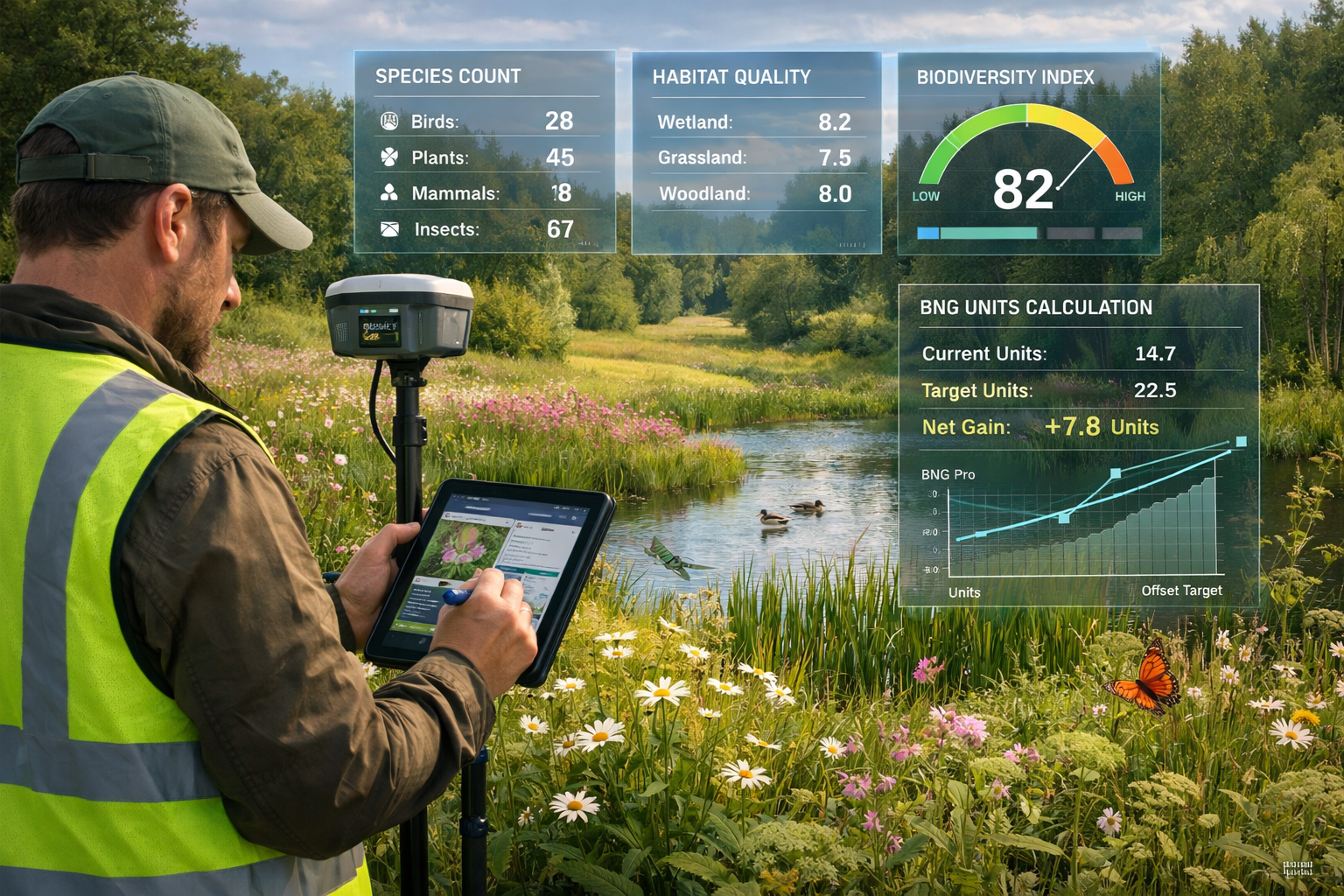
Standardized metrics are essential. The Biodiversity Net Gain framework developed in the UK provides an excellent model for quantifying biodiversity value in ways that corporate clients can understand and report. This approach uses:
- Habitat condition assessments with numerical scoring
- Biodiversity unit calculations that enable tracking and trading
- Standardized reporting templates compatible with corporate systems
- Clear baseline and target methodologies
Surveyors should invest in training on these standardized approaches, as they're increasingly becoming the global standard for corporate biodiversity accounting. Understanding how to conduct a biodiversity impact assessment positions professionals to serve corporate clients effectively.
Developing Science-Based Target Expertise
The Science Based Targets Network (SBTN) framework is rapidly becoming the gold standard for corporate nature commitments. Since validation began in 2024, 10 companies have validated 50 science-based targets for nature, with 24 additional companies publicly announcing timelines for setting SBTN targets [3]. This represents just the beginning of a scaling trajectory modeled after climate targets, which grew to over 9,500 companies over the past decade [3].
SBTN targets require specific surveyor capabilities:
- Pressure assessment – Identifying how corporate operations impact biodiversity through land use, freshwater consumption, pollution, and resource extraction
- Baseline establishment – Documenting current biodiversity state using recognized metrics and methodologies
- Target setting support – Helping corporations establish measurable, time-bound nature-positive goals
- Monitoring protocols – Designing cost-effective systems to track progress toward targets
- Verification services – Providing independent validation of claimed improvements
Surveyors who develop SBTN expertise position themselves at the forefront of corporate biodiversity compliance. The framework's emphasis on high-impact sectors and geographies [3] means focusing on industries like agriculture, forestry, infrastructure, and extractives where biodiversity impacts are most significant.
Creating Value Through Integrated Assessment Services
Modern corporate clients need more than species lists and habitat maps. They require integrated assessments that connect biodiversity data to business risks, regulatory compliance, and stakeholder expectations. Successful surveyors in 2026 are developing service packages that include:
Comprehensive baseline assessments that document:
- Current habitat types and condition using standardized metrics
- Species presence with focus on protected and indicator species
- Ecosystem services provided by existing habitats
- Regulatory compliance status and gaps
- Biodiversity risks to operations and supply chains
Strategic planning support covering:
- On-site versus off-site delivery options for biodiversity improvements
- Cost-benefit analysis of different intervention strategies
- Timeline development aligned with corporate reporting cycles
- Stakeholder engagement planning and communication materials
Implementation and monitoring services including:
- Habitat creation and enhancement design
- Contractor oversight and quality assurance
- Regular monitoring using consistent methodologies
- Data management and reporting dashboard development
- Achieving biodiversity net gain without risk through proven approaches
Regional Variations in Corporate Biodiversity Compliance Requirements
Europe: From Commitment to Execution
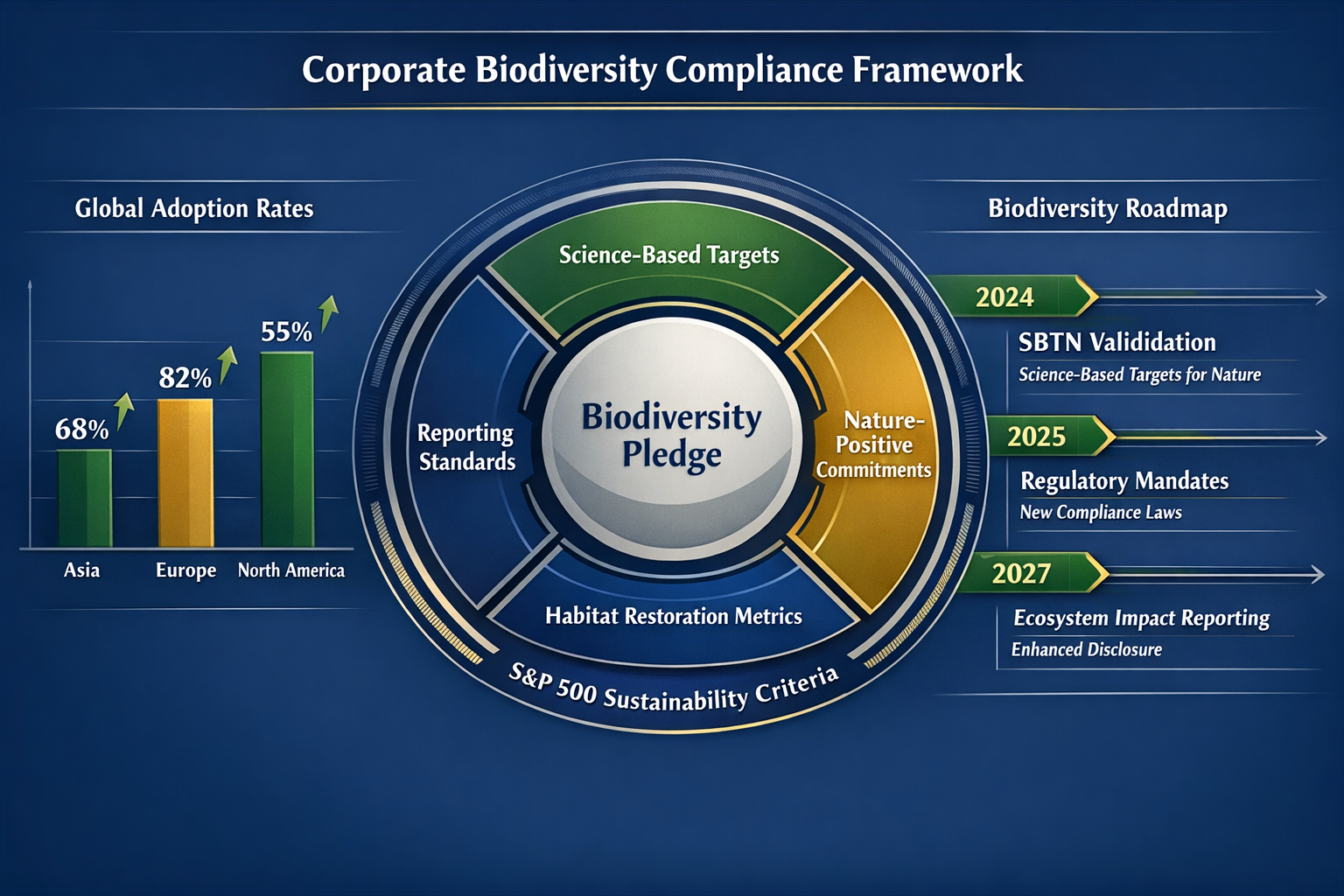
Europe's leadership in corporate nature commitments is well-established, with 96% of Fortune Global 500 companies reporting at least one nature-related target [1]. However, the region experienced a 1.7 percentage point decline in companies with multiple targets [1], suggesting a strategic pivot from breadth to depth.
What this means for surveyors: European corporate clients are moving beyond initial commitments to actual implementation and verification. They need surveyors who can:
- Design practical habitat enhancement projects on corporate landholdings
- Navigate complex regulatory frameworks like the EU Nature Restoration Law
- Provide credible third-party verification of nature-positive claims
- Integrate biodiversity considerations into supply chain audits
- Support CSRD reporting with robust ecological data
The UK's mandatory Biodiversity Net Gain requirement for development projects provides a template that other European nations are adapting. Surveyors familiar with how to achieve 10% biodiversity net gain have transferable skills applicable across European markets.
Asia: Rapid Growth and Emerging Standards
Asia's 3.6 percentage point increase in carbon targets and rising adoption of multiple nature-related commitments [1] represents the fastest regional growth in corporate biodiversity pledges. This expansion is driven by:
- Regulatory developments in countries like China, Singapore, and Japan
- Supply chain pressure from European and North American buyers
- Investor expectations as ESG integration deepens in Asian markets
- Biodiversity risk recognition in sectors critical to Asian economies
Surveyors entering Asian markets should understand that standardization is still emerging. While this creates challenges, it also offers opportunities to help establish best practices and methodologies. Focus areas include:
- Agricultural supply chain biodiversity assessments
- Manufacturing facility site biodiversity baselines
- Infrastructure project impact assessments and mitigation
- Coastal and marine ecosystem monitoring for port and shipping operations
- Forest landscape restoration verification
Building partnerships with local ecological experts and understanding regional biodiversity priorities is essential for surveyors seeking to serve Asian corporate clients effectively.
North America: Navigating the Retreat and Repositioning
North America's 2.6 percentage point decrease in carbon targets and 2.9 percentage point drop in advanced nature commitments [1] represents a concerning trend, but the underlying dynamics are complex. Some companies are retreating from public commitments amid political backlash against ESG initiatives, while others are quietly continuing implementation without fanfare.
Surveyor strategies for North American markets should include:
- Risk-focused framing – Emphasize biodiversity as business risk management rather than purely environmental benefit
- Regulatory compliance positioning – Focus on meeting existing requirements (Endangered Species Act, Clean Water Act, state regulations) rather than voluntary commitments
- Cost-benefit documentation – Demonstrate financial returns from ecosystem services and avoided regulatory penalties
- Stakeholder relations value – Highlight community and Indigenous partnership benefits
- Supply chain resilience – Connect biodiversity health to operational continuity
Despite the retreat in public commitments, actual biodiversity work continues as companies recognize that nature-related risks don't disappear when commitments are withdrawn. Surveyors who can work discreetly while maintaining scientific rigor will find continued demand.
Practical Tools and Technologies for Corporate Biodiversity Surveying
Digital Assessment Platforms and Data Management
Corporate clients expect professional data management and reporting systems that integrate with their existing sustainability platforms. Surveyors in 2026 need technological capabilities including:
Field data collection systems:
- Mobile apps for standardized habitat condition assessments
- GPS-enabled species occurrence recording
- Photo documentation with geolocation and metadata
- Real-time data synchronization to cloud platforms
- Offline functionality for remote site work
Analysis and reporting tools:
- Biodiversity metric calculators (BNG units, habitat hectares, etc.)
- GIS platforms for spatial analysis and mapping
- Statistical software for trend analysis and significance testing
- Dashboard creation tools for client-facing visualizations
- Integration capabilities with corporate ESG reporting systems
Data security and quality assurance:
- Secure data storage meeting corporate IT requirements
- Version control and audit trails for regulatory compliance
- Quality control protocols and peer review systems
- Long-term data archiving for multi-year monitoring programs
Investing in these technological capabilities distinguishes professional surveying firms from competitors and enables efficient service delivery at corporate scale.
Biodiversity Metrics That Matter to Corporate Clients
While ecologists appreciate nuanced discussions of species richness, evenness, and community composition, corporate clients need simpler metrics that connect to business objectives. Effective surveyors translate complex ecological data into actionable business intelligence.
Key metrics for corporate reporting:
| Metric Category | Examples | Business Relevance |
|---|---|---|
| Habitat Extent | Hectares of priority habitat, percentage of site with high biodiversity value | Land use efficiency, regulatory compliance |
| Biodiversity Units | BNG units, habitat hectares, species credits | Quantifiable targets, trading opportunities |
| Species Status | Number of protected species, red list species presence | Legal risk, reputational value |
| Ecosystem Services | Carbon sequestration, water filtration, pollination value | Financial valuation, stakeholder benefits |
| Condition Trends | Year-over-year habitat quality changes, population trends | Progress tracking, target achievement |
Understanding what is in a biodiversity net gain assessment provides insight into the comprehensive approach corporate clients increasingly expect.
Leveraging Biodiversity Credit and Unit Markets
While the voluntary biodiversity credits market remains undeveloped with less than $2 million in total trading volume [4], regulatory biodiversity unit markets are functioning in several jurisdictions. The UK's statutory biodiversity credits system and similar frameworks in Australia and several US states provide models for corporate compliance.
Surveyor roles in biodiversity markets include:
- Baseline assessment for sites considering selling biodiversity units
- Habitat creation verification to certify unit generation
- Monitoring and reporting to maintain unit validity over 30-year periods
- Due diligence for corporations considering buying biodiversity units
- Market intelligence on cost of biodiversity units and statutory credits
The hesitation around voluntary credits due to lack of standardization and regulatory uncertainty [4] actually strengthens the case for regulated unit markets where surveyors provide essential verification services.
Building Long-Term Corporate Client Relationships
Understanding Corporate Decision-Making and Procurement
Securing corporate biodiversity surveying contracts requires understanding how large organizations make decisions and procure services. Unlike traditional conservation clients, corporations prioritize:
Risk management over environmental benefit – Frame services in terms of regulatory compliance, reputational protection, and operational continuity rather than purely ecological outcomes.
Standardization and scalability – Demonstrate ability to apply consistent methodologies across multiple sites and regions, enabling corporate-wide reporting.
Integration with existing systems – Show how biodiversity data connects to broader ESG reporting, supply chain management, and stakeholder engagement platforms.
Cost predictability – Provide clear pricing structures and multi-year service agreements that enable budget planning.
Professional credibility – Maintain appropriate insurance, certifications, and quality management systems that meet corporate vendor requirements.
"Corporations prefer insetting and internal project development over purchasing external credits, particularly in agriculture and forestry sectors where value chain integration is feasible." [4]
This preference for insetting means surveyors should develop expertise in value chain biodiversity assessments and on-site habitat enhancement rather than focusing exclusively on offset projects.
Developing Sector-Specific Expertise
Corporate biodiversity compliance needs vary dramatically by sector. Surveyors who develop deep expertise in specific industries can command premium rates and build lasting client relationships.
High-priority sectors for 2026:
🏭 Manufacturing and Industrial – Site biodiversity baselines, stormwater management habitat integration, pollinator corridors, employee engagement programming
🌾 Agriculture and Food – Regenerative agriculture verification, supply chain biodiversity risk assessment, sustainable sourcing certification, benefitting nature and developers through integrated approaches
🏗️ Infrastructure and Development – Impact assessments, mitigation hierarchy implementation, biodiversity net gain planning, long-term monitoring
⚡ Energy and Utilities – Transmission corridor management, renewable energy site selection, facility habitat enhancement, wildlife conflict mitigation
💧 Water and Wastewater – Treatment facility habitat integration, watershed biodiversity monitoring, green infrastructure design support
Each sector has unique regulatory drivers, operational constraints, and biodiversity impact profiles. Surveyors who invest in understanding these nuances become trusted advisors rather than transactional service providers.
Creating Value Beyond Compliance

While regulatory compliance drives initial engagement, surveyors who create additional value build lasting client relationships. Opportunities to exceed compliance requirements include:
Employee engagement programming – Design volunteer habitat restoration events, develop educational materials, create biodiversity awareness campaigns that enhance corporate culture.
Community relations enhancement – Facilitate partnerships with local conservation organizations, support community access to corporate lands, demonstrate environmental stewardship to neighbors.
Innovation and research collaboration – Partner on pilot projects testing new biodiversity enhancement techniques, contribute to industry best practice development, publish case studies showcasing corporate leadership.
Supply chain sustainability support – Extend biodiversity expertise to supplier assessment and capacity building, helping clients address scope 3 nature impacts.
Investor relations support – Prepare materials for sustainability reports, investor presentations, and ESG rating agency submissions that showcase biodiversity achievements.
These value-added services differentiate surveying firms in competitive markets and create multiple touchpoints that strengthen client relationships over time.
Overcoming Common Challenges in Corporate Biodiversity Work
Addressing the Standardization Gap
The lack of standardized definitions for biodiversity credits and claims remains a primary barrier to corporate action [4]. Surveyors can help bridge this gap by:
- Adopting recognized frameworks like SBTN, TNFD, and regional BNG methodologies consistently
- Documenting methodology transparently so clients understand exactly what is being measured and claimed
- Participating in standard-setting processes through professional associations and industry working groups
- Educating clients on existing standards and their applicability to specific situations
- Building verification systems that provide credible third-party validation
As the field matures, surveyors who helped establish standards will be recognized as industry leaders with competitive advantages in client acquisition and retention.
Managing Corporate Timelines and Expectations
Corporate reporting cycles and project timelines often conflict with ecological survey windows and natural processes. Successful surveyors develop strategies to manage these tensions:
Phased assessment approaches – Break comprehensive surveys into phases that deliver interim results aligned with corporate reporting deadlines while maintaining scientific rigor.
Predictive modeling – Use existing data, remote sensing, and habitat modeling to provide preliminary assessments when field surveys are seasonally constrained.
Multi-year planning – Develop survey schedules that capture seasonal variation while providing annual progress updates for corporate reporting.
Clear communication – Set realistic expectations about survey timing requirements and explain ecological rationale for methodological choices.
Contingency planning – Build flexibility into project plans to accommodate weather, access, and other constraints that affect field work.
Understanding guidance for developers provides insight into managing client expectations around biodiversity assessment timelines and deliverables.
Navigating Political and Regulatory Uncertainty
The retreat in North American corporate nature commitments [1] and broader political backlash against ESG initiatives create uncertainty for biodiversity professionals. Strategies for navigating this environment include:
Focus on enduring drivers – Emphasize regulatory requirements, physical risks, and operational benefits that persist regardless of political trends.
Flexible framing – Adapt messaging to client preferences, whether emphasizing environmental stewardship, risk management, or stakeholder relations.
Diversified client base – Serve multiple sectors and regions to reduce dependence on any single market segment.
Long-term perspective – Recognize that biodiversity loss and ecosystem degradation are physical realities that will eventually demand corporate response regardless of short-term political dynamics.
Professional credibility – Maintain scientific rigor and ethical standards that preserve professional reputation through political cycles.
Future Outlook: Positioning for 2027 and Beyond
Anticipated Regulatory Developments
The regulatory landscape for corporate biodiversity is evolving rapidly. Surveyors should prepare for:
Expanded mandatory disclosure – TNFD recommendations becoming requirements in major markets, CSRD implementation expanding across EU and potentially influencing other jurisdictions.
Sector-specific regulations – Targeted requirements for high-impact industries like agriculture, mining, and infrastructure development.
Supply chain due diligence – Regulations requiring companies to assess and address biodiversity impacts throughout value chains, similar to deforestation regulations.
Nature-positive targets – Government adoption of nature-positive goals driving corporate target-setting to align with national commitments.
Biodiversity credit market regulation – Standardization and oversight of biodiversity markets creating more structured opportunities for surveyor involvement.
Staying informed about regulatory developments and adapting service offerings accordingly positions surveyors for continued growth.
Technology Integration and Innovation
Technological advancement will continue reshaping biodiversity surveying. Key trends include:
Remote sensing and AI – Satellite imagery, drone surveys, and machine learning enabling more efficient baseline assessments and monitoring at landscape scales.
Environmental DNA – eDNA sampling providing cost-effective species detection for aquatic and terrestrial environments, complementing traditional survey methods.
Automated monitoring – Camera traps, acoustic sensors, and IoT devices enabling continuous data collection with reduced field time requirements.
Blockchain verification – Distributed ledger technology providing transparent, tamper-proof records of biodiversity data and claims for corporate reporting.
Digital twins – Virtual representations of sites enabling scenario modeling and stakeholder visualization of biodiversity interventions.
Surveyors who integrate these technologies while maintaining scientific rigor will deliver superior value to corporate clients seeking efficient, credible assessment solutions.
The Path to Mainstream Adoption
The trajectory from less than 20% of S&P 500 companies with biodiversity commitments [2] to mainstream adoption will likely follow the pattern established by climate commitments. Key milestones to anticipate:
2026-2027: Early adopter phase – Leading companies establish targets and methodologies, creating demand for surveyor expertise and best practice development.
2028-2030: Rapid scaling – Regulatory requirements and investor pressure drive broader adoption, with SBTN targets potentially reaching hundreds of companies as the framework matures [3].
2031-2035: Mainstream integration – Biodiversity considerations become standard business practice, integrated into corporate strategy, risk management, and operational decision-making.
Surveyors who establish expertise, build client relationships, and develop scalable service delivery models during the early adopter phase will be positioned to capture significant market share as adoption accelerates.
Conclusion
The surge in corporate biodiversity pledges represents a transformative opportunity for ecological surveyors and biodiversity professionals. While less than 20% of S&P 500 companies currently have commitments in place [2], the trajectory is clear: nature-related targets are expanding across sectors and regions, with particularly strong growth in Asia and sustained leadership in Europe [1].
For surveyors, success in this emerging market requires adapting traditional ecological methodologies to meet corporate needs for standardized metrics, integrated reporting, and business-relevant insights. The Science Based Targets Network framework provides a structured approach that is rapidly gaining adoption [3], while regional frameworks like the UK's Biodiversity Net Gain system offer proven methodologies for quantifying and tracking biodiversity value.
Key action steps for biodiversity surveyors in 2026:
✅ Develop standardized assessment capabilities using recognized frameworks like SBTN, BNG, and TNFD-aligned methodologies
✅ Invest in technology for efficient data collection, analysis, and reporting that integrates with corporate sustainability platforms
✅ Build sector-specific expertise in high-impact industries like agriculture, infrastructure, and manufacturing where corporate biodiversity demand is concentrated
✅ Create integrated service offerings that extend beyond compliance to deliver strategic value through stakeholder engagement, employee programming, and innovation partnerships
✅ Establish long-term client relationships by understanding corporate decision-making, procurement processes, and the business drivers behind biodiversity commitments
✅ Stay informed about regulatory developments, market trends, and best practice evolution to adapt service offerings proactively
✅ Participate in standard-setting through professional associations and industry working groups to help shape the emerging corporate biodiversity compliance landscape
The corporate biodiversity market is at an inflection point similar to where carbon commitments stood a decade ago. Surveyors who position themselves strategically now—developing the right expertise, tools, and client relationships—will be well-placed to grow with the market as adoption scales from early adopters to mainstream practice over the coming decade.
The path forward requires balancing scientific rigor with business pragmatism, maintaining ecological integrity while delivering corporate value, and building professional credibility that withstands both market growth and inevitable challenges. For surveyors committed to this approach, the surge in corporate biodiversity pledges offers both meaningful conservation impact and significant professional opportunity.
References
[1] Corporate Nature Commitments Have Expanded But Progress Is Uneven – https://www.mckinsey.com/capabilities/sustainability/our-insights/corporate-nature-commitments-have-expanded-but-progress-is-uneven
[2] Biodiversity Commitments Remain Rare – https://www.spglobal.com/content/dam/spglobal/s1/en/documents/general/csa/biodiversity_commitments_remain_rare.pdf
[3] Business Action For Biodiversity Via Science Based Targets For Nature – https://sciencebasedtargetsnetwork.org/wp-content/uploads/2026/01/Business-action-for-biodiversity-via-science-based-targets-for-nature.pdf
[4] From Growing Interest To Action What Is Shaping Corporate Uptake Of Biodiversity Credits – https://www.climatepolicyinitiative.org/from-growing-interest-to-action-what-is-shaping-corporate-uptake-of-biodiversity-credits/