

Recent discoveries in Lake Tanganyika reveal that cooperative breeding evolved independently at least seven times across different fish species over the past 4 million years—a finding that fundamentally changes how biodiversity surveyors should assess freshwater ecosystem resilience in 2026[2]. This groundbreaking research demonstrates that social dynamics among aquatic species provide critical insights into population stability, predation resistance, and long-term habitat viability that traditional survey methods often overlook.
Cooperative Breeding in Aquatic Surveys: Protocols for Lake Biodiversity Surveyors Capturing Social Dynamics represents an emerging frontier in ecological assessment, particularly as biodiversity net gain (BNG) requirements demand more sophisticated evaluation methods. Understanding how fish species cooperate to maintain territories, protect offspring, and ensure group survival offers surveyors powerful indicators of ecosystem health that extend far beyond simple species counts.

Key Takeaways
- Cooperative breeding in fish evolved as a survival strategy among small-bodied species vulnerable to predation, providing measurable indicators of ecosystem stress and resilience[2]
- Survey protocols must integrate behavioral observations alongside traditional population counts to capture social dynamics that influence long-term species viability
- Molecular phylogeny and field data collection together create comprehensive assessments that inform biodiversity net gain calculations and conservation strategies[2]
- Small clutch sizes and group cooperation patterns serve as quantifiable metrics for assessing habitat quality in freshwater lake environments
- Integration with BNG frameworks enables developers and conservationists to create more effective habitat enhancement strategies based on social species dynamics
Understanding Cooperative Breeding Evolution in Freshwater Ecosystems
The Lake Tanganyika Discovery
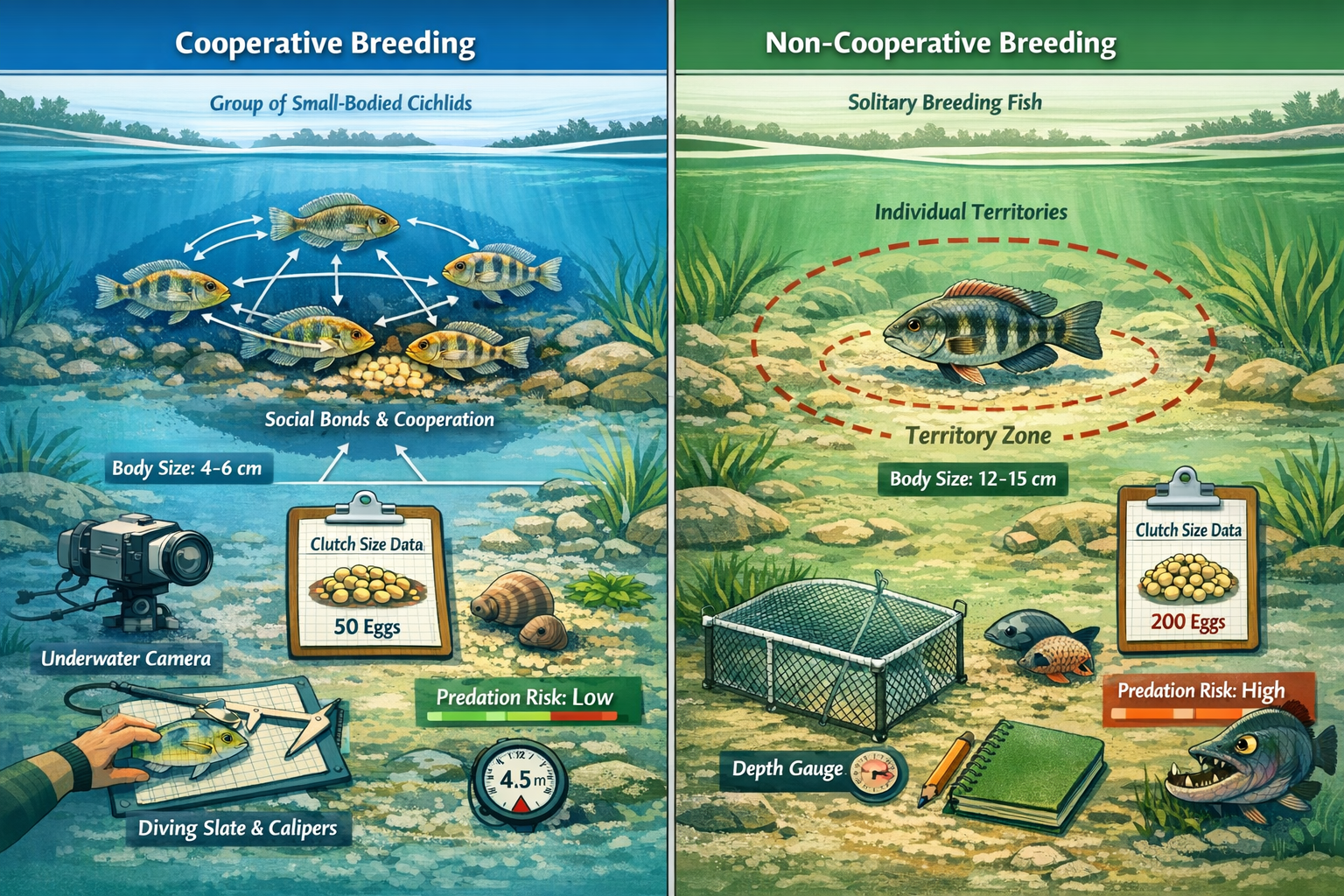
Scientists studying lamprologine cichlids in Lake Tanganyika uncovered remarkable patterns in cooperative breeding evolution. Through molecular phylogeny reconstruction of 73 different species, researchers identified that cooperative breeding first appeared approximately 4 million years ago and developed independently across multiple evolutionary lineages[2]. This repeated evolution suggests strong selective pressures favoring social cooperation in specific environmental conditions.
The research revealed compelling correlations between body size, reproductive output, and social behavior. Cooperatively breeding fish species showed smaller body sizes and produced fewer eggs per clutch compared to their non-cooperative relatives[2]. This trade-off reflects an evolutionary strategy where vulnerable small-bodied species compensate for individual weakness through collective strength.
Why Cooperative Breeding Matters for Surveyors
For biodiversity surveyors conducting lake assessments in 2026, these findings have immediate practical applications. Species exhibiting cooperative breeding behaviors demonstrate:
- Enhanced predation resistance through group vigilance and territory defense
- Improved offspring survival rates via shared parental care responsibilities
- Greater habitat stability through cooperative maintenance of breeding sites
- Resilience indicators that predict population persistence under environmental stress
When surveyors document cooperative breeding patterns, they capture information about ecosystem functionality that traditional abundance surveys miss. A lake supporting multiple cooperatively breeding species likely possesses habitat characteristics that promote long-term biodiversity stability—precisely the outcomes biodiversity net gain assessments aim to quantify.
Evolutionary Pressures Shaping Social Dynamics
The Lake Tanganyika research employed phylogenetic path analyses to trace how environmental pressures shaped cooperative behaviors. Small-bodied species vulnerable to predation evolved cooperative breeding as a strategy for maintaining nests, territories, and protecting offspring through group cooperation[2]. This adaptive response provides surveyors with a framework for understanding which habitat conditions favor social species.
Key environmental factors include:
🔹 Predation pressure – High predator density selects for cooperative defense strategies
🔹 Habitat complexity – Rocky substrates and structured environments enable territory establishment
🔹 Resource distribution – Patchy food sources favor group foraging and territory defense
🔹 Population density – Crowded conditions create competition that cooperation helps resolve
Developing Protocols for Capturing Social Dynamics in Lake Surveys
Integrating Behavioral Observations with Traditional Methods
Effective protocols for Cooperative Breeding in Aquatic Surveys: Protocols for Lake Biodiversity Surveyors Capturing Social Dynamics require combining established survey techniques with new behavioral documentation methods. The American Fisheries Society maintains foundational guidelines for fish research that surveyors should incorporate[3], while adding specific social dynamics components.
Core Protocol Components:
| Survey Element | Traditional Approach | Enhanced Social Dynamics Approach |
|---|---|---|
| Species Identification | Visual ID, specimen collection | Plus behavioral phenotype documentation |
| Population Counts | Abundance estimates | Plus social group structure mapping |
| Habitat Assessment | Physical parameters | Plus territory distribution analysis |
| Reproductive Data | Spawning season timing | Plus cooperative breeding indicators |
| Data Collection | Single-point sampling | Plus longitudinal behavioral tracking |
Field Methodology for Social Behavior Documentation
Surveyors conducting lake biodiversity assessments should implement systematic behavioral observation protocols that capture cooperative breeding indicators:
1. Territory Mapping
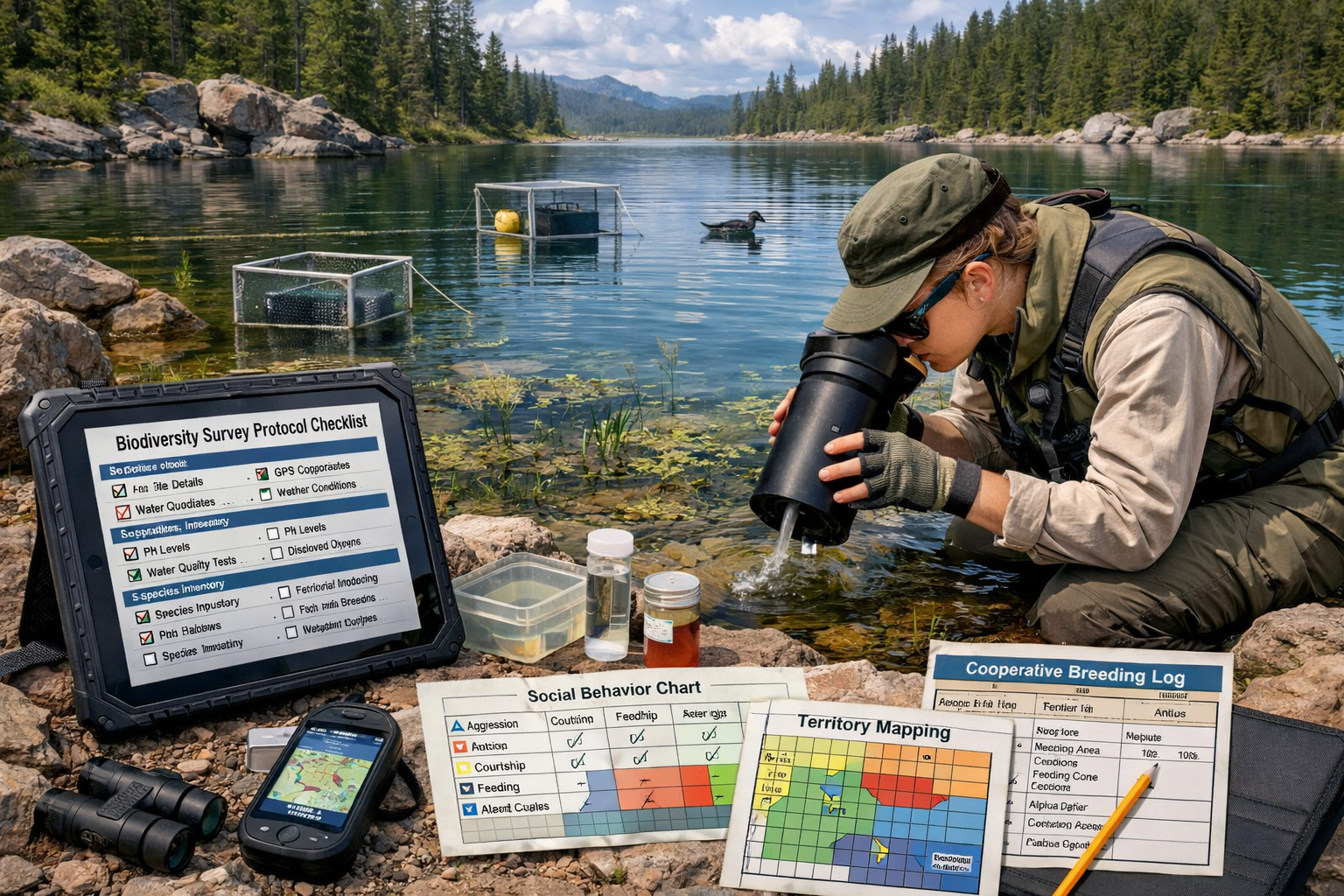
Document spatial distribution of breeding sites and identify which territories show evidence of multiple adult fish cooperating in defense and maintenance. GPS coordinates combined with underwater photography create verifiable records.
2. Group Composition Analysis
Record the number and size classes of fish associated with each breeding territory. Cooperative breeding typically involves helper individuals (often previous offspring) assisting dominant breeding pairs.
3. Behavioral Event Sampling
Conduct timed observation periods (minimum 30-minute intervals) documenting specific cooperative behaviors:
- Coordinated territory defense against intruders
- Shared nest maintenance activities
- Multiple adults tending eggs or fry
- Group foraging expeditions from breeding sites
4. Reproductive Output Measurement
When possible without disturbing breeding sites, estimate clutch sizes and offspring survival rates. The research indicates cooperatively breeding species produce fewer eggs per clutch[2], making this a diagnostic indicator.
Molecular and Genetic Sampling Integration
The Lake Tanganyika study's success relied heavily on molecular phylogeny reconstruction[2], demonstrating the value of genetic data in understanding social evolution. Surveyors working on comprehensive biodiversity impact assessments can incorporate genetic sampling to:
- Confirm species identification in visually similar taxa
- Determine relatedness among individuals in cooperative groups
- Identify cryptic species that may have different social structures
- Track population connectivity across lake habitats
Non-invasive genetic sampling through environmental DNA (eDNA) collection provides species presence data, while fin clip samples from captured specimens enable detailed genetic analysis without harming populations.
Standardized Data Recording Frameworks
Consistency across survey sites and time periods requires standardized data recording. Surveyors should develop field datasheets that capture:
Quantitative Metrics:
- Number of cooperative breeding groups per survey area
- Average group size (breeding pair plus helpers)
- Territory density (groups per hectare)
- Clutch size ranges for cooperative versus non-cooperative species
- Offspring survival rates where measurable
Qualitative Observations:
- Behavioral descriptions of cooperative activities
- Habitat characteristics associated with breeding territories
- Predator presence and abundance
- Environmental disturbance indicators
Digital data collection tools enable real-time GPS tagging, photograph integration, and standardized dropdown menus that reduce recording errors while facilitating later analysis.
Applying Cooperative Breeding Data to Biodiversity Net Gain Frameworks
Enhancing Habitat Quality Assessments
Traditional biodiversity net gain calculations focus on habitat area, distinctiveness, and condition. Incorporating cooperative breeding dynamics adds a crucial functional ecology dimension that better predicts long-term conservation outcomes. When surveyors document robust cooperative breeding populations, they identify habitats providing:
✅ Sufficient structural complexity for territory establishment
✅ Adequate food resources supporting extended family groups
✅ Appropriate predator-prey dynamics that favor cooperative strategies
✅ Stable environmental conditions enabling multi-generational site fidelity
These characteristics translate directly into higher habitat condition scores within biodiversity net gain frameworks, providing objective justification for valuing sites that support complex social species.
Informing Habitat Creation and Enhancement Strategies
Developers seeking to achieve 10% biodiversity net gain through habitat creation can apply cooperative breeding insights to design more effective aquatic environments. Understanding that small-bodied cooperatively breeding species require specific habitat features enables targeted enhancement:
Design Recommendations:
🏗️ Substrate Complexity – Incorporate varied rock sizes, crevices, and cave structures that enable territory establishment and defense
🏗️ Depth Variation – Create multiple depth zones providing refuge from predation while maintaining breeding habitat access
🏗️ Vegetation Patterns – Establish aquatic plant communities that support prey populations while providing visual barriers between territories
🏗️ Connectivity Features – Design habitat patches with appropriate spacing to support territorial species while enabling population connectivity
Quantifying Resilience in BNG Calculations
The Lake Tanganyika research demonstrates that cooperative breeding represents an evolutionary adaptation to environmental challenges[2]. Populations exhibiting these behaviors show inherent resilience characteristics that surveyors can quantify within BNG assessments.
Resilience Indicators:
| Indicator | Measurement Method | BNG Application |
|---|---|---|
| Social group stability | Longitudinal monitoring of territory occupancy | Condition multiplier adjustment |
| Offspring recruitment | Annual cohort survival tracking | Population viability metric |
| Behavioral plasticity | Response to environmental variation | Adaptability score |
| Genetic diversity | Molecular analysis of group members | Long-term persistence indicator |
These metrics provide developers and planners with evidence-based justification for conservation strategies that prioritize functional ecosystem characteristics rather than simple species checklists.
Integration with Off-Site and On-Site Delivery
Understanding cooperative breeding dynamics influences decisions about off-site versus on-site BNG delivery. Species exhibiting complex social structures often require:
- Larger contiguous habitat patches to support multiple territorial groups
- Longer establishment timeframes for social structures to develop
- Reduced disturbance regimes during critical breeding periods
- Connectivity to source populations providing colonizing individuals
These requirements may favor off-site habitat creation in locations offering appropriate scale and management flexibility, while on-site delivery might focus on supporting less socially complex species better suited to smaller habitat patches.
Practical Implementation for Lake Biodiversity Surveyors
Survey Timing and Seasonal Considerations
Capturing cooperative breeding behaviors requires surveys timed to coincide with reproductive periods when social dynamics become most visible. For temperate lake systems, this typically means:
Spring Surveys (March-May) – Document territory establishment, pair formation, and helper recruitment as breeding season begins
Summer Surveys (June-August) – Observe active breeding, nest maintenance, and offspring care behaviors when cooperation is most evident
Autumn Surveys (September-November) – Assess offspring survival and social group persistence as breeding season concludes
Multiple survey visits across the breeding season provide comprehensive data on social dynamics that single-visit surveys cannot capture.
Equipment and Technology Requirements
Modern survey protocols benefit from technological tools that enhance behavioral observation and data quality:
Essential Equipment:
- Underwater cameras (GoPro or similar) for behavioral documentation
- Polarized sunglasses for surface observation
- Snorkeling or SCUBA gear for direct observation
- GPS units for territory mapping
- Waterproof datasheets or tablets
- Fish identification guides specific to regional species
Advanced Technology:
- Hydrophones for acoustic monitoring
- Underwater drones for extended observation periods
- Genetic sampling kits for eDNA collection
- Time-lapse cameras for continuous monitoring
- Sonar equipment for habitat structure mapping
Training and Competency Development
Effective implementation of Cooperative Breeding in Aquatic Surveys: Protocols for Lake Biodiversity Surveyors Capturing Social Dynamics requires surveyor training beyond traditional species identification. Professional development should include:
📚 Behavioral ecology fundamentals – Understanding cooperative breeding theory and social evolution
📚 Observation techniques – Systematic behavioral sampling methods and data recording
📚 Species-specific knowledge – Identifying which local species exhibit cooperative breeding
📚 Statistical analysis – Quantifying social dynamics for BNG assessments
📚 Safety protocols – Aquatic survey safety and environmental protection standards
Organizations conducting biodiversity assessments should invest in surveyor training that incorporates these behavioral ecology competencies alongside traditional survey skills.
Quality Assurance and Data Validation
Behavioral observations introduce subjective elements that require robust quality assurance protocols:
Validation Methods:
- Dual observer comparisons for behavioral event recording
- Video documentation for later verification
- Standardized behavior definitions and coding systems
- Regular calibration sessions among survey teams
- Peer review of behavioral interpretations
The Cooperative-Breeding Database (Co-BreeD) provides models for standardized data collection and peer review processes, though aquatic applications require adaptation of existing frameworks[5].
Regulatory Compliance and Reporting
Surveyors must ensure cooperative breeding data collection complies with relevant regulations and ethical standards. The American Fisheries Society guidelines emphasize minimizing research impacts on fish populations[3], principles that apply equally to behavioral surveys.
Compliance Considerations:
- Obtain necessary permits for fish observation and sampling
- Follow animal welfare guidelines during behavioral studies
- Document survey methods transparently in reports
- Share data with relevant conservation authorities
- Contribute to regional biodiversity databases
Case Study Applications and Real-World Examples
Applying Lake Tanganyika Insights to Temperate Lakes
While the breakthrough research focused on African cichlids, the principles apply broadly to temperate lake systems. North American sunfish (Centrarchidae), European perch species, and various minnow families exhibit cooperative or semi-cooperative breeding behaviors that surveyors can document.
For example, pumpkinseed sunfish often show helper behaviors where non-breeding individuals assist in nest defense. Surveyors documenting these patterns in pre-development assessments provide developers with baseline data for creating effective biodiversity plans.
Integration with Broader Conservation Initiatives
Cooperative breeding data complements other conservation research initiatives. The ASI-II Initiative focuses on aquatic species monitoring[4], while marine mammal surveys increasingly recognize social structure importance[7]. Lake biodiversity surveyors can contribute to these broader efforts by standardizing data collection methods that enable cross-system comparisons.
Small Development Project Applications
Even small development projects affecting lake margins benefit from understanding cooperative breeding dynamics. A small dock installation might disrupt breeding territories of socially complex species, impacts that standard surveys might underestimate. Documenting social dynamics enables proportionate mitigation that addresses functional ecosystem losses rather than just habitat area.
Future Directions and Emerging Research
Expanding the Cooperative-Breeding Database
The existing Co-BreeD database focuses primarily on birds and mammals[5]. Expanding this framework to systematically include aquatic species would provide surveyors with comparative data enabling more sophisticated assessments. Collaborative efforts between academic researchers and practitioners could accelerate database development.
Climate Change and Social Dynamics
As climate change alters lake temperatures, stratification patterns, and food webs, understanding how cooperative breeding strategies respond becomes increasingly important. Longitudinal studies tracking social dynamics alongside environmental changes will provide critical data for predicting ecosystem resilience under future conditions.
Technological Innovations
Artificial intelligence and machine learning applications show promise for automated behavioral analysis from video footage. These technologies could enable continuous monitoring of cooperative breeding behaviors at scales impossible with traditional observation methods, providing richer datasets for BNG assessments.
Policy Development
As evidence accumulates demonstrating the importance of social dynamics for ecosystem function, regulatory frameworks may evolve to explicitly require behavioral assessments. Surveyors establishing expertise in Cooperative Breeding in Aquatic Surveys: Protocols for Lake Biodiversity Surveyors Capturing Social Dynamics position themselves at the forefront of this emerging policy landscape.
Conclusion
The discovery that cooperative breeding in Lake Tanganyika fish evolved independently multiple times over 4 million years fundamentally changes how biodiversity surveyors should approach freshwater ecosystem assessments in 2026[2]. These social dynamics provide measurable indicators of habitat quality, population resilience, and long-term conservation value that traditional survey methods overlook.
Implementing comprehensive protocols for Cooperative Breeding in Aquatic Surveys: Protocols for Lake Biodiversity Surveyors Capturing Social Dynamics requires integrating behavioral observations with established survey techniques, investing in surveyor training, and adopting standardized data collection frameworks. The resulting assessments provide developers, planners, and conservationists with evidence-based insights that strengthen biodiversity net gain strategies and improve conservation outcomes.
Actionable Next Steps
For Surveyors:
- Review current survey protocols and identify opportunities to incorporate behavioral observations
- Develop species-specific knowledge of cooperative breeding in regional lake fish communities
- Invest in equipment and training that enables systematic social dynamics documentation
- Establish partnerships with academic researchers studying cooperative breeding
For Developers and Planners:
5. Request behavioral ecology components in biodiversity assessment specifications
6. Allocate appropriate survey timing and resources for capturing social dynamics
7. Incorporate cooperative breeding insights into habitat design and enhancement plans
8. Engage with experienced biodiversity surveyors who understand functional ecology principles
For Conservation Practitioners:
9. Contribute behavioral data to emerging databases supporting comparative research
10. Advocate for policy frameworks recognizing social dynamics in BNG calculations
11. Support long-term monitoring programs tracking cooperative breeding patterns
12. Share best practices and lessons learned across the surveyor community
The integration of cooperative breeding protocols into standard lake biodiversity surveys represents a significant advancement in ecological assessment methodology. As the field evolves, surveyors who master these techniques will deliver more comprehensive, scientifically robust evaluations that better serve both conservation goals and development needs. The Lake Tanganyika research provides the scientific foundation; now practitioners must translate these insights into practical protocols that enhance freshwater biodiversity protection across all lake systems.
References
[1] academic.oup – https://academic.oup.com/condor/advance-article/doi/10.1093/ornithapp/duag013/8466017
[2] 2026 03 Village Cooperative Lake Tanganyika Fish – https://phys.org/news/2026-03-village-cooperative-lake-tanganyika-fish.html
[3] Guidelines For The Use Of Fishes In Research – https://fisheries.org/policy-media/science-guidelines/guidelines-for-the-use-of-fishes-in-research/
[4] Sc17.inf03 State Of Play Of The Asi Ii Initiative – https://accobams.org/wp-content/uploads/2026/02/SC17.Inf03_State-of-play-of-the-ASI-II-Initiative.pdf
[5] 1365 2656 – https://besjournals.onlinelibrary.wiley.com/doi/10.1111/1365-2656.70154
[6] wildlifemanagement.institute – https://wildlifemanagement.institute/node/1725
[7] North Atlantic Right Whale Calving Season 2026 – https://www.fisheries.noaa.gov/national/endangered-species-conservation/north-atlantic-right-whale-calving-season-2026
[8] Final Rfp Aquatic And Riparian Habitat Enhancement Addendum 1 – https://www.nationalforests.org/wp-content/uploads/2026/02/FINAL-RFP-Aquatic-and-Riparian-Habitat-Enhancement-Addendum-1.pdf
[9] 2026 04 Science Enable High Seas Treaty – https://phys.org/news/2026-04-science-enable-high-seas-treaty.html