

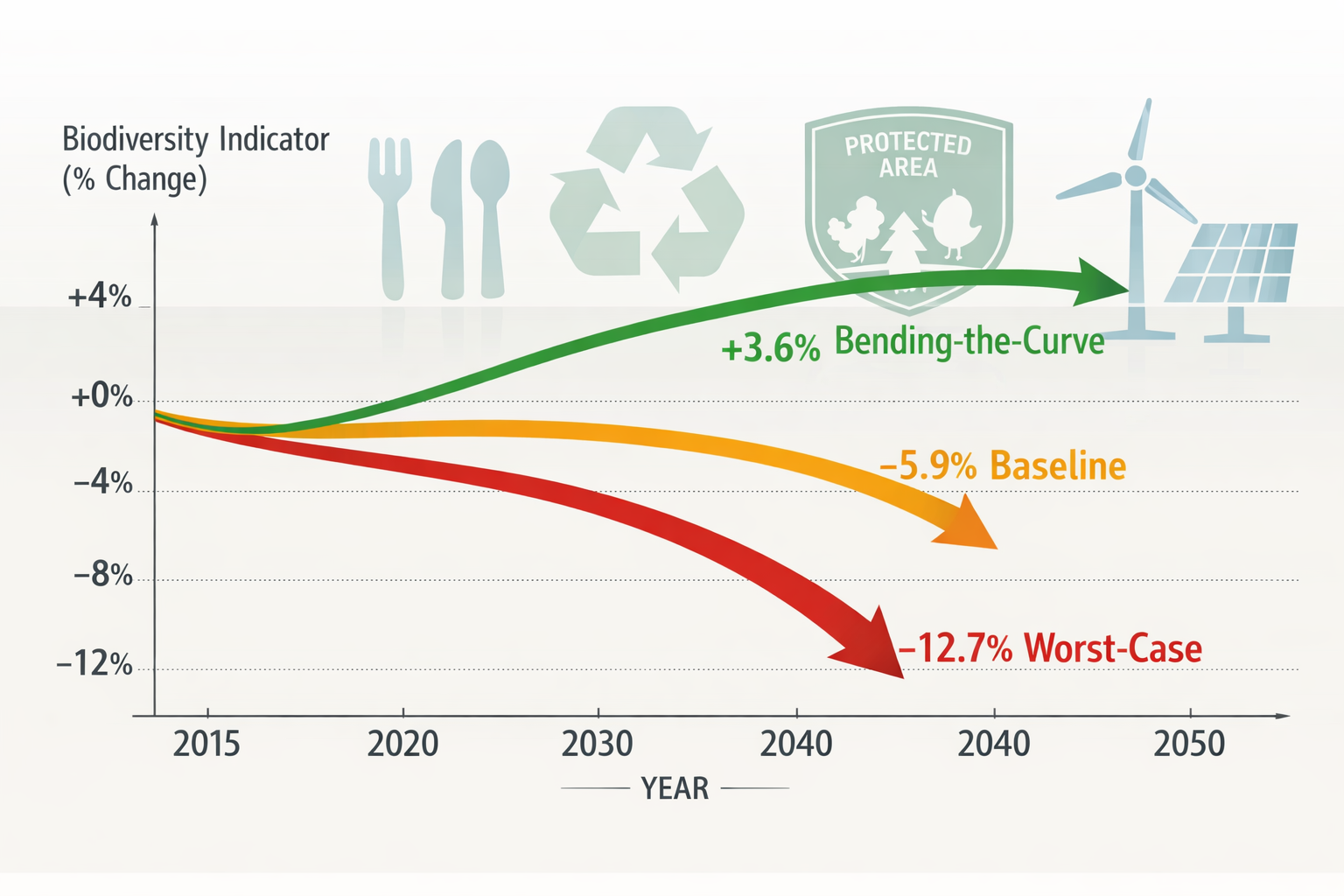
The planet's biodiversity stands at a critical crossroads. Recent meta-analysis reveals that only 11 bending-the-curve scenarios exist in global scientific literature—studies that project actual reversals of biodiversity loss rather than mere slowdowns. Yet these rare scenarios offer something remarkable: pathways showing an average 3.6% positive change in biodiversity indicators by 2050. For ecologists conducting surveys in 2026, understanding "Bending Global Biodiversity Curves: Scenario Modeling Protocols for 2026 Ecology Surveys" has become essential for validating conservation interventions and predicting local ecological trends.
This comprehensive guide explores how scenario modeling protocols are transforming ecology surveys, enabling practitioners to align field assessments with global biodiversity targets while delivering measurable conservation outcomes.
Key Takeaways
- Bending-the-curve scenarios project 3.6% average biodiversity gains by 2050, contrasting sharply with baseline projections showing 5.9% declines—a critical framework for 2026 ecology surveys
- Integrated policy combinations are mandatory: diet change, reduced food waste, and sustainable intensification appear in all successful scenarios, requiring cross-sectoral survey approaches
- Current models oversimplify biodiversity pressures, with most addressing only land-use change while ignoring climate impacts—2026 protocols must incorporate multiple threat drivers
- Standardized biodiversity indicators enable meaningful comparisons between survey sites and modeling predictions, essential for validating biodiversity net gain interventions
- Field surveys in 2026 serve dual purposes: documenting current biodiversity status while testing scenario model predictions at local scales
Understanding Bending Global Biodiversity Curves: The Scenario Modeling Foundation
What Makes a Scenario "Bend the Curve"?
The concept of bending biodiversity curves represents a fundamental shift from damage control to actual recovery. Traditional conservation scenarios aim to "reduce loss"—slowing the rate of species decline. Bending-the-curve scenarios go further, projecting genuine reversals where biodiversity indicators improve relative to baseline years.
The mathematics tell a compelling story:
| Scenario Type | Average Change by 2050 | Relative to 2015 Baseline |
|---|---|---|
| Bending-the-Curve | +3.6% | Positive recovery 📈 |
| Baseline (Business-as-Usual) | -5.9% | Continued decline 📉 |
| Worst-Case | -12.7% | Accelerated loss ⚠️ |
These projections emerged from analyzing the limited pool of 11 bending-the-curve scenarios published globally—a remarkably small evidence base considering the urgency of international commitments under the Kunming-Montreal Global Biodiversity Framework.
The Scarcity Problem in Scenario Literature
Why do so few bending-the-curve scenarios exist? The answer reveals critical challenges for ecology surveys:
Complexity barriers: Modeling biodiversity recovery requires integrating multiple sectors—agriculture, energy, conservation, climate policy, and consumption patterns. Most research teams lack the interdisciplinary capacity to model these interactions accurately.
Data limitations: Bending the curve demands baseline data across multiple indicators (Mean Species Abundance, Living Planet Index, species richness) and geographic scales. Many regions lack sufficient historical data to validate recovery projections.
Political sensitivity: Recovery scenarios often require transformative policy changes—dietary shifts, agricultural reforms, land redistribution—that challenge established interests and economic models.
For ecologists conducting biodiversity impact assessments in 2026, this scarcity means working with limited validated frameworks while contributing essential ground-truth data to expand the evidence base.
Core Components of Successful Scenarios
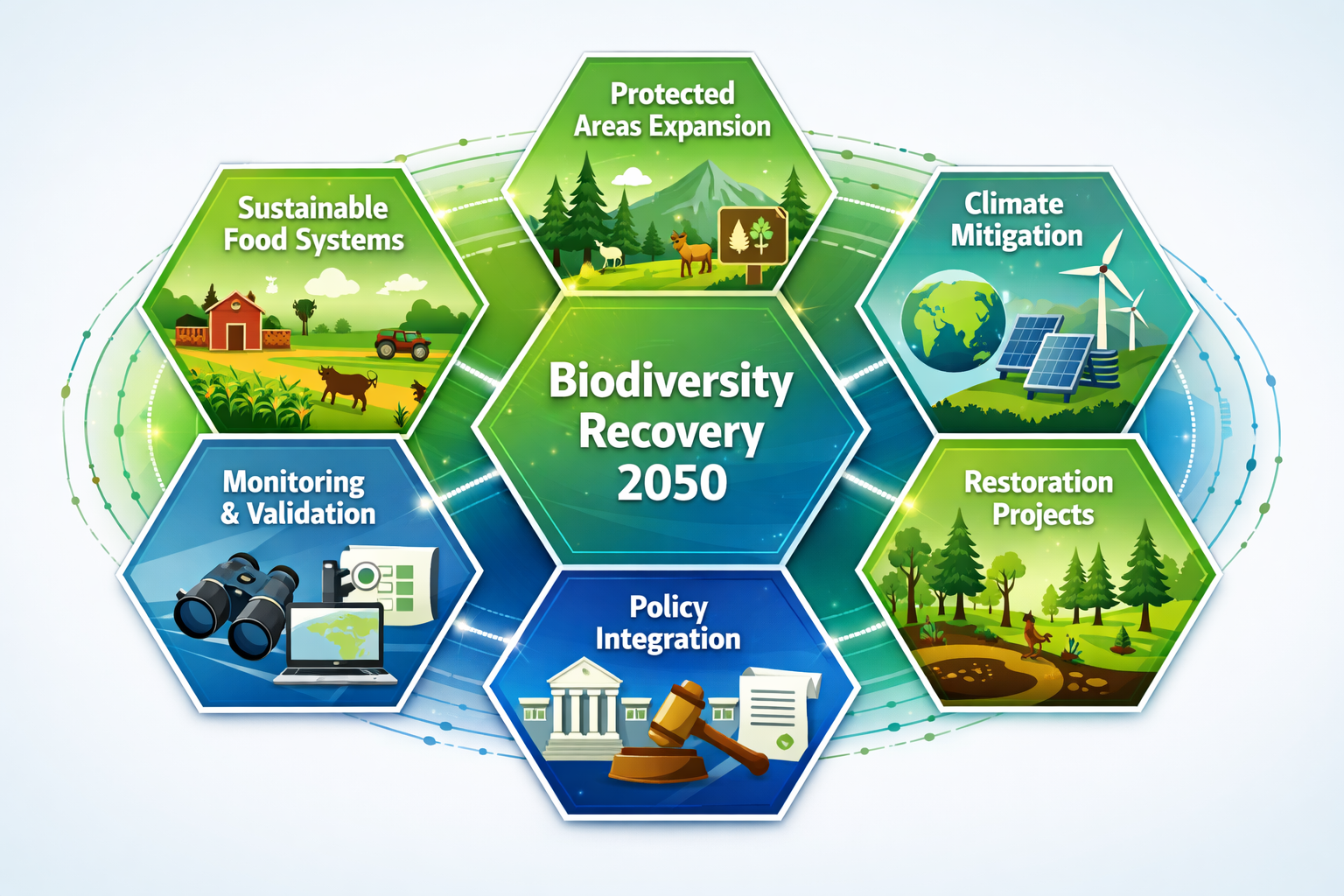
Analysis of existing bending-the-curve scenarios reveals three mandatory policy components present in 100% of successful models:
- Diet change toward plant-based foods 🥗: Reducing livestock production pressure on land and water resources
- Reduced food waste ♻️: Minimizing agricultural land requirements through efficiency
- Sustainable agricultural intensification 🌾: Increasing yields on existing farmland without expanding cultivated areas
Additional frequently-included measures appear in most (but not all) scenarios:
- Expanded protected areas: Increasing coverage from current ~17% terrestrial to 30-50%
- Reduced bioenergy crop cultivation: Avoiding biodiversity-damaging energy plantations
- Restoration of degraded habitats: Active rehabilitation of ecosystems
Notably underrepresented in current models—appearing in fewer than half of scenarios—are:
- Land-use planning reforms
- International trade adjustments
- Crop mix diversification
- Forestry plantation management
- Lifestyle and consumption changes beyond diet
This gap creates opportunities for 2026 ecology surveys to test these underexplored interventions at local scales, generating data to inform next-generation scenario models.
Implementing Bending Global Biodiversity Curves: Scenario Modeling Protocols for 2026 Ecology Surveys
Adapting Global Scenarios to Local Survey Contexts
The challenge for ecology practitioners lies in translating global-scale scenario projections into actionable survey protocols. Here's how leading ecology teams approach this translation in 2026:
Step 1: Select Appropriate Biodiversity Indicators
Standardization remains the greatest challenge in scenario modeling. Different studies use incompatible indicators, making comparisons difficult. For 2026 surveys, prioritize indicators that:
- Connect to global scenarios: Mean Species Abundance (MSA) and Living Planet Index (LPI) appear most frequently in bending-the-curve literature
- Suit local conditions: Species richness, habitat quality scores, and functional diversity metrics may better capture site-specific changes
- Enable temporal tracking: Choose indicators measurable consistently across survey periods
- Align with regulatory frameworks: In the UK context, metrics compatible with biodiversity net gain calculations ensure compliance
💡 Pro Tip: Use multiple complementary indicators rather than relying on single metrics. Policy combinations may produce net gains in MSA while only reducing losses in LPI—capturing both perspectives provides fuller understanding.
Step 2: Identify Relevant Pressure Drivers
Most existing bending-the-curve scenarios address only land-use change—a critical oversimplification. Nearly all ignore climate change impacts despite this representing a primary biodiversity threat.
For comprehensive 2026 surveys, assess multiple pressure drivers:
- Land-use change: Habitat conversion, fragmentation, agricultural expansion
- Climate change: Temperature shifts, precipitation changes, phenological mismatches
- Pollution: Nutrient runoff, pesticides, air quality degradation
- Invasive species: Non-native species establishment and spread
- Direct exploitation: Hunting, fishing, harvesting pressure
Document which pressures affect your survey site and how proposed interventions address them. This multi-pressure approach generates data to improve future scenario models beyond their current land-use focus.
Step 3: Design Cross-Sectoral Assessment Protocols
Single-sector approaches cannot bend biodiversity curves. Every successful scenario requires integrated interventions spanning multiple domains. Survey protocols must therefore assess:
Agricultural interfaces: How do farming practices on adjacent land affect biodiversity? Document:
- Pesticide and fertilizer application rates
- Crop diversity and rotation patterns
- Livestock stocking densities
- Organic matter management
Conservation measures: Catalog existing and planned interventions:
- Protected area designations and enforcement
- Habitat restoration activities
- Species reintroduction programs
- Connectivity corridor establishment
Human consumption patterns: Even site-specific surveys should document:
- Local food sourcing and waste patterns
- Recreation pressure and visitor impacts
- Resource extraction activities
- Development pressures
This cross-sectoral data enables testing whether local interventions mirror the policy combinations shown effective in global scenarios. Understanding how to achieve 10% biodiversity net gain requires this integrated perspective.
Field Survey Methodologies for Scenario Validation
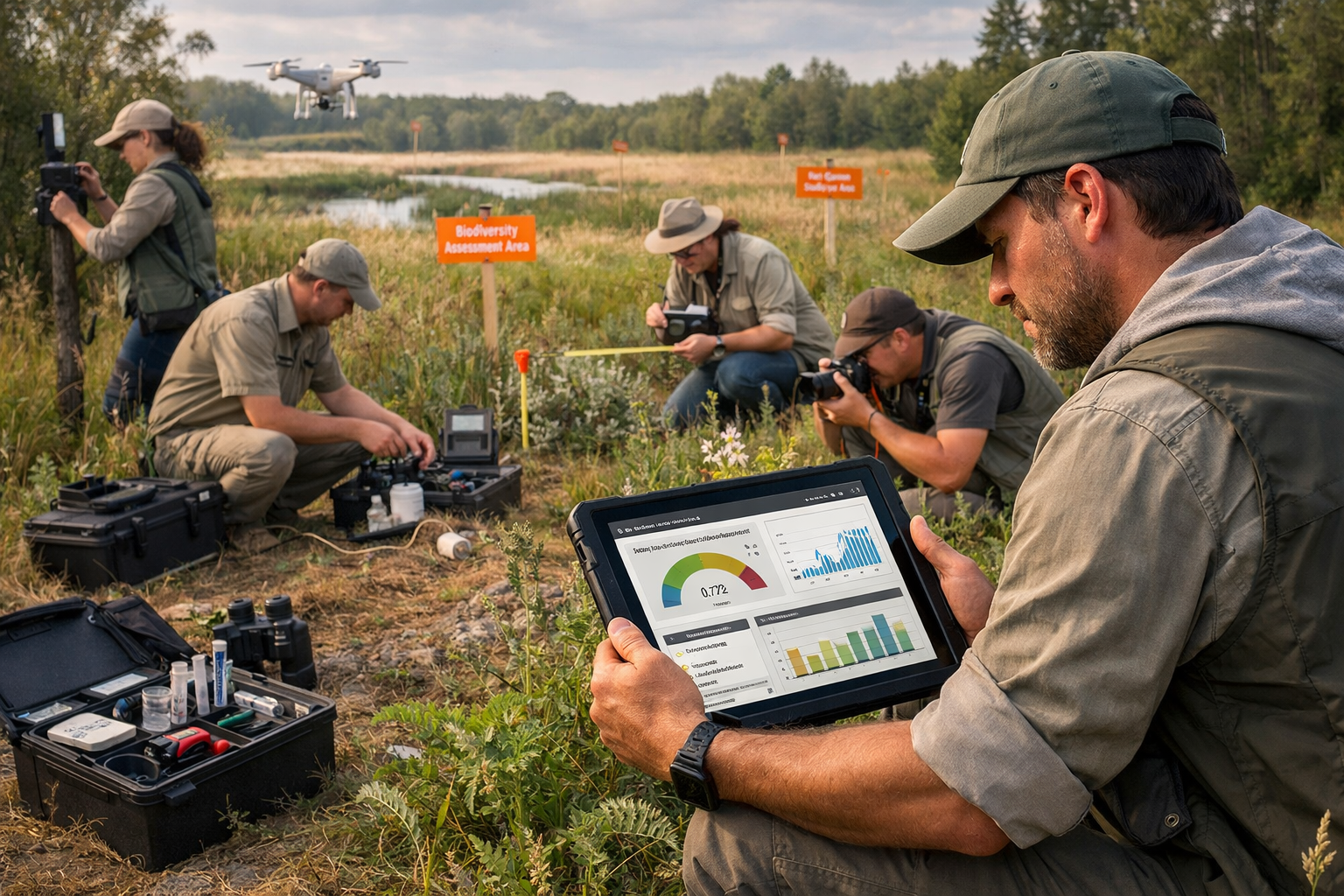
Modern ecology surveys serve dual purposes: documenting current biodiversity status and testing scenario model predictions. Implement these methodologies for robust scenario validation:
Baseline Documentation Protocols
Establish comprehensive baseline conditions before interventions:
- Species inventories: Complete taxonomic surveys across multiple seasons using standardized methods (transects, quadrats, camera traps, acoustic monitoring)
- Habitat mapping: GIS-based habitat classification with quality scoring using established frameworks
- Threat assessment: Document current pressure intensities using quantitative metrics
- Historical context: Compile historical data from previous surveys, aerial imagery, and local records
Intervention Monitoring Frameworks
Track changes following conservation interventions:
- Control site comparison: Establish reference sites without interventions for comparison
- Before-After-Control-Impact (BACI) design: Robust statistical framework for detecting intervention effects
- Temporal replication: Survey at consistent intervals (quarterly, annually) to capture seasonal variation and trends
- Adaptive protocols: Adjust survey intensity based on detected changes and emerging threats
Data Integration with Scenario Models
Connect field data to global scenario frameworks:
- Indicator calculation: Convert raw survey data into standardized indicators (MSA, LPI equivalents) using established conversion protocols
- Trajectory comparison: Plot local trends against scenario projections to assess alignment
- Uncertainty quantification: Document confidence intervals and data quality limitations
- Model feedback: Share findings with scenario modeling teams to improve future projections
When planning biodiversity net gain projects, these validation protocols ensure interventions deliver predicted outcomes.
Technology Integration in 2026 Survey Protocols
Modern survey protocols leverage advanced technologies unavailable to earlier scenario modelers:
Remote sensing and drones 🛸: High-resolution habitat mapping, vegetation health monitoring, and change detection across large areas
Environmental DNA (eDNA): Species detection from soil, water, and air samples, particularly valuable for cryptic and rare species
Acoustic monitoring: Automated recording and AI-powered species identification for birds, bats, amphibians, and insects
Sensor networks: Continuous environmental monitoring (temperature, humidity, soil moisture) linking biodiversity changes to climate variables
Mobile applications: Standardized data collection with built-in quality controls, GPS integration, and real-time data synchronization
Machine learning: Automated species identification from images and sounds, pattern detection in large datasets, and predictive modeling
These technologies enable survey intensity and geographic coverage previously impossible, generating data quality that strengthens scenario model validation.
Challenges and Future Directions for Bending Global Biodiversity Curves: Scenario Modeling Protocols
Critical Gaps in Current Scenario Modeling
Despite progress, significant limitations constrain current bending-the-curve scenarios and the survey protocols derived from them:
The Climate Change Blind Spot
Most bending-the-curve scenarios ignore climate change—an astonishing omission given climate represents one of the "big five" biodiversity threats. This oversight creates two problems:
- Overoptimistic projections: Scenarios may suggest curves can bend more easily than reality permits
- Incomplete intervention testing: Surveys cannot validate climate-biodiversity interactions absent from models
For 2026 surveys, explicitly document climate-biodiversity linkages:
- Temperature and precipitation trends at survey sites
- Phenological shifts (flowering, migration, breeding timing)
- Range shifts and colonization by climate-adapted species
- Climate-driven habitat changes (drought stress, flooding, fire regimes)
This data helps build next-generation scenarios integrating climate-biodiversity interactions.
Single-Model Limitations
Current scenarios typically rely on single modeling frameworks rather than model intercomparisons. This creates consistency problems:
- Different models produce contradictory projections for identical policy packages
- Model-specific assumptions and biases remain unidentified
- Uncertainty ranges may be artificially narrow
Future scenario development requires ensemble approaches using multiple models, similar to climate projection methods. Ecology surveys contribute by:
- Testing predictions from multiple scenario frameworks at the same sites
- Documenting which model assumptions best match field observations
- Identifying systematic biases across modeling approaches
Indicator Inconsistency
Lack of standardized biodiversity indicators remains perhaps the greatest barrier to scenario modeling progress. Identical interventions produce different outcomes depending on which indicator researchers choose:
- Policy packages generating net gains in Mean Species Abundance may only reduce losses in Living Planet Index
- Species richness may increase while functional diversity declines
- Local gains may coincide with regional losses due to spatial redistribution
For survey practitioners, this means:
- Use multiple complementary indicators rather than single metrics
- Document why different indicators show divergent trends at your sites
- Contribute to standardization efforts by using widely-adopted metrics alongside site-specific measures
When conducting biodiversity net gain assessments, indicator selection profoundly affects whether projects demonstrate success.
Underexplored Interventions Requiring Field Testing
Current scenarios underrepresent several potentially powerful interventions appearing in fewer than half of published models. These represent priority areas for 2026 survey research:
Restoration and Rewilding
While some scenarios include restoration, most underestimate its potential. One outlier scenario projected 92% recovery of arable areas to natural intact vegetation—far beyond typical assumptions. Field surveys should:
- Test restoration trajectories across different habitat types and degradation levels
- Document timescales for biodiversity recovery following restoration initiation
- Identify restoration approaches delivering fastest biodiversity gains
- Assess whether passive rewilding or active restoration proves more effective
Land-Use Planning Reforms
Spatial configuration of habitats—connectivity, patch size, matrix quality—profoundly affects biodiversity but rarely appears in scenarios. Surveys can:
- Compare biodiversity outcomes in well-connected versus isolated habitat patches
- Assess effectiveness of corridor establishment
- Document edge effects and optimal reserve geometries
- Test landscape-scale planning principles
Trade and Consumption Adjustments
International trade shifts agricultural pressure geographically, yet scenarios rarely model these dynamics. Local surveys contribute by:
- Documenting biodiversity impacts of export-oriented versus local food production
- Assessing land-sparing effects when food imports replace local production
- Tracking biodiversity changes following agricultural trade policy shifts
Lifestyle and Behavior Changes
Beyond diet, numerous consumption changes could benefit biodiversity but remain unmodeled. Survey sites near human populations should document:
- Recreation pressure effects and management effectiveness
- Garden and urban greening contributions to regional biodiversity
- Consumer product choices affecting habitat conversion (palm oil, timber, minerals)
Testing these underexplored interventions helps expand the limited pool of bending-the-curve scenarios while generating practical guidance for achieving biodiversity net gain without risk.
Integrating Climate Mitigation and Biodiversity Goals
A critical challenge emerging in 2026 involves reconciling climate mitigation with biodiversity conservation. Many efficient climate strategies damage biodiversity:
Bioenergy expansion: Large-scale energy crop plantations (miscanthus, switchgrass, short-rotation forestry) require vast land areas, directly competing with natural habitats. Most bending-the-curve scenarios explicitly reduce bioenergy to protect biodiversity.
Afforestation in inappropriate locations: Tree planting on natural grasslands, peatlands, or other non-forest ecosystems can reduce biodiversity while providing limited climate benefits.
Renewable energy infrastructure: Solar farms and wind turbines require land and can affect wildlife, though impacts remain far smaller than fossil fuel alternatives.
Survey protocols should assess:
- Biodiversity impacts of climate mitigation projects at survey sites
- Alternative mitigation approaches with lower biodiversity costs (energy efficiency, renewable energy on degraded land, reduced consumption)
- Synergistic interventions benefiting both climate and biodiversity (peatland restoration, natural forest regeneration, agroforestry)
This integration proves essential for developers navigating both climate and biodiversity requirements.
Building Robust Scenario-Survey Feedback Loops
The relationship between global scenarios and local surveys should be bidirectional:
Scenarios inform surveys by:
- Identifying which interventions warrant field testing
- Providing predicted trajectories for comparison
- Highlighting data gaps requiring targeted collection
- Suggesting optimal indicator selections
Surveys improve scenarios by:
- Validating or refuting model predictions with empirical data
- Revealing overlooked mechanisms and interactions
- Quantifying intervention effectiveness and timescales
- Documenting context-dependencies affecting outcomes
Strengthening these feedback loops requires:
- Standardized data sharing: Establish repositories where survey data becomes accessible to scenario modelers
- Collaborative research design: Involve modelers in survey planning to ensure data compatibility
- Rapid publication: Accelerate dissemination of survey findings to inform model updates
- Interdisciplinary teams: Bridge the ecology-modeling divide through joint projects
- Funding mechanisms: Support long-term monitoring enabling trajectory validation
Organizations conducting biodiversity surveys for developers increasingly contribute data to these broader scientific efforts.
Practical Applications for Developers and Land Managers
Understanding bending-the-curve scenarios provides practical advantages for stakeholders implementing biodiversity interventions:
Prioritizing High-Impact Interventions
Not all conservation actions deliver equal biodiversity benefits. Scenario analysis reveals which interventions appear in successful models:
Tier 1 (Essential): Present in all bending-the-curve scenarios
- Sustainable agricultural intensification on existing farmland
- Reduced food waste throughout supply chains
- Dietary shifts toward plant-based foods
Tier 2 (Highly Effective): Present in most scenarios
- Protected area expansion and improved management
- Minimizing bioenergy crop cultivation
- Habitat restoration on degraded lands
Tier 3 (Promising but Underexplored): Present in fewer scenarios but potentially powerful
- Strategic land-use planning for connectivity
- Rewilding and passive restoration
- Trade policy adjustments
- Lifestyle and consumption changes
When planning biodiversity net gain projects, prioritize Tier 1 and 2 interventions with strongest evidence bases while contributing to research on Tier 3 approaches.
Avoiding Counterproductive Approaches
Scenario analysis also reveals approaches that undermine biodiversity goals despite appearing beneficial:
❌ Bioenergy expansion: Energy crops compete directly with natural habitats
❌ Afforestation on natural grasslands: Destroys existing biodiversity while providing limited climate benefits
❌ Intensive agriculture without demand reduction: Sustainable intensification alone proves insufficient without addressing consumption
❌ Protected areas without threat management: Designation without enforcement delivers minimal benefits
Setting Realistic Timescales
Bending-the-curve scenarios project outcomes to 2050—a 25-year timeframe from 2026. This provides realistic expectations:
- Short-term (2026-2030): Establish baselines, implement interventions, detect initial responses in fast-responding taxa (invertebrates, annual plants)
- Medium-term (2030-2040): Observe population trends, habitat quality improvements, colonization by target species
- Long-term (2040-2050): Achieve projected biodiversity gains, validate scenario predictions, adjust management
Understanding these timescales helps developers and landowners set appropriate monitoring schedules and success criteria.
Leveraging Biodiversity Markets
The emergence of biodiversity unit markets creates financial mechanisms supporting bending-the-curve interventions:
- On-site delivery: Implement high-impact interventions directly on development sites where feasible
- Off-site delivery: Purchase biodiversity units from projects implementing scenario-validated interventions
- Unit creation: Landowners can sell biodiversity units generated through evidence-based habitat creation and restoration
Aligning biodiversity markets with bending-the-curve scenarios ensures financial flows support interventions with strongest evidence for reversing biodiversity loss.
Conclusion: From Global Scenarios to Local Action
Bending Global Biodiversity Curves: Scenario Modeling Protocols for 2026 Ecology Surveys represents more than an academic exercise—it provides the essential framework connecting international biodiversity commitments to measurable conservation outcomes. The stark contrast between bending-the-curve scenarios (+3.6% biodiversity gain) and business-as-usual projections (-5.9% continued loss) illustrates what's at stake.
For ecology practitioners in 2026, the path forward involves:
Immediate Action Steps
- Adopt standardized indicators: Use Mean Species Abundance, Living Planet Index equivalents, and complementary metrics enabling comparison with global scenarios
- Implement cross-sectoral assessments: Document agricultural, conservation, climate, and consumption factors affecting survey sites
- Test underexplored interventions: Contribute data on restoration, land-use planning, and lifestyle changes underrepresented in current scenarios
- Address multiple pressures: Move beyond land-use-only assessments to incorporate climate change, pollution, invasive species, and exploitation
- Integrate technology: Leverage remote sensing, eDNA, acoustic monitoring, and AI to enhance survey coverage and data quality
Contributing to the Evidence Base
With only 11 bending-the-curve scenarios currently published, every survey contributes essential data to expand this limited foundation. Share findings through:
- Peer-reviewed publications documenting intervention effectiveness
- Open data repositories enabling scenario model validation
- Collaborative research partnerships with modeling teams
- Professional networks and conferences
- Regulatory reporting that informs policy development
Long-Term Commitment
Bending biodiversity curves requires sustained effort over decades. Establish monitoring frameworks enabling:
- Consistent data collection through 2050 and beyond
- Adaptive management responding to detected trends
- Institutional memory preserving baseline data and methodological details
- Funding mechanisms supporting long-term research
- Knowledge transfer ensuring continuity across personnel changes
The Broader Context
While individual surveys operate at local scales, collective efforts contribute to global biodiversity recovery. Every hectare restored, every invasive species controlled, every sustainable practice adopted moves the needle. The scenario evidence proves that bending the curve remains possible—but only through integrated, evidence-based, sustained action.
For developers, land managers, ecologists, and policymakers navigating biodiversity net gain requirements, understanding scenario modeling protocols transforms compliance obligations into opportunities for meaningful conservation impact.
The biodiversity crisis demands nothing less than transformative change across food systems, land management, consumption patterns, and conservation approaches. Scenario modeling provides the roadmap. Field surveys provide the validation. Together, they offer humanity's best chance to bend global biodiversity curves upward—reversing decades of decline and securing ecological resilience for future generations.
The time to act is now. The tools are available. The path is clear. Will your 2026 ecology surveys contribute to bending the curve? 🌍🌱