

Invasive Species Early Detection Networks: Drone and eDNA Strategies for Biodiversity Baseline Accuracy
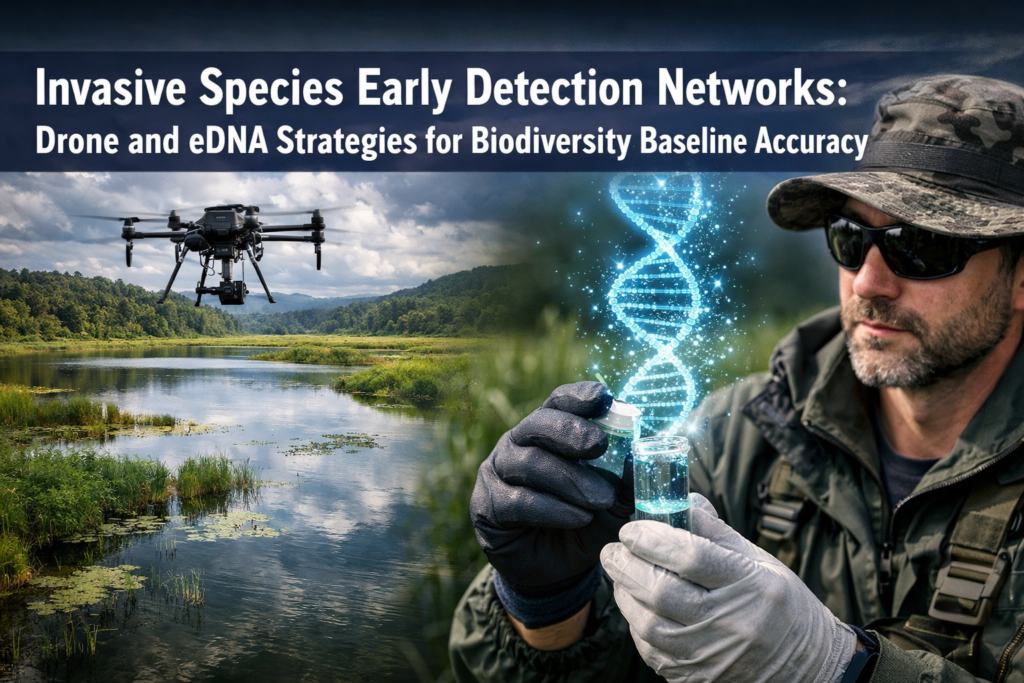
The Japanese beetle (Popillia japonica) was detected in Swiss vineyards several weeks before a single insect became visible to trained surveyors—not through sharper human eyes, but via autonomous drones collecting environmental DNA from leaf surfaces. This temporal advantage represents a fundamental shift in how conservation professionals establish biodiversity baselines, particularly as regulatory frameworks like the […]
Rewilding Metrics and Measurement: How Ecologists Quantify Restoration Success in BNG Projects
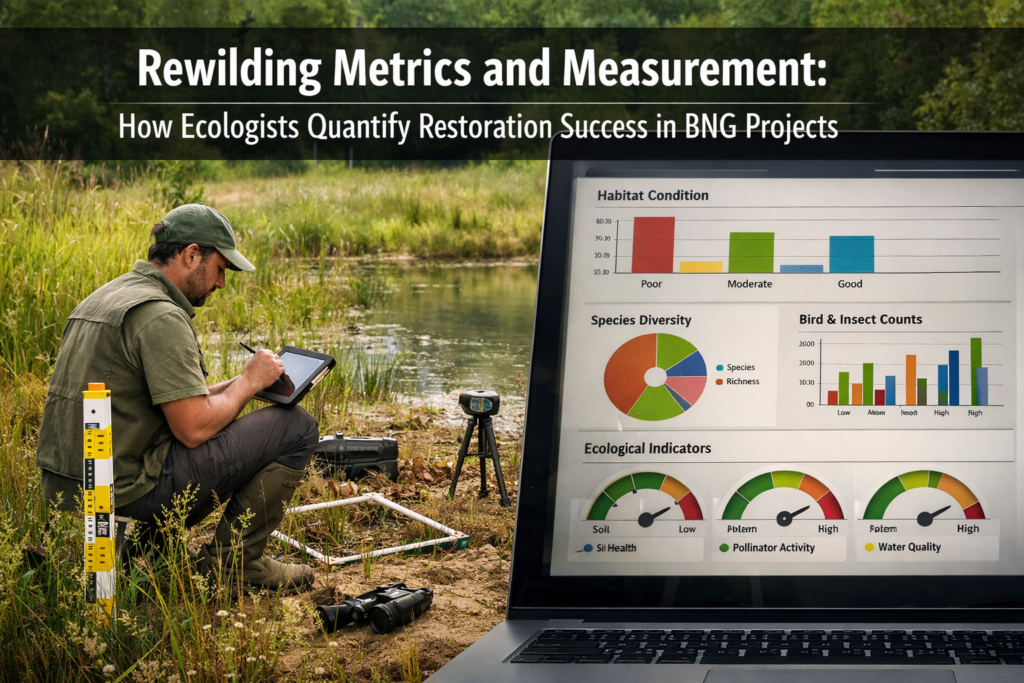
Britain's rewilding movement has reached a critical inflection point: as of September 2025, 112 off-site Biodiversity Net Gain (BNG) projects covering over 4,000 hectares had been officially registered[1]. Yet behind these impressive numbers lies a more complex question—how do ecologists truly measure whether restored land is becoming ecologically functional, not just greener? Understanding Rewilding Metrics […]
Land-Sea Interface Surveys for Integrated Biodiversity Net Gain: Coastal Ecologist Field Strategies
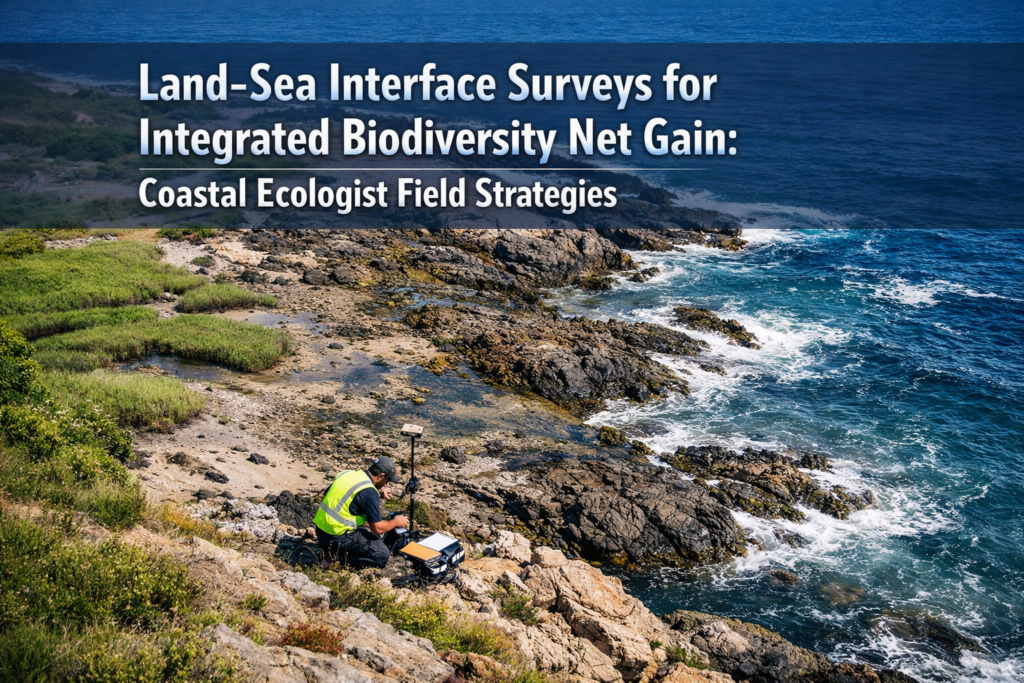
Coastal development projects lose an estimated 30-40% of potential biodiversity value when survey teams treat land and sea as separate entities. This critical oversight occurs at the land-sea interface—the transitional zone where terrestrial and marine ecosystems merge, creating unique habitats that traditional survey methodologies consistently undervalue or entirely miss. As Biodiversity Net Gain (BNG) requirements […]