

The global biodiversity crisis has reached a critical juncture in 2026. Following the landmark decisions made at COP16 and its resumed session, ecologists worldwide face an unprecedented challenge: transforming international biodiversity commitments into actionable, measurable survey protocols. The Post-COP16 Biodiversity Survey Mandates: Updating Protocols for Global Ecologists in 2026 represent more than bureaucratic requirements—they signal a fundamental shift in how we monitor, report, and protect Earth's living systems. 🌍
With the February 2026 national reporting deadline now behind us and the crucial COP17 global review scheduled for October 2026 in Armenia, ecologists must rapidly adapt their methodologies to align with the Kunming-Montreal Global Biodiversity Framework (KMGBF) targets. This comprehensive guide breaks down the new COP16 requirements for monitoring and disclosure, offering tailored protocols for biodiversity surveyors integrating KMGBF targets into local frameworks, including the UK's Biodiversity Net Gain (BNG) requirements.
Key Takeaways
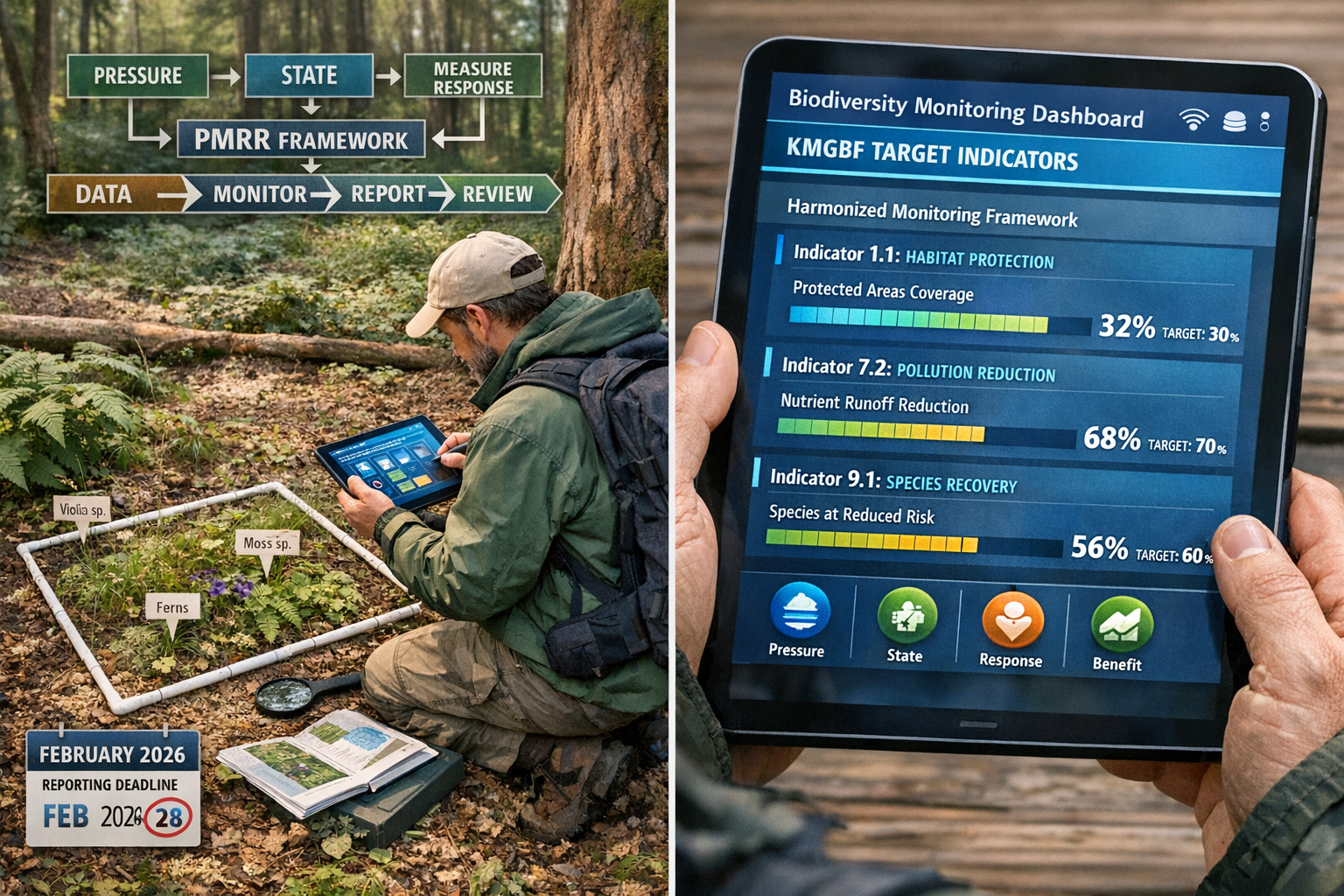
- Harmonized monitoring frameworks adopted at COP16 require all countries to track biodiversity using standardized indicators through the Planning, Monitoring, Reporting, and Review (PMRR) mechanism [1]
- National reporting deadlines include the seventh national report (February 2026, completed) and eighth national report (June 2029), with templates revised for KMGBF alignment [4]
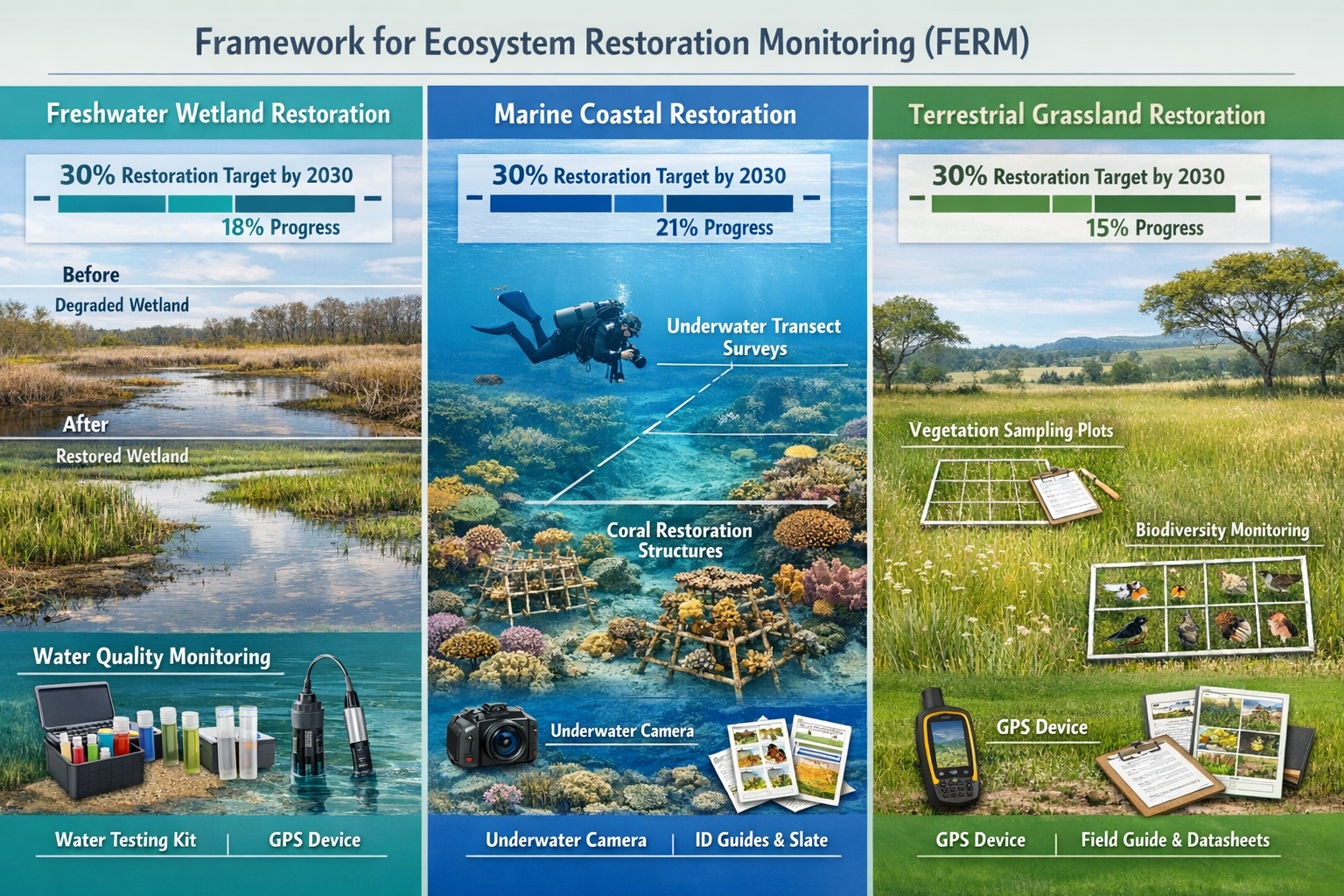
- Framework for Ecosystem Restoration Monitoring (FERM) establishes global data collection protocols targeting 30% restoration of degraded ecosystems by 2030 [1]
- Headline indicators now provide measurable benchmarks for biodiversity-inclusive spatial planning, pesticide impacts, and benefits from sustainable wild species use [3]
- Integration opportunities exist between international KMGBF targets and local BNG frameworks, creating streamlined compliance pathways for developers and ecologists
Understanding the Post-COP16 Biodiversity Survey Mandates Framework
The Mechanism for Planning, Monitoring, Reporting, and Review (PMRR)
COP16.2 fundamentally strengthened accountability mechanisms by refining the PMRR framework, which ensures all Convention on Biological Diversity (CBD) parties track biodiversity progress using harmonized indicators [1]. This represents a significant evolution from previous voluntary reporting systems to a structured, comparable global monitoring architecture.
The PMRR mechanism operates on three core principles:
- Standardization: All countries must use the same set of headline indicators to measure progress
- Transparency: National biodiversity strategies and action plans (NBSAPs) undergo structured global stocktaking
- Accountability: Results feed into peer review processes and inform future target revisions
For ecologists conducting biodiversity impact assessments, this means survey protocols must now explicitly map to KMGBF targets and generate data compatible with national reporting requirements.
Headline Indicators: The New Measurement Standard
COP16 adopted a comprehensive set of indicators to measure both global and national progress toward the 23 KMGBF targets [3]. Three headline indicators particularly impact field survey protocols:
| Indicator | Measurement Focus | Survey Protocol Impact |
|---|---|---|
| 1.1 | Percentage of land and sea covered by biodiversity-inclusive spatial plans | Requires documentation of how survey areas integrate into regional conservation planning |
| 7.2 | Pesticide environmental concentration | Necessitates water and soil sampling protocols for chemical residue analysis |
| 9.1 | Benefits from sustainable use of wild species | Demands socioeconomic data collection alongside ecological surveys |
The CBD Secretariat has requested further metadata development for indicators at lower development levels, ensuring cross-country comparability [4]. Ecologists should anticipate evolving technical specifications as these metadata frameworks mature throughout 2026.
National Reporting Deadlines and Requirements
All CBD parties, including EU Member States, submitted their seventh national reports by February 2026 [5]. These reports feed directly into the global review at COP17 in October 2026, where countries' progress toward KMGBF targets will undergo comprehensive assessment.
The next critical deadline arrives on June 30, 2029, when parties must submit their eighth national reports with revised templates better aligned to the Global Biodiversity Framework [4]. For practicing ecologists, this three-year window represents the period during which survey methodologies must fully transition to PMRR-compatible protocols.
Understanding what is included in a biodiversity net gain assessment becomes even more critical as these assessments must now satisfy both local regulatory requirements and international reporting obligations.
Framework for Ecosystem Restoration Monitoring (FERM): New Global Standards
The 30×30 Restoration Target
The newly finalized Framework for Ecosystem Restoration Monitoring (FERM) establishes protocols for collecting global data on restoration efforts, with the ambitious objective of restoring at least 30% of degraded freshwater, marine, and terrestrial ecosystems by 2030 [1]. This target operates alongside the parallel 30×30 conservation target (protecting 30% of land and sea by 2030).
FERM introduces standardized restoration monitoring protocols across three ecosystem categories:
Terrestrial Ecosystems 🌳
- Vegetation structure and composition assessments
- Soil health and carbon sequestration measurements
- Native species population recovery tracking
- Invasive species management effectiveness
Freshwater Ecosystems 💧
- Water quality parameter monitoring (pH, dissolved oxygen, nutrient levels)
- Aquatic biodiversity surveys using eDNA techniques
- Hydrological connectivity assessments
- Riparian zone vegetation recovery
Marine and Coastal Ecosystems 🌊
- Coral reef health indicators
- Seagrass bed extent and density
- Mangrove restoration success metrics
- Fish population abundance and diversity
Integrating FERM into Local Survey Protocols
For biodiversity surveyors working on development projects, FERM integration offers significant advantages. Projects that demonstrate restoration contributions can potentially offset impacts more effectively when using internationally recognized monitoring frameworks.
When achieving biodiversity net gain without risk, incorporating FERM-aligned restoration monitoring provides:
- Enhanced credibility through internationally standardized methodologies
- Future-proofing against evolving regulatory requirements
- Dual compliance satisfying both local BNG mandates and national KMGBF reporting
- Improved marketability for biodiversity units meeting global standards
Ecologically and Biologically Significant Marine Areas (EBSAs)
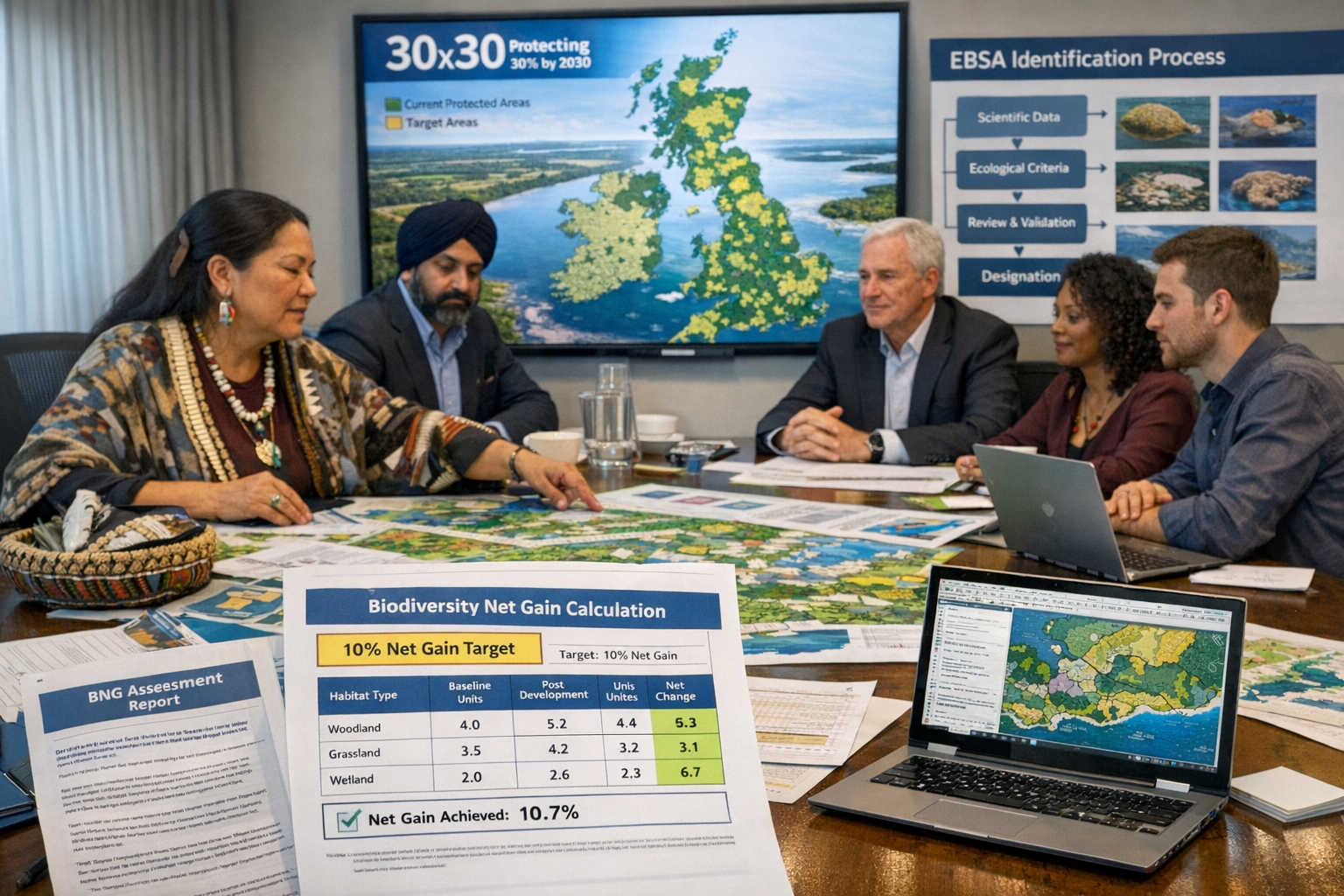
COP16 agreed on new mechanisms to identify and update EBSAs, ensuring marine biodiversity information supports planning with advanced science [3]. The EBSA process provides a structured approach to cataloguing marine biodiversity that directly supports the 30×30 protected areas target.
For coastal development projects, EBSA designations increasingly influence planning decisions. Surveyors should:
- Check whether project sites fall within or adjacent to identified EBSAs
- Incorporate EBSA criteria (uniqueness, special importance for life history, vulnerability, biological productivity) into marine surveys
- Document how development plans avoid or minimize impacts to EBSA values
- Consider how restoration efforts could enhance EBSA characteristics
Implementing Post-COP16 Biodiversity Survey Mandates in Practice
Aligning KMGBF Targets with BNG Frameworks
The UK's Biodiversity Net Gain requirements, now mandatory for most developments in 2026, provide an excellent case study for integrating international KMGBF targets with local regulatory frameworks. The biodiversity net gain framework already emphasizes measurable outcomes, making KMGBF alignment relatively straightforward.
Key Integration Points:
Target 1 (Spatial Planning) aligns with BNG's requirement for biodiversity-inclusive development planning. When creating biodiversity plans for development projects, explicitly reference how the plan contributes to national spatial planning targets under indicator 1.1.
Target 7 (Pollution Reduction) connects directly to BNG considerations around water quality and pesticide use. Projects near agricultural areas should incorporate indicator 7.2 monitoring protocols for pesticide environmental concentrations.
Target 9 (Sustainable Use) relates to how developments maintain or enhance ecosystem services. Document benefits from sustainable wild species use, particularly for projects involving green infrastructure or urban biodiversity features.
Updated Field Survey Protocols for 2026
Modern biodiversity surveys must now serve dual purposes: satisfying immediate regulatory requirements while generating data compatible with national KMGBF reporting. This requires protocol updates across several dimensions:
1. Data Collection Standards 📊
- Use taxonomic classifications compatible with Global Biodiversity Information Facility (GBIF) standards
- Record GPS coordinates with sufficient precision for spatial planning analysis
- Document habitat condition using metrics aligned with FERM restoration indicators
- Collect photographic evidence with standardized metadata
2. Temporal Considerations ⏰
- Plan survey timing to capture seasonal variation required for robust indicator calculations
- Establish baseline monitoring that can support long-term PMRR tracking
- Consider how survey data contributes to both immediate project needs and future national reports
3. Technology Integration 💻
- Adopt digital data collection tools that facilitate PMRR-compatible data formatting
- Utilize eDNA sampling for species detection where appropriate
- Implement remote sensing and GIS analysis for landscape-scale assessments
- Ensure data storage systems support long-term accessibility for national reporting
4. Stakeholder Engagement 🤝
Following COP16's establishment of a dedicated Subsidiary Body on Article 8(j) for Indigenous Peoples and local communities [4], survey protocols should incorporate:
- Consultation with Indigenous Peoples and local communities holding traditional ecological knowledge
- Documentation of culturally significant species and ecosystems
- Recognition of community-based monitoring contributions
- Respect for traditional governance systems in biodiversity management
Non-State Actor Reporting Requirements
COP16 adopted core reporting elements for non-state actors, including businesses, civil society organizations, and Indigenous communities [4]. This creates new obligations for developers and their ecological consultants.
Developers must now report:
- Contributions to national biodiversity strategies through BNG and other conservation measures
- Alignment with KMGBF targets, particularly Targets 14 and 15 regarding mainstreaming biodiversity into business decisions
- Financial contributions to biodiversity conservation and restoration
- Impact reduction measures and their effectiveness
For surveyors, this means project documentation should explicitly track and quantify these elements. When benefiting nature and developers through biodiversity surveys, clearly articulate how survey findings inform non-state actor reporting obligations.
Voluntary Peer Review Process
Following the global review at COP17, countries will conduct voluntary peer reviews and may incorporate review outcomes into future NBSAP revisions [2]. This creates a feedback loop where national-level learnings influence local implementation.
Ecologists should:
- Monitor peer review outcomes from their countries' COP17 assessments
- Anticipate potential protocol adjustments based on international best practices identified through peer review
- Contribute to national learning by documenting innovative approaches and lessons learned
- Participate in professional networks sharing peer review insights across jurisdictions
Financial Mechanisms Supporting Updated Protocols
The $200 Billion Biodiversity Finance Target
COP16 agreed to mobilize $200 billion per year for biodiversity by 2030, including $20 billion annually from public international finance [7]. This unprecedented financial commitment creates opportunities for ecologists and developers to access funding for enhanced monitoring and restoration.
Potential funding sources include:
- National biodiversity funds supporting enhanced survey capacity
- International development assistance for monitoring infrastructure in developing countries
- Private sector biodiversity credits through biodiversity unit markets
- Blended finance mechanisms combining public and private investment
Biodiversity Credits and Unit Trading
The intersection of KMGBF targets and local BNG frameworks creates opportunities for internationally recognized biodiversity credits. Projects generating units that demonstrably contribute to KMGBF targets may command premium pricing in emerging biodiversity markets.
For landowners considering selling biodiversity units, FERM-aligned restoration monitoring can enhance unit value by providing:
- Third-party verification through internationally standardized protocols
- Long-term credibility as PMRR mechanisms mature
- Multiple benefit streams serving both local BNG markets and international biodiversity finance
- Risk mitigation through alignment with evolving regulatory expectations
Understanding the cost of biodiversity units and statutory credits becomes more complex but potentially more lucrative as international standards influence local markets.
Practical Implementation Checklist for Ecologists
To successfully navigate the Post-COP16 Biodiversity Survey Mandates: Updating Protocols for Global Ecologists in 2026, consider this implementation roadmap:
Immediate Actions (Q2-Q3 2026) ✅
- Review national seventh reports to understand how your country is interpreting KMGBF targets
- Update survey templates to capture data aligned with headline indicators 1.1, 7.2, and 9.1
- Invest in training on FERM protocols for relevant ecosystem types
- Establish data management systems compatible with PMRR reporting requirements
- Engage with Indigenous and local communities to incorporate traditional ecological knowledge
Medium-Term Preparations (Q4 2026 – 2027) 📅
- Monitor COP17 outcomes (October 2026) for refined guidance and peer review insights
- Participate in professional development on emerging EBSA identification protocols
- Develop case studies demonstrating KMGBF-BNG integration for client education
- Build partnerships with international monitoring networks for data sharing
- Assess technology needs for enhanced remote sensing and eDNA capabilities
Long-Term Strategic Planning (2028-2029) 🎯
- Prepare for eighth national report cycle (deadline June 2029) by ensuring survey data feeds national reporting
- Contribute to metadata development for evolving headline indicators
- Establish quality assurance protocols for long-term monitoring consistency
- Develop thought leadership on best practices for integrated KMGBF-local framework compliance
- Explore biodiversity finance opportunities aligned with the $200 billion mobilization target
Sector-Specific Guidance
For Developers and Planners
Developers navigating biodiversity net gain requirements should recognize that KMGBF alignment offers strategic advantages:
- Regulatory anticipation: Projects designed to KMGBF standards are better positioned for future regulatory changes
- Market differentiation: Demonstrating international biodiversity leadership enhances corporate reputation
- Risk management: Alignment reduces the likelihood of projects becoming stranded assets as standards evolve
- Access to finance: KMGBF-aligned projects may access emerging biodiversity finance mechanisms
When considering off-site versus on-site BNG delivery, evaluate how each option contributes to KMGBF targets, particularly the 30% restoration objective under FERM.
For Architects and Design Professionals
Architects solving biodiversity net gain challenges can incorporate KMGBF principles into design from project inception:
- Integrate biodiversity-inclusive spatial planning (Target 1) into site layouts
- Design green infrastructure that supports indicator 9.1 (sustainable use benefits)
- Specify materials and construction methods minimizing pollution (Target 7)
- Create habitat features aligned with FERM restoration protocols
For Small Development Projects
Even small development projects can benefit from KMGBF awareness. While full PMRR compliance may be disproportionate for minor developments, understanding the broader biodiversity context helps:
- Identify opportunities to contribute to landscape-scale conservation
- Access simplified monitoring protocols developed for national reporting
- Participate in aggregated biodiversity credit schemes aligned with international standards
- Demonstrate corporate social responsibility through biodiversity stewardship
Challenges and Solutions
Challenge 1: Data Complexity and Technical Capacity
Problem: Many ecologists lack training in PMRR-compatible data collection and FERM protocols.
Solution:
- Invest in professional development through CBD-endorsed training programs
- Collaborate with academic institutions developing KMGBF monitoring curricula
- Join professional networks sharing implementation experiences
- Utilize technology platforms that automate PMRR data formatting
Challenge 2: Resource Constraints
Problem: Enhanced monitoring protocols require additional time and financial investment.
Solution:
- Access the $200 billion biodiversity finance mobilization through national biodiversity funds
- Demonstrate value-added services to clients through dual compliance (local + international)
- Utilize cost-effective technologies like eDNA and remote sensing
- Develop partnerships for shared monitoring infrastructure
Challenge 3: Evolving Standards
Problem: Metadata for headline indicators continues developing, creating uncertainty.
Solution:
- Adopt flexible data collection protocols that can accommodate specification refinements
- Monitor CBD Secretariat guidance updates regularly
- Participate in pilot programs testing emerging methodologies
- Build data systems with adaptable fields and categories
Challenge 4: Stakeholder Coordination
Problem: Integrating Indigenous and local community knowledge requires new engagement approaches.
Solution:
- Develop culturally appropriate consultation protocols
- Allocate sufficient time for meaningful engagement
- Recognize traditional ecological knowledge as equivalent to scientific data
- Support community-based monitoring initiatives
Looking Ahead: COP17 and Beyond
The October 2026 COP17 meeting in Armenia represents a critical milestone where the first comprehensive global review of KMGBF implementation will occur [1]. This stocktaking process will:
- Assess aggregate progress toward the 23 KMGBF targets
- Identify implementation gaps and best practices
- Inform potential target or timeline adjustments
- Establish precedents for future review cycles
For ecologists, COP17 outcomes will likely:
- Clarify ambiguities in current headline indicator specifications
- Highlight innovative monitoring approaches worthy of replication
- Identify capacity gaps requiring targeted support
- Influence national policy adjustments affecting local regulatory frameworks
Staying informed about COP17 developments ensures survey protocols remain aligned with evolving international expectations. The lessons learned from the first global review cycle will shape biodiversity monitoring for the remainder of the decade.
Conclusion
The Post-COP16 Biodiversity Survey Mandates: Updating Protocols for Global Ecologists in 2026 represent a transformative moment in biodiversity conservation. The harmonized monitoring frameworks, standardized indicators, and enhanced accountability mechanisms established through the PMRR process create unprecedented opportunities for meaningful biodiversity protection—but only if ecologists successfully adapt their practices to these new requirements.
Key actions for immediate implementation:
- Audit current survey protocols against PMRR requirements and headline indicators
- Establish data management systems compatible with national reporting obligations
- Integrate FERM protocols for ecosystem restoration monitoring
- Engage stakeholders, particularly Indigenous Peoples and local communities
- Monitor COP17 outcomes for refined guidance and international best practices
- Explore biodiversity finance opportunities aligned with the $200 billion mobilization target
- Document contributions to KMGBF targets for non-state actor reporting
For developers and planners, understanding these mandates is no longer optional—it's essential for regulatory compliance, risk management, and accessing emerging biodiversity markets. The integration of international KMGBF targets with local frameworks like the UK's Biodiversity Net Gain creates streamlined pathways for demonstrating environmental leadership while meeting legal obligations.
The journey from COP16 decisions to on-the-ground implementation requires commitment, capacity building, and collaboration. However, the potential rewards—halting and reversing biodiversity loss, restoring degraded ecosystems, and securing nature's contributions to human wellbeing—make this effort among the most important of our generation.
As we move toward COP17 and the 2029 national reporting deadline, the ecologists who embrace these updated protocols will lead the profession, shaping how humanity monitors and protects biodiversity for decades to come. The time to act is now—the future of Earth's living systems depends on the choices we make in 2026 and beyond. 🌱
For expert guidance on implementing these protocols in your biodiversity surveys and development projects, contact our team of experienced biodiversity professionals.
References
[1] Cop16 Takeaways – https://for-the-ocean.org/cop16-takeaways/
[2] Cop16 Key Outcomes Agreed At The Un Biodiversity Conference In Cali Colombia – https://www.carbonbrief.org/cop16-key-outcomes-agreed-at-the-un-biodiversity-conference-in-cali-colombia/
[3] Cop16 Resumed Session Closing 2025 – https://www.cbd.int/article/cop16-resumed-session-closing-2025
[4] Un Biodiversity Conference Cbd Cop16 Resumed Summary – https://enb.iisd.org/un-biodiversity-conference-cbd-cop16-resumed-summary
[5] Progress Made Biodiversity Swifter Action Needed 2026 02 12 En – https://environment.ec.europa.eu/news/progress-made-biodiversity-swifter-action-needed-2026-02-12_en
[7] The Year In Biodiversity And What Cop30 Means Going Forward – https://gentian.io/blog/the-year-in-biodiversity-and-what-cop30-means-going-forward