

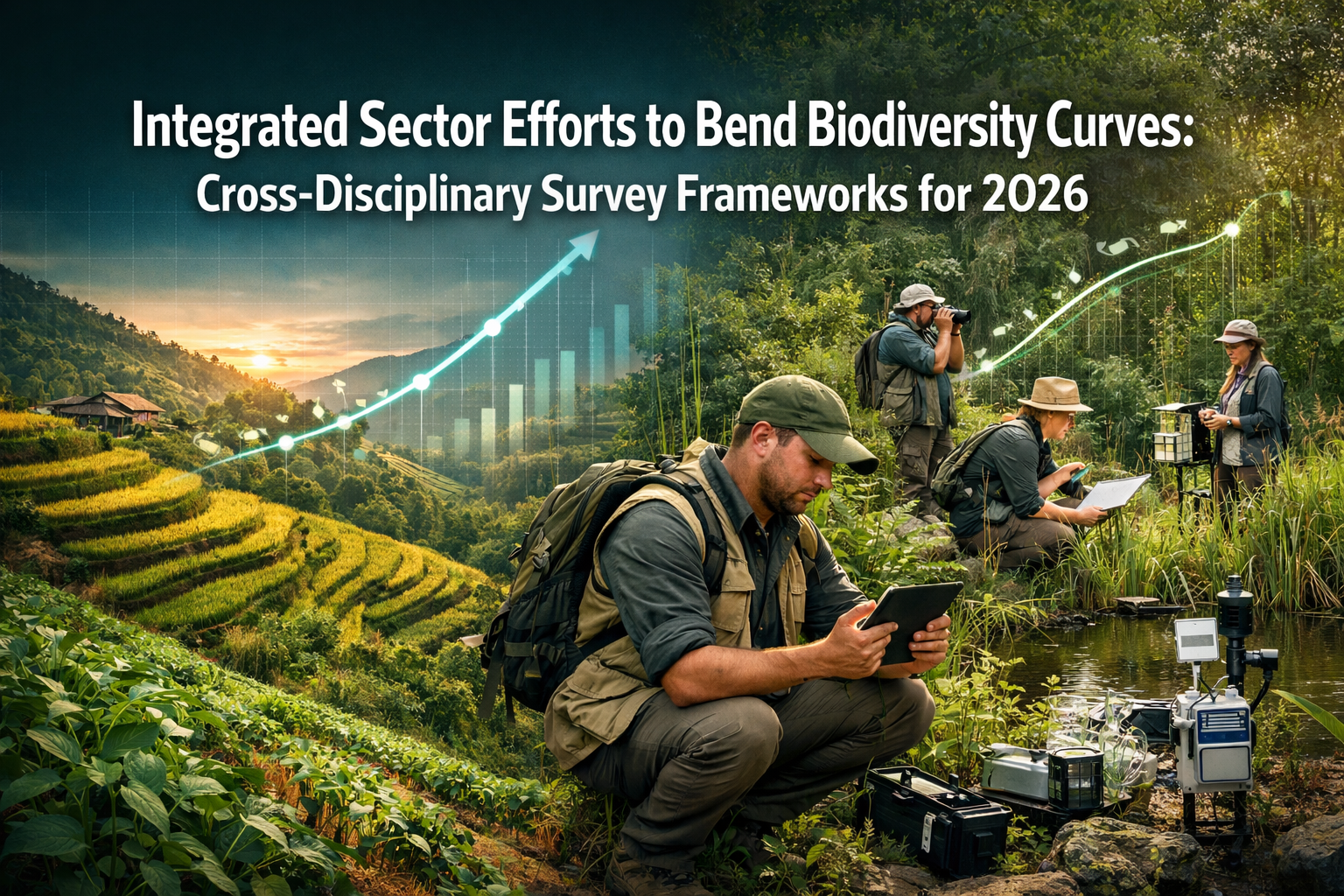
The world stands at a critical juncture. Biodiversity loss continues at an alarming rate, threatening ecosystems, economies, and human wellbeing. Yet emerging evidence shows that reversing this decline—bending the biodiversity curve upward—is achievable through coordinated action across multiple sectors. In 2026, Integrated Sector Efforts to Bend Biodiversity Curves: Cross-Disciplinary Survey Frameworks for 2026 represent the cutting edge of conservation science, combining food production, conservation management, and waste reduction into unified measurement systems that deliver actionable results.
Global scenarios demonstrate that no single sector can reverse biodiversity loss alone. Agriculture, conservation, urban development, and waste management must work together using standardized survey protocols that capture the complex interactions between land use pressures and ecological outcomes. These frameworks provide the foundation for evidence-based decision-making and biodiversity net gain validation across development projects.
Key Takeaways
- 🌍 Cross-sector integration is essential—food production, conservation, and waste management must coordinate efforts using unified survey frameworks to successfully bend biodiversity curves upward
- 📊 Standardized survey protocols enable ecologists to assess multi-pressure sites accurately, providing comparable data across different land uses and development contexts
- ✅ Actionable validation frameworks translate field survey data into measurable biodiversity net gain outcomes, supporting regulatory compliance and conservation targets
- 🎯 The Kunming-Montreal Global Biodiversity Framework guides international efforts, with COP17 in October 2026 serving as a critical checkpoint for progress assessment
- 🔬 Emerging technologies including AI-powered monitoring tools are transforming how biodiversity surveys capture and analyze ecosystem health across integrated landscapes
Understanding the Need for Integrated Sector Efforts to Bend Biodiversity Curves
The Current State of Biodiversity Decline
The planet faces unprecedented biodiversity loss. Species extinction rates exceed natural background levels by 100 to 1,000 times, while habitat degradation accelerates across terrestrial, freshwater, and marine ecosystems. This decline threatens ecosystem services worth trillions of dollars annually, including pollination, water purification, climate regulation, and food security.
Traditional conservation approaches—protecting isolated nature reserves while allowing unrestricted development elsewhere—have proven insufficient. The biodiversity curve continues its downward trajectory despite decades of conservation investment. This reality demands a fundamental shift toward integrated approaches that address biodiversity across all land uses and economic sectors.
Why Cross-Disciplinary Frameworks Matter
Integrated Sector Efforts to Bend Biodiversity Curves: Cross-Disciplinary Survey Frameworks for 2026 emerge from recognition that biodiversity outcomes depend on decisions made across multiple sectors:
- Agriculture and food production occupy approximately 40% of ice-free land globally
- Urban development continues expanding, fragmenting natural habitats
- Forestry operations impact vast woodland ecosystems
- Waste management affects pollution levels and resource cycling
- Energy infrastructure creates barriers and disturbances to wildlife movement
Each sector generates unique pressures on biodiversity, but these pressures interact in complex ways. A survey framework limited to single-sector assessment cannot capture these interactions or identify optimal intervention points for conservation gains.
Cross-disciplinary frameworks integrate data collection across sectors, enabling comprehensive assessment of cumulative impacts and coordinated responses. This integration is central to achieving biodiversity net gain in development contexts.
The 2026 Global Context: International Frameworks and Emerging Issues
Kunming-Montreal Global Biodiversity Framework
The Kunming-Montreal Global Biodiversity Framework (KMGBF), adopted at COP15, provides the primary international structure guiding biodiversity conservation through 2030. This framework establishes 23 targets across four goals, requiring coordinated action from governments, businesses, and civil society [2].
In 2026, the framework enters a critical implementation phase. COP17, scheduled for October 2026 in Yerevan, Armenia, will assess progress toward these targets and accelerate implementation strategies [2]. Early indicators show mixed results—the EU reports being on track to achieve 16 out of 45 KMGBF targets, with two already achieved, but significant acceleration is needed across multiple sectors [4].
The framework explicitly calls for integrated approaches, recognizing that biodiversity conservation cannot succeed through environmental policy alone. It requires mainstreaming biodiversity considerations into:
- Agricultural policy and food systems
- Urban planning and infrastructure development
- Financial sector decision-making
- Supply chain management
- Consumer behavior and demand patterns
2026 Global Horizon Scan: Emerging Biodiversity Issues
The 2026 Global Horizon Scan identifies 15 emerging biodiversity issues requiring cross-disciplinary attention over the coming decade [1]. These issues demonstrate the interconnected nature of biodiversity challenges:
| Issue Category | Key Concerns | Survey Implications |
|---|---|---|
| AI and Technology | Machine learning tools for monitoring, automated species identification | Integration of AI-powered survey methods |
| Food Demand Shifts | Changing dietary patterns, alternative proteins, agricultural intensification | Agricultural biodiversity assessments |
| Ocean Dynamics | Marine ecosystem changes, coastal development pressures | Coastal and marine survey protocols |
| Forest Finance | Carbon credit markets, sustainable forestry certification | Woodland biodiversity metrics |
| Climate Interactions | Compound effects of climate change and habitat loss | Multi-stressor survey designs |
These emerging issues underscore the need for survey frameworks that can adapt to evolving pressures while maintaining data comparability across time and space [1].
Cross-Disciplinary Survey Frameworks: Core Components and Methodologies
Unified Survey Protocols for Multi-Pressure Sites
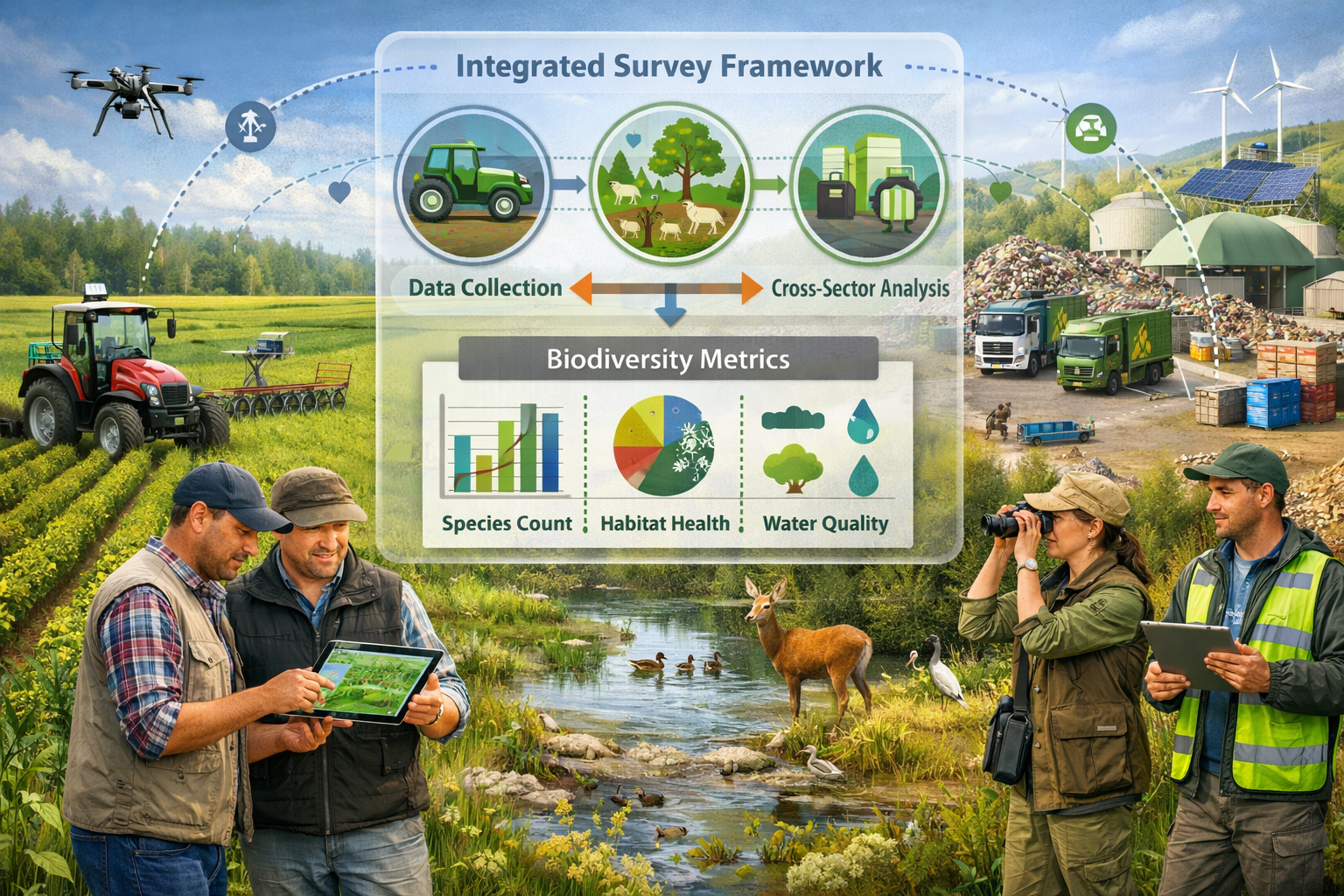
Integrated Sector Efforts to Bend Biodiversity Curves: Cross-Disciplinary Survey Frameworks for 2026 rely on standardized survey protocols that function across different land uses and pressure types. These protocols share several core features:
1. Standardized Habitat Classification Systems
Survey frameworks employ consistent habitat classification that works across agricultural, urban, and natural landscapes. This enables direct comparison of biodiversity value across different contexts and supports biodiversity impact assessments for development projects.
2. Multi-Taxa Assessment Approaches
Rather than focusing on single species or taxa, integrated frameworks assess multiple biological groups:
- Vascular plants as indicators of habitat condition
- Breeding birds reflecting landscape-scale connectivity
- Invertebrates indicating soil health and ecosystem function
- Mammals showing habitat quality and human disturbance levels
- Amphibians and reptiles sensitive to environmental changes
3. Pressure-Response Indicators
Effective survey frameworks measure both biodiversity state (what species and habitats exist) and pressure indicators (what threatens them). This dual approach enables identification of causal relationships and intervention opportunities.
4. Temporal Monitoring Protocols
Bending biodiversity curves requires tracking change over time. Survey frameworks establish baseline conditions and repeated monitoring schedules that capture seasonal variation and long-term trends. This temporal dimension is essential for validating biodiversity net gain outcomes.
Sector-Specific Adaptations Within Unified Frameworks
While maintaining standardized core methods, survey frameworks incorporate sector-specific adaptations:
Agricultural Landscapes
Agricultural biodiversity surveys assess:
- Field margin habitat quality and connectivity
- In-field biodiversity (farmland birds, pollinators, soil organisms)
- Hedgerow and woodland fragment condition
- Water quality in agricultural watercourses
- Pesticide and fertilizer impact indicators
These assessments support sustainable farming practices while maintaining food production capacity.
Urban Development Sites
Urban biodiversity surveys evaluate:
- Pre-development baseline habitat conditions
- Green infrastructure opportunities (green roofs, urban trees, rain gardens)
- Wildlife corridor connectivity through developed areas
- Invasive species presence and management needs
- Post-development monitoring for net gain verification
These surveys inform biodiversity net gain strategies for development projects.
Conservation Management Areas
Protected area surveys focus on:
- Target species population trends
- Habitat condition and restoration success
- Visitor impact assessment
- Climate adaptation indicators
- Ecosystem service provision
Data Integration and Analysis Platforms
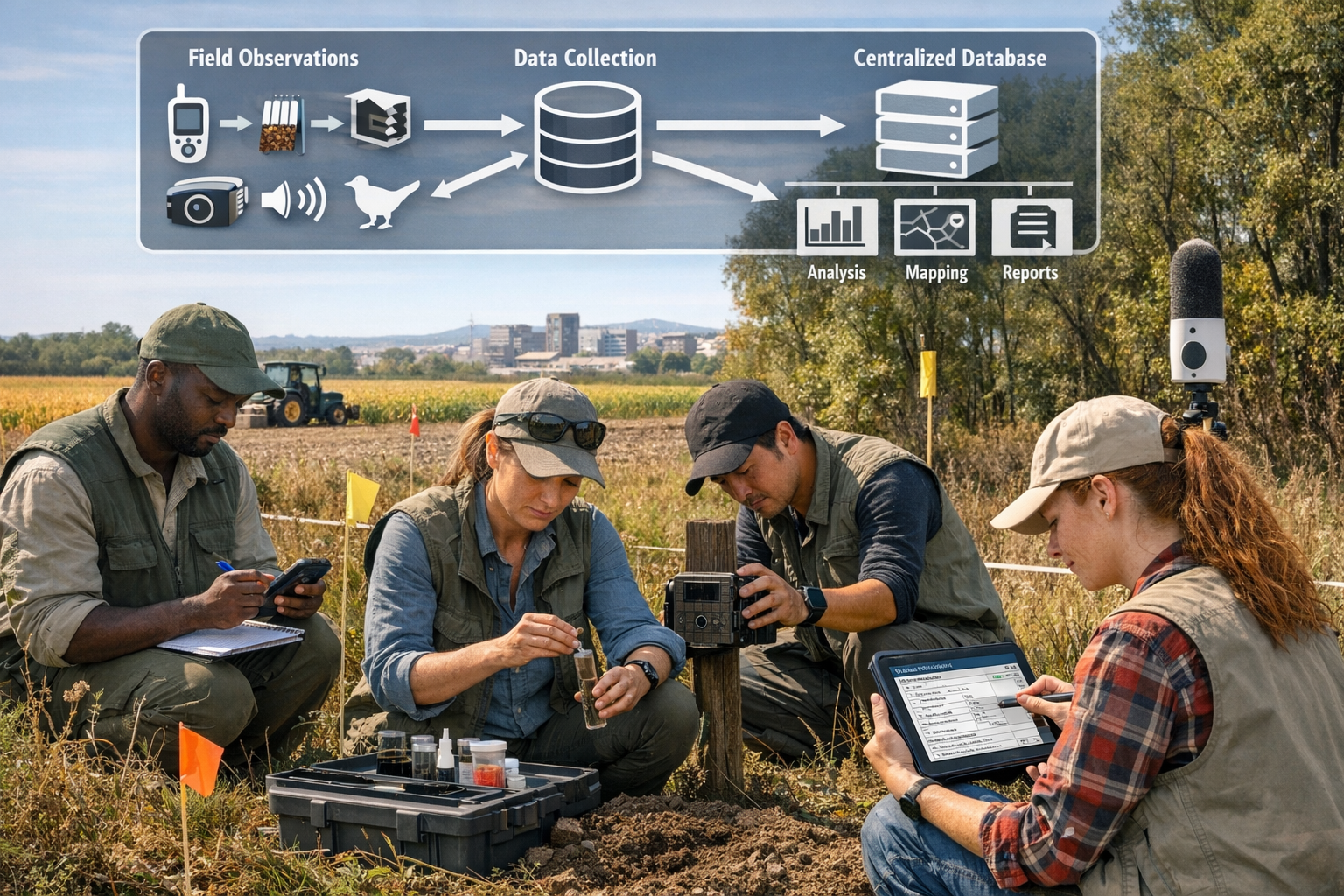
Modern survey frameworks depend on digital platforms that integrate data from multiple sources and sectors. These platforms enable:
- Real-time data collection using mobile applications and GPS-enabled devices
- Automated quality control identifying data errors and inconsistencies
- Cross-sector data sharing allowing different organizations to contribute to unified datasets
- Spatial analysis revealing landscape-scale patterns and connectivity
- Predictive modeling forecasting biodiversity responses to management interventions
The integration of artificial intelligence is transforming survey efficiency and accuracy. AI-powered tools can identify species from photographs, analyze acoustic recordings for bird and bat calls, and process satellite imagery to classify habitat types across large areas [1].
Implementing Integrated Sector Efforts: Practical Applications
Food System Integration
Food production systems represent the largest driver of biodiversity loss globally, yet they also offer immense potential for biodiversity recovery. Integrated Sector Efforts to Bend Biodiversity Curves: Cross-Disciplinary Survey Frameworks for 2026 enable farmers and food companies to measure and improve biodiversity outcomes while maintaining productivity.
Sustainable Intensification Approaches
Survey frameworks help identify opportunities for sustainable intensification—increasing food production per unit area while reducing biodiversity impacts. This includes:
- Precision agriculture techniques that minimize pesticide use
- Integrated pest management based on biodiversity monitoring
- Agroforestry systems combining food production with woodland habitat
- Rotational grazing systems that enhance grassland biodiversity
Supply Chain Biodiversity Tracking
Major food companies increasingly require biodiversity data from their supply chains. Standardized survey frameworks enable consistent reporting across different suppliers and geographic regions, supporting corporate biodiversity commitments.
Conservation and Development Balance
The tension between conservation and development has historically created adversarial relationships. Integrated survey frameworks facilitate constructive collaboration by providing objective data on biodiversity impacts and opportunities.
Biodiversity Net Gain Implementation
Biodiversity net gain requirements mandate that development projects deliver measurable improvements in biodiversity. Survey frameworks provide the measurement foundation for:
- Baseline assessment documenting pre-development conditions
- Impact prediction modeling biodiversity losses from development
- Enhancement design identifying optimal on-site and off-site interventions
- Outcome verification confirming that net gain targets are achieved
Developers benefit from clear, standardized requirements that reduce uncertainty and enable efficient project planning. Conservation interests benefit from guaranteed biodiversity improvements backed by rigorous monitoring.
Strategic Site Selection
Cross-disciplinary survey data helps identify development sites with lower biodiversity value and higher potential for net gain delivery. This strategic approach concentrates development where biodiversity costs are minimized while directing conservation investment toward high-value sites.
Waste Sector Contributions
The waste management sector influences biodiversity through multiple pathways:
- Pollution reduction decreasing toxic impacts on ecosystems
- Circular economy approaches reducing resource extraction pressures
- Landfill site restoration creating new habitat opportunities
- Composting systems supporting soil biodiversity
Survey frameworks that include waste sector activities capture these contributions to overall biodiversity outcomes, incentivizing circular economy innovations.
Actionable Frameworks for Net Gain Validation
Science-Based Targets for Nature
The Science-Based Targets for Nature (SBTN) framework provides businesses with structured approaches to reduce biodiversity pressures through measurable commitments [5]. This framework translates global biodiversity targets into company-level actions across sectors.
SBTN establishes a five-step process:
- Assess current biodiversity impacts and dependencies
- Interpret results to prioritize high-impact activities
- Measure baseline conditions using standardized metrics
- Set targets aligned with global biodiversity goals
- Act implementing interventions and tracking progress
Integrated Sector Efforts to Bend Biodiversity Curves: Cross-Disciplinary Survey Frameworks for 2026 provide the measurement infrastructure supporting SBTN implementation. Survey data enables companies to establish credible baselines, set ambitious yet achievable targets, and demonstrate genuine progress [5].
Metric Standardization and Comparability
Effective net gain validation requires metrics that are:
- Ecologically meaningful reflecting genuine biodiversity value
- Measurable through practical field survey methods
- Comparable across different sites and contexts
- Sensitive to management interventions
- Cost-effective to collect and analyze
The biodiversity metric system used in England provides one model, calculating habitat units based on habitat type, condition, and strategic significance. Similar metric systems are emerging globally, with increasing harmonization enabling international comparability.
Survey frameworks must generate data compatible with these metric systems while capturing additional ecological detail that informs adaptive management.
Long-Term Monitoring and Adaptive Management
Bending biodiversity curves is not a one-time achievement but an ongoing process requiring sustained effort. Survey frameworks establish long-term monitoring programs that:
- Track trajectory confirming biodiversity trends move in desired directions
- Detect problems early identifying threats before they cause significant damage
- Evaluate interventions determining which management actions deliver best results
- Support adaptive management enabling evidence-based adjustments to conservation strategies
This long-term perspective is essential for achieving biodiversity net gain without risk, ensuring that promised biodiversity improvements materialize over time.
Challenges and Solutions in Cross-Disciplinary Implementation
Data Compatibility and Integration Barriers
Different sectors have historically used incompatible data standards, classification systems, and survey methodologies. Integrating these diverse data streams presents technical challenges:
Solution Approaches:
- Common data standards establishing shared vocabularies and formats
- Interoperability platforms enabling data exchange between different systems
- Training programs building cross-sector capacity in standardized methods
- Collaborative governance creating multi-stakeholder bodies to oversee framework development
Resource Constraints and Survey Costs
Comprehensive biodiversity surveys require significant investment in skilled ecologists, equipment, and time. Resource constraints can limit survey coverage and frequency.
Cost-Reduction Strategies:
- Technology adoption using AI and remote sensing to reduce field survey requirements
- Citizen science integration engaging volunteers in data collection
- Risk-based approaches concentrating detailed surveys on high-priority sites
- Shared monitoring infrastructure pooling resources across multiple projects
Organizations can explore biodiversity credit systems that distribute survey costs across buyers and sellers of biodiversity units.
Institutional and Policy Alignment
Effective implementation requires policy alignment across government departments, regulatory agencies, and funding bodies. Fragmented governance can undermine integrated approaches.
Alignment Mechanisms:
- Cross-departmental coordination establishing formal collaboration structures
- Integrated policy frameworks aligning agricultural, development, and environmental policies
- Funding mechanisms directing resources toward integrated approaches
- Regulatory harmonization reducing conflicting requirements across sectors
The EU's progress toward KMGBF targets demonstrates both achievements and gaps in policy alignment, with accelerated cross-sector action needed [4].
Future Directions: Emerging Technologies and Innovations
Artificial Intelligence and Automated Monitoring
AI technologies are revolutionizing biodiversity survey capabilities. Machine learning algorithms can now:
- Identify thousands of species from photographs with expert-level accuracy
- Analyze acoustic recordings to detect and classify bird, bat, and insect calls
- Process satellite and drone imagery to map habitat types and condition
- Predict species distributions based on environmental variables
These capabilities dramatically reduce survey costs while increasing spatial and temporal coverage. The 2026 Global Horizon Scan identifies AI tools as a key emerging issue requiring thoughtful integration into conservation practice [1].
Environmental DNA (eDNA) Applications
Environmental DNA sampling—collecting genetic material from soil, water, or air samples—enables detection of species presence without direct observation. This technique is particularly valuable for:
- Rare or cryptic species that evade traditional surveys
- Aquatic ecosystems where visual surveys are challenging
- Rapid biodiversity assessments across large areas
- Early detection of invasive species
eDNA is becoming increasingly cost-effective and is being integrated into standardized survey protocols.
Blockchain for Biodiversity Credit Verification
Blockchain technology offers potential solutions for transparent, tamper-proof tracking of biodiversity credits and net gain outcomes. Distributed ledger systems can:
- Record survey data with verified timestamps and locations
- Track biodiversity unit transactions between buyers and sellers
- Automate compliance verification against regulatory requirements
- Prevent double-counting of biodiversity benefits
Several pilot projects are exploring blockchain applications in biodiversity markets, with broader adoption likely in coming years.
Conclusion: Building a Coordinated Future for Biodiversity
Integrated Sector Efforts to Bend Biodiversity Curves: Cross-Disciplinary Survey Frameworks for 2026 represent a fundamental shift in conservation approach—from isolated protected areas to landscape-scale coordination across all sectors affecting biodiversity. The evidence is clear: reversing biodiversity decline requires food production, urban development, conservation management, and waste reduction working together using standardized measurement systems that capture complex ecological interactions.
The frameworks emerging in 2026 provide the foundation for this integrated approach. They enable ecologists to assess multi-pressure sites accurately, deliver actionable data for biodiversity net gain validation, and track progress toward global targets established under the Kunming-Montreal Global Biodiversity Framework.
Actionable Next Steps
For organizations seeking to implement integrated biodiversity approaches:
🎯 Developers and Planners:
- Engage qualified biodiversity surveyors early in project planning
- Utilize standardized survey protocols compatible with regulatory requirements
- Explore both on-site and off-site biodiversity net gain options
- Establish long-term monitoring programs to verify outcomes
🌾 Agricultural Producers:
- Conduct baseline biodiversity assessments of farm landscapes
- Integrate biodiversity monitoring into farm management systems
- Explore sustainable intensification opportunities identified through survey data
- Consider biodiversity credit markets as additional revenue streams
🏢 Businesses and Financial Institutions:
- Adopt Science-Based Targets for Nature frameworks
- Require standardized biodiversity data from supply chains
- Integrate biodiversity metrics into investment decisions
- Support development of cross-sector survey infrastructure
🔬 Conservation Organizations:
- Collaborate with other sectors using shared survey frameworks
- Invest in technology adoption to improve survey efficiency
- Build capacity for cross-disciplinary data integration
- Advocate for policy alignment supporting integrated approaches
The path to bending biodiversity curves is challenging but achievable. With coordinated effort across sectors, standardized measurement systems, and commitment to evidence-based action, 2026 can mark a turning point—the year when biodiversity trends begin their upward trajectory toward recovery and resilience.
For expert guidance on implementing biodiversity surveys and achieving net gain outcomes, contact professional biodiversity surveyors who can provide tailored solutions for your specific context and requirements.
References
[1] Whats Next For Biodiversity Conservation Insights From The 2026 Horizon Scan – https://www.unep-wcmc.org/en/news/whats-next-for-biodiversity-conservation-insights-from-the-2026-horizon-scan
[2] Action On Nature What Can Financial Institutions Expect In 2026 – https://www.unepfi.org/themes/ecosystems/action-on-nature-what-can-financial-institutions-expect-in-2026/
[4] Progress Made Biodiversity Swifter Action Needed 2026 02 12 En – https://environment.ec.europa.eu/news/progress-made-biodiversity-swifter-action-needed-2026-02-12_en
[5] Business Action For Biodiversity Via Science Based Targets For Nature – https://sciencebasedtargetsnetwork.org/wp-content/uploads/2026/01/Business-action-for-biodiversity-via-science-based-targets-for-nature.pdf