

The geopolitical landscape of environmental conservation shifted dramatically in early 2026 when the United States announced its withdrawal from 66 international organizations, fundamentally altering how biodiversity professionals conduct cross-border ecological assessments. For surveyors working on transatlantic projects, this policy change presents unprecedented challenges in maintaining data comparability and scientific rigor. The US Climate Framework Withdrawal: Adapting Terrestrial Biodiversity Surveys for Policy Shifts in 2026 has become a critical consideration for conservation professionals, developers, and policymakers navigating this new reality. 🌍
Between January 4-7, 2026, the Trump administration issued orders for "immediate steps" to withdraw from 31 UN bodies and 35 non-UN entities, including cornerstone organizations like the Intergovernmental Panel on Climate Change (IPCC), UN Framework Convention on Climate Change (UNFCCC), and the Intergovernmental Science-Policy Platform on Biodiversity and Ecosystem Services (IPBES) [2][3]. This departure disrupts decades of international collaboration on biodiversity monitoring and threatens the standardized methodologies that have enabled meaningful ecological comparisons across continents.
Key Takeaways
- 66 international organizations were targeted for US withdrawal in early 2026, including critical biodiversity and climate bodies like IPBES, IPCC, and IUCN [2]
- UK-based biodiversity surveyors must now adapt protocols for transatlantic projects to maintain data comparability despite diverging policy frameworks
- Fourteen US states plus Guam are actively supporting continued engagement with international biodiversity organizations, creating a patchwork regulatory landscape [8]
- Scientific expertise and funding from US sources remain accessible through alternative channels, though coordination becomes more complex [7]
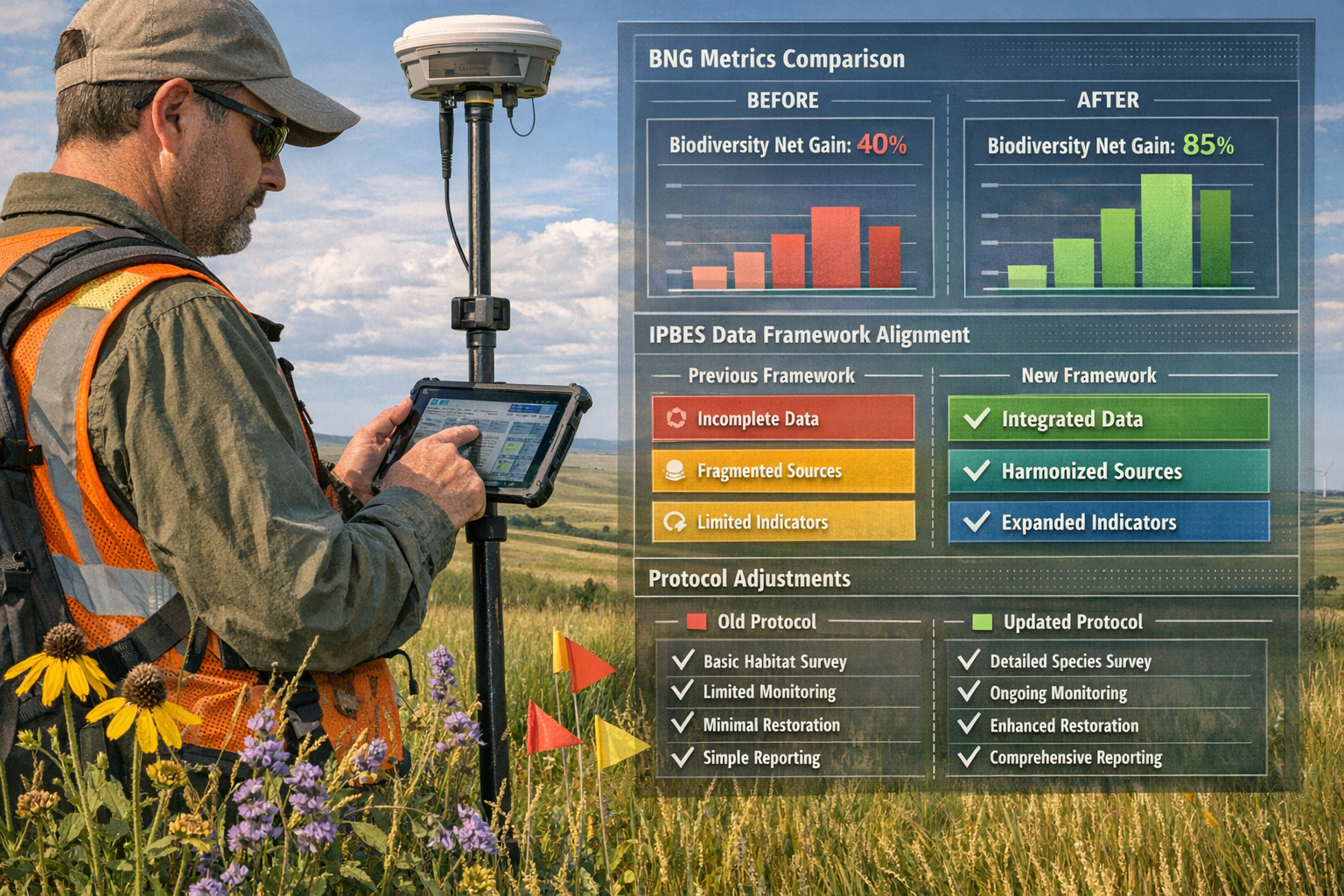
- Biodiversity Net Gain (BNG) methodologies developed in the UK offer a potential framework for maintaining standardized assessment approaches across policy divides
Understanding the Scope of US Climate Framework Withdrawal in 2026
Organizations Affected by the Withdrawal
The scale of the US Climate Framework Withdrawal extends far beyond climate treaties alone. The administration characterized these organizations as promoting "radical climate policies, global governance, and ideological programs that conflict with US sovereignty and economic strength" [2]. The primary organizations affected include:
| Organization | Acronym | Primary Function |
|---|---|---|
| Intergovernmental Panel on Climate Change | IPCC | Climate science assessment |
| UN Framework Convention on Climate Change | UNFCCC | International climate policy coordination |
| Intergovernmental Science-Policy Platform on Biodiversity and Ecosystem Services | IPBES | Biodiversity science assessment |
| International Union for Conservation of Nature | IUCN | Species conservation standards |
| International Renewable Energy Agency | IRENA | Renewable energy policy |
| International Tropical Timber Organization | ITTO | Sustainable forest management |
Immediate Impacts on Biodiversity Science
Dr. David Obura, IPBES chair, stated in February 2026 that the US exit "harms everybody, including themselves," with impacts affecting both the panel's finances and involvement of important US scientists [7]. The withdrawal creates several critical challenges:
- Loss of US scientific expertise from global decision-making tables where climate, energy, and conservation policies are shaped [1]
- Major damage to monitoring efforts for species conservation, especially in the Global South where data and resources are already limited [2]
- Funding disruptions that threaten ongoing research programs and international collaborative projects
- Reduced standardization in biodiversity assessment methodologies across North American and European projects
For professionals working on biodiversity impact assessments, this policy shift necessitates immediate protocol adjustments to ensure survey data remains scientifically valid and internationally comparable.
Adapting Terrestrial Biodiversity Survey Protocols After US Climate Framework Withdrawal
Maintaining International Data Comparability
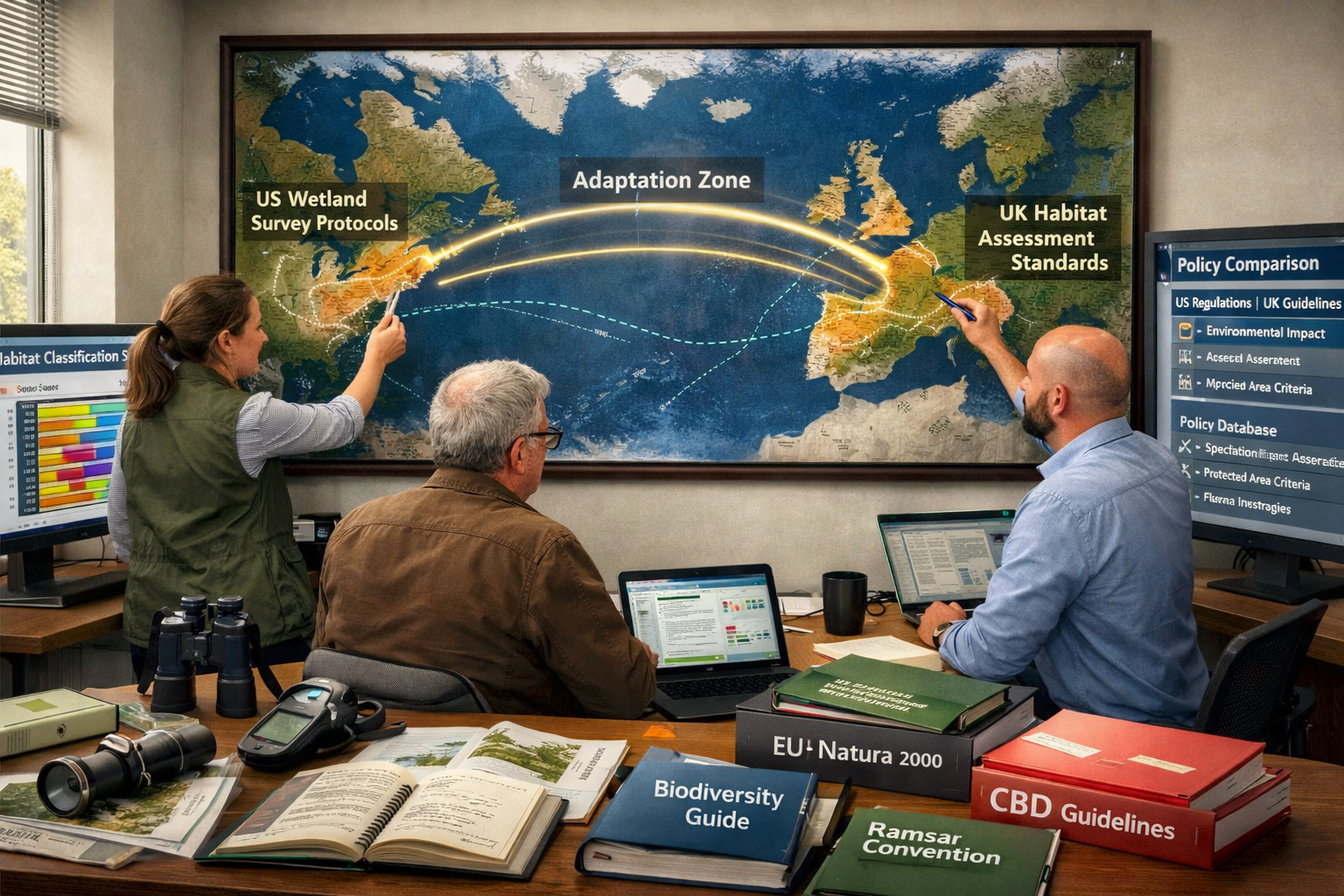
The US Climate Framework Withdrawal: Adapting Terrestrial Biodiversity Surveys for Policy Shifts in 2026 requires surveyors to develop hybrid methodologies that bridge diverging regulatory frameworks. UK-based professionals working on transatlantic projects face particular challenges in maintaining consistency with established international standards while accommodating new US-specific requirements.
Key adaptation strategies include:
- Dual-framework documentation – Recording data using both IPBES-aligned methodologies and emerging US-specific protocols
- Enhanced metadata collection – Documenting survey conditions, classification systems, and reference frameworks in greater detail
- Cross-reference taxonomies – Maintaining parallel species identification systems that align with both international and US databases
- Temporal baseline establishment – Creating clear data snapshots from pre-2026 frameworks to enable longitudinal comparisons
The IPCC chair has confirmed the panel will continue working on scientific reports already agreed by member governments, making decisions by consensus [2]. This continuity provides a stable reference point for surveyors adapting their methodologies.
UK Biodiversity Net Gain as a Model Framework
The UK's Biodiversity Net Gain (BNG) framework offers a robust model for maintaining standardized assessment approaches despite policy divergence. Developed independently of US climate frameworks, BNG provides:
- Quantifiable habitat metrics that translate across jurisdictions
- Standardized calculation methodologies for biodiversity value
- Clear baseline and monitoring protocols applicable to diverse ecosystems
- Transparent reporting requirements that facilitate international collaboration
For developers and architects working on biodiversity projects, adopting BNG-aligned methodologies ensures project assessments remain credible regardless of shifting political frameworks. The system's emphasis on measurable outcomes rather than policy alignment makes it particularly valuable during periods of geopolitical uncertainty.
Strategic Responses: How Surveyors Are Adapting to Policy Shifts
State-Level Engagement and Regional Variations
Fourteen US states and Guam have recognized the potential harm from federal withdrawal and are calling on Congress and state governors to support critical international organizations working on biodiversity and climate mitigation [8]. This creates a complex regulatory landscape where state-level policies may diverge significantly from federal positions.
Geographic considerations for surveyors:
- 🗺️ California, New York, and Washington – States with robust environmental frameworks likely to maintain alignment with international standards
- 🌲 Pacific Northwest corridor – Regional cooperation on habitat connectivity and species migration monitoring
- 🦅 Migratory species pathways – Enhanced focus on cross-border species requiring coordinated monitoring despite policy differences
- 🏞️ Federal land management – Distinct protocols for surveys on federal versus state-managed territories
Surveyors must now conduct jurisdiction-specific research before designing survey protocols, ensuring methodologies align with applicable state regulations while maintaining scientific comparability with international projects.
Alternative Funding and Collaboration Channels
US scientists are actively exploring ways to access funding to continue working with the IPCC despite government withdrawal, with similar efforts underway at IPBES [7]. These alternative channels include:
- Private foundation support for continued participation in international scientific panels
- University-based research programs maintaining institutional memberships in international bodies
- State government partnerships funding biodiversity research aligned with international standards
- NGO collaboration networks facilitating data sharing and methodological coordination
For developers seeking biodiversity credits, understanding these alternative pathways ensures project assessments incorporate the most current scientific knowledge regardless of federal policy positions.
Technology-Enhanced Survey Methodologies
The policy disruption accelerates adoption of technology-driven solutions that reduce dependence on governmental coordination:
Emerging technologies include:
- Satellite-based habitat monitoring – Remote sensing data accessible regardless of policy frameworks
- eDNA sampling protocols – Standardized molecular techniques providing consistent species detection
- AI-powered species identification – Machine learning systems trained on international databases
- Blockchain-verified data chains – Immutable records ensuring survey integrity across jurisdictional boundaries
- Cloud-based collaborative platforms – Secure data sharing maintaining scientific cooperation
These technological advances enable surveyors to maintain data quality and international comparability even as governmental coordination structures evolve.
Practical Implementation: Adapting Biodiversity Surveys for 2026 and Beyond
Updated Field Survey Protocols
Terrestrial biodiversity surveyors must now implement enhanced protocols addressing the US Climate Framework Withdrawal: Adapting Terrestrial Biodiversity Surveys for Policy Shifts in 2026. Practical field adjustments include:
Pre-survey planning:
- Identify applicable federal, state, and international standards for project location
- Establish clear data collection objectives addressing multiple regulatory frameworks
- Secure access to both US-specific and international reference databases
- Document baseline conditions using multiple classification systems
During fieldwork:
- Collect redundant data points enabling post-survey reclassification if standards change
- Photograph habitat conditions extensively for future reference and verification
- Record environmental variables at higher resolution than minimum requirements
- Maintain detailed field notes documenting decision-making rationale
Post-survey analysis:
- Process data using parallel classification systems (IPBES-aligned and US-specific)
- Generate reports with modular sections addressing different regulatory audiences
- Archive raw data in formats facilitating future reanalysis under evolving standards
- Establish clear version control for reports as standards continue evolving
Transatlantic Project Coordination
UK-based surveyors working on projects with US components face unique coordination challenges. The benefits of professional biodiversity surveyors become even more apparent when navigating complex international regulatory landscapes.
Best practices for transatlantic projects:
- Early stakeholder alignment – Establish clear expectations about applicable standards before fieldwork begins
- Dual-credentialed teams – Engage professionals familiar with both UK and US methodologies
- Phased reporting structures – Deliver interim findings allowing course corrections as standards clarify
- Contingency budgeting – Allocate resources for potential re-surveying if regulatory requirements shift
- Legal review integration – Involve environmental attorneys early to anticipate compliance requirements
For projects requiring Biodiversity Net Gain assessments, maintaining UK standard compliance while documenting US-relevant data ensures projects remain viable regardless of future policy developments.

Long-Term Monitoring and Adaptive Management
The policy shift emphasizes the importance of adaptive management approaches that remain robust despite changing regulatory frameworks. Long-term monitoring programs must now incorporate:
Adaptive monitoring elements:
- Flexible data collection protocols – Core metrics supplemented by jurisdiction-specific variables
- Regular methodology reviews – Scheduled assessments of protocol relevance as policies evolve
- Stakeholder communication plans – Proactive updates to project partners about regulatory changes
- Data legacy planning – Ensuring historical data remains interpretable under future standards
- Cross-training programs – Building team capacity across multiple methodological frameworks
Organizations implementing biodiversity plans should view 2026 policy shifts as catalysts for building more resilient monitoring systems rather than temporary disruptions requiring short-term fixes.
International Cooperation and Scientific Continuity
Maintaining Scientific Standards Despite Political Changes
The scientific community's response to the US Climate Framework Withdrawal demonstrates the resilience of international cooperation networks. The IPCC and IPBES continue advancing their scientific missions, with member governments proceeding with agreed-upon research programs [2].
Mechanisms preserving scientific continuity:
- Consensus-based decision making – International panels continue operating with remaining member nations
- Open-access data repositories – Scientific findings remain publicly available regardless of government positions
- Professional society networks – Organizations like the Ecological Society of America maintain international collaboration
- Academic partnerships – Universities continue cross-border research independent of government policies
For surveyors, these continuity mechanisms ensure access to cutting-edge science and methodological innovations even as governmental relationships evolve.
The Role of UK Leadership in Global Biodiversity Standards
The UK's position as a leader in biodiversity conservation policy takes on increased significance following US withdrawal from international frameworks. UK methodologies, particularly BNG, provide stable reference points for international projects.
UK contributions to global standards:
- Proven BNG implementation – Demonstrating practical application of biodiversity metrics at scale
- Transparent methodology documentation – Publicly available calculation tools and guidance
- Ongoing policy refinement – Continuous improvement based on implementation experience
- International training programs – Capacity building for professionals worldwide
UK-based surveyors working internationally can leverage this leadership position to promote standardized approaches that transcend individual national policies, ensuring biodiversity assessments remain scientifically credible and internationally comparable.
Conclusion: Building Resilient Biodiversity Survey Frameworks
The US Climate Framework Withdrawal: Adapting Terrestrial Biodiversity Surveys for Policy Shifts in 2026 represents both a significant challenge and an opportunity for innovation in conservation science. While the withdrawal from 66 international organizations disrupts established coordination mechanisms, it also catalyzes development of more resilient, technology-enhanced, and adaptable survey methodologies.
Key actions for biodiversity professionals:
✅ Implement dual-framework protocols – Document surveys using both international standards and emerging US-specific requirements to maintain data comparability
✅ Leverage UK BNG methodologies – Adopt proven frameworks that provide stability during policy uncertainty and facilitate international project coordination
✅ Invest in technology solutions – Deploy satellite monitoring, eDNA sampling, and AI-powered identification systems reducing dependence on governmental coordination
✅ Build state-level partnerships – Engage directly with the fourteen US states and territories supporting international biodiversity frameworks to maintain scientific collaboration
✅ Enhance professional development – Cross-train teams in multiple methodological frameworks ensuring adaptability as policies continue evolving
✅ Strengthen data management – Implement robust archiving and version control systems preserving data utility under future regulatory scenarios
The scientific foundation for biodiversity conservation remains strong despite political disruptions. US scientists continue seeking funding to participate in IPCC and IPBES work [7], demonstrating the research community's commitment to international cooperation. For surveyors, developers, and conservation professionals, the path forward requires flexibility, technological innovation, and unwavering commitment to scientific rigor.
Organizations conducting biodiversity surveys must view 2026 not as an endpoint but as an inflection point—a moment to build more resilient systems that transcend individual policy changes while maintaining the scientific standards essential for effective conservation. By adopting adaptive protocols, leveraging proven frameworks like BNG, and maintaining international scientific collaboration through alternative channels, biodiversity professionals can ensure their work continues advancing conservation goals regardless of shifting geopolitical landscapes.
The future of terrestrial biodiversity surveying lies in methodologies robust enough to withstand policy volatility while remaining scientifically credible across jurisdictions. The adaptations implemented in 2026 will define conservation practice for decades to come, establishing new standards for international collaboration in an increasingly complex regulatory environment.
References
[1] Agu Statement On Us Withdrawal From Climate And Environmental Organizations And Treaties – https://news.agu.org/press-release/agu-statement-on-us-withdrawal-from-climate-and-environmental-organizations-and-treaties/
[2] Trump Abandons International Climate Biodiversity And Energy Bodies – https://dialogue.earth/en/climate/trump-abandons-international-climate-biodiversity-and-energy-bodies/
[3] Us Withdrawal From Major Environmental International Organisations Weakens Its Credibility – https://theloop.ecpr.eu/us-withdrawal-from-major-environmental-international-organisations-weakens-its-credibility/
[7] Cropped 11 February 2026 Aftershocks Of Us Withdrawals Biodiversity And Business Risks Deep Sea Mining Tensions – https://www.carbonbrief.org/cropped-11-february-2026-aftershocks-of-us-withdrawals-biodiversity-and-business-risks-deep-sea-mining-tensions/
[8] As Trump Steps Back From Global Health And Environment Crises Congress And States Asked To Step Up – https://beyondpesticides.org/dailynewsblog/2026/02/as-trump-steps-back-from-global-health-and-environment-crises-congress-and-states-asked-to-step-up/