

}
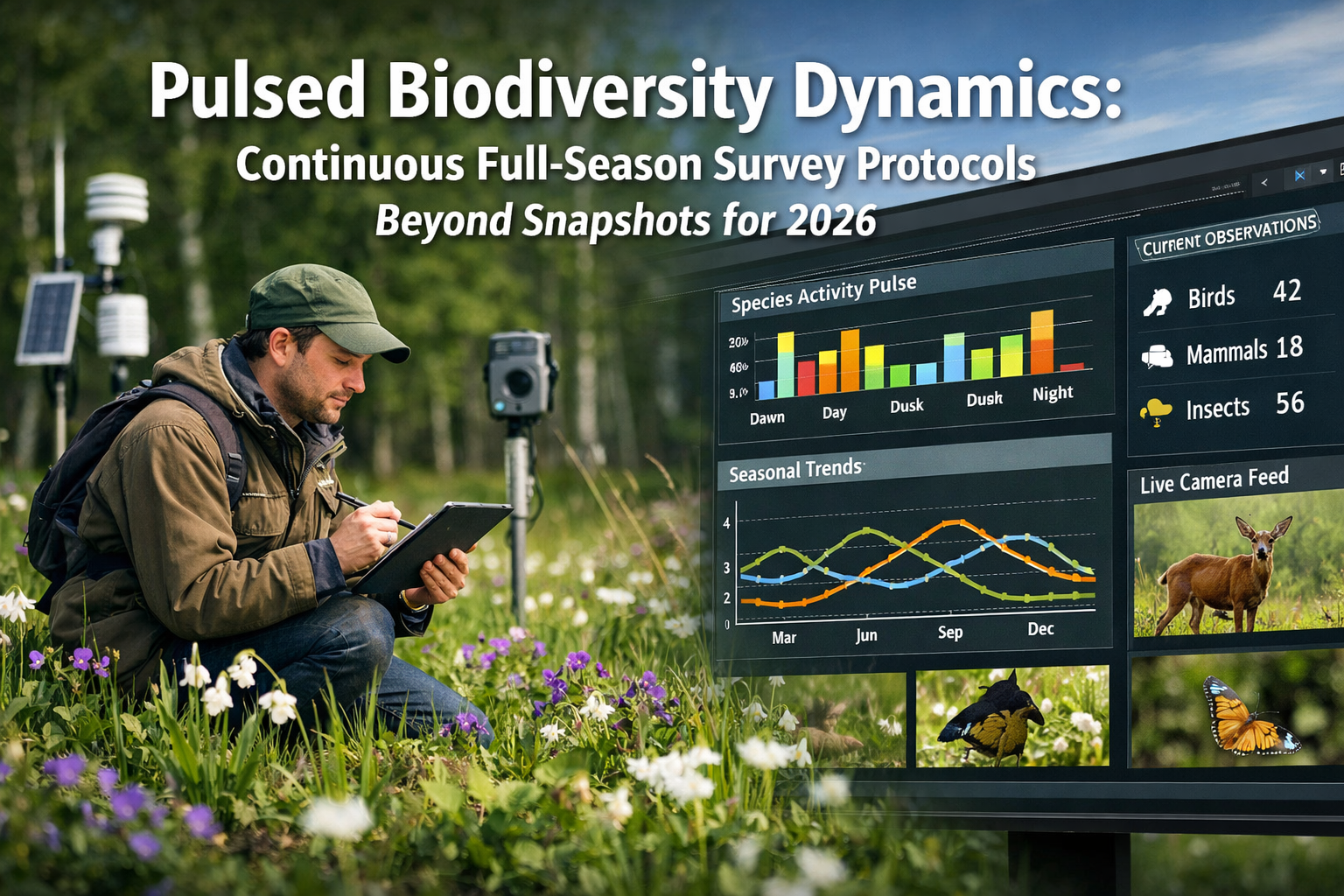
The natural world doesn't operate on a fixed schedule—it pulses, fluctuates, and responds dynamically to weather patterns, seasonal shifts, and environmental triggers. Yet traditional biodiversity assessments have long relied on single-point-in-time surveys, capturing mere snapshots of ecosystems that are constantly in flux. As we move through 2026, ecological science and conservation practice are undergoing a fundamental transformation: embracing Pulsed Biodiversity Dynamics: Continuous Full-Season Survey Protocols Beyond Snapshots for 2026 that recognize and measure these non-linear trends. This shift is particularly critical for developers, planners, and ecologists working to achieve accurate Biodiversity Net Gain (BNG) metrics in an era of increasingly unpredictable weather patterns and early-spring ecological events.
Key Takeaways
- 🔄 Biodiversity operates in pulses: Species populations fluctuate dramatically throughout seasons in response to weather events, making single-survey snapshots inadequate for accurate assessment
- 📊 Continuous monitoring protocols: Full-season survey approaches using eDNA, acoustic monitoring, and AI-powered imaging capture temporal dynamics that traditional methods miss
- 🌱 Early-spring shifts matter: Climate variability is pushing ecological events earlier, requiring extended survey windows starting in February-March rather than traditional April-May periods
- 🎯 BNG accuracy depends on timing: Biodiversity Net Gain calculations based on snapshot surveys can significantly misrepresent baseline conditions and post-development outcomes
- 🔬 Technology integration is essential: Multi-method approaches combining molecular techniques, automated sensors, and real-time data processing enable practical continuous monitoring at scale
Understanding Pulsed Biodiversity Dynamics: Beyond Traditional Survey Methods
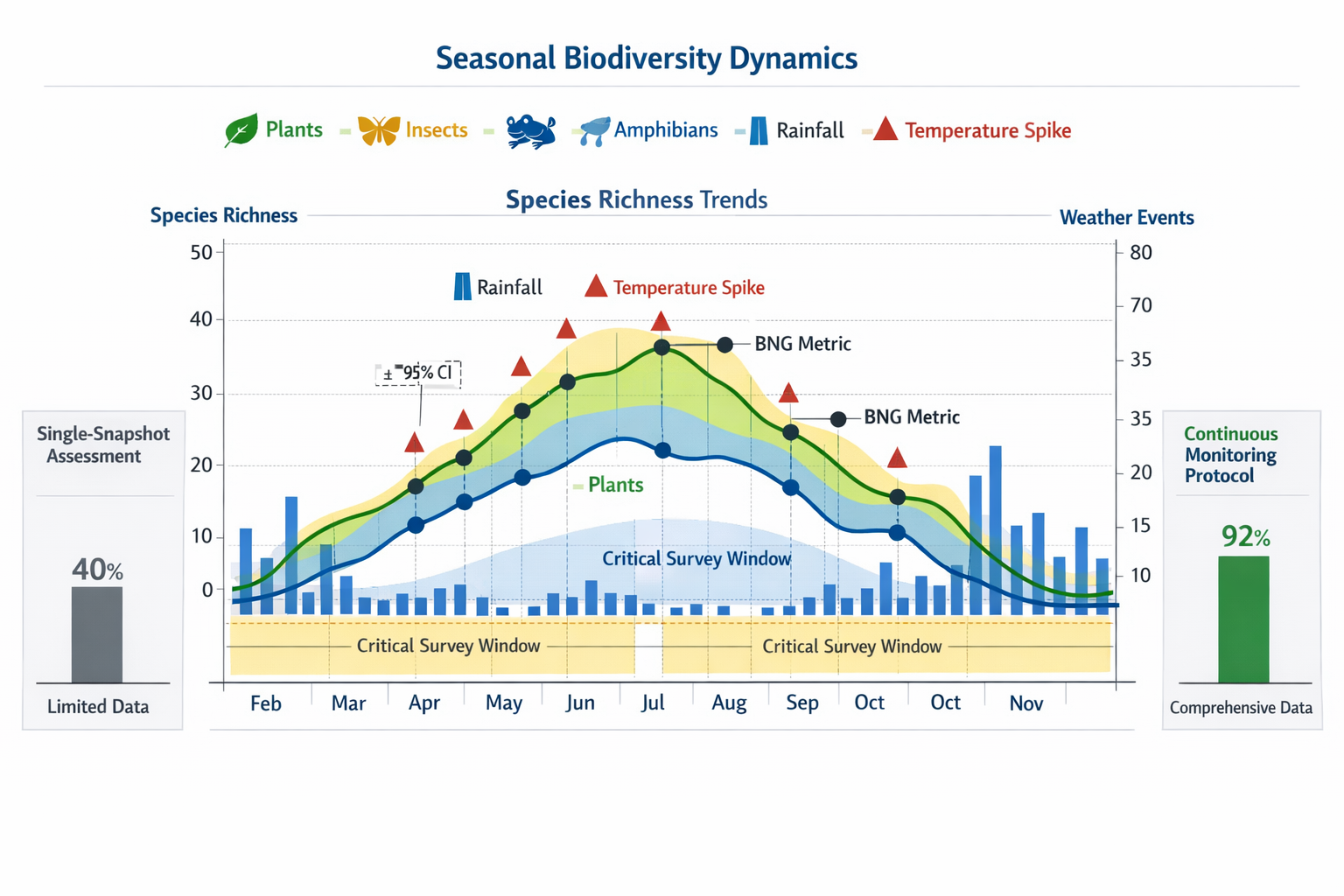
Traditional biodiversity surveys have operated under an implicit assumption: that a carefully timed site visit during peak activity periods provides a representative picture of ecological value. However, emerging research and monitoring programs in 2026 reveal a more complex reality. Pulsed biodiversity dynamics describe the natural phenomenon where species abundance, activity, and detectability fluctuate in response to environmental triggers—rainfall events, temperature spikes, photoperiod changes, and resource availability pulses.
The Limitations of Snapshot Assessments
Consider a typical development site assessment conducted in mid-May. Surveyors document breeding birds, emerging amphibians, and flowering plants—generating a species list and habitat condition score. Yet this snapshot misses:
- Early-emerging species that peaked in March-April before surveys began
- Weather-dependent populations that surge after specific rainfall or temperature conditions
- Late-season specialists that don't appear until July-September
- Temporal resource pulses that support migratory or nomadic species at different times
For biodiversity impact assessments, these omissions can lead to systematic underestimation of site ecological value, affecting both baseline calculations and post-development monitoring outcomes.
Non-Linear Ecological Trends in 2026
The emphasis on non-linear trends reflects growing recognition that biodiversity doesn't follow smooth, predictable seasonal curves. Weather variability creates ecological pulses—sudden increases in activity, reproduction, or abundance triggered by specific conditions. A warm February week might trigger early amphibian breeding. An April cold snap could delay insect emergence by weeks. Summer drought might concentrate species around remaining water sources, creating temporary hotspots of apparent abundance.
These pulses have profound implications for achieving biodiversity net gain targets. A development assessed during a weather-suppressed period might appear to have lower baseline biodiversity than one surveyed during optimal conditions—even if the sites have identical intrinsic ecological value.
Continuous Full-Season Survey Protocols: Methods and Technologies for 2026
The solution to capturing pulsed dynamics lies in continuous full-season survey protocols that monitor sites repeatedly throughout the active period. Rather than single visits, these approaches employ multiple survey occasions, automated monitoring technologies, and integrated data streams that reveal temporal patterns.
Environmental DNA (eDNA) for Continuous Aquatic Monitoring
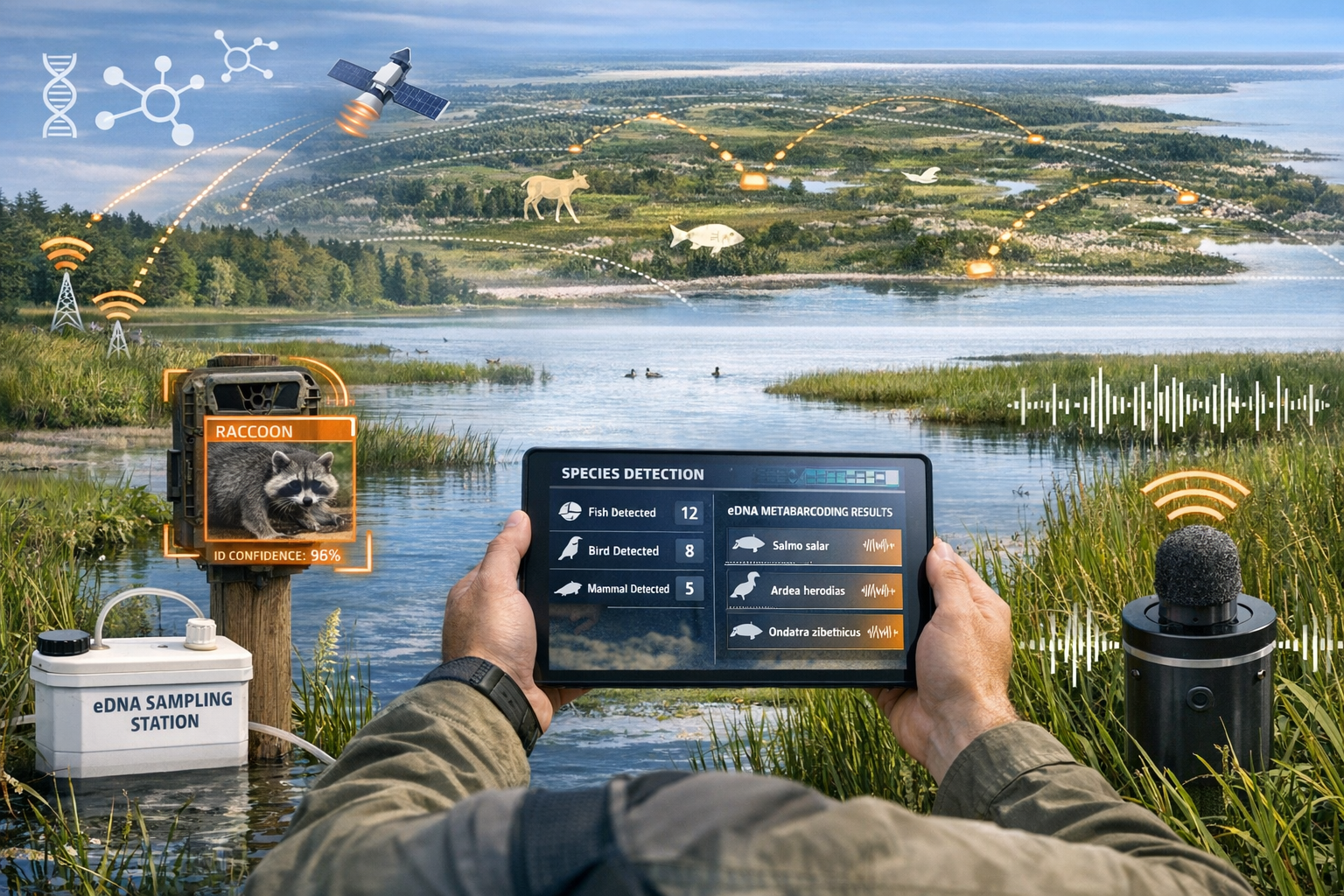
Environmental DNA has revolutionized biodiversity sampling, particularly in aquatic systems. Water samples containing genetic material from resident species can be collected regularly throughout the season, processed efficiently, and analyzed to detect presence and relative abundance of fish, amphibians, invertebrates, and even some plant species[1].
Key advantages for continuous monitoring:
- Minimal site disturbance allowing frequent repeat sampling
- High efficiency in data collection and processing
- Detection of cryptic species missed by visual surveys
- Standardized protocols enabling temporal comparisons
- FAIR data principles (findable, accessible, interoperable, reusable) supporting long-term datasets[1]
Global initiatives are compiling eDNA databases following consistent protocols to analyze how aquatic biodiversity distribution varies across spatial and temporal scales[1]. For UK developers working on sites with water features, regular eDNA sampling from March through October provides comprehensive species detection that captures seasonal turnover and weather-driven activity pulses.
Passive Acoustic Monitoring: Recording the Soundscape
Automated acoustic recorders deployed for full seasons capture the temporal dynamics of vocal species—birds, amphibians, bats, and insects. Unlike human surveyors limited to specific weather windows and daylight hours, acoustic sensors record continuously or on programmed schedules, building comprehensive datasets that reveal:
- Daily activity patterns (dawn chorus intensity, nocturnal species)
- Seasonal phenology (arrival dates, breeding period duration)
- Weather-response patterns (activity suppression during storms, post-rain surges)
- Rare species detection through extended sampling effort
AI-assisted species identification tools in 2026 can process thousands of hours of recordings, extracting species-specific calls and generating temporal activity profiles. This technology is being explored for standardized farmland biodiversity monitoring[1], but applies equally to development sites requiring thorough baseline assessment.
Integrated Multi-Technology Approaches
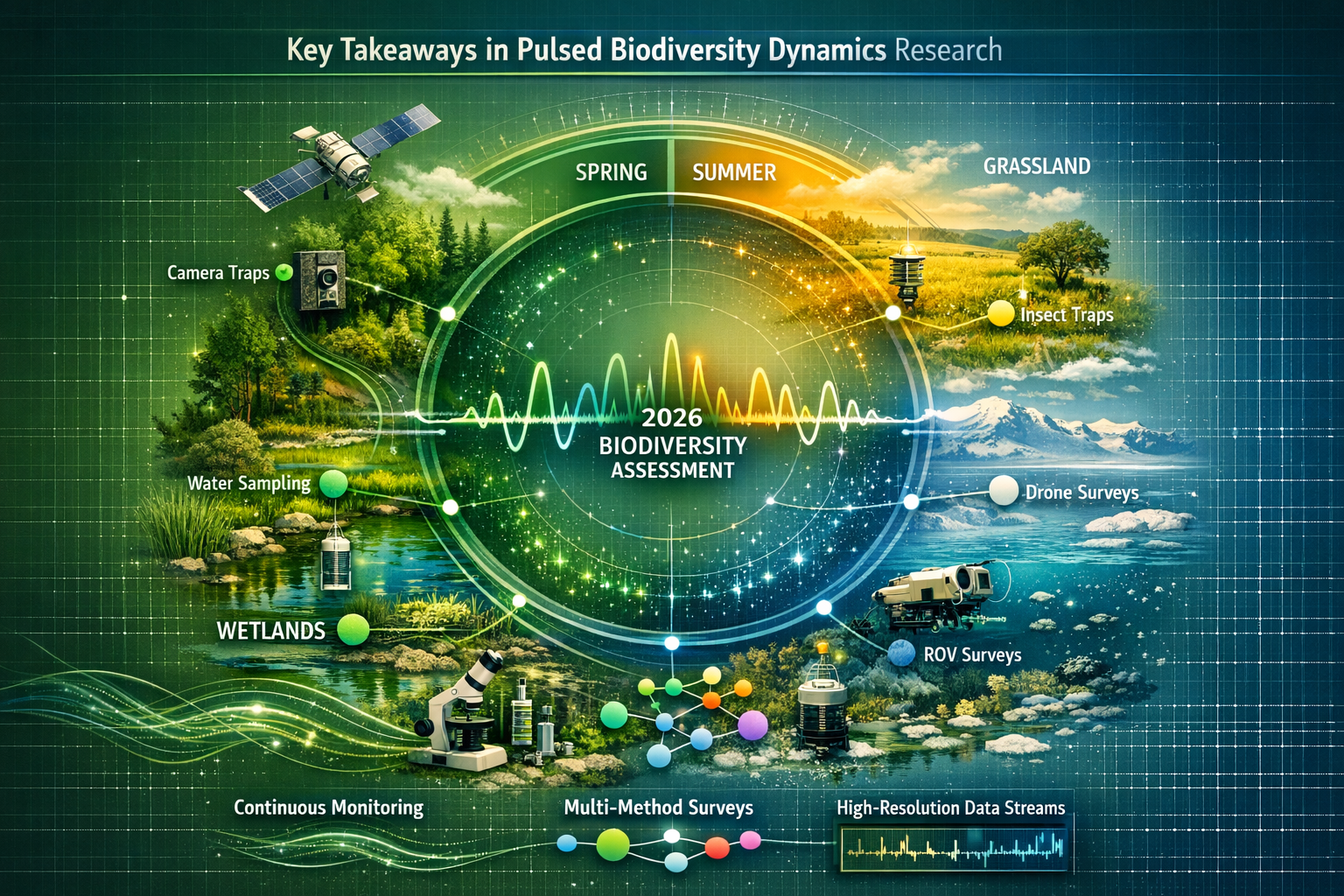
The most robust continuous monitoring protocols combine multiple methods to capture different taxonomic groups and ecological processes. Advanced approaches being implemented in 2026 include[2]:
| Technology | Target Taxa | Temporal Resolution | Application |
|---|---|---|---|
| eDNA metabarcoding | Aquatic vertebrates, invertebrates | Weekly-monthly sampling | Ponds, streams, wetlands |
| Automated cameras + AI | Mammals, birds, reptiles | Continuous (trigger-based) | Terrestrial habitats |
| Acoustic recorders | Birds, bats, amphibians, insects | Continuous or scheduled | All habitat types |
| Remote sensing | Vegetation phenology, structure | Daily-weekly | Landscape scale |
| Manual surveys | Plants, invertebrates, validation | Monthly intervals | Ground-truthing |
This integration enables near real-time tracking of ecosystem changes and captures spatio-temporal dynamics that single-method approaches miss[2].
The Continuous Plankton Recorder Model
Marine biodiversity monitoring provides instructive examples for terrestrial applications. The Continuous Plankton Recorder (CPR) Survey—an established international program—monitors plankton biodiversity continuously across ocean regions[2]. Emerging programs like the European Marine Omics Biodiversity Observation Network (EMO BON) are integrating environmental genomics, plankton imaging, and acoustic monitoring for comprehensive, large-scale biodiversity assessments[2].
While development sites don't require ocean-scale monitoring, the principles apply: systematic, repeated sampling across the full activity season using standardized protocols produces datasets that reveal true ecological patterns rather than weather-dependent snapshots.
Implementing Pulsed Biodiversity Dynamics Protocols for BNG Compliance
For developers, planners, and ecological consultants working within the UK's mandatory Biodiversity Net Gain framework, adopting continuous full-season protocols offers significant advantages—and presents practical challenges.
Extended Survey Windows: Starting in Early Spring
One of the most important shifts for 2026 is recognizing that ecological activity now begins earlier than traditional survey calendars assume. Climate variability and warming trends mean that:
- Amphibians may begin breeding in February during warm spells
- Early flowering plants emerge in March, supporting early pollinators
- Resident birds establish territories by late February-early March
- Invertebrate emergence can begin in March depending on temperature
Waiting until the traditional "survey season" of mid-April through June misses these early pulses. Biodiversity net gain assessments should ideally begin monitoring in February-March and continue through October-November to capture the full range of species and activity patterns.
Practical Protocol Design for Development Sites
Implementing continuous full-season protocols doesn't require constant human presence. A practical approach for a typical development site might include:
February-March (Early Season):
- Deploy acoustic recorders for amphibian and early bird activity
- Conduct initial habitat condition assessment
- Install eDNA sampling points if aquatic features present
- Set up camera traps in key locations
April-June (Peak Activity):
- Monthly manual surveys for plants, invertebrates, breeding birds
- Continue automated monitoring (acoustics, cameras)
- Bi-weekly eDNA sampling during amphibian breeding
- Document weather events and ecological responses
July-September (Late Season):
- Target late-flowering plants and associated pollinators
- Monitor bat activity during peak feeding period
- Continue camera trap monitoring for mammals
- Assess habitat condition changes
October-November (Season Close):
- Final habitat assessment
- Retrieve automated monitoring equipment
- Compile full-season datasets
- Analyze temporal patterns and weather correlations
This approach provides the temporal coverage needed to characterize pulsed dynamics while remaining practical and cost-effective compared to intensive weekly manual surveys.
Data Integration and Quality Standards
One of the challenges addressed at the World Biodiversity Forum 2026 is how to handle data to achieve standard quality requirements across different spatial and temporal scales[1]. For BNG applications, this means:
- Standardized data formats allowing comparison across survey occasions
- Uncertainty estimates acknowledging detection probability variations
- Weather correlation analysis identifying which observations represent typical versus exceptional conditions
- Temporal aggregation methods that appropriately summarize full-season data into habitat condition scores and species richness metrics
Biodiversity surveyors implementing continuous protocols must develop clear methodologies for translating temporal datasets into the static baseline values required for BNG metric calculations—while preserving information about seasonal variability and pulse dynamics.
Cost-Benefit Considerations
Continuous full-season protocols require greater upfront investment than single-visit surveys, but offer substantial benefits:
Benefits:
- ✅ Defensible baseline data less vulnerable to challenge based on survey timing
- ✅ Better detection of protected and notable species
- ✅ Reduced risk of post-approval discoveries requiring mitigation changes
- ✅ Higher quality post-development monitoring data
- ✅ Demonstrated due diligence in ecological assessment
Costs:
- 💰 Multiple site visits or equipment deployment/retrieval
- 💰 Automated monitoring equipment purchase or rental
- 💰 Extended data processing and analysis time
- 💰 Specialist expertise for eDNA or acoustic analysis
For large or ecologically complex sites, the risk reduction alone often justifies the additional cost. For smaller development projects, a scaled-down continuous approach—perhaps monthly visits March-September plus targeted automated monitoring—provides substantial improvement over single snapshots without proportional cost increases.
Global Monitoring Networks and Standardization Efforts
The shift toward continuous biodiversity monitoring extends far beyond individual development sites. International research networks are establishing standardized protocols and data sharing frameworks that will shape best practice in 2026 and beyond.
Freshwater Monitoring Networks
Freshwater ecosystems exemplify the value of continuous, networked monitoring. Established networks including the National Ecological Observatory Network (NEON), Long-term Ecological Research (LTER) networks, Global Lake Ecological Observatory Network (GLEON), and Critical Zone Observatories (CZO) utilize high-frequency sampling and coupled terrestrial-aquatic measurements[3].
These networks demonstrate that meaningful biodiversity trend detection requires sustained, standardized observation—precisely the principle underlying continuous full-season protocols for development sites.
Marine Biodiversity Projects
Four major EU marine biodiversity projects—MARCO-BOLO, OBAMA-Next, DIVERSEA, and Phytodiverse—are developing new technologies and approaches for monitoring marine biodiversity at different scales using eDNA, imaging, modeling, and remote sensing[2]. While focused on ocean systems, the methodological innovations have direct terrestrial applications:
- Standardized sampling protocols adaptable across ecosystem types
- Quality control frameworks ensuring data comparability
- Automated processing pipelines making continuous monitoring practical
- Integration frameworks combining multiple data streams
Farmland Biodiversity Initiatives
Agricultural landscapes present monitoring challenges similar to development sites: large areas, diverse habitats, and practical constraints on survey effort. Novel technologies including satellite and airborne remote sensing, passive acoustic monitoring, eDNA, and AI-assisted species identification are being explored for standardized farmland biodiversity data collection[1].
These approaches align with the Sustainable Farming Incentive and other agri-environment schemes requiring biodiversity monitoring. The protocols being developed for agricultural contexts translate directly to development site assessment.
Trait-Based Monitoring Approaches
Beyond species lists, trait-based approaches integrating animal movement data with global data repositories are being developed for operationalized biodiversity monitoring at national and international scales[1]. These methods focus on functional diversity—the ecological roles species play—rather than just taxonomic diversity.
For BNG applications, trait-based approaches could enhance habitat condition assessments by quantifying not just which species are present, but what ecological functions they perform and how these vary temporally in response to environmental pulses.
Challenges and Future Directions for Continuous Protocols
Despite clear advantages, implementing Pulsed Biodiversity Dynamics: Continuous Full-Season Survey Protocols Beyond Snapshots for 2026 faces several challenges that require ongoing attention.
Data Volume and Processing Capacity
Continuous monitoring generates enormous datasets—thousands of images, hundreds of hours of audio, weekly eDNA samples. Processing these data streams requires:
- Automated analysis tools (AI species identification, bioinformatics pipelines)
- Data storage infrastructure with appropriate backup and security
- Quality control procedures to catch processing errors
- Skilled personnel who understand both ecology and data science
As these technologies mature through 2026, processing bottlenecks are gradually resolving, but remain a practical constraint for many consultancies.
Standardization Across Practitioners
For continuous protocols to support robust BNG implementation, the ecological consulting sector needs:
- Agreed survey standards specifying minimum sampling frequencies and methods
- Data format standards enabling comparison across sites and practitioners
- Quality assurance schemes verifying protocol adherence
- Training programs building capacity in new technologies
Professional organizations and regulatory bodies are working toward these standards, but the field remains somewhat fragmented in 2026.
Integration with Statutory Requirements
Current BNG guidance and metric calculations were developed around traditional survey approaches. Integrating continuous monitoring data requires:
- Clear guidance on temporal aggregation methods
- Metric adaptations that account for seasonal variability
- Validation studies comparing continuous protocols to traditional approaches
- Regulatory acceptance of automated monitoring data
Planning authorities and ecological consultants are navigating these integration challenges collaboratively through 2026.
Cost Barriers for Small Projects
While continuous protocols are increasingly practical for major developments, cost remains a barrier for smaller projects. Solutions being explored include:
- Tiered approaches matching survey intensity to site complexity and risk
- Shared equipment pools reducing capital costs for consultancies
- Citizen science integration for some monitoring components
- Streamlined protocols focusing effort on key indicator groups
Small development projects may adopt modified continuous approaches—perhaps quarterly visits rather than monthly—that capture major seasonal shifts without full temporal resolution.
Case Applications: When Continuous Protocols Matter Most
Certain site types and ecological contexts particularly benefit from continuous full-season protocols:
Sites with Aquatic Features
Ponds, streams, and wetlands support species with highly seasonal activity patterns—amphibians breeding in early spring, dragonflies emerging in summer, waterfowl using sites during migration. Single-visit surveys inevitably miss major components of aquatic biodiversity. Regular eDNA sampling combined with targeted manual surveys captures the full community.
Ecologically Complex Sites
Sites with diverse habitat mosaics, connectivity to larger ecological networks, or known presence of protected species warrant intensive monitoring. The investment in continuous protocols provides defensible data supporting biodiversity net gain planning and reduces risk of project delays from unexpected discoveries.
Sites in Variable Climates
Locations subject to high weather variability—coastal areas, uplands, regions with unpredictable rainfall—show pronounced biodiversity pulses. Understanding these dynamics requires temporal data that reveals which patterns are typical versus exceptional.
Post-Development Monitoring
Continuous protocols are equally valuable for post-development monitoring, verifying that created or enhanced habitats are functioning as predicted. Temporal data from both pre- and post-development periods enable robust comparison and adaptive management.
Conclusion: Embracing Temporal Complexity in Biodiversity Assessment
As we progress through 2026, the ecological consulting sector is undergoing a paradigm shift—moving from snapshot assessments toward Pulsed Biodiversity Dynamics: Continuous Full-Season Survey Protocols Beyond Snapshots for 2026 that recognize and measure the temporal complexity of natural systems. This transformation is driven by scientific understanding of non-linear ecological trends, technological advances making continuous monitoring practical, and regulatory frameworks like Biodiversity Net Gain demanding accurate baseline and outcome data.
The benefits are substantial: more complete species detection, defensible baseline assessments, reduced project risk, and ultimately better conservation outcomes. The challenges—data processing capacity, standardization needs, cost considerations—are being actively addressed through technological innovation, collaborative protocol development, and practical experience.
Actionable Next Steps
For developers and planners:
- Engage ecological consultants early to discuss continuous monitoring options
- Budget appropriately for extended survey periods starting in early spring
- Consider continuous protocols for ecologically complex or high-risk sites
- Review guidance for developers on BNG requirements
For ecological consultants:
- Invest in training and equipment for eDNA, acoustic monitoring, and AI-assisted analysis
- Develop standardized continuous monitoring protocols for common site types
- Build data management infrastructure to handle temporal datasets
- Collaborate on industry-wide standardization efforts
For regulatory authorities:
- Provide clear guidance on acceptable temporal aggregation methods for BNG metrics
- Support validation studies comparing continuous and traditional protocols
- Consider tiered requirements matching survey intensity to site complexity
- Facilitate data sharing to build regional baseline datasets
The natural world operates in pulses, responding dynamically to weather, seasons, and ecological interactions. Our biodiversity assessment methods must evolve to match this reality. By embracing continuous full-season protocols, we move beyond inadequate snapshots toward comprehensive understanding—supporting better development decisions, more effective conservation, and genuine biodiversity net gain in 2026 and beyond.
For expert guidance on implementing continuous biodiversity monitoring protocols for your development project, contact our team of biodiversity surveyors who specialize in advanced assessment methods and BNG compliance.
References
[1] Oral And Poster Sessions Wbf2026 – https://worldbiodiversityforum.org/oral-and-poster-sessions-wbf2026/
[2] 7 Taking The Pulse Of The Ocean Measuring The Current Marine Biodiversity State And How It Impacts Us – https://www.wcmb2026.org/7-Taking-the-pulse-of-the-ocean-measuring-the-current-marine-biodiversity-state-and-how-it-impacts-us
[3] Special Sessions – https://www.sfsannualmeeting.org/special-sessions