

Wildlife populations worldwide face an unprecedented crisis—but the true danger lies not in individual threats, but in how they combine and amplify each other. Recent groundbreaking research analyzing over 3,000 vertebrate populations across 70 years reveals a stark reality: animals facing multiple simultaneous pressures decline significantly faster than those confronting single threats. For ecologists working in 2026, understanding Interactive Threats in Wildlife Declines: Multi-Pressure Survey Protocols for 2026 Ecologists has become essential to accurately assess population trends and design effective conservation interventions.
Using data from the Living Planet Database and sophisticated Bayesian statistical models, researchers have demonstrated that combinations of climate change, disease, pollution, invasive species, habitat loss, and exploitation create synergistic impacts that traditional single-threat assessments fail to capture [1]. This paradigm shift demands new survey methodologies that can disentangle these complex interactions and provide actionable insights for conservation planning.
Key Takeaways
- Wildlife populations facing multiple threats decline 2-3 times faster than those affected by single pressures, with interactive effects exceeding simple additive impacts [1]
- Analysis of 3,129 vertebrate populations over 70 years (1950-2020) reveals that traditional single-threat conservation approaches are insufficient to halt biodiversity loss [2]
- Freshwater vertebrates show catastrophic 83% average decline, driven primarily by combinations of habitat loss, pollution, and climate change [3]
- Bayesian modeling frameworks enable ecologists to quantify threat interactions across 36 unique combinations of six major pressure categories [1]
- Integrated survey protocols for 2026 must simultaneously assess climate impacts, invasive species presence, disease prevalence, pollution levels, habitat quality, and exploitation pressure to generate accurate population trend predictions
Understanding Interactive Threats in Wildlife Population Declines
The Synergistic Nature of Multiple Pressures
The concept of interactive threats represents a fundamental shift from traditional conservation thinking. Rather than treating each pressure independently, modern ecological science recognizes that threats combine in ways that amplify their individual impacts. When a population faces both climate change and disease, for example, the combined effect often exceeds what would be expected from simply adding the two pressures together [1].
Research published in 2026 examined 3,129 vertebrate populations across mammals, birds, reptiles, amphibians, and fish, tracking their trajectories from 1950 to 2020. The findings were unequivocal: populations exposed to multiple threats showed steeper declines than those facing single pressures. This pattern held true across taxonomic groups, geographic regions, and habitat types [1].
Key threat categories identified in the analysis include:
- 🌡️ Climate change – altered temperature regimes, precipitation patterns, and extreme weather events
- 🦠 Disease – pathogens, parasites, and emerging infectious diseases
- 🐀 Invasive species – non-native competitors, predators, and ecosystem engineers
- 🏭 Pollution – chemical contaminants, plastics, nutrient loading, and toxins
- 🌳 Habitat loss/degradation – deforestation, urbanization, agricultural conversion
- 🎣 Exploitation – overharvesting, hunting, fishing, and wildlife trade
The Hidden Impact of Underestimated Threats
While habitat loss and climate change receive substantial attention in conservation discourse, the research highlights two critically underestimated threats: disease and invasive species. Disease affects only 3.04% of tracked populations, and invasive species just 5.69%, yet these pressures "can lead to even faster population declines, especially when they occur together" with other stressors [2].
Dr. Pol Capdevila, co-lead researcher from the University of Bristol, emphasizes that these seemingly minor threats punch far above their weight when combined with other pressures. A population weakened by habitat fragmentation becomes far more vulnerable to disease outbreaks. Similarly, invasive species can transform entire ecosystems in ways that magnify climate change impacts [2].
Understanding these biodiversity assessment protocols becomes crucial for developers and conservationists working to protect wildlife populations in 2026.
Multi-Pressure Survey Protocols for 2026 Ecologists: Framework and Methodology

The Living Planet Database: Foundation for Interactive Threat Analysis
The Living Planet Database serves as the cornerstone for understanding global wildlife trends. Now expanded to track nearly 32,000 populations of 5,230 species, this comprehensive dataset provides unprecedented scale for biodiversity assessments [3]. The database includes time-series data on population abundance, allowing researchers to calculate population trends and associate them with specific threats.
For ecologists conducting surveys in 2026, the database offers several critical advantages:
- Standardized metrics across diverse taxa and ecosystems
- Long-term trend data spanning multiple decades
- Threat classification systems that enable comparative analysis
- Geographic coverage representing all major biogeographic regions
- Quality control protocols ensuring data reliability
Bayesian Statistical Modeling for Threat Interaction Quantification
Traditional statistical approaches struggle to disentangle the complex web of interacting threats. Bayesian multilevel models offer a solution by accounting for spatial and temporal autocorrelation while estimating population trends across single and multiple threat scenarios [1].
The methodology employed in recent research analyzed 36 unique combinations of six primary threats. This combinatorial approach allows ecologists to:
- Identify which threat combinations produce the most severe declines
- Quantify synergistic effects beyond additive impacts
- Generate predictive scenarios for conservation planning
- Account for uncertainty in threat exposure assessments
"Tackling threats one at a time will not be enough to halt ongoing biodiversity loss. We need integrated conservation strategies coordinated across multiple pressures." — Dr. Duncan O'Brien [2]
Implementing Multi-Pressure Survey Protocols in Field Studies
For practical field application, Interactive Threats in Wildlife Declines: Multi-Pressure Survey Protocols for 2026 Ecologists require systematic data collection across all six threat categories simultaneously. The following protocol framework provides a structured approach:
Phase 1: Baseline Assessment
- Establish population monitoring transects or sampling points
- Document habitat characteristics and quality metrics
- Map spatial distribution of target species
- Identify historical population trends from existing data
Phase 2: Threat Exposure Mapping
- Climate data: temperature, precipitation, extreme events
- Invasive species: presence/absence surveys, abundance estimates
- Disease surveillance: pathogen screening, health assessments
- Pollution monitoring: water quality, soil contaminants, air quality
- Habitat metrics: fragmentation indices, connectivity analysis
- Exploitation indicators: harvest rates, human disturbance levels
Phase 3: Interaction Analysis
- Apply Bayesian models to estimate threat interactions
- Calculate population growth rates under different threat scenarios
- Identify primary threat combinations driving declines
- Assess vulnerability to future threat intensification
This comprehensive approach aligns with modern biodiversity impact assessment methodologies that recognize the complexity of ecological systems.
Regional Patterns and Taxonomic Variations in Interactive Threats
Geographic Hotspots of Multi-Threat Exposure
Wildlife declines show stark geographic variation, reflecting different combinations and intensities of threats across regions. Africa experienced a 66% decline in monitored wildlife populations, while Asia-Pacific saw a 55% decline over the study period [3]. These regional differences emerge from distinct threat profiles:
| Region | Primary Decline % | Dominant Threat Combinations |
|---|---|---|
| Africa | 66% | Habitat loss + exploitation + climate change |
| Asia-Pacific | 55% | Pollution + invasive species + habitat loss |
| Latin America | 94% | Deforestation + climate + exploitation |
| Freshwater systems (global) | 83% | Pollution + habitat barriers + invasive species |
The catastrophic 83% decline in freshwater vertebrates represents the most severe taxonomic decline documented [3]. Freshwater ecosystems face unique threat combinations: habitat fragmentation from dams and water extraction, pollution from agricultural runoff and industrial discharge, invasive species introductions, and climate-driven changes in water temperature and flow regimes.
Taxonomic Vulnerability to Threat Interactions
Different vertebrate groups show varying sensitivity to threat combinations. Amphibians, for instance, prove particularly vulnerable to disease-climate interactions, as warming temperatures expand the range of chytrid fungus while simultaneously stressing amphibian immune systems. Migratory species face compounded threats across their annual ranges, with habitat loss in breeding grounds, exploitation along migration routes, and climate change affecting stopover sites [3].
For developers and planners working on projects that impact wildlife, understanding these patterns is essential. The benefits of working with biodiversity surveyors include access to expertise in identifying and mitigating these complex threat interactions.
Integrated Conservation Strategies for Managing Interactive Threats
Moving Beyond Single-Threat Management
The research findings carry profound implications for conservation practice. Traditional approaches that address threats sequentially—protecting habitat first, then addressing climate change, then controlling invasives—prove insufficient when threats interact synergistically [2]. Integrated threat management frameworks must coordinate interventions across multiple pressures simultaneously.
Effective 2026 conservation strategies include:
🌍 Coordinated Land-Use Planning
- Combine habitat protection with restoration to buffer climate impacts
- Design conservation corridors that account for multiple threat gradients
- Integrate protected area networks with sustainable development zones
🎣 Supply Chain and Harvest Reform
- Pair fishery management with pollution reduction programs
- Link sustainable harvest quotas to habitat restoration investments
- Coordinate enforcement across exploitation and habitat protection
🛂 International Biosecurity Coordination
- Harmonize invasive species screening across trade networks
- Integrate disease surveillance with wildlife monitoring programs
- Coordinate rapid response protocols across jurisdictions
💧 Ecosystem-Based Adaptation
- Restore natural water flow regimes to address multiple freshwater threats
- Implement nature-based solutions that provide climate resilience
- Enhance ecosystem connectivity to facilitate species adaptation
The Role of Economic Transformation in Threat Mitigation
Solutions require "transforming economies so that natural resources are properly valued" alongside direct conservation interventions [3]. This economic dimension connects directly to emerging frameworks like Biodiversity Net Gain, which mandates that development projects deliver measurable biodiversity improvements.
For developers, achieving biodiversity net gain requires understanding how project impacts interact with existing threats. A development in a region already stressed by climate change and pollution must account for these cumulative effects in mitigation planning.
Practical Applications: Survey Protocol Implementation for 2026
Field Equipment and Technology Integration
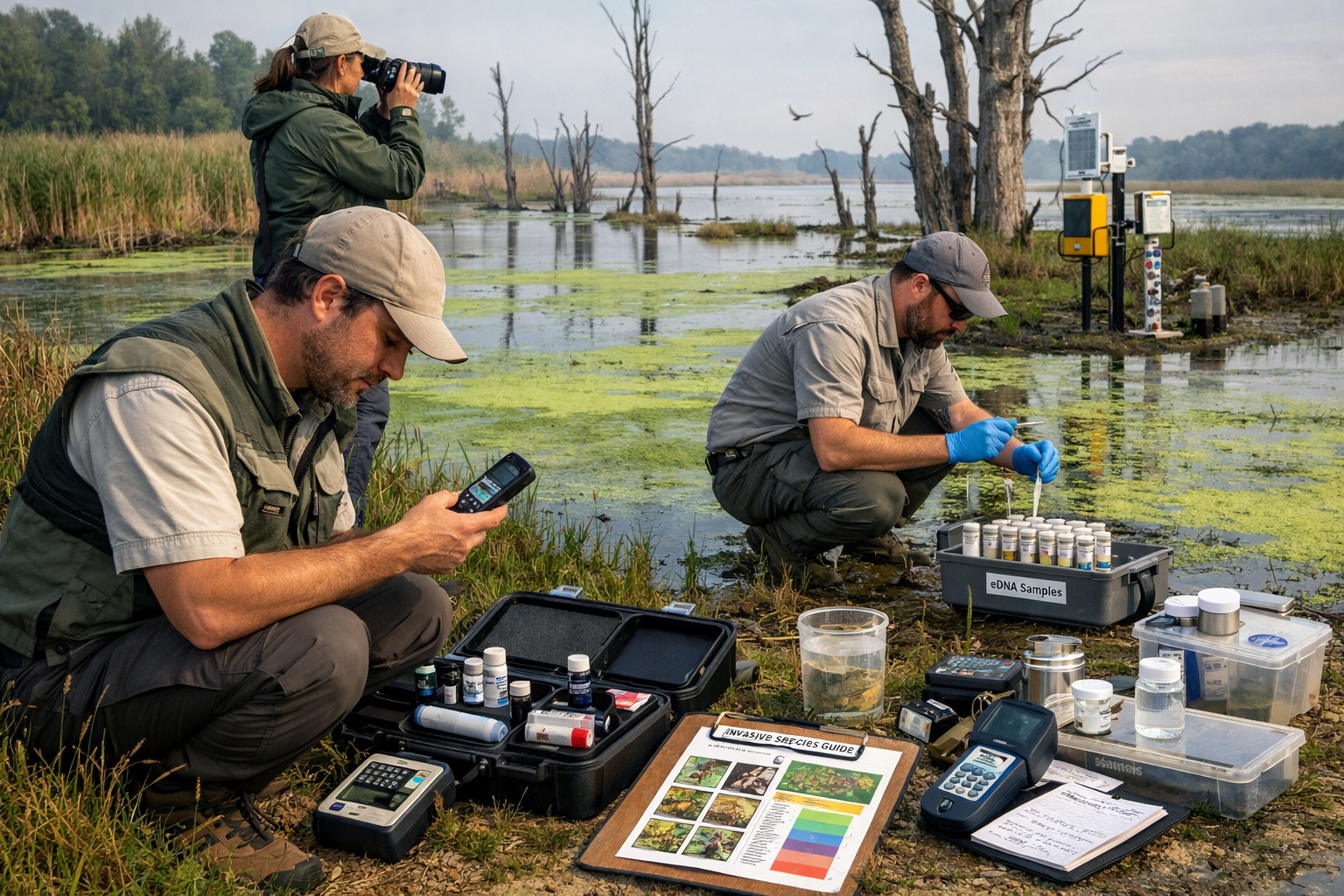
Modern multi-pressure surveys leverage technological advances to efficiently collect comprehensive threat data:
Essential Survey Equipment:
- GPS-enabled tablets with offline GIS capabilities
- Environmental DNA sampling kits for species detection
- Water quality testing meters (pH, dissolved oxygen, conductivity)
- Thermal imaging cameras for wildlife detection
- Acoustic monitoring devices for biodiversity assessment
- Soil sampling equipment for contamination analysis
- Weather stations for microclimate monitoring
Data Management Systems:
- Cloud-based databases for real-time data synchronization
- Mobile apps with standardized threat assessment protocols
- Integration with Living Planet Database formats
- Bayesian modeling software for interaction analysis
Case Study: Implementing Multi-Pressure Protocols in Freshwater Systems
Freshwater ecosystems provide an ideal context for demonstrating Interactive Threats in Wildlife Declines: Multi-Pressure Survey Protocols for 2026 Ecologists due to their high threat exposure and severe declines.
Survey Protocol Steps:
- Habitat Assessment – Map river connectivity, measure riparian buffer width, document barriers (dams, culverts)
- Water Quality Monitoring – Test for nutrients, heavy metals, pesticides, temperature, dissolved oxygen
- Invasive Species Survey – Conduct visual surveys and eDNA sampling for non-native fish, plants, invertebrates
- Climate Vulnerability – Analyze flow regime changes, temperature trends, drought frequency
- Exploitation Assessment – Document fishing pressure, water extraction rates, recreational impacts
- Disease Surveillance – Collect tissue samples for pathogen screening, document disease signs
This comprehensive approach enables identification of threat interaction hotspots where multiple pressures converge, allowing targeted conservation interventions with maximum impact.
Data Analysis and Interpretation for Multi-Threat Assessments
Statistical Framework for Interaction Detection
Detecting true interactive effects requires sophisticated statistical approaches that distinguish synergistic impacts from simple additive effects. The Bayesian multilevel modeling framework used in the landmark 2026 research provides a template for field ecologists [1].
Key analytical steps include:
- Model specification – Define hierarchical structure accounting for species, location, and time
- Prior selection – Incorporate existing knowledge about threat effects
- Interaction terms – Include multiplicative terms for threat combinations
- Autocorrelation adjustment – Account for spatial and temporal dependencies
- Posterior estimation – Generate probability distributions for population trends
- Predictive validation – Test model accuracy against held-out data
Interpreting Results for Conservation Planning
Analysis outputs should inform specific management decisions. When results indicate that climate change + invasive species produces steeper declines than either threat alone, conservation strategies must address both simultaneously rather than prioritizing one over the other.
For projects requiring biodiversity net gain assessments, understanding these interactions helps design more effective mitigation hierarchies. Avoiding areas with multiple existing threats, for example, may prove more valuable than attempting to offset impacts in already-stressed ecosystems.
Future Directions: Advancing Multi-Pressure Survey Methodologies

Emerging Technologies for Threat Detection
The next generation of survey protocols will incorporate:
- Satellite remote sensing for landscape-scale threat monitoring
- Artificial intelligence for automated species identification and threat classification
- Citizen science platforms for expanding monitoring coverage
- Genomic tools for detecting pollution impacts and disease prevalence
- Drone technology for accessing difficult terrain and conducting rapid assessments
Standardization and Global Coordination
As understanding of interactive threats advances, the conservation community must develop standardized protocols that enable global comparisons while accommodating local contexts. International initiatives are working to:
- Harmonize threat classification systems across databases
- Establish minimum data standards for multi-pressure assessments
- Create open-access platforms for sharing survey protocols
- Develop training programs for implementing advanced methodologies
The approximately 20% of populations that face no identified major threats [1] offer valuable reference points for understanding what healthy populations look like under minimal pressure—information crucial for setting restoration targets.
Integration with Policy and Planning Frameworks
Multi-pressure survey protocols must connect to policy implementation. For planners and developers, understanding how biodiversity net gain works in practice requires recognizing how projects intersect with existing threat landscapes.
Policy applications include:
- Environmental impact assessments that quantify cumulative effects
- Conservation prioritization based on threat interaction severity
- Adaptive management frameworks responsive to changing threat profiles
- Monitoring requirements that track multiple pressures over time
Conclusion: Embracing Complexity in Conservation Science
The evidence is clear: Interactive Threats in Wildlife Declines: Multi-Pressure Survey Protocols for 2026 Ecologists represent not just an academic exercise, but an urgent practical necessity. With wildlife populations declining at unprecedented rates—69% average decline globally, 83% for freshwater species [3]—conservation science must evolve to match the complexity of the challenges facing biodiversity.
The shift from single-threat to multi-pressure assessment frameworks marks a maturation of ecological science. By acknowledging that threats interact synergistically, ecologists can design more effective interventions, prioritize limited resources more strategically, and generate more accurate predictions of future population trends.
Actionable Next Steps for Ecologists and Conservation Practitioners
For Field Ecologists:
- Adopt comprehensive threat assessment protocols that simultaneously evaluate all six major pressure categories
- Invest in training on Bayesian statistical modeling and interaction analysis
- Collaborate with specialists across disciplines (climatology, epidemiology, invasive species biology)
- Contribute data to standardized databases like the Living Planet Database
For Conservation Organizations:
- Redesign conservation programs to address multiple threats simultaneously
- Develop partnerships across sectors (climate, pollution control, habitat protection)
- Advocate for policy frameworks that recognize threat interactions
- Support research on emerging threat combinations
For Developers and Planners:
- Engage professional biodiversity surveyors early in project planning
- Conduct comprehensive baseline assessments that identify existing threat profiles
- Design mitigation strategies that account for cumulative and interactive effects
- Consider biodiversity net gain opportunities that address multiple pressures
For Policymakers:
- Mandate multi-pressure assessments in environmental review processes
- Fund research on threat interactions in priority ecosystems
- Create incentives for integrated conservation approaches
- Support international coordination on transboundary threats
The path forward requires embracing complexity rather than oversimplifying it. Wildlife populations exist within intricate webs of interacting pressures, and our conservation responses must reflect that reality. By implementing robust multi-pressure survey protocols, ecologists in 2026 and beyond can generate the knowledge needed to reverse biodiversity declines and build resilient ecosystems capable of withstanding multiple simultaneous challenges.
The tools exist. The methodologies are proven. The data infrastructure is expanding. What remains is the collective will to implement these approaches at the scale required to address the biodiversity crisis. For every ecologist conducting surveys, every developer planning projects, and every policymaker crafting regulations, understanding interactive threats is no longer optional—it's essential for effective conservation in our rapidly changing world.
References
[1] Sciadv – https://www.science.org/doi/10.1126/sciadv.adx7973
[2] Wildlife Decline – https://www.bristol.ac.uk/cabot/news/2026/wildlife-decline.html
[3] New Report Reveals Devastating 69 Drop In Wildlife Populations – https://www.unep-wcmc.org/new-report-reveals-devastating-69-drop-in-wildlife-populations