

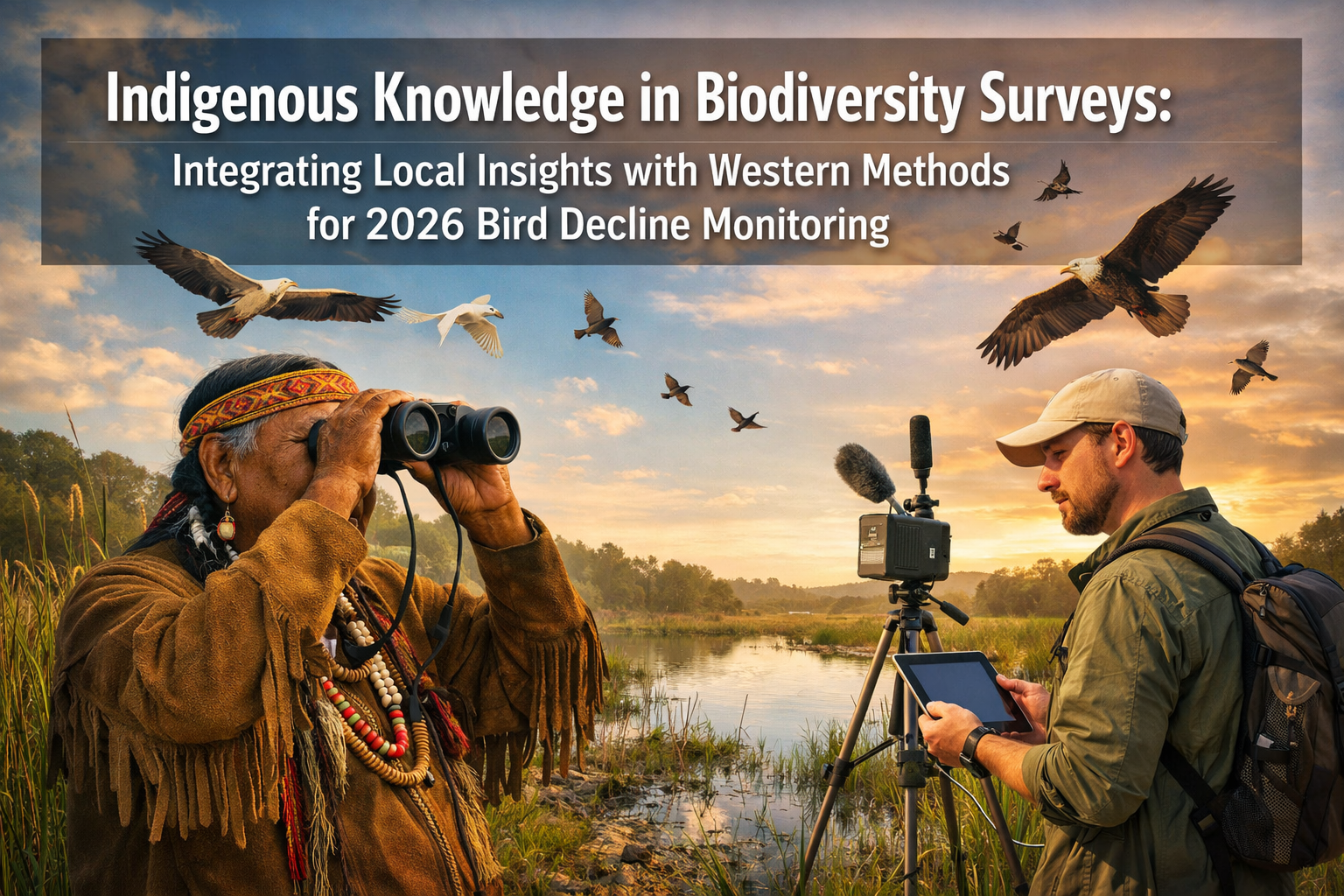
March 2026 research has revealed something remarkable: indigenous communities across three continents have been observing and recording the same dramatic bird population changes that scientists are only now confirming through formal studies. When 1,434 participants from 10 place-based communities shared their observations, they documented what eight decades of collective memory had witnessed—large birds disappearing from local landscapes, replaced by progressively smaller species. This groundbreaking study demonstrates that Indigenous Knowledge in Biodiversity Surveys: Integrating Local Insights with Western Methods for 2026 Bird Decline Monitoring isn't just complementary to scientific approaches—it's essential for understanding environmental changes in regions where traditional monitoring has been sparse or nonexistent.[4]
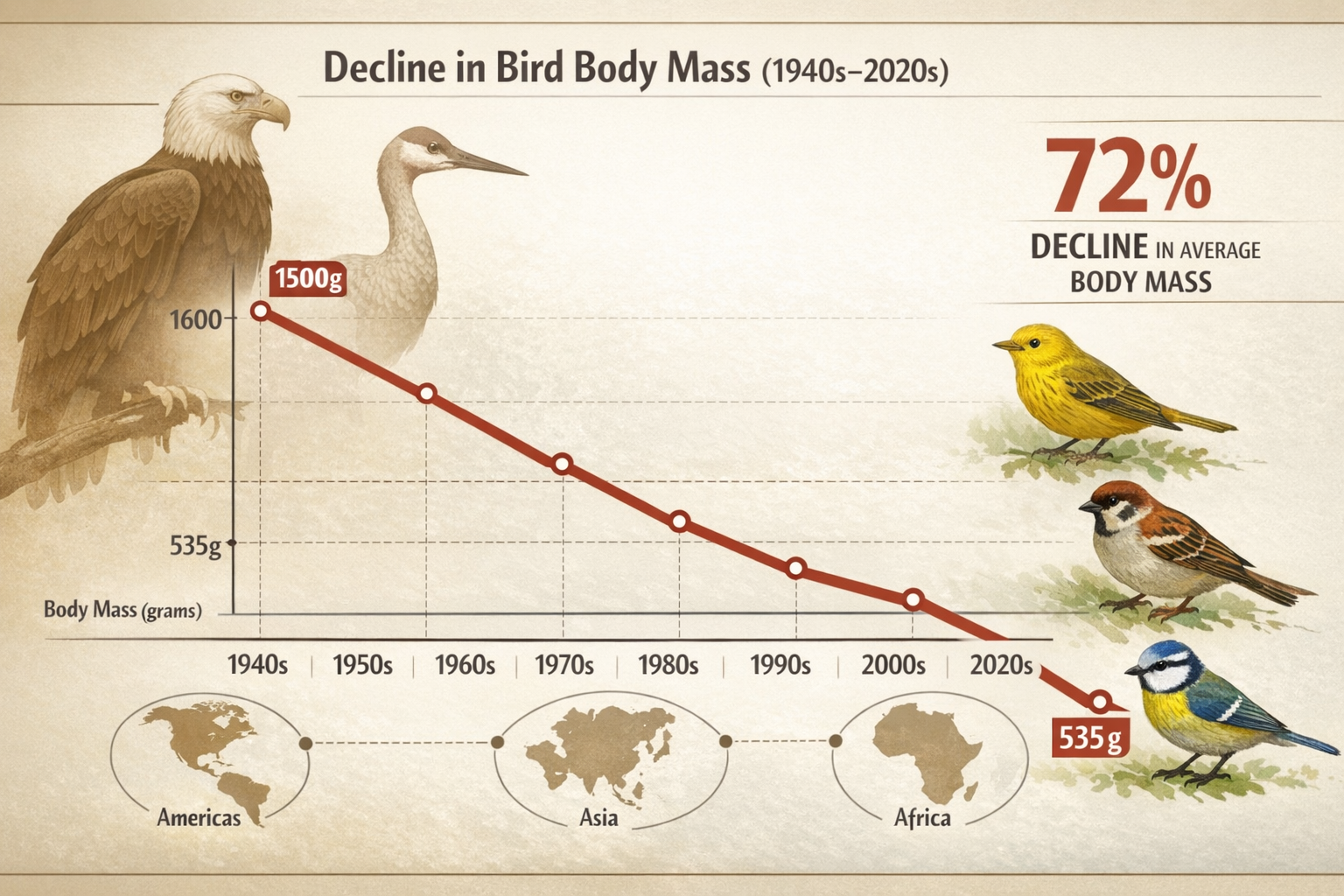
The findings are stark: bird assemblages have experienced approximately 72% decline in mean body mass over 80 years, with average weights dropping from over 1,500 grams in the 1940s to approximately 535 grams in the 2020s.[3] This pattern holds consistently across continents, ecosystems, and geographic locations, revealing a global crisis that indigenous observers have witnessed firsthand through their daily interactions with the land.
Key Takeaways
- 🌍 Indigenous communities documented 6,914 unique bird reports representing 283 species, demonstrating the capacity of traditional knowledge systems to generate large-scale comparative biodiversity data across three continents
- 📉 Bird body mass has declined 72% over eight decades according to indigenous observations, with large-bodied species progressively disappearing and being replaced by smaller species globally
- 🤝 Hybrid monitoring protocols combining indigenous observations with Western scientific methods produce more comprehensive and accurate biodiversity assessments than either approach alone
- 🔍 Traditional ecological knowledge extends historical records by decades or centuries in regions with limited formal scientific monitoring, filling critical data gaps
- ✅ Qualitative indigenous observations often detect biological changes before instrumental data confirms them, providing early warning signals for ecosystem shifts
Understanding the Global Pattern: What Indigenous Communities Are Witnessing
The Local Indicators of Climate Change Impacts project established a standardized framework for collecting locally relevant but cross-culturally comparable information across indigenous and local communities worldwide.[1] Through this collaborative research initiative, participants provided detailed accounts of bird species they currently observe compared to those remembered from previous generations.
The results paint a consistent picture across diverse ecosystems:
- Large-bodied bird species have progressively disappeared from local environments globally
- Smaller-bodied species have increased in relative abundance, filling ecological niches left vacant
- The pattern holds regardless of geographic location, ecosystem type, or specific community characteristics
- Changes are perceptible within living memory, with elders recalling dramatically different bird assemblages from their youth
Why Large Birds Are Disappearing First
Large-bodied bird species face multiple, compounding threats that make them particularly vulnerable to extinction:
| Threat Factor | Impact on Large Birds | Examples |
|---|---|---|
| Hunting Pressure | Preferred targets due to meat yield | Eagles, cranes, large waterfowl |
| Habitat Loss | Require larger territories and specific nesting sites | Forest raptors, large wading birds |
| Infrastructure Development | Collision risks with power lines, wind turbines | Vultures, storks, large migratory species |
| Slower Reproduction | Fewer offspring, longer maturation periods | Condors, albatrosses, large parrots |
| Food Chain Sensitivity | Higher trophic levels accumulate toxins | Apex predators, fish-eating birds |
Indigenous hunters noticing lighter game, observers reporting changes in migration patterns, and community members recognizing the absence of once-common large species—these qualitative observations capture real ecological change patterns that formal science is now confirming through quantitative analysis.[2]
Indigenous Knowledge in Biodiversity Surveys: The Historical Window That Science Cannot Replicate
One of the most valuable contributions of Indigenous Knowledge in Biodiversity Surveys: Integrating Local Insights with Western Methods for 2026 Bird Decline Monitoring is the extension of historical baselines far beyond what instrumental records can provide. In many regions, particularly in the Global South, formal bird monitoring programs began only in recent decades—or never existed at all.
The Power of Generational Memory
Indigenous communities living in regions with limited long-term scientific monitoring can extend the historical window of environmental assessment by decades or centuries. This temporal depth comes from:
- 🧠 Oral histories passed through generations preserving ecological knowledge
- 📅 Cultural practices tied to seasonal bird movements creating natural monitoring systems
- 🏞️ Place-based connections to territories maintained across lifetimes
- 👥 Community-wide observation networks where multiple individuals contribute to collective knowledge
The study revealed that indigenous memory captures environmental changes in regions where traditional instrumental records are sparse or nonexistent.[3] This is particularly significant for understanding baseline conditions before industrialization, agricultural intensification, and climate change accelerated biodiversity loss.
Detecting Signals Before Instruments Confirm Them
Research demonstrates that qualitative observations often precede quantitative confirmation. Indigenous communities detect biological signals through:
- Changes in hunting success rates and prey availability
- Shifts in traditional seasonal indicators used for planting or harvesting
- Alterations in bird behavior, migration timing, or nesting locations
- Disappearance of species that held cultural or spiritual significance
These observations aren't anecdotal—they represent systematic, long-term monitoring embedded in daily subsistence activities and cultural practices. When formal scientific studies eventually document these changes, they're confirming what communities have already witnessed and reported.[2]
Understanding these patterns is crucial for comprehensive biodiversity impact assessments that inform conservation strategies and development planning.
Integrating Local Insights with Western Methods: Building Hybrid Survey Protocols for 2026
The most effective approach to Indigenous Knowledge in Biodiversity Surveys: Integrating Local Insights with Western Methods for 2026 Bird Decline Monitoring recognizes that these knowledge systems are complementary, not competing. Each brings unique strengths to biodiversity assessment:
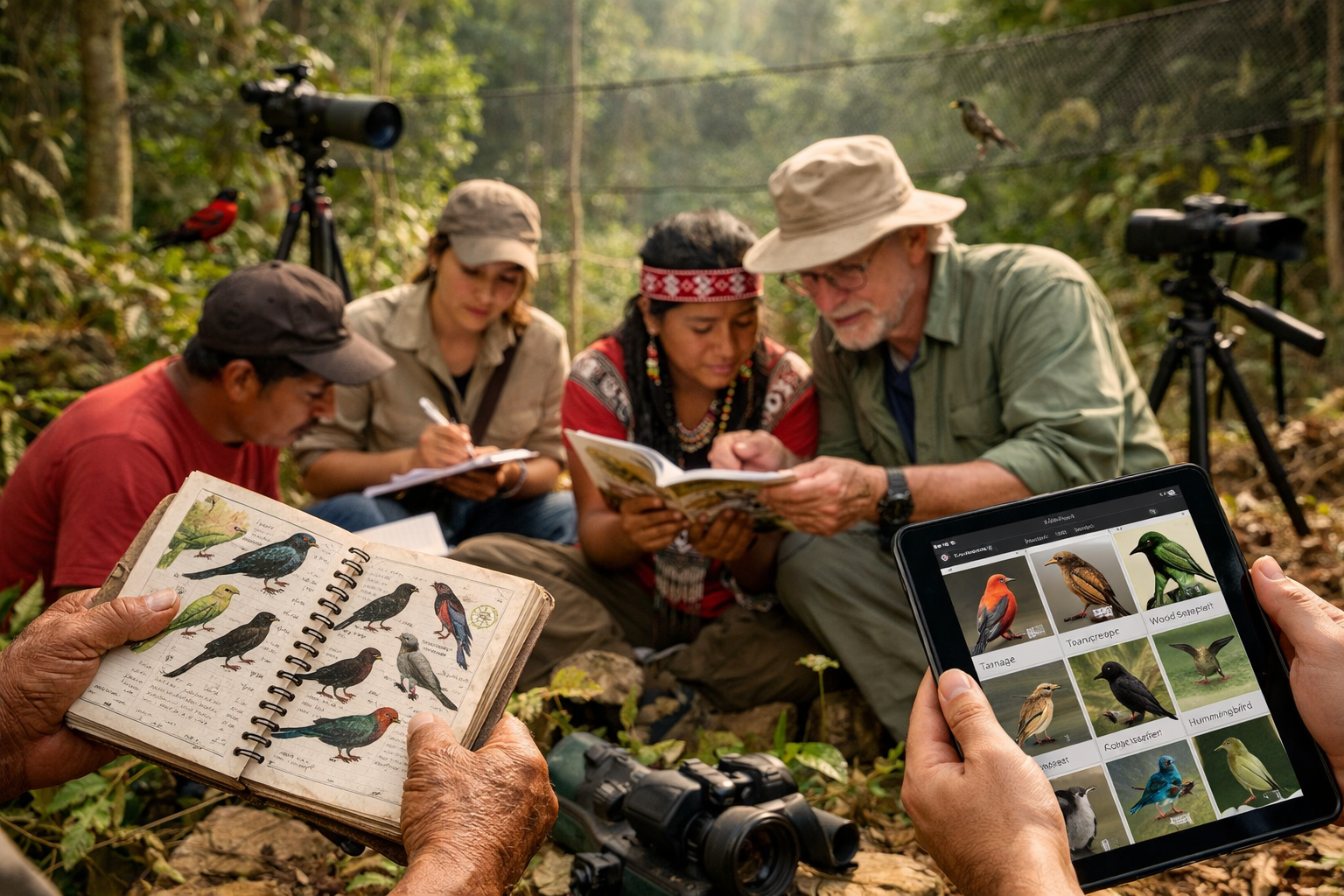
Strengths of Western Scientific Methods
Quantitative precision through:
- Standardized survey protocols ensuring repeatability
- Statistical analysis for detecting population trends
- Radio tracking and telemetry for movement patterns
- Genetic analysis for population structure
- Remote sensing and GIS for habitat mapping
Technological tools including:
- Automated recording devices capturing bird calls 24/7
- Satellite tracking revealing migration routes
- Drone surveys accessing difficult terrain
- Database systems managing large datasets
- Modeling software predicting future scenarios
Strengths of Indigenous Ecological Knowledge
Contextual understanding through:
- Long-term observation of local ecosystems across seasons and years
- Knowledge of species behavior, habitat preferences, and ecological relationships
- Understanding of historical baselines and natural variability
- Recognition of subtle changes in species abundance or distribution
- Awareness of cultural and social factors affecting wildlife
Practical advantages including:
- Familiarity with terrain improving detection rates
- Language and cultural protocols facilitating community engagement
- Cost-effective data collection across large areas
- Local legitimacy and trust in research processes
- Sustainable monitoring frameworks embedded in community life
Creating Effective Integration Frameworks
Successful hybrid protocols for 2026 bird decline monitoring incorporate:
- Co-design of research questions ensuring relevance to both scientific inquiry and community priorities
- Standardized data collection methods that respect indigenous observation practices while maintaining scientific rigor
- Capacity building providing training in both directions—scientists learning traditional knowledge, community members gaining technical skills
- Equitable benefit sharing ensuring communities receive recognition, compensation, and practical value from research participation
- Intellectual property protection safeguarding traditional knowledge from exploitation
The Local Indicators of Climate Change Impacts project demonstrates this approach in action, creating protocols that generated 6,914 unique bird reports from 1,434 participants—a scale of data collection that would be prohibitively expensive using conventional scientific surveys alone.[1]
These integrated approaches align with modern conservation frameworks like Biodiversity Net Gain, which require comprehensive baseline assessments and long-term monitoring to demonstrate ecological improvements.
Practical Applications: How Integrated Surveys Improve Conservation Outcomes
The integration of Indigenous Knowledge in Biodiversity Surveys: Integrating Local Insights with Western Methods for 2026 Bird Decline Monitoring produces tangible benefits for conservation planning and implementation:
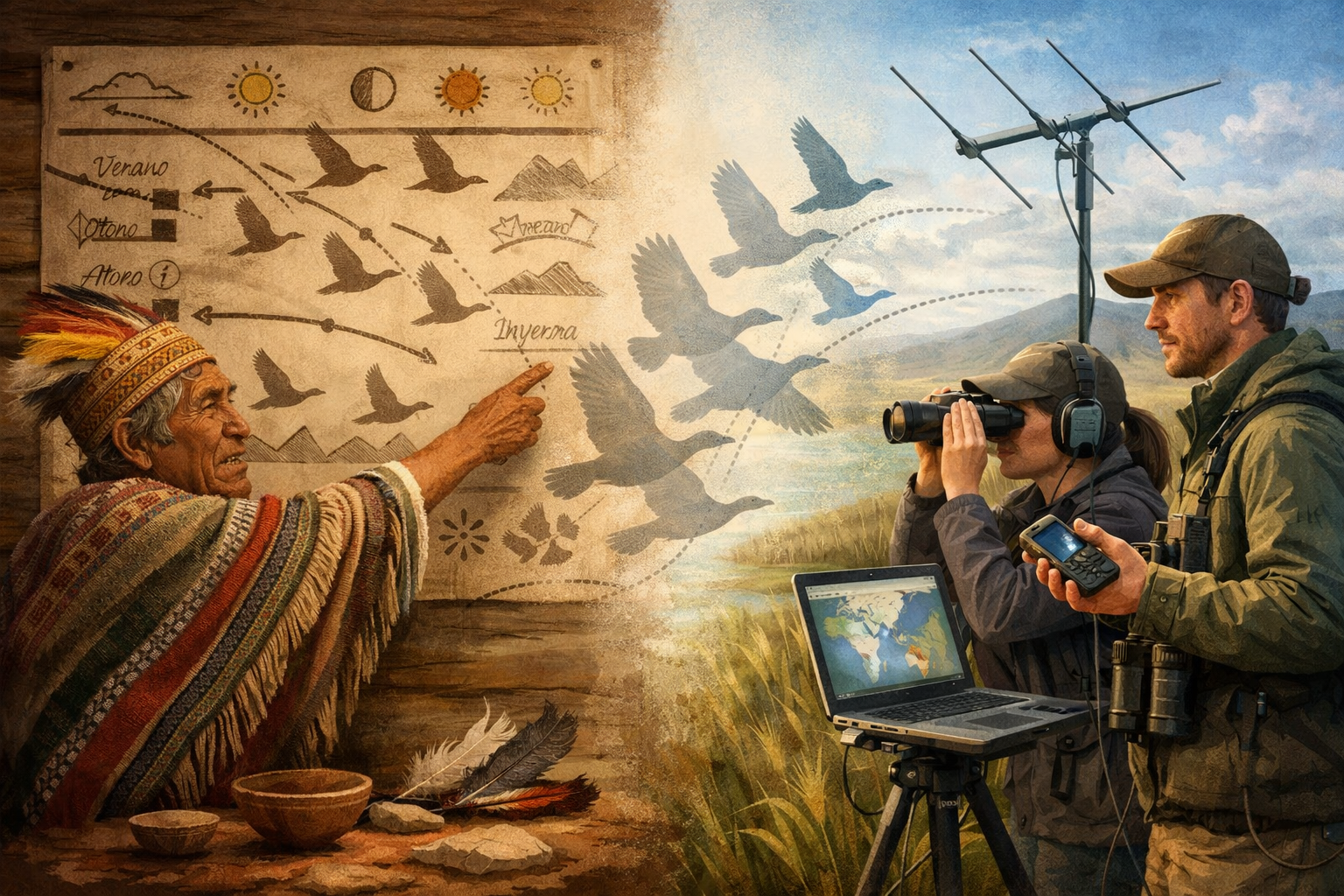
Enhanced Detection and Accuracy
Combining knowledge systems improves monitoring effectiveness:
- Higher species detection rates as local participants identify cryptic or rare species that external observers miss
- Improved seasonal coverage through year-round community presence versus periodic scientific surveys
- Better habitat mapping incorporating local knowledge of microhabitats and ecological processes
- Validation of scientific findings through independent confirmation by community observers
Research shows that local participants can gather extensive biodiversity data across large areas at relatively low cost compared to conventional scientific surveys.[2] This cost-effectiveness is particularly valuable for conservation programs with limited budgets or working in remote regions.
Informing Conservation Priorities
Integrated survey data reveals:
- Species of local importance that might not be conservation priorities based solely on scientific criteria
- Culturally significant habitats requiring protection for both ecological and social reasons
- Historical distribution patterns helping identify restoration opportunities
- Early warning indicators of ecosystem stress detected through traditional observation
For developers and planners working on projects requiring biodiversity net gain assessments, incorporating indigenous knowledge can identify critical habitats and species that formal surveys might overlook, leading to more effective mitigation and enhancement strategies.
Supporting Adaptive Management
The 2026 research demonstrates that indigenous observations capture ongoing ecological changes in real-time. This creates opportunities for:
- Responsive conservation interventions based on early detection of population declines
- Monitoring of restoration effectiveness through community-based observation networks
- Climate change adaptation strategies informed by local understanding of ecosystem responses
- Sustainable resource management balancing conservation with community needs
Organizations implementing biodiversity plans can incorporate community monitoring into long-term management frameworks, creating sustainable surveillance systems that persist beyond project timelines.
Challenges and Solutions in Implementation
While the benefits of integrating indigenous knowledge with Western methods are clear, implementation faces several challenges:
Challenge 1: Different Epistemologies and Communication Barriers
Issue: Indigenous knowledge systems and Western science operate from different worldviews, use different terminology, and prioritize different types of evidence.
Solutions:
- Employ cultural liaisons and translators who understand both knowledge systems
- Invest time in relationship-building before data collection begins
- Create visual and narrative formats for knowledge exchange alongside quantitative data
- Recognize the validity of different ways of knowing without forcing artificial equivalence
Challenge 2: Power Imbalances and Historical Mistrust
Issue: Colonial history and past exploitation of indigenous knowledge create legitimate skepticism about research partnerships.
Solutions:
- Establish community-controlled research protocols with indigenous leadership
- Ensure free, prior, and informed consent at all stages
- Provide transparent benefit-sharing agreements with tangible community returns
- Support indigenous data sovereignty and intellectual property rights
Challenge 3: Standardization Without Homogenization
Issue: Scientific protocols require standardization for comparison, but indigenous knowledge is inherently place-based and culturally specific.
Solutions:
- Develop flexible frameworks allowing local adaptation while maintaining core comparability
- Use multiple data types (quantitative, qualitative, spatial, temporal) to capture complexity
- Accept that some knowledge cannot be standardized without losing essential meaning
- Value local specificity as a strength rather than a limitation
Challenge 4: Funding and Institutional Support
Issue: Integrated approaches require more time, resources, and cross-cultural expertise than conventional surveys.
Solutions:
- Demonstrate cost-effectiveness through improved data quality and coverage
- Build institutional capacity for cross-cultural research within universities and agencies
- Create dedicated funding streams for community-based monitoring
- Recognize indigenous knowledge contributions in academic and policy contexts
For organizations navigating these complexities while meeting regulatory requirements like achieving biodiversity net gain, partnering with experienced professionals who understand both scientific protocols and community engagement is essential.
The Future of Biodiversity Monitoring: Lessons from 2026 Research
The groundbreaking 2026 study published in Oryx represents a shift in how conservation science approaches evidence and knowledge.[1] Key lessons emerging from this research include:
Memory as Data
The study demonstrates that collective memory is a legitimate and valuable form of biodiversity data. Indigenous communities' observations of bird assemblage changes over 80 years provide insights that no other data source can replicate. This recognition challenges conservation science to expand its definition of valid evidence beyond instrumental measurement.
Scale and Scope
By engaging 1,434 participants across 10 communities on three continents, the research achieved a geographic and temporal scale impossible through conventional scientific surveys alone. This demonstrates that community-based monitoring can generate large-scale comparative data when properly designed and coordinated.[3]
Convergent Evidence
The alignment between indigenous observations and scientific findings strengthens both knowledge systems. When independent methods reach the same conclusions—in this case, the dramatic decline in large-bodied bird species—confidence in the pattern increases substantially. This convergent evidence approach should become standard practice in conservation assessment.
Actionable Insights
The research doesn't just document decline; it reveals patterns that inform conservation action. Understanding that large-bodied birds are disproportionately affected allows targeted interventions addressing specific threats like hunting pressure, habitat loss, and infrastructure impacts. Indigenous knowledge provides the local context necessary for designing effective, culturally appropriate conservation strategies.
Policy Implications
As governments and international bodies establish biodiversity targets and monitoring frameworks, the 2026 research provides a model for inclusive, comprehensive assessment. Policies like the UK's Biodiversity Net Gain requirements could be strengthened by incorporating indigenous and local knowledge into baseline assessments and long-term monitoring programs.
Building Capacity for Integrated Surveys: Practical Steps for 2026 and Beyond
Organizations and practitioners seeking to implement Indigenous Knowledge in Biodiversity Surveys: Integrating Local Insights with Western Methods for 2026 Bird Decline Monitoring can take concrete steps:
For Conservation Organizations
- Invest in cross-cultural training for staff working with indigenous communities
- Establish long-term partnerships rather than extractive, one-time research projects
- Allocate adequate resources for community engagement and capacity building
- Create indigenous advisory boards to guide research design and implementation
- Support indigenous-led conservation initiatives with funding and technical assistance
For Government Agencies
- Incorporate indigenous knowledge into environmental assessments and regulatory frameworks
- Recognize community-based monitoring as legitimate evidence in policy decisions
- Fund collaborative research programs bringing together scientists and indigenous experts
- Protect indigenous data sovereignty through appropriate legal frameworks
- Include indigenous representatives in conservation planning and decision-making bodies
For Researchers and Scientists
- Learn about indigenous knowledge systems relevant to your research area
- Engage communities early in research design, not just data collection
- Use participatory methods that respect community protocols and priorities
- Ensure co-authorship and recognition for indigenous knowledge holders
- Communicate findings to communities in accessible formats and languages
For Developers and Planners
When conducting biodiversity surveys for development projects, consider:
- Consulting with local and indigenous communities during baseline assessment phases
- Incorporating traditional ecological knowledge into habitat mapping and species inventories
- Engaging community monitors for long-term surveillance of mitigation measures
- Supporting indigenous stewardship as part of biodiversity offset strategies
- Recognizing cultural values of species and habitats in impact assessments
Conclusion
The March 2026 research confirming indigenous observations of large bird declines represents more than just another scientific study—it marks a fundamental shift in how we understand and value different forms of ecological knowledge. Indigenous Knowledge in Biodiversity Surveys: Integrating Local Insights with Western Methods for 2026 Bird Decline Monitoring isn't a compromise between two approaches; it's a synthesis that produces more comprehensive, accurate, and actionable understanding than either system alone.
The dramatic 72% decline in bird body mass documented through indigenous memory across three continents reveals both an ecological crisis and an opportunity. The crisis is clear: large-bodied bird species are disappearing globally, with profound implications for ecosystem function, cultural heritage, and biodiversity conservation. The opportunity lies in recognizing that communities with long-term, place-based connections to their territories hold irreplaceable knowledge about environmental change—knowledge that can guide more effective conservation action.
Actionable Next Steps
For immediate implementation:
- Review existing biodiversity monitoring programs to identify opportunities for indigenous knowledge integration
- Reach out to local and indigenous communities in your project areas to explore collaborative monitoring partnerships
- Invest in capacity building for both scientific and indigenous knowledge holders to work effectively together
- Advocate for policy changes that recognize indigenous knowledge as legitimate evidence in conservation decisions
- Support indigenous-led conservation initiatives through funding, technical assistance, and institutional partnerships
For long-term transformation:
- Build institutional frameworks supporting cross-cultural research and knowledge exchange
- Develop standardized protocols for integrated surveys that respect both scientific rigor and indigenous epistemologies
- Create dedicated funding streams for community-based biodiversity monitoring
- Establish indigenous data sovereignty protections ensuring communities control their knowledge
- Integrate indigenous perspectives into conservation education and professional training
The 2026 bird decline research demonstrates that understanding ecological change depends as much on listening to indigenous communities as on instrumental measurement. As we face accelerating biodiversity loss and climate disruption, we cannot afford to ignore any source of knowledge about how ecosystems are changing. The path forward requires humility, partnership, and recognition that the longest and most comprehensive records of environmental change often exist in the collective memory of communities who have lived on and cared for their lands for generations.
For organizations seeking to implement rigorous, comprehensive biodiversity monitoring that meets regulatory requirements while incorporating diverse knowledge systems, professional biodiversity survey services can provide the expertise and frameworks necessary for successful integration. The future of conservation depends on our ability to bridge knowledge systems, respect diverse ways of knowing, and act on the convergent evidence they provide about our changing world.
References
[1] Indigenous peoples and local communities report a consistent decline in the body mass of birds across three continents – https://www.cambridge.org/core/journals/oryx/article/indigenous-peoples-and-local-communities-report-a-consistent-decline-in-the-body-mass-of-birds-across-three-continents/EF0F50BC2F769287BAB468FC6BE77484
[2] Birds Are Changing And Indigenous Memory Is The Longest Record We Have – https://news.mongabay.com/2026/03/birds-are-changing-and-indigenous-memory-is-the-longest-record-we-have/
[3] Indigenous peoples, locals drastic decline – https://phys.org/news/2026-02-indigenous-peoples-locals-drastic-decline.html
[4] Indigenous Knowledge Confirms What Scientists Observe Large Birds Are Disappearing – https://news.mongabay.com/short-article/indigenous-knowledge-confirms-what-scientists-observe-large-birds-are-disappearing/