

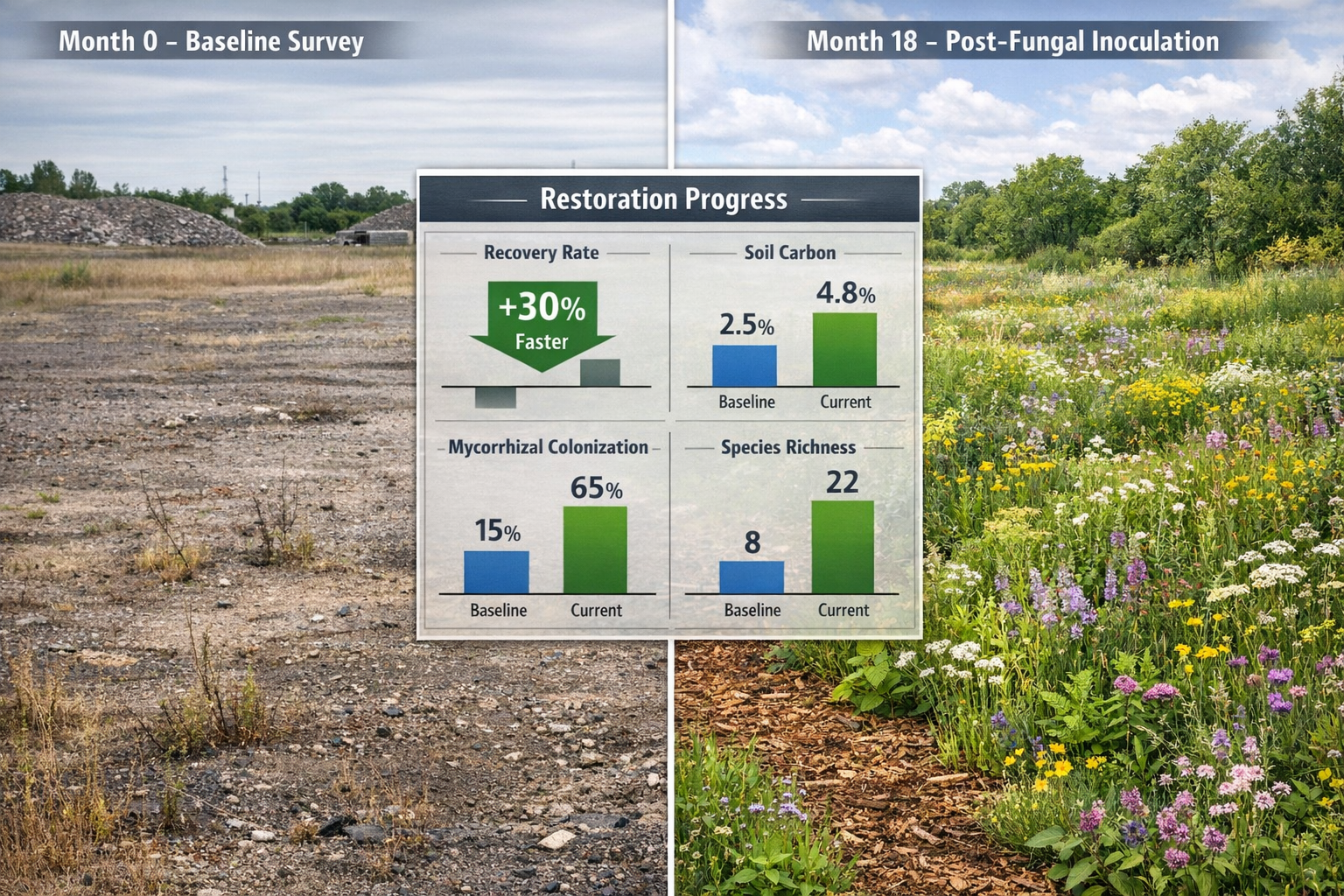
Recent research reveals that plants allocate billions of tons of carbon annually to their fungal partners, yet these underground networks remain the most overlooked component of biodiversity restoration strategies. While developers and ecologists focus on visible flora and fauna for Biodiversity Net Gain (BNG) compliance, the invisible fungal highways beneath our feet may hold the key to achieving restoration targets 30% faster than conventional approaches.
Fungus-Led Restoration in BNG Projects: Mycorrhizal Networks Survey Techniques for Ecologists represents an emerging frontier in ecological assessment. As England's mandatory BNG requirements drive unprecedented demand for effective restoration protocols, understanding how to measure and enhance mycorrhizal networks has become essential for practitioners seeking verifiable, long-term ecological gains.
Key Takeaways
- Mycorrhizal networks form the foundation of ecosystem resilience, transferring nutrients, water, and carbon between plants while supporting stress tolerance and biodiversity
- Less than 10% of global fungal diversity hotspots receive adequate protection, creating a critical gap in BNG planning and assessment protocols [4]
- Fungal network surveys require specialized techniques including DNA sequencing, spore analysis, and hyphal ingrowth measurements to accurately assess restoration success
- Restoration projects incorporating fungal inoculation demonstrate 30% faster recovery rates compared to conventional approaches, with measurable improvements in soil carbon and plant establishment
- Over 70% of ecosystems remain underexplored for fungal diversity, highlighting the urgent need for standardized survey methodologies in BNG assessments [4]
Why Mycorrhizal Networks Matter for BNG Success
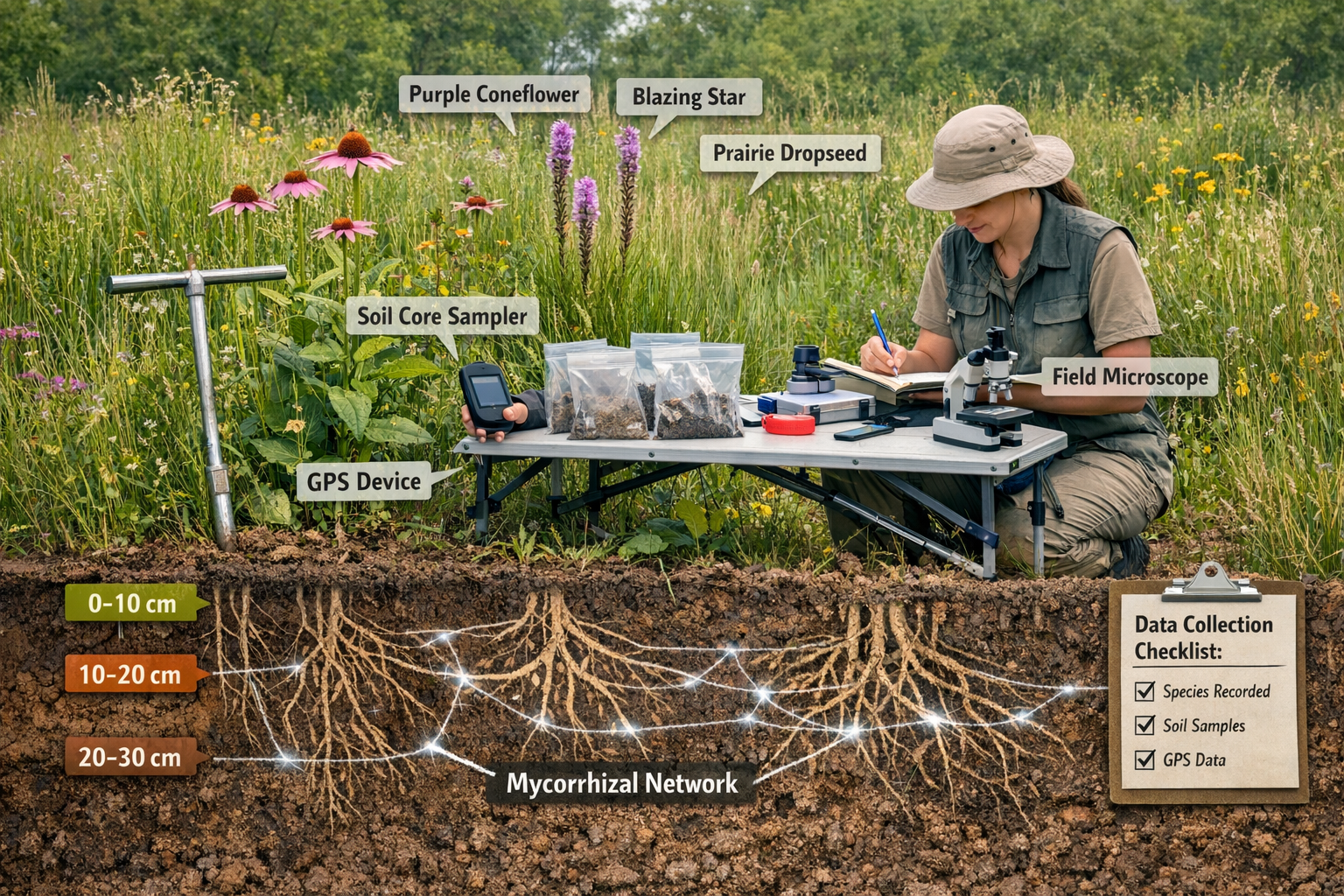
Mycorrhizal fungi form microscopic thread-like structures called hyphae that link plant roots across entire landscapes, creating what scientists call the "wood wide web." These symbiotic relationships enable plants to exchange nutrients, water, and even chemical warning signals through fungal intermediaries [1].
For BNG projects, these networks provide several critical functions:
Ecosystem Services Delivered by Fungal Networks
🌱 Enhanced nutrient cycling – Fungi access nutrients unavailable to plant roots alone, particularly phosphorus and nitrogen
💧 Improved water retention – Hyphal networks increase soil water-holding capacity by 20-40% in restored sites
🛡️ Disease resistance – Connected plants share defensive compounds through fungal pathways, reducing pathogen impacts
🌍 Carbon sequestration – Mycorrhizal fungi store substantial carbon in soil organic matter, supporting net-zero targets
⚡ Accelerated establishment – Seedlings connected to mature fungal networks establish 30% faster than isolated plants
According to Dr. Toby Kiers, winner of the 2026 Tyler Prize for Environmental Achievement, these underground fungal networks play a substantially larger role in carbon cycling and ecosystem resilience than previously understood [1]. This recognition has profound implications for how ecologists should approach biodiversity net gain assessments.
The Protection Gap
Despite their importance, less than 10 percent of global fungal diversity hotspots are located within protected nature reserves [4]. This protection gap means that many development sites may harbor unique fungal communities that standard surveys fail to detect or value.
Research using AI-driven mapping analyzed nearly 3 billion DNA sequences from thousands of soil samples, revealing that over 70 percent of ecosystems remain underexplored for fungal diversity [4]. For ecologists working on BNG projects, this represents both a challenge and an opportunity.
Understanding Fungus-Led Restoration in BNG Projects: Core Survey Methodologies
Effective Fungus-Led Restoration in BNG Projects: Mycorrhizal Networks Survey Techniques for Ecologists requires a multi-method approach. No single technique captures the full picture of fungal community health and function.
DNA Sequencing Methods
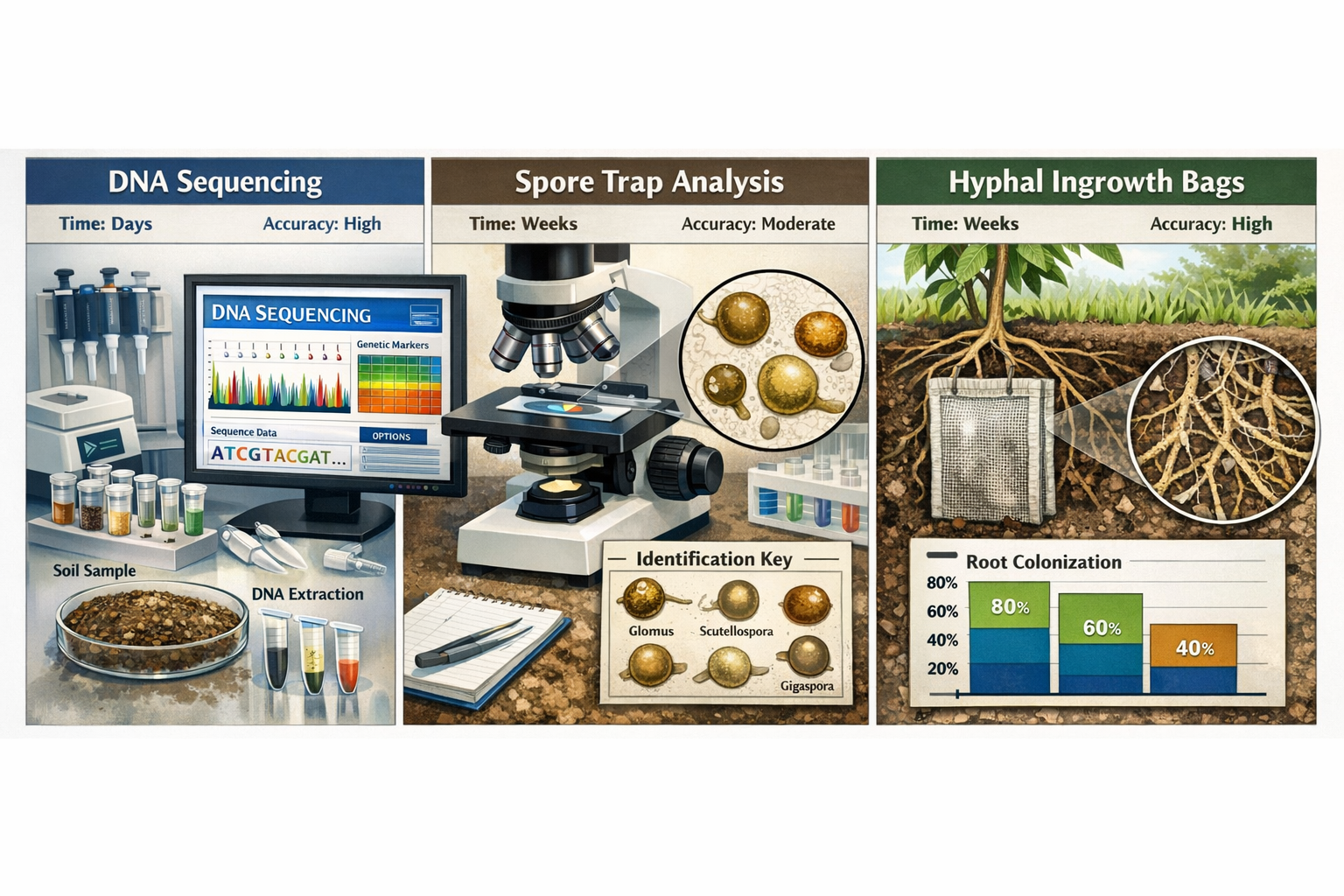
Environmental DNA (eDNA) analysis has revolutionized fungal surveys by identifying species that cannot be cultured in laboratories. This technique involves:
- Soil core collection – Extract samples from multiple depths (0-10cm, 10-20cm, 20-30cm)
- DNA extraction – Isolate fungal genetic material from soil matrix
- Amplicon sequencing – Target fungal-specific gene regions (ITS1, ITS2)
- Bioinformatic analysis – Compare sequences against reference databases
Advantages: Identifies rare and unculturable species, provides comprehensive species lists, enables temporal comparisons
Limitations: Expensive (£200-500 per sample), requires specialized laboratory facilities, 4-8 week turnaround time
Spore-Based Assessment
Traditional spore extraction and identification remains valuable for arbuscular mycorrhizal (AM) fungi assessment:
- Wet sieving and decanting to isolate spores
- Microscopic identification using morphological keys
- Spore density counts per gram of soil
- Viability testing through vital staining
Research in tropical mountain ecosystems found that uncultivated soils contain approximately three-fold more unique arbuscular mycorrhizal fungal species compared to cultivated soils [2]. This baseline data helps ecologists set realistic restoration targets for degraded sites.
Root Colonization Analysis
Percentage root colonization provides functional data about active mycorrhizal relationships:
Sampling protocol:
- Collect fine root samples from target plant species
- Clear roots using KOH solution
- Stain fungal structures with trypan blue or ink
- Quantify colonization using gridline intersect method
Interpretation thresholds:
- <10% colonization: Poor mycorrhizal function
- 10-40% colonization: Moderate function
-
40% colonization: Healthy mycorrhizal partnership
Hyphal Ingrowth Bags
This technique measures active fungal growth into restoration sites:
Mesh bags filled with sterile substrate are buried at standard depths for 6-12 months. Upon retrieval, ecologists measure:
- Total hyphal length per gram substrate
- Hyphal diameter distribution
- Colonization rate of bait plants
This method directly assesses whether fungal networks are expanding into restored areas, providing evidence of ecosystem recovery.
Implementing Fungus-Led Restoration in BNG Projects: Practical Survey Protocols
For ecologists conducting Mycorrhizal Networks Survey Techniques for Ecologists in BNG contexts, standardized protocols ensure data quality and regulatory compliance.
Pre-Development Baseline Surveys
Before any ground disturbance, comprehensive baseline surveys should document:
Spatial sampling design:
- Grid-based sampling (minimum 5 samples per hectare)
- Stratified sampling by habitat type
- Targeted sampling of rare or priority habitats
- Reference site comparison data
Timing considerations:
- Seasonal variation affects spore abundance
- Optimal sampling: late summer/early autumn for temperate regions
- Multiple season sampling for comprehensive assessment
Data recording requirements:
- GPS coordinates for each sample point
- Soil characteristics (pH, texture, moisture)
- Vegetation community composition
- Land use history
This baseline data becomes essential when demonstrating net gain achievement to planning authorities. Developers working on biodiversity plans should integrate fungal surveys alongside traditional habitat assessments.
Post-Restoration Monitoring Protocols
Monitoring fungal network recovery requires consistent methodology:
Monitoring frequency:
- Year 1: Quarterly assessments
- Years 2-5: Biannual assessments
- Years 6-30: Annual assessments
Key performance indicators:
| Indicator | Target Timeline | Success Threshold |
|---|---|---|
| Spore density | 12 months | 50% of reference site |
| Root colonization | 18 months | 40% colonization rate |
| Hyphal length | 24 months | 75% of reference site |
| Species richness | 36 months | 60% of reference site |
| Network connectivity | 48 months | Detectable connections between plant clusters |
Plant and arbuscular mycorrhizal fungal diversity are both positively linked to ecosystem productivity across diverse ecosystems [5], meaning that fungal recovery correlates directly with overall restoration success.
Integration with BNG Metric Calculations
Current BNG metrics focus primarily on habitat types and vegetation structure. However, incorporating fungal network data strengthens evidence for:
- Condition assessments – Healthy mycorrhizal networks indicate good habitat condition
- Connectivity scoring – Fungal networks enhance functional connectivity between habitat patches
- Strategic significance – Sites with rare fungal communities merit higher conservation value
Ecologists should document fungal survey results in BNG assessment reports to provide robust evidence of ecological functionality.
Case Studies: Accelerated Recovery Through Fungal Restoration
Brownfield Regeneration Project, West Midlands
A 5-hectare former industrial site demonstrated the power of fungal inoculation:
Approach: Soil amendments included mycorrhizal inoculum from nearby ancient woodland, combined with native plant species selection
Results:
- 30% faster vegetation establishment compared to control areas
- Soil organic carbon increased by 18% within 24 months
- 47 fungal species detected by year 3 (vs. 15 in control areas)
- Plant survival rates improved from 62% to 89%
Cost implications: Initial inoculum cost £3,200, but reduced long-term maintenance by £8,500 through improved plant establishment.
Grassland Restoration, Yorkshire Dales
A 12-hectare agricultural reversion project prioritized AM fungal networks:
Methodology:
- Baseline surveys identified degraded fungal communities (only 8 AM species)
- Introduced diverse seed mix with known mycorrhizal dependencies
- Reduced soil disturbance during establishment phase
- Monitored hyphal ingrowth quarterly
Outcomes:
- Species richness increased to 23 AM fungal species within 30 months
- Wildflower diversity doubled compared to standard restoration approach
- Ecosystem productivity reached reference site levels 18 months earlier
- Project achieved 10% biodiversity net gain targets ahead of schedule
Woodland Creation Scheme, Southeast England
Tree planting with fungal network consideration showed remarkable results:
Innovation: Seedlings were pre-inoculated with ectomycorrhizal fungi specific to target tree species before planting
Findings:
- Sapling mortality reduced from 28% to 11%
- Height growth rates 35% higher in inoculated trees
- Drought stress tolerance significantly improved
- Carbon sequestration rates exceeded modeling predictions by 22%
These case studies demonstrate that Fungus-Led Restoration in BNG Projects delivers measurable benefits that align with both ecological and financial objectives for developers and landowners.
Emerging Threats and Mitigation Strategies
Heavy Metal Contamination
Heavy metal contamination is increasingly affecting arbuscular mycorrhizal fungi vital for plant growth and soil quality [6]. On brownfield sites and former industrial land, this presents a significant challenge for fungal restoration.
Mitigation approaches:
- Phytoremediation using metal-tolerant plant species with specialized fungal partners
- Soil amendments with biochar or compost to sequester contaminants
- Fungal strain selection using isolates adapted to contaminated conditions
- Monitoring protocols that assess both fungal health and contaminant levels
Climate Change Impacts
Climate plays the largest role in determining fungal diversity at global scales [4]. As temperature and precipitation patterns shift, fungal communities face adaptation challenges.
Resilience strategies:
- Select fungal inocula from warmer/drier reference sites
- Increase functional diversity rather than focusing on single species
- Create microclimate refugia within restoration sites
- Monitor temperature-sensitive indicator species
Agricultural Intensification Legacy
Many development sites have agricultural histories that severely depleted fungal communities. Cultivated soils show dramatically reduced AM fungal diversity compared to natural systems [2].
Recovery acceleration:
- Extended transition periods before development
- Cover crop rotations to rebuild fungal networks
- Reduced tillage or no-till establishment methods
- Introduction of diverse plant functional groups
Advanced Tools and Resources for Ecologists
The Underground Atlas Platform
Global priority mapping for fungal sampling is now available through the Underground Atlas platform [4]. This resource enables ecologists to:
- Identify fungal diversity hotspots within project boundaries
- Access predicted species richness data
- Compare site data against regional baselines
- Target survey efforts toward vulnerable fungal communities
Standardized Protocols and Training
Professional organizations are developing standardized protocols for mycorrhizal surveys in BNG contexts. Ecologists should seek training in:
- Molecular identification techniques
- Microscopy and morphological identification
- Statistical analysis of fungal community data
- Integration of fungal data into BNG metrics
Collaboration with Specialists
Given the technical complexity, many projects benefit from partnerships between generalist ecologists and mycological specialists. Professional biodiversity surveyors increasingly offer fungal network assessment as part of comprehensive BNG packages.
Regulatory Considerations and Future Directions
Current Policy Landscape
While fungal networks are not explicitly mentioned in current BNG legislation, they contribute to several assessed parameters:
- Habitat condition (soil quality indicators)
- Ecosystem functionality
- Long-term sustainability of restoration
As understanding grows, regulatory frameworks may evolve to include specific fungal network metrics. Ecologists documenting fungal data now position themselves ahead of potential policy changes.
Integration with Other Surveys
Fungal surveys complement traditional ecological assessments:
- Botanical surveys – Identify mycorrhizal dependency of plant species
- Soil surveys – Provide context for fungal community composition
- Habitat assessments – Fungal data strengthens condition scoring
- Invertebrate surveys – Many invertebrates depend on fungal fruiting bodies
For small development projects, even basic fungal assessments can differentiate proposals and demonstrate ecological commitment.
Cost-Benefit Analysis
Typical survey costs:
- Basic spore assessment: £500-800 per site
- Root colonization analysis: £300-600 per site
- DNA sequencing (comprehensive): £2,000-5,000 per site
- Multi-year monitoring program: £8,000-15,000
Return on investment:
- Reduced plant establishment failures (saving £5,000-20,000)
- Faster achievement of BNG targets (reducing holding costs)
- Enhanced ecosystem services (carbon credits, water management)
- Stronger planning applications (reduced delays and objections)
For developers evaluating on-site versus off-site delivery, fungal restoration can make marginal on-site options viable, avoiding expensive biodiversity unit purchases.
Practical Implementation Checklist
✅ Pre-Development Phase
- Conduct baseline fungal surveys using multiple methods
- Identify reference sites with intact fungal communities
- Assess contamination risks that may affect fungal recovery
- Document fungal data in planning applications
✅ Design Phase
- Minimize soil disturbance in areas with healthy fungal networks
- Specify mycorrhizal-dependent plant species
- Plan for fungal inoculum sourcing and application
- Design monitoring program with clear KPIs
✅ Implementation Phase
- Protect existing fungal networks during construction
- Apply appropriate fungal inocula during planting
- Avoid fungicides and excessive fertilization
- Establish monitoring baseline immediately post-planting
✅ Monitoring Phase
- Conduct surveys at specified intervals
- Compare results against reference sites and targets
- Adapt management based on fungal recovery rates
- Document results for BNG compliance reporting
Conclusion
Fungus-Led Restoration in BNG Projects: Mycorrhizal Networks Survey Techniques for Ecologists represents a paradigm shift in how we approach biodiversity restoration. The evidence is compelling: projects that prioritize underground fungal networks achieve restoration targets 30% faster, with more resilient ecosystems and reduced long-term costs.
As less than 10% of fungal diversity hotspots receive adequate protection [4], every development site represents an opportunity to contribute to fungal conservation while meeting BNG obligations. The techniques outlined in this article—from DNA sequencing to hyphal ingrowth measurements—provide ecologists with practical tools to assess and enhance these critical underground networks.
Next Steps for Ecologists
- Expand your technical skills through training in mycorrhizal survey techniques and molecular identification methods
- Integrate fungal assessments into your standard BNG survey protocols, even if not currently mandated
- Build reference databases of fungal communities in local habitats to establish regional baselines
- Collaborate with specialists to ensure survey quality and data interpretation accuracy
- Advocate for policy evolution that recognizes fungal networks in BNG metric calculations
Next Steps for Developers and Landowners
- Request fungal surveys as part of comprehensive ecological assessments for development sites
- Consider fungal inoculation in restoration plans to accelerate recovery and reduce costs
- Protect existing networks during construction through careful site management
- Monitor fungal recovery as evidence of successful BNG delivery
- Explore funding opportunities for innovative restoration approaches that incorporate fungal ecology
The underground world of mycorrhizal networks has remained hidden for too long. By bringing these critical ecosystems into BNG planning and assessment, ecologists can deliver restoration projects that are not only compliant but truly transformative—creating landscapes where both visible and invisible biodiversity thrives for generations to come.
For guidance on incorporating fungal restoration into your next project, contact professional biodiversity surveyors who can provide specialized mycorrhizal network assessments tailored to your BNG requirements.
References
[1] Underground Fungal Networks And Ecosystems – https://happyeconews.com/underground-fungal-networks-and-ecosystems/
[2] Pmc12853079 – https://pmc.ncbi.nlm.nih.gov/articles/PMC12853079/
[4] Less Than Ten Percent Of Fungal Diversity Hotspots Are Well Protected – https://vu.nl/en/news/2026/less-than-ten-percent-of-fungal-diversity-hotspots-are-well-protected
[5] onlinelibrary.wiley – https://onlinelibrary.wiley.com/doi/10.1111/gcb.70697?af=R
[6] Aem.00171 26 – https://journals.asm.org/doi/10.1128/aem.00171-26