

Frontiers in Ecosystem Dynamics: Biodiversity Surveyor Guide to 2026 Research Topics from Frontiers in Ecology and Evolution
Over 82 active research topics are currently shaping the future of ecosystem science, yet most biodiversity surveyors remain unaware of how these cutting-edge methodologies can transform their field assessments and Biodiversity Net Gain (BNG) monitoring strategies. The Frontiers in Ecosystem Dynamics: Biodiversity Surveyor Guide to 2026 Research Topics from Frontiers in Ecology and Evolution bridges […]
Hot Topics in Policy-Relevant Ecology Surveys: Australian Insights for Global Biodiversity Net Gain Implementation in 2026
Australia's government recently submitted a 261-page report to the United Nations that reads "more like a fairy tale written by public relations consultants than an evidence-based report by scientists," according to the Biodiversity Council—a consortium of 11 Australian universities.[1] This stark criticism reveals a troubling disconnect between official narratives and ecological reality, offering crucial lessons […]
Nutrient Cycling Surveys for BNG Compliance: Ecologist Strategies Tracking Phosphorus and Nitrogen in 2026 Agro-Ecosystem Baselines
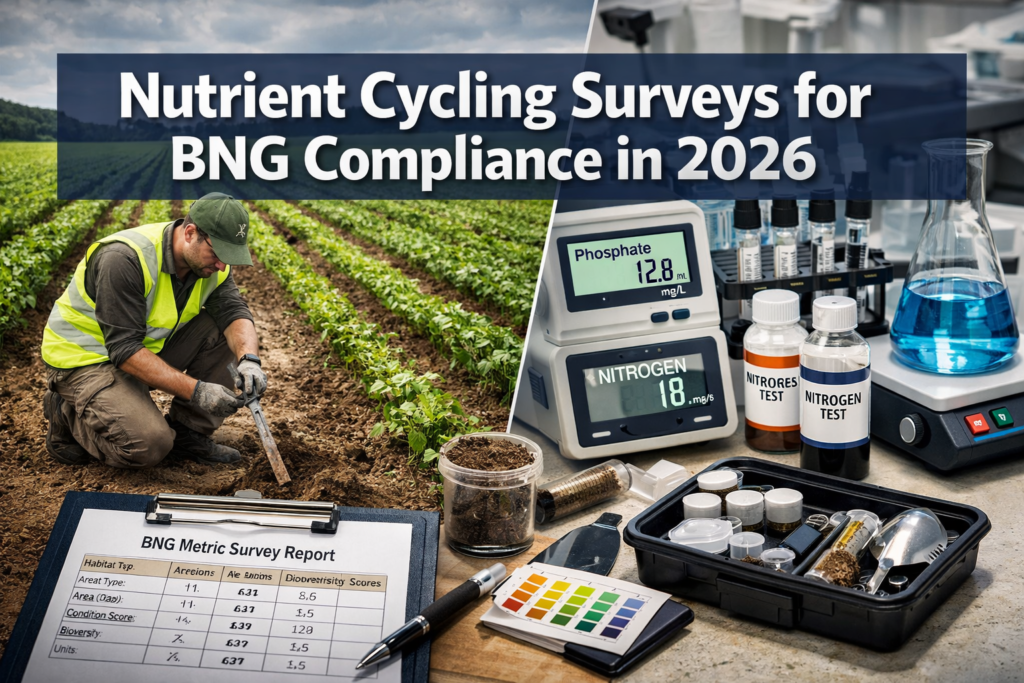
Altered nutrient cycles in agricultural landscapes now pose one of the most significant threats to achieving Biodiversity Net Gain (BNG) targets. Research shows that excess phosphorus and nitrogen can reduce habitat condition scores by up to 30%, directly undermining the mandatory 10% biodiversity uplift required since February 2024[1]. As development pressure intensifies on agricultural land […]
Land-Sea Interaction Surveys for Coastal BNG: Ecologist Protocols for Measuring Nutrient Fluxes in 2026 Estuarine Biodiversity Assessments
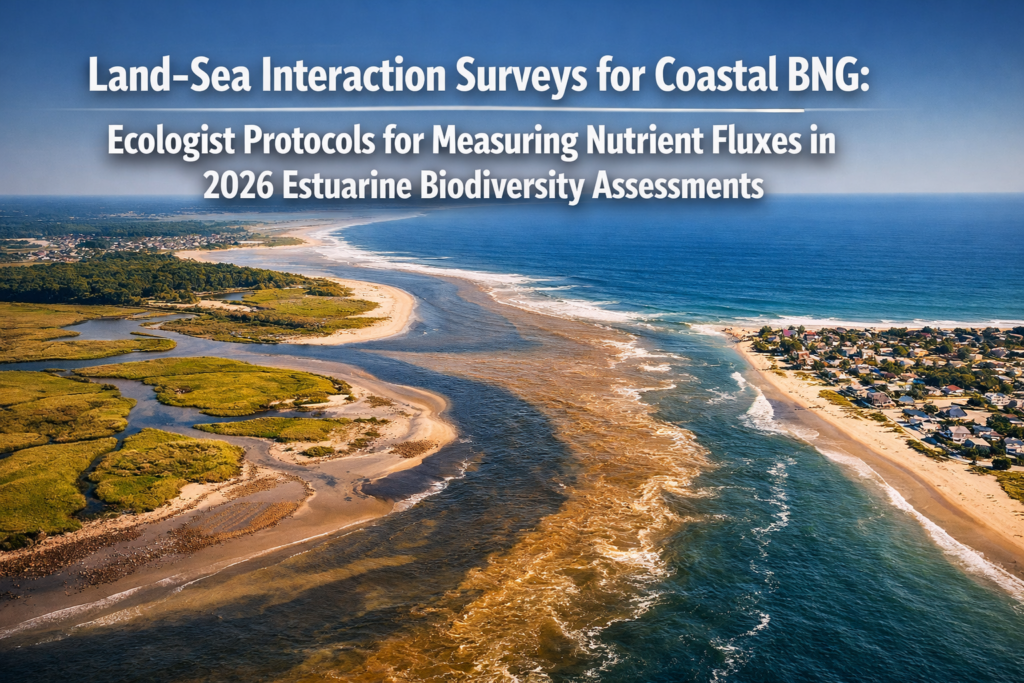
Coastal ecosystems process more than 80% of global nutrient runoff before it reaches the open ocean, yet traditional Biodiversity Net Gain (BNG) assessments often treat terrestrial and marine habitats as separate entities. This disconnect creates critical gaps in understanding how development projects truly impact estuarine biodiversity. In 2026, ecologists are bridging this divide with integrated […]
Ecosystem Functioning Under Human Impacts: Resilience Protocols for Biodiversity Surveyors in 2026 Urban Fringe Assessments
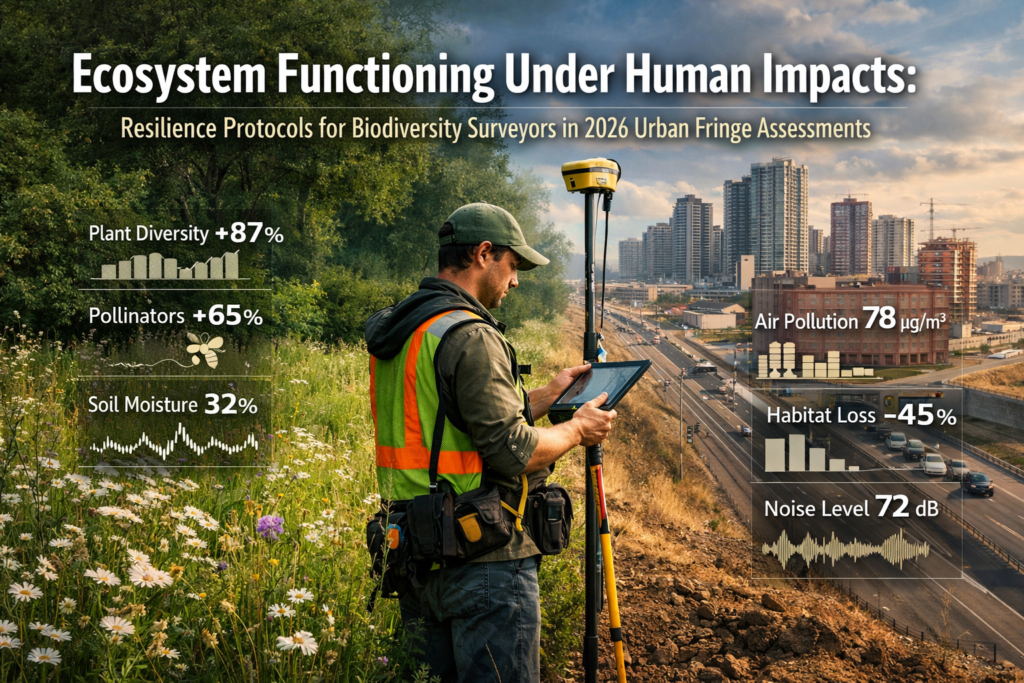
Between 2000 and 2018, the Ganjingzi district witnessed a staggering 40% decline in total green space—from 359.57 km² to just 213.46 km²—with ecosystem functions including gas regulation, climate regulation, and water conservation weakening dramatically as fragmentation intensified [1]. This pattern repeats across urban fringe areas worldwide, where human pressures transform functioning ecosystems into stressed, fragmented […]