

Coastal Ecosystem Surveys for Biodiversity Net Gain: Integrating Land-Sea Interactions in 2026 Baseline Assessments
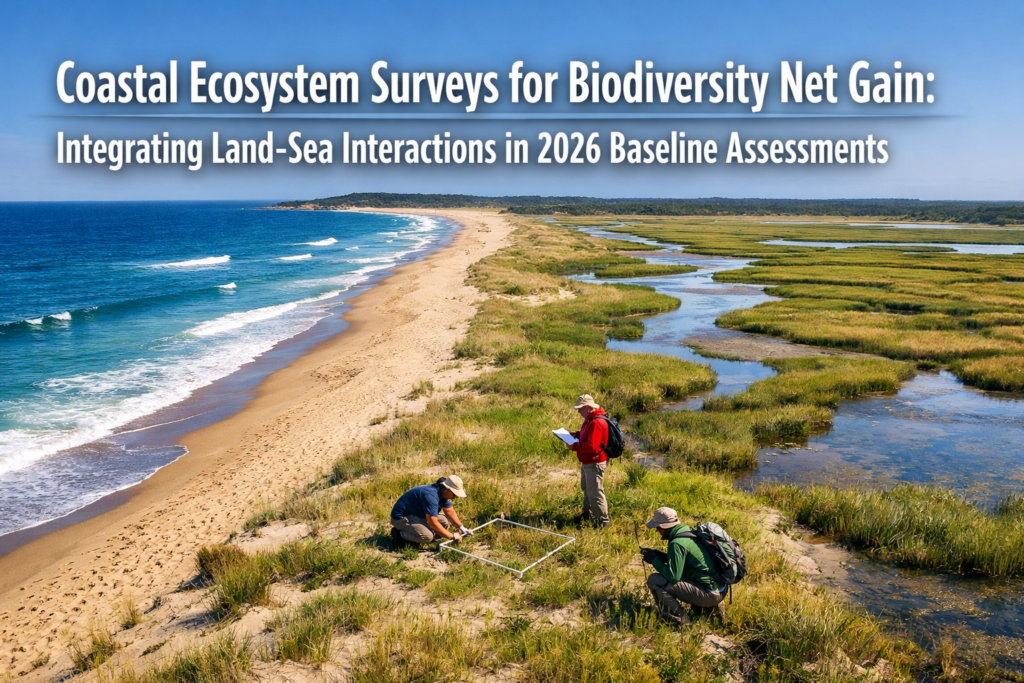
Where land meets sea, biodiversity doesn't stop at arbitrary boundaries—yet most assessment protocols still do. A recent 2026 Global Horizon Scan identified the projected loss of macroalgal habitats, including kelp forests, as a critical vulnerability in coastal ecosystems facing warming and extreme events.[4] This emerging threat underscores why Coastal Ecosystem Surveys for Biodiversity Net Gain: […]
Ecosystem Connectivity in Biodiversity Surveys: Mapping Species Movement Across Fragmented Habitats for 2026 Net Gain Projects
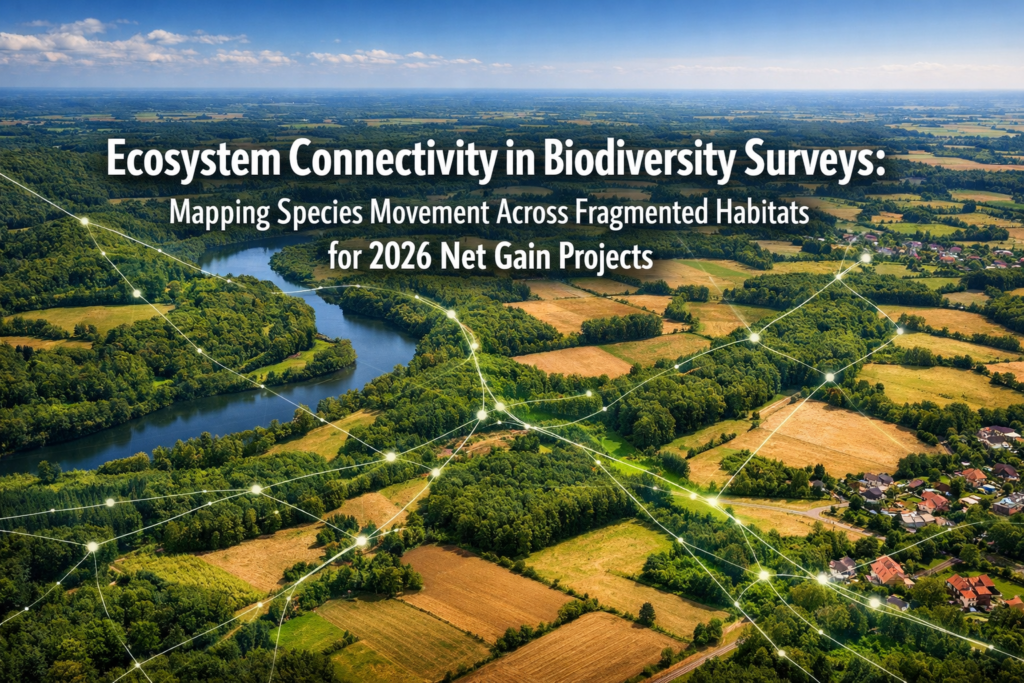
Habitat fragmentation now affects 70% of the world's remaining forests, with the average distance between forest patches decreasing species survival rates by up to 50% in some regions. As development pressures intensify across the UK and globally, biodiversity surveyors face a critical challenge: traditional site-based assessments no longer capture the landscape-level connectivity that determines whether […]
Drought Resilience Profiling in Biodiversity Surveys: Using Soil Microbe Memory to Predict Species Survival in 2026
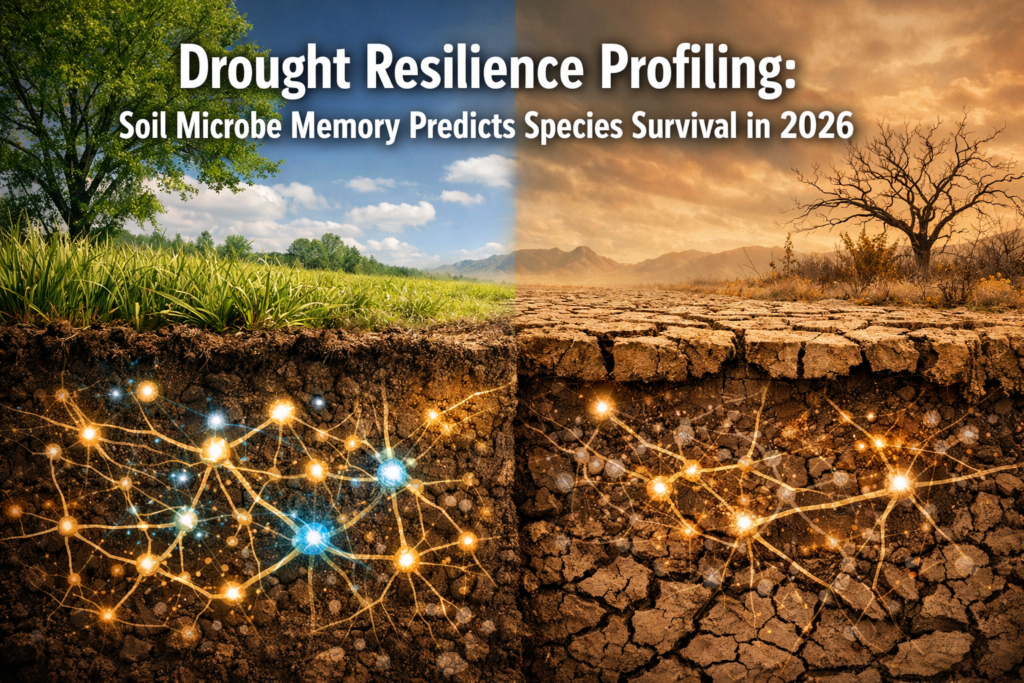
Soil beneath our feet holds memories. When drought strikes an ecosystem, microscopic communities of bacteria and fungi don't simply disappear—they adapt, persist, and retain information about past stress events. This microbial memory, scientists now understand, directly influences which plant and animal species will survive future droughts. In 2026, as soil moisture decline emerges as a […]
Designing Surveys for Ecosystem Functioning: Moving Beyond Species Lists to Measure Nutrient Cycling and Energy Flow in 2026
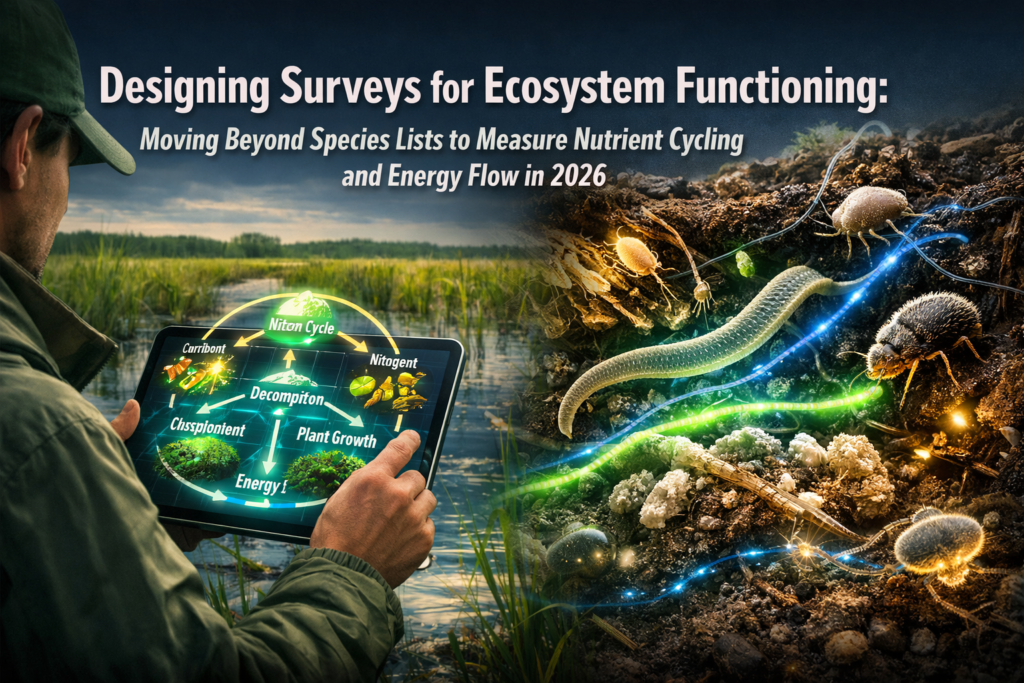
Recent research from The Jena Experiment reveals that soil biodiversity effects on ecosystems depend far more on functional processes than species counts—with nutrient cycling, organic-matter decomposition, and climate regulation providing the actual ecosystem services that biodiversity assessments aim to protect.[3] Yet most ecological surveys in 2026 still rely primarily on species presence/absence checklists, missing the […]
Ecosystem Within Ecosystems: Hierarchical Survey Design for Multi-Scale Biodiversity Assessment in 2026
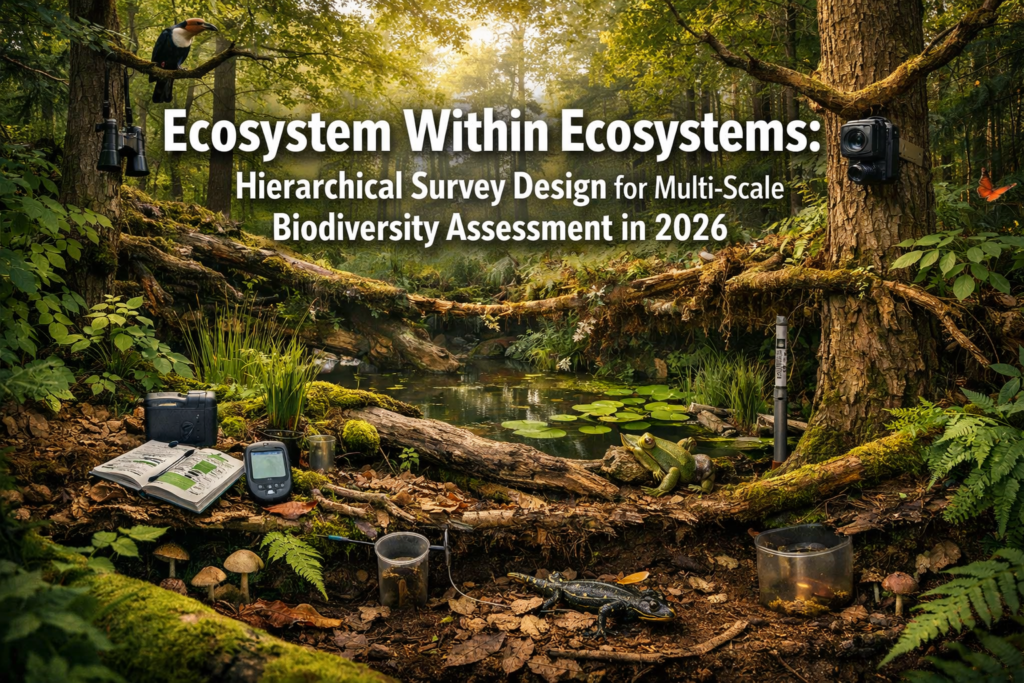
A single wetland within a coastal bay can harbor more distinct ecological communities than some entire nature reserves. Yet traditional biodiversity surveys often treat these nested habitats as uniform units, missing critical species interactions and habitat dependencies that determine true ecological value. As biodiversity net gain (BNG) requirements intensify across development sectors in 2026, understanding […]