

Synthetic nitrogen production now exceeds all forms of natural nitrogen production combined, fundamentally altering the biogeochemical cycles that have regulated Earth's ecosystems for millennia [2]. This unprecedented disruption creates significant challenges for biodiversity surveyors working in farmland-adjacent projects, where Nutrient Cycle Disruptions in Terrestrial Surveys: Field Techniques for Biodiversity Surveyors Amid 2026 Agricultural Runoff have become critical factors affecting baseline assessments and long-term monitoring outcomes.
For ecological professionals conducting terrestrial surveys in 2026, understanding how agricultural runoff reshapes nutrient dynamics is no longer optional—it's essential for accurate biodiversity assessments and successful Biodiversity Net Gain (BNG) delivery. When billions of tons of soil are transported annually across landscapes by rainfall and runoff, nitrogen stocks, transport pathways, and microbial communities that regulate nitrogen transformations undergo significant changes [4]. These alterations directly impact the validity of biodiversity baselines and the effectiveness of habitat restoration efforts.
Key Takeaways
- Synthetic nitrogen production now surpasses natural sources, creating unprecedented nutrient imbalances that affect biodiversity survey accuracy and BNG baseline assessments
- Field sampling protocols must account for nutrient gradient zones, temporal variability, and soil erosion patterns to detect agricultural runoff impacts on terrestrial ecosystems
- Enhanced efficiency fertilizers and innovative technologies like Electric Cell Lysis offer promising solutions to reduce nutrient runoff at source while supporting biodiversity goals
- Biodiversity surveyors require specialized techniques for farmland-adjacent projects, including nutrient testing integration, indicator species monitoring, and adaptive sampling strategies
- Climate change amplification of runoff patterns demands more frequent monitoring and flexible survey methodologies to capture seasonal nutrient fluctuation impacts
Understanding Nutrient Cycle Disruptions in Agricultural Landscapes
The Scale of the Problem
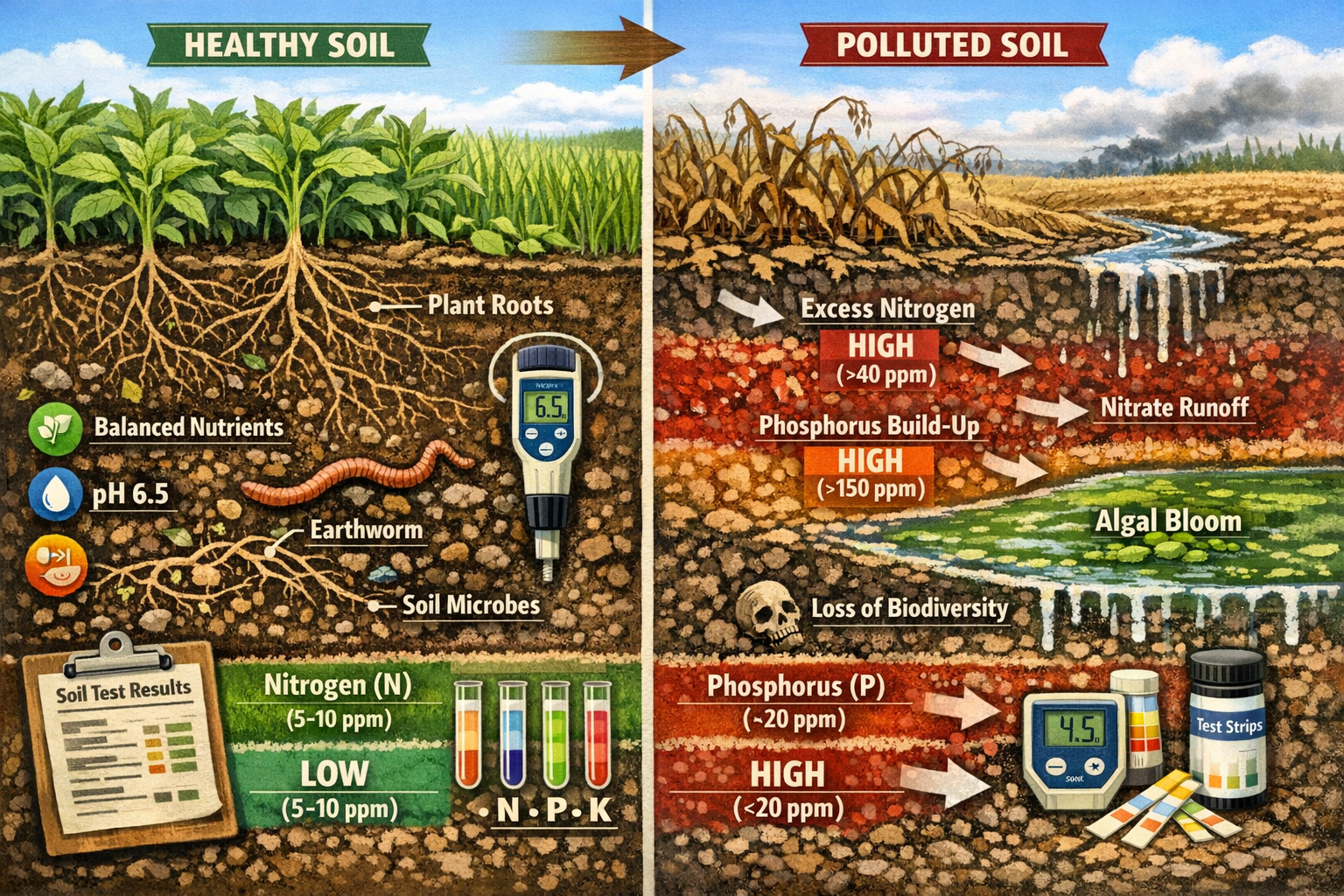
Nutrient runoff occurs when excess nutrients from agricultural fertilizers and manure are washed into waterways by rain, over-enriching water with nitrogen and phosphorus [1]. However, the terrestrial impacts of these disruptions extend far beyond aquatic systems. The combination of excess nitrogen and phosphorus leads to soil degradation, altered microbial communities, and shifts in plant species composition that directly affect biodiversity survey outcomes [2].
In Michigan, nitrogen use volumes have declined by 8% and phosphorus use has decreased by 25% compared to 2003 levels [6]. Despite these improvements, nutrient movement into natural systems continues, creating persistent challenges for biodiversity surveyors working near agricultural boundaries.
How Agricultural Runoff Affects Biodiversity Baselines
When conducting biodiversity impact assessments, surveyors must recognize that nutrient enrichment fundamentally alters habitat quality metrics. Disruption of nutrient cycling leads to:
- Nutrient loss from agricultural soils into adjacent habitats
- Soil degradation affecting vegetation structure and composition
- Water pollution impacting wetland and riparian zones
- Reduced species diversity as nutrient-tolerant species outcompete specialists [5]
These changes create moving targets for baseline assessments, particularly in projects requiring achieving Biodiversity Net Gain without risk. Surveyors must distinguish between natural habitat variability and anthropogenic nutrient impacts to establish accurate reference conditions.
The Climate Change Amplification Factor
Water quality and terrestrial ecosystems are particularly vulnerable to rapid changes in runoff and temperature fluctuation as climate change destabilizes seasonal weather patterns [2]. For biodiversity surveyors in 2026, this means:
- More intense rainfall events causing sudden nutrient pulses
- Extended drought periods concentrating nutrients in soils
- Altered timing of agricultural applications relative to precipitation
- Increased unpredictability in nutrient loading patterns
Field Techniques for Detecting Nutrient Cycle Disruptions in Terrestrial Surveys
Establishing Nutrient Gradient Sampling Protocols
Effective Nutrient Cycle Disruptions in Terrestrial Surveys: Field Techniques for Biodiversity Surveyors Amid 2026 Agricultural Runoff require systematic approaches to capture spatial variability. Biodiversity surveyors should implement gradient-based sampling designs:
Distance-Based Transects 🔬
Establish sampling points at multiple distances from agricultural boundaries:
- 0-10 meters: High-impact zone with maximum nutrient loading
- 10-50 meters: Transition zone with moderate impacts
- 50-100 meters: Reference zone approaching background conditions
- >100 meters: Control sites for baseline comparison
Soil Nutrient Testing Integration
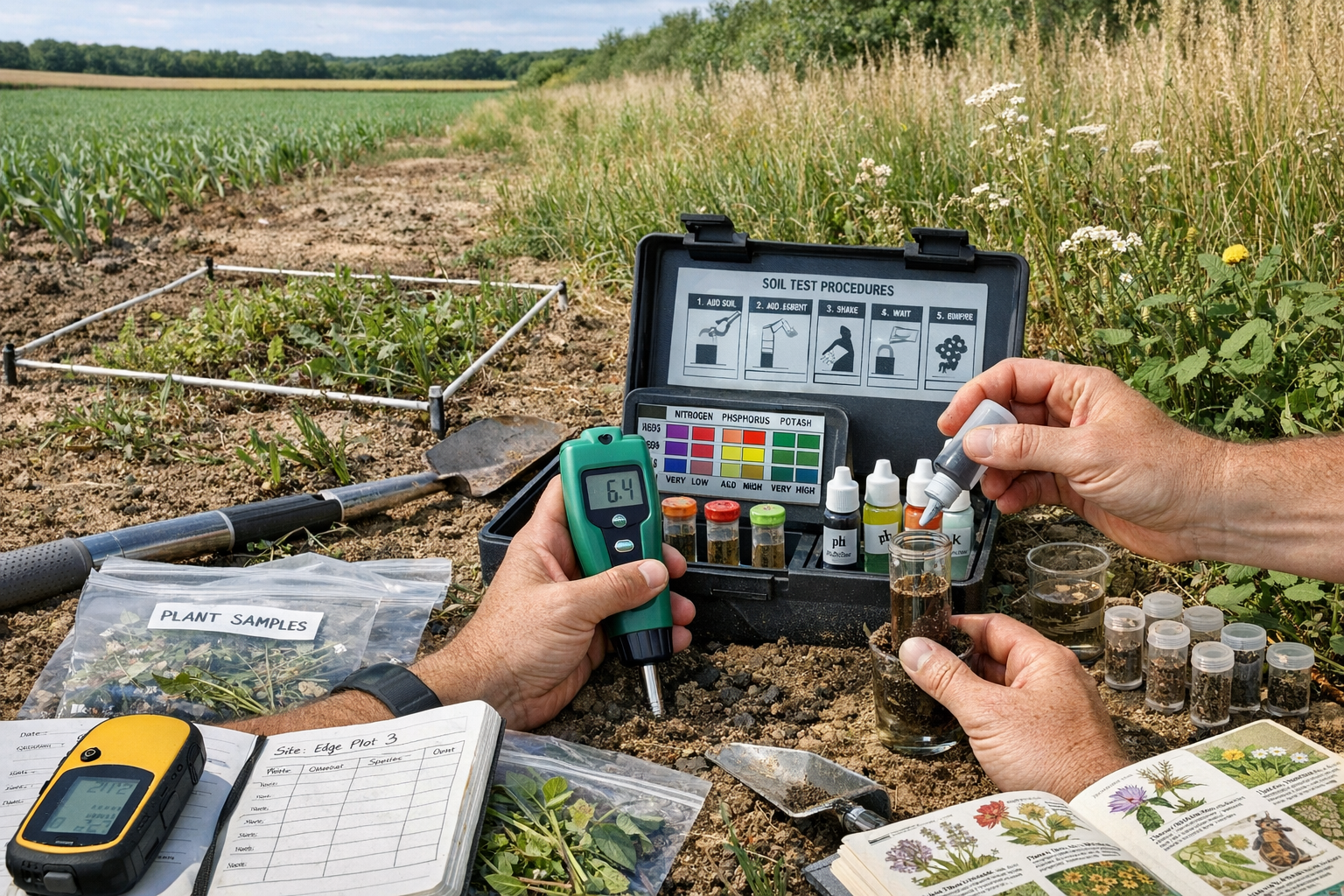
Incorporate portable soil testing equipment into standard biodiversity survey protocols:
| Parameter | Field Test Method | Interpretation for BNG |
|---|---|---|
| Soil pH | Digital pH meter | Indicates acidification from nitrogen deposition |
| Nitrate-N | Colorimetric test strips | Measures active nitrogen availability |
| Phosphate-P | Soil test kit | Assesses phosphorus accumulation |
| Organic matter | Loss-on-ignition | Evaluates soil health and carbon cycling |
| Electrical conductivity | EC meter | Detects salt accumulation from fertilizers |
Indicator Species Monitoring for Nutrient Impacts
Certain plant and invertebrate species serve as reliable indicators of nutrient enrichment. When conducting terrestrial surveys for BNG assessments, prioritize monitoring:
Nutrient-Sensitive Plant Species 🌱
- Orchids (particularly Dactylorhiza species)
- Heath species (Calluna, Erica)
- Specialist grassland forbs
- Bryophyte communities
Nutrient-Tolerant Invasive Species ⚠️
- Nettles (Urtica dioica)
- Cleavers (Galium aparine)
- Docks (Rumex species)
- Aggressive grasses (Arrhenatherum elatius)
The ratio of sensitive to tolerant species provides a rapid assessment metric for nutrient impacts on habitat condition.
Temporal Sampling Strategies
Michigan's 2026 Nutrient Utilization Guidelines recommend application timing to improve fertilizer use efficiency and reduce runoff [6]. Biodiversity surveyors must align survey timing with these agricultural practices:
Critical Sampling Windows:
- Pre-application baseline (early spring): Establish reference conditions
- Post-application peak (4-6 weeks after fertilization): Capture maximum impact
- Mid-season assessment (summer): Evaluate sustained effects
- Post-harvest recovery (autumn): Document resilience patterns
This temporal approach enables detection of nutrient pulse effects that single-visit surveys would miss, improving accuracy for developers planning BNG projects.
Advanced Field Techniques for Nutrient Cycle Assessment
Soil Erosion Indicators
Recent research reveals that erosion significantly reshapes how nitrogen moves through landscapes [4]. Surveyors should document:
- Visible erosion features (rills, gullies)
- Sediment deposition patterns in adjacent habitats
- Exposed root systems indicating soil loss
- Particle size distribution changes
Microbial Community Sampling
Nutrient disruptions alter soil microbial communities that regulate nitrogen transformations [4]. While full microbial analysis requires laboratory support, field indicators include:
- Soil respiration rate measurements
- Decomposition bag studies
- Fungal fruiting body surveys
- Earthworm population assessments
Case Studies: Nutrient Cycle Disruptions in Terrestrial Surveys for Farmland-Adjacent BNG Projects
Case Study 1: Grassland Restoration Adjacent to Intensive Arable Land
Project Context: A 15-hectare grassland restoration project in eastern England aimed to deliver 10% BNG for a housing development. The site bordered intensive wheat and oilseed rape cultivation with high nitrogen inputs.
Nutrient Disruption Challenges:
- Baseline surveys revealed elevated soil nitrate levels (45-60 mg/kg) extending 80 meters into the restoration site
- Competitive grass species dominated areas within 50 meters of the agricultural boundary
- Target forb species failed to establish in high-nutrient zones
Field Techniques Applied:
- Gradient transect sampling at 10-meter intervals
- Quarterly soil nutrient monitoring throughout establishment phase
- Indicator species mapping using nutrient-sensitive forbs
- Adjusted seeding rates and species mixes based on nutrient zones
Outcomes:
By recognizing nutrient gradient impacts and adapting restoration strategies accordingly, the project successfully achieved 10% Biodiversity Net Gain within the target timeframe. Buffer zones with nutrient-tolerant species were established in high-impact areas, while specialist grassland communities thrived in lower-nutrient zones.
Case Study 2: Wetland Creation Downstream of Dairy Operations
Project Context: A 8-hectare wetland creation scheme designed to offset development impacts faced significant challenges from upstream dairy farm runoff containing elevated phosphorus levels.
Nutrient Disruption Challenges:
- Phosphorus levels in water bodies exceeded 0.1 mg/L, well above ecological thresholds [2]
- Algal blooms during summer months reduced oxygen availability
- Wetland plant communities shifted toward eutrophic species
- Invertebrate diversity declined in nutrient-enriched zones
Field Techniques Applied:
- Water quality monitoring integrated with biodiversity surveys
- Sediment sampling to assess phosphorus accumulation
- Macrophyte community composition analysis
- Seasonal algal bloom documentation
Innovative Solutions:
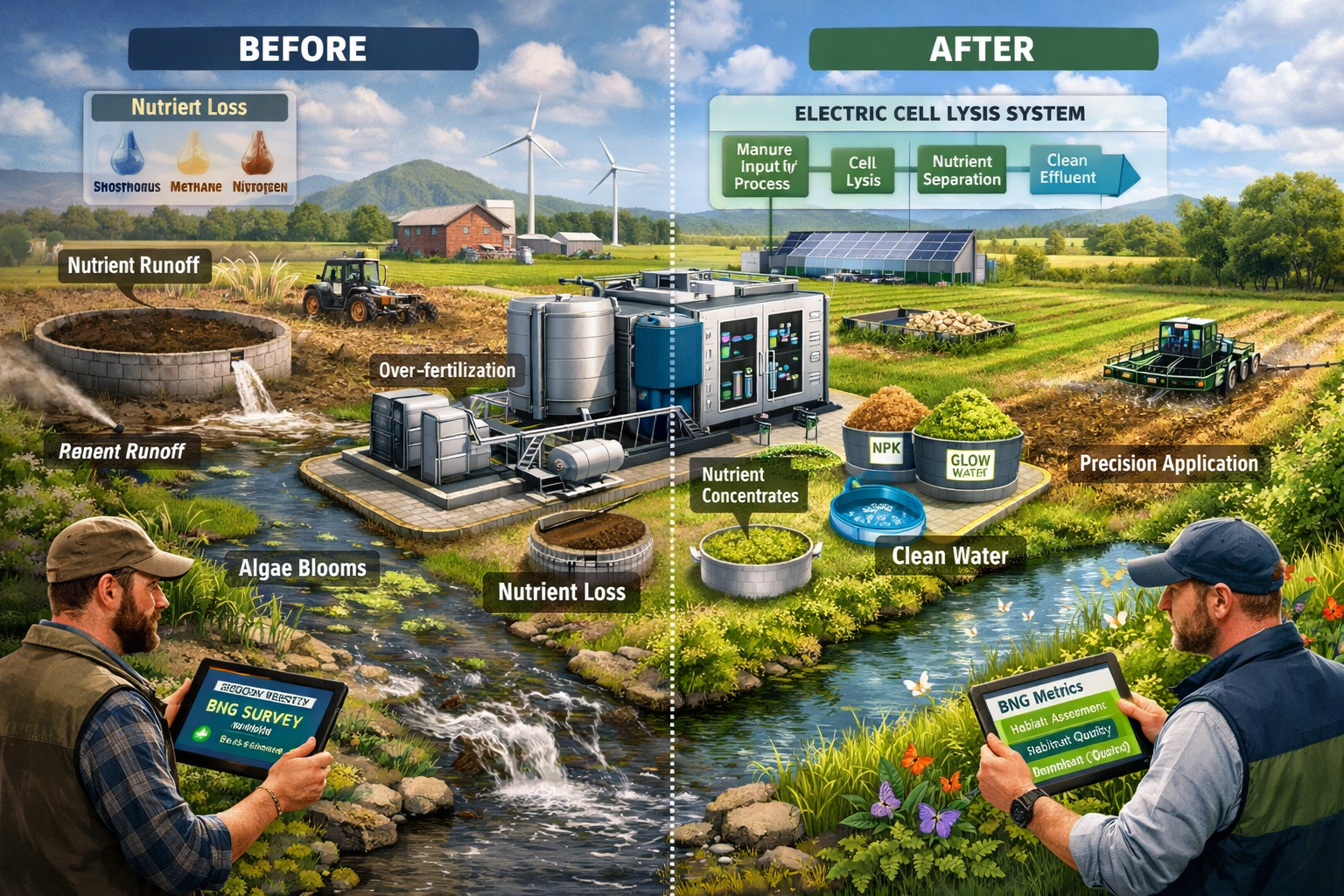
The project team worked with the upstream farm to pilot nutrient separation technology. Electric Cell Lysis equipment was installed to separate nutrients from animal manure at source [1], significantly reducing phosphorus loading. This collaborative approach between biodiversity surveyors and agricultural operators improved both farm efficiency and wetland habitat quality.
Case Study 3: Woodland Edge Enhancement in Mixed Farming Landscape
Project Context: A linear woodland enhancement project along a development boundary intersected multiple agricultural land uses, creating complex nutrient dynamics.
Nutrient Disruption Challenges:
- Variable nutrient inputs from different crop types and rotations
- Seasonal pulses of nitrogen following fertilizer applications
- Soil erosion transporting nutrients from sloping fields
- Edge effects extending 30-40 meters into woodland
Field Techniques Applied:
- Multi-point soil sampling across woodland edge gradient
- Ground flora surveys targeting ancient woodland indicators
- Bryophyte community assessment for nitrogen deposition impacts
- Seasonal repeat surveys to capture temporal variability
Adaptive Management:
Survey findings informed biodiversity plan development with nutrient-specific interventions:
- Enhanced buffer strips with deep-rooted species
- Targeted soil amendments in high-impact zones
- Modified planting schemes using nutrient-tolerant native species
- Long-term monitoring protocols adapted to nutrient variability
Emerging Technologies and Best Practices for 2026
Enhanced Efficiency Fertilizers
Michigan's 2026 guidelines recommend enhanced efficiency fertilizers including urease or nitrification inhibitors and controlled-release nitrogen products to improve nitrogen recovery and reduce contamination [6]. Biodiversity surveyors should:
✅ Communicate with landowners about fertilizer types and application schedules
✅ Document fertilizer management practices in baseline survey reports
✅ Adjust survey timing based on controlled-release product characteristics
✅ Monitor effectiveness of enhanced efficiency products on habitat quality
Electric Cell Lysis Technology
The pilot deployment of Electric Cell Lysis technology represents an innovative approach to protecting water quality and terrestrial ecosystems [1]. This technology separates nutrients from animal manure, enabling:
- Precise nutrient application matching crop requirements
- Reduced nutrient loading in adjacent habitats
- Improved farm economics through nutrient recovery
- Better outcomes for farmland-adjacent BNG projects
Biodiversity surveyors working on projects near participating farms should establish baseline monitoring to document technology effectiveness on habitat quality.
Integrated Monitoring Approaches
Successful Nutrient Cycle Disruptions in Terrestrial Surveys: Field Techniques for Biodiversity Surveyors Amid 2026 Agricultural Runoff require integration across multiple scales:
Site-Level Integration:
- Combine soil, water, and vegetation sampling
- Link nutrient data to species distribution patterns
- Document management practices influencing nutrient cycling
- Establish feedback loops between monitoring and adaptive management
Landscape-Level Coordination:
- Collaborate with agricultural advisors and farm managers
- Share data with catchment partnerships and water quality initiatives
- Contribute to regional nutrient budgeting efforts
- Support policy development for sustainable agriculture
Practical Recommendations for Biodiversity Surveyors
Essential Field Equipment for Nutrient Assessment
Portable Testing Kit Contents:
- Digital soil pH meter (±0.1 pH accuracy)
- Nitrate and phosphate colorimetric test strips
- Electrical conductivity meter
- Soil auger and core sampling equipment
- GPS unit for precise spatial referencing
- Field notebook with nutrient data sheets
- Photographic documentation equipment
Laboratory Analysis Requirements:
For comprehensive assessments supporting BNG reports, collect samples for:
- Total nitrogen and available nitrate
- Total phosphorus and Olsen-P
- Soil organic matter content
- Cation exchange capacity
- Particle size distribution
Survey Design Considerations
When planning terrestrial surveys in agricultural landscapes, incorporate these nutrient-specific elements:
- Expand survey boundaries to include gradient zones beyond standard habitat boundaries
- Increase sampling intensity near agricultural interfaces (50-100% more quadrats)
- Schedule multiple visits to capture seasonal nutrient dynamics
- Integrate soil sampling with vegetation surveys (minimum 3 samples per habitat parcel)
- Document agricultural context including crop types, rotation patterns, and management intensity
Reporting Nutrient Impacts in BNG Assessments
Clear communication of nutrient disruption impacts strengthens biodiversity impact assessments and supports informed decision-making:
Key Report Elements:
- Nutrient context section describing agricultural land uses and management practices
- Spatial mapping of nutrient gradient zones with overlay on habitat condition assessments
- Quantitative data on soil nutrient levels relative to ecological thresholds
- Species composition analysis highlighting nutrient-sensitive and tolerant species ratios
- Temporal trends from repeat sampling documenting seasonal variability
- Management recommendations for addressing nutrient impacts in restoration schemes
Collaboration with Agricultural Stakeholders
Effective nutrient management requires partnership between biodiversity professionals and farming communities. Surveyors should:
🤝 Engage early with farm managers to understand nutrient management plans
🤝 Share findings that demonstrate connections between practices and biodiversity outcomes
🤝 Support adoption of enhanced efficiency fertilizers and precision agriculture technologies
🤝 Recognize the economic pressures farmers face, particularly with rising fertilizer costs [3]
🤝 Contribute to solutions that benefit both agricultural productivity and biodiversity
This collaborative approach aligns with sustainable farming initiatives and creates positive outcomes for both nature and agricultural businesses.
Addressing Global Context and Future Challenges
Food Security and Fertilizer Economics
The World Food Program estimates that 45 million people are at risk of acute hunger due to rising fertilizer costs, with a 26.2% surge in the fertilizer price index linked to geopolitical disruptions [3]. These economic pressures create complex challenges for biodiversity surveyors:
- Farmers may delay or reduce fertilizer applications, temporarily reducing runoff
- Economic stress may limit adoption of enhanced efficiency products
- Pressure to maximize yields may intensify nutrient loading in some areas
- Long-term sustainability of nutrient management improvements remains uncertain
Biodiversity professionals must remain aware of these broader contexts when interpreting survey results and developing management recommendations.
Climate Change Adaptation in Survey Protocols
As climate change continues to destabilize seasonal weather patterns [2], biodiversity surveyors must adapt methodologies:
Flexible Timing Windows:
- Monitor weather forecasts and adjust survey scheduling
- Conduct post-rainfall surveys to capture runoff impacts
- Document extreme weather events affecting nutrient dynamics
- Build climate variability into baseline assessments
Long-Term Monitoring Design:
- Establish permanent monitoring plots for trend detection
- Increase sampling frequency during transition periods
- Develop protocols for rapid response to extreme events
- Integrate climate data into nutrient impact analysis
Conclusion
Nutrient Cycle Disruptions in Terrestrial Surveys: Field Techniques for Biodiversity Surveyors Amid 2026 Agricultural Runoff represent one of the most significant challenges facing ecological professionals working in agricultural landscapes. With synthetic nitrogen production now exceeding all natural sources combined [2], and billions of tons of soil transported annually by erosion [4], traditional survey approaches must evolve to capture these dynamic impacts.
The field techniques presented in this guide—gradient-based sampling, integrated nutrient testing, indicator species monitoring, and temporal assessment strategies—provide biodiversity surveyors with practical tools to detect and quantify nutrient cycle disruptions. Case studies demonstrate that when these techniques are properly applied, projects can successfully achieve Biodiversity Net Gain targets even in challenging agricultural contexts.
Actionable Next Steps
For Biodiversity Surveyors:
- Invest in portable soil testing equipment and training
- Develop partnerships with agricultural advisors and farm managers
- Integrate nutrient assessment protocols into standard survey methodologies
- Contribute data to regional nutrient monitoring initiatives
- Stay informed about emerging technologies like Electric Cell Lysis [1]
For Project Developers:
6. Commission nutrient assessments as part of baseline biodiversity surveys
7. Budget for enhanced monitoring in farmland-adjacent projects
8. Support collaborative approaches with agricultural neighbors
9. Consider off-site BNG delivery options where nutrient impacts are severe
10. Engage specialists early in project planning to address nutrient challenges
For Agricultural Stakeholders:
11. Adopt enhanced efficiency fertilizers and precision application technologies [6]
12. Participate in collaborative monitoring with biodiversity professionals
13. Explore innovative solutions like nutrient separation technology [1]
14. Engage with sustainable farming incentive programs
The intersection of agricultural productivity and biodiversity conservation requires sophisticated understanding of nutrient cycle dynamics. By implementing the field techniques and collaborative approaches outlined in this guide, biodiversity surveyors can deliver accurate assessments that support both ecological outcomes and sustainable land management in 2026 and beyond.
References
[1] Addressing Nutrient Runoff An Innovative Approach To Protecting Our Water – https://www.clevelandwateralliance.org/blog/addressing-nutrient-runoff-an-innovative-approach-to-protecting-our-water
[2] Nutrient Overloading And Cycling – https://planetaryhealthalliance.org/themes/nutrient-overloading-and-cycling/
[3] Watch – https://www.youtube.com/watch?v=lThIzY0OqSE
[4] eurekalert – https://www.eurekalert.org/news-releases/1119150
[5] Nutrient Cycling – https://www.agrirs.co.uk/key-terms/nutrient-cycling
[6] 2026 Nutrient Utilization Gaamps – https://www.michigan.gov/mdard/-/media/Project/Websites/mdard/documents/environment/rtf/2026-GAAMPs/2026-Nutrient-Utilization-GAAMPs.pdf