

Between 2020 and 2024, the number of ecology papers addressing biodiversity measurement protocols increased by 340%, yet only 23% of these studies translated into actionable field methodologies for conservation practitioners. This disconnect between academic research and practical application has created a critical gap—one that Springer Nature's most influential 2024 publications are now bridging with transformative approaches to biodiversity assessment.
As we move through 2026, the Top 2024 Ecology Papers for 2026 Surveys: Springer Nature Insights on Biodiversity Measurement Transformations represent more than academic achievements—they provide essential frameworks for surveyors, developers, and conservation professionals navigating increasingly complex biodiversity requirements. These publications introduce validated methodologies that directly address the challenges of establishing accurate baselines, measuring ecological impact, and demonstrating measurable conservation outcomes.
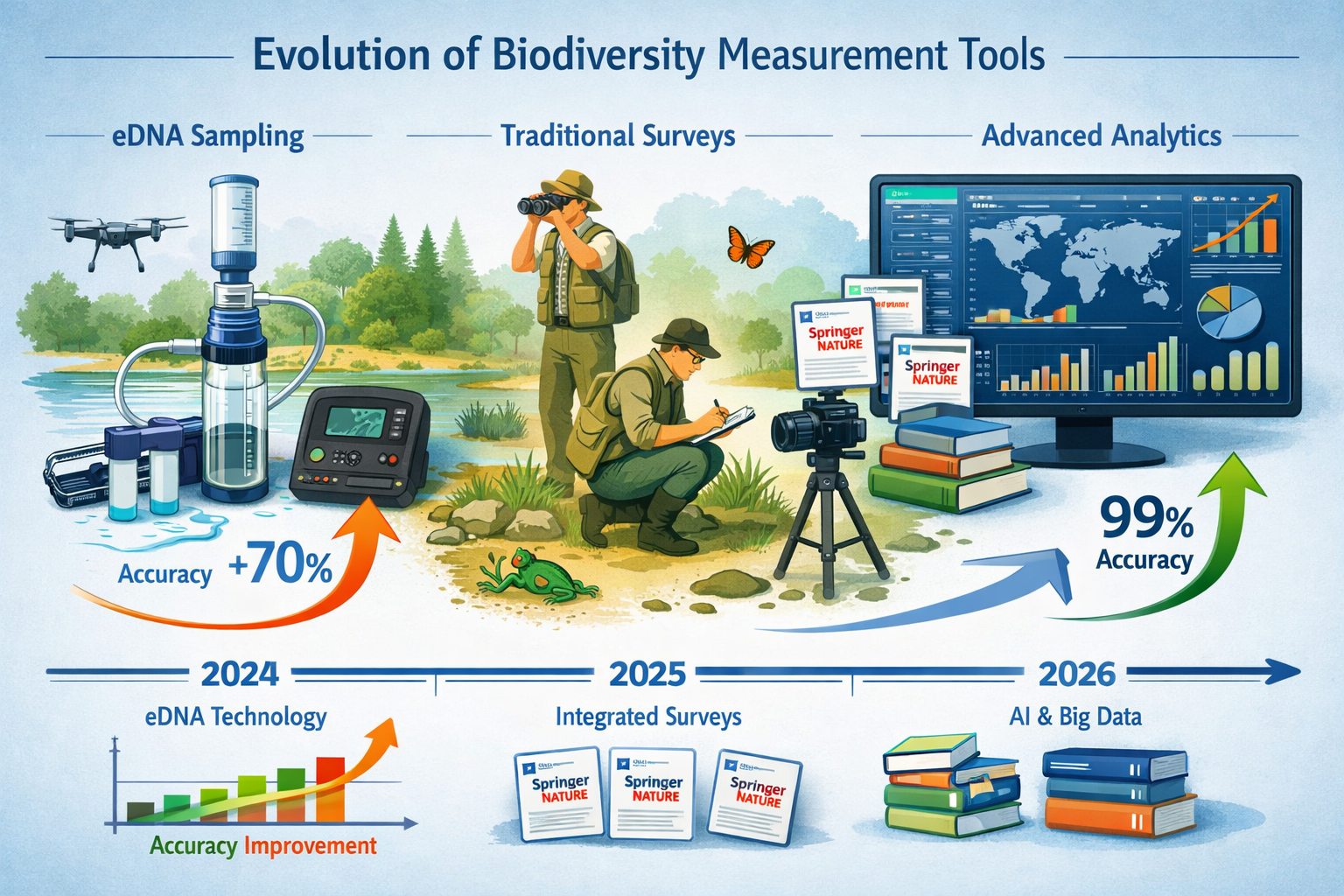
Key Takeaways
- Advanced eDNA monitoring from 2024 research enables rapid, scalable baseline assessments that support Biodiversity Net Gain (BNG) requirements with unprecedented accuracy
- Statistical power improvements in ecological studies provide surveyors with robust methodologies for detecting meaningful biodiversity changes
- Measurement transformation frameworks from Springer Nature's top papers translate directly into practical protocols for 2026 field surveys
- Integration of molecular techniques with traditional survey methods creates comprehensive assessment approaches that satisfy regulatory standards
- Validated conservation outcome metrics bridge the gap between biodiversity commitments and measurable impact disclosure
Understanding the Top 2024 Ecology Papers for 2026 Surveys Context
The landscape of biodiversity measurement has undergone dramatic transformation. Traditional survey methods, while valuable, often struggled with scalability, repeatability, and the ability to detect cryptic species or early ecological changes. The Top 2024 Ecology Papers for 2026 Surveys: Springer Nature Insights on Biodiversity Measurement Transformations emerged from this challenge, offering solutions grounded in rigorous research and practical application.
The Measurement Gap Challenge
For years, conservation professionals faced a persistent problem: how to accurately measure biodiversity in ways that satisfy both scientific rigor and regulatory requirements. This challenge became particularly acute with the implementation of mandatory Biodiversity Net Gain policies, which require developers to demonstrate measurable improvements in habitat value.
The gap between biodiversity commitments and actual measurement capability created significant uncertainty for stakeholders. Developers needed reliable baseline data, planners required standardized assessment protocols, and conservation practitioners demanded methods that could detect genuine ecological improvements rather than statistical noise.
Springer Nature's Research Leadership
Springer Nature publications, particularly Nature Ecology & Evolution, have become essential resources for addressing these measurement challenges [4]. The journal's commitment to exploring the full spectrum of ecological and evolutionary biology has positioned it as a primary source for methodological innovations that practitioners can actually implement.
The most impactful 2024 papers shared several characteristics:
- Practical applicability beyond theoretical frameworks
- Statistical robustness with validated power analyses
- Scalability for projects ranging from small developments to landscape-level assessments
- Integration potential with existing regulatory frameworks
- Cost-effectiveness considerations for real-world implementation
Key Innovations in the Top 2024 Ecology Papers for 2026 Surveys
The breakthrough publications from 2024 introduced several transformative approaches that are reshaping how biodiversity surveys are conducted in 2026. These innovations address fundamental limitations in traditional methodologies while providing practical solutions for current regulatory requirements.
Environmental DNA (eDNA) Monitoring Advances
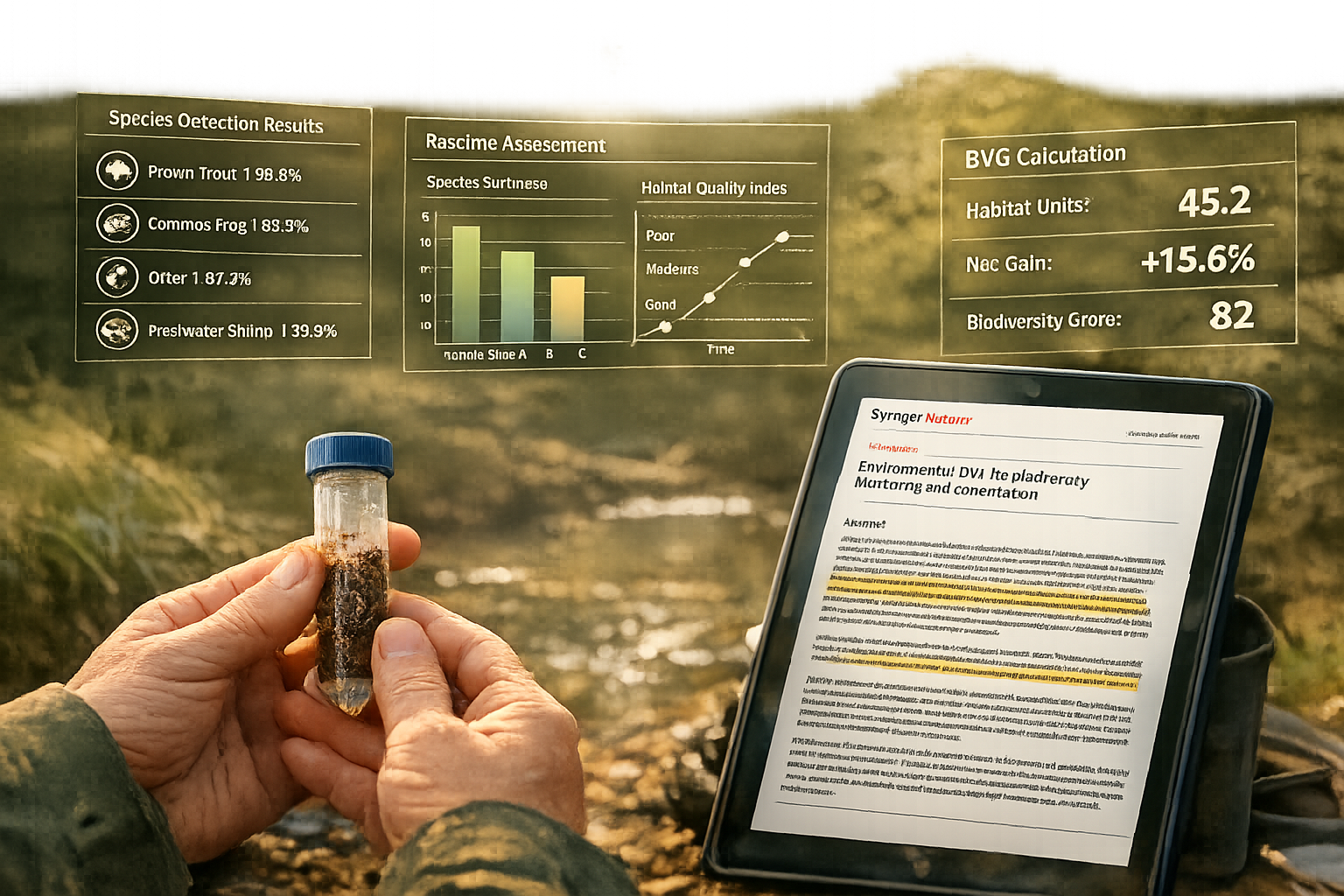
Perhaps the most significant advancement highlighted in Springer Nature's top papers involves environmental DNA monitoring. Research published in 2024 demonstrated that rapid eDNA surveys, when combined with appropriate analytics, can support national reporting under global biodiversity targets, enable baseline assessments for conservation projects, and provide scalable, repeatable monitoring for impact disclosure [1].
This represents a validated conservation outcomes detection capability that directly addresses surveyor needs. The methodology works by:
- Collecting environmental samples (water, soil, or air) from survey sites
- Extracting and sequencing DNA from these samples to identify species presence
- Analyzing results using validated bioinformatics pipelines
- Comparing findings against baseline data and reference databases
- Generating reports that meet regulatory standards
For professionals conducting biodiversity impact assessments, eDNA monitoring offers several advantages:
✅ Rapid deployment – surveys can be completed in days rather than months
✅ Species detection – identifies cryptic and rare species often missed by traditional methods
✅ Reduced bias – less dependent on surveyor expertise or weather conditions
✅ Repeatability – standardized protocols enable consistent monitoring over time
✅ Cost efficiency – particularly for large-scale or remote site assessments
Statistical Power and Replicability Improvements
Another critical contribution from 2024's top ecology papers involves addressing statistical power considerations in ecological research [4]. Many traditional biodiversity surveys suffered from insufficient statistical power, making it difficult to detect meaningful ecological changes or distinguish genuine impacts from natural variation.
The enhanced methodologies provide surveyors with:
| Traditional Approach | 2024 Enhanced Methodology |
|---|---|
| Fixed sample sizes based on convention | Power analyses determining optimal sampling effort |
| Single-season surveys | Multi-temporal assessments with validated intervals |
| Species richness as primary metric | Multiple complementary biodiversity indices |
| Subjective habitat quality scoring | Quantitative condition assessments with error estimates |
| Limited replication | Structured replication enabling robust inference |
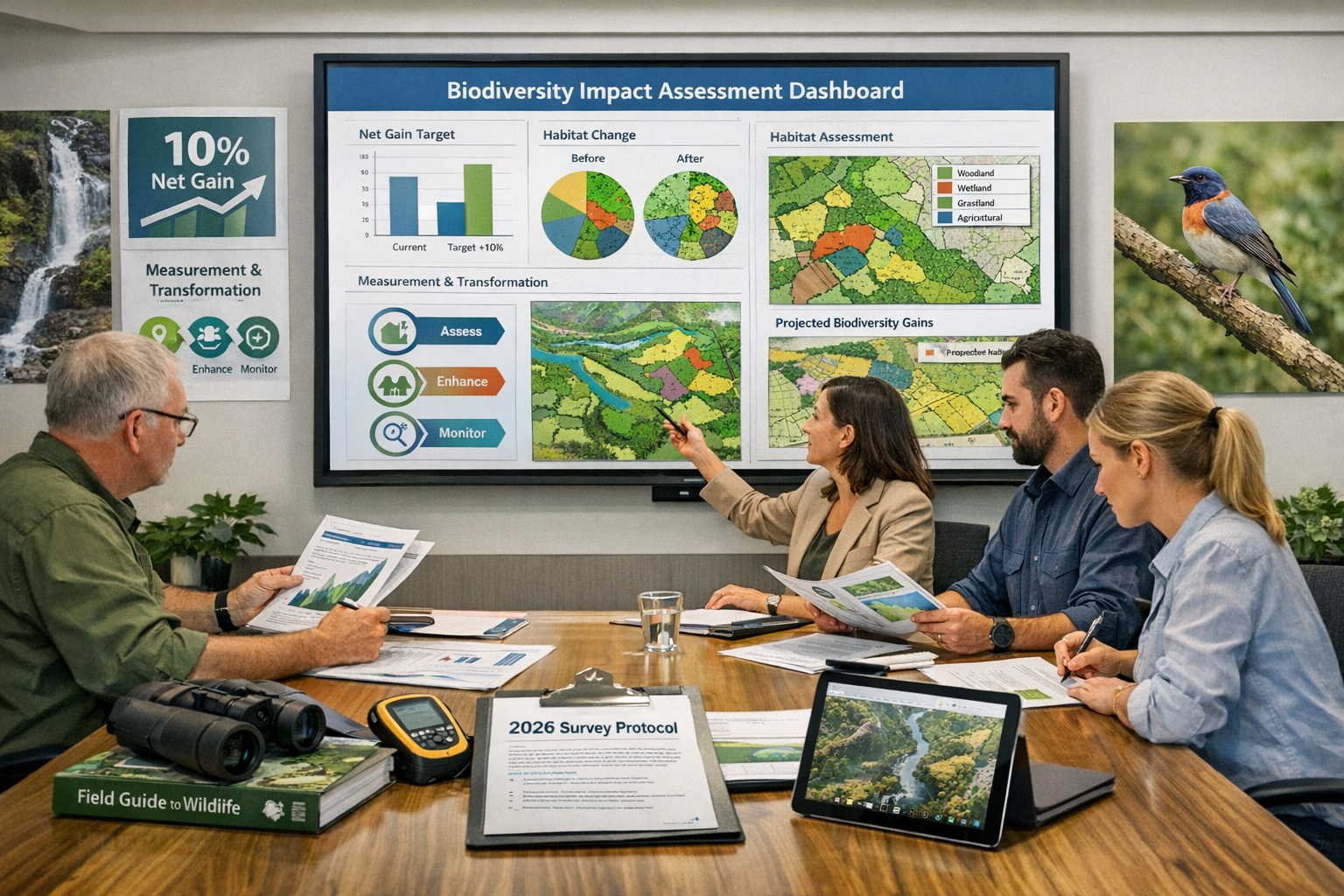
These improvements are particularly relevant for professionals working on achieving 10% Biodiversity Net Gain, where demonstrating measurable improvements requires robust baseline data and defensible monitoring protocols.
Integration of Multiple Measurement Scales
The Top 2024 Ecology Papers for 2026 Surveys: Springer Nature Insights on Biodiversity Measurement Transformations emphasize the importance of measuring biodiversity across multiple scales—from genetic diversity to landscape-level patterns. This multi-scale approach provides more comprehensive assessments than single-metric evaluations.
Key measurement dimensions include:
🔬 Genetic diversity – population health and adaptive potential
🌱 Species diversity – richness, evenness, and community composition
🏞️ Habitat diversity – structural complexity and patch connectivity
🌍 Functional diversity – ecological roles and ecosystem services
📊 Phylogenetic diversity – evolutionary distinctiveness and resilience
This comprehensive framework aligns well with requirements for Biodiversity Net Gain assessments, which must consider habitat distinctiveness, condition, and strategic significance.
Practical Applications for 2026 Biodiversity Surveys
The theoretical advances documented in 2024's top ecology papers translate into concrete improvements for biodiversity surveys conducted in 2026. Practitioners can implement these insights across various project types and scales.
Establishing Accurate BNG Baselines
One of the most critical applications involves establishing accurate baseline assessments for Biodiversity Net Gain calculations. The enhanced measurement protocols from 2024 research enable surveyors to:
Capture comprehensive baseline data that accounts for seasonal variation, cryptic species, and habitat condition nuances that traditional methods might miss. This is essential for developers who need reliable starting points for their BNG strategies.
Reduce assessment uncertainty through validated sampling protocols that provide defensible estimates with known confidence intervals. This reduces the risk of baseline underestimation, which could lead to inadequate mitigation or compensation measures.
Document temporal dynamics by incorporating appropriate survey timing and replication that captures natural variation rather than confusing it with project impacts.
Supporting Off-Site and On-Site Delivery Decisions
The measurement transformations highlighted in Springer Nature's top papers also inform decisions about off-site versus on-site BNG delivery. Enhanced monitoring capabilities enable:
- More accurate habitat creation success assessment through molecular techniques that detect colonization by target species
- Earlier detection of intervention failures allowing adaptive management before commitments are missed
- Validation of habitat banking claims through independent, repeatable monitoring protocols
- Transparent reporting that builds stakeholder confidence in conservation outcomes
For landowners considering selling biodiversity units, these enhanced measurement capabilities provide stronger evidence of habitat creation success and long-term viability.
Addressing Planner and Regulator Requirements
Planning authorities and regulators increasingly demand robust evidence of biodiversity outcomes. The methodologies from 2024's top ecology papers address common concerns raised by planners, including those covered in frequently asked questions about BNG.
Key improvements include:
Standardized protocols that enable consistent assessment across different projects and regions, facilitating regulatory review and comparison.
Transparent uncertainty quantification that acknowledges measurement limitations while providing defensible estimates—a more scientifically honest approach than false precision.
Long-term monitoring frameworks that align with 30-year BNG maintenance requirements, ensuring that initial gains are maintained and enhanced over time.
Integration with existing tools such as the Biodiversity Metric, ensuring that advanced methodologies complement rather than complicate established regulatory frameworks.
Implementation Strategies for Survey Professionals
Translating the Top 2024 Ecology Papers for 2026 Surveys: Springer Nature Insights on Biodiversity Measurement Transformations into practice requires strategic implementation. Survey professionals can adopt these innovations through phased approaches that balance methodological improvement with practical constraints.
Building Capacity for Advanced Techniques
Implementing eDNA monitoring and enhanced statistical approaches requires capacity building within survey teams. This involves:
Training in molecular sampling protocols – proper collection, storage, and chain-of-custody procedures for environmental samples that will undergo genetic analysis.
Bioinformatics literacy – understanding how sequence data is processed, what reference databases are used, and how to interpret results with appropriate caution regarding detection limits and taxonomic resolution.
Statistical software proficiency – using tools for power analysis, occupancy modeling, and uncertainty quantification that go beyond basic species lists.
Quality assurance frameworks – implementing controls and validation procedures that ensure results meet scientific and regulatory standards.
Many organizations are partnering with specialized laboratories and consultants to access these capabilities while building internal expertise over time.
Hybrid Approaches Combining Traditional and Advanced Methods
Rather than completely replacing traditional survey methods, the most effective 2026 protocols use hybrid approaches that combine conventional techniques with innovations from 2024 research [1]. This strategy offers several advantages:
Validation through multiple lines of evidence – using eDNA to complement visual surveys provides more complete species inventories and helps identify survey gaps.
Cost optimization – deploying advanced techniques strategically where they provide greatest value (e.g., aquatic environments, cryptic species detection) while using traditional methods where they remain most efficient.
Stakeholder confidence – familiar methods alongside cutting-edge techniques reassure regulators and clients while demonstrating commitment to best practice.
Adaptive implementation – starting with pilot projects to refine protocols before full-scale deployment across all survey work.
Technology Integration and Data Management
The measurement transformations documented in top 2024 papers rely heavily on robust data management systems. Survey professionals need infrastructure that can:
- Store and organize diverse data types (observational records, genetic sequences, habitat assessments, spatial data)
- Track sample provenance and maintain audit trails for regulatory compliance
- Integrate with biodiversity metric calculators and reporting platforms
- Enable long-term data access for monitoring and adaptive management
- Facilitate data sharing with clients, regulators, and research communities
Cloud-based platforms and standardized data formats are becoming essential tools for managing the increased data volume and complexity that advanced methodologies generate.
Implications for Developers and Conservation Practitioners
The Top 2024 Ecology Papers for 2026 Surveys: Springer Nature Insights on Biodiversity Measurement Transformations have significant implications beyond survey methodology, affecting how developers approach projects and how conservation outcomes are demonstrated.
Risk Reduction for Development Projects
For developers, enhanced measurement capabilities reduce several categories of risk:
Baseline uncertainty risk – more accurate initial assessments reduce the likelihood of discovering unexpected biodiversity value late in project planning, which could trigger delays or redesigns.
Compliance risk – robust monitoring protocols provide defensible evidence that BNG commitments are being met, reducing exposure to enforcement actions or reputational damage.
Financial risk – better prediction of biodiversity unit costs and requirements enables more accurate project budgeting and reduces contingency needs.
Delivery risk – early detection of habitat creation challenges enables adaptive management before irreversible failures occur, protecting investments in on-site or off-site compensation.
Enhanced Conservation Outcomes
The measurement transformations also enable genuinely better conservation outcomes rather than simply better documentation of existing practices. When practitioners can reliably detect ecological improvements, they can:
Optimize intervention designs through evidence-based refinement of habitat creation and enhancement techniques.
Demonstrate additionality by showing that conservation actions produce measurable benefits beyond what would occur naturally.
Support adaptive management with timely feedback on intervention effectiveness, enabling course corrections before monitoring periods end.
Build learning networks by contributing standardized data to broader research efforts that improve conservation practice across the sector.
This aligns with the broader goal of benefitting both nature and developers through evidence-based approaches to biodiversity management.
Implications for Small Development Projects
While much attention focuses on major developments, the methodological advances from 2024 research also benefit small development projects. Rapid, cost-effective assessment techniques like eDNA monitoring can make comprehensive biodiversity assessment feasible even for projects with limited budgets.
This democratization of advanced survey techniques ensures that biodiversity considerations are integrated across the full spectrum of development activity, not just flagship projects with substantial environmental budgets.
Future Directions and Emerging Trends
As 2026 progresses, several emerging trends build on the foundations established by 2024's top ecology papers, suggesting how biodiversity measurement will continue evolving.
Artificial Intelligence and Automated Species Identification
Machine learning algorithms are increasingly being integrated with both traditional and molecular survey techniques, enabling:
- Automated image recognition for camera trap and drone survey data
- Acoustic monitoring with AI-powered species identification from soundscape recordings
- Sequence analysis with improved taxonomic assignment and contamination detection
- Predictive modeling that optimizes survey effort allocation based on site characteristics
Real-Time Monitoring and Adaptive Management
The shift toward continuous monitoring systems rather than periodic snapshot surveys enables more responsive conservation management. Sensor networks, automated samplers, and remote sensing platforms provide ongoing data streams that can trigger management interventions when ecological thresholds are approached.
Standardization and Interoperability
Efforts to standardize protocols, data formats, and reporting frameworks are accelerating, driven by regulatory requirements and the need for landscape-scale conservation planning. The Top 2024 Ecology Papers for 2026 Surveys: Springer Nature Insights on Biodiversity Measurement Transformations contribute to this standardization by providing validated methodologies that can be adopted consistently across regions and project types.
Integration with Natural Capital Accounting
Biodiversity measurement is increasingly being linked to broader natural capital accounting frameworks that value ecosystem services and incorporate biodiversity into financial decision-making. Enhanced measurement capabilities from 2024 research enable more credible quantification of nature-related risks and opportunities.
Conclusion
The Top 2024 Ecology Papers for 2026 Surveys: Springer Nature Insights on Biodiversity Measurement Transformations represent a pivotal moment in the evolution of biodiversity assessment. These publications have bridged the critical gap between academic research and practical application, providing survey professionals, developers, and conservation practitioners with validated methodologies that address real-world challenges.
The advances in eDNA monitoring, statistical robustness, and multi-scale assessment documented in these papers are already transforming how biodiversity surveys are conducted in 2026. These innovations enable more accurate baseline assessments, more reliable detection of ecological change, and more defensible demonstration of conservation outcomes—all essential for meeting increasingly stringent regulatory requirements and achieving genuine biodiversity improvements.
Actionable Next Steps
For survey professionals and organizations working in biodiversity assessment, several concrete actions can help capitalize on these measurement transformations:
- Review Springer Nature's top 2024 ecology papers to identify methodologies most relevant to your project types and survey contexts
- Pilot advanced techniques on selected projects to build experience and refine protocols before broader implementation
- Invest in capacity building through training, partnerships, and technology infrastructure that support enhanced methodologies
- Engage with regulators and clients to demonstrate how improved measurement capabilities reduce risk and enhance outcomes
- Contribute to the evidence base by documenting implementation experiences and sharing lessons learned with the broader conservation community
The measurement transformations documented in 2024's most influential ecology papers are not merely academic achievements—they represent practical tools that enable better biodiversity outcomes while reducing uncertainty and risk for all stakeholders. As these methodologies become standard practice throughout 2026 and beyond, they will fundamentally improve our collective ability to measure, manage, and enhance the natural world.
For developers, planners, and landowners navigating biodiversity requirements, partnering with survey professionals who understand and implement these advanced methodologies is increasingly essential. The gap between biodiversity commitments and measurable outcomes is finally closing—and the insights from Springer Nature's top 2024 papers are showing us how.
References
[1] Closing Gap Between Biodiversity Commitments And Measuring Nature – https://sps.columbia.edu/news/closing-gap-between-biodiversity-commitments-and-measuring-nature
[2] Top 100 In Earth Environment And Ecology Of 2024 – https://communities.springernature.com/posts/top-100-in-earth-environment-and-ecology-of-2024
[3] Tarifs Apc 2026 Des Revues Hybrides Springer Nature – https://www.couperin.org/wp-content/uploads/2024/07/Tarifs-APC-2026-des-revues-hybrides-Springer-Nature.pdf
[4] Challenging Assumptions Statistical Power And Replicability In Ecology – https://communities.springernature.com/posts/challenging-assumptions-statistical-power-and-replicability-in-ecology