

Recent policy shifts in 2026 have introduced a 0.2-hectare exemption for smaller developments under UK Biodiversity Net Gain regulations, fundamentally changing how surveyors must validate nature-based interventions across project scales. As these regulatory adjustments reshape the landscape, ecologists face mounting pressure to demonstrate measurable outcomes that satisfy both environmental objectives and financial stakeholders.
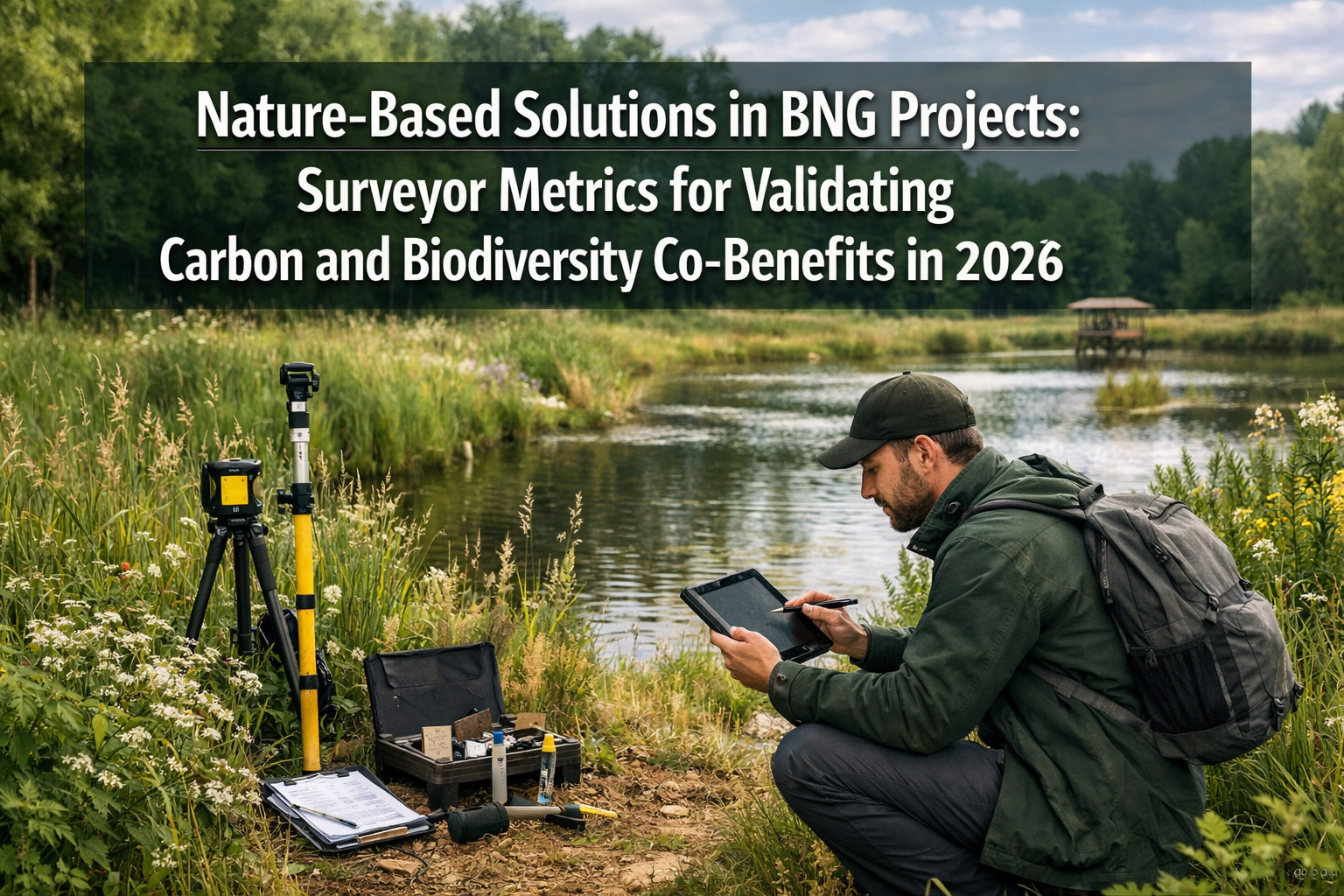
Nature-Based Solutions in BNG Projects: Surveyor Metrics for Validating Carbon and Biodiversity Co-Benefits in 2026 represents a critical convergence of ecological science, regulatory compliance, and economic viability. This article provides practical checklists and field protocols that enable surveyors to quantify restoration success while linking ecological outcomes to financial incentives—a necessity as developers navigate increasingly complex BNG requirements.
Key Takeaways
- Integrated measurement frameworks combine carbon sequestration and biodiversity metrics through standardized field protocols that satisfy both regulatory and financial validation requirements
- Recent policy exemptions for developments under 0.2 hectares require adjusted surveyor approaches to maintain ecological integrity while streamlining compliance processes
- Financial incentive structures increasingly depend on quantifiable co-benefits, making robust validation metrics essential for project viability and long-term funding
- Standardized checklists enable consistent data collection across diverse habitat types, supporting both immediate compliance and 30-year monitoring obligations
- Emerging technologies including remote sensing and AI-assisted species identification enhance validation accuracy while reducing field time and costs
Understanding Nature-Based Solutions Within the BNG Framework
Nature-Based Solutions (NbS) represent multifunctional interventions that simultaneously deliver ecosystem services, carbon storage, biodiversity enhancement, and community benefits. Unlike traditional conservation approaches that treat these outcomes as separate objectives, NbS frameworks recognize the interconnected nature of ecological processes.
Within the context of Biodiversity Net Gain requirements, Nature-Based Solutions in BNG Projects: Surveyor Metrics for Validating Carbon and Biodiversity Co-Benefits in 2026 must address both regulatory mandates and broader environmental goals. The UK's mandatory 10% biodiversity uplift requirement creates opportunities to implement solutions that exceed minimum compliance thresholds.
The Multifunctional Value Proposition
Modern BNG projects increasingly leverage NbS to maximize return on ecological investment. A restored wetland, for example, provides:
- Biodiversity habitat for amphibians, invertebrates, and wetland plants 🌿
- Carbon sequestration through peat accumulation and vegetation growth
- Water quality improvement via natural filtration processes
- Flood risk mitigation through water storage capacity
- Recreation and wellbeing benefits for local communities
This integrated approach aligns with comprehensive biodiversity planning strategies that developers must now incorporate into project design from the earliest stages.
Policy Context: The 2026 Regulatory Landscape
The UK Government's announcement of new exemptions has created a more nuanced regulatory environment. The 0.2-hectare threshold for smaller developments and the proposed 2.5-hectare brownfield residential exemption represent significant policy shifts that affect surveyor validation requirements.
These changes don't eliminate the need for rigorous measurement—they redistribute it. Larger projects now carry proportionally greater responsibility for demonstrating measurable co-benefits, while smaller developments must still document their ecological impacts within streamlined frameworks.
Core Surveyor Metrics for Validating Biodiversity Co-Benefits
Effective validation of biodiversity outcomes requires standardized, repeatable measurement protocols that generate defensible data for regulatory compliance and long-term monitoring. Nature-Based Solutions in BNG Projects: Surveyor Metrics for Validating Carbon and Biodiversity Co-Benefits in 2026 demands metrics that bridge ecological science and practical field application.
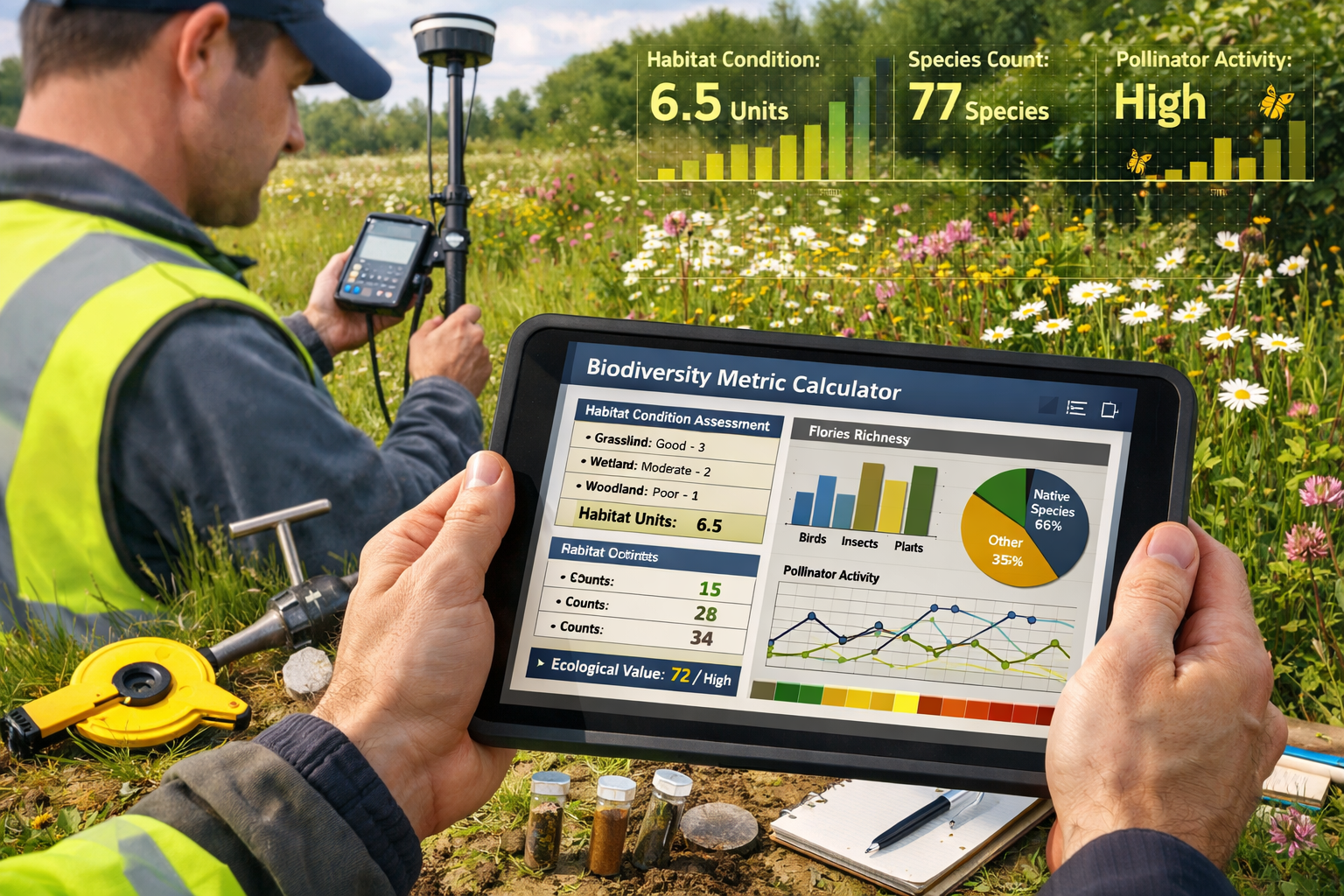
Habitat Condition Assessment Protocols
The Defra Biodiversity Metric 4.0 provides the foundation for habitat assessment, but surveyors must enhance these baseline measurements with additional indicators that capture co-benefit delivery:
Primary Habitat Condition Indicators:
- Vegetation structure complexity (vertical layering, age diversity)
- Native species composition and dominance
- Physical structure integrity (deadwood, bare ground, water features)
- Disturbance indicators and invasive species presence
- Connectivity to surrounding habitats
Enhanced Co-Benefit Indicators:
- Soil organic carbon content (0-30cm depth samples)
- Vegetation biomass and growth rates
- Pollinator activity indices (timed observation counts)
- Water quality parameters in aquatic/wetland habitats
- Microclimate regulation capacity
Species Richness and Abundance Metrics
Quantifying biodiversity gains requires systematic species monitoring across multiple taxonomic groups. Practical surveyor checklists should prioritize indicator species that reflect habitat quality while remaining feasible for routine assessment:
| Taxonomic Group | Survey Method | Frequency | Key Metrics |
|---|---|---|---|
| Vascular Plants | Quadrat sampling | Annual (spring/summer) | Species richness, % native cover |
| Birds | Point counts, territory mapping | Breeding season | Species diversity, breeding pairs |
| Invertebrates | Sweep netting, pitfall traps | Bi-annual | Pollinator abundance, specialist species |
| Mammals | Camera traps, field signs | Quarterly | Presence/absence, activity indices |
| Amphibians/Reptiles | Visual surveys, refugia checks | Breeding season | Population estimates, breeding success |
These protocols align with biodiversity impact assessment methodologies that establish baseline conditions and track progress toward net gain targets.
Functional Diversity Measurements
Beyond species counts, functional diversity metrics capture the ecological roles that species fulfill within restored habitats. These measurements directly link to ecosystem service delivery:
- Pollination capacity: Flower visitation rates, pollinator functional groups
- Nutrient cycling: Decomposer abundance, litter decomposition rates
- Seed dispersal: Frugivore presence, seed bank viability
- Pest regulation: Predator-prey ratios, biological control indicators
- Soil formation: Earthworm abundance, soil structure development
Carbon Sequestration Validation Metrics for BNG Sites
While biodiversity remains the primary focus of BNG legislation, carbon co-benefits provide additional value streams that enhance project financial viability and contribute to net-zero commitments. Nature-Based Solutions in BNG Projects: Surveyor Metrics for Validating Carbon and Biodiversity Co-Benefits in 2026 requires robust carbon accounting methodologies adapted to UK habitat types.
Vegetation Carbon Stock Assessment
Above-ground biomass measurements form the foundation of vegetation carbon accounting. Surveyors should employ habitat-specific protocols:
Woodland and Scrub Habitats:
- Tree diameter at breast height (DBH) measurements for all stems >7cm
- Species-specific allometric equations for biomass estimation
- Deadwood volume calculations (standing and fallen)
- Shrub layer biomass sampling via destructive quadrats (small subset)
- Estimated carbon content: 45-50% of dry biomass
Grassland and Meadow Habitats:
- Vegetation height and density measurements
- Biomass clip samples (0.5m² quadrats, minimum n=10 per habitat parcel)
- Root biomass estimation using root:shoot ratios
- Annual accumulation rates for permanent grasslands
Wetland and Peatland Habitats:
- Peat depth surveys using graduated probes
- Bulk density core samples (minimum 3 per habitat type)
- Vegetation biomass as per grassland protocols
- Water table monitoring (critical for carbon retention)
Soil Organic Carbon Monitoring
Soil represents the largest terrestrial carbon pool, making soil organic carbon (SOC) measurement essential for comprehensive validation. Practical surveyor protocols include:
Field Sampling Protocol:
- Establish permanent monitoring points on systematic grid (minimum 5 points per hectare)
- Collect soil cores at standardized depths: 0-15cm, 15-30cm, 30-50cm
- Record bulk density using calibrated core samplers
- Document soil texture, structure, and moisture conditions
- Repeat sampling at 5-year intervals for long-term trends
Laboratory Analysis Requirements:
- Loss-on-ignition or dry combustion for organic carbon content
- Bulk density determination for volumetric calculations
- Particle size analysis for texture classification
- pH and nutrient analysis for habitat condition context
These measurements support achieving biodiversity net gain targets while documenting additional carbon benefits that may qualify for emerging financial mechanisms.
Carbon Sequestration Rate Calculations
Annual carbon accumulation rates provide dynamic metrics that demonstrate ongoing NbS effectiveness:
Calculation Framework:
- Baseline measurement (Year 0): Initial carbon stocks across all pools
- Periodic remeasurement (Years 1, 3, 5, 10, etc.): Repeat stock assessments
- Net sequestration rate: (Current stock – Baseline stock) / Time elapsed
- Emission factors: Account for management activities (e.g., machinery use)
- Permanence risk assessment: Evaluate threats to stored carbon
Typical sequestration rates for UK habitats under restoration:
- Native woodland creation: 2-4 tonnes CO₂e/ha/year (establishment phase)
- Grassland restoration: 0.5-1.5 tonnes CO₂e/ha/year
- Wetland/peatland restoration: 3-8 tonnes CO₂e/ha/year (including emission reduction)
- Hedgerow establishment: 0.3-0.8 tonnes CO₂e/ha/year
Practical Field Checklists for Integrated Co-Benefit Validation
Standardized checklists ensure consistent data collection across diverse project types and surveyor teams. Nature-Based Solutions in BNG Projects: Surveyor Metrics for Validating Carbon and Biodiversity Co-Benefits in 2026 benefits from field-tested protocols that balance comprehensiveness with practical efficiency.
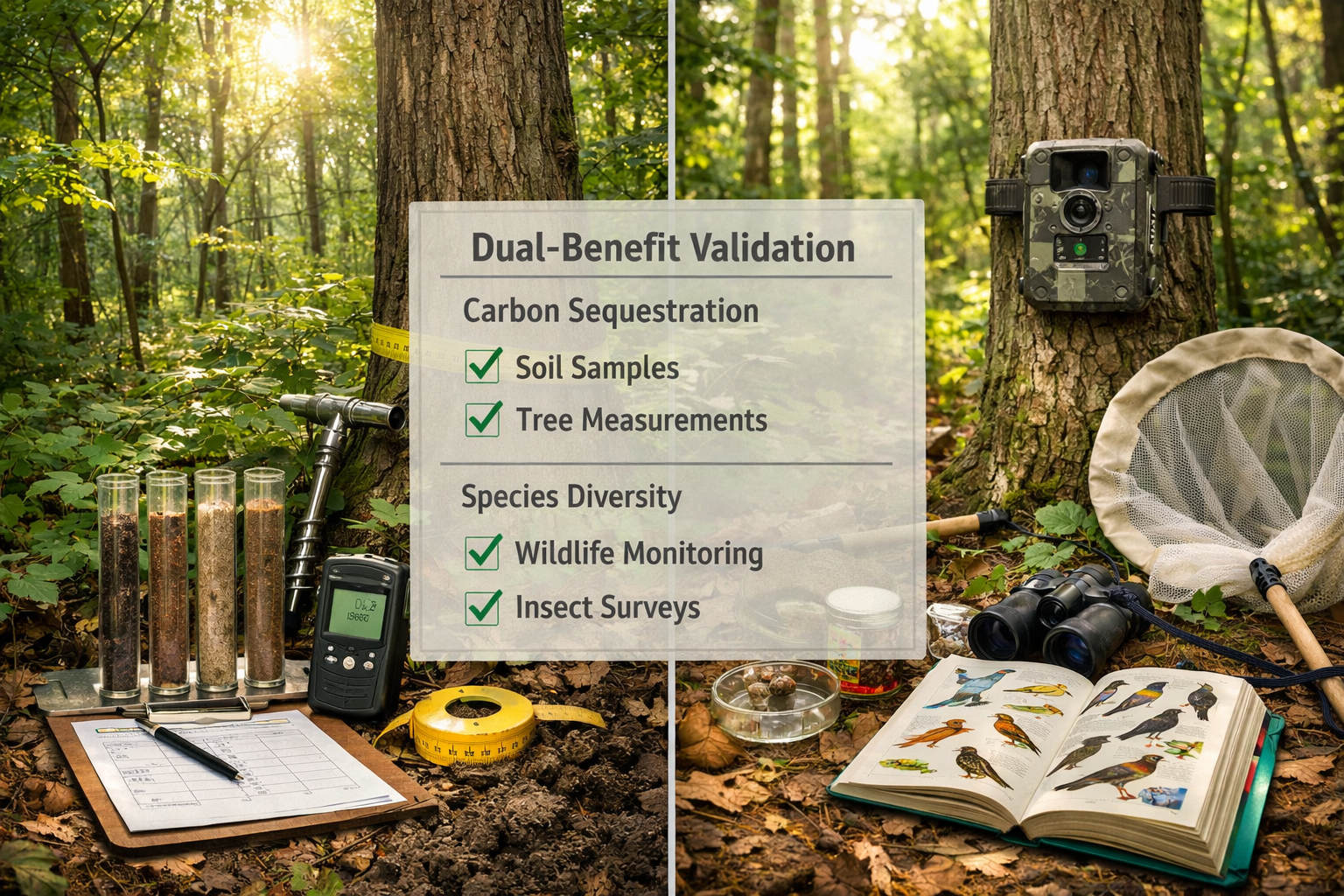
Pre-Survey Preparation Checklist
Documentation Review:
- Access BNG assessment reports and habitat baseline data
- Review habitat creation/enhancement prescriptions
- Confirm monitoring schedule and reporting requirements
- Identify sensitive species and access restrictions
- Verify land ownership and permission status
Equipment Preparation:
- GPS unit with pre-loaded site boundaries and monitoring points
- Digital data collection tablet with offline survey forms
- Habitat condition assessment field guide and metric calculator
- Species identification guides (plants, birds, invertebrates)
- Measuring equipment (tapes, quadrat frames, calipers)
- Soil sampling kit (corer, bags, labels, bulk density sampler)
- Camera for photographic documentation
- Weather-appropriate PPE and first aid supplies
Biodiversity Field Survey Checklist
Habitat Structure Assessment (per habitat parcel):
- Record dominant and sub-dominant plant species (minimum 10 species)
- Measure vegetation height at 10 random points
- Assess vertical structure complexity (ground, field, shrub, canopy layers)
- Document physical features (deadwood, bare ground %, water bodies)
- Evaluate connectivity to adjacent habitats (hedgerows, corridors)
- Photograph representative areas and specific features
- Complete Defra Biodiversity Metric condition assessment sheet
Species Monitoring (taxonomic group-specific):
- Conduct standardized surveys per approved methodology
- Record all species identified to lowest practical taxonomic level
- Note abundance/activity levels using consistent scales
- Document breeding evidence for priority species
- Photograph voucher specimens for verification (where appropriate)
- Record environmental conditions (temperature, wind, cloud cover)
Invasive Species and Threats:
- Survey for Schedule 9 invasive species presence
- Map invasive species locations and estimate coverage
- Document disturbance indicators (trampling, dumping, pollution)
- Assess predation/grazing pressure evidence
- Note management intervention requirements
Carbon Measurement Field Checklist
Vegetation Carbon Assessment:
- Measure DBH for all trees >7cm at permanent monitoring plots
- Record tree species, height, and condition
- Assess deadwood volume (standing and fallen, >10cm diameter)
- Collect vegetation biomass clip samples (grassland/meadow)
- Photograph vegetation structure for temporal comparison
Soil Carbon Sampling:
- Navigate to permanent soil monitoring points using GPS
- Collect soil cores at standardized depths (0-15, 15-30, 30-50cm)
- Measure and record bulk density using calibrated corer
- Document soil profile characteristics (color, texture, roots, stones)
- Label samples with unique identifiers and GPS coordinates
- Store samples appropriately for laboratory submission
Site Condition Factors:
- Measure water table depth (wetland/peatland sites)
- Record management activities since last survey
- Document weather conditions and recent precipitation
- Assess erosion or soil disturbance indicators
- Note any factors affecting carbon storage permanence
These checklists support systematic biodiversity net gain planning while ensuring data quality for both regulatory compliance and financial validation.
Linking Validation Metrics to Financial Incentives
The economic viability of Nature-Based Solutions in BNG Projects: Surveyor Metrics for Validating Carbon and Biodiversity Co-Benefits in 2026 increasingly depends on demonstrating quantifiable outcomes that justify investment. Robust validation metrics create pathways to diverse revenue streams beyond basic regulatory compliance.
Biodiversity Unit Trading and Financial Returns
The UK's biodiversity unit market creates direct financial value for measurable habitat improvements. Surveyor metrics directly influence unit generation and pricing:
Unit Calculation Dependencies:
- Habitat type classification: Determines baseline unit value per hectare
- Condition assessment scores: Multiplier effect on unit generation (Poor/Moderate/Good)
- Strategic significance: Location-specific multipliers for priority areas
- Temporal discounting: Time-to-target-condition affects present value
Current market dynamics show biodiversity units trading between £42,000-£650,000 per unit depending on habitat type, location, and delivery timeframe. Accurate surveyor validation ensures landowners and habitat banking providers receive appropriate compensation for delivered outcomes.
Carbon Credit Potential from Co-Benefits
While BNG projects primarily target biodiversity outcomes, documented carbon sequestration creates potential supplementary revenue through voluntary carbon markets:
Carbon Credit Eligibility Criteria:
- Additionality: Carbon storage beyond business-as-usual scenarios
- Permanence: Long-term protection mechanisms (minimum 30 years)
- Leakage prevention: No displacement of emissions elsewhere
- Verification: Third-party validation of measurement protocols
- Co-benefit documentation: Biodiversity and social benefits enhance credit value
UK Woodland Carbon Code and Peatland Code:
These government-endorsed standards provide frameworks for carbon credit generation from habitat creation projects. Surveyor metrics that align with these codes enable dual-benefit monetization:
- Woodland Carbon Code: Verified units typically trade at £15-25 per tonne CO₂e
- Peatland Code: Restoration credits command premium pricing due to high sequestration rates
- Co-benefit premiums: Projects demonstrating biodiversity gains may achieve 10-30% price increases
Performance-Based Payment Structures
Emerging financial models tie payments directly to validated ecological outcomes rather than simple habitat creation activities. This results-based approach rewards effective management and incentivizes long-term stewardship:
Milestone-Based Payment Examples:
- Year 1-2: 20% payment upon habitat establishment and initial survival
- Year 3-5: 30% payment upon achieving "Moderate" condition assessment
- Year 6-10: 30% payment upon achieving "Good" condition and target species presence
- Year 10+: 20% payment upon sustained condition maintenance and carbon stock verification
These structures make surveyor validation metrics directly consequential to financial returns, creating strong incentives for accurate measurement and transparent reporting.
Case Studies: Emerging Best Practices from 2026 Policy Shifts
Real-world implementation of Nature-Based Solutions in BNG Projects: Surveyor Metrics for Validating Carbon and Biodiversity Co-Benefits in 2026 reveals practical challenges and innovative solutions that inform best practice development.
Case Study 1: Small-Scale Development Under the 0.2-Hectare Exemption
Project Context:
A residential infill development of 0.18 hectares qualified for the new small-scale exemption but voluntarily implemented NbS to enhance marketability and community acceptance.
Surveyor Approach:
Despite exemption status, the developer commissioned baseline habitat surveys and implemented a simplified monitoring protocol:
- Streamlined condition assessment focusing on five key indicators
- Annual photographic monitoring from fixed points
- Citizen science engagement for species recording
- Soil carbon baseline measurement at three representative points
Outcomes:
- Enhanced property values through demonstrated environmental stewardship
- Positive community relations and planning approval support
- Documented carbon sequestration of 0.8 tonnes CO₂e/year (hedgerow and garden habitats)
- Template created for similar small-scale voluntary BNG implementations
Key Lesson: Even exempt projects benefit from basic validation metrics that demonstrate environmental responsibility and create marketing advantages.
Case Study 2: Large-Scale Habitat Banking with Integrated Carbon Accounting
Project Context:
A 45-hectare agricultural land conversion to mixed habitat mosaic (woodland, wetland, species-rich grassland) designed for biodiversity unit generation with documented carbon co-benefits.
Surveyor Approach:
Comprehensive monitoring framework combining BNG requirements with carbon code standards:
- Systematic grid-based monitoring (100m spacing, 45 permanent plots)
- Quarterly biodiversity surveys across multiple taxonomic groups
- Annual vegetation carbon assessments using allometric equations
- Five-year soil carbon remeasurement schedule
- Remote sensing integration for vegetation structure monitoring
Outcomes:
- Generated 127 biodiversity units over 10-year delivery period
- Verified carbon sequestration of 4.2 tonnes CO₂e/ha/year (mixed habitat average)
- Secured dual revenue streams: biodiversity unit sales (£5.4M) and carbon credits (£285K over 10 years)
- Established replicable protocol for similar large-scale habitat banking projects
Key Lesson: Integrated measurement frameworks capturing both biodiversity and carbon metrics maximize financial returns while maintaining scientific rigor.
Case Study 3: Brownfield Redevelopment with Priority Habitat Creation
Project Context:
Former industrial site (1.8 hectares) redeveloped for housing with on-site creation of priority habitat (lowland meadow and pond complex) to achieve 10% BNG.
Surveyor Approach:
Baseline surveys documented unexpected biodiversity value of brownfield habitat, requiring adjusted enhancement strategy:
- Detailed invertebrate surveys revealed rare specialist species
- Hybrid approach: retained brownfield habitat features within designed landscape
- Enhanced monitoring protocol for priority invertebrate populations
- Carbon measurement focused on soil remediation and organic matter accumulation
Outcomes:
- Achieved 12% BNG through creative habitat design
- Maintained populations of three priority invertebrate species
- Documented soil carbon increase of 15 tonnes/ha over five years (remediated soil)
- Received regional design award for innovative brownfield biodiversity integration
Key Lesson: Flexible surveyor protocols that recognize existing ecological value enable creative solutions that exceed minimum requirements.
Technology Integration: Enhancing Validation Efficiency and Accuracy
Emerging technologies are transforming how surveyors collect, analyze, and validate Nature-Based Solutions in BNG Projects: Surveyor Metrics for Validating Carbon and Biodiversity Co-Benefits in 2026. Digital tools enhance both efficiency and data quality while reducing long-term monitoring costs.
Remote Sensing and Drone Technology
Applications for BNG Monitoring:
- Vegetation structure mapping: LiDAR-derived canopy height models track woodland development
- Habitat extent verification: Multispectral imagery confirms habitat parcel boundaries and condition
- Biomass estimation: Vegetation indices (NDVI, EVI) correlate with carbon stock accumulation
- Change detection: Temporal image analysis identifies habitat degradation or improvement
- Accessibility solutions: Aerial surveys access difficult terrain without disturbance
Practical Implementation:
- Quarterly drone flights capture high-resolution imagery (5cm ground resolution)
- Annual LiDAR surveys for woodland sites track structural development
- Integration with ground-truthing data validates remote measurements
- Cost reduction: 40-60% decrease in field time for large sites
AI-Assisted Species Identification
Machine Learning Applications:
- Plant identification: Image recognition apps achieve 90%+ accuracy for common species
- Acoustic monitoring: Automated bird and bat call analysis from passive recorders
- Camera trap processing: AI algorithms identify mammal species from thousands of images
- Invertebrate sorting: Computer vision assists with specimen identification from trap samples
Benefits for Validation Metrics:
- Consistent identification standards across surveyor teams
- Rapid processing of large datasets
- Enhanced detection of rare or cryptic species
- Reduced specialist time requirements for routine monitoring
Digital Data Management Platforms
Integrated Monitoring Systems:
- Cloud-based platforms centralize all survey data and documentation
- Automated metric calculations reduce calculation errors
- Real-time data visualization supports adaptive management decisions
- Audit trails ensure data integrity for regulatory compliance
- API integration with biodiversity metric calculators streamlines reporting
Features Supporting Co-Benefit Validation:
- Linked biodiversity and carbon datasets enable correlation analysis
- Automated reporting generates compliance documents and financial validation
- Stakeholder portals provide transparent access to monitoring results
- Long-term data storage ensures 30-year monitoring obligation fulfillment
These technologies support achieving biodiversity net gain without risk by improving measurement accuracy and reducing human error.
Challenges and Solutions in Co-Benefit Validation
Implementing robust Nature-Based Solutions in BNG Projects: Surveyor Metrics for Validating Carbon and Biodiversity Co-Benefits in 2026 faces several practical challenges that require adaptive solutions.
Challenge 1: Temporal Lag Between Implementation and Measurable Outcomes
Problem: Many NbS benefits require years or decades to fully materialize, creating validation challenges for short-term financial requirements.
Solutions:
- Predictive modeling: Use validated growth models to project future carbon stocks and biodiversity value
- Interim indicators: Measure early-stage success metrics (survival rates, vegetation establishment, soil improvement)
- Reference site comparisons: Compare trajectories to established habitats of target type
- Staged payment structures: Align financial disbursements with achievable milestones
Challenge 2: Natural Variability and Measurement Uncertainty
Problem: Ecological systems exhibit high natural variability, making precise measurements difficult and comparisons across time periods challenging.
Solutions:
- Statistical power analysis: Ensure adequate sampling intensity for detecting meaningful change
- Standardized protocols: Minimize measurement variability through consistent methodologies
- Control sites: Establish reference areas to distinguish management effects from environmental fluctuations
- Conservative estimates: Apply uncertainty buffers to carbon and biodiversity calculations
Challenge 3: Cost Constraints for Comprehensive Monitoring
Problem: Detailed multi-taxa surveys and laboratory analyses create significant ongoing costs, particularly for smaller projects.
Solutions:
- Tiered monitoring approaches: Scale survey intensity to project size and risk
- Indicator species focus: Prioritize taxa that reliably reflect habitat condition
- Technology leverage: Deploy automated monitoring tools to reduce field time
- Collaborative monitoring: Pool resources across multiple nearby projects
- Volunteer engagement: Incorporate citizen science for supplementary data collection
Challenge 4: Integration Across Multiple Benefit Streams
Problem: Different validation standards exist for biodiversity (Defra Metric), carbon (Woodland/Peatland Codes), and other ecosystem services, creating complexity.
Solutions:
- Unified monitoring frameworks: Design protocols that simultaneously satisfy multiple standards
- Cross-referencing datasets: Ensure compatibility between biodiversity and carbon measurements
- Integrated reporting templates: Develop documents that address all validation requirements
- Specialist coordination: Engage experts who understand multiple assessment frameworks
Future Directions: Evolving Standards and Opportunities
The landscape of Nature-Based Solutions in BNG Projects: Surveyor Metrics for Validating Carbon and Biodiversity Co-Benefits in 2026 continues to evolve rapidly, with several emerging trends shaping future practice.
Standardization Initiatives
International efforts to harmonize NbS validation metrics will influence UK practice:
- The Nature-based Solutions International Congress in November 2026 will showcase emerging validation methodologies and potentially establish international best practice standards
- ISO standards development: Working groups are developing NbS certification frameworks
- UK-specific guidance: Defra and Natural England continue refining biodiversity metric guidance with potential carbon integration
Emerging Financial Mechanisms
New market structures create additional incentives for robust validation:
- Biodiversity and carbon bundled credits: Combined products that monetize multiple benefits simultaneously
- Ecosystem service payments: Expanding beyond carbon and biodiversity to water quality, flood mitigation, and recreation
- Impact investment vehicles: Funds specifically targeting measurable environmental outcomes
- Corporate biodiversity credits: Voluntary market for companies seeking nature-positive claims
Policy Development Trajectory
Anticipated regulatory changes will affect validation requirements:
- Brownfield exemption implementation: The proposed 2.5-hectare residential exemption may reshape urban BNG delivery
- Marine BNG extension: Coastal and marine development will require adapted validation protocols
- Nutrient neutrality integration: Combined assessment frameworks addressing multiple environmental objectives
- 30-year monitoring enforcement: Strengthened mechanisms ensuring long-term validation compliance
Research Priorities
Scientific advancement will enhance validation accuracy:
- Carbon sequestration rates: UK-specific data for diverse habitat types under various management regimes
- Biodiversity-carbon relationships: Understanding correlations and trade-offs between objectives
- Functional diversity metrics: Developing practical field protocols for ecosystem function assessment
- Climate adaptation indicators: Incorporating resilience metrics into validation frameworks
Conclusion
Nature-Based Solutions in BNG Projects: Surveyor Metrics for Validating Carbon and Biodiversity Co-Benefits in 2026 represents a critical intersection of ecological science, regulatory compliance, and financial innovation. As UK policy continues evolving with new exemptions and expanding requirements, the need for robust, standardized validation metrics becomes increasingly essential.
Effective surveyor protocols must balance multiple objectives:
✅ Regulatory compliance: Meeting mandatory BNG requirements through defensible measurement methodologies
✅ Financial validation: Generating data that supports biodiversity unit trading, carbon credit certification, and performance-based payments
✅ Ecological integrity: Ensuring measurements accurately reflect genuine environmental improvements rather than paper exercises
✅ Practical feasibility: Maintaining cost-effectiveness and efficiency while delivering comprehensive data
The field checklists, measurement protocols, and case studies presented here provide actionable frameworks for surveyors, developers, and land managers implementing NbS within BNG projects. By documenting both biodiversity and carbon co-benefits through standardized approaches, projects can maximize environmental outcomes while accessing diverse financial incentives.
Actionable Next Steps
For Surveyors and Ecologists:
- Adopt integrated monitoring protocols that capture both biodiversity and carbon metrics from the outset
- Invest in technology tools (drones, AI identification, digital platforms) that enhance efficiency and accuracy
- Pursue training in carbon measurement methodologies to complement biodiversity expertise
- Engage with emerging standards development to shape best practice evolution
For Developers and Landowners:
5. Commission comprehensive baseline assessments that document co-benefit potential
6. Structure monitoring programs with appropriate intensity for project scale and financial objectives
7. Explore bundled revenue opportunities from biodiversity units, carbon credits, and ecosystem service payments
8. Establish long-term management and monitoring arrangements that ensure 30-year obligation fulfillment
For Policy Makers and Regulators:
9. Continue refining guidance to integrate carbon and biodiversity validation frameworks
10. Support standardization initiatives that reduce complexity while maintaining rigor
11. Develop financial mechanisms that reward demonstrated co-benefit delivery
12. Invest in research addressing UK-specific data gaps in habitat carbon sequestration and biodiversity trajectories
The 2026 policy landscape presents both challenges and opportunities. Projects that embrace comprehensive validation approaches—measuring multiple benefits through robust, transparent methodologies—will not only achieve compliance but position themselves at the forefront of nature-positive development. As the UK progresses toward net-zero and nature recovery objectives, the surveyor metrics developed and refined today will form the foundation for decades of environmental accountability and genuine ecological restoration.
For expert guidance on implementing these validation frameworks within your BNG project, explore our comprehensive biodiversity net gain services and discover how professional surveyor support can maximize both environmental and financial outcomes.
References
[1] Bng No More Loopholes – https://www.the-ies.org/system/files/paragraphs/cw_file/2026-02/BNG_no_more_loopholes.pdf
[2] Are Nature Based Solutions The Key To Adapting Under Uncertainty – https://gca.org/are-nature-based-solutions-the-key-to-adapting-under-uncertainty/
[3] Nature Based Solutions International Congress 2026 – https://www.biodiversa.eu/2026/03/05/nature-based-solutions-international-congress-2026/